
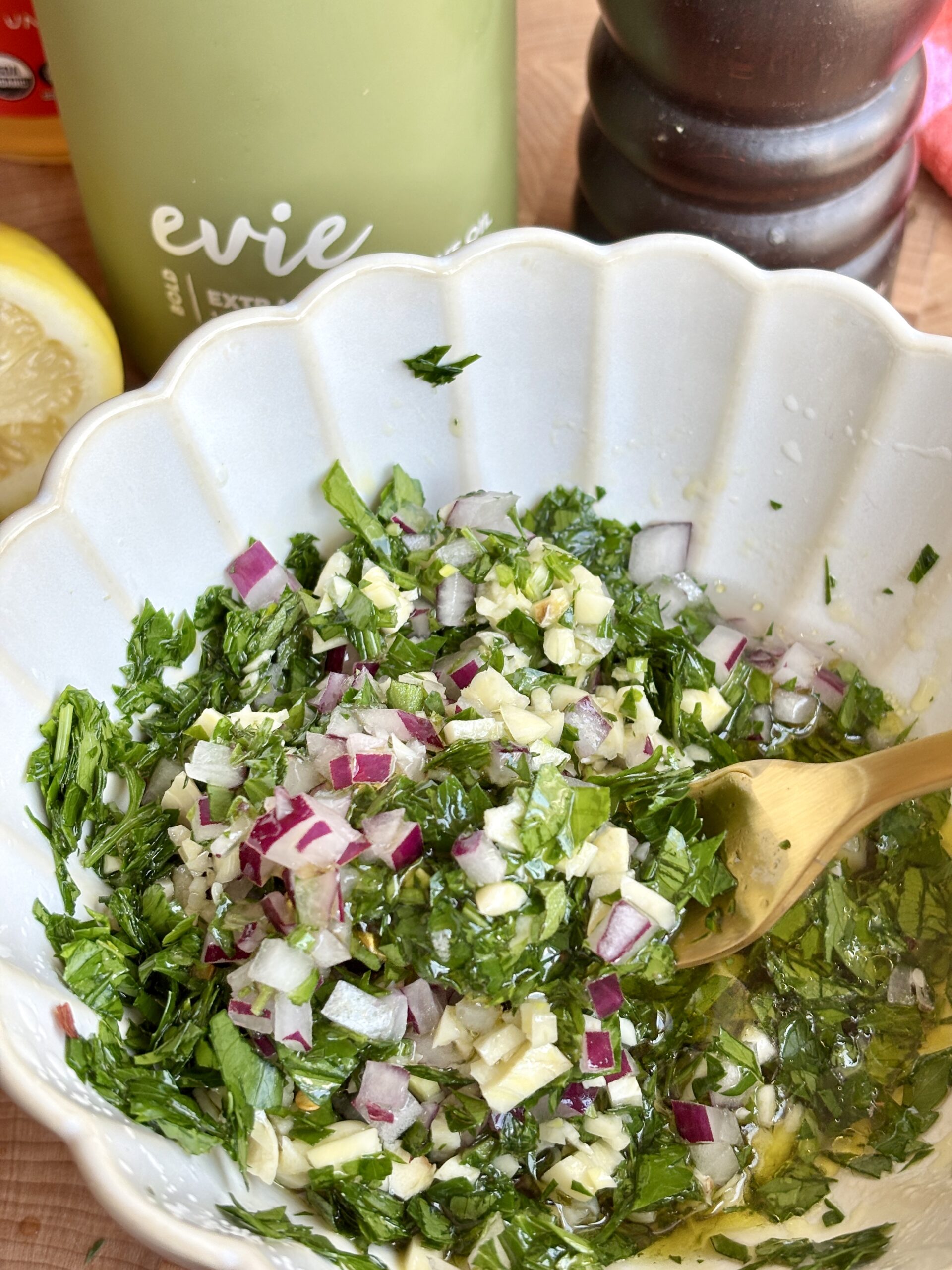
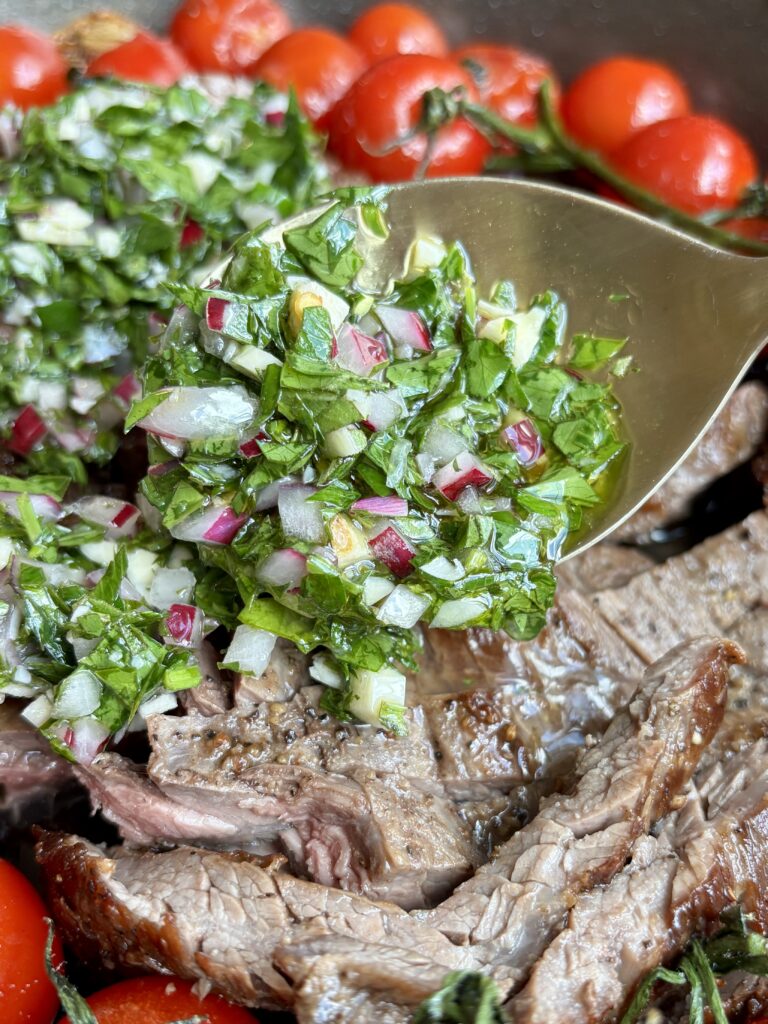
Homemade Chimichurri Sauce may just be the ideal summer protein topping in my opinion. It’s vibrant, fresh, garlicky, tangy, and bursting with flavor. Made with parsley, garlic, red onion, oregano, vinegar, and olive oil, it’s the perfect way to add brightness to grilled meats, roasted vegetables, seafood, sandwiches, and more. In fact, I love pairing this with my Skirt Steak Chimichurri with Blistered Tomatoes.
Originating in Argentina and Uruguay, chimichurri is traditionally served alongside grilled steak, but its versatility extends far beyond beef. This simple no cook sauce comes together in minutes and instantly elevates everything it is paired with. The combination of fresh herbs, bold garlic, and tangy vinegar creates a balanced sauce that’s equally delicious as a marinade, dipping sauce, or finishing drizzle.
Whether you’re hosting a summer cookout, meal prepping for the week, or simply looking for a way to add fresh flavor to dinner, this easy Chimichurri Sauce recipe deserves a permanent place on your menu.
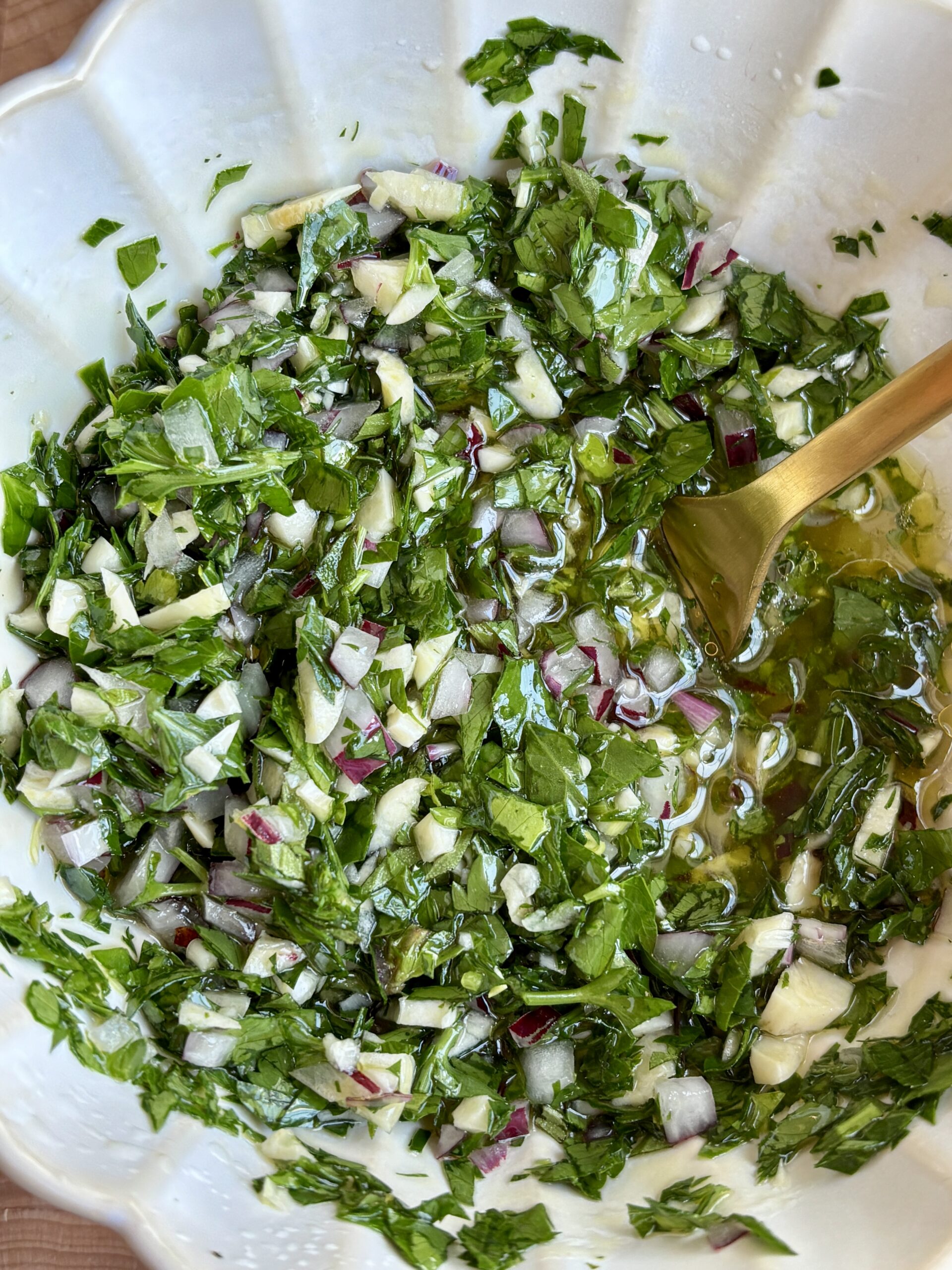
Why you’ll love this recipe!
What ingredients do I need?
- Fresh Parsley: The star ingredient of chimichurri. Fresh parsley provides the vibrant green color and fresh herbal flavor.
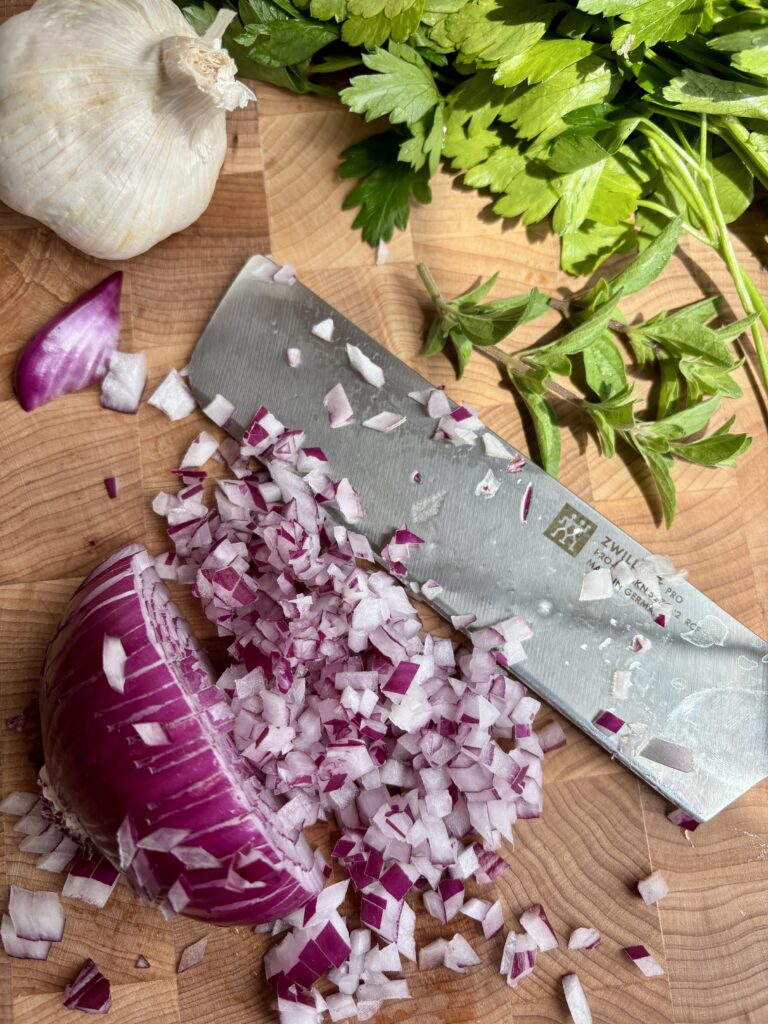
- Red Onion: Adds subtle sharpness and depth while balancing the richness of the olive oil.
- Garlic: Provides bold, savory flavor that gives chimichurri its signature punch.
- Fresh Oregano: Adds earthy, slightly peppery notes. Fresh oregano is ideal, but dried oregano works well too.
- Red Pepper Flakes: Adds a subtle touch of heat without overwhelming the sauce.
- Apple Cider Vinegar: Provides brightness and acidity that balances the richness of meats and olive oil.
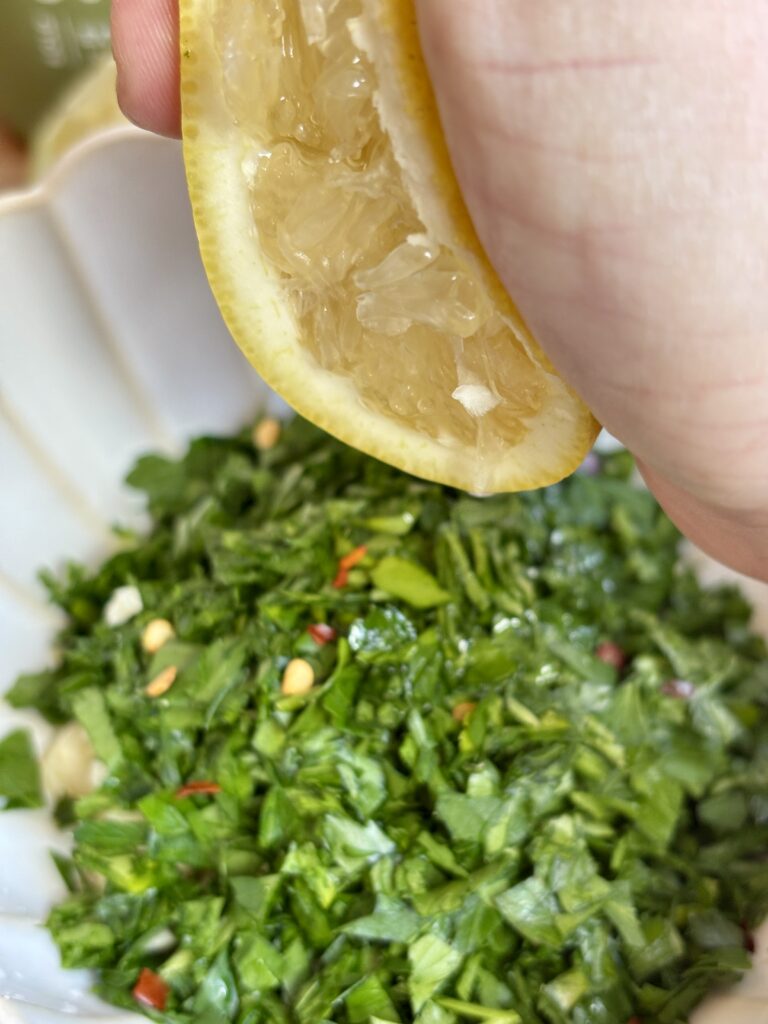
- Lemon Juice: Optional, but adds extra freshness and citrus notes.
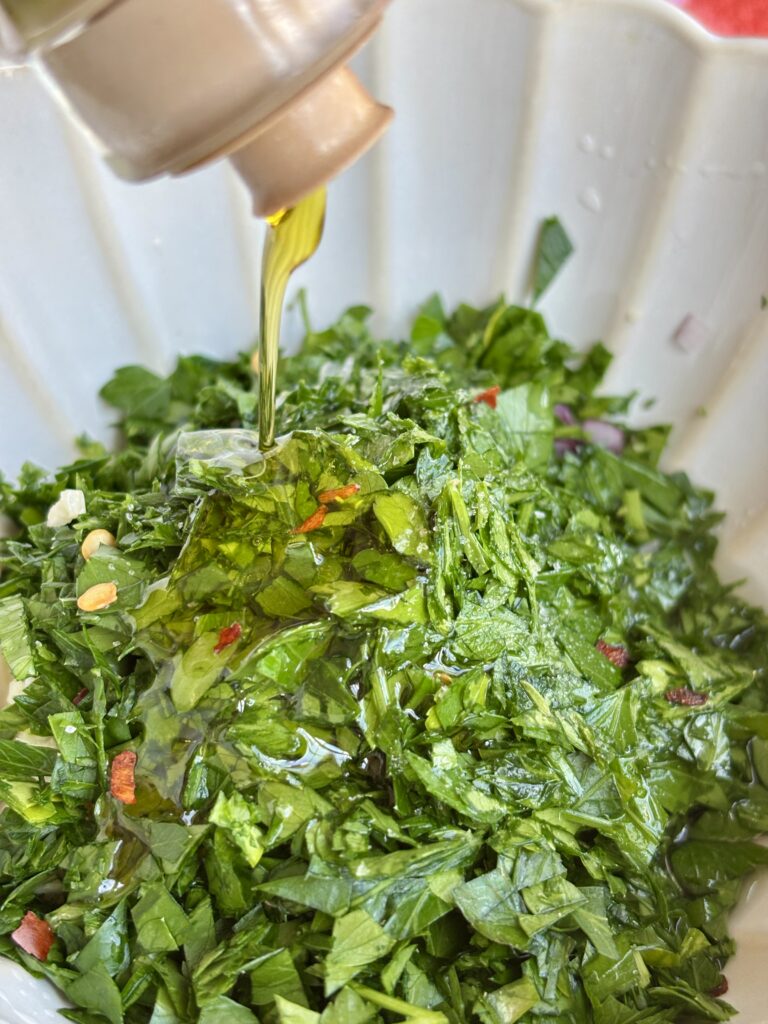
- Extra Virgin Olive Oil: Creates the silky texture and carries all of the flavors throughout the sauce.
- Salt: Enhances and balances the overall flavor.
Recipe Variations
- Spicy Chimichurri: Increase the red pepper flakes for extra heat.
- Cilantro ChimichurriL Replace half the parsley with fresh cilantro.
- Lemon Chimichurri: Add additional lemon juice and lemon zest for a brighter citrus flavor.
- Garlic Lover’s Chimichurri: Increase garlic to 5–6 cloves.
- Smoky Chimichurri: Add a pinch of smoked paprika.
Pro Tips
- Let the chimichurri rest a little. While it can be enjoyed immediately, allowing it to sit for at least 10–15 minutes helps the flavors meld and mellow.
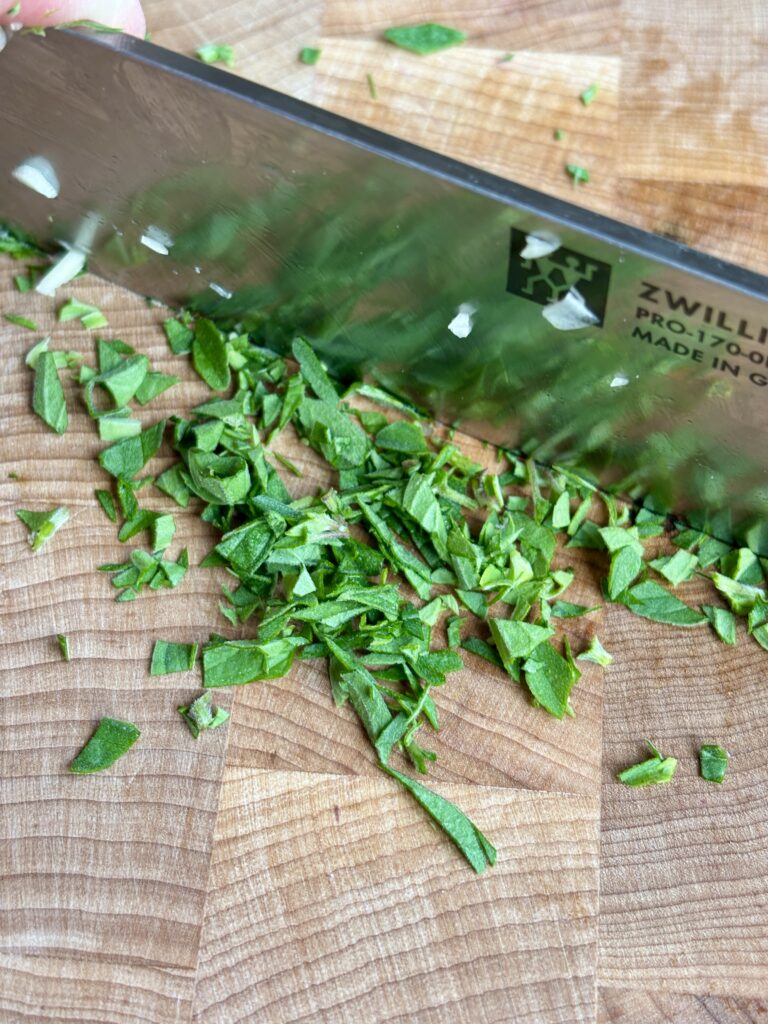
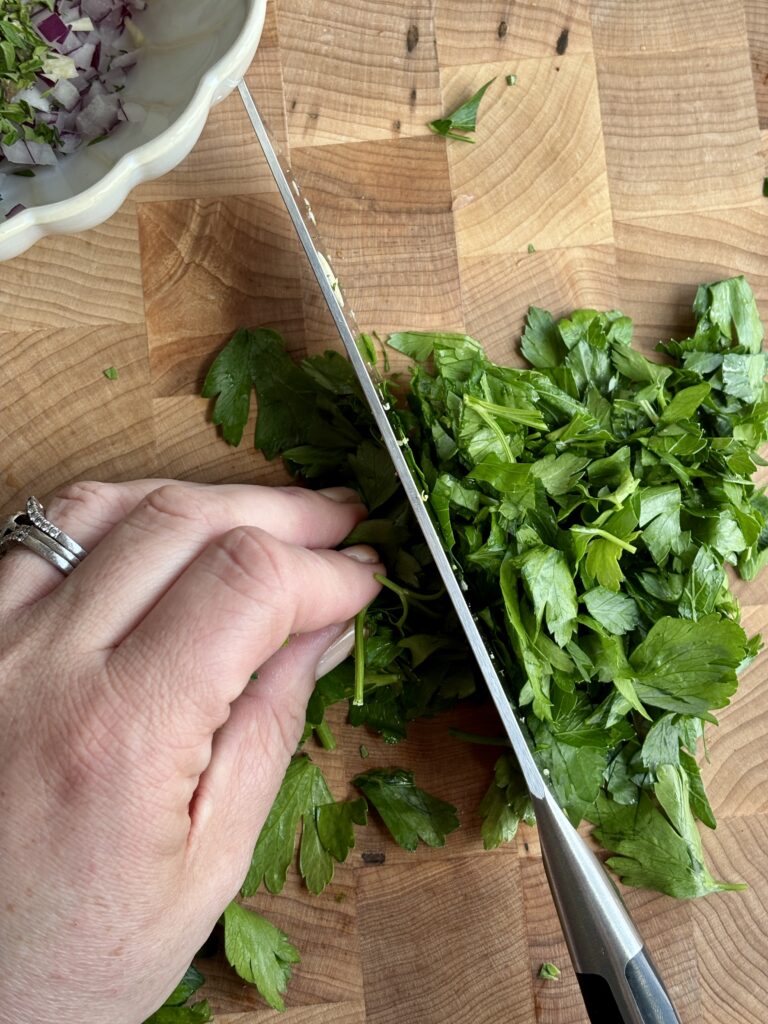
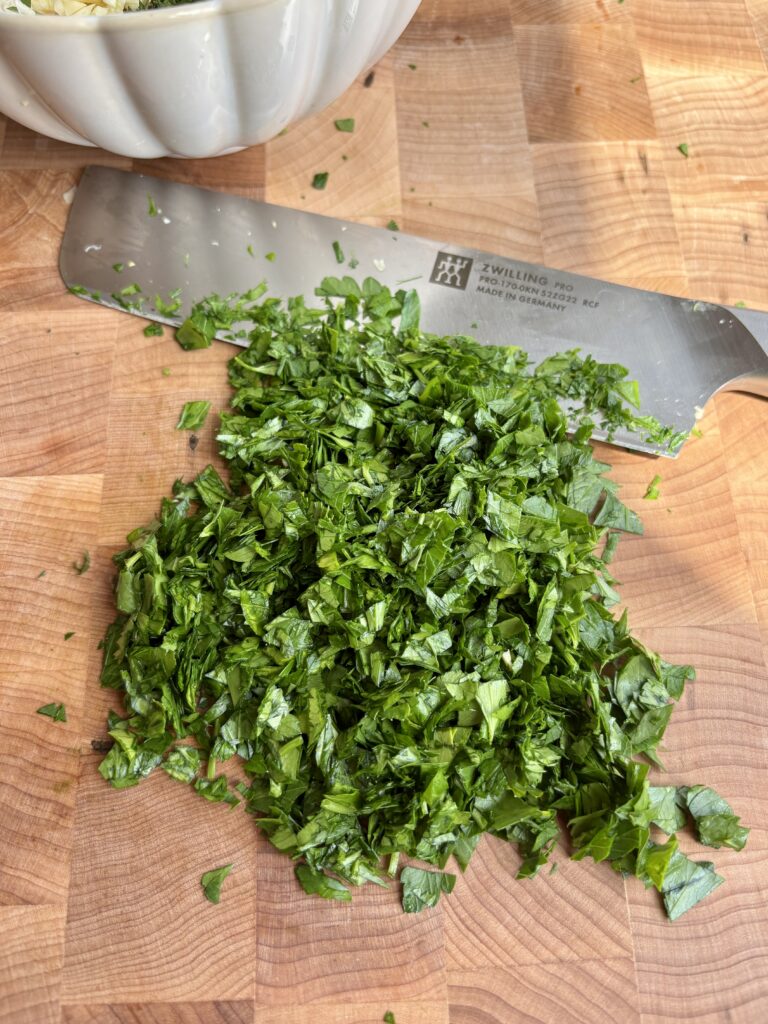
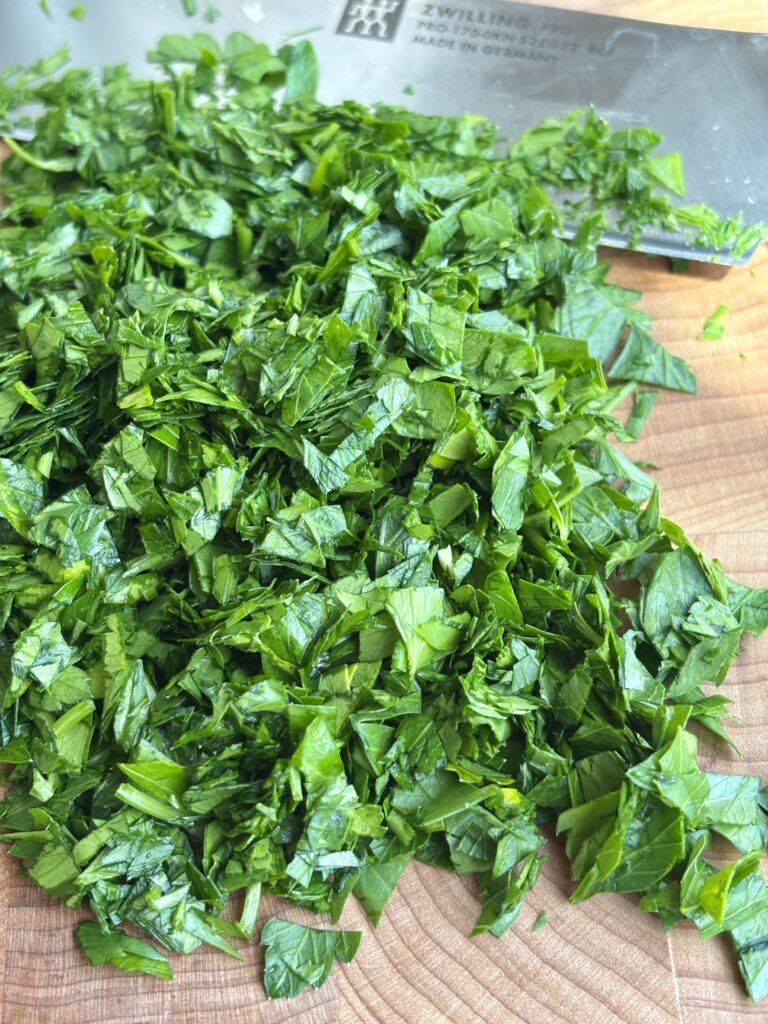
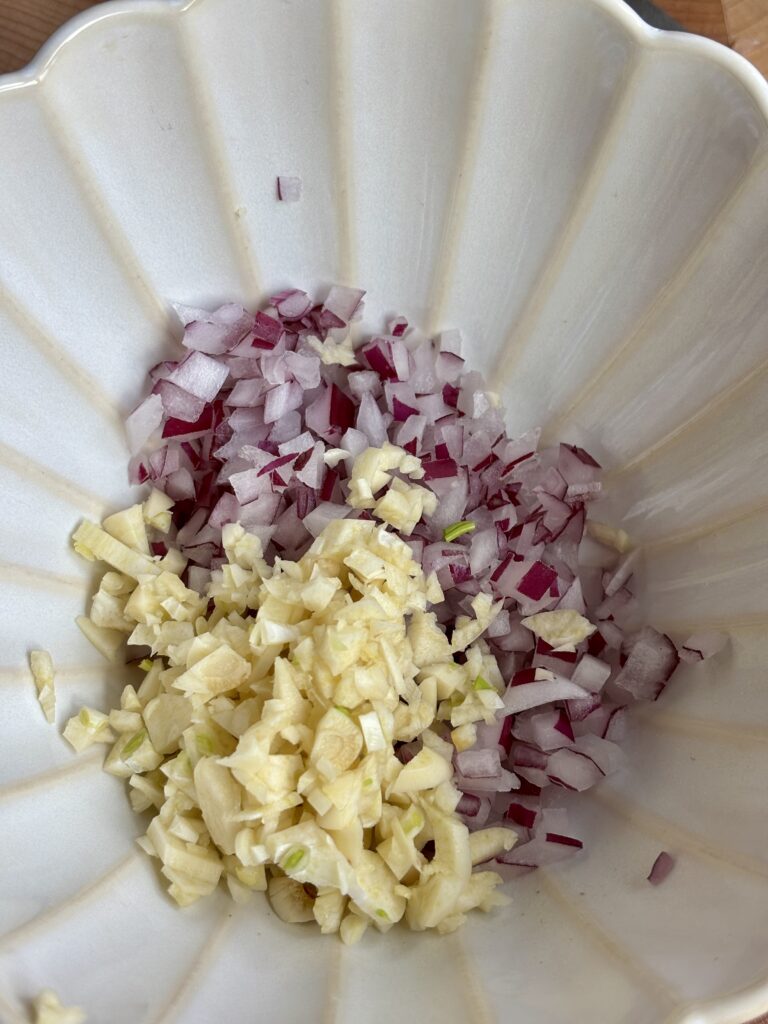
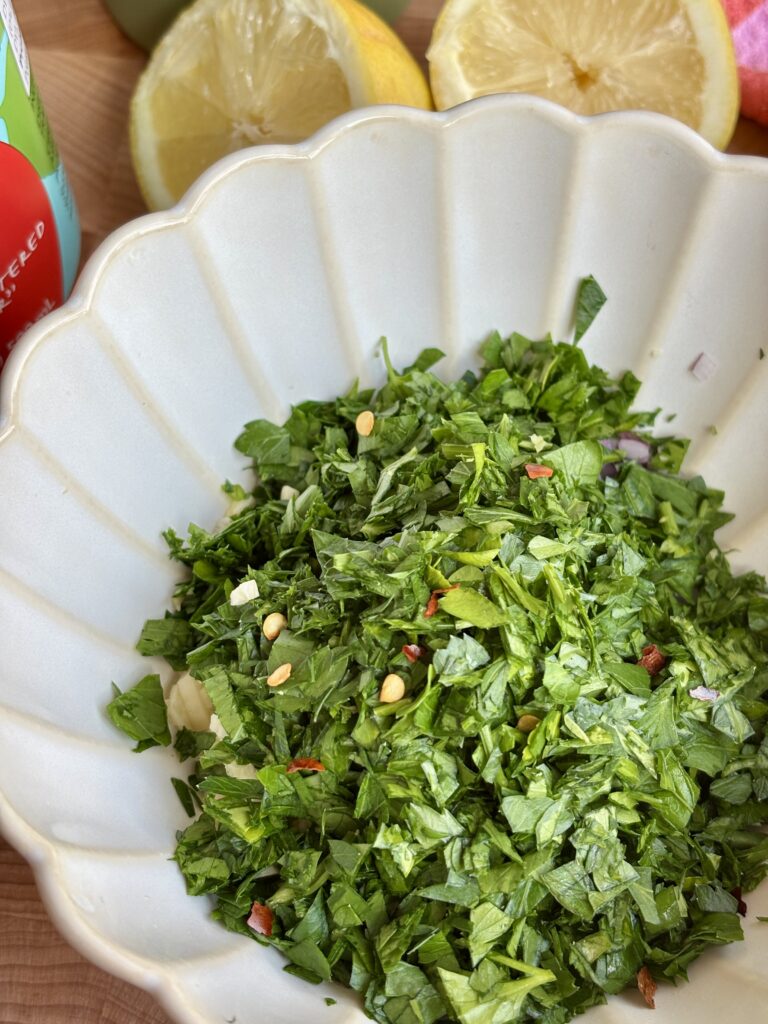
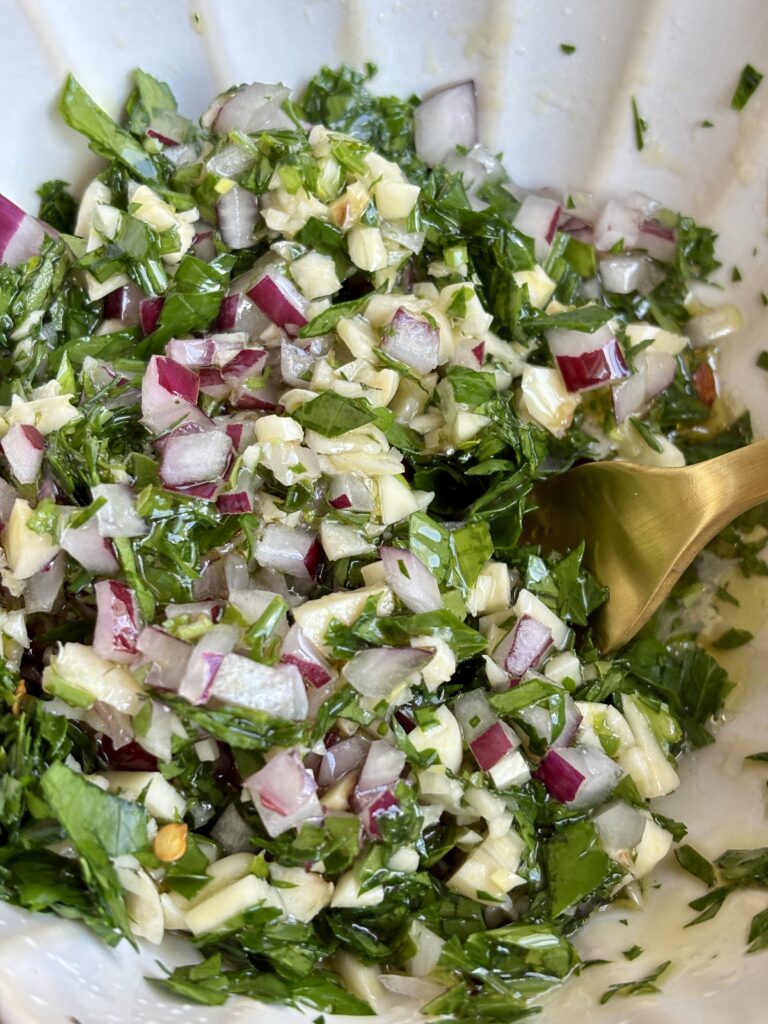
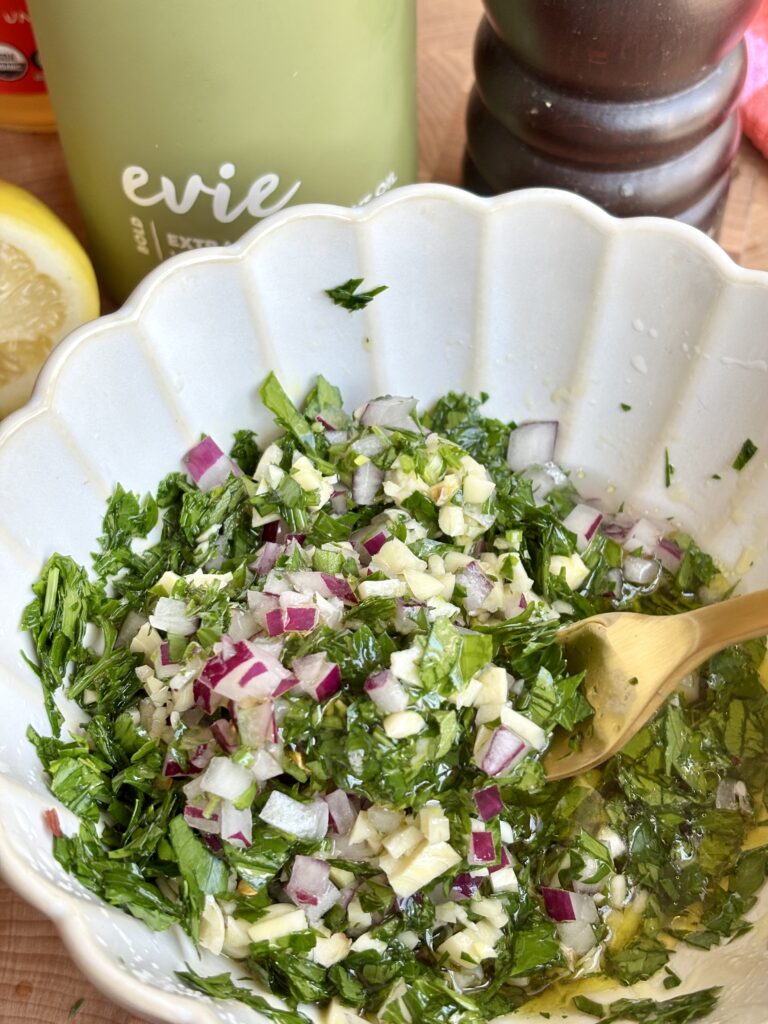
- Finely chop all the ingredients. The smaller pieces create a more balanced sauce and help distribute flavor evenly throughout every bite.
- Use fresh herbs. Fresh parsley is essential for authentic flavor and texture. I do not recommend using dried for a recipe like this.
- Taste it before serving. The acidity level can vary depending on your vinegar and lemon juice. Taste and adjust the salt, vinegar, or oil as needed.
- Use high-quality olive oil! Because olive oil is a major component of the sauce, choose one with good flavor.
- Avoid using an intensely peppery or very bitter extra virgin olive oil in chimichurri. Because the sauce is uncooked and simple, those flavors become much more noticeable. A smooth, fruity extra virgin olive oil tends to create the most balanced and versatile chimichurri.
- Chimichurri often tastes even better after several hours in the refrigerator, so plan ahead to let it meld together.
- Stir well before serving. The oil naturally separates as it sits.
- Spoon it over warm foods. The warmth of freshly cooked meat or vegetables helps release the flavors of the herbs and garlic.
Can I Substitute?
Yes! Like always though, any substitutions made to the recipe can result in a change in texture and/or flavor.
- Apple Cider Vinegar: Substitute red wine vinegar for apple cider vinegar. Or you can use white wine vinegar for a milder tang.
- Red Onion: Use shallots instead of red onion.
- Parsley: Replace some of the parsley with fresh cilantro. You can also add fresh basil for a slightly sweeter flavor profile.
Extra Virgin Olive Oil vs. Regular Olive Oil
Extra Virgin Olive Oil (EVOO) and regular olive oil are both made from olives, but they differ in flavor, processing, and quality.
Extra Virgin Olive Oil
- Minimally processed
- Made from the first pressing of olives
- Has a more robust, fruity, peppery flavor
- Contains more natural antioxidants and compounds that contribute to flavor
- Best used in dressings, sauces, dips, and finishing dishes
Regular Olive Oil
- More refined and processed
- Milder, more neutral flavor
- Higher smoke point
- Often used for cooking, roasting, and sautéing
- Doesn’t contribute as much flavor to uncooked recipes
Which One Should You Use for Chimichurri?
For the best chimichurri, extra virgin olive oil is the preferred choice.
Since chimichurri is a fresh, uncooked sauce, the flavor of the olive oil plays a major role in the final result. A good-quality extra virgin olive oil adds richness, depth, and a slightly peppery finish that complements the parsley, garlic, and vinegar beautifully.
That said, if you find some extra virgin olive oils too strong or bitter, you can use:
- A mild extra virgin olive oil
- Half extra virgin olive oil and half regular olive oil
Leftovers and Storage
- Refrigerator: Store chimichurri in an airtight container or mason jar in the refrigerator for up to 5 days. The olive oil solidifies slightly when chilled, so I would recommend allowing the sauce to sit at room temperature for about 15–20 minutes before serving and then stir well.
- Freezer: You can freeze the chimichurri in ice cube trays until solid, then transfer the cubes to a freezer-safe container or bag. Store for up to 3 months.
- Reheating: No reheating is necessary. Chimichurri is best served at room temperature.
But, I Still Have A Few Questions…
What is chimichurri sauce?
Chimichurri is a fresh Argentine herb sauce made with parsley, garlic, vinegar, olive oil, and seasonings. Traditionally, it’s served with grilled meats; however, it’s also delicious on vegetables, seafood, and sandwiches.
Can I use regular olive oil instead of extra virgin olive oil?
You can, however extra virgin olive oil is recommended for the best flavor. Since it is served raw, the quality and flavor of the olive oil has a noticeable impact on the finished sauce. Therefore for the most authentic and flavorful results, choose a mild, high-quality extra virgin olive oil.
Can I make chimichurri ahead of time?
Yes! In fact, chimichurri often tastes even better after sitting for several hours because the flavors have more time to meld together.
How long does homemade chimichurri last?
When stored in an airtight container in the refrigerator, homemade chimichurri will typically stay fresh for up to 5 days.
Can I freeze chimichurri?
Yes! For easy portioning, freeze chimichurri in ice cube trays and thaw individual portions as needed.
Can I use dried parsley?
No. While dried oregano works well in this recipe, fresh parsley is essential for achieving the proper flavor, texture, and vibrant color.
What meats pair best with chimichurri?
Steak is the classic pairing. Additionally, chimichurri is fantastic with chicken, pork, shrimp, fish, and even lamb. Try making it with my Skirt Steak, it’s unbelievable.
Is chimichurri spicy?
Traditionally, chimichurri has only a mild amount of heat. However, you can easily adjust the spice level by increasing or decreasing the red pepper flakes.
Can I use a food processor?
Yes, but do so carefully. Pulse the ingredients just a few times to maintain the traditional chunky texture. Otherwise, over-processing can turn the sauce into a paste.
Why does my chimichurri taste bitter?
Typically, bitterness comes from using a strong or low-quality olive oil. Additionally, over-processing the herbs can release bitter compounds and affect the overall flavor.
Can I use chimichurri as a marinade?
Absolutely! Not only is chimichurri delicious as a finishing sauce, but it also works wonderfully as a marinade for steak, chicken, pork, and seafood before cooking.
Other Recipes You’ll Love

Let’s engage!
Make sure to tag @thehomechefmomma on Instagram or Facebook, and leave a review or comment if you make these. I always get so excited to see your creations, variations of the recipe, and feedback! Just remember to be kind in your comments, there is still a person behind this screen! 🙂
Homemade Chimichurri Sauce
Ingredients
- 1 cup parsley finely chopped
- 2 tablespoons red onion minced
- 4 cloves garlic minced
- 1 tablespoon fresh oregano or ¼ teaspoon dried oregano
- ¼ teaspoon red pepper flakes
- 3 tablespoons apple cider vinegar
- 1 tablespoon fresh lemon juice optional
- ½ cup extra virgin olive oil
- Salt to taste
Instructions
- In a small bowl, combine parsley, red onion, garlic, oregano, and red pepper flakes.
- Add the apple cider vinegar and lemon juice, if using.
- Slowly drizzle in the olive oil while stirring.
- Season with salt to taste.
- Stir until fully combined.
- Let the chimichurri sit for at least 10–15 minutes before serving to allow the flavors to meld.
- Serve over grilled meats, seafood, vegetables, sandwiches, or grain bowls.
Notes
- Fresh parsley provides the best flavor and texture.
- Adjust the vinegar and salt to suit your taste.
- Chimichurri often tastes even better after a few hours in the refrigerator.
- Stir before serving if the oil separates.
chimichurri sauce | homemade chimichurri recipe | authentic chimichurri sauce | Argentine chimichurri | parsley chimichurri | steak sauce recipe | chimichurri for steak | garlic herb sauce | chimichurri marinade | easy chimichurri recipe | fresh herb sauce | chimichurri for chicken | chimichurri for vegetables | homemade steak sauce | grilled steak sauce

Nutritional Content Disclaimer
I choose not to include nutritional information with my recipes, as these values can be calculated from the ingredients provided. With my background as a pediatric nurse practitioner and my own family experience with disordered eating, I understand how focusing on numbers can affect our relationship with food. My philosophy is that all foods have a place—sweet, savory, nourishing, or indulgent. I aim to share recipes that support a healthy, joyful approach to eating. My hope is that this space also encourages a balanced, healthy relationship with food for you and your family too.