
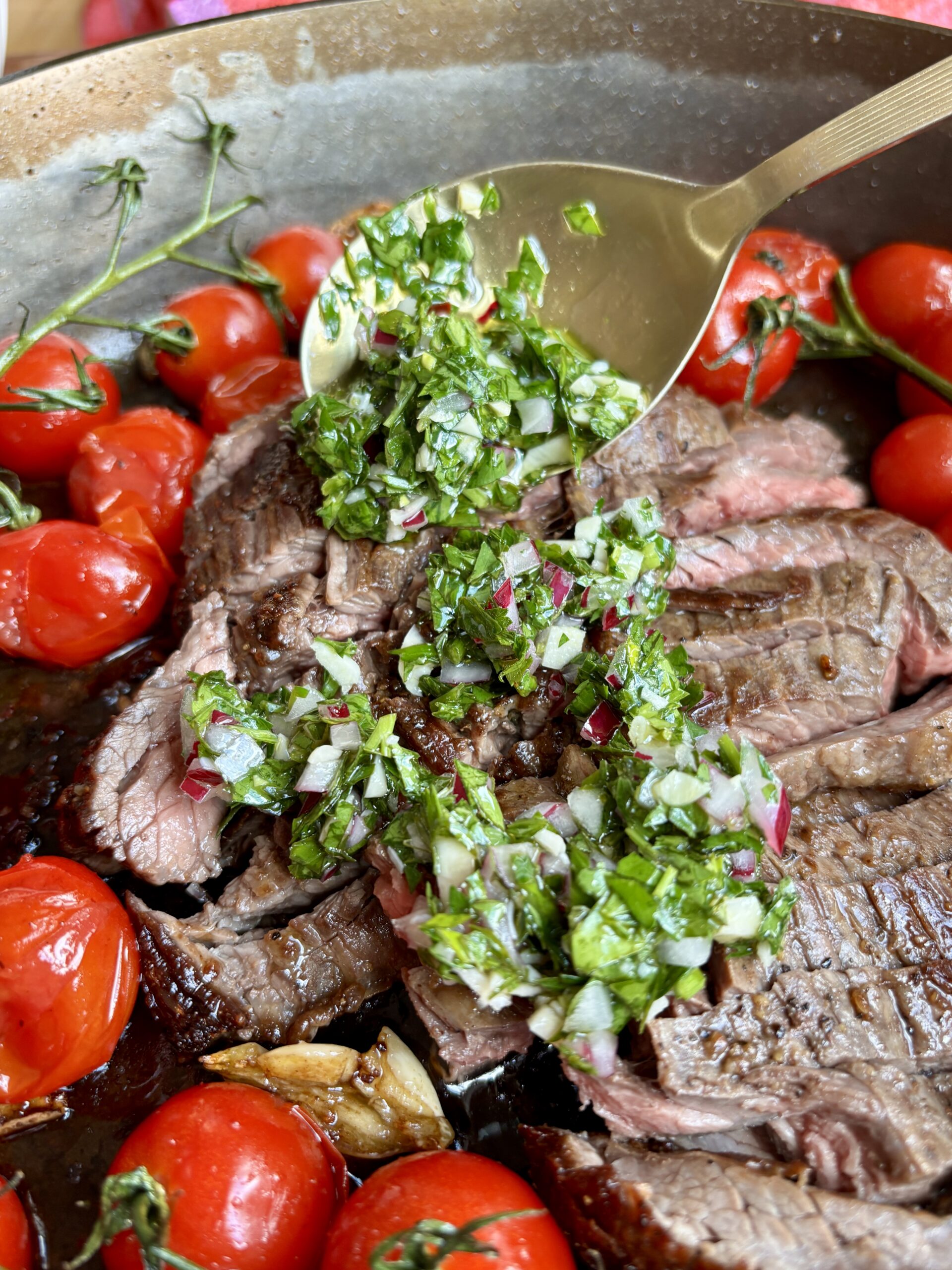
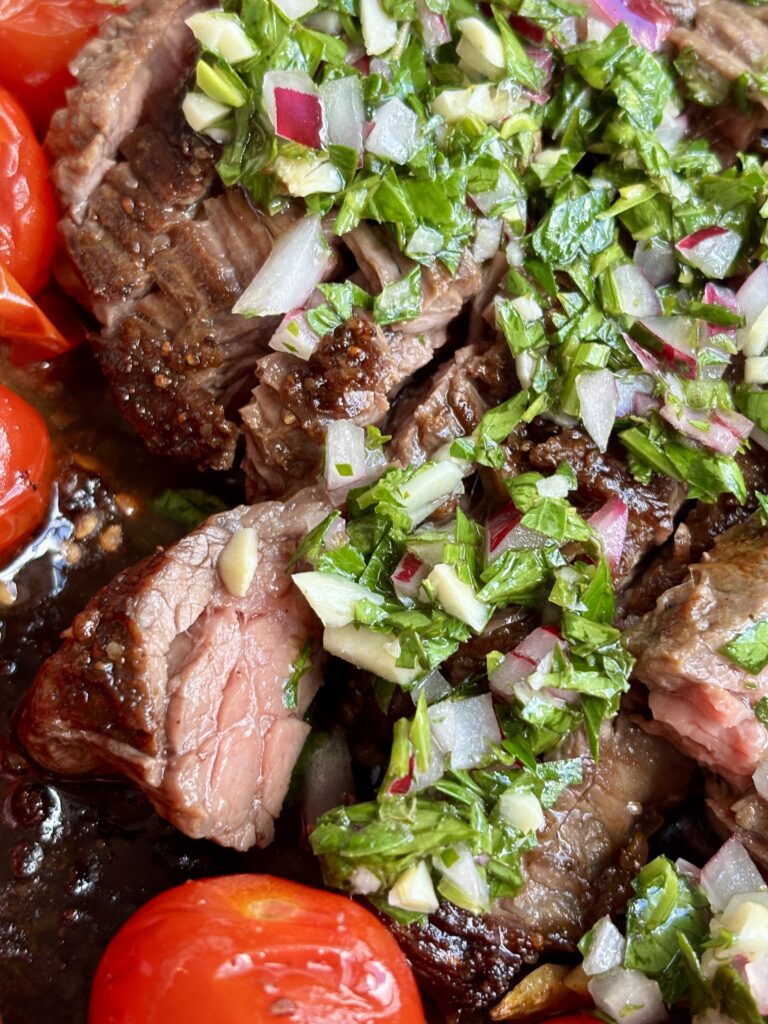
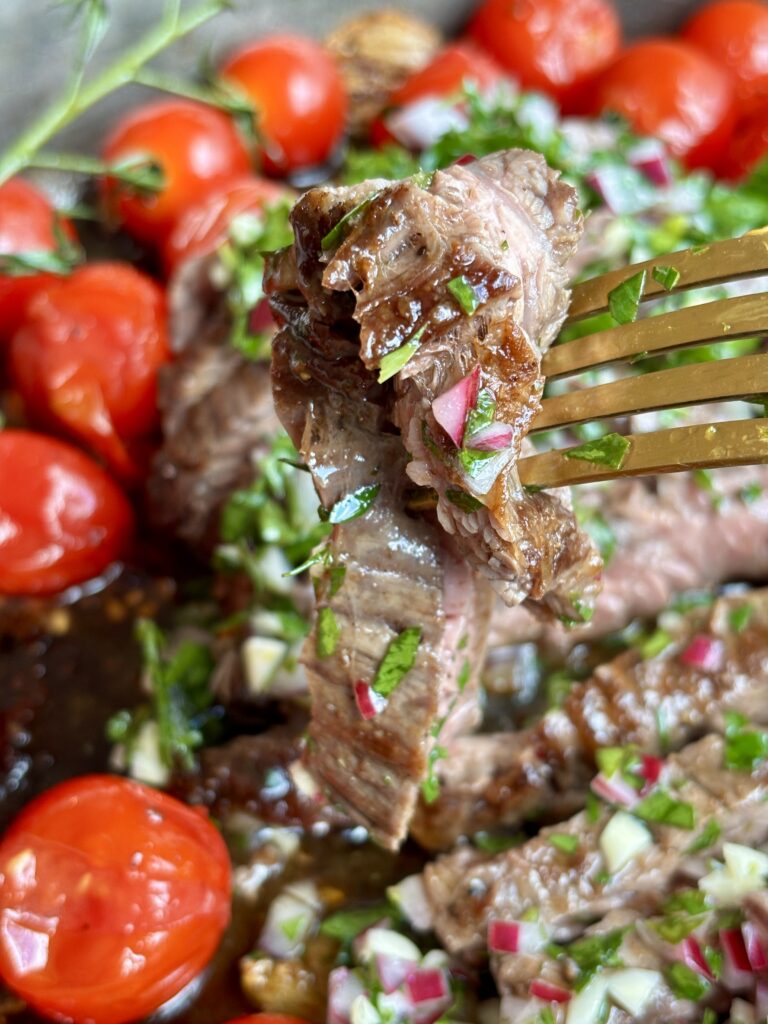
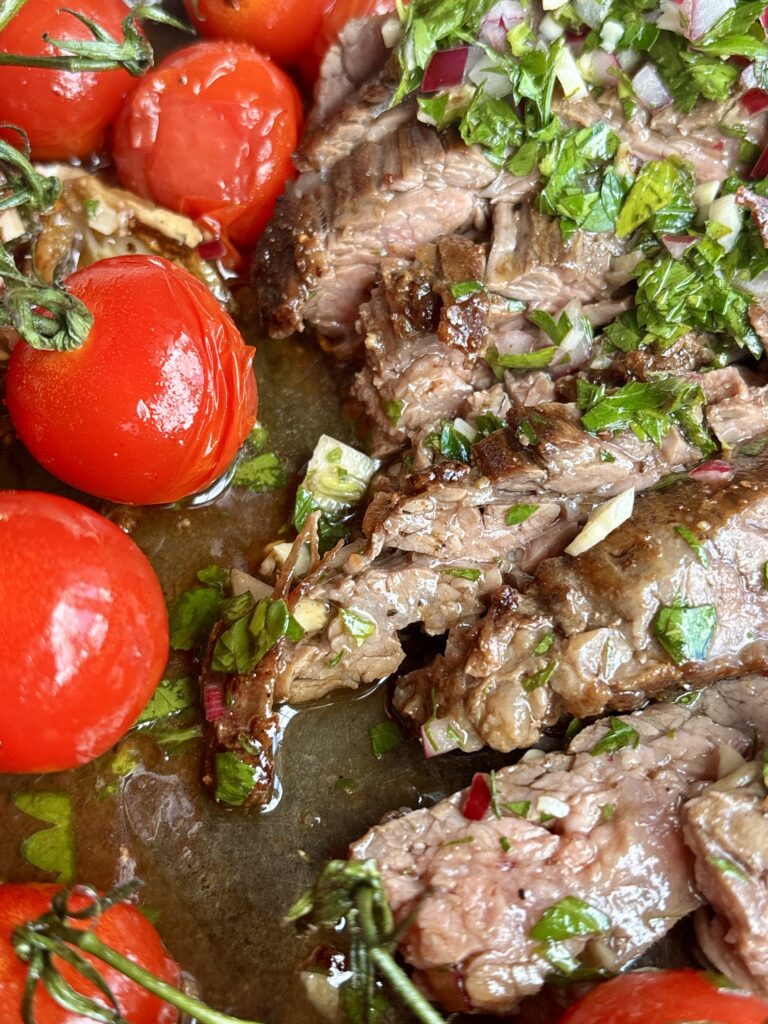
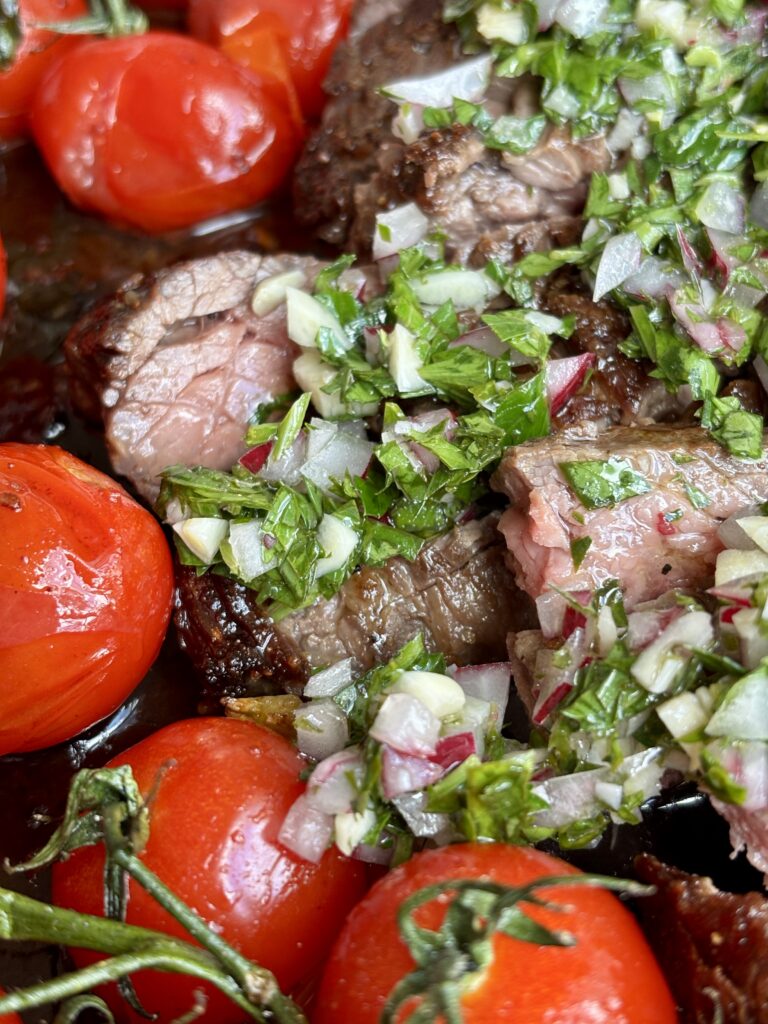
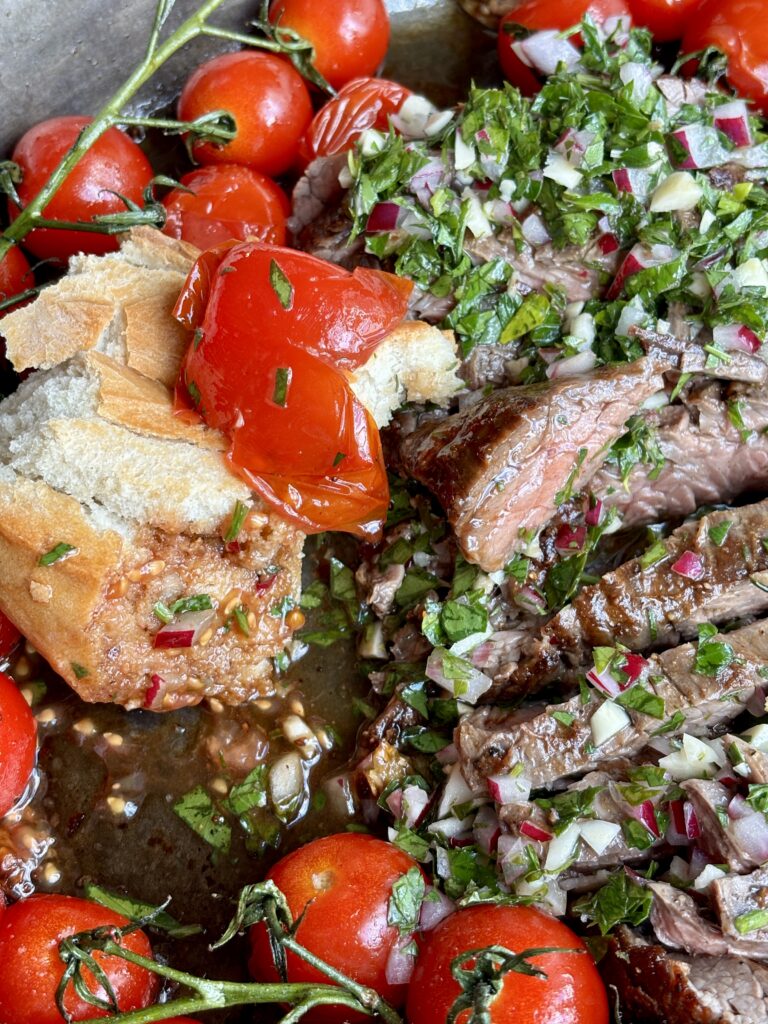
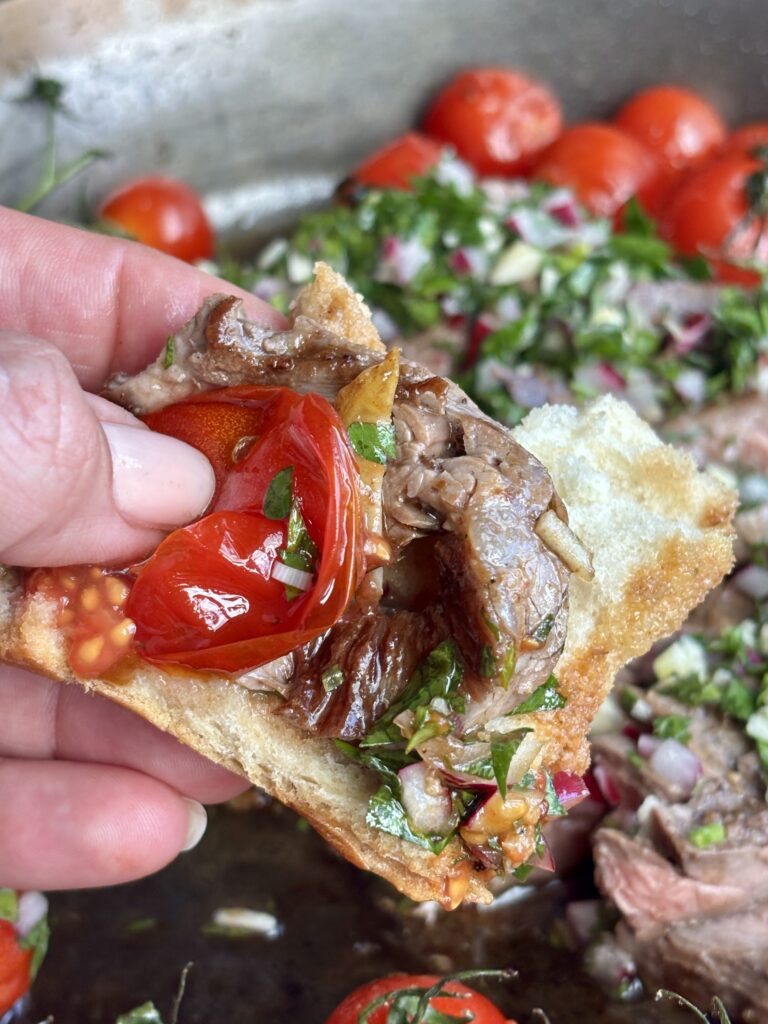
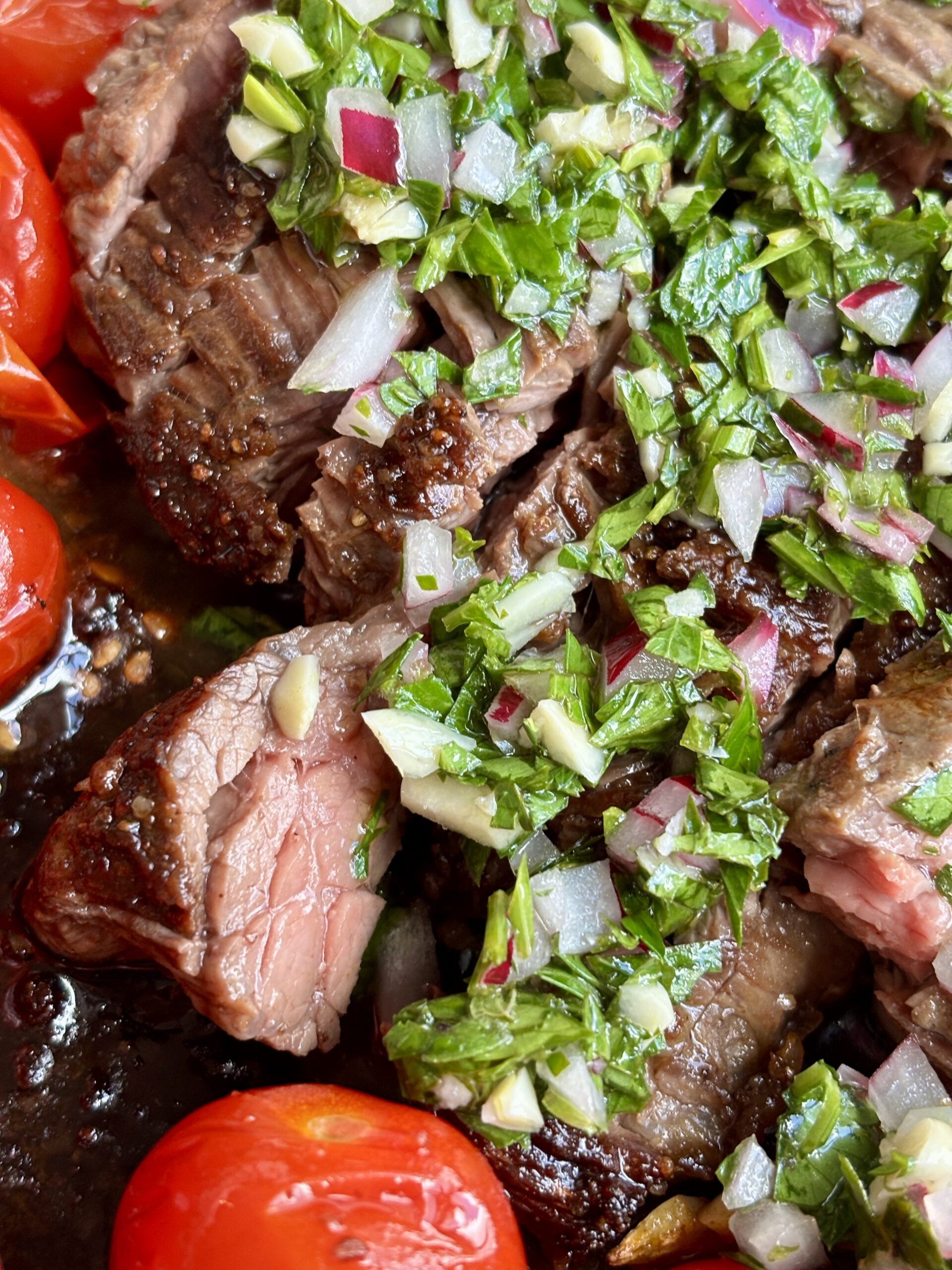
Juicy, perfectly seared steak topped with vibrant homemade chimichurri and served alongside sweet blistered cherry tomatoes. This is one of those meals that feels like you are dining out, yet is surprisingly simple to make at home. This Steak Chimichurri recipe combines tender skirt steak, a bright herb-packed chimichurri sauce, and garlicky blistered tomatoes for a fresh, flavorful dinner that’s ready in about 30 minutes.
The chimichurri adds a bold combination of parsley, garlic, vinegar, and olive oil that perfectly balances the rich, beefy flavor of the steak. Meanwhile, the blistered tomatoes add a touch of sweetness and acidity that ties everything together beautifully.
Whether you’re cooking dinner on a cast iron skillet or firing up the grill, this easy steak recipe delivers incredible flavor with minimal effort. It’s perfect for weeknight dinners, date nights, summer cookouts, or anytime you’re craving a fresh, yet hearty meal at home.
Why you’ll love this recipe!
What ingredients do I need?
- For the Steak
- Skirt Steak: A flavorful, well-marbled cut of beef that cooks quickly and develops an incredible crust when seared over high heat.
- Kosher Salt: Enhances the natural beef flavor and helps create a flavorful crust.
- Black Pepper: Adds warmth and subtle spice.
- Extra Virgin Olive Oil: Helps create a beautiful sear when cooking in a cast iron skillet.
- For the Chimichurri
- Fresh Parsley: The foundation of traditional chimichurri, providing freshness and vibrant color.
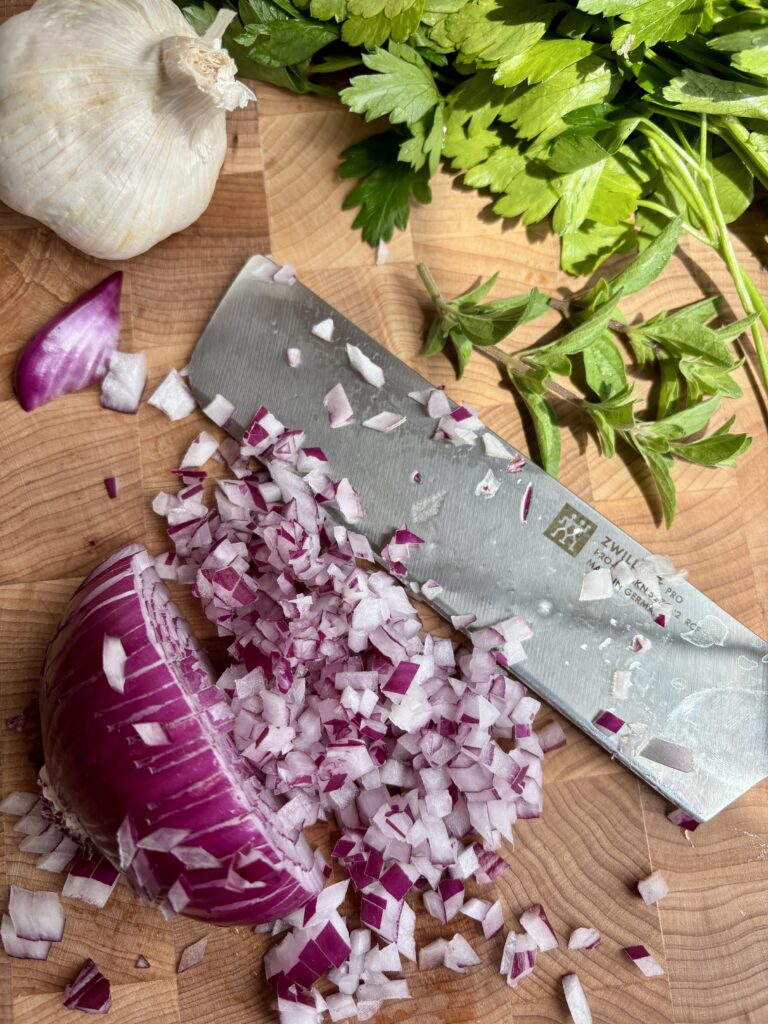
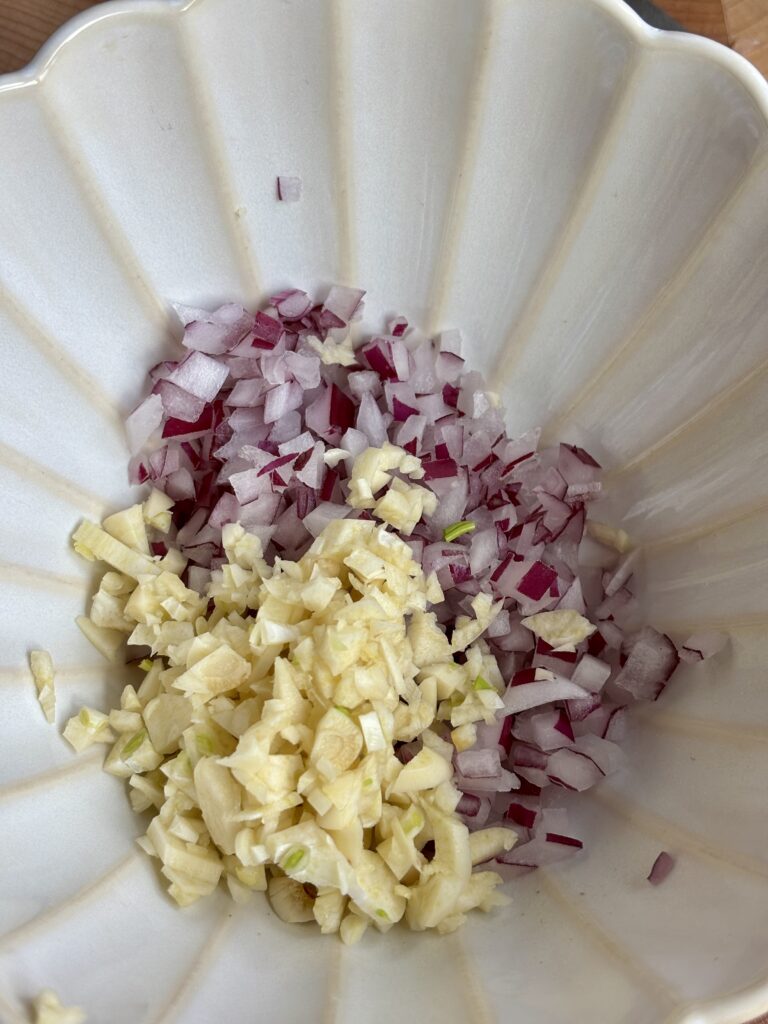
- Red Onion: Adds mild sharpness and depth.
- Garlic: Brings bold savory flavor.
- Fresh Oregano: Adds authentic herbal flavor.
- Red Pepper Flakes: Provide a subtle kick of heat.
- Apple Cider Vinegar: Adds brightness and balances the richness of the steak.
- Lemon Juice: Optional but provides extra freshness.
- Extra Virgin Olive Oil: Creates the silky texture of the sauce.
- For the Blistered Tomatoes
- Cherry Tomatoes: Become sweet, juicy, and slightly smoky when blistered.
- Garlic: Infuses the tomatoes with savory flavor.
- Extra Virgin Olive Oil: Helps the tomatoes blister and soften.
- Red Pepper Flakes: Optional for a little heat.
Recipe Variations
- Grilled Steak Chimichurri: Cook entirely on the grill for a smoky flavor.
- Chimichurri Chicken: Replace the steak with grilled chicken breasts or chicken thighs.
- Steak and Shrimp Chimichurri: Serve grilled shrimp alongside the steak for a surf-and-turf dinner.
- Vegetable Chimichurri Bowl: Serve chimichurri over grilled vegetables and rice.
- Spicy Chimichurri: Increase the red pepper flakes for extra heat.
Pro Tips
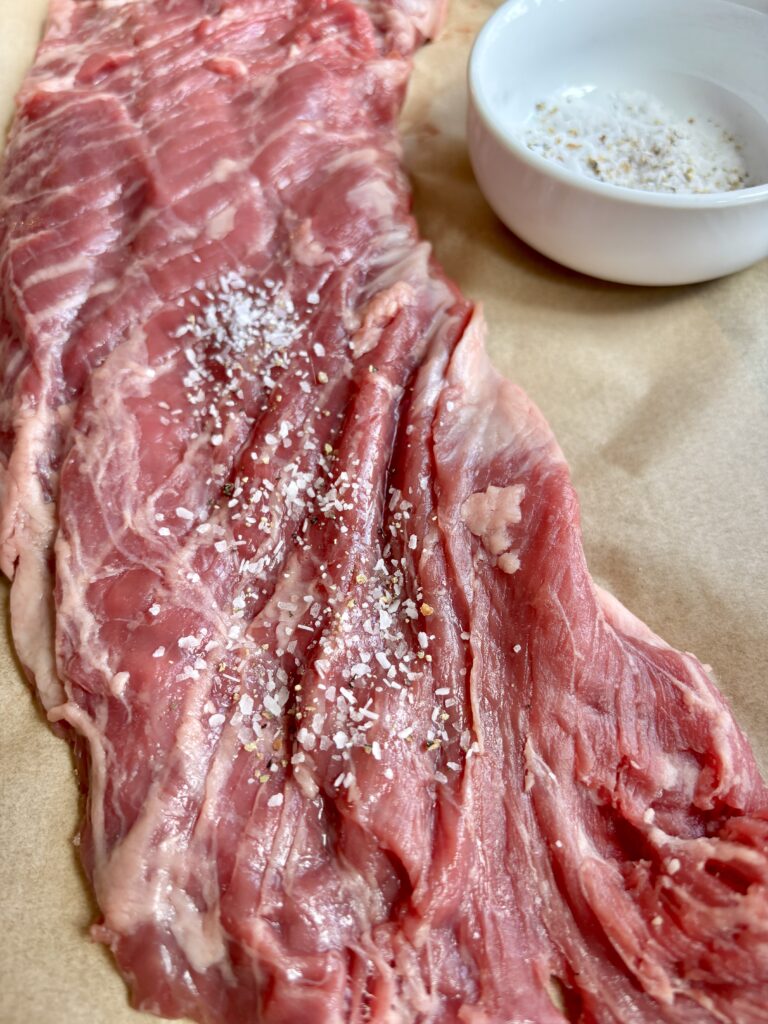
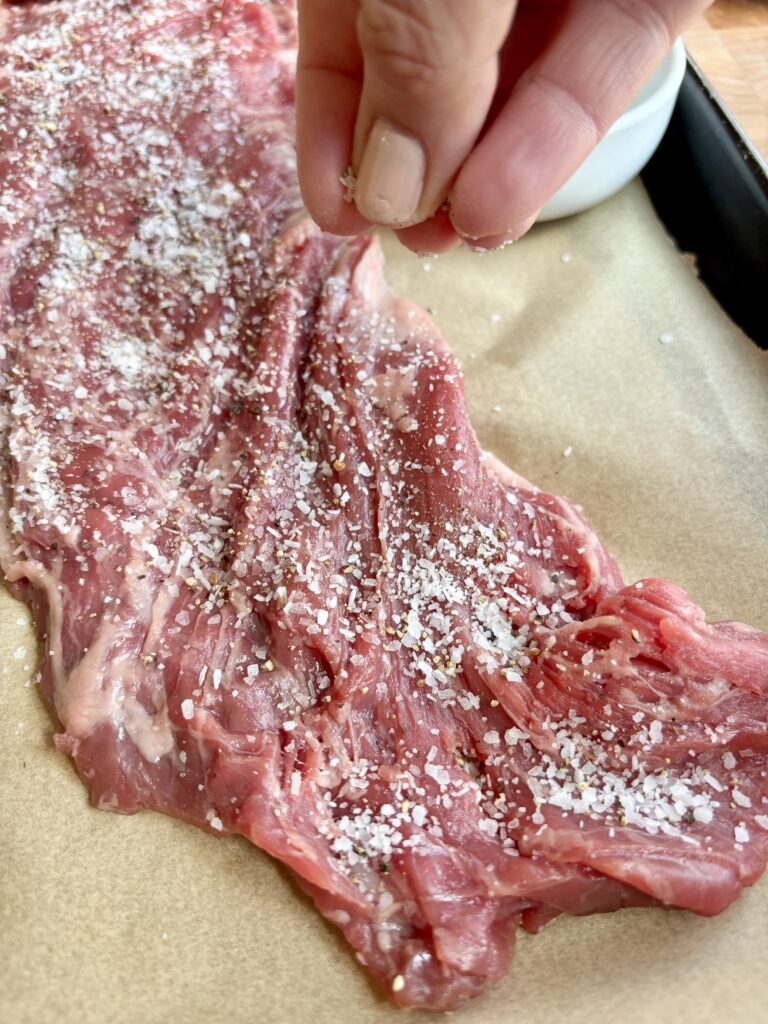
- Pat the steak completely dry before cooking. Moisture is the enemy of a great sear. Use paper towels to thoroughly pat the steak dry before seasoning. A dry surface helps create that beautiful golden brown crust while locking in the steak’s natural juices.
- Season the steak generously. Skirt steak is a thin cut with bold beefy flavor that benefits from a generous amount of kosher salt and black pepper.
- Bring the steak closer to room temperature before cooking. Remove the steak from the refrigerator about 20–30 minutes before cooking. This helps prevent the outside from overcooking before the center reaches the perfect temperature.
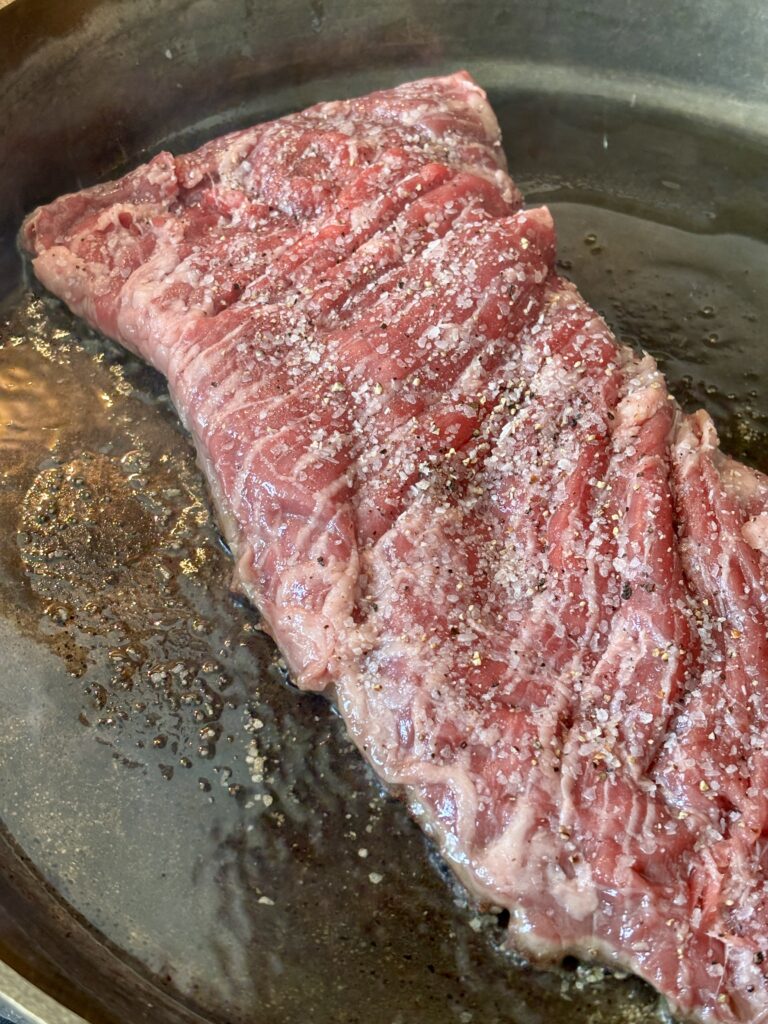
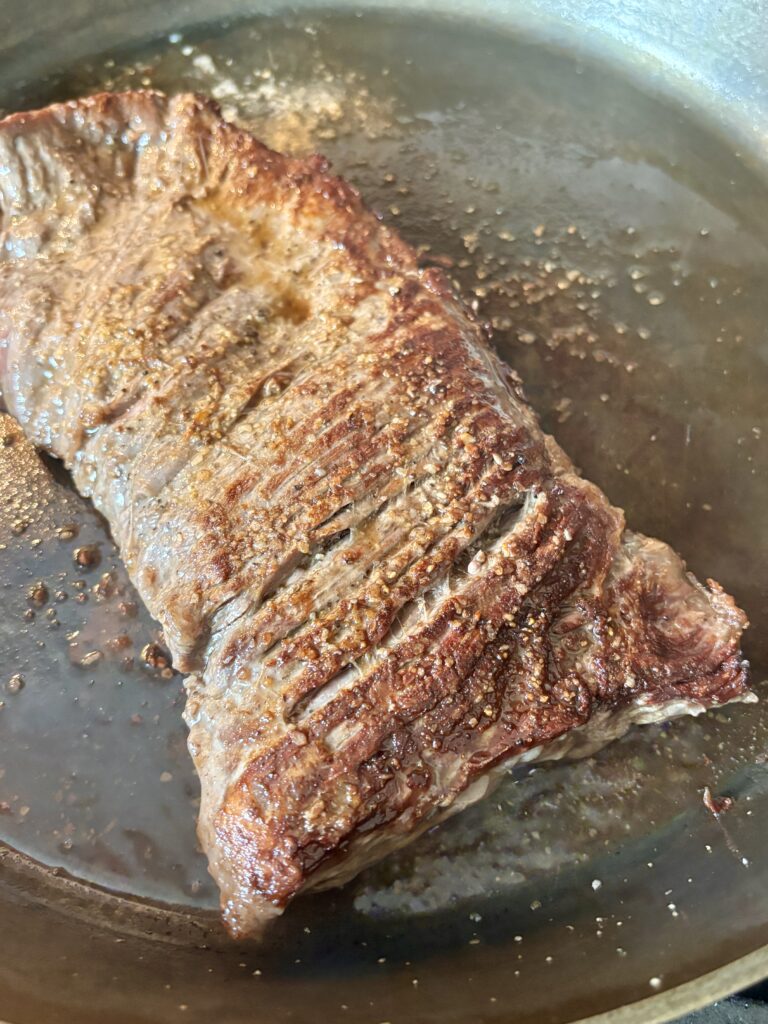
- Use extremely high heat. Skirt steak loves high heat and quick cooking. Whether you’re using a cast iron skillet or a grill, make sure it’s fully preheated before the steak touches the surface. High heat creates a flavorful crust while keeping the inside tender and juicy.
- Don’t move the steak around while cooking. Once the steak hits the skillet or grill, let it sit undisturbed. Constantly moving or flipping it prevents a proper crust from forming.
- Avoid overcooking the steak. Because skirt steak is thin, it cooks very quickly. Medium-rare to medium is ideal. Overcooking can cause the meat to become chewy and dry. Use an instant-read thermometer if needed:
- Rare: 120–125°F
- Medium-Rare: 130–135°F
- Medium: 140–145°F
- Let the steak rest before slicing. This step is easy to skip but it makes a big difference. Resting allows the juices to redistribute throughout the meat instead of running out onto the cutting board. Let the steak rest for at least 5–10 minutes before slicing.
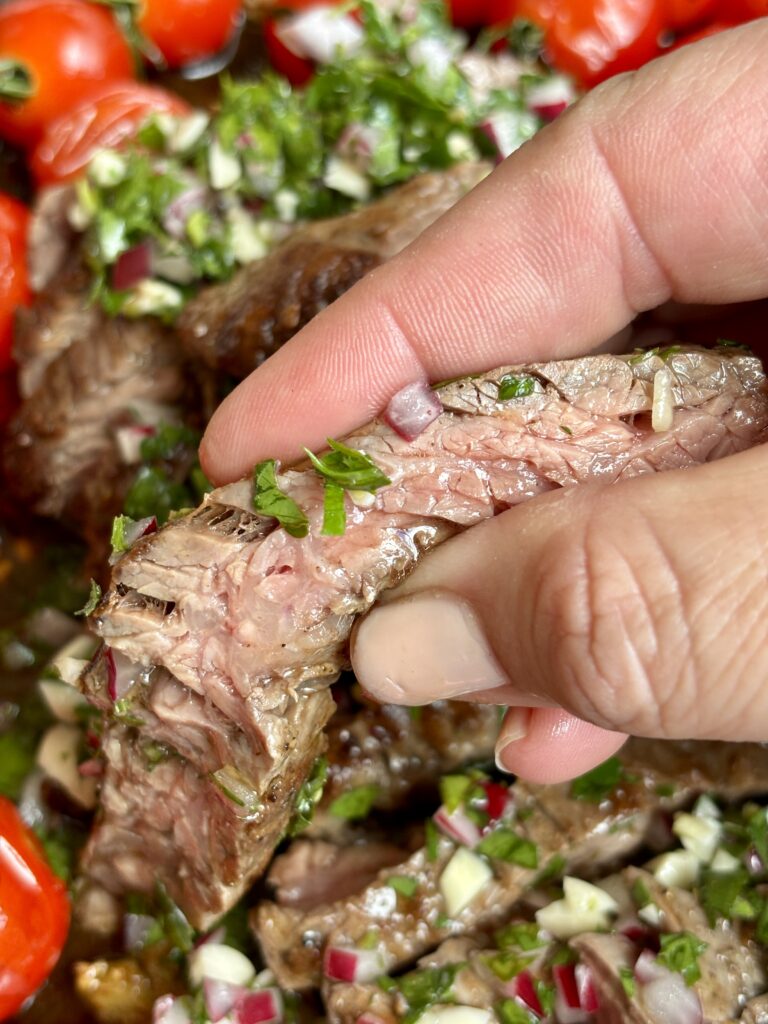
- Always slice skirt steak against the grain! This is the most important tip for skirt steak. Look closely and you’ll notice long muscle fibers running in one direction. Slice perpendicular to those fibers to shorten them. Cutting with the grain leaves those fibers long and chewy, while cutting against the grain creates tender, easy-to-bite pieces. Many people who think they don’t like skirt steak have simply never had it sliced correctly.
- Slice at a slight angle. For even more tenderness and a restaurant style presentation, angle your knife slightly while slicing. This creates wider, thinner slices that feel extra tender when eating.
- Let the chimichurri rest before serving. Fresh chimichurri tastes good immediately, but it tastes even better after sitting for 15–30 minutes. This gives the garlic, herbs, vinegar, and olive oil time to meld together and develop a deeper flavor.
- Use fresh herbs whenever possible. Fresh parsley and oregano create the bright, vibrant flavor that makes chimichurri so special. While dried oregano works in a pinch, fresh herbs will give you the best results.
- Be careful not to overcook the garlic when blistering tomatoes. Garlic can go from perfectly fragrant to bitter very quickly. Cook it just until aromatic before adding the tomatoes.
- Let the tomatoes blister naturally. Resist the urge to stir the tomatoes constantly. Allowing the tomatoes to sit against the hot pan helps them develop those delicious blistered spots and concentrated sweet flavor.
- For grilling, oil the grates instead of the steak. Lightly oiling clean grill grates helps prevent sticking and promotes better grill marks without causing flare-ups.
- For the best flavor though, use a cast iron skillet. If cooking indoors, cast iron retains heat exceptionally well and creates a steakhouse quality crust that’s difficult to achieve with other pans.
Can I Substitute?
Yes! Like always though, any substitutions made to the recipe can result in a change in texture and/or flavor.
- Skirt Steak: Replace with flank steak, flat iron steak, ribeye, hanger steak, or budget friendly sirloin.
- Apple Cider Vinegar: Substitute red wine vinegar.
- Red onion: Use shallots instead.
- Fresh Parsley: Substitute cilantro for some of the parsley.
- Cherry Tomatoes: Grape tomatoes can replace cherry tomatoes.
Dietary Substitutions
- Red Meat: Substitute with chicken breast.
How to Properly Slice Skirt Steak
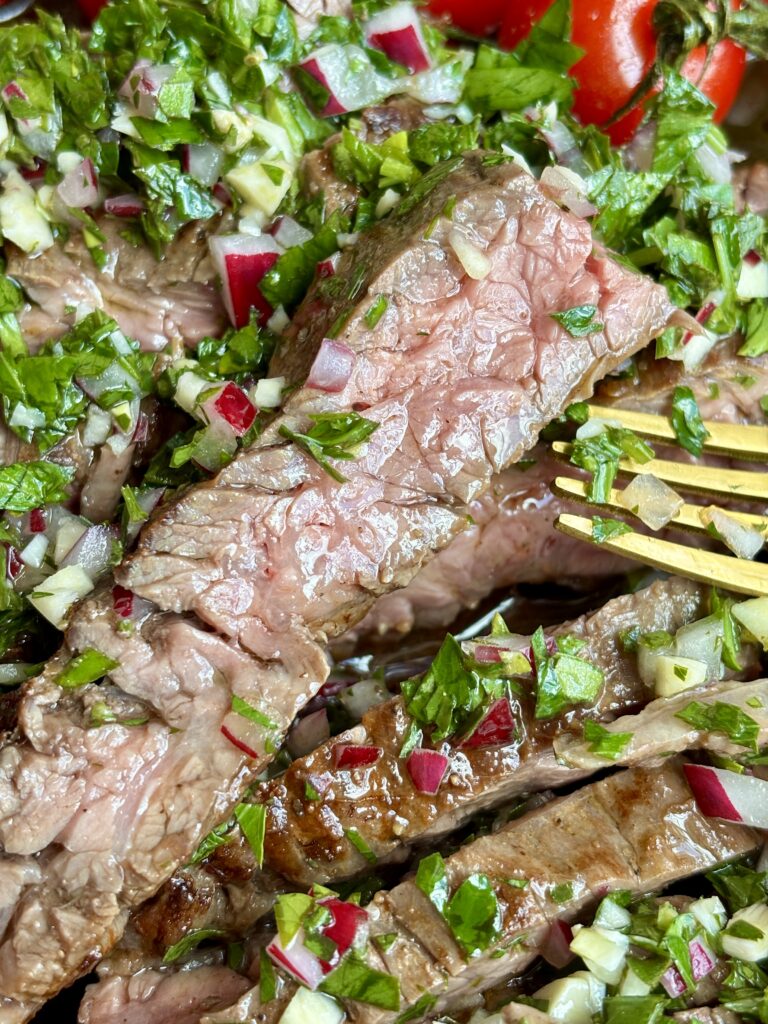
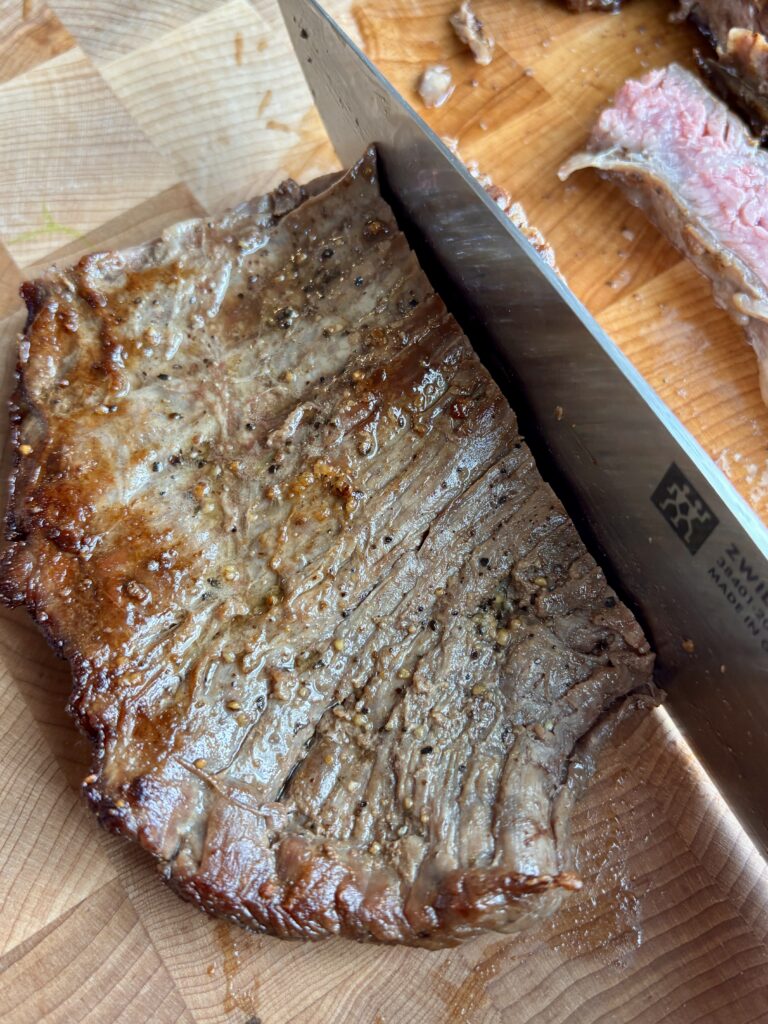
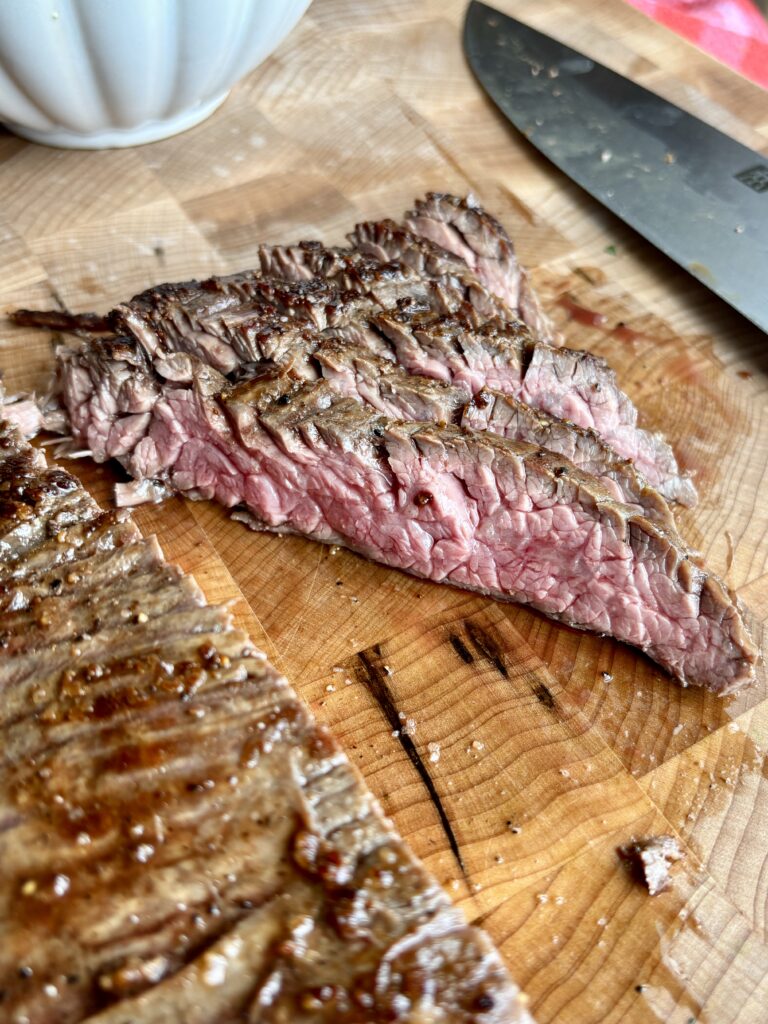
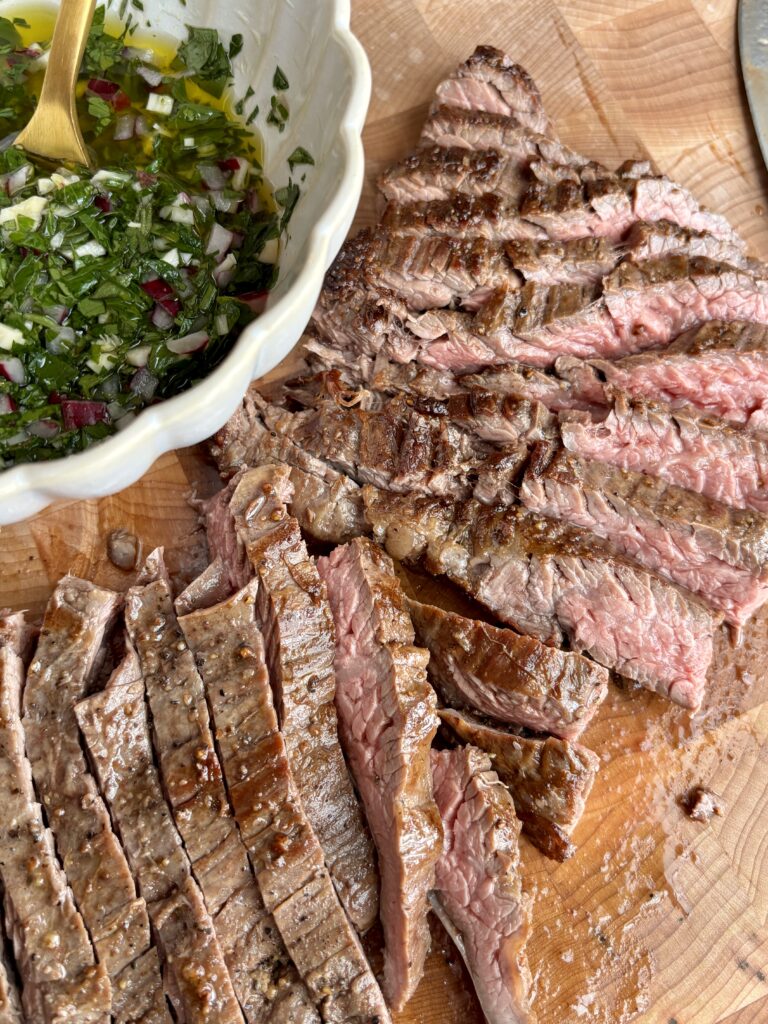
One of the biggest reasons people think skirt steak is tough is because it’s sliced incorrectly. Skirt steak contains long, visible muscle fibers called the grain. If you slice with the grain, those fibers remain long and chewy. To create tender, melt-in-your-mouth bites, always slice against the grain.
After resting the steak:
- Locate the direction of the muscle fibers.
- Turn the steak so the fibers run horizontally in front of you.
- Slice perpendicular to those fibers.
- Cut thin slices at a slight angle.
This shortens the muscle fibers and dramatically improves tenderness. Properly sliced skirt steak is incredibly flavorful, juicy, and tender. Honestly, this is my favorite cut of beef.
Leftovers and Storage
- Store leftover steak, chimichurri, and tomatoes separately in airtight containers in the refrigerator.
- Refrigerator
- Steak: Up to 4 days
- Chimichurri: Up to 5 days
- Tomatoes: Up to 3 days
- Refrigerator
- Reheating: Gently warm steak in a skillet over low heat until heated through. Avoid microwaving if possible, as it can overcook the meat.
- Freezing: The cooked steak can be frozen for up to 3 months. Chimichurri is best enjoyed fresh and is not recommended for freezing.
But, I Still Have A Few Questions…
What is the best steak for chimichurri?
Skirt steak is one of the best options because its rich flavor pairs beautifully with the bright chimichurri sauce.
Can I make chimichurri ahead of time?
Yes. Chimichurri can be made up to 3 days in advance and stored in the refrigerator.
Why is my skirt steak tough?
Skirt steak is usually tough when it is overcooked or sliced incorrectly. You have to make sure you slice against the grain, not with it.
Can I grill the steak instead of cooking it in a skillet?
Absolutely. Grilling adds incredible smoky flavor and works beautifully with chimichurri.
What temperature should skirt steak be cooked to?
For medium-rare, cook to an internal temperature of 130–135°F before resting.
Can I use dried herbs in the chimichurri?
Fresh herbs provide the best flavor, but dried oregano can be substituted if needed. I would just substitute with around 1 tsp of dried oregano.
Can I make this recipe with chicken?
Yes. Grilled chicken breasts or thighs are delicious with chimichurri and blistered tomatoes.
What sides pair well with steak chimichurri?
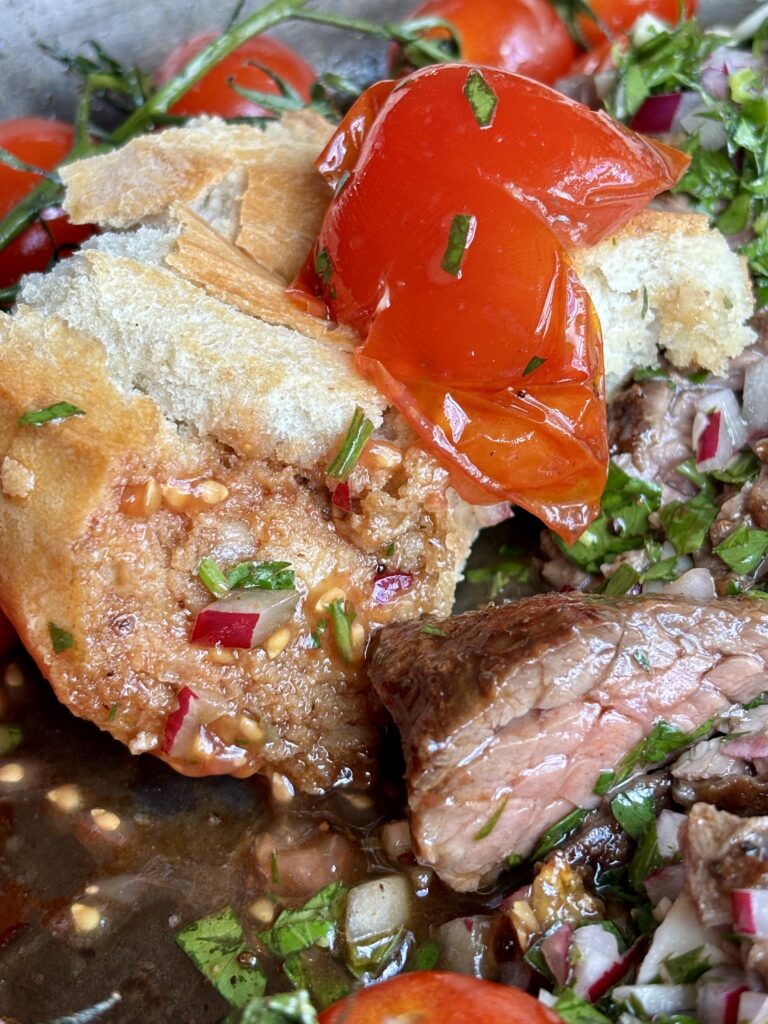
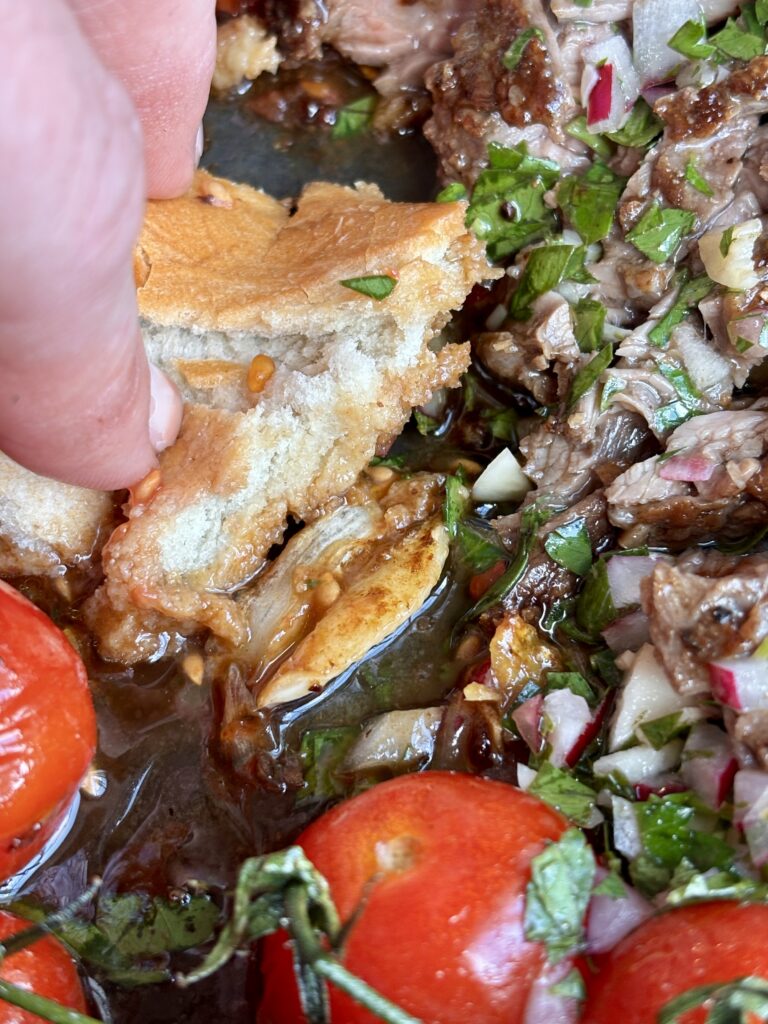
Roasted potatoes, rice, grilled vegetables, crusty bread, salads, and corn on the cob are all excellent choices.
Other Recipes You’ll Love

Let’s engage!
Make sure to tag @thehomechefmomma on Instagram or Facebook, and leave a review or comment if you make these. I always get so excited to see your creations, variations of the recipe, and feedback! Just remember to be kind in your comments, there is still a person behind this screen! 🙂
Skirt Steak Chimichurri with Blistered Tomatoes
Ingredients
Steak
- 1 skirt steak around 1.5 lbs
- Kosher salt to taste
- Black pepper to taste
- 1 tablespoon extra virgin olive oil for skillet cooking
Chimichurri Sauce
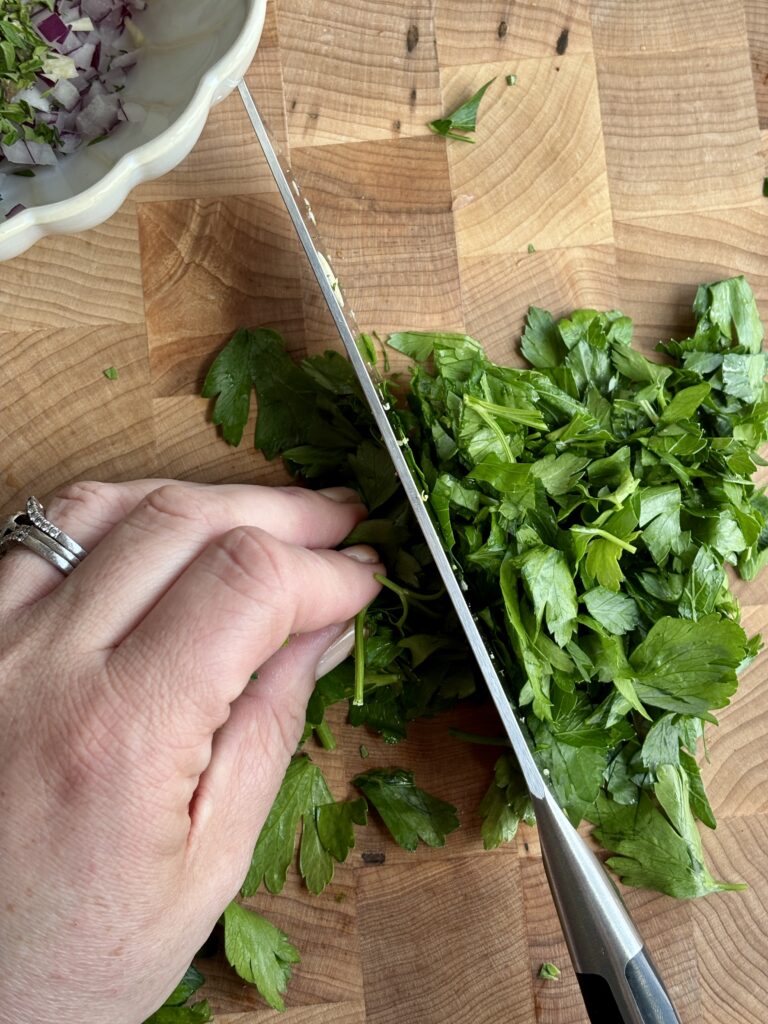
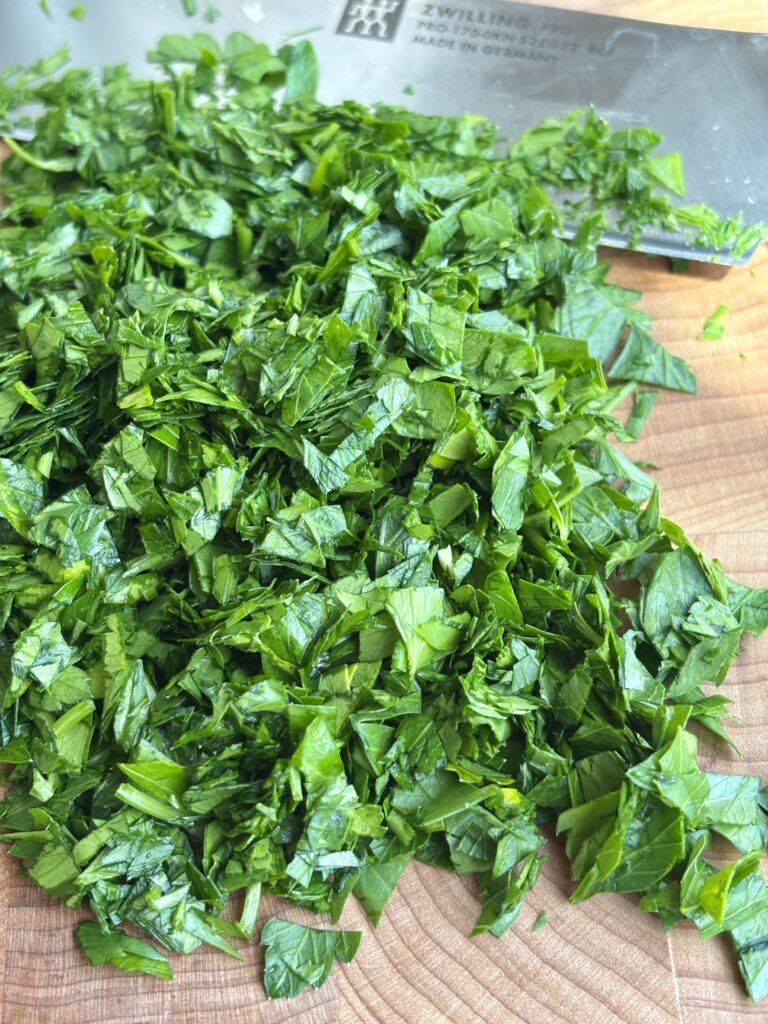
- 1 cup parsley finely chopped
- 2 tablespoons red onion minced
- 4 cloves garlic minced
- 1 tablespoon fresh oregano or ¼ teaspoon dried oregano
- ¼ teaspoon red pepper flakes
- 3 tablespoons apple cider vinegar
- 1 tablespoon fresh lemon juice optional
- ½ cup extra virgin olive oil
- Salt to taste
Blistered Tomatoes
- 1 cup cherry tomatoes
- 1 –2 tablespoons olive oil
- 3 cloves garlic smashed
- Salt and black pepper to taste
- Pinch red pepper flakes optional
Instructions
Make the Chimichurri
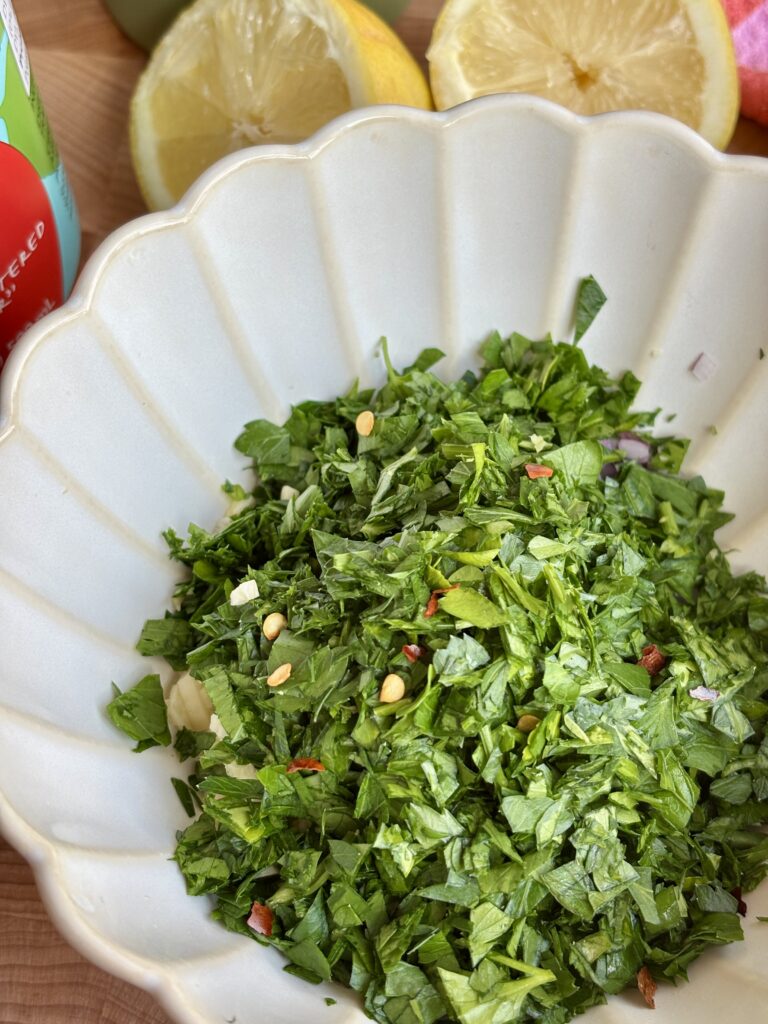
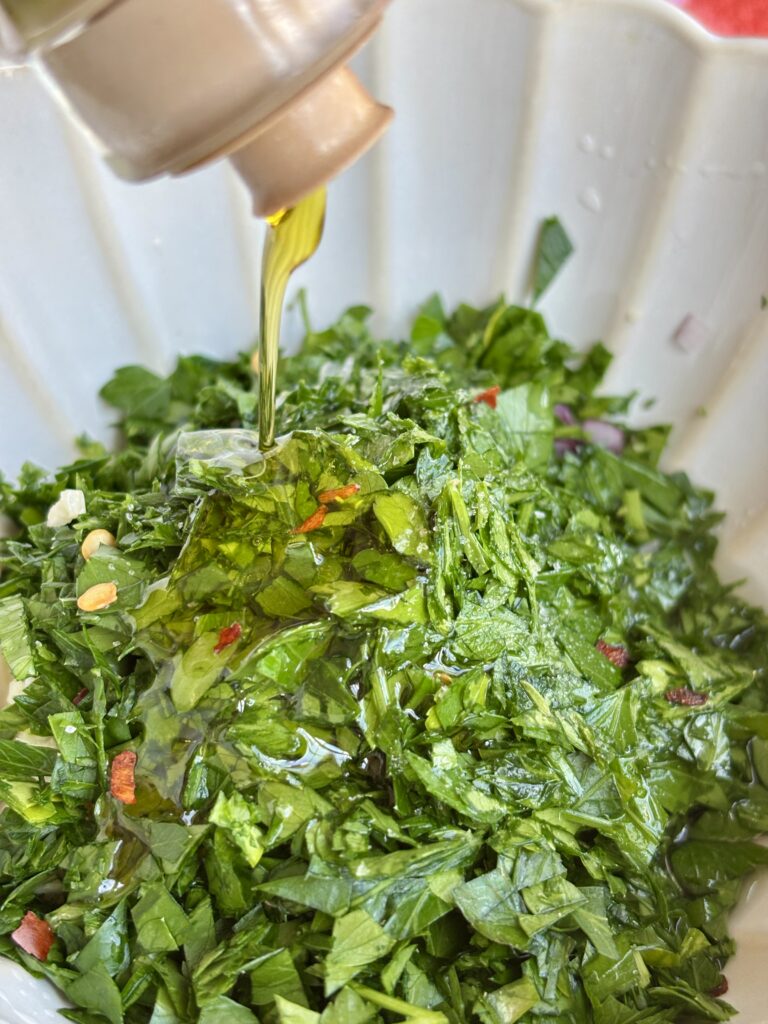
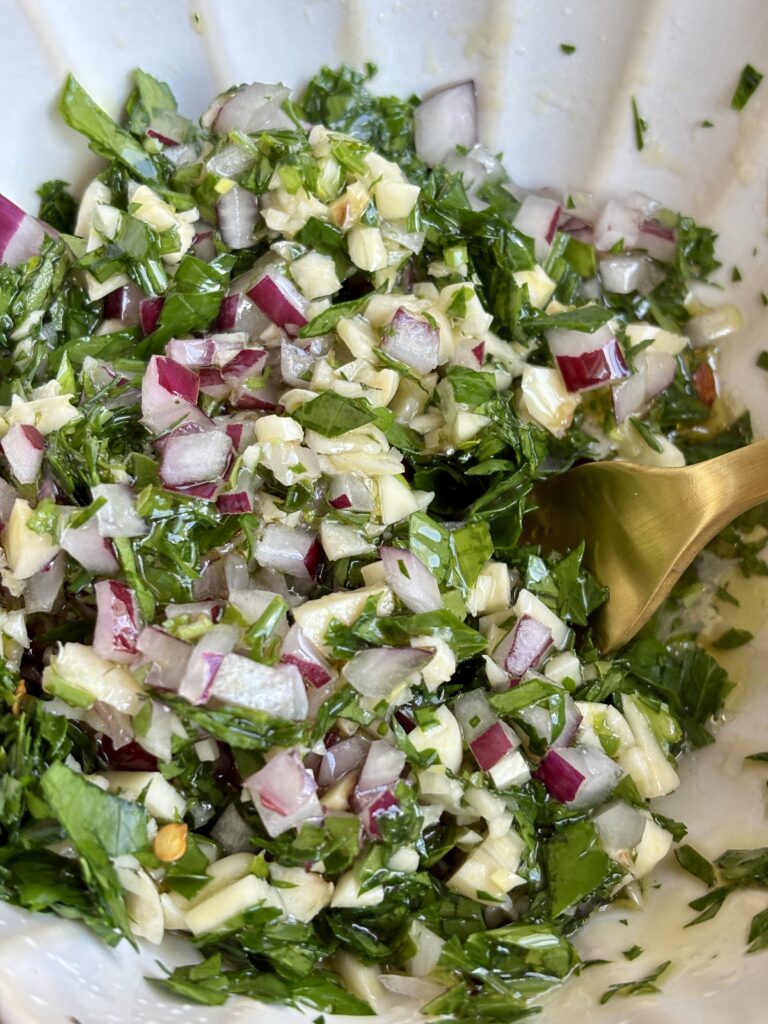
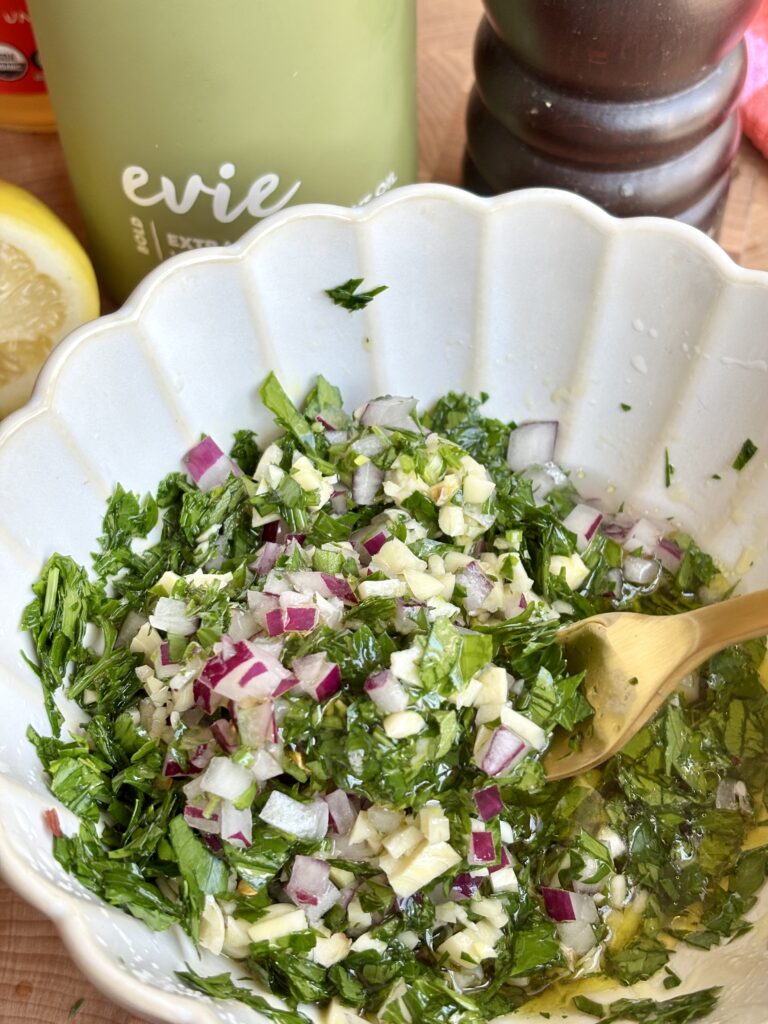
- In a medium bowl, combine parsley, red onion, garlic, oregano, and red pepper flakes.
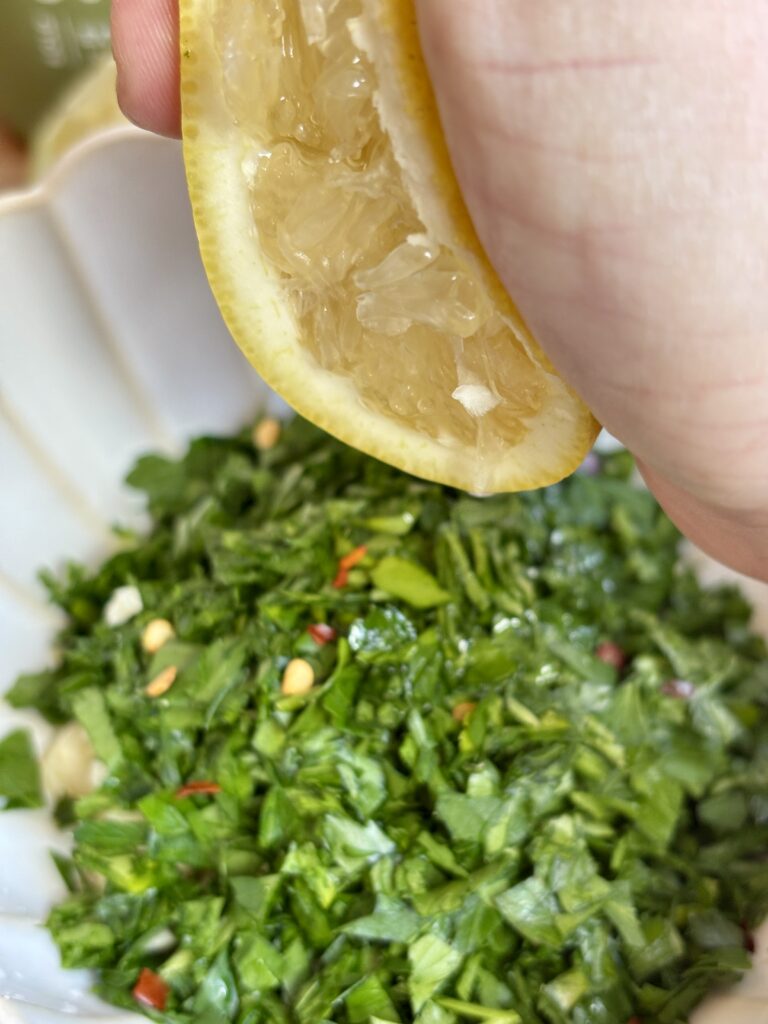
- Stir in vinegar and lemon juice.
- Slowly drizzle in olive oil while stirring.
- Season with salt to taste.
- Let sit for at least 10–15 minutes before serving.
Prepare the Steak
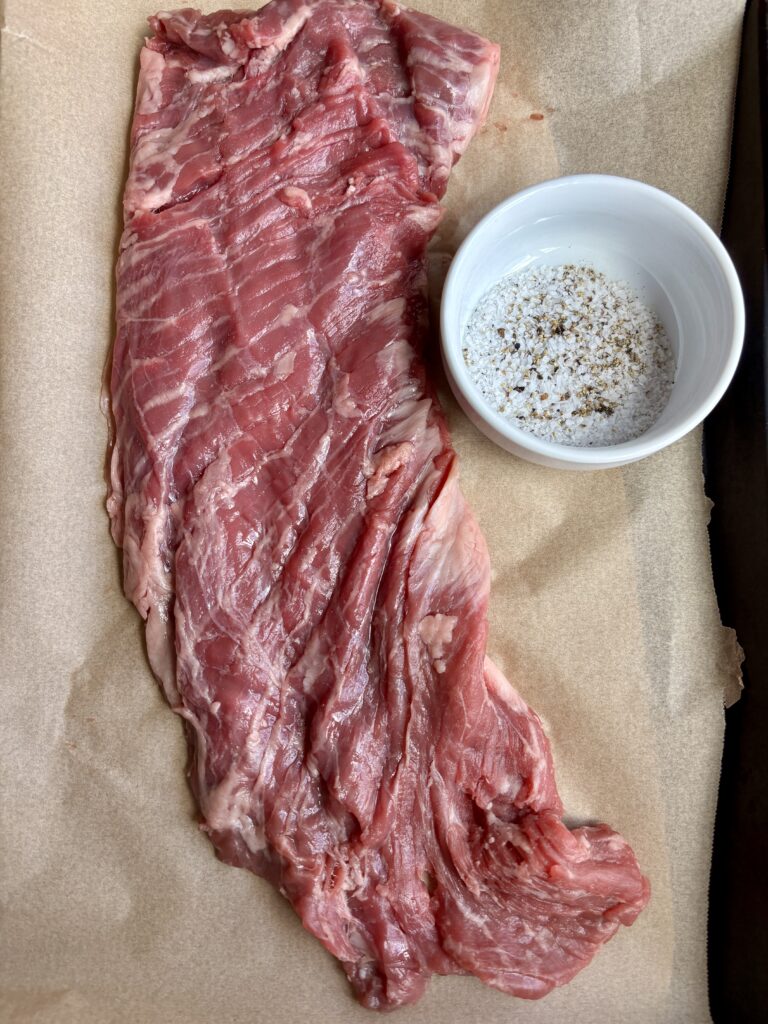
- Pat steak dry with paper towels.
- Generously season both sides with kosher salt and black pepper.
Cast Iron Skillet Method
- Heat a cast iron skillet over medium-high to high heat until very hot.
- Add olive oil.
- Place steak in the skillet and cook for 2–3 minutes per side for medium-rare (130–135°F).
- Adjust cooking time based on thickness and desired doneness.
- Transfer to a cutting board and rest for 5–10 minutes.
Grill Method
- Preheat grill to high heat (450–500°F).
- Clean and oil grill grates.
- Place steak directly over heat.
- Grill for 2–4 minutes per side for medium-rare.
- Remove when internal temperature reaches 130–135°F.
- Rest for 5–10 minutes before slicing.
Blister the Tomatoes
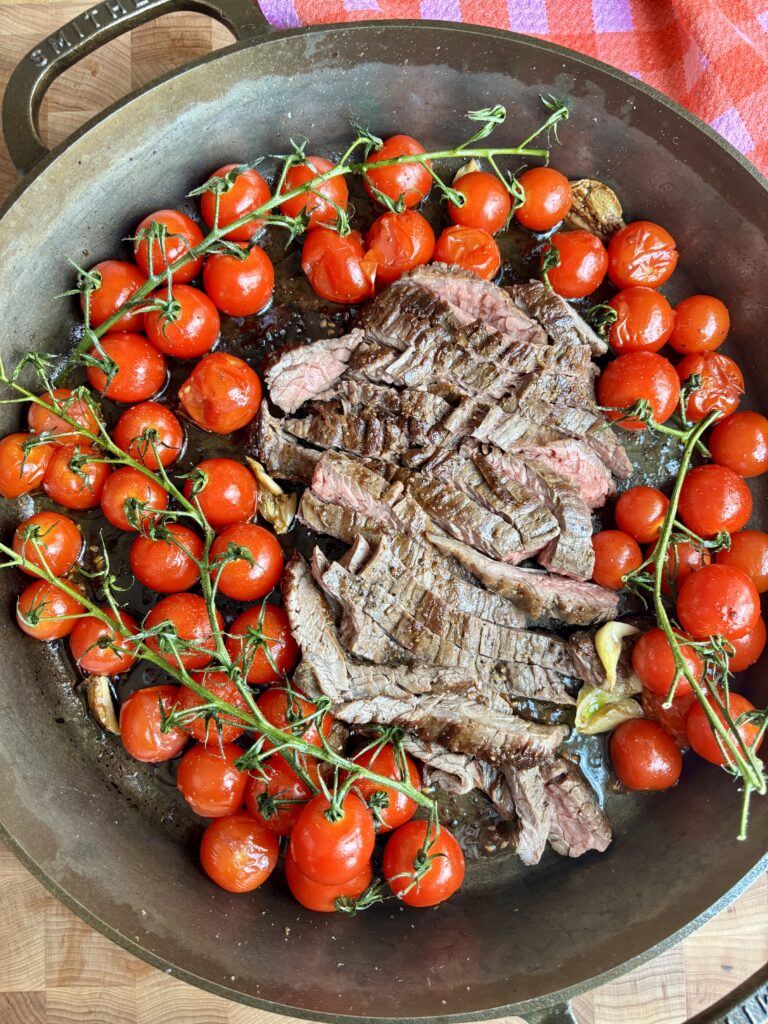
- Heat olive oil in the same skillet or a grill-safe pan.
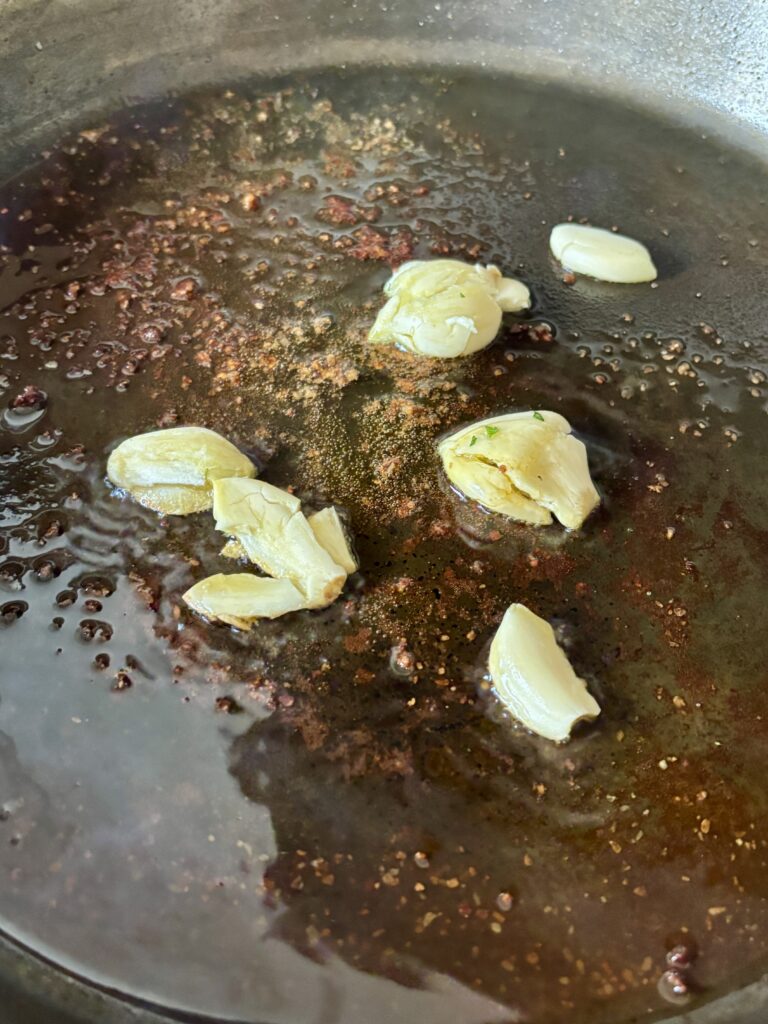
- Add smashed garlic and cook for 30–60 seconds until fragrant.
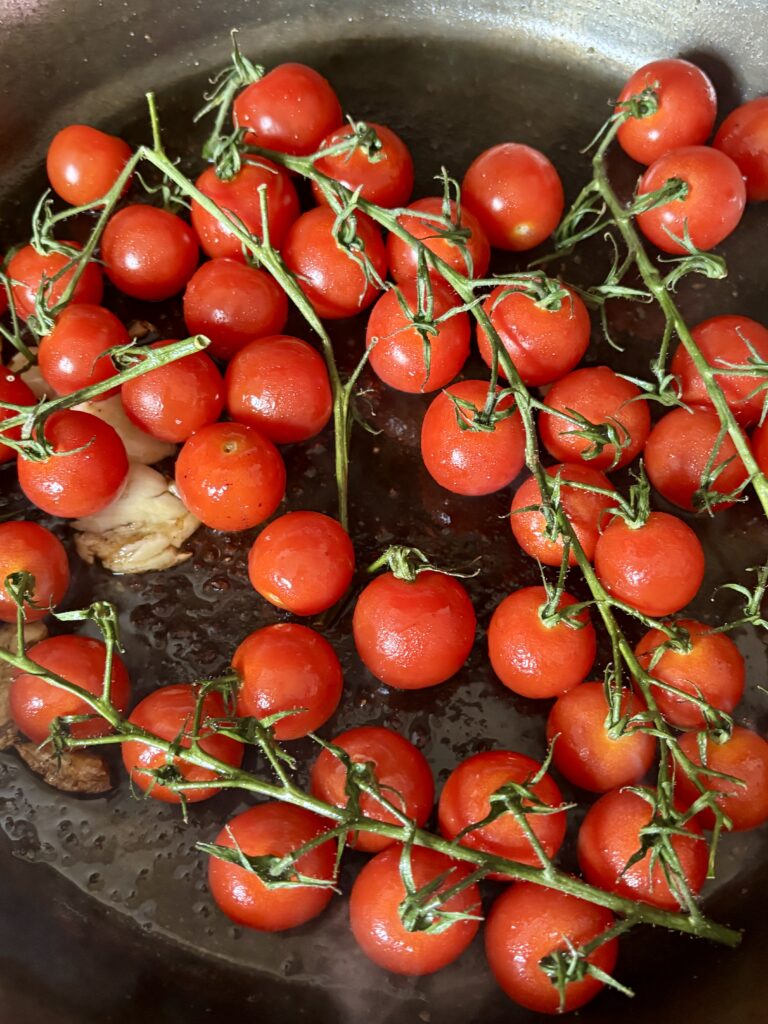
- Add tomatoes, salt, pepper, and red pepper flakes.
- Cook 2–3 minutes, shaking occasionally, until blistered and softened.
Slice and Serve
- Identify the direction of the grain.
- Slice the steak thinly against the grain at a slight angle.
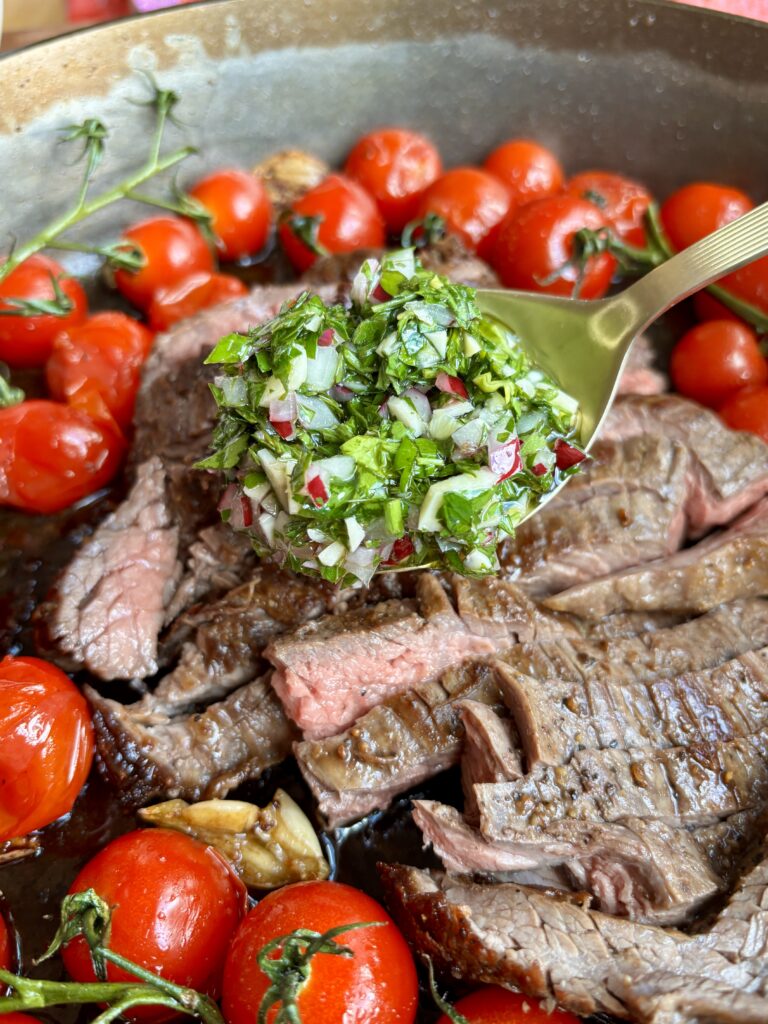
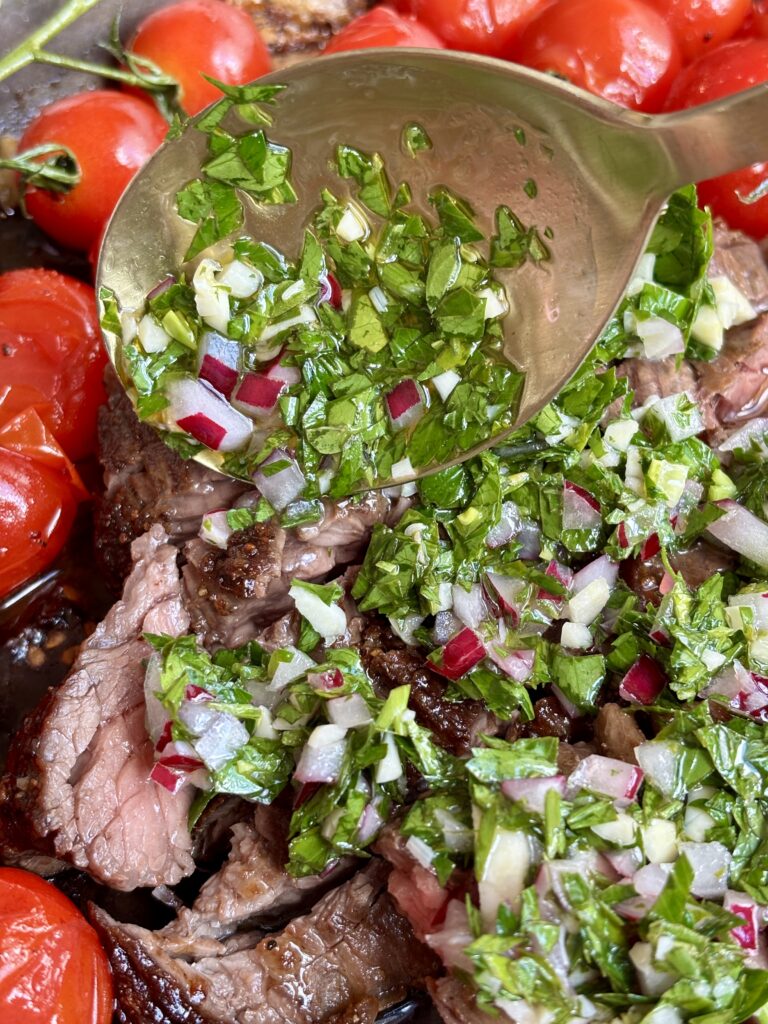
- Spoon chimichurri generously over the steak.
- Serve with blistered tomatoes alongside or spooned over the top.
Notes
- Patting the steak dry creates a better crust.
- High heat is essential for skirt steak.
- Avoid overcooking.
- Always rest before slicing.
- Slice against the grain for maximum tenderness.
steak chimichurri recipe | skirt steak chimichurri | chimichurri steak | grilled skirt steak | cast iron skirt steak | steak with chimichurri sauce | easy steak dinner recipe | steak and tomatoes recipe | blistered cherry tomatoes | grilled steak recipe | skirt steak recipe | homemade chimichurri sauce | Argentine steak recipe | steak dinner ideas | chicken chimichurri recipe

Nutritional Content Disclaimer
I choose not to include nutritional information with my recipes, as these values can be calculated from the ingredients provided. With my background as a pediatric nurse practitioner and my own family experience with disordered eating, I understand how focusing on numbers can affect our relationship with food. My philosophy is that all foods have a place—sweet, savory, nourishing, or indulgent. I aim to share recipes that support a healthy, joyful approach to eating. My hope is that this space also encourages a balanced, healthy relationship with food for you and your family too.