
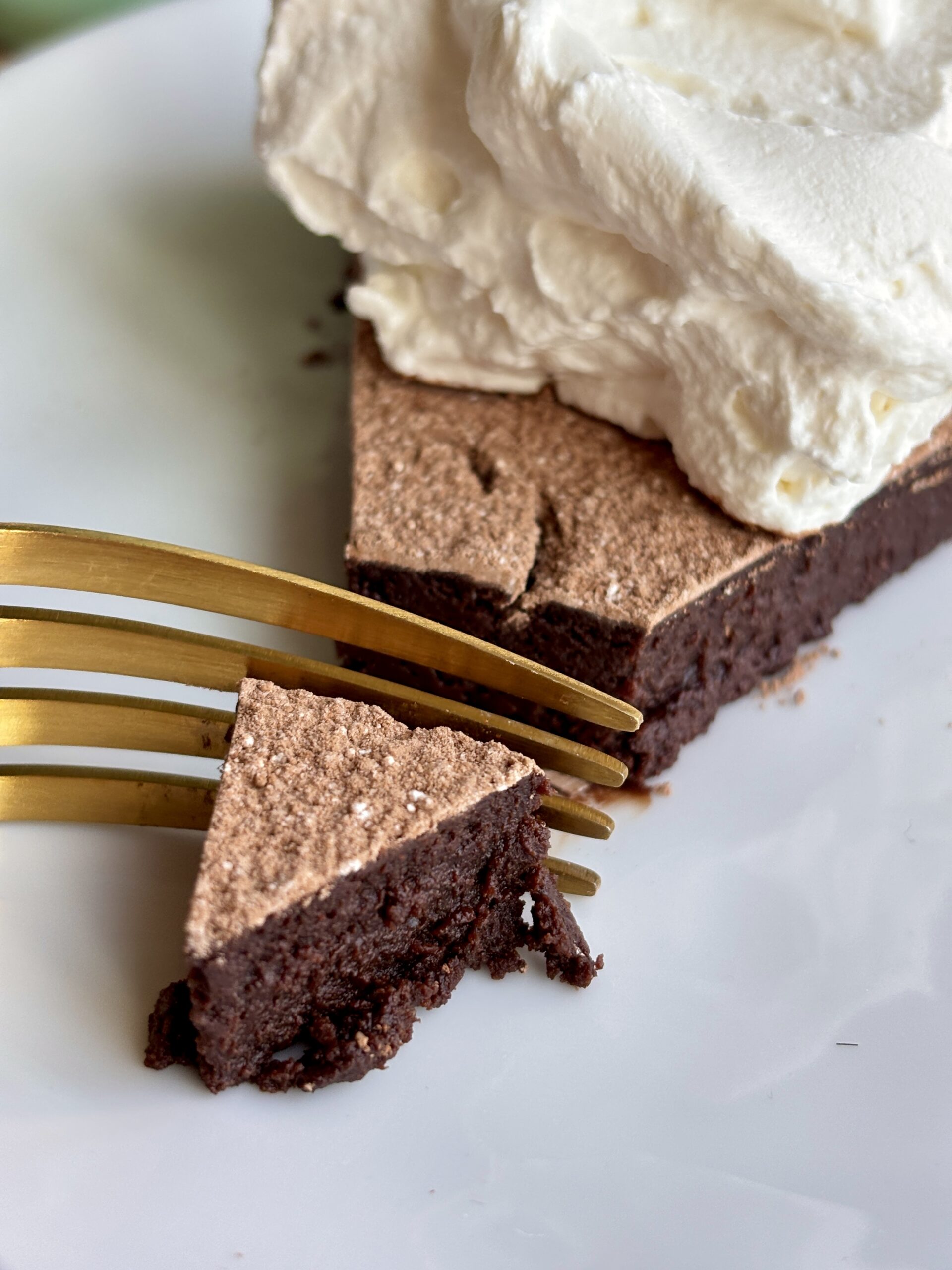
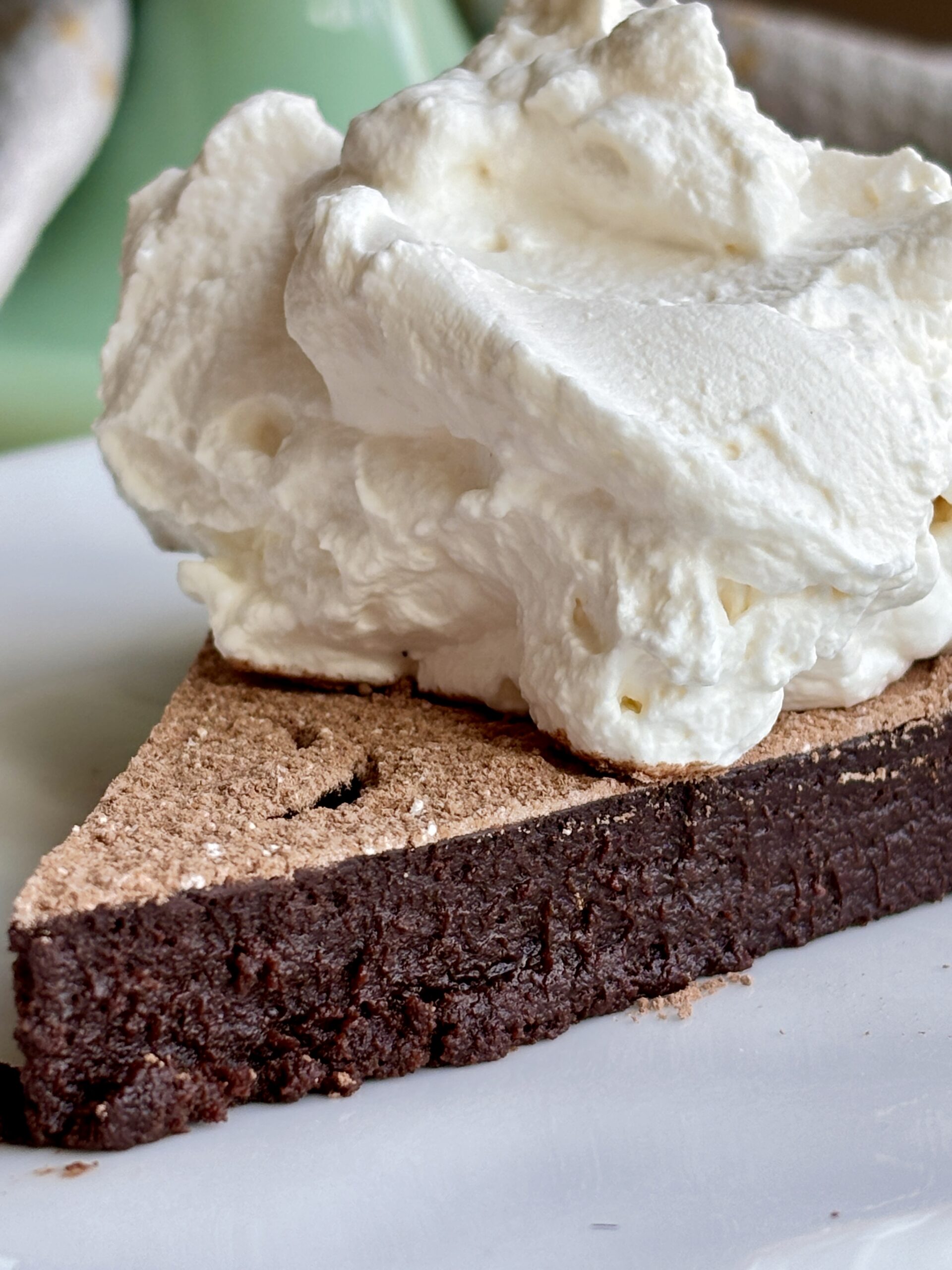
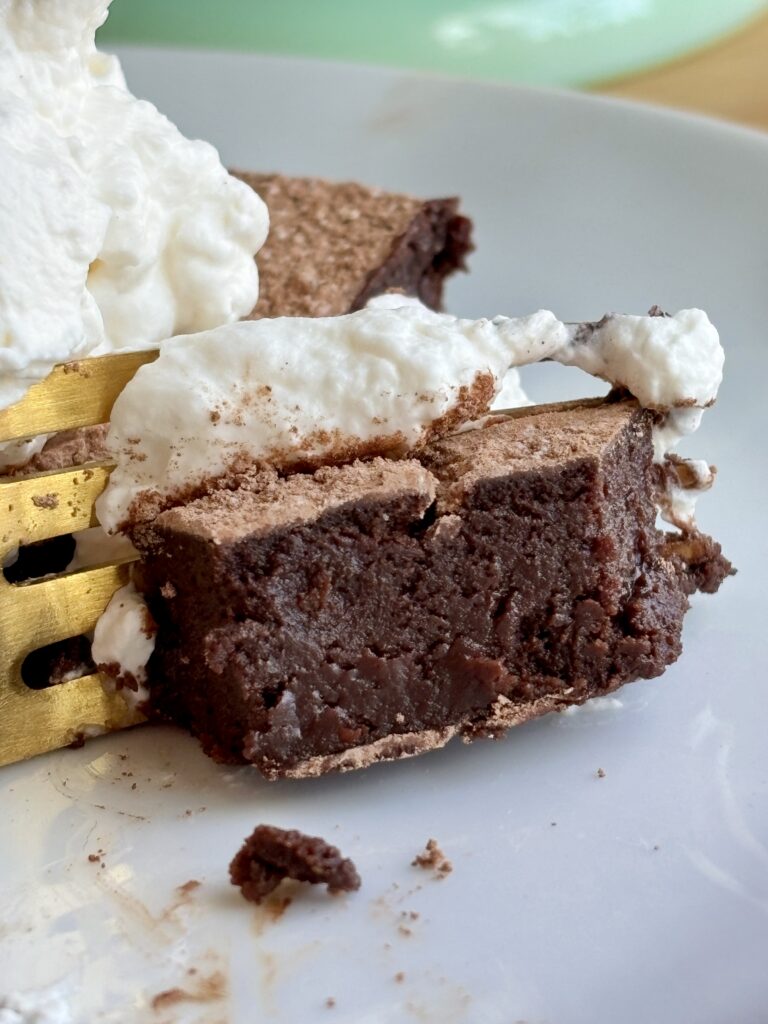
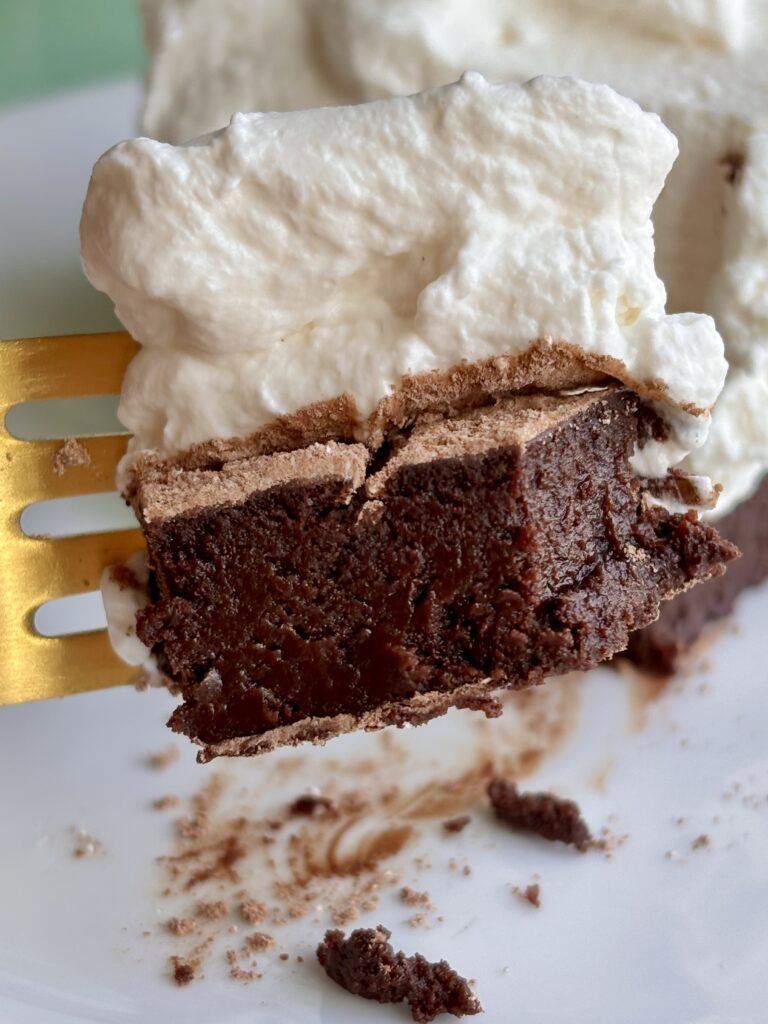
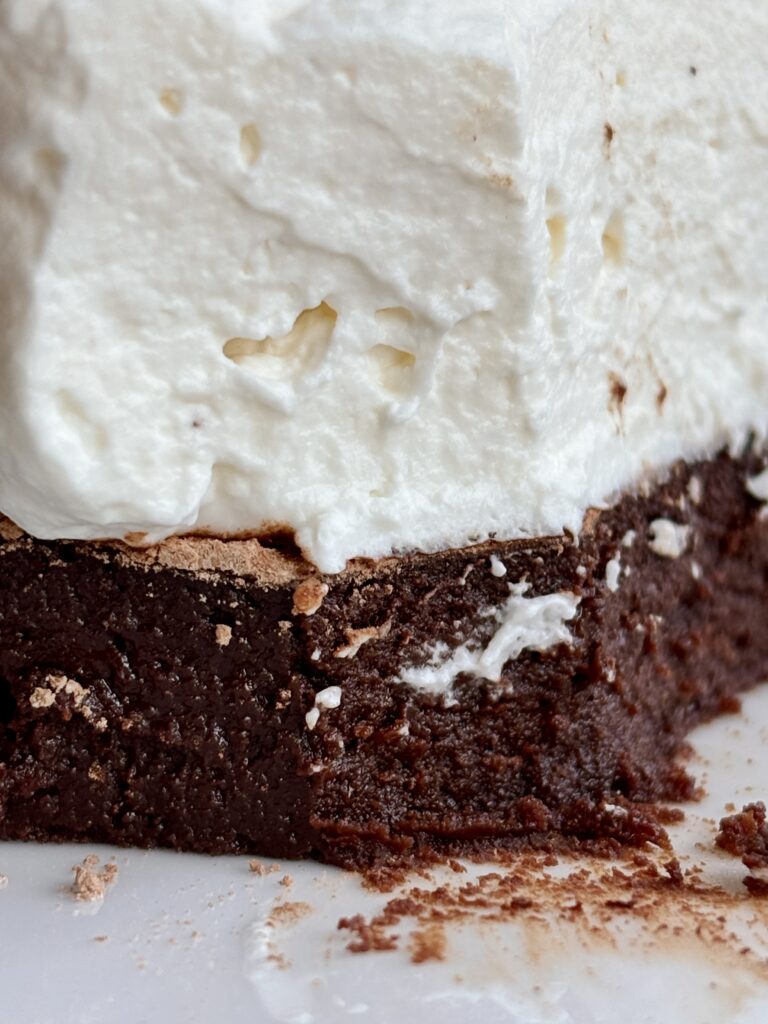
If you’re someone who believes chocolate desserts should be unapologetically rich, then this Flourless Dark Chocolate Truffle Cake is going to be right up your alley. It’s intensely chocolatey, incredibly fudgy, and somewhere between a flourless chocolate torte, a dense brownie, and a decadent dark chocolate truffle. And yes, it’s every bit as indulgent as it sounds.
Made with rich dark chocolate, nutty browned butter, a little olive oil, and Greek yogurt, this flourless chocolate cake has a dense, velvety texture that practically melts in your mouth. The combination of melted chocolate and cocoa powder creates a deep, bittersweet chocolate flavor, while the espresso powder makes all that chocolate taste even more chocolatey. A touch of maple syrup and vanilla bean paste rounds everything out with a little warmth and sweetness.
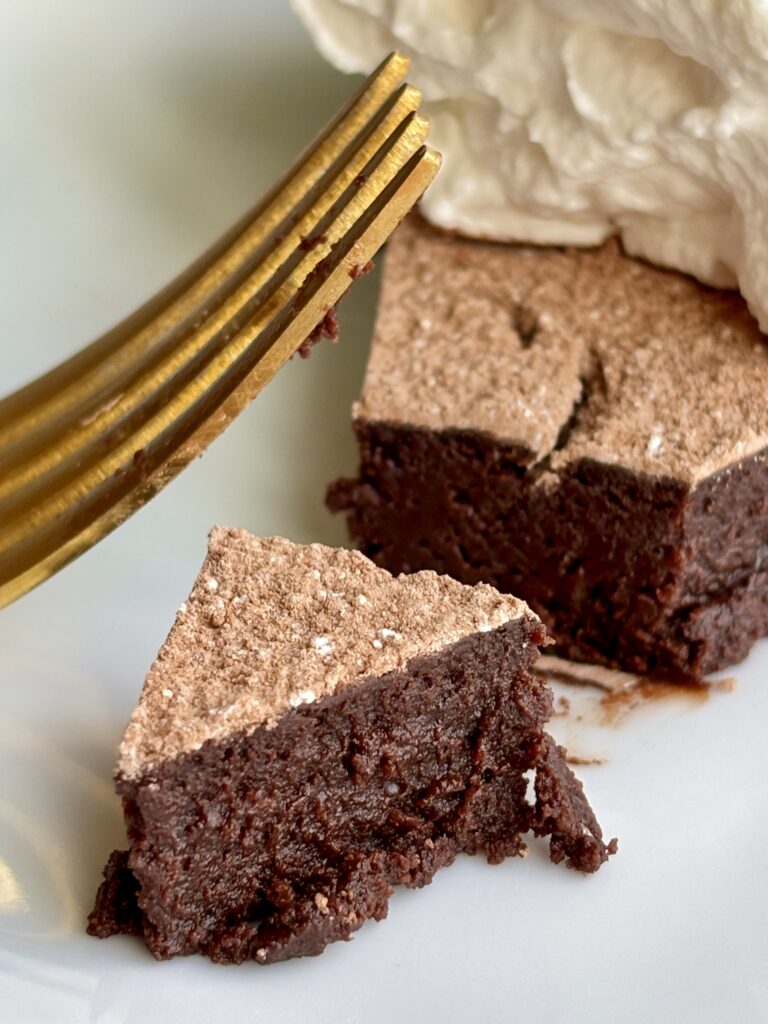
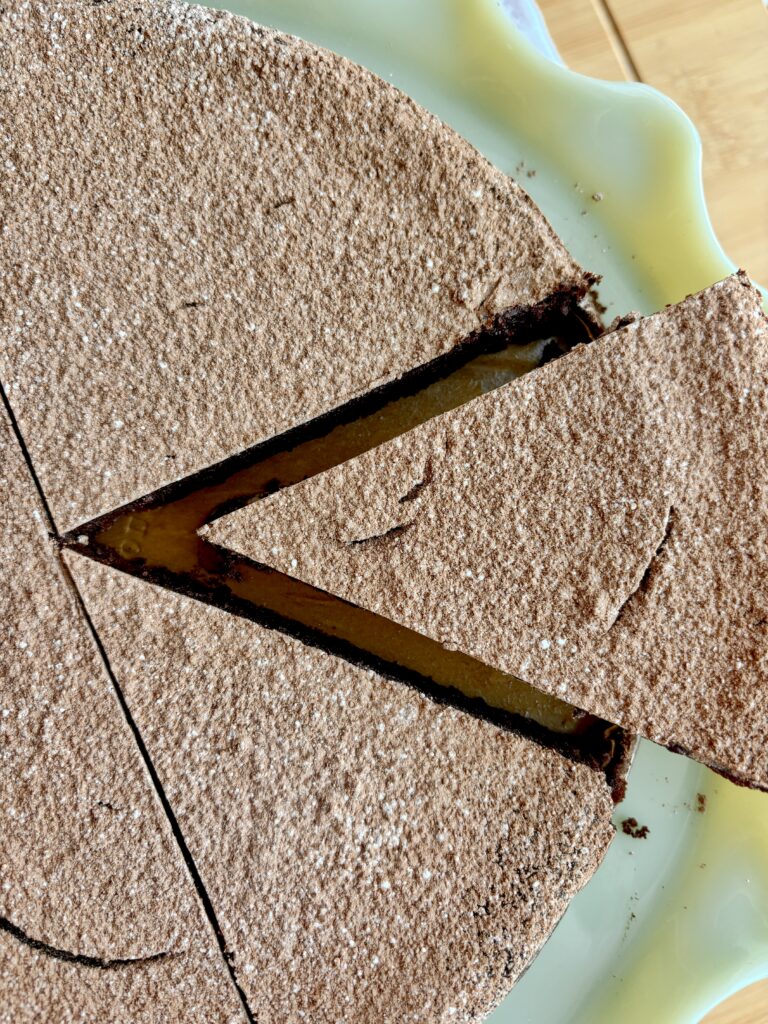
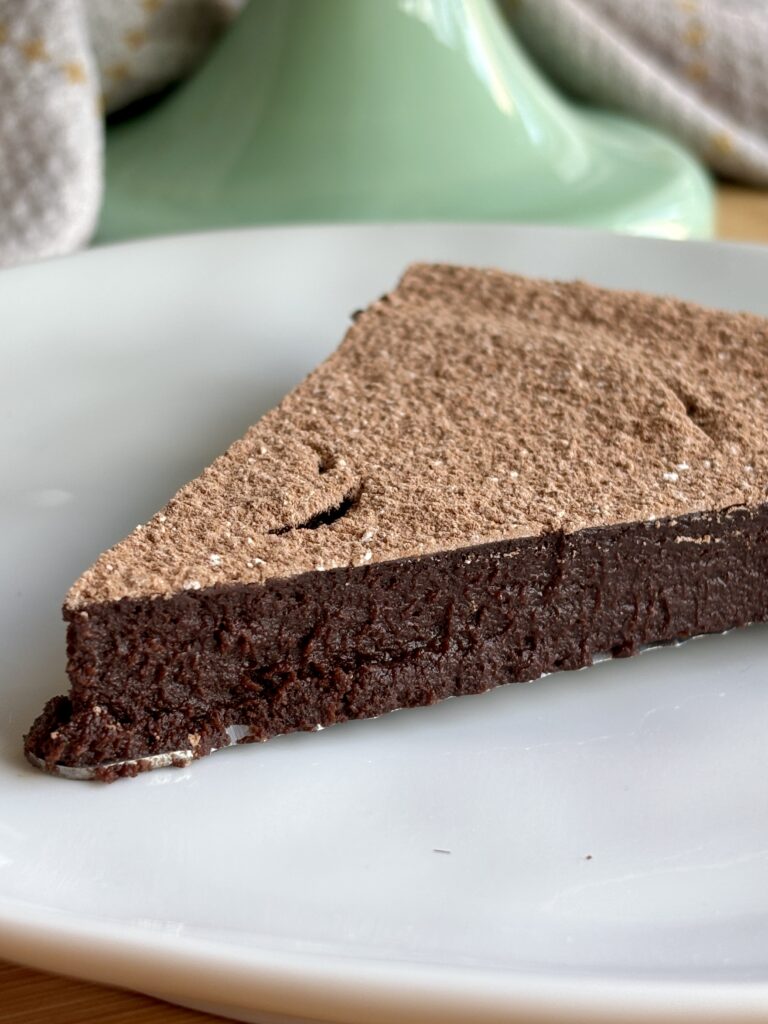
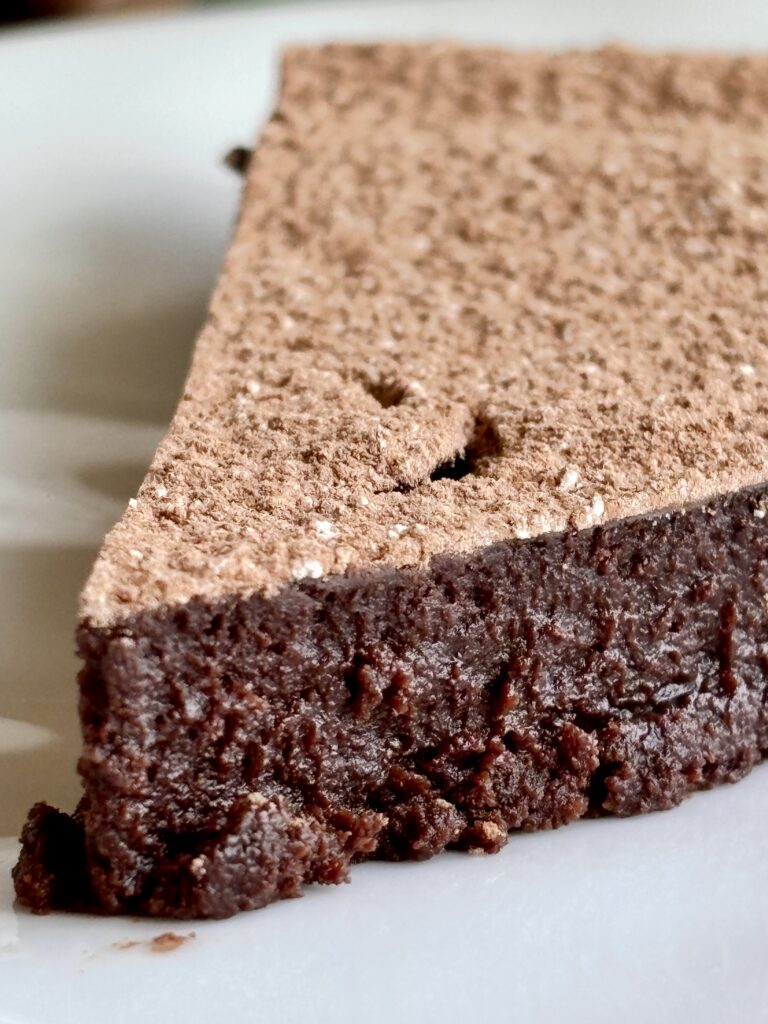
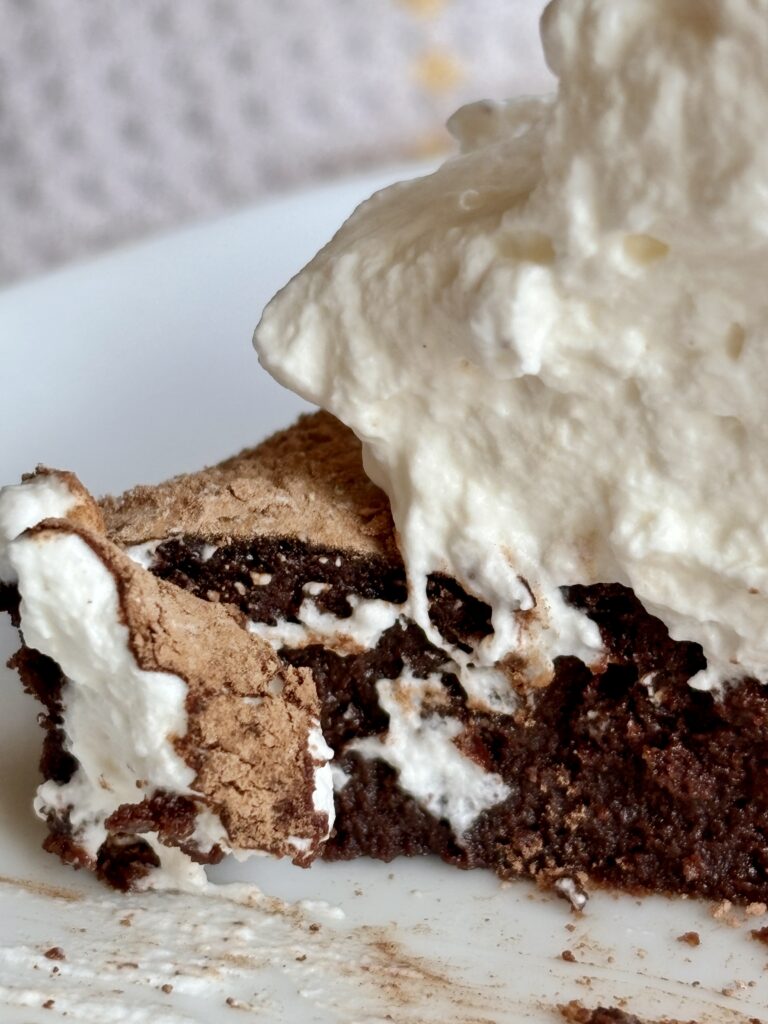
Unlike a traditional chocolate cake, this one doesn’t rise into a tall, fluffy dessert. Instead, it bakes into a thin, rich chocolate cake with a firm, yet fudgy center that reminds me of biting into a really good dark chocolate truffle. It’s the kind of dessert where a small slice goes a long way, especially if you’re someone who loves the slightly bitter finish of dark chocolate.
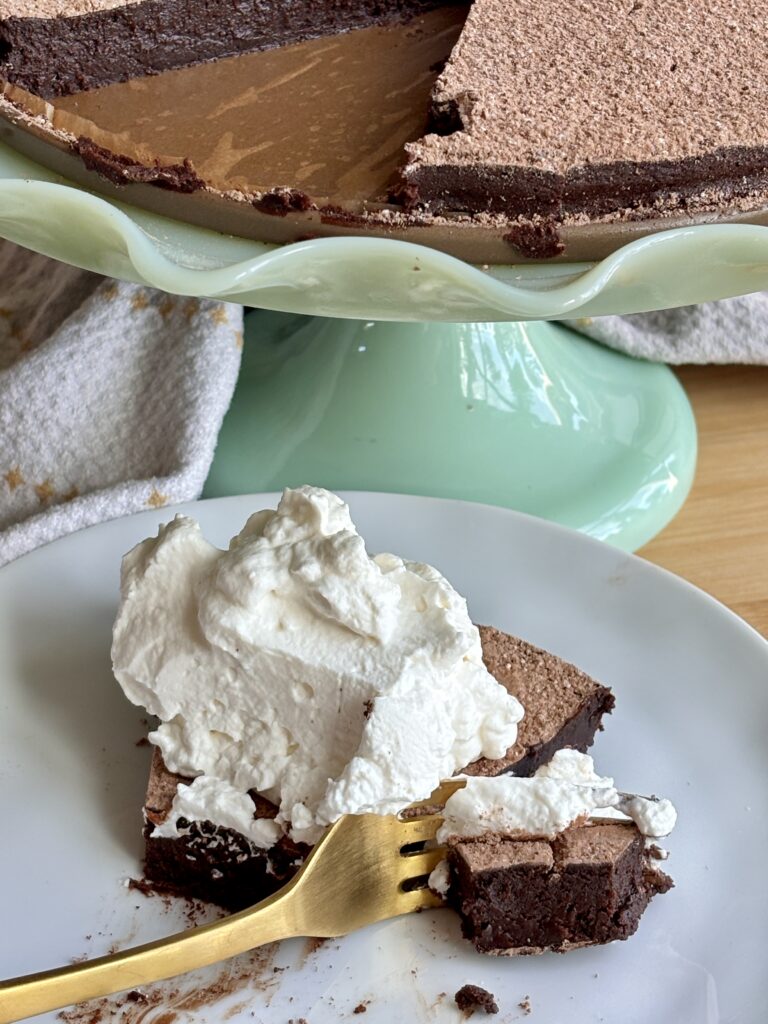
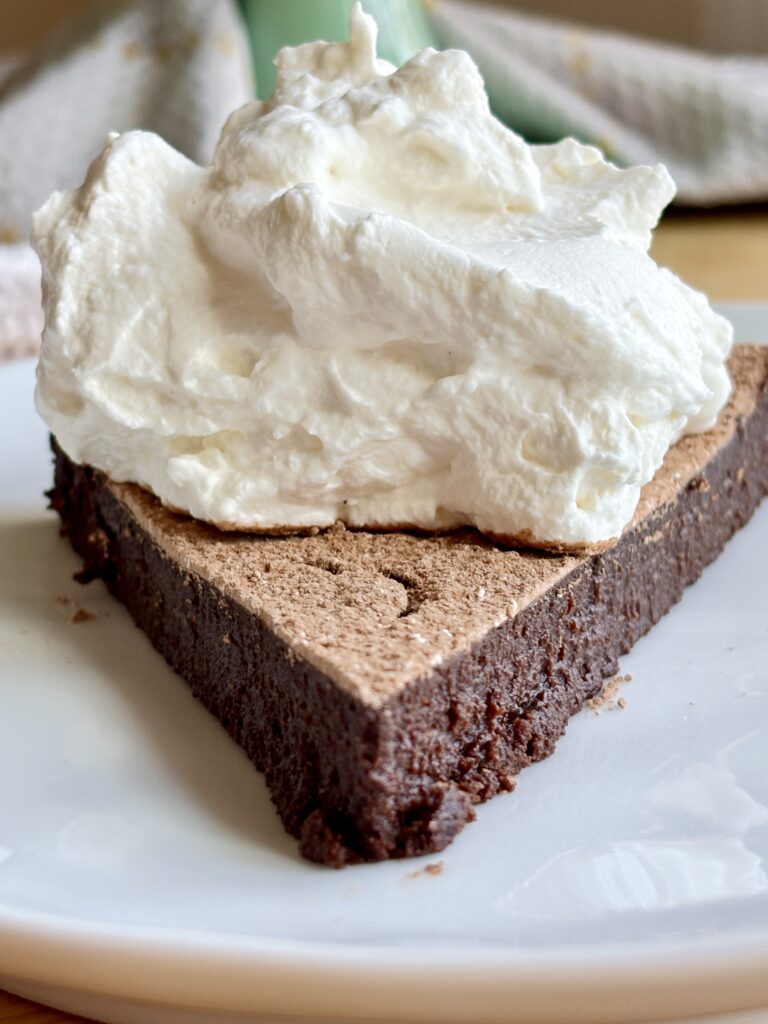
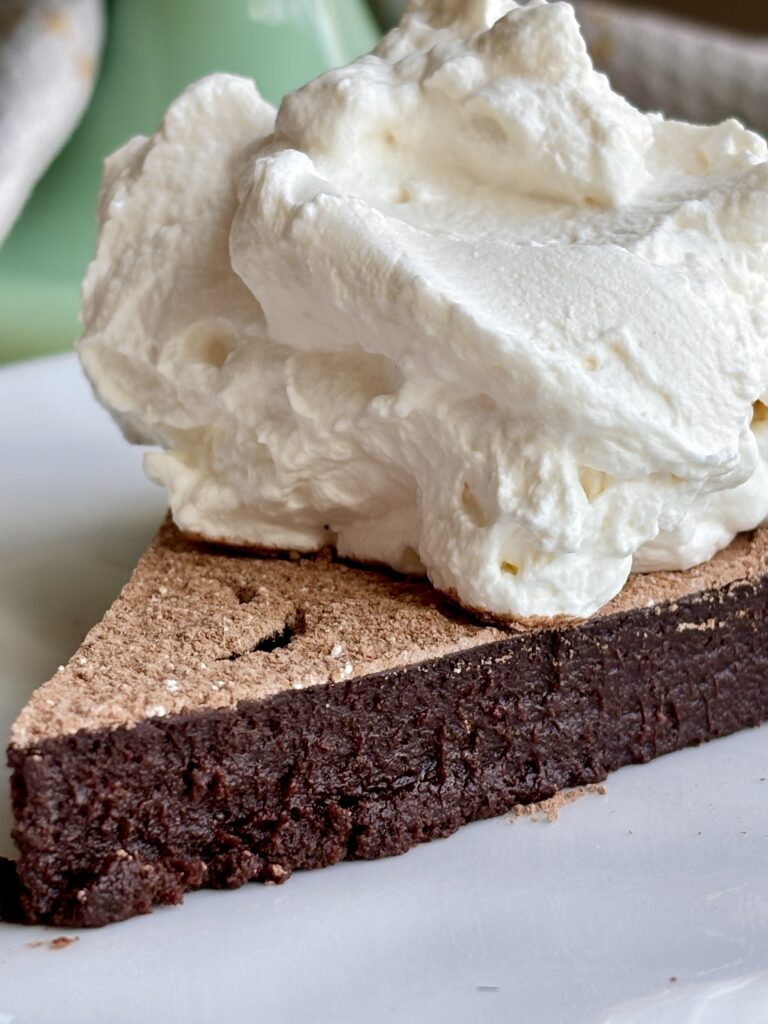
And the best part of this dessert is that you don’t need any flour, complicated decorating, or layers of frosting. A simple dusting of cocoa powder and powdered sugar, a little flaky sea salt, and maybe a generous spoonful of whipped cream are all you need.
Serve it for Valentine’s Day, date night, a dinner party, the holidays, or whenever a serious chocolate craving hits. If you love deeply rich, dark chocolate desserts, then this one was made for you. You’re welcome!
Other rich, indulgent chocolate recipes: Fudgy Black Cocoa Brownies, Fudgy Dark Chocolate Brownies, Fudgy Chocolate Cobbler, Chocolate Croissant Bread Pudding, Dark Chocolate Orange Truffles, Fudgy Brownie Soufflé
Why you’ll love this recipe!
What ingredients do I need?
- Dark Chocolate: Dark chocolate is the star of this flourless chocolate truffle cake, so use a good-quality chocolate that you enjoy eating on its own. I used 72% dark chocolate, which gives the cake a deeply rich, slightly bitter chocolate flavor. For a sweeter, more approachable version, choose a dark chocolate closer to 60–65% cacao. The chocolate percentage makes a noticeable difference in the finished dessert.
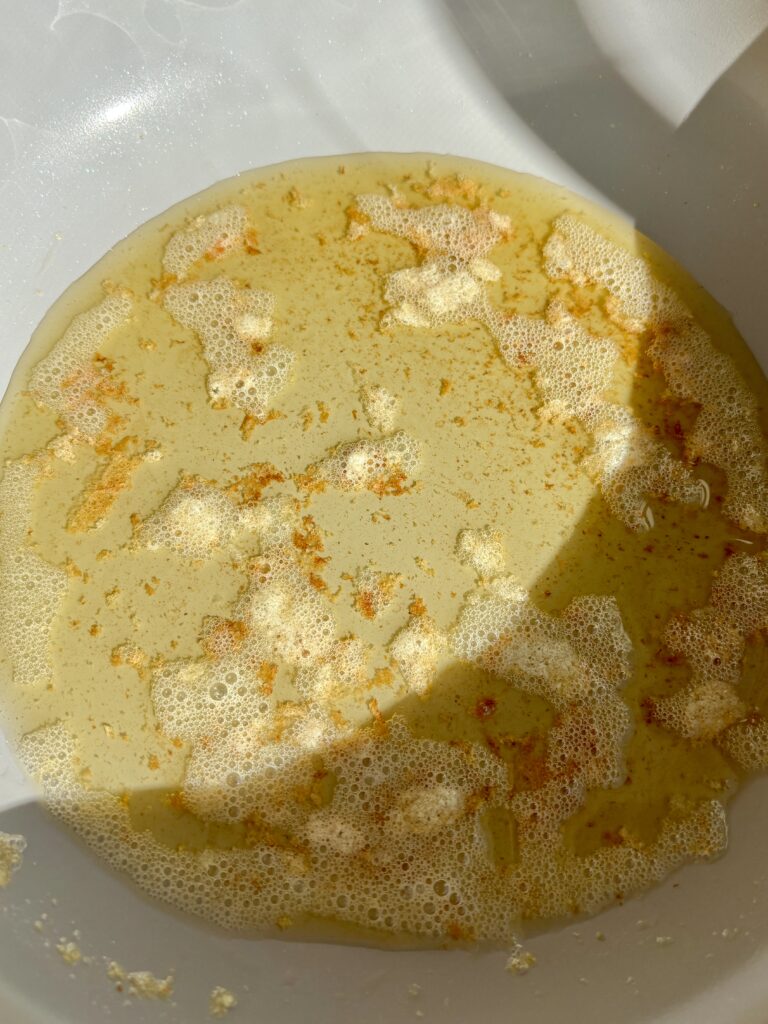
- Unsalted Butter: Browned butter adds a warm, nutty richness that complements the dark chocolate. Cooking the butter until the milk solids turn golden brown develops a deeper flavor than simply melting it. Be sure to scrape all those beautiful browned bits into the chocolate mixture!
- Extra-Virgin Olive Oil: A little olive oil adds richness and contributes to the cake’s smooth, fudgy texture. A mild, fruity olive oil works especially well here without competing too much with the chocolate.
- Granulated Sugar: Granulated sugar provides sweetness and helps balance the bitterness of the dark chocolate and cocoa powder. Because this cake uses intensely flavored chocolate, it isn’t overly sweet.
- Pure Maple Syrup: Maple syrup adds another layer of sweetness along with subtle caramel-like notes that pair beautifully with the browned butter. It also contributes moisture to the batter.
- Plain Greek Yogurt: Greek yogurt adds moisture, a little tanginess, and richness to the cake. I recommend using plain, full-fat Greek yogurt for the creamiest result.
- Eggs and Egg Yolk: Three whole eggs and an additional egg yolk help bind the flourless batter and give the cake its dense, fudgy structure. The extra yolk adds richness without introducing additional flour or starch.
- Vanilla Bean Paste: Vanilla bean paste adds warmth and rounds out the intense chocolate flavor. I love the depth it brings to chocolate desserts, especially when paired with browned butter.
- Espresso Powder: Espresso powder enhances the dark chocolate flavor without necessarily making the cake taste like coffee. The full teaspoon contributes to the intensity of this dessert, so you can reduce it slightly if you prefer a softer chocolate flavor.
- Unsweetened Cocoa Powder: Cocoa powder intensifies the chocolate flavor and contributes to the cake’s dense, truffle-like consistency. Dutch-process cocoa can provide a smoother, less acidic chocolate profile, while natural cocoa tends to taste sharper.
- Kosher Salt: Salt balances the sweetness and enhances the chocolate and browned butter flavors.
- Cocoa Powder, Powdered Sugar, and Flaky Sea Salt: A simple dusting of cocoa powder and powdered sugar finishes the cake without making it overly sweet. A small pinch of flaky sea salt adds a delicious contrast to the rich chocolate.
Recipe Variations
- Less Bitter Dark Chocolate Truffle Cake: If you love dark chocolate but prefer a slightly sweeter dessert, use 60–65% dark chocolate instead of 72%. You can also reduce the espresso powder to ½ teaspoon. This is the first variation I would try for a more approachable chocolate flavor.
- Orange Dark Chocolate Truffle Cake: Add 1–2 teaspoons of finely grated orange zest to the chocolate mixture. Orange and dark chocolate are delicious together, especially during the holiday season.
- Salted Dark Chocolate Truffle Cake: Skip the cocoa-powdered sugar topping and finish the cake with a small sprinkle of flaky sea salt. It adds a lovely contrast to the intense chocolate flavor.
- Dark Chocolate Raspberry Truffle Cake: Serve slices with fresh raspberries or a spoonful of raspberry sauce. The tartness of the berries helps balance the richness of the cake.
- Dark Chocolate Espresso Truffle Cake: For coffee lovers, lean into the espresso flavor by serving the cake alongside espresso whipped cream or a scoop of coffee ice cream.
Pro Tips
- Choose your chocolate carefully. I used 72% dark chocolate, which creates an intensely rich, bittersweet cake. If you’re serving people who typically prefer sweeter chocolate desserts, a 60–65% chocolate may be a better choice.
- Don’t overbrown, or burn, the butter. You want golden-brown milk solids and a warm, nutty aroma, not dark or burnt butter. Burnt butter can introduce additional bitterness to the cake.
- Use finely chopped chocolate. Smaller pieces melt more evenly into the warm browned butter and help create a smooth, glossy mixture.
- Let the chocolate cool a little before adding the eggs. If the chocolate mixture is too hot, it can scramble the eggs, even when tempering.
- Use room-temperature eggs and Greek yogurt. This helps the ingredients combine more smoothly without cooling and thickening the chocolate too quickly.
- Manage your expectations. Don’t expect a tall cake with this recipe. This recipe is intentionally dense and flourless. My original cake finished approximately ½ inch tall in an 8-inch springform pan.
- Avoid overbaking the cake. The cake should have set edges and a center that still has a slight jiggle. It will continue to firm as it cools. Because this is an egg-based dessert, a food thermometer is useful for checking doneness; a fully cooked egg-based cake should reach 160°F.
- Cool the cake before removing from the pan. This cake is very delicate while warm. By allowing it to cool completely, it helps it set and makes slicing easier.
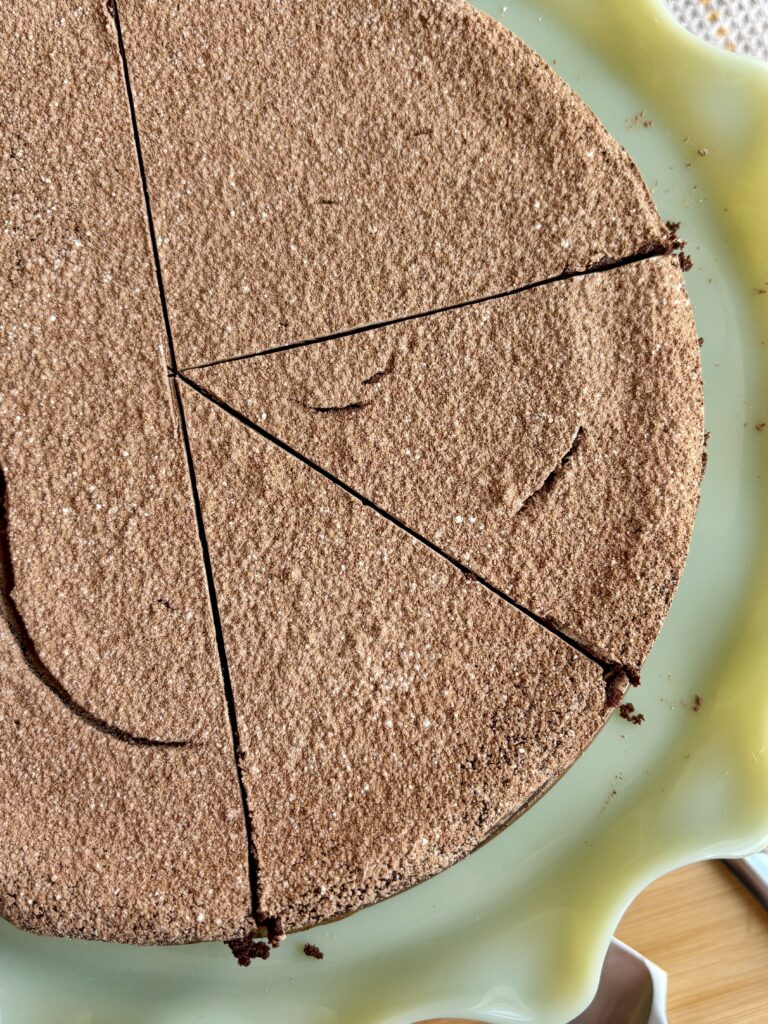
- Use a warm a sharp knife under hot water, wipe it dry, and clean between cuts for neat slices.
- Serve with something creamy. Lightly sweetened whipped cream or vanilla ice cream helps balance the intensity of the dark chocolate.
Can I Substitute?
Yes! Like always though, any substitutions made to the recipe can result in a change in texture and/or flavor.
- Dark Chocolate: Substitute 60–65% dark chocolate for the 72% chocolate if you prefer a slightly sweeter, less bitter cake. You can also use semisweet chocolate, although the flavor will be sweeter and less intense.
- Unsalted Butter: Salted butter can be used in place of unsalted butter. Reduce the additional salt slightly to account for the salt already present in the butter.
- Olive Oil: A neutral oil, such as avocado oil, can replace the extra-virgin olive oil. The finished cake will have a slightly different flavor profile.
- Maple Syrup: Honey may be used in place of maple syrup, although it will contribute a different flavor and sweetness profile. This substitution has not been tested in this specific cake.
- Greek Yogurt: Full-fat sour cream is a reasonable alternative to Greek yogurt. It will provide similar moisture and tanginess, although the finished texture may vary slightly. I have not tested this version however.
- Vanilla Bean Paste: Substitute an equal amount of pure vanilla extract.
- Espresso Powder: Instant coffee powder can be used, although its flavor and strength may vary. You can also omit the espresso powder entirely.
- Cocoa Powder: Natural unsweetened cocoa powder or Dutch-process cocoa powder can be used, but expect slight differences in flavor and acidity.
Dietary Substitutions
- Gluten-Free: This recipe contains no flour and is naturally gluten-free when prepared with certified gluten-free chocolate and other ingredients that meet your dietary needs. Always check ingredient labels for potential cross-contact.
- Nut-Free: The recipe doesn’t call for nuts, but check the chocolate and other packaged ingredients for potential cross-contact if preparing it for someone with a nut allergy.
- Vegetarian: This recipe is suitable for a lacto-ovo vegetarian diet, provided the chocolate and other packaged ingredients meet your preferences.
Leftovers and Storage
- Refrigerator: Store leftovers in an airtight container in the refrigerator for up to 3–4 days. Because this cake contains a generous amount of dark chocolate and butter, it will become firmer as it chills, giving it an even denser, almost chocolate truffle-like consistency.
- Freezer: This cake freezes well! Once completely cooled, wrap individual slices tightly in plastic wrap and transfer them to a freezer-safe container or bag. Freeze for up to 2 months for the best flavor and texture.
- Thawing: Allow frozen slices to thaw overnight in the refrigerator. For the best texture, let the cake sit at room temperature for approximately 20–30 minutes before serving, or until it softens slightly.
- Reheating: While this cake is delicious chilled, I prefer it at room temperature when the chocolate and butter have softened and the center becomes more luscious. If you prefer it slightly warm, microwave an individual slice in 5–10 second intervals, checking frequently to avoid overheating.
- Make Ahead: This is a wonderful dessert to prepare a day in advance! Bake the cake, allow it to cool completely, and refrigerate it in an airtight container. Bring it to room temperature before serving, and wait until just before serving to add the cocoa-powdered sugar dusting and flaky sea salt.
Troubleshooting
My cake tastes too bitter
This cake is intentionally dark and bittersweet, especially when made with 72% chocolate. The combination of dark chocolate, cocoa powder, and espresso creates a very intense chocolate flavor. If this wasn’t for you, you can try making it with 60–65% dark chocolate or reduce the espresso powder to ½ teaspoon. You can also serve the original cake with lightly sweetened whipped cream or vanilla ice cream to balance the bitterness.
My cake is dry or crumbly instead of fudgy
Overbaking is one possible cause of this. This cake contains no flour, so its texture depends heavily on the chocolate, fat, and eggs. Too much heat can cause the eggs to firm up excessively, creating a drier texture. Start checking the cake early and avoid baking it longer than necessary. The edges should be set and the center should have a gentle wobble rather than appear liquid. You can use a thermometer to check for a safe internal temperature of 160°F if you’d like and allow the cake to cool before slicing.
My chocolate mixture looks grainy
Chocolate can become grainy if it overheats, seizes, or doesn’t combine smoothly with the other ingredients. Granulated sugar may also remain slightly noticeable because it doesn’t dissolve readily in fat. To fix this, melt the chocolate gently in the warm browned butter off heat, rather than over direct high heat. Whisk it thoroughly and avoid overheating.
My chocolate mixture separated or looks oily
Chocolate and fat can separate when the mixture becomes too hot or the ingredients aren’t properly incorporated. To fix this, remove the mixture from the heat and whisk gently until it comes back together. When combining the chocolate with the egg mixture, add it gradually while whisking continuously to encourage a smooth emulsion.
My eggs scrambled when I added the chocolate
The chocolate mixture was likely too hot when it came into contact with the eggs. Allow the melted chocolate mixture to cool until warm rather than hot before tempering the eggs. You can temper the eggs by adding small amounts of chocolate to the eggs while whisking constantly first and then gradually combine everything together.
My cake cracked across the top
Some cracking is completely normal in flourless chocolate cakes. As the cake bakes and cools, the surface can set before the interior, causing small cracks as the cake settles. Avoid overbaking and allow the cake to cool gradually. A few cracks aren’t a problem and can actually give the finished cake a beautiful rustic appearance.
My cake sank in the middle
Flourless chocolate cakes can settle as they cool because they don’t have the same starch-based structure as traditional cakes. Some sinking is expected.Avoid opening the oven repeatedly during baking and make sure the cake has set sufficiently before removing it. A slightly sunken center is normal, but a very wet or collapsed center may indicate insufficient baking.
My cake is sticking to the pan
The cake’s dense, fudgy texture makes it more delicate than a traditional chocolate cake, particularly before it has cooled completely. To avoid this, grease the springform pan thoroughly and line the bottom with parchment paper. Allow the cake to cool completely before carefully running a thin knife around the edges and releasing the pan.
My cake is too firm after refrigeration
Chocolate and butter naturally firm up at colder temperatures, so refrigerated slices will have a much denser, almost solid truffle-like consistency. Let individual slices sit at room temperature for approximately 20–30 minutes before serving, or until they soften to your preferred consistency.
My cake has an unpleasant burnt flavor
The browned butter may have cooked too far, or the chocolate may have overheated while melting. Both can introduce harsh, bitter flavors that are different from the natural bitterness of dark chocolate. Brown the butter just until the milk solids turn golden brown and smell nutty. Remove it from the heat promptly, and let the residual warmth melt the chocolate gently. If the butter actually burns, it’s best to start over.
My cake has a greasy surface
A little sheen is normal in a chocolate-rich cake like this, but visible pools of oil or butter can indicate that the batter separated or didn’t emulsify properly. Make sure the chocolate mixture is smooth before combining it with the eggs, and incorporate the tempered egg mixture gradually. Avoid excessive heat, which can destabilize the chocolate mixture.
But, I Still Have A Few Questions…
What is the difference between a flourless chocolate cake and a chocolate truffle cake?
Both are rich chocolate desserts made without traditional flour, but a chocolate truffle cake typically emphasizes an especially dense, smooth, and fudgy texture. This recipe is closer to a chocolate truffle or dense brownie than a traditional fluffy chocolate cake.
Can I use a different percentage of dark chocolate?
Absolutely! I used 72% dark chocolate for an intensely rich, bittersweet flavor. If you prefer something a little sweeter and less bitter, try 60–65% dark chocolate. Just keep in mind that changing the chocolate percentage may slightly affect the finished texture.
Does this flourless chocolate cake taste like coffee?
Not particularly. The espresso powder primarily enhances the chocolate flavor rather than making the cake taste like coffee. However, because this is an intensely chocolatey dessert, you may notice subtle roasted coffee notes. You can reduce, or omit the espresso powder completely, if preferred.
Can I make this cake ahead of time?
Yes! I love a good make ahead recipe and this is a great dessert for that because the cake needs time to cool and set before slicing. You can make it the day before, refrigerate it in an airtight container, and bring it to room temperature before serving.
Can I use chocolate chips instead of chopped chocolate?
You can try using good-quality chocolate chips, but I recommend chopped chocolate bars for the smoothest texture. Some chocolate chips contain ingredients that help them hold their shape, which can make them more difficult to melt smoothly.
Can I make this cake without a springform pan?
Yes, an 8-inch round cake pan lined with parchment paper may work. However, because this cake is thin and delicate, a springform pan makes removing it much easier. Allow the cake to cool completely before attempting to remove it from a regular cake pan.
Can I double this recipe?
You can double the ingredients, but I recommend dividing the batter between two 8-inch pans rather than baking everything in one deeper pan. A thicker cake will require a different baking time and may not develop the same texture.
What should I serve with dark chocolate truffle cake?
Because this cake is incredibly rich and bittersweet, I love pairing it with something lighter or slightly sweet. Vanilla ice cream, lightly sweetened whipped cream, fresh raspberries, strawberries, or even a little salted caramel sauce would all be delicious.
Is this cake supposed to be served warm or cold?
I recommend serving it at room temperature for the best balance of flavor and texture. Refrigerating the cake makes it firmer and more truffle-like, while allowing it to warm slightly softens the chocolate and butter for a more luscious consistency. It is really up to your preference!
Other Recipes You’ll Love
Let’s engage!
Make sure to tag @thehomechefmomma on Instagram or Facebook, and leave a review or comment if you make these. I always get so excited to see your creations, variations of the recipe, and feedback! Just remember to be kind in your comments, there is still a person behind this screen! 🙂
Flourless Dark Chocolate Truffle Cake
Ingredients
For the Cake
- 6 ounces dark chocolate 72% cacao, finely chopped
- 4 tablespoons unsalted butter melted, browned
- 2 tablespoons extra-virgin olive oil
- ½ cup granulated sugar
- ¼ cup pure maple syrup
- ¼ cup plain Greek yogurt
- 3 large eggs
- 1 large egg yolk
- 2 teaspoons vanilla bean paste
- 1 teaspoon espresso powder
- ⅓ cup unsweetened cocoa powder Dutch-process cocoa powder
- ½ teaspoon kosher salt
For the Topping
- ½ tablespoon unsweetened cocoa powder Dutch-process cocoa powder
- ½ tablespoon powdered sugar
- Flaky sea salt optional
Instructions
- Preheat the oven to 325°F. Grease an 8-inch springform pan and line the bottom with parchment paper.
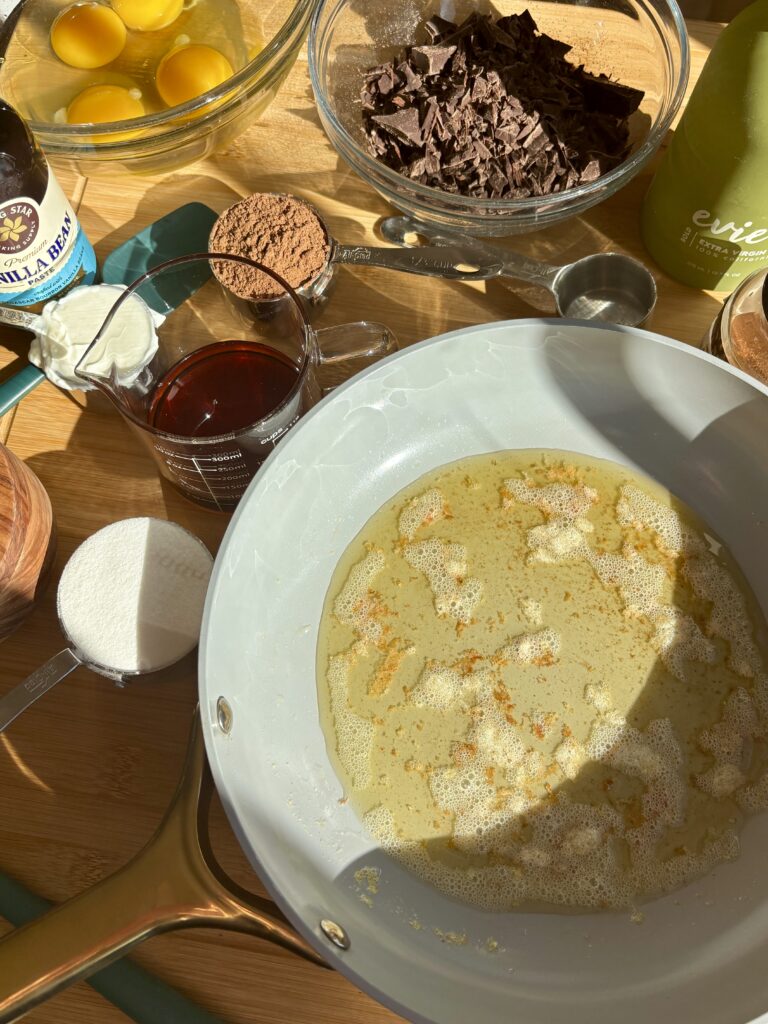
- Add the butter to a medium saucepan over medium heat. Cook, swirling occasionally, until the butter melts, foams, and develops golden-brown milk solids with a nutty aroma. Remove from the heat.
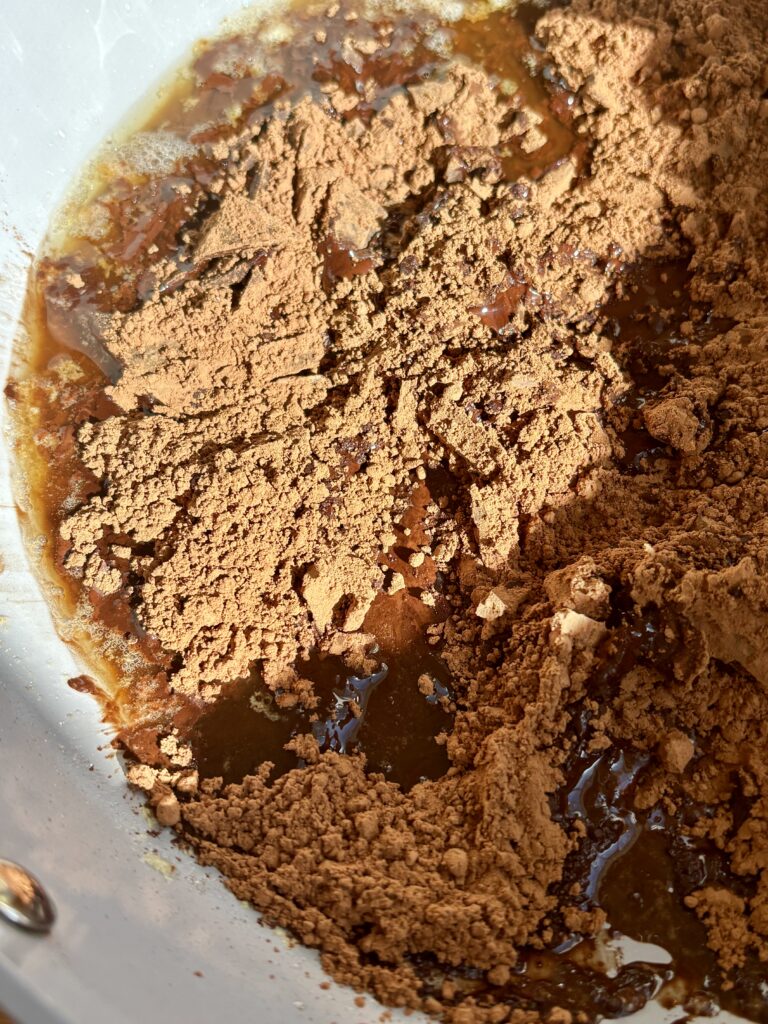
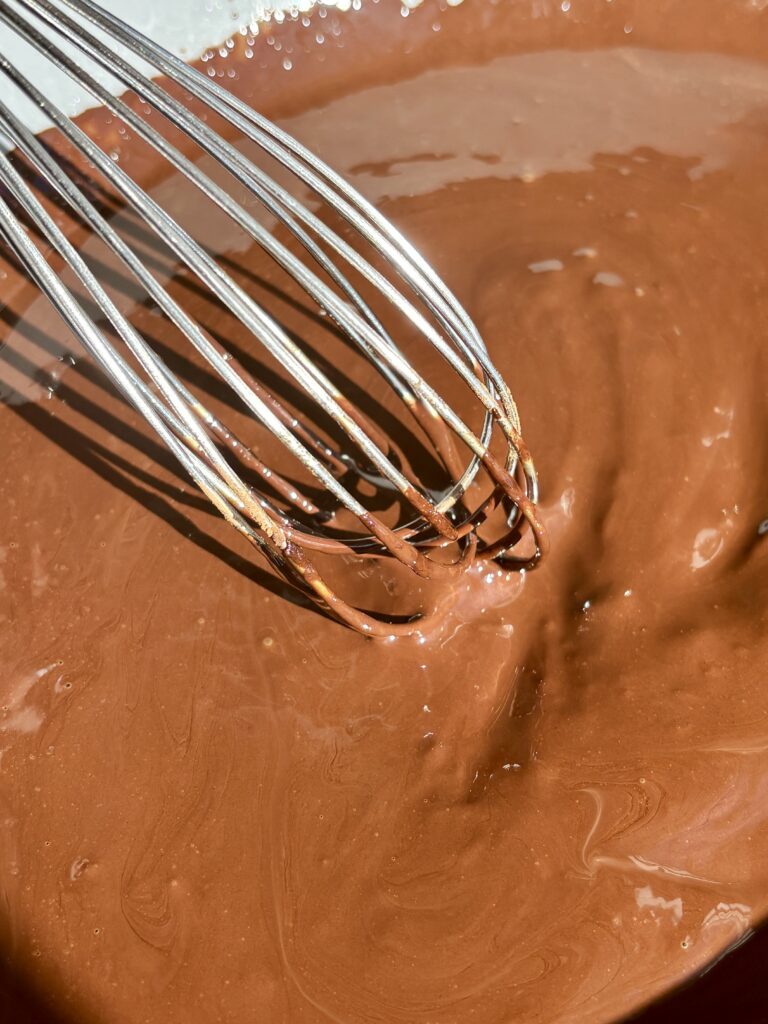
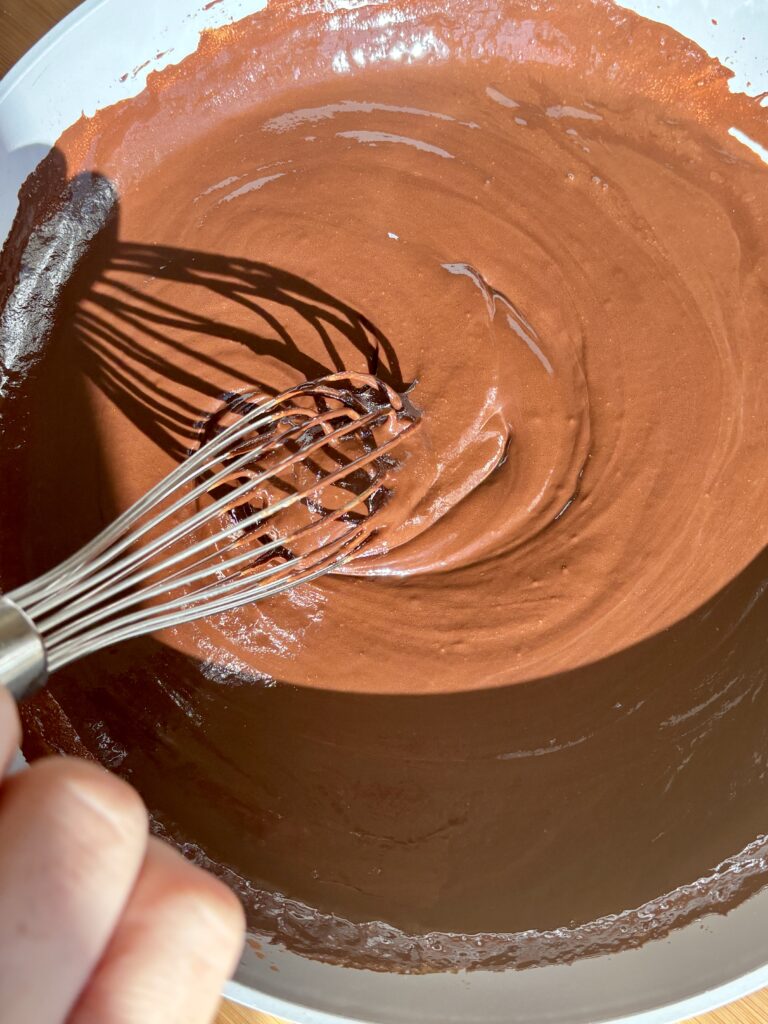
- Immediately add the chopped dark chocolate, olive oil, cocoa powder, and espresso powder to the warm browned butter. Let sit for 1–2 minutes, then whisk until the chocolate is completely melted and the mixture is smooth and glossy.
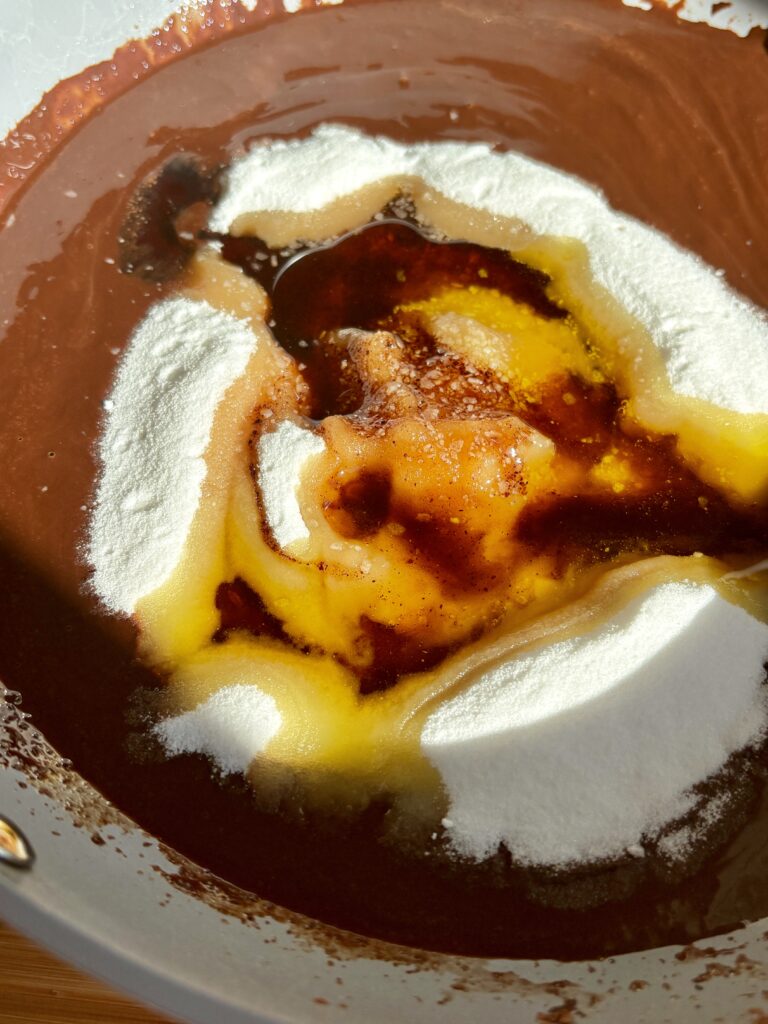
- Add the sugar and flavorings. Whisk in the granulated sugar, maple syrup, vanilla bean paste, and kosher salt until well combined.
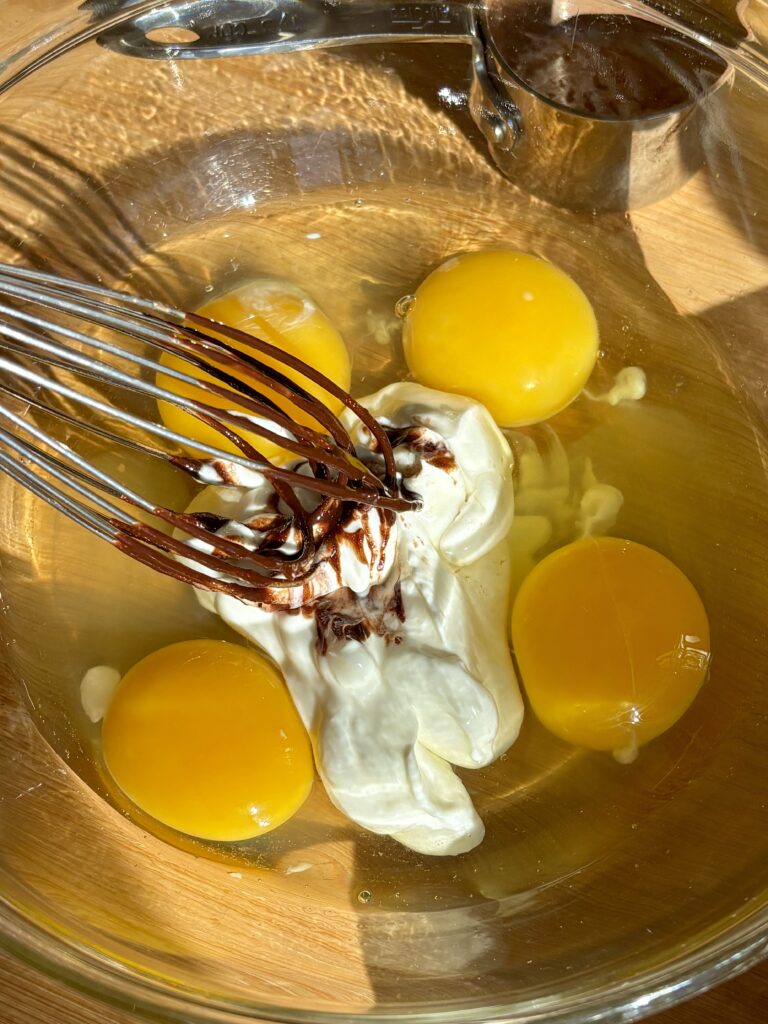
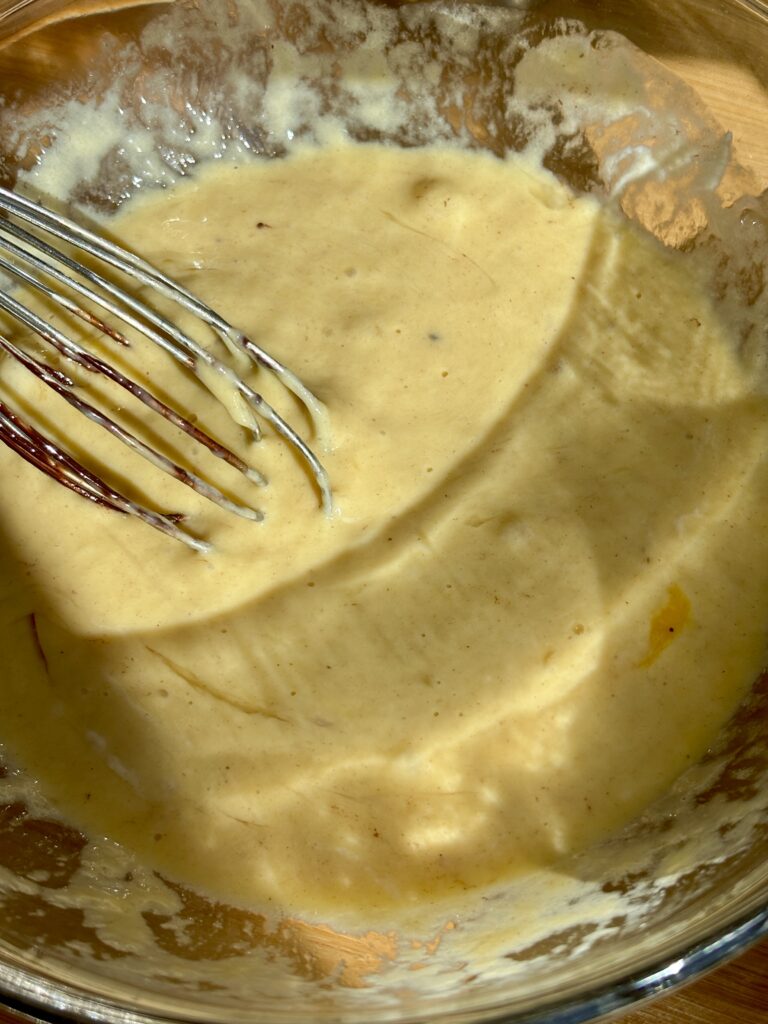
- In a separate bowl, whisk together the eggs, egg yolk, and Greek yogurt until smooth.
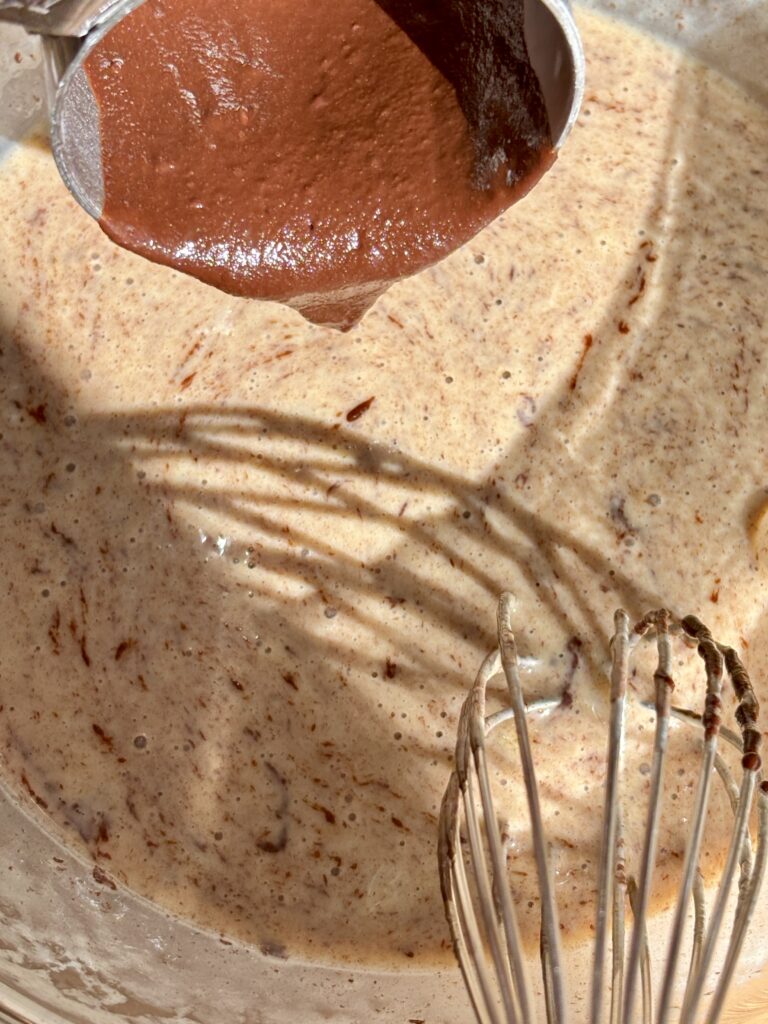
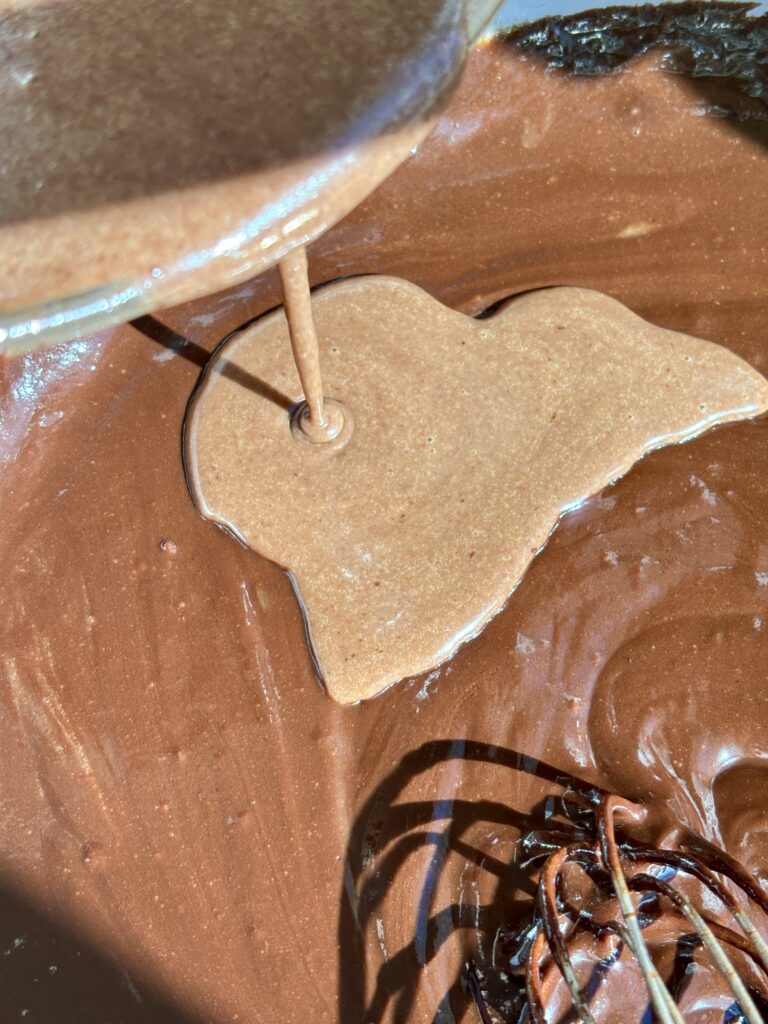
- Slowly whisk about ¼ cup of the warm chocolate mixture into the egg mixture to temper, adding it a little at a time while whisking constantly.
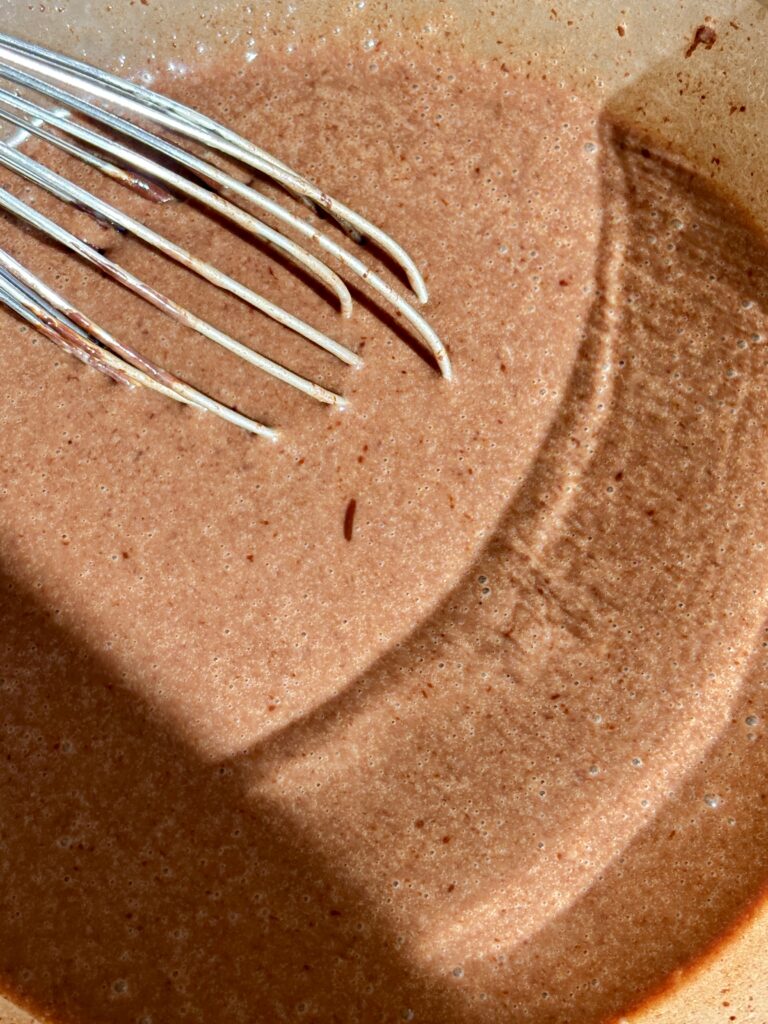
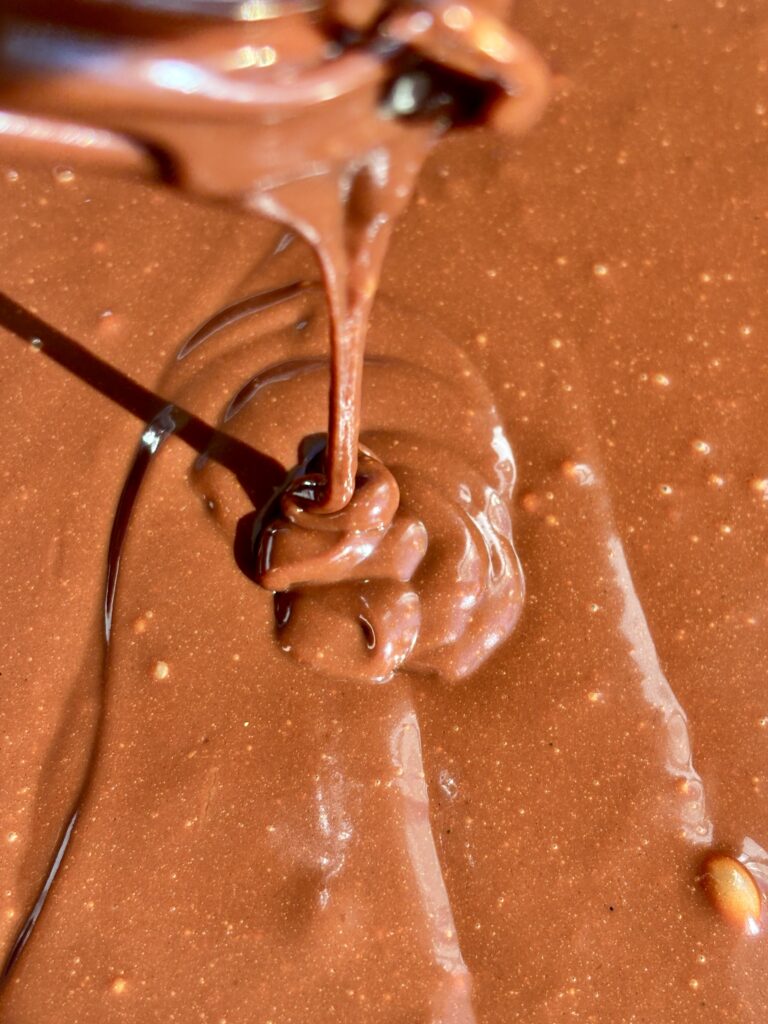
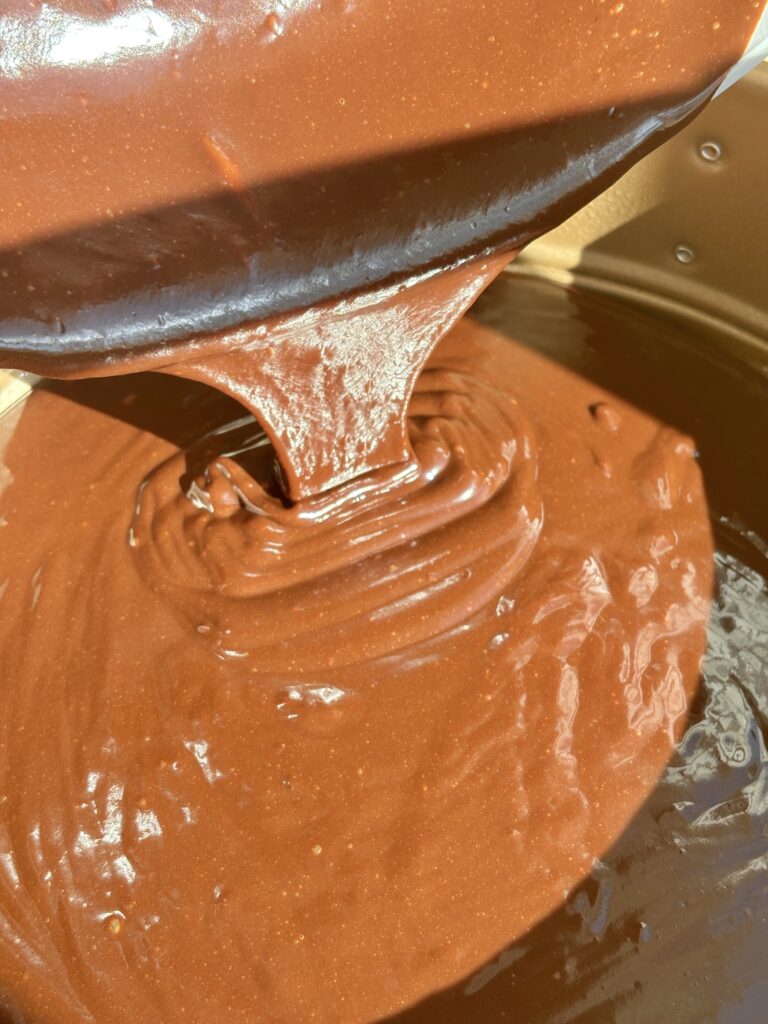
- Then slowly whisk the tempered egg mixture back into the remaining chocolate mixture. Continue whisking until the batter is completely smooth.
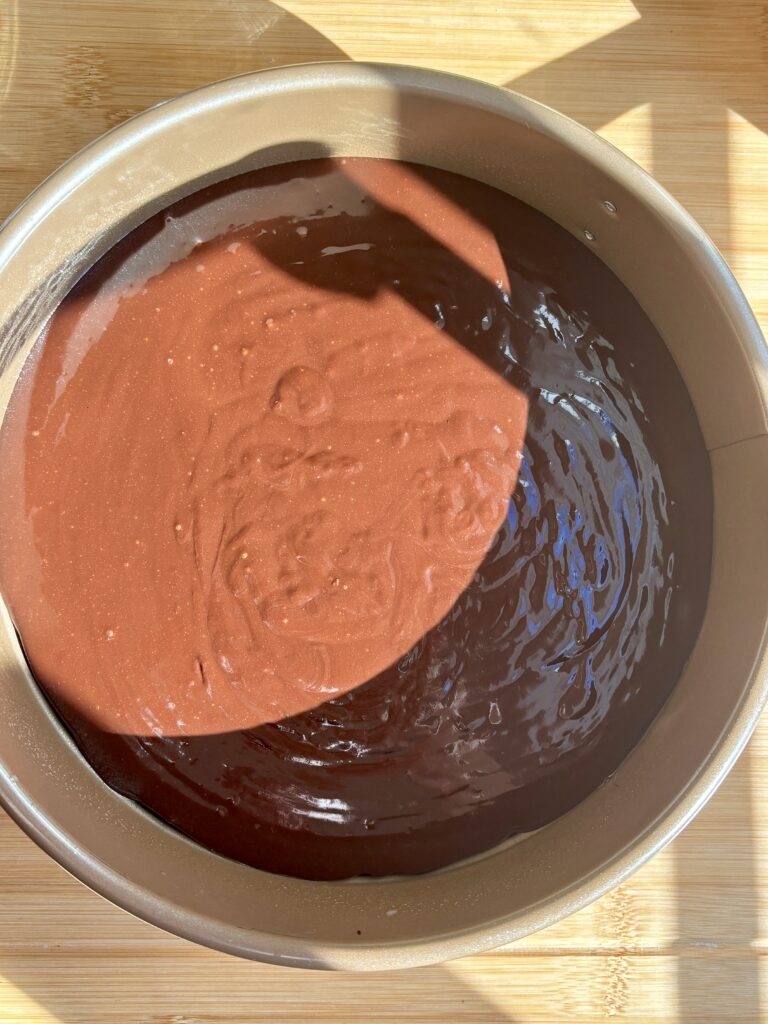
- Pour the batter into the prepared springform pan and smooth the top. Bake for 20–24 minutes, or until the edges are set and the center still has a slight jiggle when gently shaken. (Internal temperature should be 160°F; additional baking may be needed.)
- Allow the cake to cool completely in the pan before releasing the springform. The center will continue to set as the cake cools.
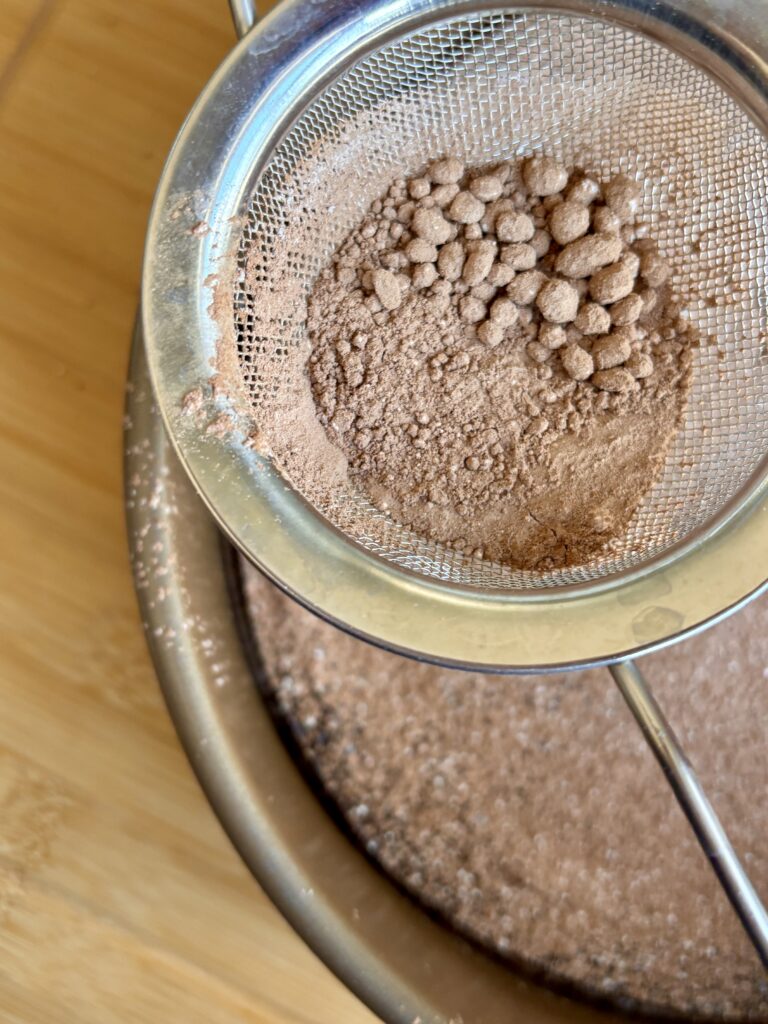
- Whisk together the cocoa powder and powdered sugar. Dust lightly over the cooled cake just before serving. Add a small pinch of flaky sea salt, if desired.
- For the richest, fudgiest texture, let the cake come to room temperature before serving. Serve with vanilla ice cream, lightly sweetened whipped cream, or fresh berries if desired.
Notes
-
This is an intentionally thin, dense, dark chocolate cake, not a tall or fluffy cake.
-
Using 72% dark chocolate creates a noticeably bittersweet flavor. Choose 60–65% chocolate if you prefer a sweeter dessert; however this variation has not been tested.
-
Be careful not to overbrown, or burn, the butter. Burnt milk solids can add unwanted bitterness.
-
Cool completely before slicing to help the cake hold its shape.
-
Store leftovers covered in the refrigerator for up to 3–4 days.
flourless chocolate cake | dark chocolate truffle cake | flourless dark chocolate cake | flourless chocolate torte
| fudgy chocolate cake | rich chocolate cake | dark chocolate dessert | flourless chocolate dessert | browned butter chocolate cake | chocolate truffle cake recipe | easy flourless dark chocolate truffle cake | flourless chocolate cake with browned butter | dense and fudgy chocolate cake

Nutritional Content Disclaimer
I choose not to include nutritional information with my recipes, as these values can be calculated from the ingredients provided. With my background as a pediatric nurse practitioner and my own family experience with disordered eating, I understand how focusing on numbers can affect our relationship with food. My philosophy is that all foods have a place—sweet, savory, nourishing, or indulgent. I aim to share recipes that support a healthy, joyful approach to eating. My hope is that this space also encourages a balanced, healthy relationship with food for you and your family too.