
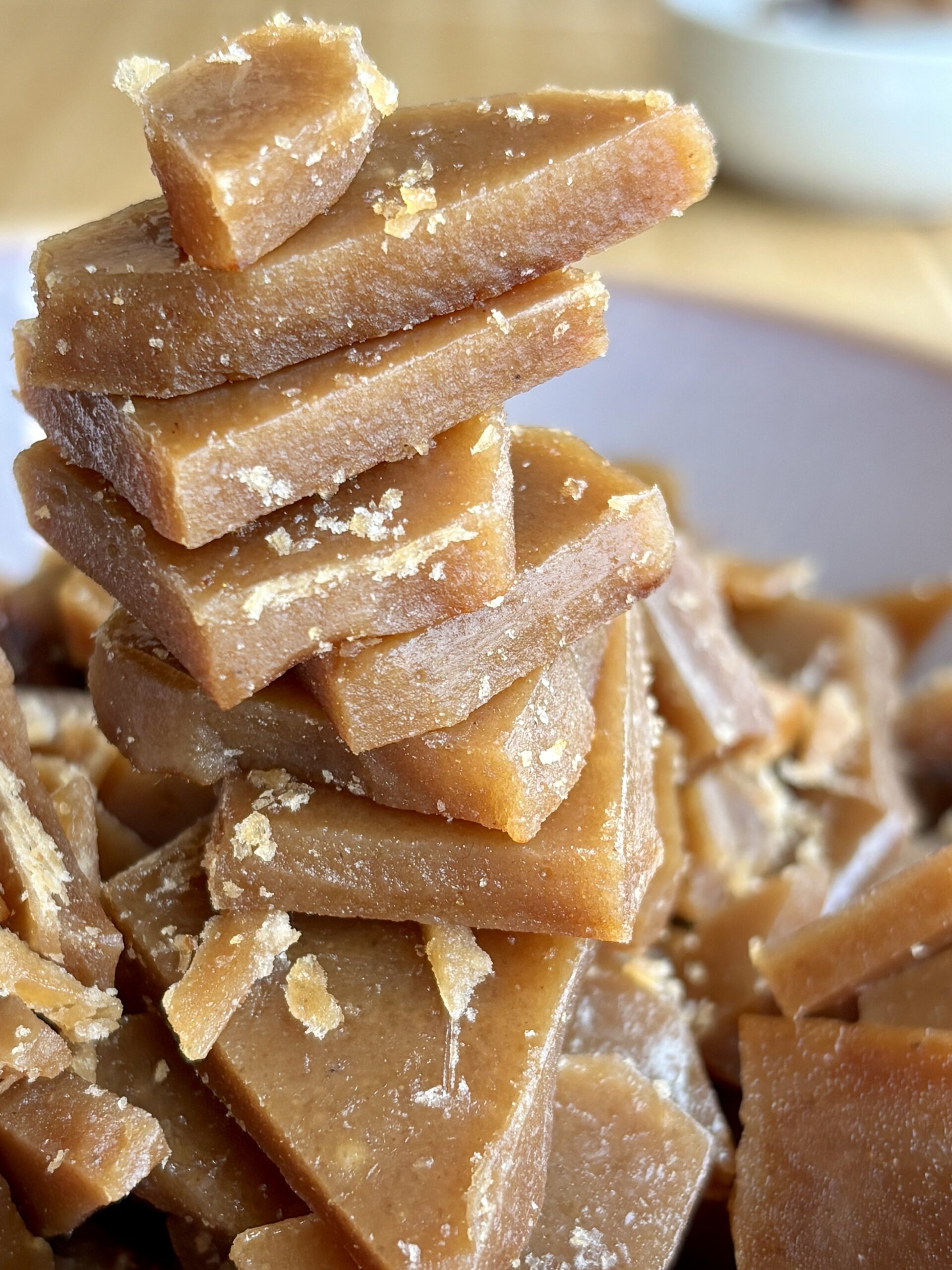
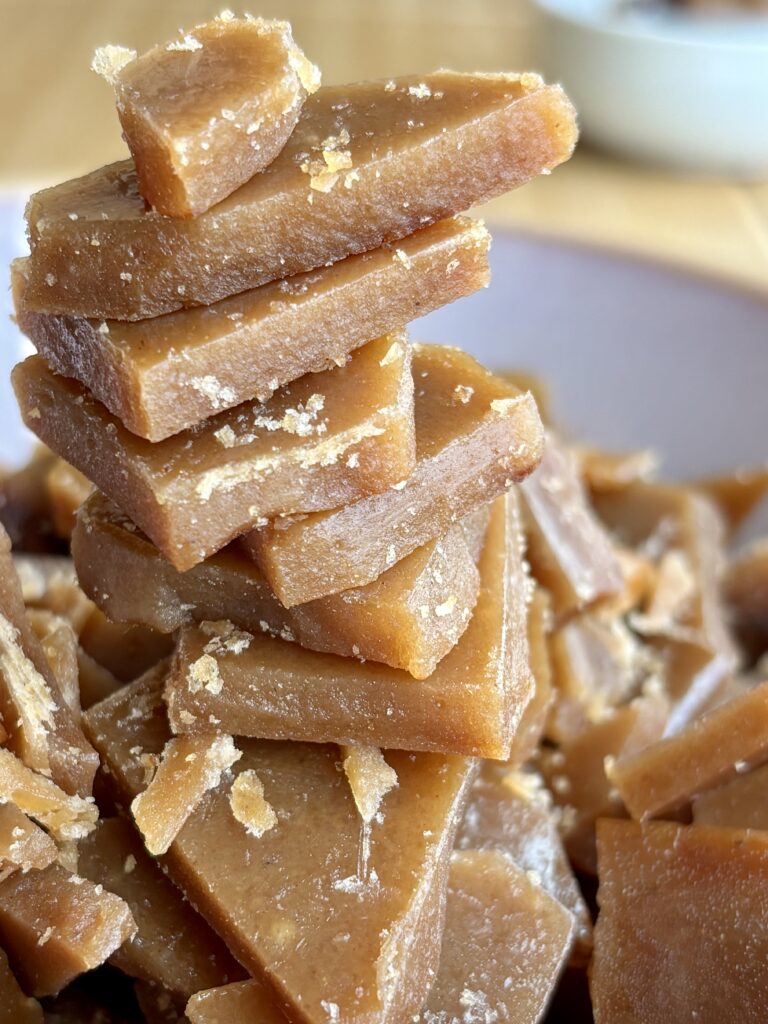
Using toffee chips is one of my favorite things in baking. So I decided to try out making my own from scratch. And let me tell you, I will never go back to the store bought! It is so much easier to make than you’d expect and it tastes even better too!
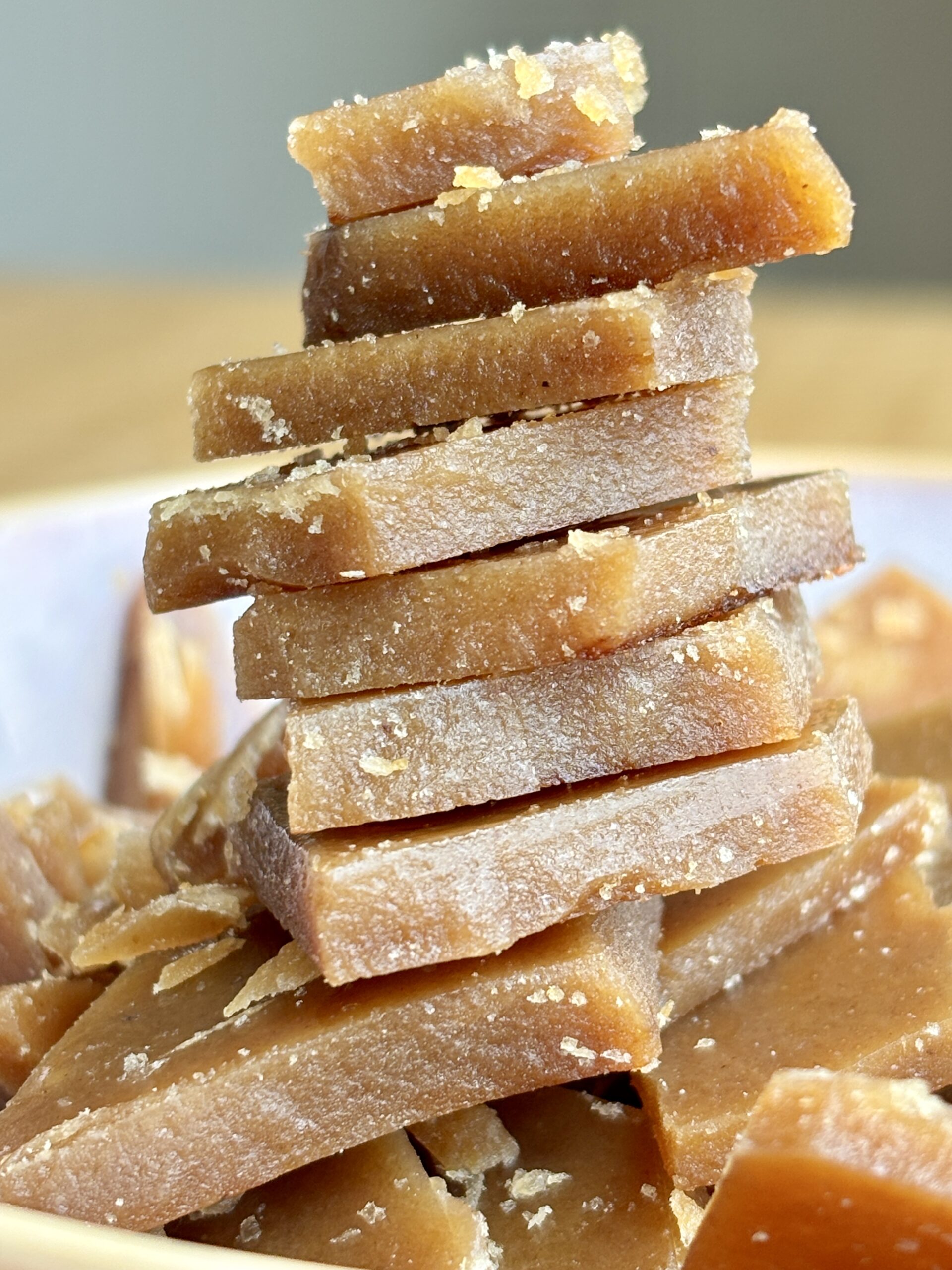
These Homemade Toffee Chips are buttery, crunchy, and packed with deep caramel flavor. They’re made with just four simple ingredients and cook in one saucepan, giving you crisp, golden pieces of homemade toffee that are perfect for folding into cookies (like my Toffee Chocolate Chip Cookies!), brownies, blondies, or sprinkling over just about any dessert.
What makes these homemade toffee chips especially delicious is the combination of light and dark brown sugar. The dark brown sugar adds a deeper caramel flavor and gives the toffee a little more complexity than many traditional recipes.
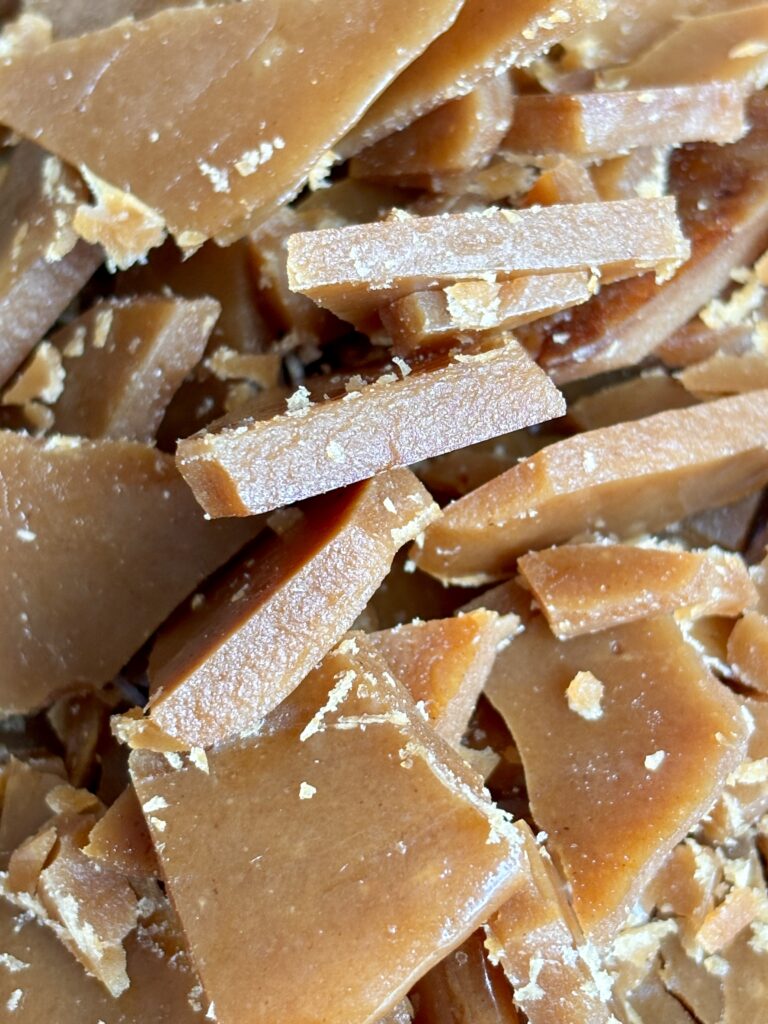
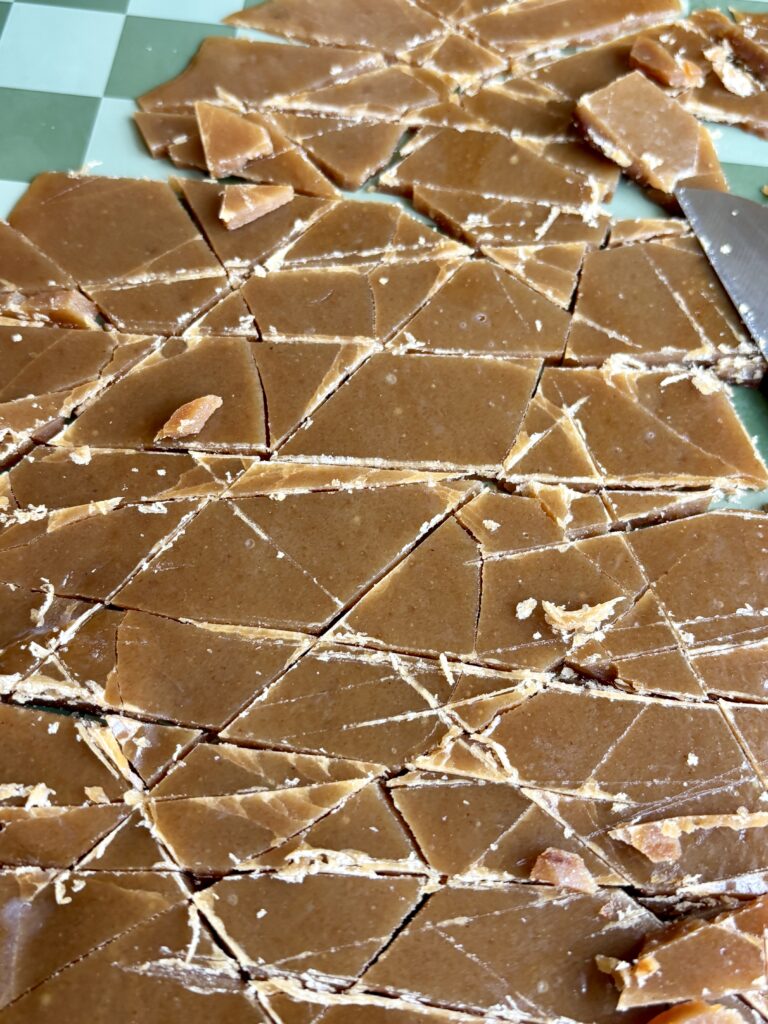
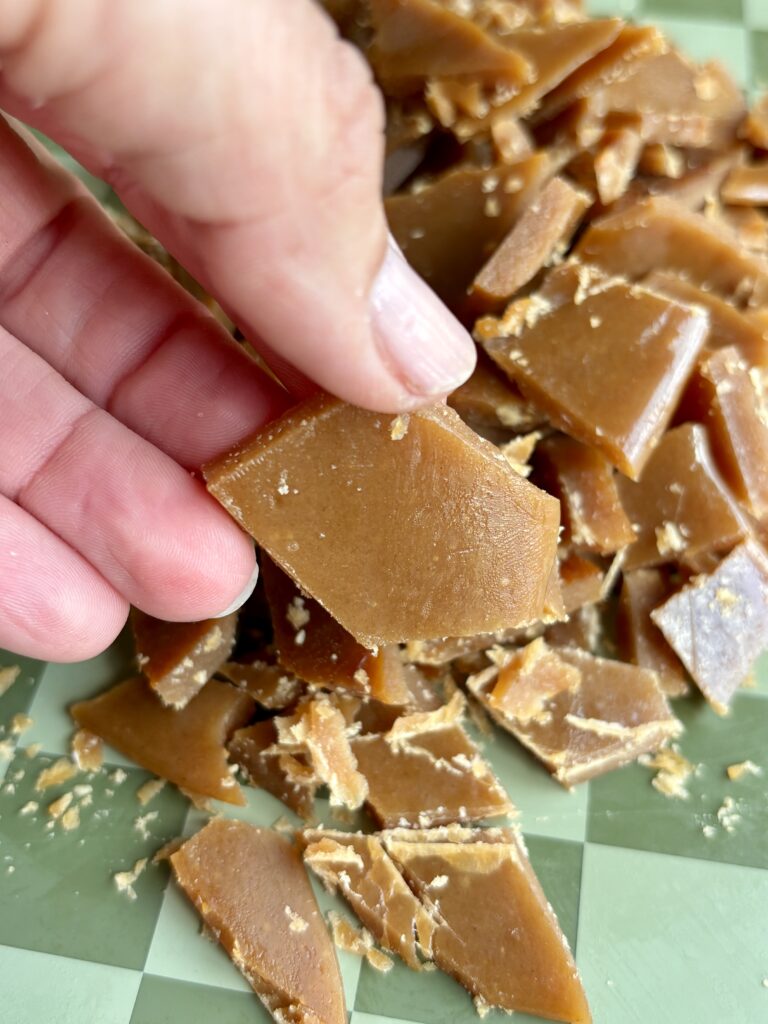
Break it into large shards for snacking, or chop it into small pieces to use in your favorite baking recipes. Once you have a container of homemade toffee chips in the pantry, you’ll start finding excuses to put them on everything.
Why you’ll love this recipe!
What ingredients do I need?
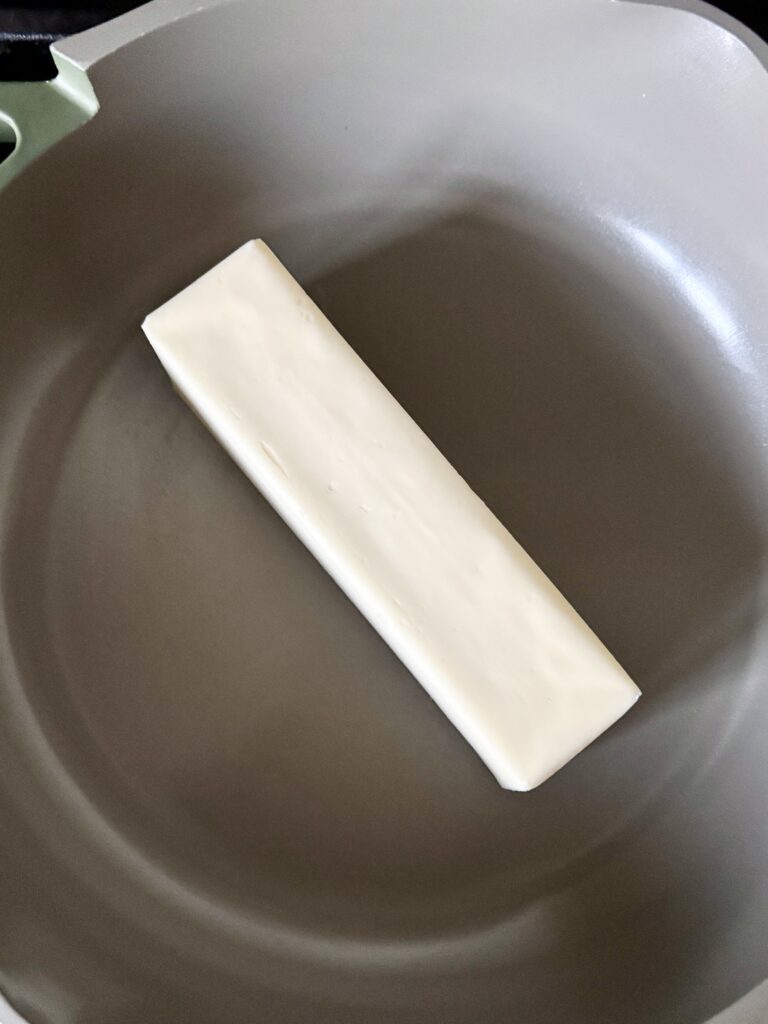
- Unsalted Butter: Butter is the foundation of homemade toffee and gives it that rich, buttery flavor. Unsalted butter allows you to control the amount of salt in the recipe.
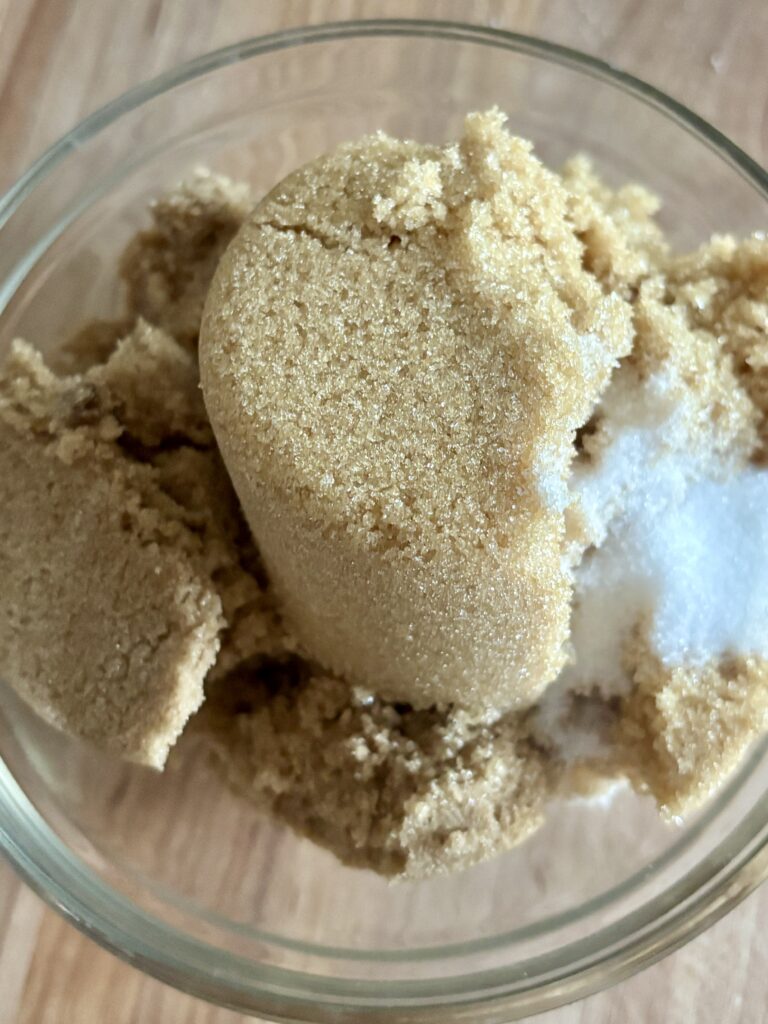
- Light Brown Sugar: Light brown sugar provides sweetness and caramel flavor while keeping the finished toffee balanced.
- Dark Brown Sugar: This is my favorite little trick in this recipe. Dark brown sugar contains more molasses than light brown sugar, which gives the toffee a deeper, richer caramel flavor.
- Using a combination of light and dark brown sugar gives these toffee chips more complexity than using just one type.
- Salt: Salt balances the sweetness and brings out the buttery caramel flavor. You can adjust the amount slightly depending on how salty you like your toffee.
How to Make Homemade Toffee Chips
Making homemade toffee bits is easier than you might think, but the temperature matters. The mixture needs to reach the hard-crack stage so that it becomes crisp and brittle once cooled.
- Start by lining a baking sheet, plate, or cutting board with parchment paper or a silicone baking mat.
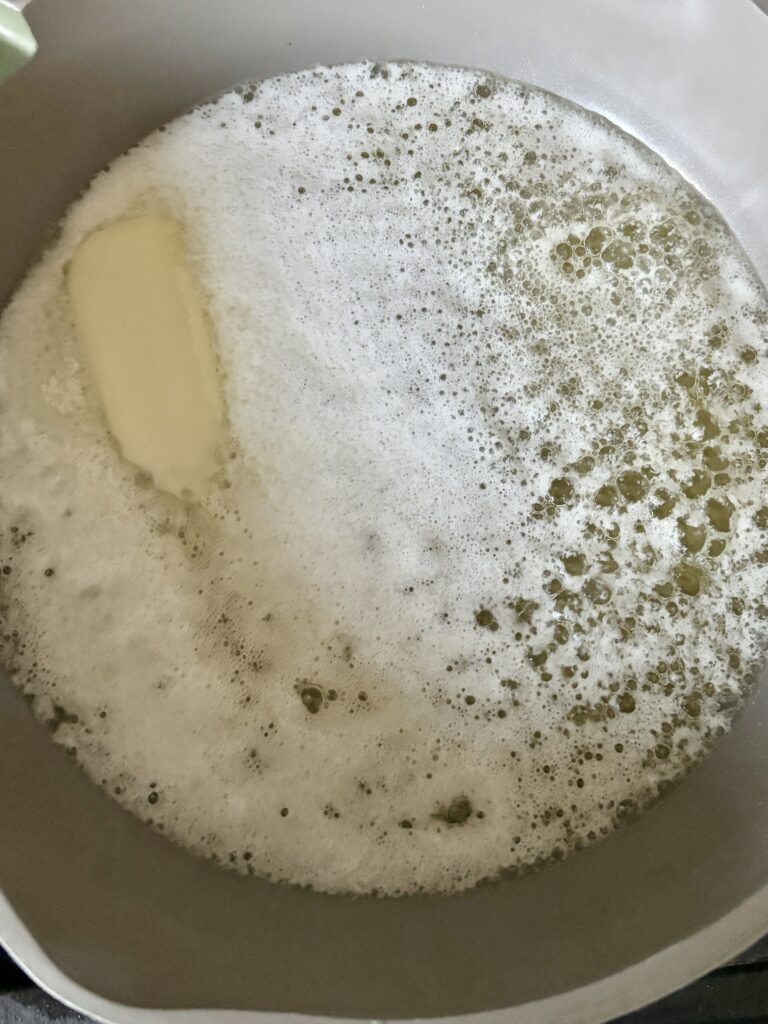
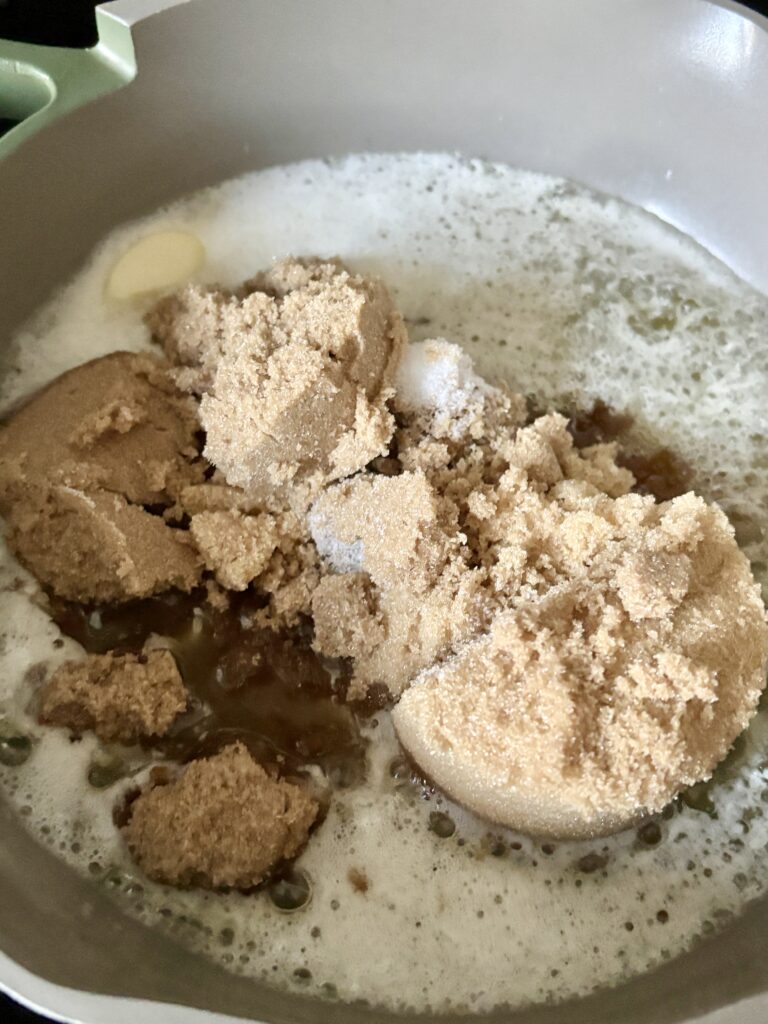
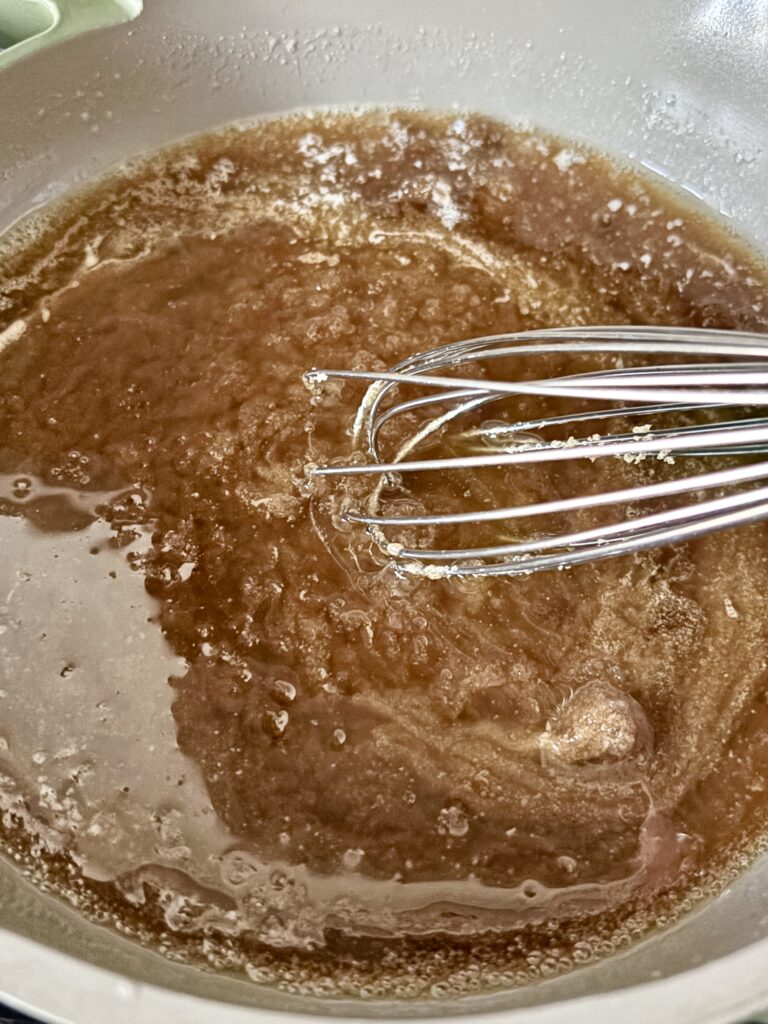
- Melt the butter in a heavy-bottomed saucepan over medium heat, then add the light brown sugar, dark brown sugar, and salt.
- Whisk until everything is combined and the mixture becomes smooth and glossy.
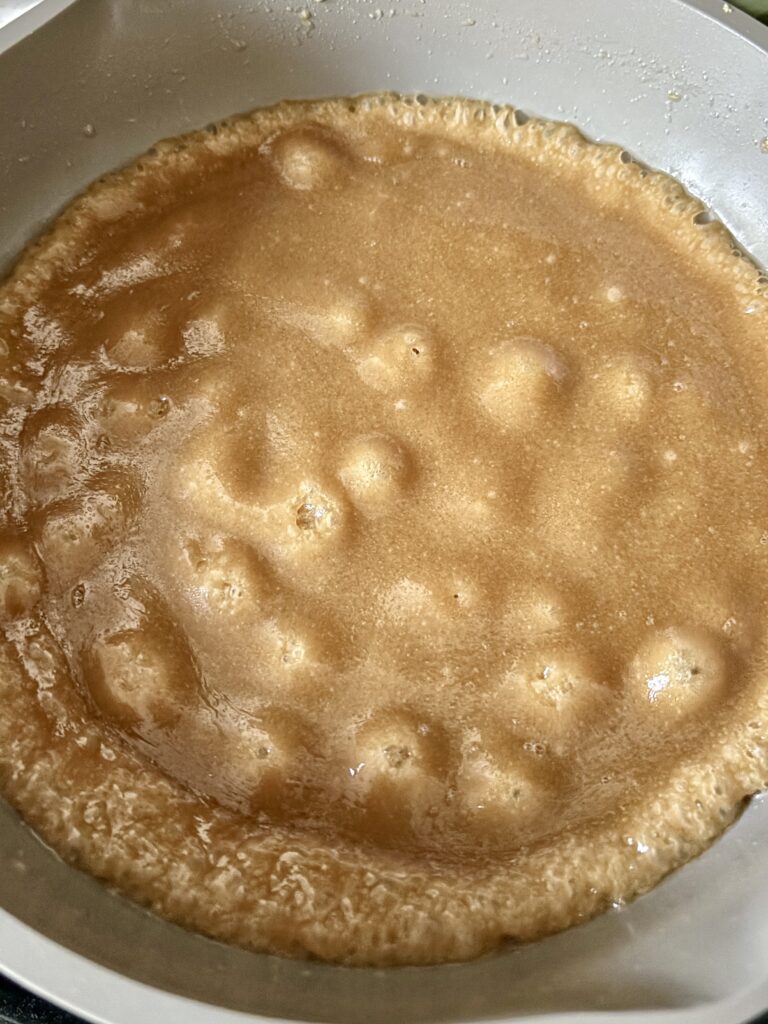
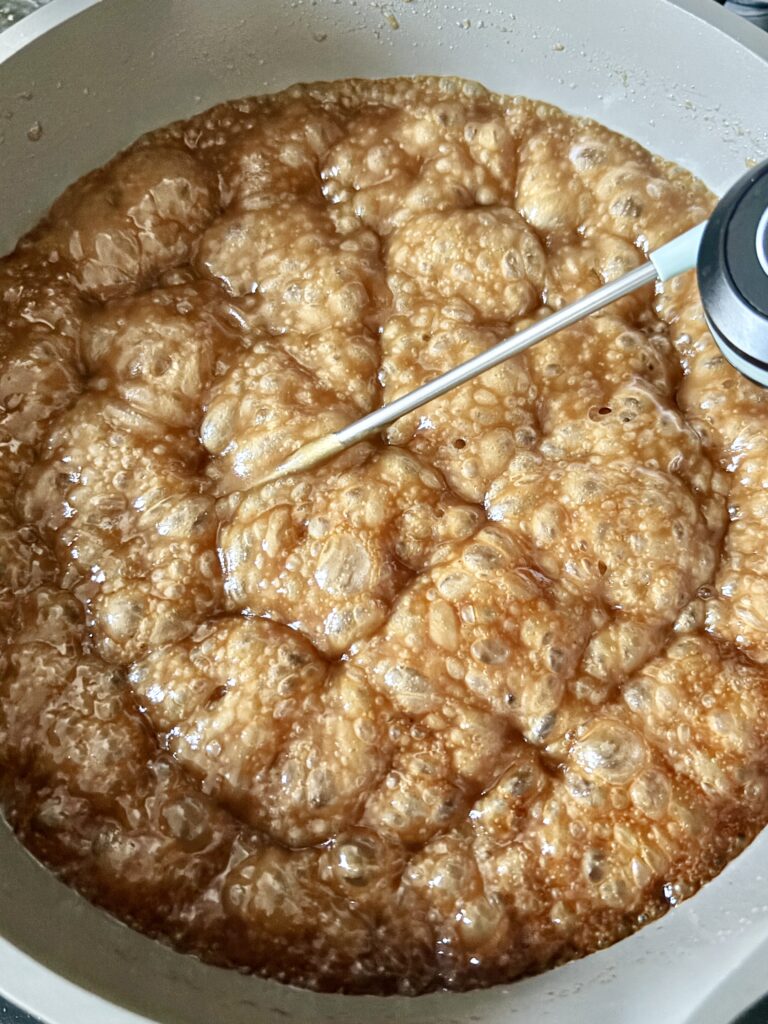
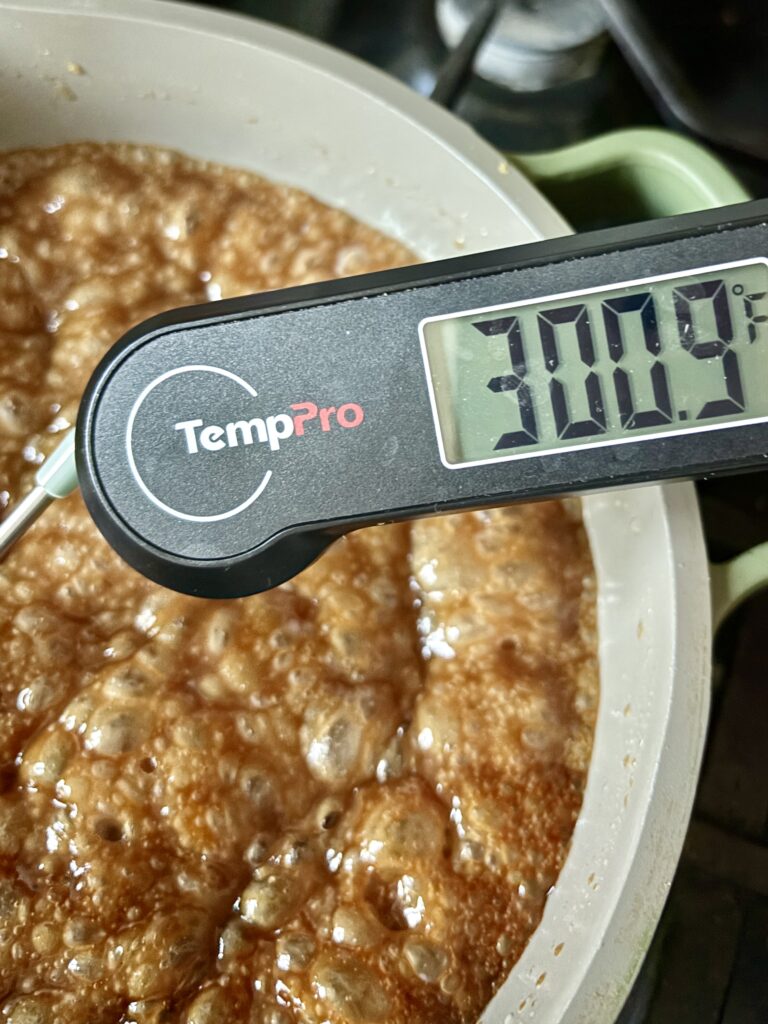
- Reduce the heat to medium-low and continue cooking until the mixture reaches 295–305°F on a candy thermometer. The toffee will become darker, bubbly, and fragrant as it cooks.
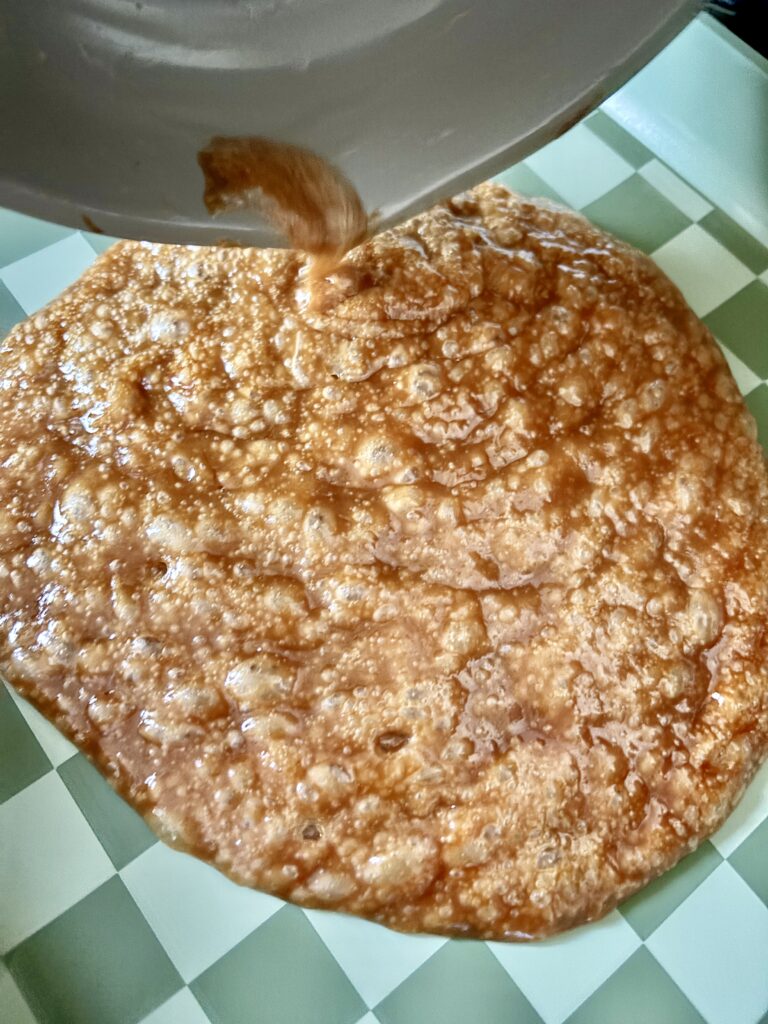
- Once it reaches temperature, immediately remove it from the heat and pour it onto your prepared surface.
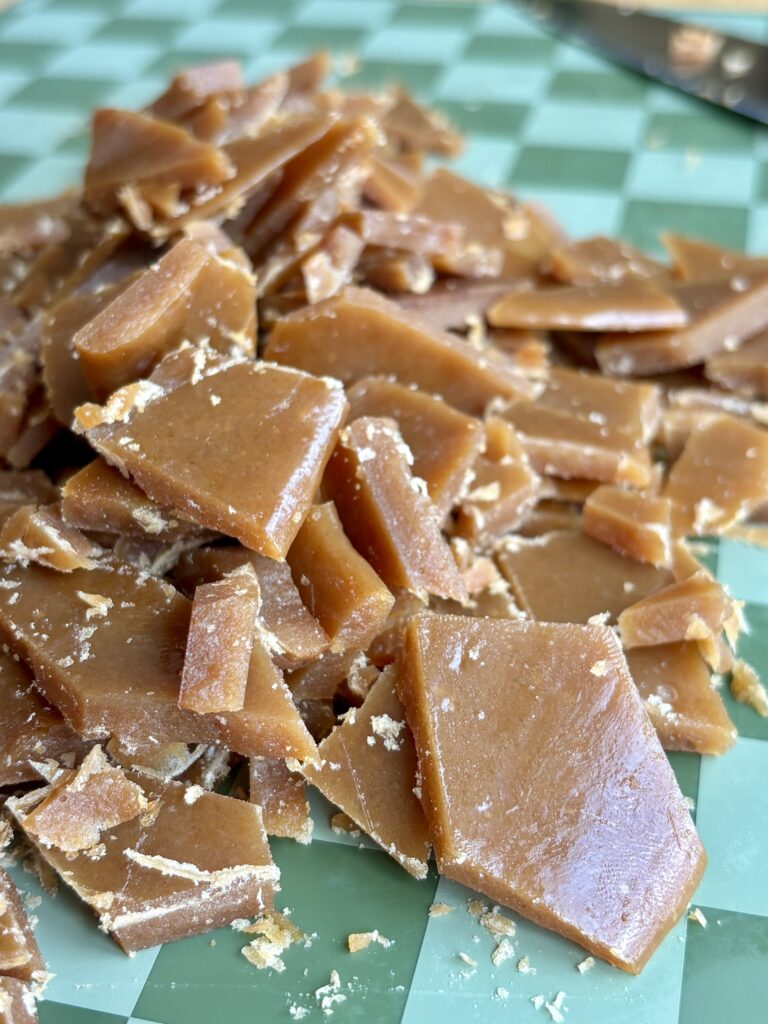
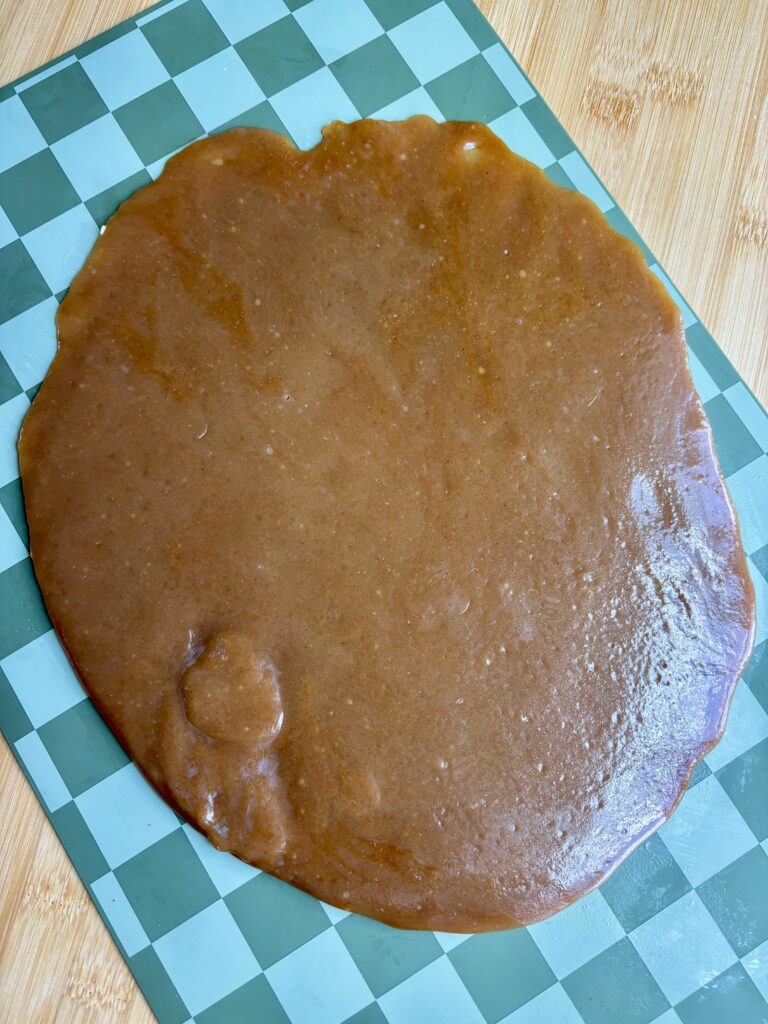
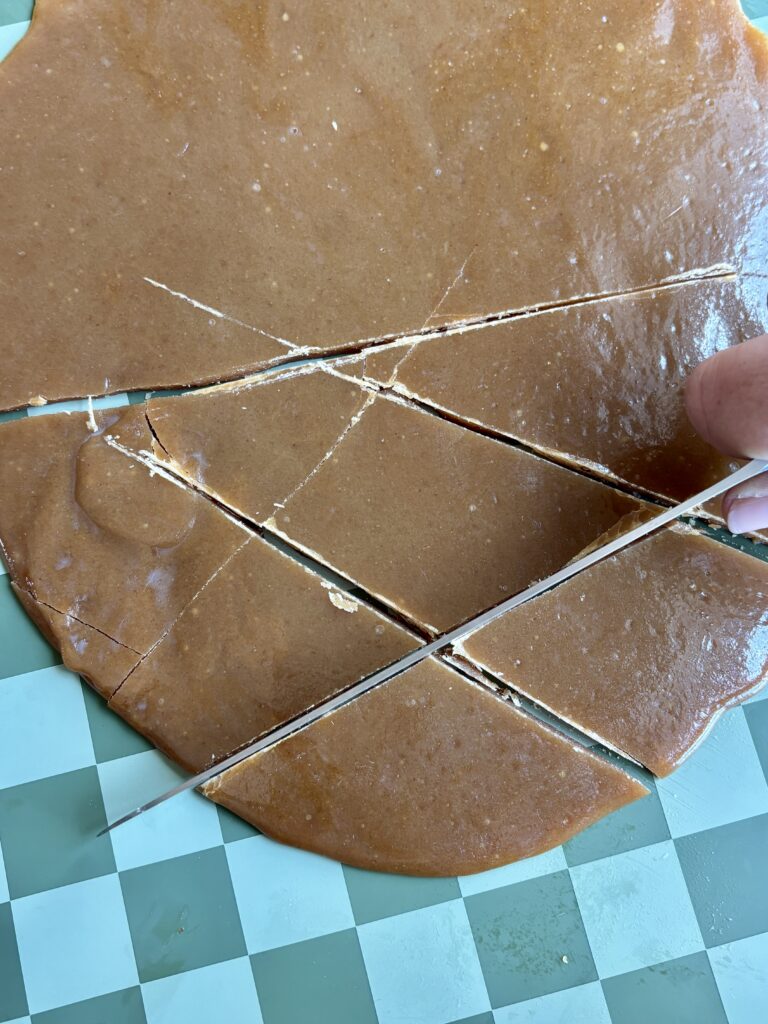
- Let it cool completely until hard and brittle, then break it into shards. Chop those shards into whatever size pieces you need.
- For cookies, I like smaller pieces because they distribute throughout the dough without creating huge pockets of toffee.
Pro Tips
- Use a heavy-bottomed saucepan. A heavy pan distributes heat more evenly and helps prevent hot spots that can cause the butter and sugar to scorch.
- Use a candy thermometer. This is one recipe where temperature really matters. The difference between soft caramel and crisp toffee comes down to reaching the correct temperature.
- Watch the toffee closely near the end. Once the mixture gets close to 280°F, the temperature can climb quickly. Don’t walk away from the stove during the final few minutes.
- Don’t rely only on color. Color can be helpful, but a thermometer gives you a much more reliable indication that the toffee has reached the hard-crack stage.
- Pour it immediately once the toffee reaches 295–305°F. Remove it from the heat and immediately pour it onto the prepared surface. It will continue cooking in the hot pan if you don’t.
- Don’t spread it too thin. You want a thin, even layer that can be easily broken into pieces, but spreading it extremely thin can make the pieces fragile and difficult to chop.
- Let it cool completely. Resist the urge to chop it while it’s still warm. Fully cooled toffee will break cleanly and give you crisp, crunchy pieces.
- Chop according to how you’re using it and preference. Use larger shards for topping desserts and smaller pieces for cookies, brownies, blondies, and muffins.
- Keep your surrounding humidity in mind. Homemade toffee absorbs moisture from the air. In a humid kitchen, transfer it to an airtight container as soon as it has completely cooled.
How to Use Homemade Toffee Chips
There are so many ways to use these homemade toffee bits!
- Cookies: Fold them into chocolate chip cookies, oatmeal cookies, sugar cookies, peanut butter cookies, or shortbread. They’re especially good in my Toffee Chocolate Chip Cookies, where they add buttery caramel flavor and little pockets of crunch.
- Brownies and Blondies: Add chopped toffee to brownie or blondie batter before baking, or sprinkle it over the top for extra crunch.
- Ice Cream: Sprinkle homemade toffee chips over vanilla, chocolate, caramel, or coffee ice cream. Add chocolate sauce or caramel sauce for an easy sundae.
- Cheesecake: Use them as a crunchy topping for cheesecake, especially chocolate, vanilla, caramel, or pumpkin cheesecake.
- Cakes: Sprinkle toffee pieces over frosting or use them between cake layers for a little crunch.
- Muffins and Coffee Cake: Add chopped toffee to muffin or coffee cake batter for little pockets of buttery caramel flavor.
- Pancakes and Waffles: Sprinkle toffee pieces over pancakes or waffles with whipped cream and maple syrup.
- Snack Mix: Add toffee pieces to popcorn, pretzels, cereal, and chocolate for an easy sweet-and-salty snack mix.
- Chocolate Bark: Fold the toffee into melted chocolate and let it set for an easy homemade candy.
Can I Substitute?
Yes! Like always though, any substitutions made to the recipe can result in a change in texture and/or flavor.
- Butter: Salted butter can be used instead of unsalted butter. If using salted butter, reduce the added salt to ½ teaspoon.
- Brown sugar: You can use all light brown sugar or all dark brown sugar if needed, although the combination of both gives the best balance of flavor in my opinion.
- Salt: Fine sea salt can be used in place of kosher salt.
Leftovers and Storage
- Room Temperature: Once the toffee has cooled completely, store it in an airtight container at room temperature for up to 2 weeks.
- Keep the container tightly sealed, especially if you live somewhere humid. Moisture can cause the toffee to become sticky and lose some of its crunch.
- If stacking the pieces, place parchment paper between the layers to keep them from sticking together.
- Can You Freeze Homemade Toffee Chips?
- Yes! Homemade toffee freezes well. Place the completely cooled toffee pieces in a freezer-safe airtight container or zip-top bag. Freeze for up to 3 months.
- When you’re ready to use them, let the toffee come to room temperature while still sealed in the container. Keeping it sealed while it comes to temperature can help prevent condensation from forming directly on the candy.
But, I Still Have A Few Questions…
What are toffee chips?
Toffee chips are small pieces of hard, crunchy toffee that can be mixed into baked goods or used as a topping. They’re buttery, caramelized, and add both flavor and texture to cookies, brownies, cakes, ice cream, and more.
Are homemade toffee bits the same as toffee chips?
Yes. The terms are often used interchangeably. You may also see them called toffee pieces, toffee chunks, or toffee bits depending on the recipe.
Do I need a candy thermometer to make toffee?
I highly recommend a candy thermometer for this. The mixture needs to reach 295–305°F to become crisp and brittle once cooled. Because the temperature can change quickly near the end, using a thermometer takes the guesswork out of the process.
What temperature should homemade toffee reach?
Cook the mixture to 295–305°F, which is the hard-crack stage. This is what gives the cooled toffee its characteristic crisp, crunchy texture.
What happens if my toffee doesn’t reach 295°F?
If the mixture doesn’t reach a high enough temperature, there is still too much moisture in the candy. The finished toffee may be soft, chewy, or sticky instead of crisp and brittle.
Why did my toffee burn?
Toffee can burn quickly once it reaches the higher temperatures. Keep a close eye on it during the final few minutes and remove it from the heat as soon as it reaches the target temperature.
Why is my toffee grainy?
Graininess can happen when sugar crystallizes during cooking. Avoid unnecessary stirring once the mixture is fully combined, and make sure the sugars dissolve properly before allowing the mixture to reach the final cooking temperature.
Can I use salted butter?
Yes. If using salted butter, reduce the added salt to ½ teaspoon.
Can I use only light brown sugar?
Yes. The recipe will still work, but the flavor will be a little lighter. The combination of light and dark brown sugar gives the finished toffee a deeper caramel flavor.
Can I use only dark brown sugar?
Yes. Using all dark brown sugar will give the toffee a deeper molasses and caramel flavor.
Can I use granulated sugar instead of brown sugar?
This recipe was developed using brown sugar, so I recommend sticking with it. Granulated sugar will change both the flavor and the way the toffee cooks.
Why use both light and dark brown sugar?
The combination gives the toffee a more complex caramel flavor. Light brown sugar provides sweetness and caramel notes, while dark brown sugar adds more molasses and depth.
How do I know when my toffee is done without relying on color?
The most reliable method is temperature. Your mixture should reach 295–305°F. It will also become darker, bubbly, and smell deeply caramelized as it cooks.
Why did my toffee become sticky after cooling?
Humidity is usually the culprit. Homemade toffee absorbs moisture from the air, which can soften the candy. Store it in a tightly sealed airtight container as soon as it has completely cooled.
Can I make these toffee chips ahead of time?
Absolutely. Homemade toffee chips are perfect for making ahead. Store them in an airtight container at room temperature for up to 2 weeks or freeze them for up to 3 months.
How small should I chop the toffee for cookies?
For cookies, pea to nickel-sized pieces work well. They distribute evenly throughout the dough and give you little pockets of caramelized crunch without creating pieces that are too large.
Can I leave the toffee in large pieces?
Yes. Large shards are perfect for topping ice cream, cheesecakes, cakes, brownies, or other desserts.
Can I use homemade toffee chips in chocolate chip cookies?
Absolutely. They are especially delicious in chocolate chip cookies. Add them alongside the chocolate chips for buttery caramel flavor and crunch. Try them in my Toffee Chocolate Chip Cookies.
Can I add nuts to this toffee recipe?
Yes. Toasted almonds, pecans, or walnuts can be added to the warm toffee. Sprinkle them over the surface immediately after pouring and gently press them into the candy.
Can I add chocolate?
Yes. Once the toffee has cooled, you can drizzle or coat it with melted chocolate for a chocolate-toffee candy.
Can I double the recipe?
Yes. Use a larger, heavy-bottomed saucepan and make sure there is plenty of room for the mixture to bubble as it cooks. The cooking time may increase slightly, so rely on the temperature rather than the clock.
Why did my butter separate from the sugar?
Separation can happen if the mixture isn’t cooking evenly or if the temperature changes too quickly. A heavy-bottomed pan and steady heat can help. Continue cooking and whisking as directed, while keeping a close eye on the temperature.
What can I use homemade toffee bits for?
Use them in chocolate chip cookies, brownies, blondies, muffins, coffee cake, cheesecake, ice cream, pancakes, waffles, snack mixes, chocolate bark, and cakes. They’re also delicious eaten straight from the container—which may or may not happen before you finish baking.
Other Recipes You’ll Love

Let’s engage!
Make sure to tag @thehomechefmomma on Instagram or Facebook, and leave a review or comment if you make these. I always get so excited to see your creations, variations of the recipe, and feedback! Just remember to be kind in your comments, there is still a person behind this screen! 🙂
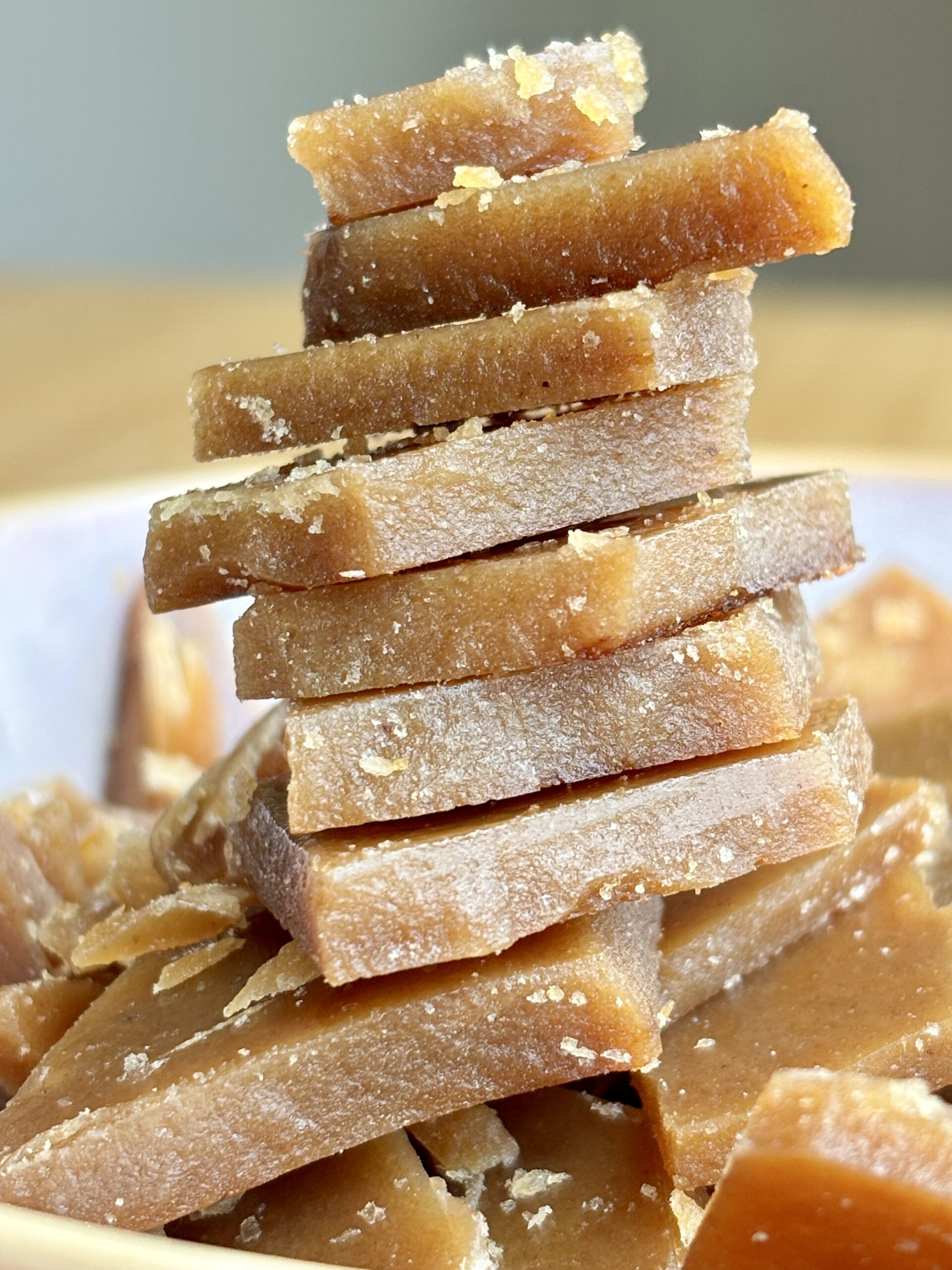
Homemade Toffee Chips
Ingredients
- 8 tablespoons unsalted butter
- ½ cup light brown sugar packed
- ½ cup dark brown sugar packed
- 1 teaspoon kosher salt
Instructions
- Line a baking sheet, large plate, or cutting board with parchment paper or a silicone baking mat. Set aside.
- In a medium heavy-bottomed saucepan, melt the butter over medium heat.
- Once the butter is melted, add the light brown sugar, dark brown sugar, and salt.
- Whisk continuously until the butter and sugars are fully combined and the mixture looks smooth and glossy, about 1–2 minutes. The mixture may look grainy at first but should become more uniform as the sugars begin to dissolve.
- Reduce the heat to medium-low. Continue cooking, stirring occasionally with a heatproof spatula or whisk, until the mixture reaches 295–305°F on a candy thermometer.
- The toffee will darken slightly, become bubbly, and develop a rich caramel aroma as it cooks. Watch it closely during the final few minutes because the temperature can rise quickly.
- Immediately remove the saucepan from the heat and carefully pour the hot toffee onto the prepared parchment paper or silicone mat.
- Use an offset spatula or the back of a spoon to spread it into a thin, even layer if needed.
- Allow the toffee to cool completely at room temperature until hard and brittle, about 30 minutes.
- Once completely cooled, break or cut the toffee into large shards.
- For even smaller toffee bits, transfer the shards to a cutting board and carefully chop them into your desired size using a sharp knife.
Notes
- A candy thermometer is highly recommended for the most reliable results.
- The toffee needs to reach 295–305°F to become crisp and brittle when cooled.
- Watch the mixture carefully once it reaches about 280°F, as the temperature can rise quickly.
- For cookies, chop the cooled toffee into pea-sized pieces so they distribute evenly throughout the dough.
- For toppings, leave some pieces larger for extra crunch and visual appeal.
- Store completely cooled toffee in an airtight container to protect it from humidity.
- If using salted butter, reduce the added salt to ½ teaspoon.
homemade toffee chips | homemade toffee bits | homemade toffee pieces | toffee bits recipe | homemade toffee recipe | how to make toffee bits | toffee chips recipe | crunchy toffee bits | buttery toffee | easy homemade toffee | brown sugar toffee | homemade caramel bits | toffee pieces for cookies | toffee bits for cookies | toffee for cookies | homemade toffee for baking | chocolate chip cookie toffee | toffee cookie recipe | homemade candy recipe | easy candy recipe | toffee topping | toffee bits for brownies | toffee bits for ice cream | homemade dessert topping | caramel toffee | salted toffee

Nutritional Content Disclaimer
I choose not to include nutritional information with my recipes, as these values can be calculated from the ingredients provided. With my background as a pediatric nurse practitioner and my own family experience with disordered eating, I understand how focusing on numbers can affect our relationship with food. My philosophy is that all foods have a place—sweet, savory, nourishing, or indulgent. I aim to share recipes that support a healthy, joyful approach to eating. My hope is that this space also encourages a balanced, healthy relationship with food for you and your family too.