
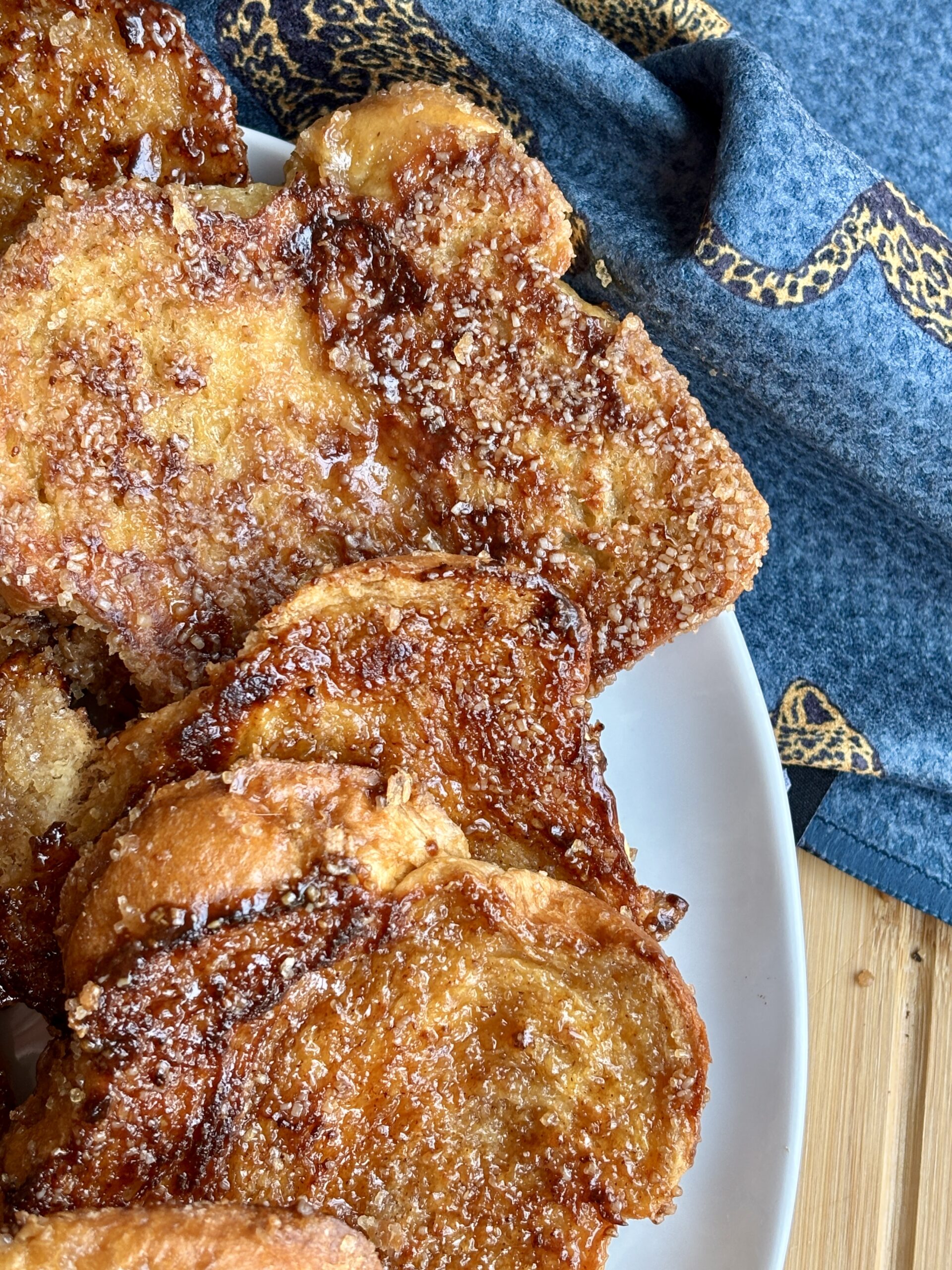
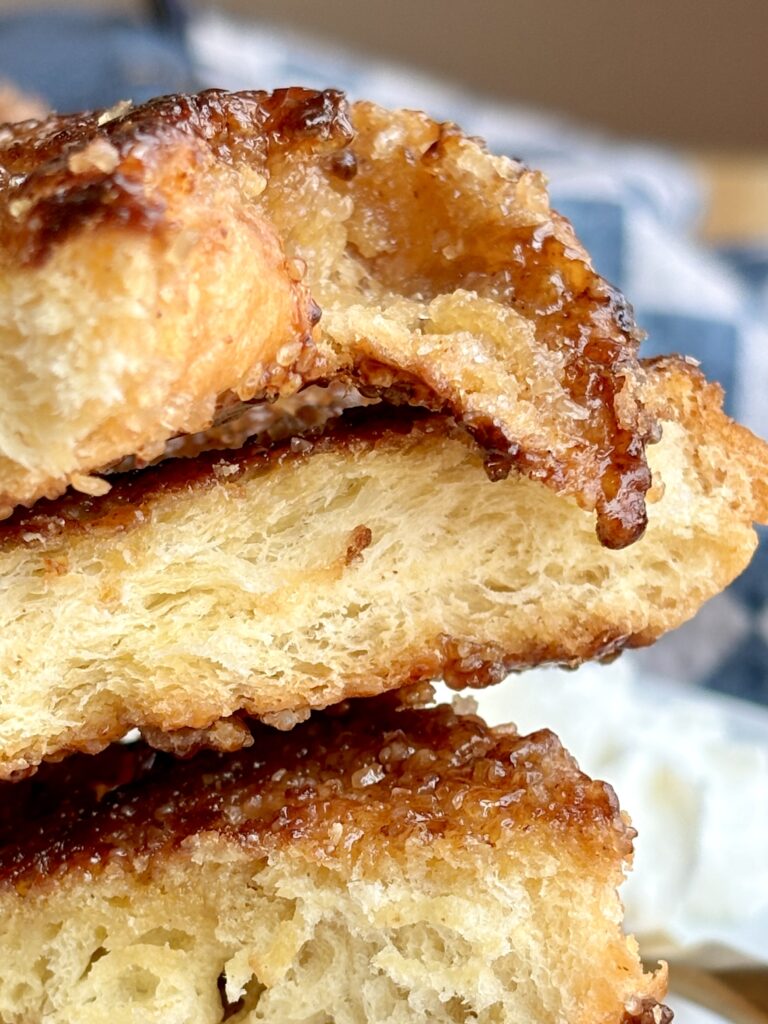
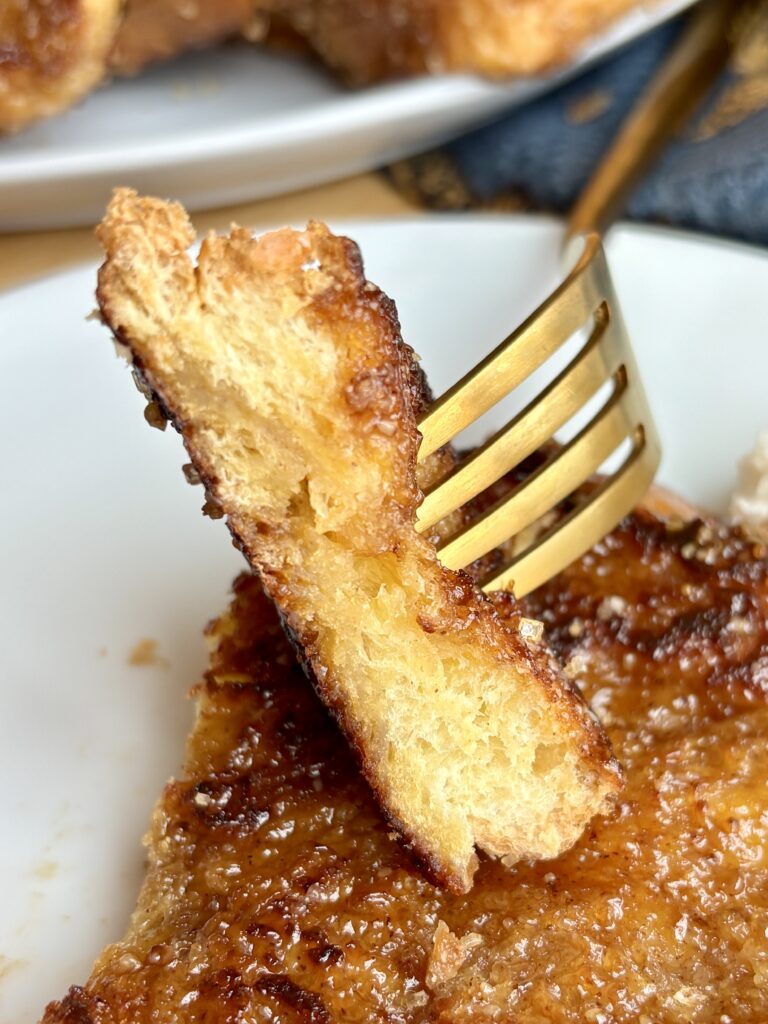
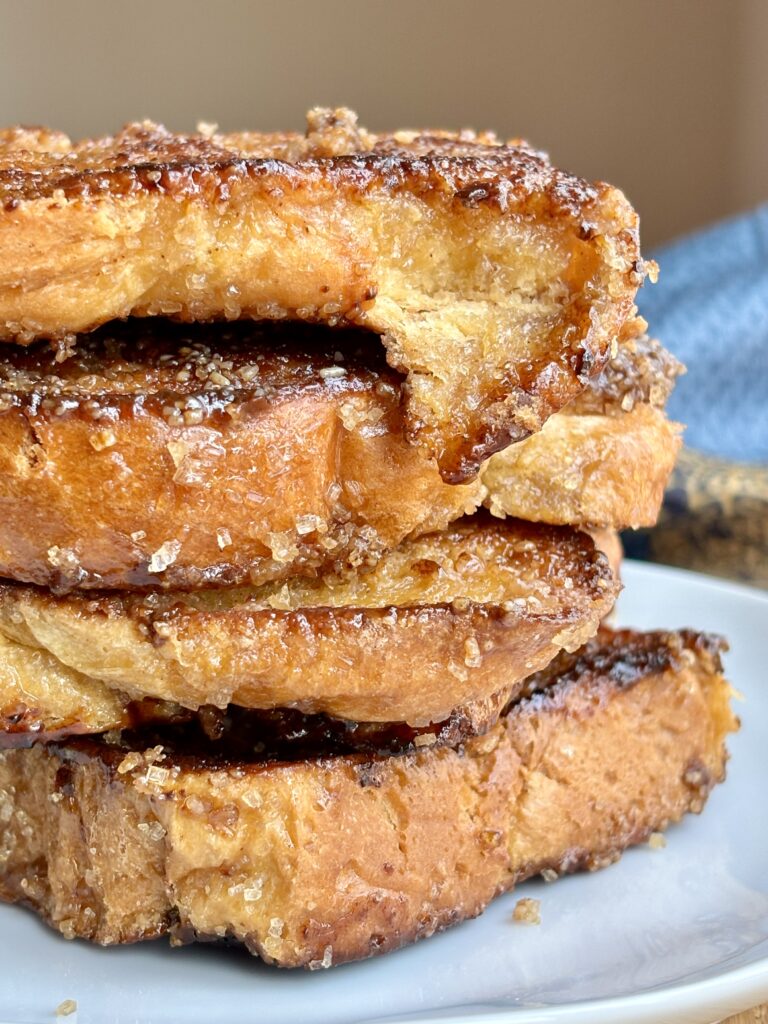
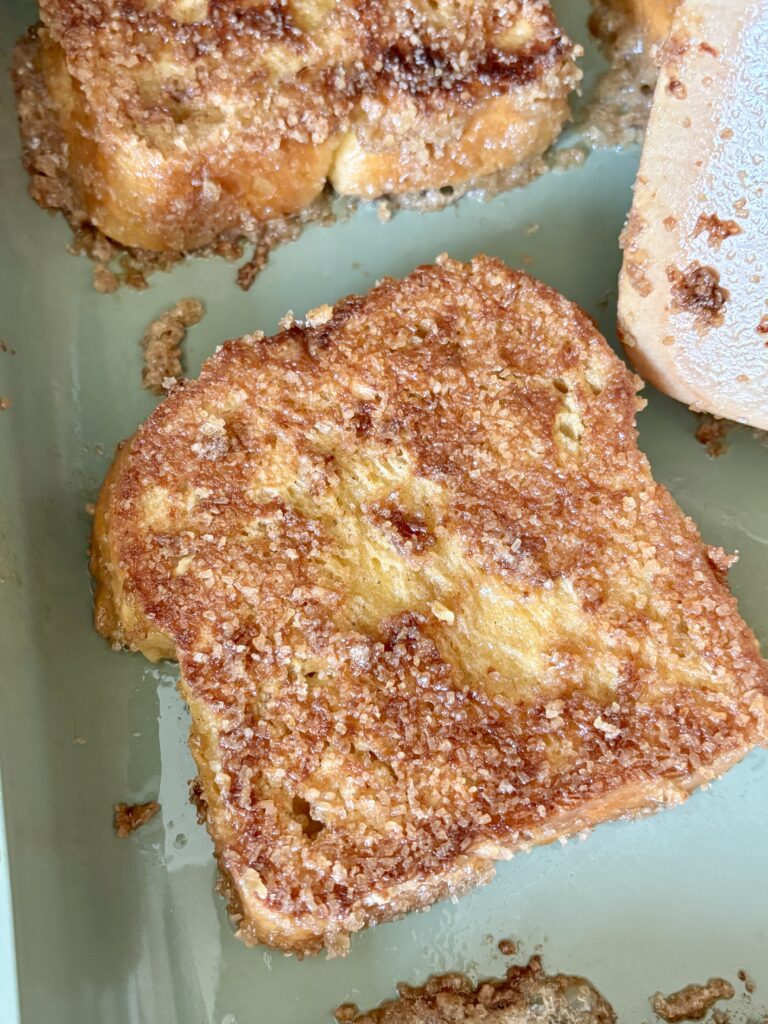
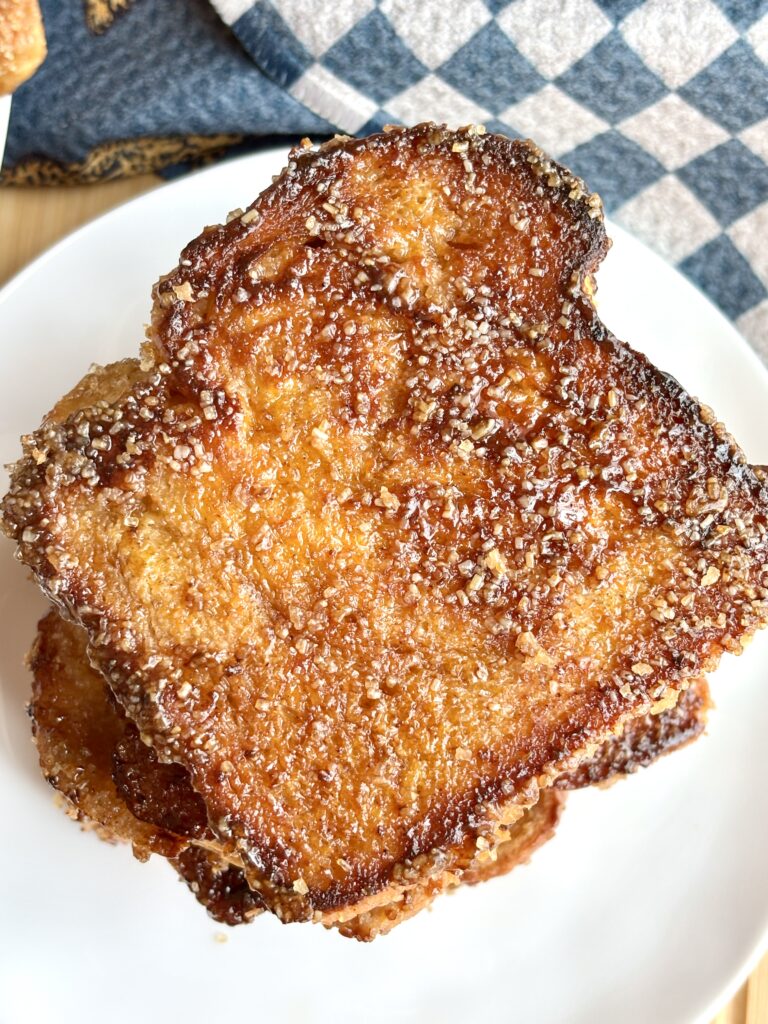
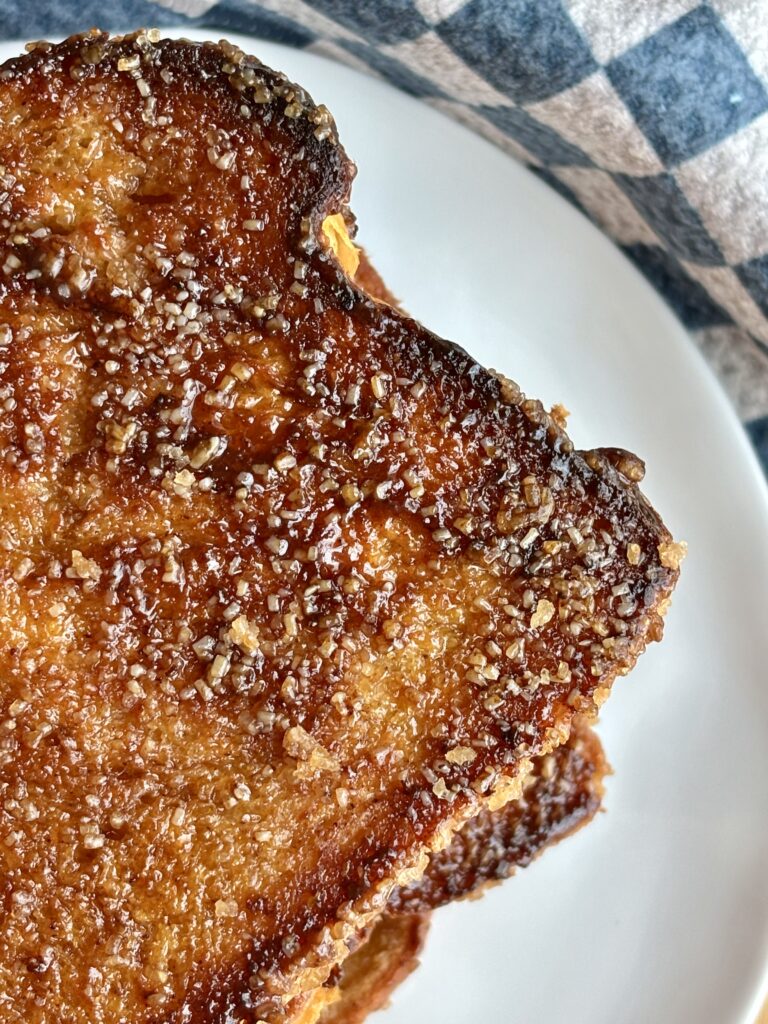
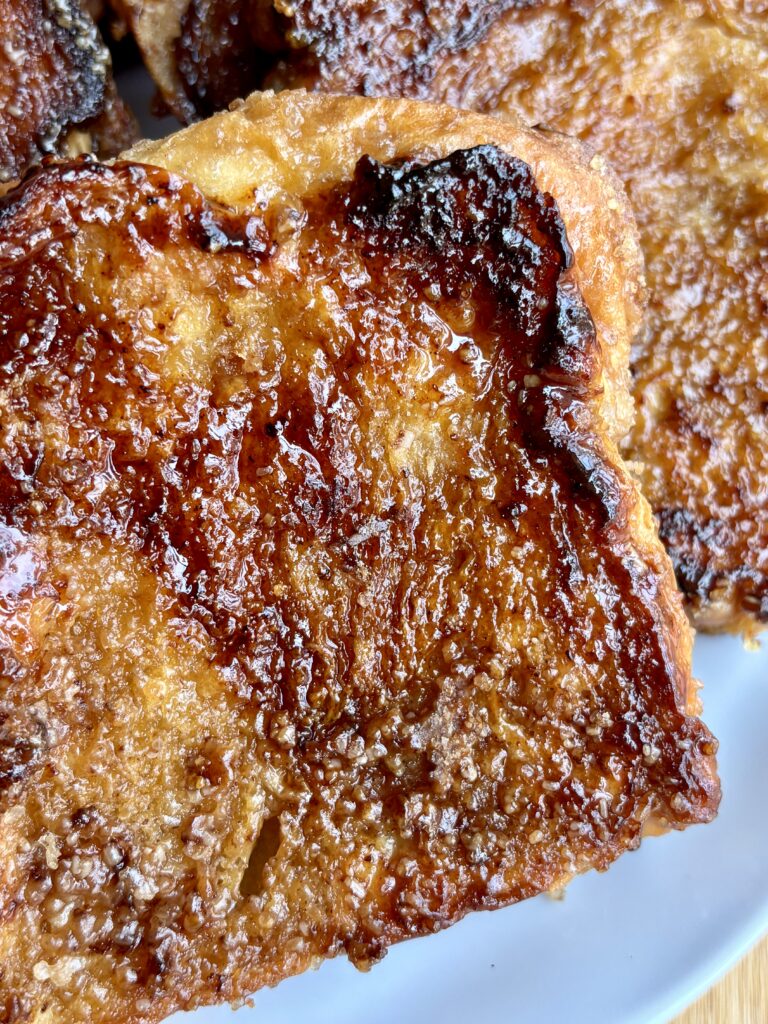
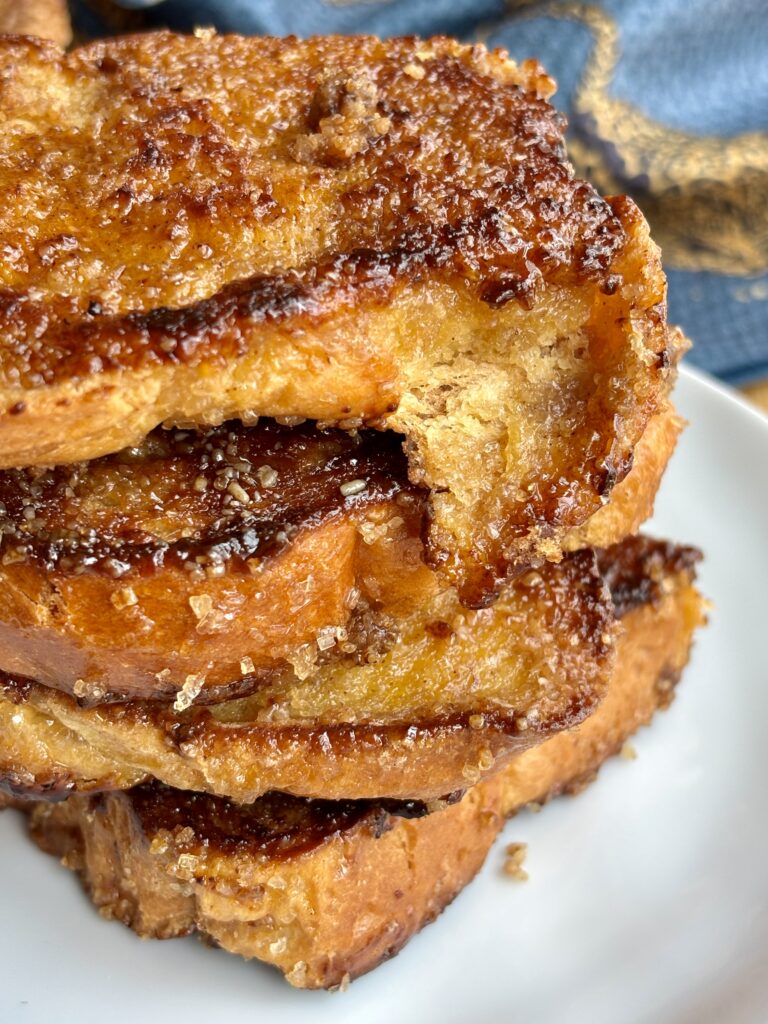
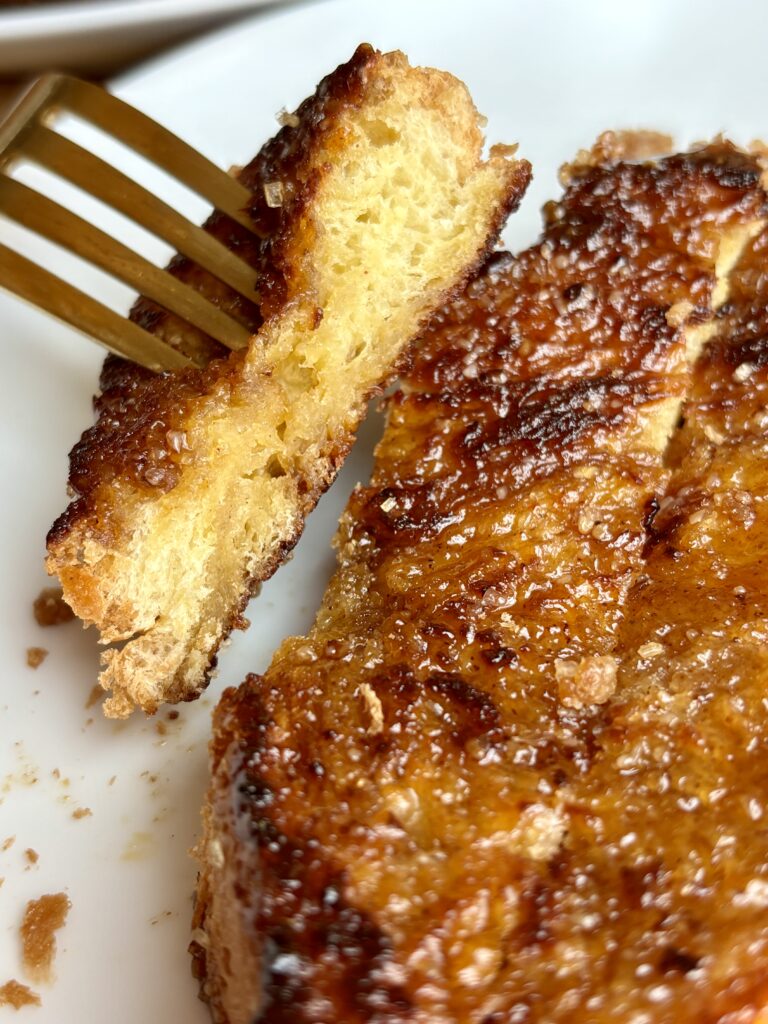
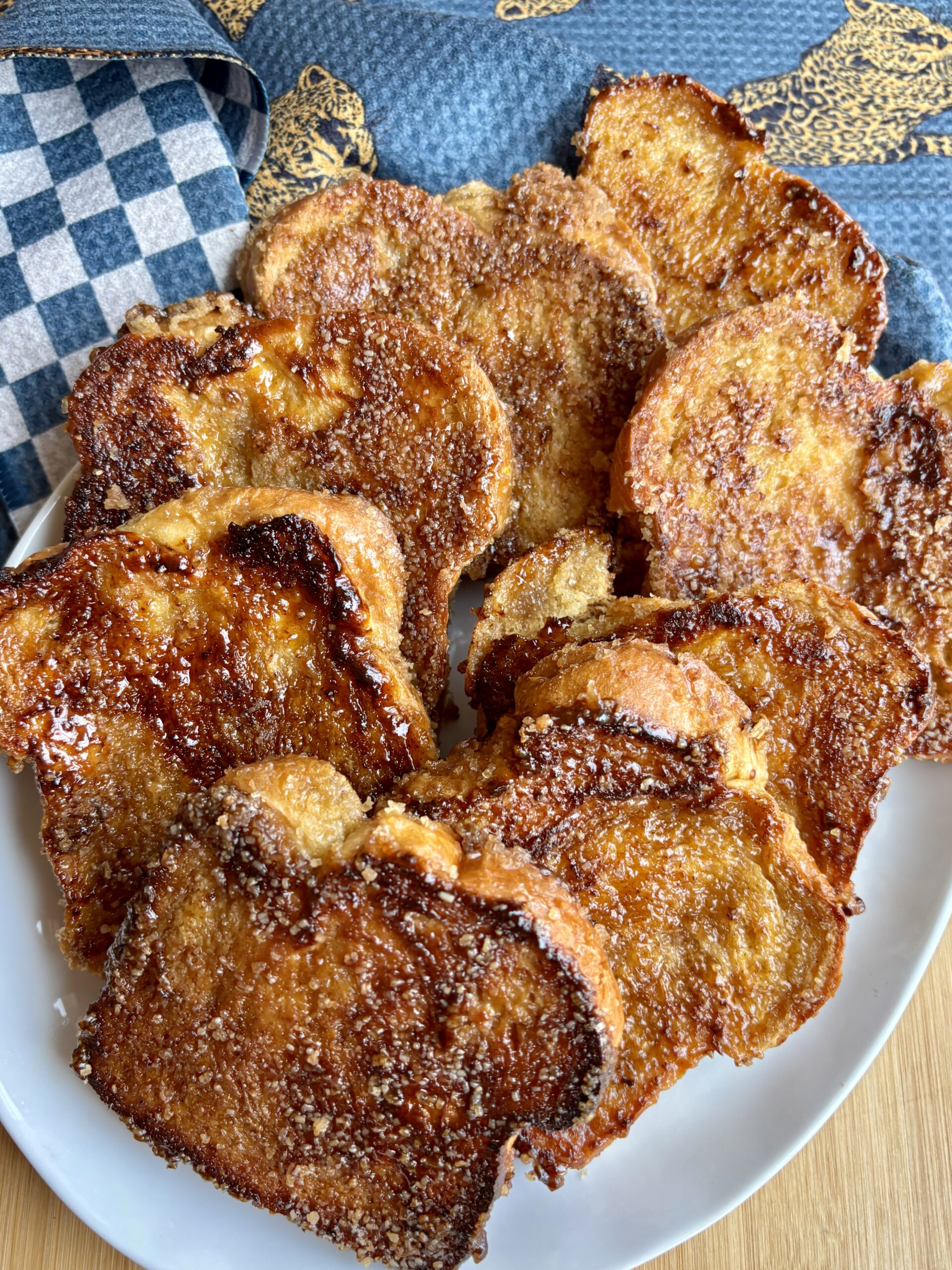
If you love crème brûlée and you love French Toast, then you have to try this recipe! This French Toast has that delicious crackly, caramelized sugar crust on the outside, but underneath is soft, buttery brioche soaked in a vanilla-cinnamon custard. Basically, all the best parts of crème brûlée and French toast in one very delicious breakfast.
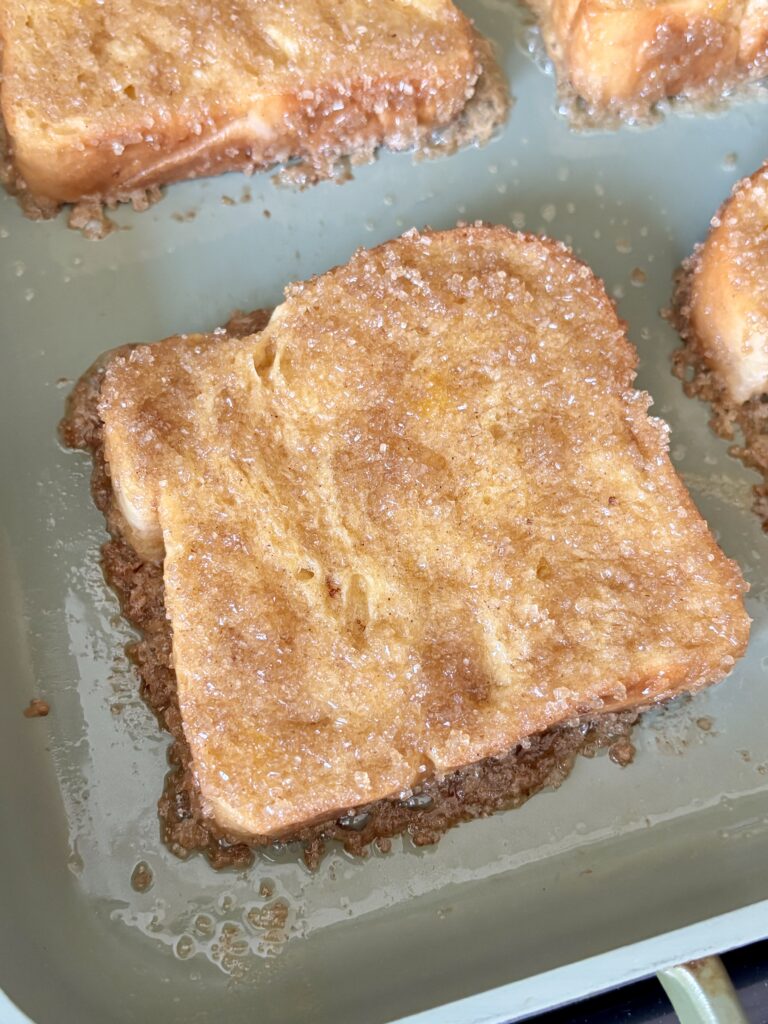
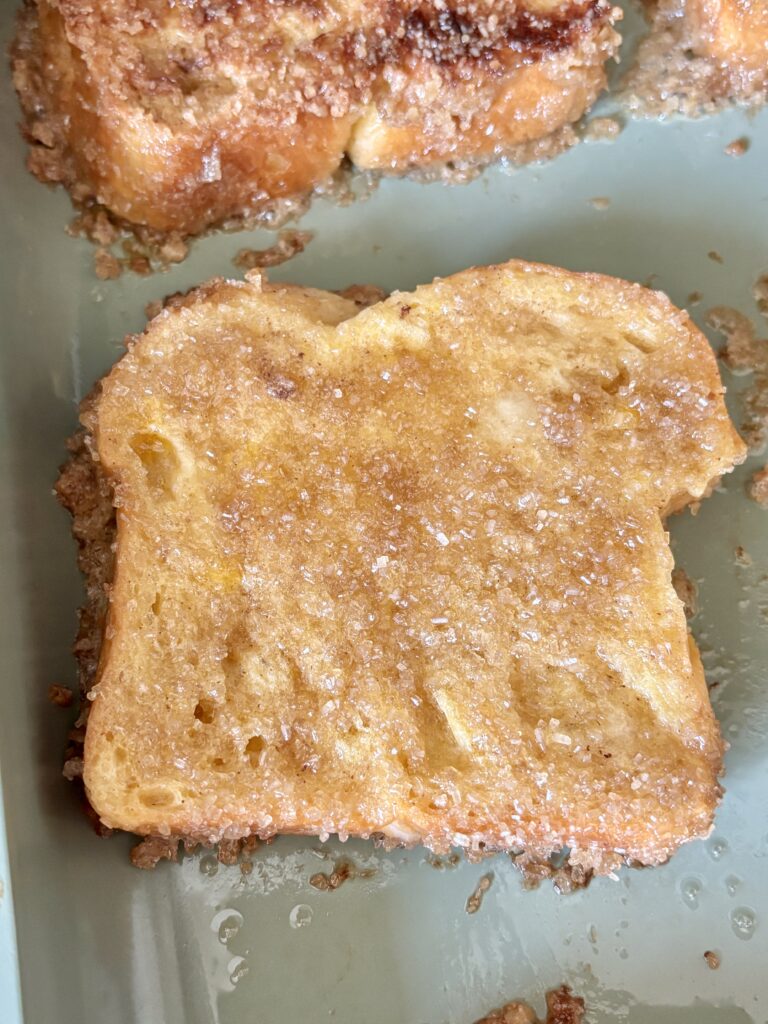
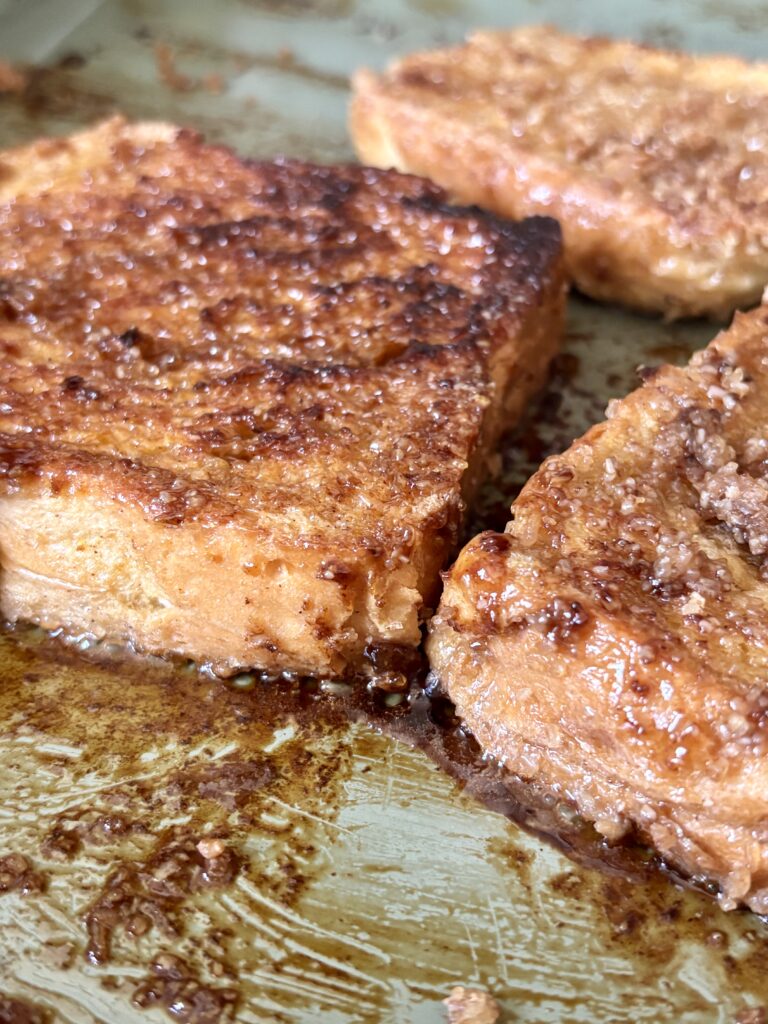
The trick is coating the brioche in turbinado sugar before cooking it. As it hits the hot, buttery griddle, the sugar melts and caramelizes into the most amazing crispy crust. It takes a little patience (and you definitely don’t want to flip it too much!), but the result is SO worth it.
And don’t worry, it might look fancy, but it’s actually really easy to make. Just keep the heat at medium-low and let the sugar do its thing. You’ll end up with golden, crispy French toast with a soft, custardy center.
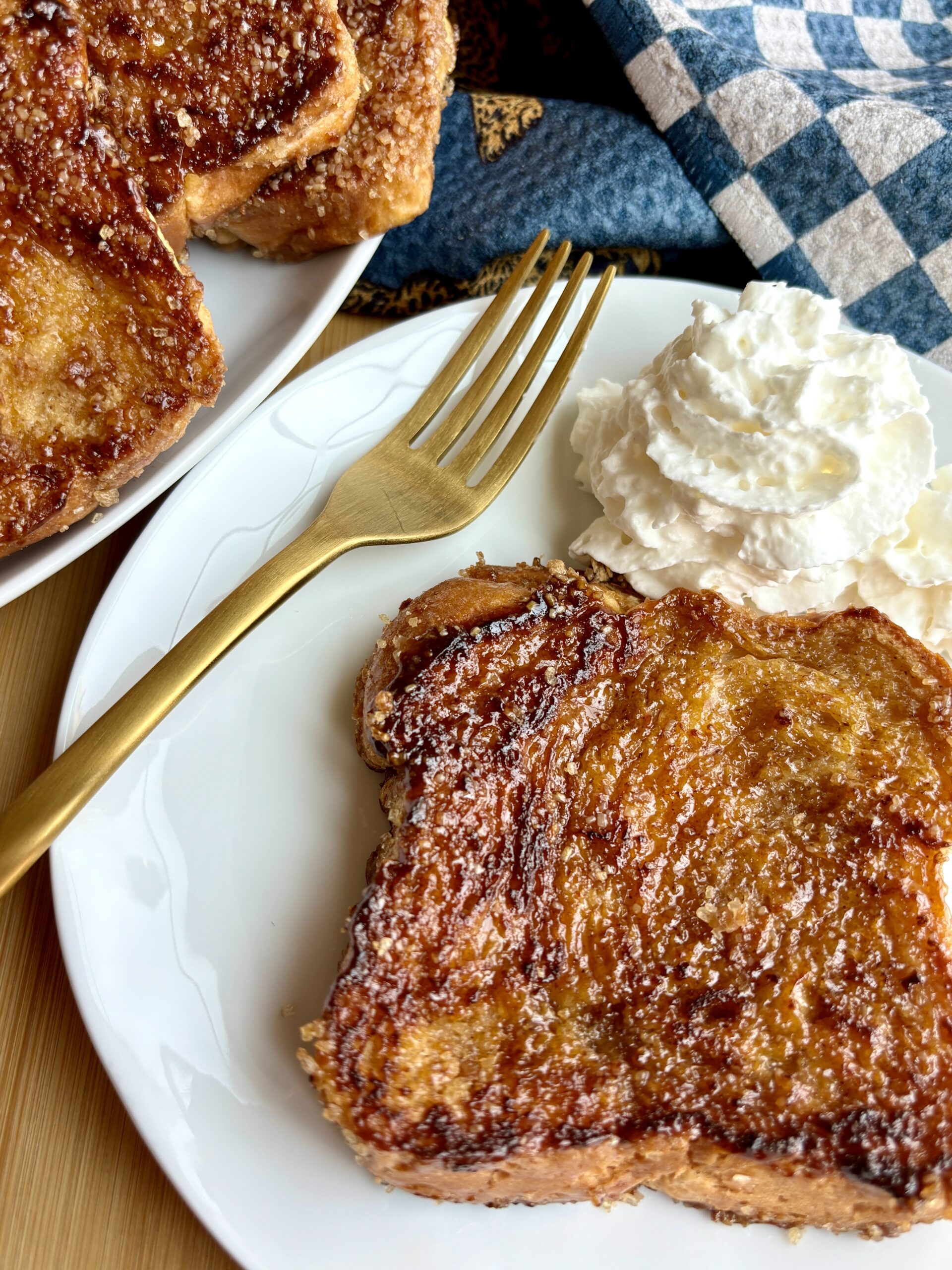
I love serving this with a big spoonful of my homemade whipped cream and fresh berries, but maple syrup, powdered sugar, or even sprinkles are also so good.
This is definitely a special breakfast kind of recipe, but I’m a big believer that you don’t need a special occasion for really good French toast. So if your craving an easy, decadent, breakfast, just do it!
Why you’ll love this recipe!
What Is Crème Brûlée French Toast?
This Crème Brûlée French Toast takes inspiration from the classic French dessert by adding a crisp caramelized sugar coating to traditional French toast.
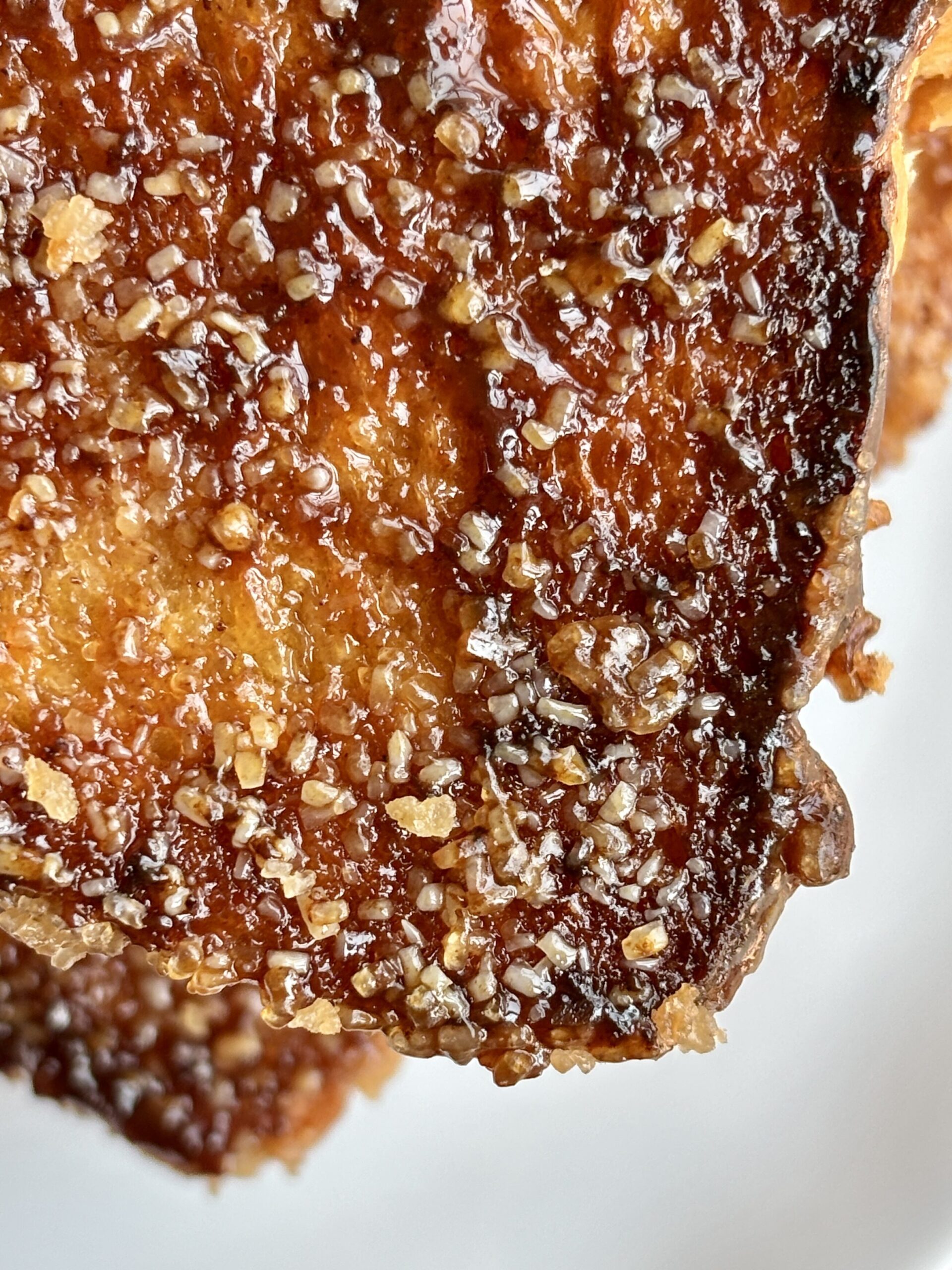
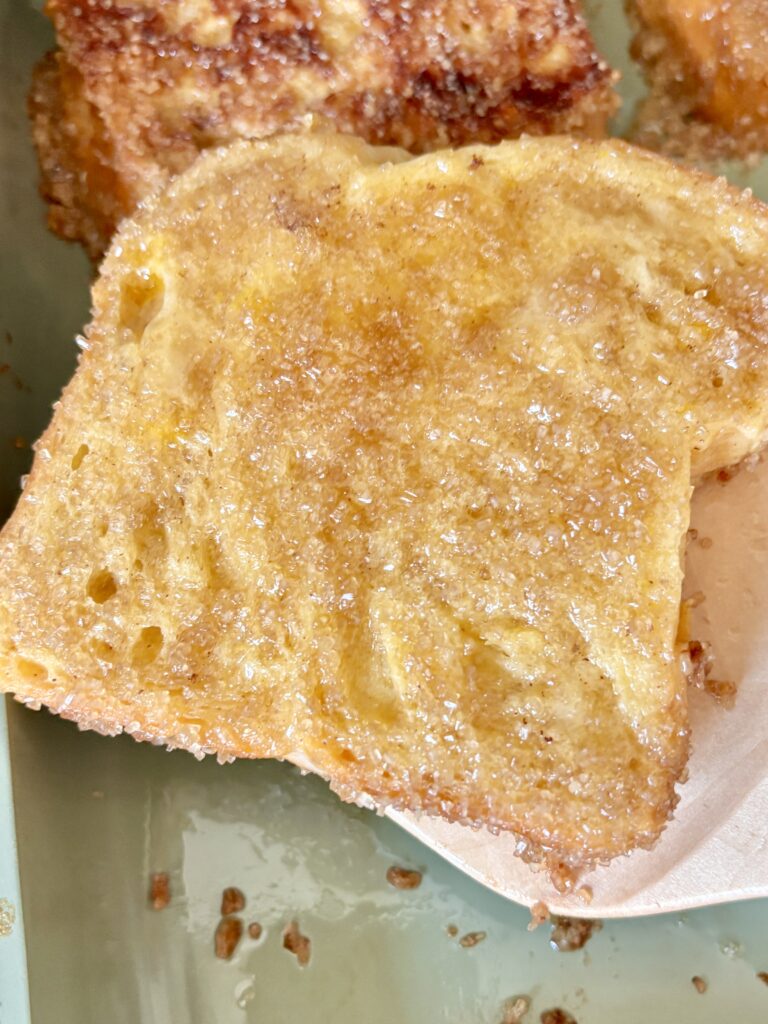
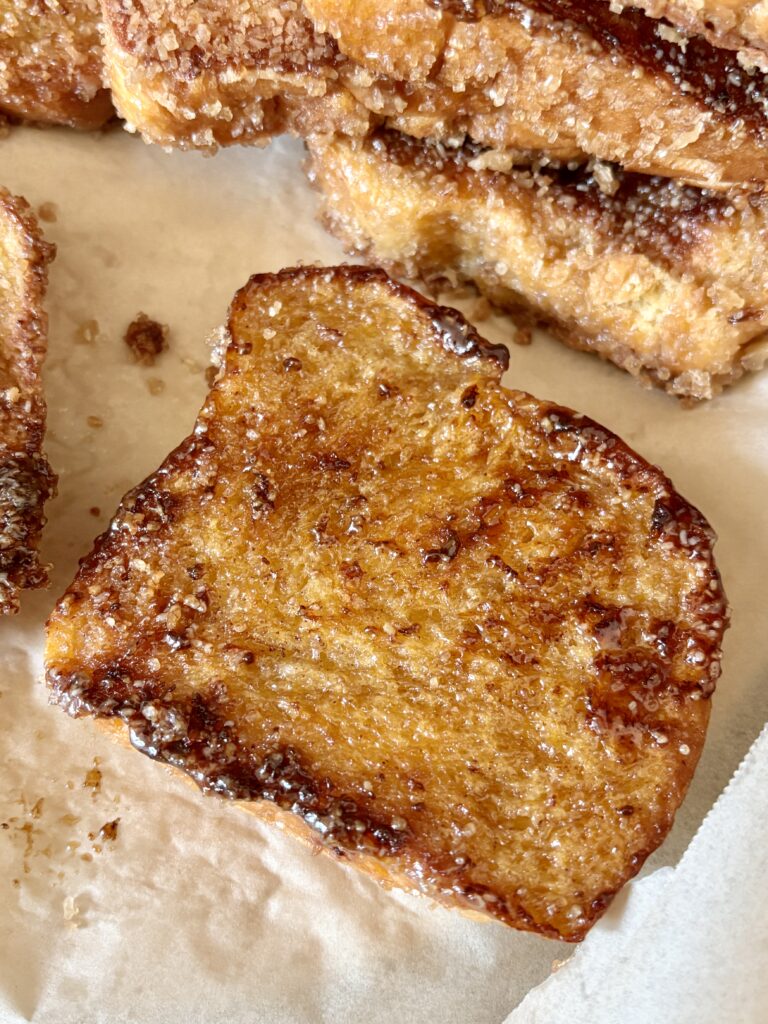
Instead of finishing the French toast with sugar after baking, the brioche is coated in turbinado sugar before it goes onto the griddle. As it cooks, the sugar melts and caramelizes, creating a golden, crunchy exterior.
The inside remains soft and custardy, giving you the contrast of crisp caramelized sugar and rich, tender brioche that makes this recipe so good.

What ingredients do I need?
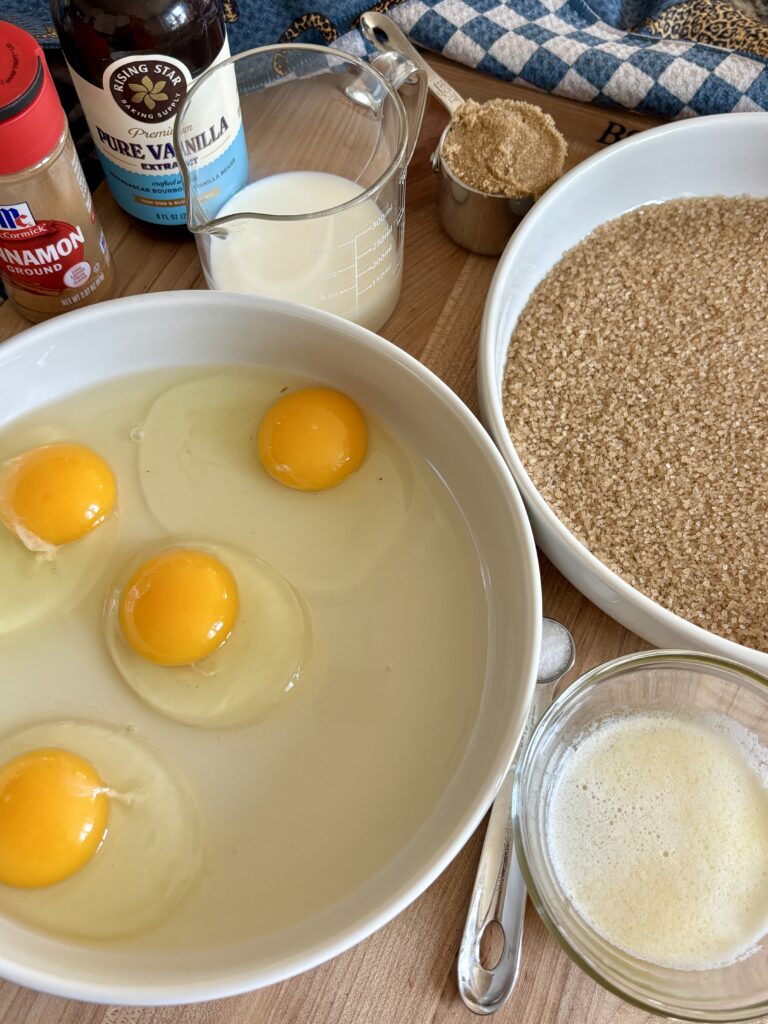
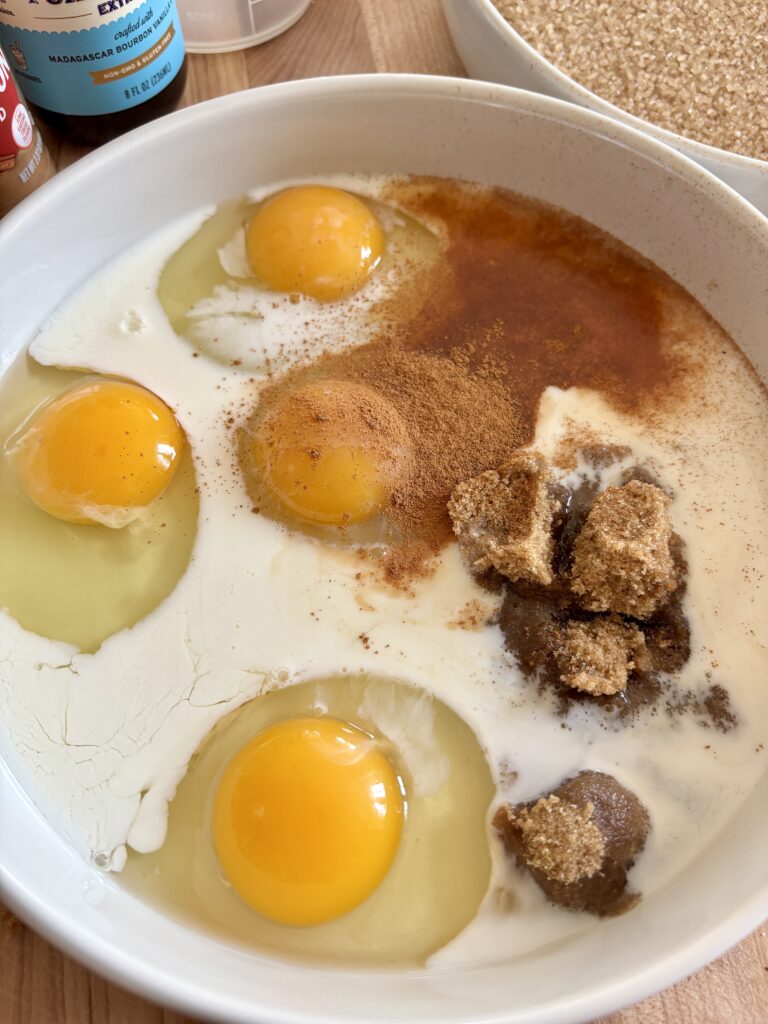
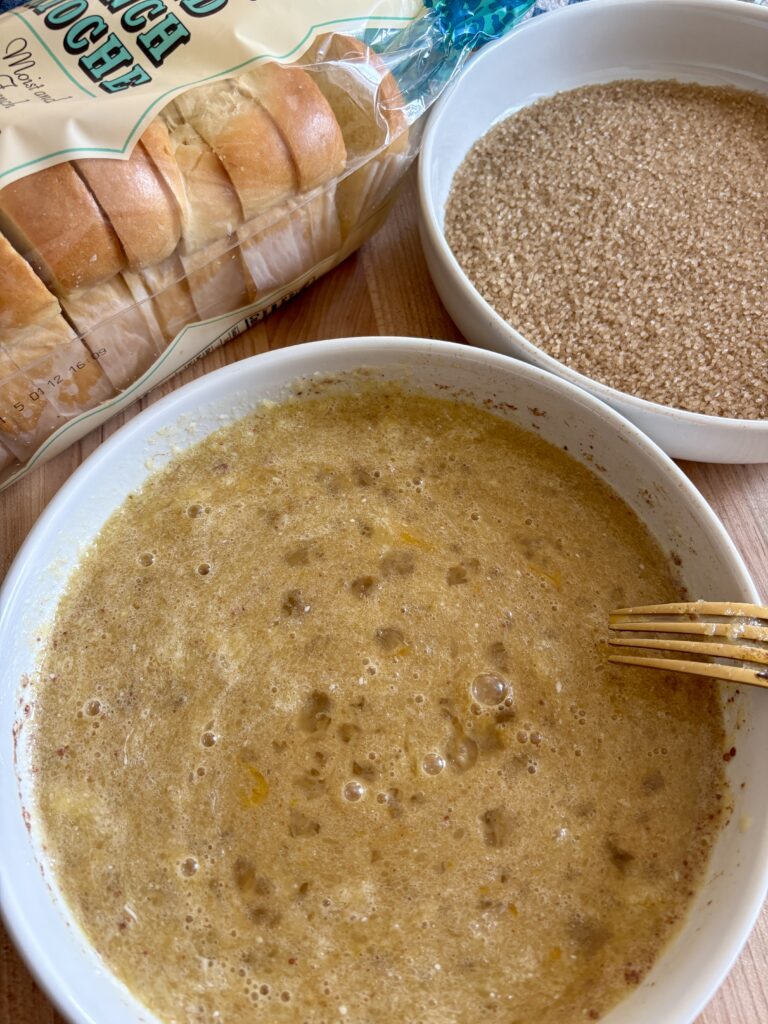
- Brioche bread: Rich, buttery brioche gives the French toast its soft, tender, almost custard-like center. Thick slices are best for creating the contrast between the crisp exterior and soft middle.
- Eggs: Eggs create the structure and richness of the custard that soaks into the brioche.
- Whole milk: Adds creaminess to the custard without making it overly heavy.
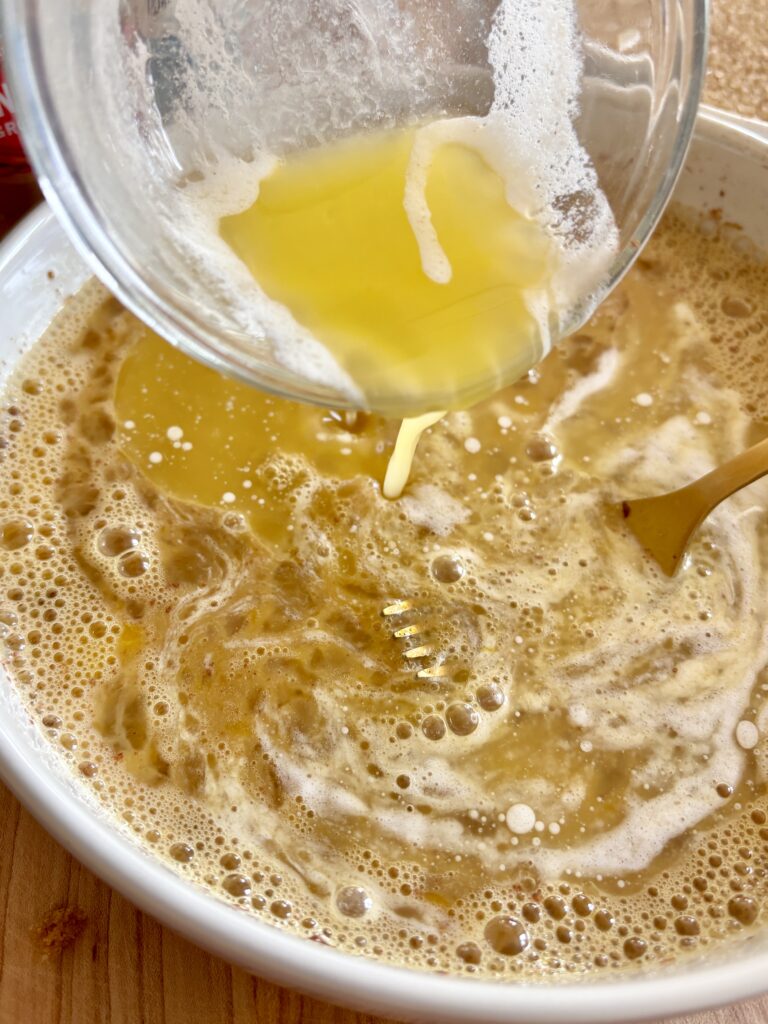
- Melted butter: Adds extra richness and buttery flavor to the French toast.
- Brown sugar: Adds sweetness and a subtle caramel flavor to the custard.
- Vanilla extract: Gives the French toast that classic warm vanilla flavor.
- Cinnamon: Adds a cozy spice that pairs beautifully with the caramelized sugar.
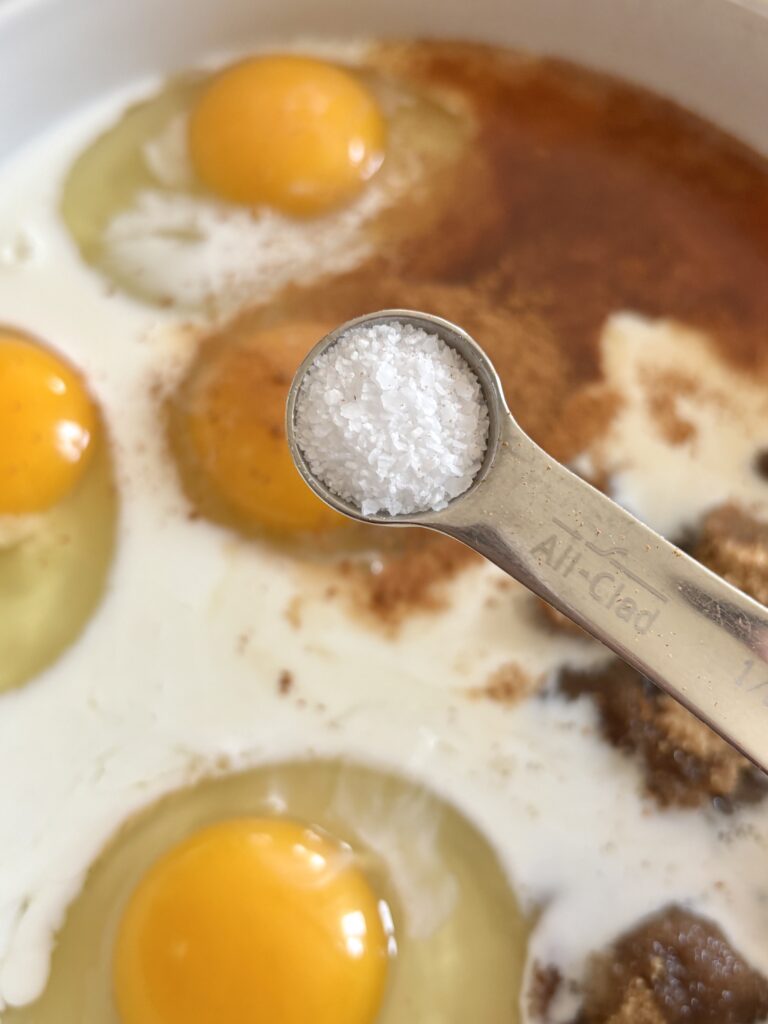
- Kosher salt: Balances the sweetness and enhances the other flavors.
- Turbinado sugar: This is the star of the caramelized crust. Its larger crystals create a crisp, crunchy layer as the sugar melts and caramelizes.
- Extra Butter: Used for cooking and helps the French toast brown beautifully while adding even more buttery flavor.
Recipe Variations
- Cinnamon Sugar French Toast: Add an extra ½ teaspoon cinnamon to the custard for an even warmer cinnamon flavor.
- Bananas Foster French Toast: Top with warm caramelized bananas and a drizzle of caramel sauce.
- Strawberry Shortcake French Toast: Top with macerated strawberries, homemade whipped cream, and powdered sugar.
Pro Tips
- Use thick-cut brioche! This is one of the most important things you can do for great French toast. Aim for slices that are about 1–1½ inches thick. Thin bread won’t give you the soft, custardy center you’re looking for.
- In fact, day old brioche works really well. Slightly stale brioche has lost some of its moisture, which allows it to absorb the custard without falling apart as easily.
- Don’t oversoak the bread. Brioche absorbs custard quickly. About 30–60 seconds per side is plenty for thick slices. If you soak it for too long, the bread can become difficult to handle and overly soft, which can cause it to fall apart.
- Keep the heat at medium-low. This is probably the most important cooking tip for this recipe. The sugar caramelizes quickly, so a pan that’s too hot can burn the crust before the center has warmed through.
- Don’t flip it constantly. Resist the urge to flip! Once the French toast is in the pan, let the sugar caramelize and form a crust. Flipping too frequently can disturb the caramelization and prevent you from getting that beautiful crisp coating.
- Be careful when working with the sugar, it gets VERY hot. The caramelized sugar becomes extremely hot while cooking. Make sure to use caution when handling the French toast, utensils, and pan, and keep your hands away from the melted sugar.
- Expect to get a little messy when making these and cooking. As the sugar caramelizes, some of it will stick to your spatula, tongs, or griddle. That’s completely normal. Scrape the caramelized sugar off your utensils and griddle as you cook so it doesn’t continue to burn and transfer onto the next pieces. I used my favorite griddle pan for this and the caramelized sugars just wiped right off at the end!
- Use parchment after cooking.
- The caramelized sugar can stick to a plate as it cools. For easiest serving, place the cooked French toast on a piece of parchment paper rather than directly onto a plate and try not to pile the cooked french toasts on top of each other which can soften the sugar crust.
- Try not to overcrowd the pan. Give each piece enough room to caramelize evenly. Depending on the size of your griddle, you may need to cook the French toast in batches.
- Have your toppings ready to go. Once the French toast is cooked, serve it fairly quickly. The caramelized sugar crust will gradually soften as it sits, especially when exposed to any moisture from toppings.
- Important Note: If your brioche is very fresh or particularly soft, soak it for less time. Brioche absorbs the custard quickly, and oversoaking is the most common reason for soggy French toast.

Can I Substitute?
Yes! Like always though, any substitutions made to the recipe can result in a change in texture and/or flavor.
- Brioche: Challah, thick-cut Texas toast, or another sturdy enriched bread can be substituted for the brioche. However, the brioche will give you the richest and most tender result.
- Whole milk: You can substitute part or all of the milk with half-and-half or heavy cream for an even richer custard.
- Turbinado sugar: Turbinado sugar is best for the crunchy caramelized coating because of its larger crystals. Granulated sugar can be used in a pinch, but the crust will be slightly different.
- Brown sugar: Light or dark brown sugar can be used. Dark brown sugar will add a slightly deeper molasses flavor.
- Butter: Unsalted butter is preferred so you can control the salt, but salted butter can also be used.
Dietary Substitutions
- Vegetarian: This recipe is vegetarian as written.
- Gluten-Free: Use thick slices of sturdy gluten-free bread in place of the brioche and make sure all other ingredients are certified gluten-free if needed.
How to Serve Crème Brûlée French Toast
This French toast is best served warm, shortly after cooking, while the caramelized sugar crust is still crisp. My favorite way to serve it is with a big spoonful of homemade whipped cream and fresh berries. The cool, creamy whipped cream against the warm caramelized crust is SO good.
You can also serve it with:
- Homemade whipped cream: Vanilla Bean Cinnamon Whipped Cream or Espresso Whipped Cream
- Fresh strawberries, blueberries, raspberries, bananas
- Powdered sugar
- Maple syrup
- Caramel sauce
- Hot fudge
- Sprinkles
- A dusting of cinnamon
For a special brunch, serve it alongside crispy bacon, sausage, fresh fruit, or a simple breakfast salad.
Leftovers and Storage
- For the best texture, this French toast is best enjoyed immediately after cooking while the caramelized sugar crust is crisp and crunchy.
- However, if you have leftovers, storage them as stated below:
- Refrigerator: Allow them to cool completely before transferring them to an airtight container. Refrigerate for up to 3 days. Place parchment paper between pieces if stacking them to help prevent the caramelized surfaces from sticking together.
- Freezer: Allow the French toast to cool completely, then place pieces between sheets of parchment paper and transfer to a freezer-safe container or bag.
- Freeze for up to 2 months. Reheat from frozen in a toaster oven or oven until warmed through and crisp.
- The caramelized sugar crust may be slightly softer after freezing than it is when freshly made, but it’s still a delicious make-ahead breakfast option.
- How to Reheat
- For the best results, reheat leftovers in a toaster oven, oven, or skillet until warmed through. This helps restore some of the crispness to the caramelized sugar coating.
- I don’t recommend the microwave if you’re trying to preserve the crunchy crust. The moisture from microwaving will soften the caramelized sugar.


But, I Still Have A Few Questions…
Why did my Crème Brûlée French Toast turn out soggy?
The most common reason is that the brioche absorbed too much custard. Brioche is soft and very absorbent, so it only needs about 30–60 seconds per side in the custard. Using very fresh bread, thinner slices, or soaking it for too long can leave the center overly wet. For the best texture, use thick-cut brioche that is about 1–1½ inches thick and preferably day-old.
Can I use fresh brioche, or is day-old bread better?
You can use fresh brioche, but day-old or slightly stale brioche is ideal. Fresh bread contains more moisture and is softer, so it can absorb the custard very quickly and become difficult to handle. Day-old brioche has lost some moisture, allowing it to absorb the custard without becoming overly saturated or falling apart.
How long should I soak the brioche?
For thick-cut brioche, about 30–60 seconds per side is plenty. Brioche absorbs liquid quickly, so there is no need for a long soak. If your bread is particularly fresh or soft, err on the shorter side. Oversoaking is one of the easiest ways to end up with soggy French toast.
What type of bread is best for Crème Brûlée French Toast?
Thick-cut brioche is my favorite because its rich, buttery texture gives you that soft, custardy center while still holding up to the caramelized sugar coating. Challah, thick-cut Texas toast, or another sturdy enriched bread can also work. For the best texture, aim for slices about 1–1½ inches thick.
Can I use regular sandwich bread?
You can, but I don’t recommend it for this recipe. Regular sandwich bread is thinner and more delicate, so it can become saturated quickly and won’t give you the same soft, custardy center and crisp caramelized exterior. A sturdy brioche or challah will give you a much better result.
Why is my French toast soggy in the middle but browned on the outside?
Your heat may be too high. The turbinado sugar caramelizes quickly, so a hot pan can brown or burn the exterior before the center has had time to warm through. Cook the French toast over medium-low heat for about 3–5 minutes per side, adjusting the heat as needed. This gives the brioche time to cook through while the sugar slowly caramelizes.
Why is my caramelized sugar burning?
The heat is likely too high. Sugar can burn surprisingly quickly when it’s directly against a hot cooking surface. Keep your griddle or skillet over medium-low heat and adjust the temperature as needed. If you’re cooking multiple batches, scrape away accumulated caramelized sugar and add fresh butter before starting the next batch.
Why isn’t my sugar caramelizing?
Your pan may not be hot enough, or the bread may not have a light, even coating of turbinado sugar. Make sure both sides are coated with a thin, even layer and allow the French toast to cook undisturbed for several minutes. Moving or flipping it too frequently can interrupt the caramelization process.
Why isn’t my Crème Brûlée French Toast crispy?
For the crispiest crust, use turbinado sugar, coat both sides of the brioche lightly and evenly, and cook over medium-low heat without moving the bread around too much. The sugar needs uninterrupted contact with the hot, buttered cooking surface to melt and caramelize into that signature crisp crust. Serve the French toast shortly after cooking for the best texture.
Why should I use turbinado sugar?
Turbinado sugar has larger crystals than regular granulated sugar, which makes it especially good for creating a crisp, crunchy caramelized crust. Granulated sugar can be used in a pinch, but it melts more quickly and will give you a somewhat different texture.
Why is my French toast falling apart when I flip it?
The brioche may have absorbed too much custard, or your slices may be too thin or soft. Try using thick-cut, day-old brioche and shortening the soaking time. When cooking, let each side develop its caramelized crust before flipping and use a wide spatula to carefully turn the French toast. Avoid flipping it repeatedly, as this can disturb the sugar crust.
Why shouldn’t I flip the French toast too much?
The sugar needs time to melt and caramelize against the hot cooking surface. Flipping too frequently can disturb the developing crust and prevent it from becoming evenly golden and crisp. Let each side cook undisturbed for several minutes before carefully flipping.
Why does my French toast stick to the pan?
Caramelized sugar is naturally sticky, especially as it cools. Make sure your cooking surface is lightly coated with butter and allow the French toast to develop its crust before carefully releasing it with a spatula. If you’re cooking multiple batches, scrape away excess caramelized sugar from the pan so it doesn’t continue to burn and cause sticking.
Why does the caramelized sugar stick to my spatula?
That’s completely normal! Melted and caramelized sugar becomes very sticky as it cools. Simply scrape the sugar from your spatula between batches so it doesn’t build up and burn. Be careful when handling the sugar because hot caramelized sugar can cause serious burns.
Why did my crispy sugar crust become soft?
The caramelized sugar crust naturally softens as it sits, especially when exposed to moisture from whipped cream, fruit, syrup, or other toppings. For the crispiest crust, serve the French toast shortly after cooking and place it on parchment paper rather than directly on a plate. Avoid stacking the pieces, which can also trap moisture and soften the crust.
Can I make Crème Brûlée French Toast ahead of time?
You can cook it ahead, but it’s best served fresh. The caramelized sugar crust is at its crispiest immediately after cooking and gradually softens as it sits. If you need to make it ahead, reheat it in a skillet, toaster oven, or conventional oven rather than the microwave to help restore some of the crispness.
Can I freeze Crème Brûlée French Toast?
Yes. Allow the cooked French toast to cool completely, then place parchment paper between the pieces and store them in an airtight freezer-safe container or bag for up to 2 months. Reheat from frozen in a toaster oven or conventional oven until warmed through. Keep in mind that the caramelized sugar coating may not be quite as crisp after freezing and reheating as it is when freshly made.
What is the best way to reheat French toast?
For the best texture, reheat it in a skillet, toaster oven, or conventional oven. These methods help warm the center while restoring some crispness to the caramelized exterior. I don’t recommend the microwave if you want to preserve the crunchy sugar crust because the moisture can soften it.
Can I soak the brioche overnight?
I don’t recommend it for this recipe. Brioche is delicate and highly absorbent, so an overnight soak can make it excessively soft and difficult to handle. A quick 30–60 second soak per side gives you a soft, custardy center without oversaturating the bread.
Can I make this French toast without the caramelized sugar coating?
Absolutely! Simply skip the turbinado sugar coating and cook the custard-soaked brioche as directed. You’ll have a delicious classic brioche French toast instead of the signature Crème Brûlée-style crust.
Why is this called Crème Brûlée French Toast?
This French toast is inspired by classic crème brûlée because the brioche is coated in sugar that caramelizes during cooking, creating a crisp, crackly crust. The inside stays soft and custardy, giving you that delicious contrast between crunchy caramelized sugar and tender brioche.
Can I use maple syrup with the caramelized sugar crust?
Absolutely! Maple syrup is delicious with this French toast, although you may not need much. The custard and caramelized sugar crust already add plenty of sweetness, so I like to use just a light drizzle.
What toppings go best with Crème Brûlée French Toast?
Homemade whipped cream and fresh berries are my favorites. You can also serve it with maple syrup, powdered sugar, strawberries, raspberries, bananas, caramel sauce, hot fudge, sprinkles, or a dusting of cinnamon.
Can I make this French toast gluten-free?
Yes. Use thick slices of sturdy gluten-free bread or gluten-free brioche in place of the regular brioche, and check that your other ingredients meet your dietary requirements. Keep in mind that different gluten-free breads can vary considerably in texture and absorbency.
Is the caramelized sugar dangerous to touch?
Yes. Hot caramelized sugar reaches a very high temperature and can stick to skin, causing serious burns. Use caution when cooking, flipping, and transferring the French toast, and keep your hands away from the melted sugar.
What is the secret to perfectly cooked Crème Brûlée French Toast?
Start with thick-cut, preferably day-old brioche, and don’t oversoak it. Coat the bread lightly and evenly with turbinado sugar, then cook it slowly over medium-low heat. Give each side plenty of time to caramelize without constantly flipping it. That combination gives you the best contrast between the crisp, crackly sugar crust and the soft, custardy center.
Other Recipes You’ll Love
Let’s engage!
Make sure to tag @thehomechefmomma on Instagram or Facebook, and leave a review or comment if you make these. I always get so excited to see your creations, variations of the recipe, and feedback! Just remember to be kind in your comments, there is still a person behind this screen! 🙂
Crème Brûlée Brioche French Toast
Ingredients
- 10 –12 thick slices brioche bread about 1–1½ inches thick
- 4 large eggs
- ½ cup whole milk
- 4 tablespoons unsalted butter melted
- ¼ cup packed brown sugar
- 2 teaspoons vanilla extract
- 1 teaspoon ground cinnamon
- ½ teaspoon kosher salt
- 1 –2 cups turbinado sugar plus more as needed
- Butter for cooking
Instructions
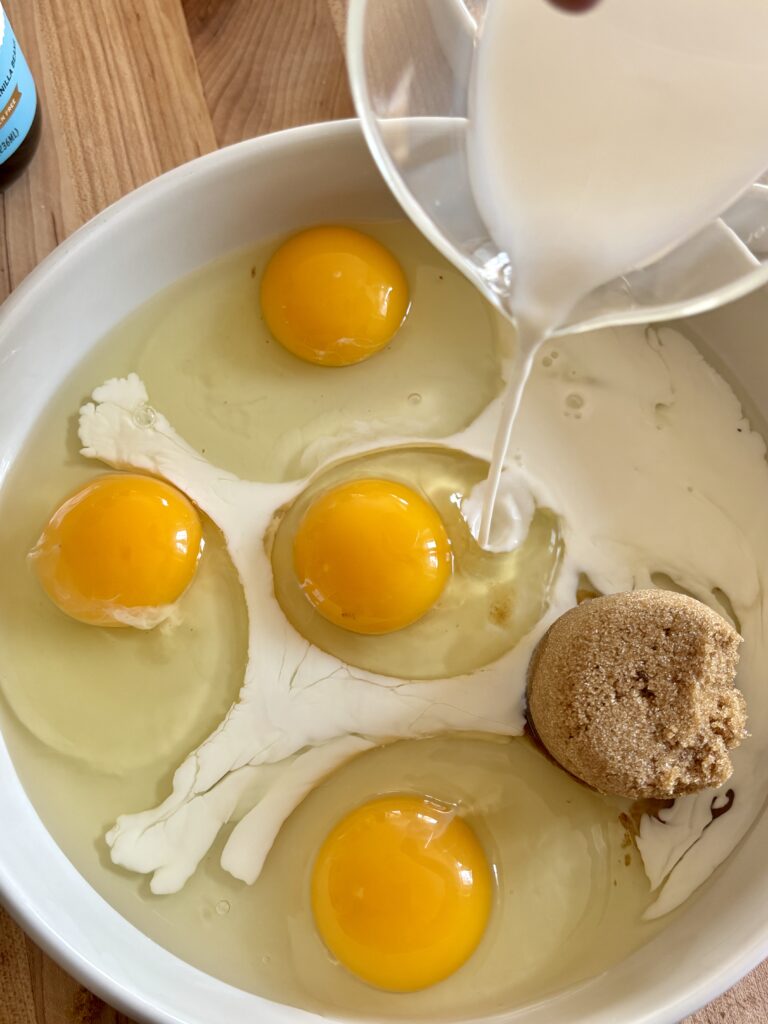
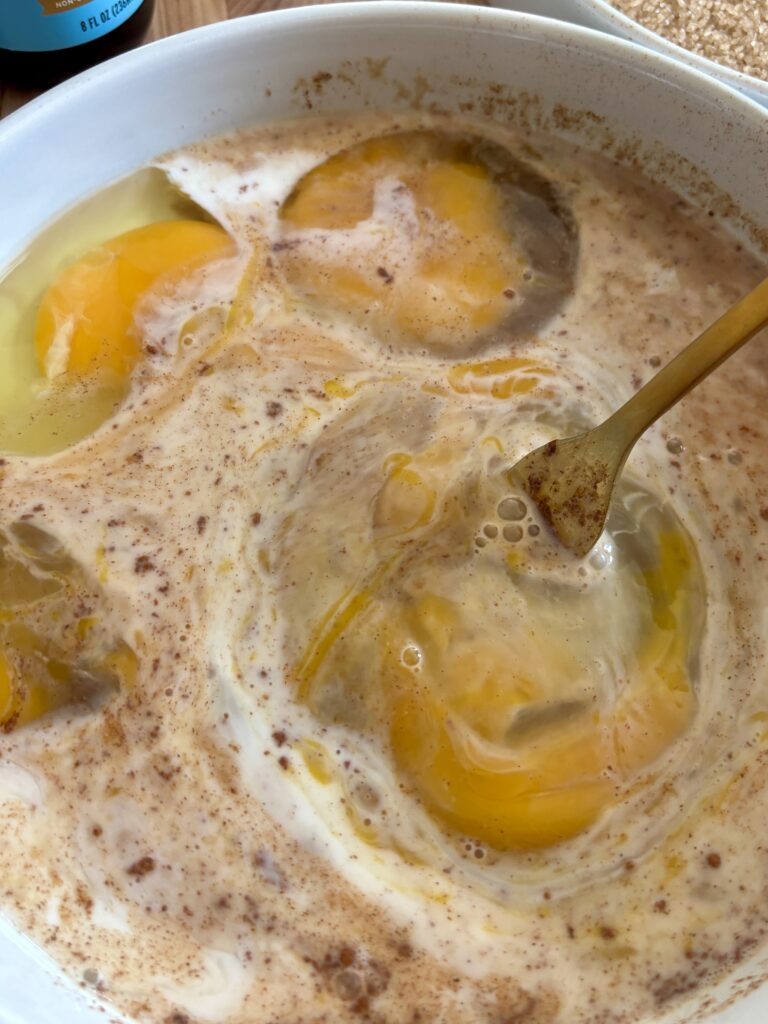
- In a shallow bowl or baking dish, whisk together the eggs, whole milk, melted butter, brown sugar, vanilla extract, cinnamon, and kosher salt until smooth and fully combined.
- Heat a large skillet or griddle over medium-low heat. Add a small amount of butter and spread it over the cooking surface.
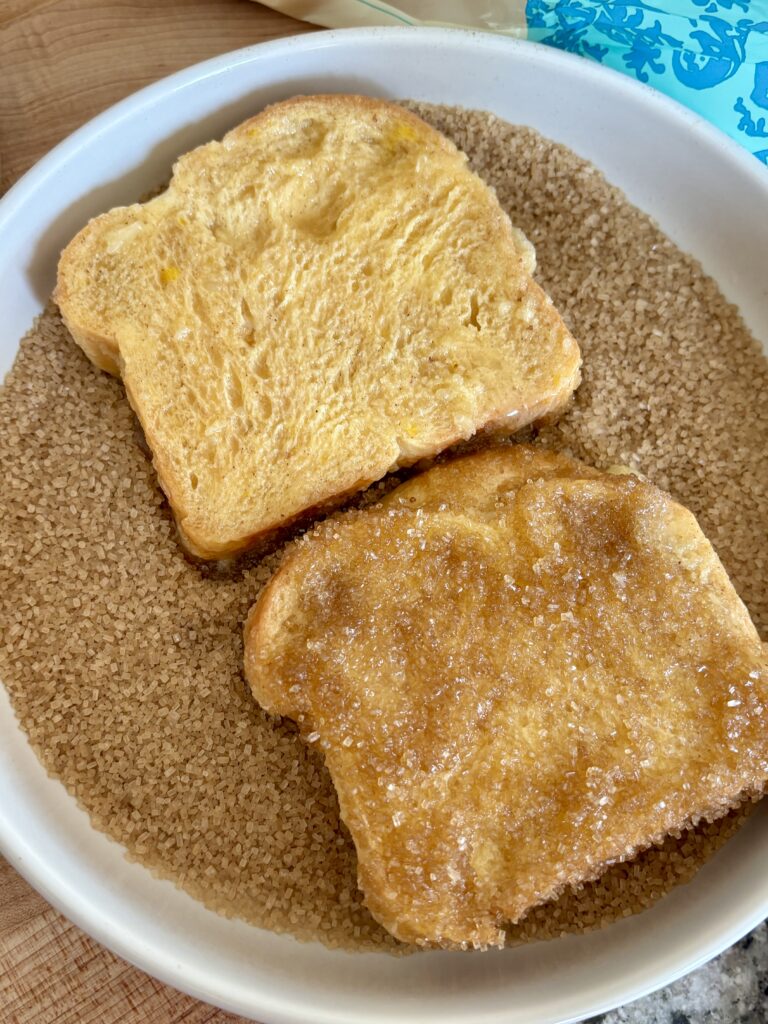
- Dip each slice of brioche into the custard mixture, allowing it to soak for about 30–60 seconds per side. Brioche absorbs the custard quickly, so don’t oversaturate it.
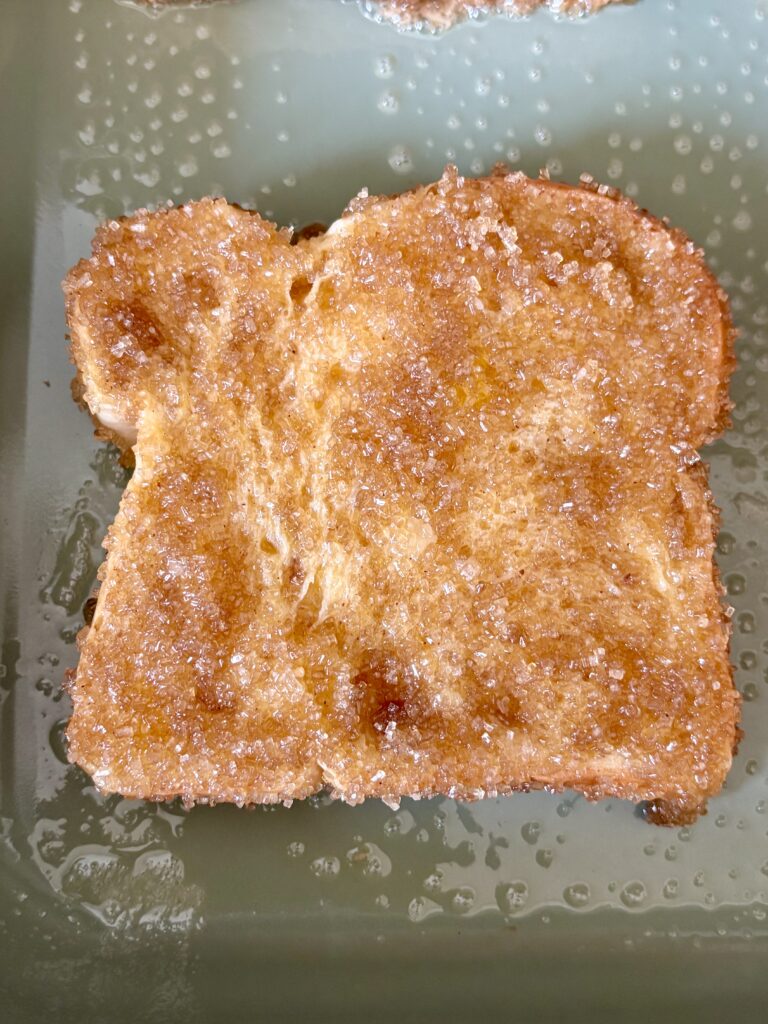
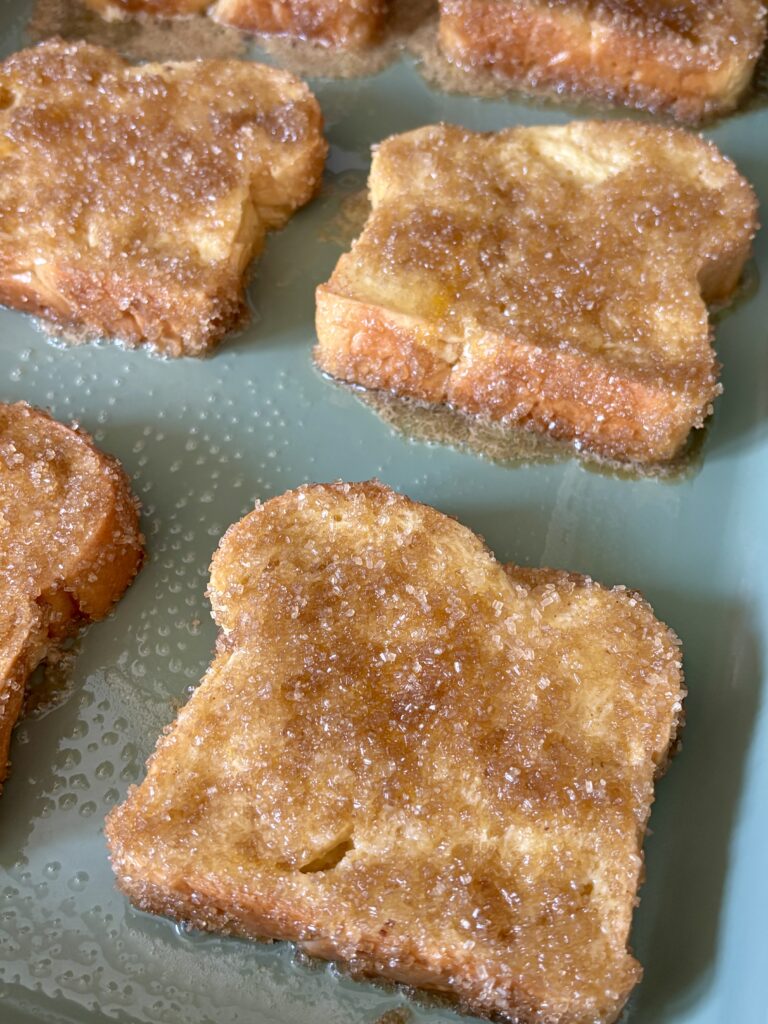
- Add the turbinado sugar to a plate or shallow dish. Lightly coat both sides of each soaked brioche slice with the sugar, shaking off any excess. You want a thin, even coating rather than a thick layer.
- Place the sugar-coated brioche onto the buttered griddle. Cook for 3–5 minutes per side, or until deeply golden and the sugar has caramelized into a crisp crust. Keep the heat at medium-low and adjust as needed to prevent the sugar from burning.
- Flip carefully! Resist the urge to flip the French toast repeatedly. Let it cook undisturbed so the sugar has time to caramelize and form a crisp crust.
- Continue with the remaining slices, adding more butter and turbinado sugar to the pan and plate as needed. Scrape caramelized sugar from your utensils and griddle between batches to prevent it from burning.
- Place the finished French toast on parchment paper rather than directly onto a plate, as the hot caramelized sugar can stick as it cools. Use caution when handling, the caramelized sugar is extremely hot!
- Serve warm with homemade whipped cream, fresh berries, maple syrup, powdered sugar, sprinkles, or your favorite toppings.
Notes
- If your brioche is very fresh or particularly soft, soak it for less time. Brioche absorbs the custard quickly, and oversoaking is the most common reason for soggy French toast.
- Use thick-cut brioche for the best soft, custardy center.
- Day-old brioche works especially well because it absorbs the custard without becoming overly soft.
- Keep the griddle at medium-low heat. Sugar can burn quickly at higher temperatures.
- Don’t flip the French toast repeatedly, as this can disturb the caramelized sugar crust.
- The caramelized sugar is extremely hot. Use caution when cooking and transferring the French toast.
- Place cooked French toast on parchment paper to prevent the caramelized sugar from sticking to the plate.
- Scrape caramelized sugar from your utensils and griddle as you cook to prevent burnt sugar from accumulating.
crème brûlée French toast | decadent French toast recipe | crème brûlée brioche French toast | caramelized sugar French toast | brioche French toast | caramelized French toast | crispy brioche French toast | best French toast recipe | easy French toast recipe | homemade French toast | French toast with turbinado sugar | caramelized sugar brioche | French toast brunch recipe | easy brunch recipes | weekend brunch recipes | special occasion breakfast | Christmas breakfast recipe | birthday breakfast recipe | Mother’s Day brunch recipe | crispy caramelized French toast | crème brûlée breakfast

Many thanks for sharing!🥂☀️ with glasses of champagne must be super good!👍
Everything is better with that! 🙂
⭐⭐⭐⭐⭐ ABSOLUTELY AMAZING!
Oh my goodness… this was hands down THE BEST French toast I have ever eaten in my entire life! And let me tell you, I am NOT a French toast person. I’ll pass it up in a heartbeat. But THIS recipe completely changed my mind!
That caramelized sugar on top is everything! It gives the French toast that delicious crème brûlée crunch when you bite into it, while the inside is soft, rich, and perfectly tender. Add the fresh whipped cream and seasonal berries, and WOW… it’s absolutely heavenly! 🤤
And the real test? My family ate EVERY. LAST. SLICE. I thought I was going to have plenty left over for later, but nope! They cleaned that dish OUT!
This recipe is officially a keeper in my house. If you’re thinking about making it, DO IT! You will not regret it! ❤️
Thank you so much for this incredible review. I am so glad your family loved this recipe so much. 🙂
Wonderful like your sole 😍
sooooo delicious 😋
Yay! I am so glad you love it so much.
Best recipes!!
Thank you so much! I am so glad you enjoy them.
can I use half and half
Hi Tina! Yes, half and half would work just fine!