
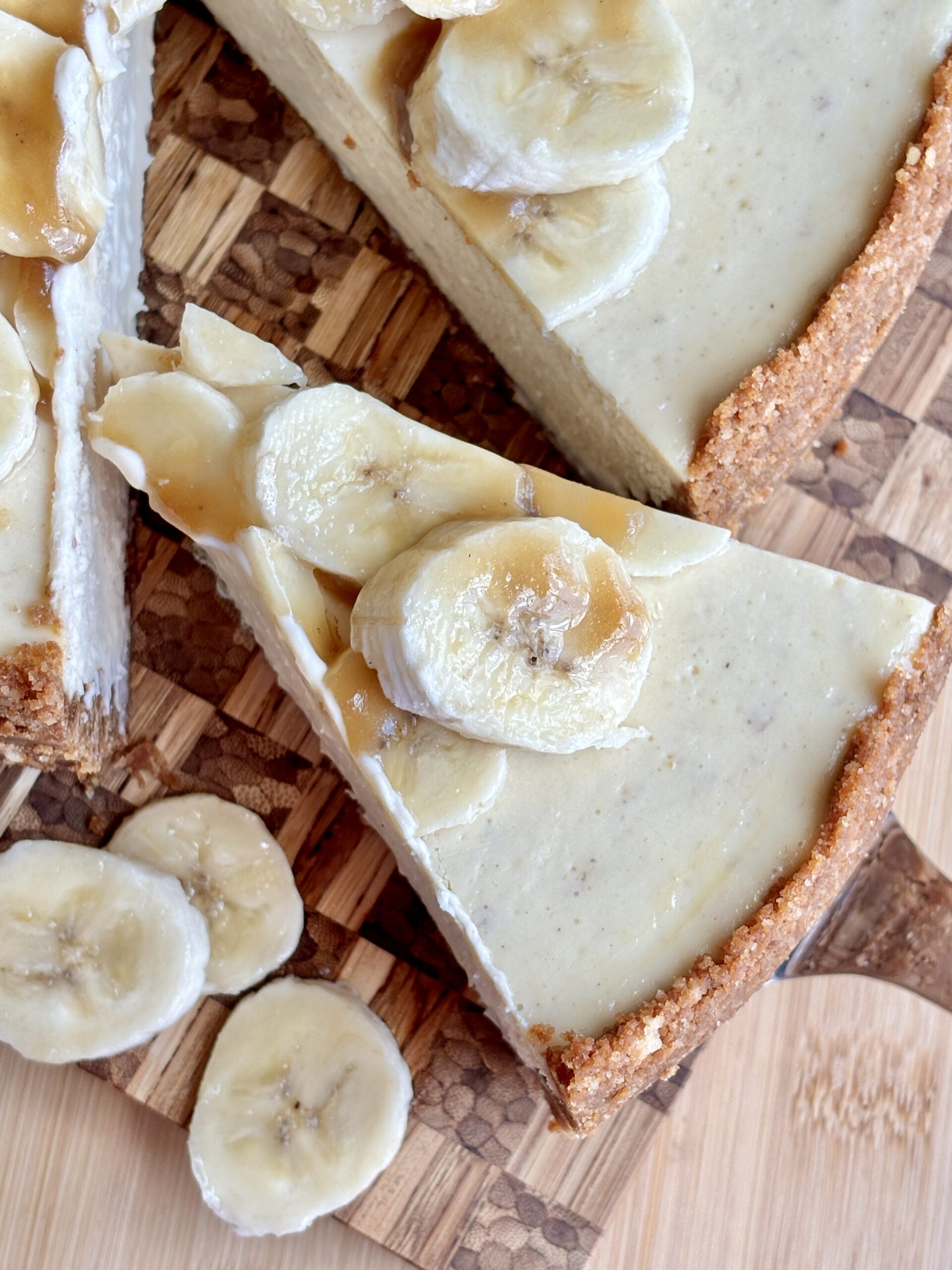
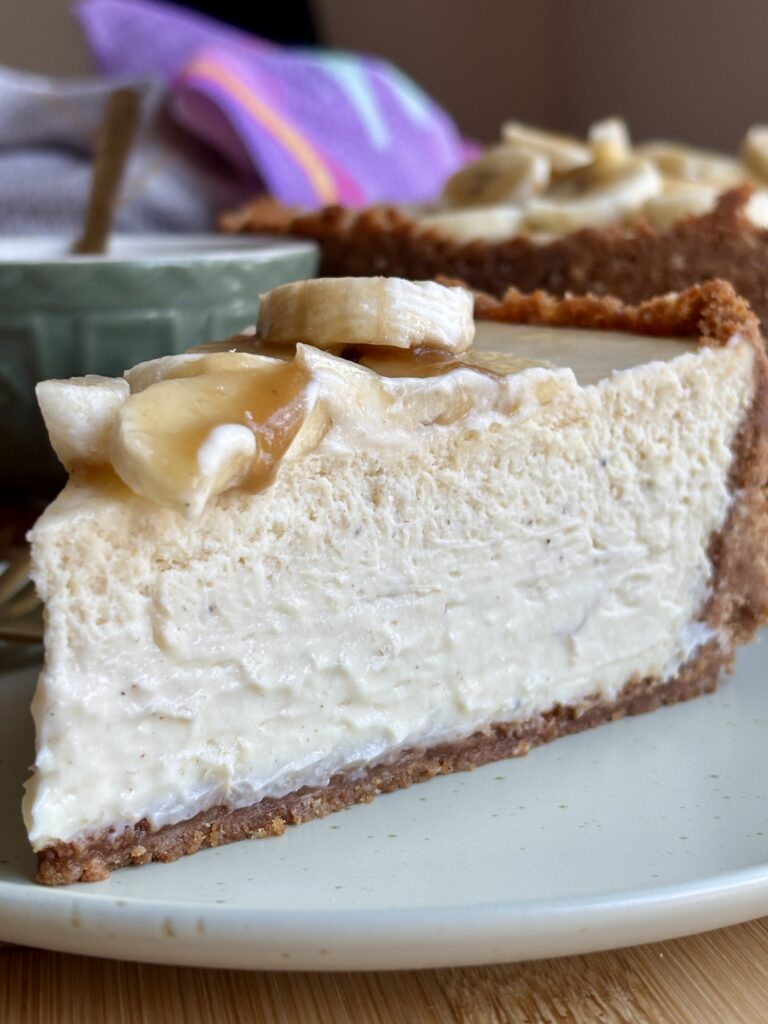
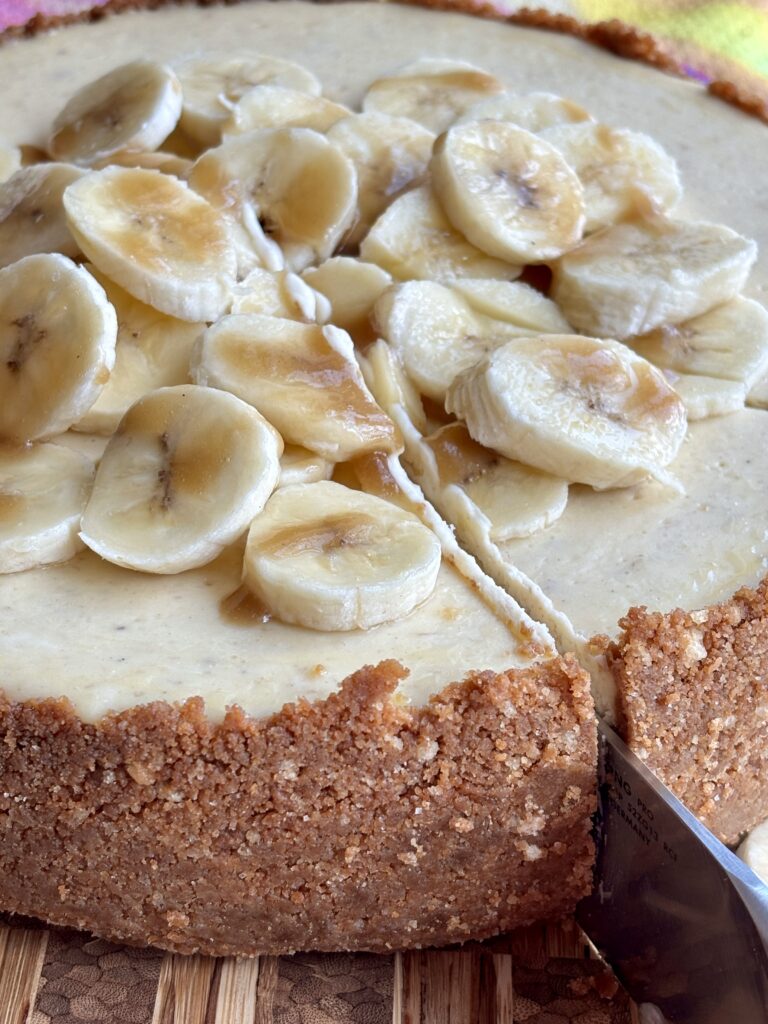
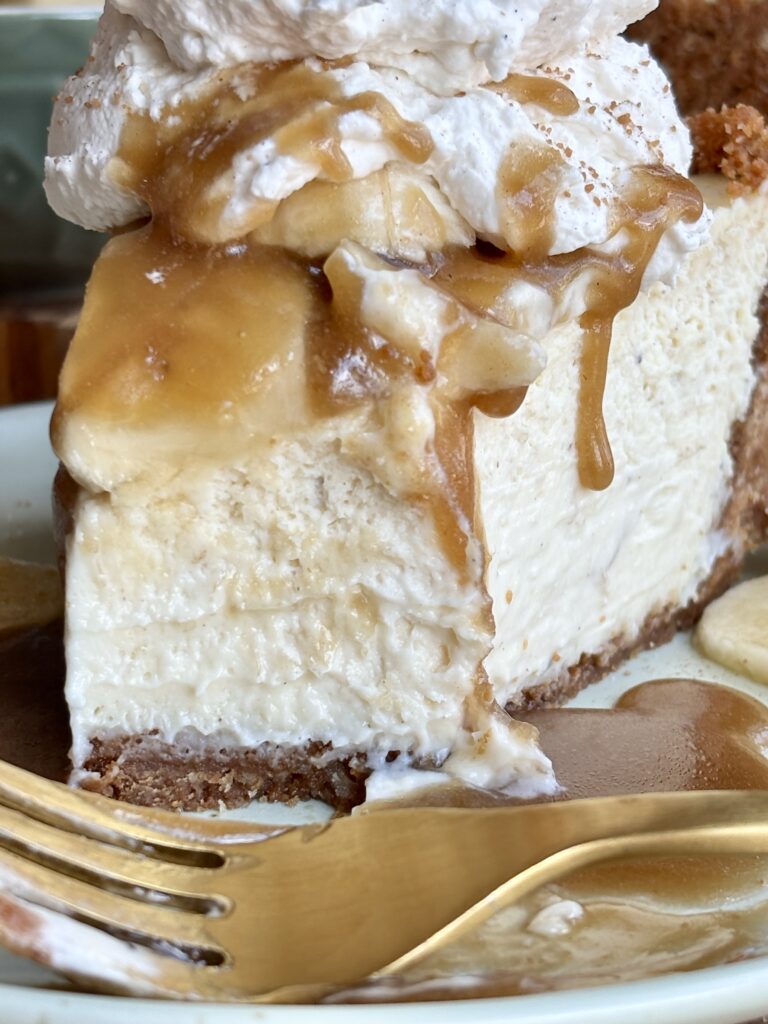
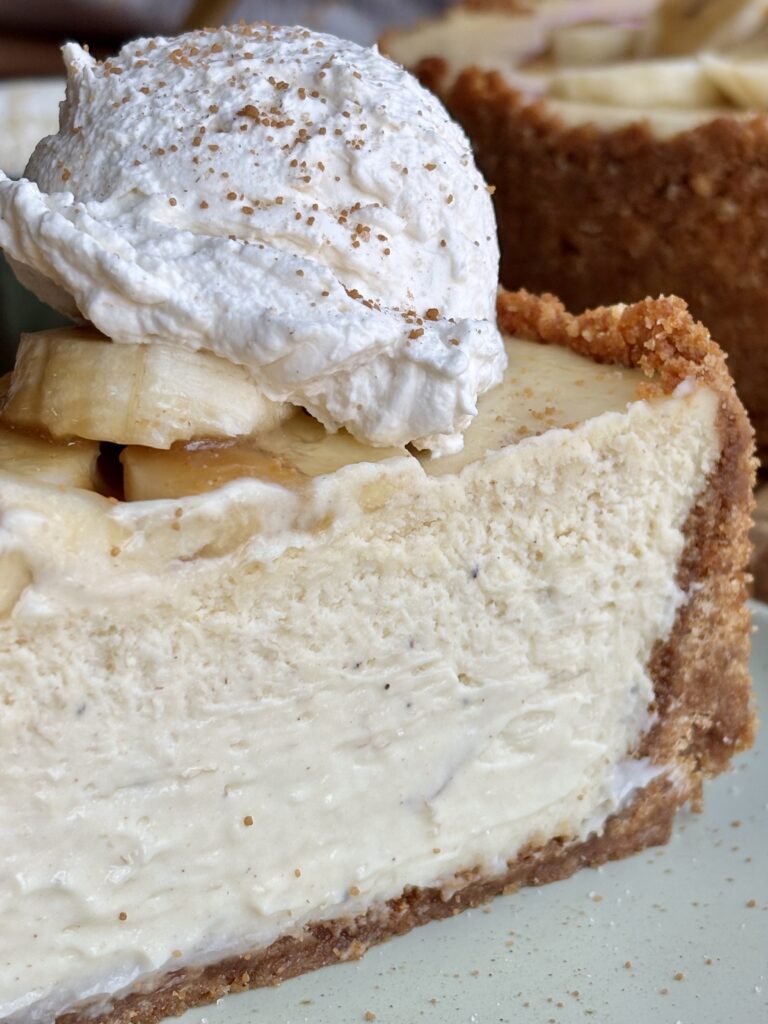
If you love banana recipes and rich, creamy cheesecake, then this homemade Creamy Banana Cheesecake needs to be added to your recipe collection. Made with real ripe bananas (no imitation flavor here!), cream cheese, sour cream, and vanilla bean paste, it’s everything you love about classic banana desserts wrapped up in one seriously delicious cheesecake.
The secret is cooking down the bananas before adding them to the filling. This simple step removes excess moisture while concentrating their natural sweetness and flavor, giving you a rich, velvety cheesecake with delicious and real banana flavor in every bite.
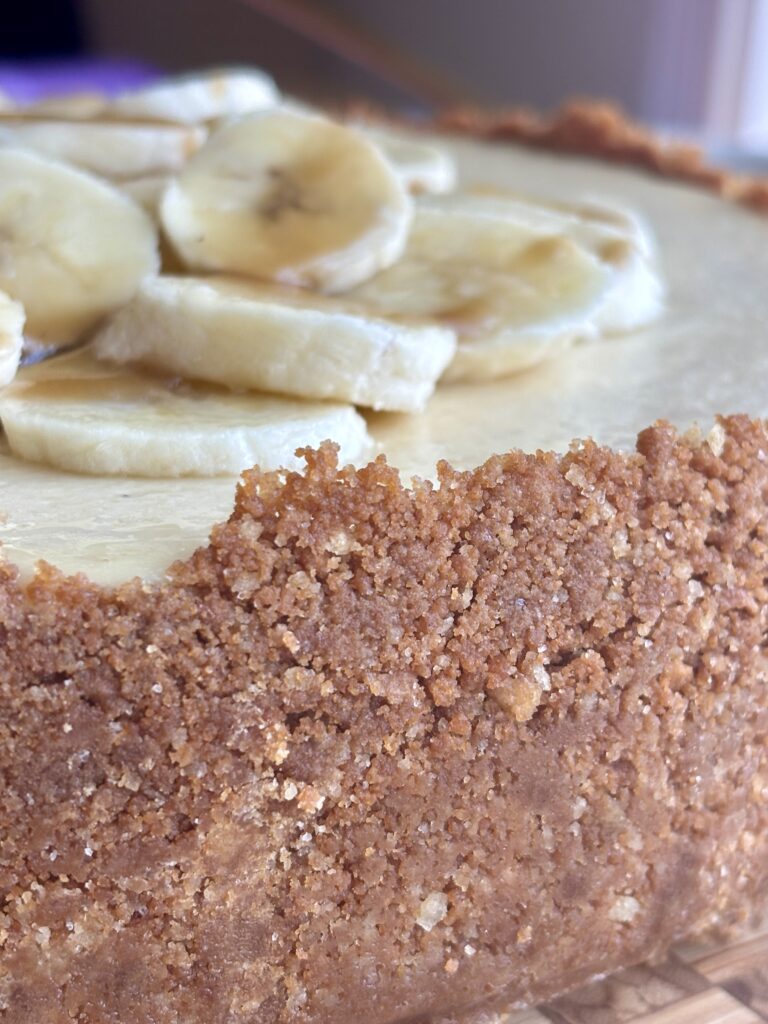
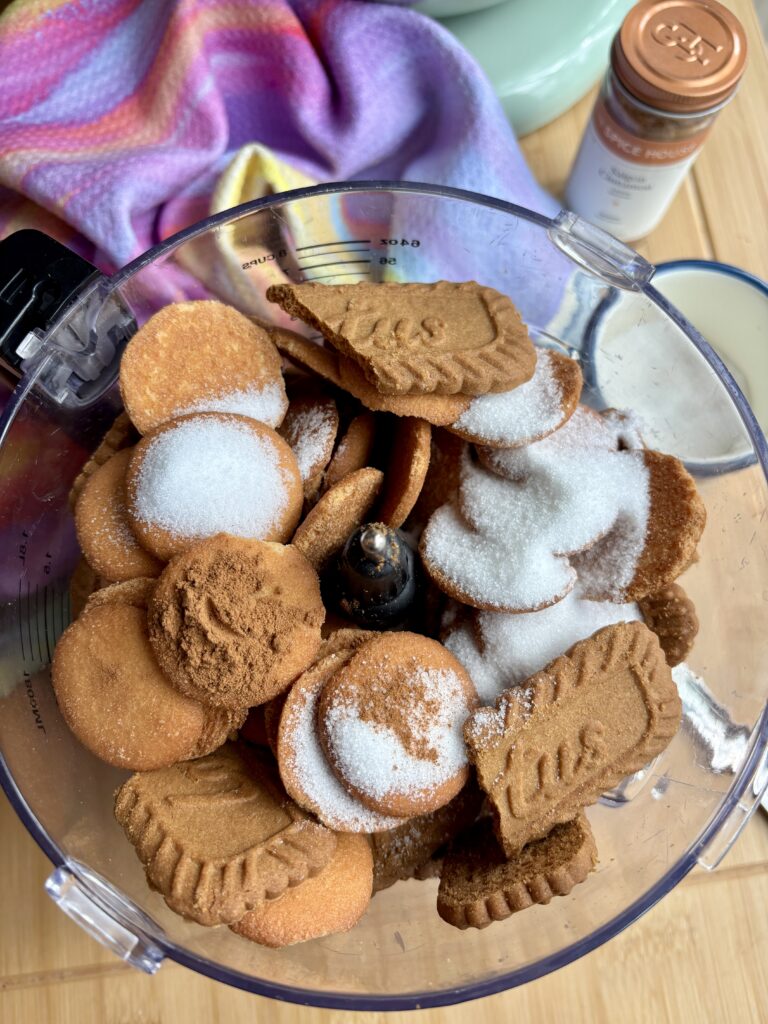
And that crust? A buttery combination of caramelized Biscoff cookies and classic Nilla wafers with just a hint of cinnamon. It brings together those familiar banana pudding flavors with a little something extra.
A gentle water bath and slow cooling help create that beautifully smooth, creamy texture without cracking. It’s an impressive, make ahead dessert that’s perfect for holidays, special occasions, or simply putting those overripe bananas to very good use!
Love cheesecake? Check out these recipes: Nutter Butter Cheesecake, Decadent Chocolate Cheesecake, Vanilla Bean Cheesecake, Pumpkin Swirl Cheesecake
Why you’ll love this recipe!
What ingredients do I need?
- For the Biscoff Nilla Wafer Crust
- Biscoff Cookie Crumbs: These caramelized cookies have a lightly spiced flavor that pairs beautifully with bananas. Crush them into fine crumbs so the crust holds together when sliced.
- Nilla Wafer Crumbs: Classic vanilla wafers bring a familiar banana pudding flavor to the crust. Their mild sweetness balances the deeper, spiced flavor of the Biscoff cookies.
- Ground Cinnamon: A small amount of cinnamon adds warmth and complements both the cookies and banana filling.
- Unsalted Butter: Melted butter binds the cookie crumbs together and creates a rich, buttery crust. Using unsalted butter allows you to control the amount of salt.
- Granulated Sugar: A little sugar adds sweetness and helps the crust bake into a cohesive layer.
- Salt: Salt balances the sweetness of the cookies and butter, keeping the crust from tasting one-dimensional.
- For the Banana Cheesecake Filling
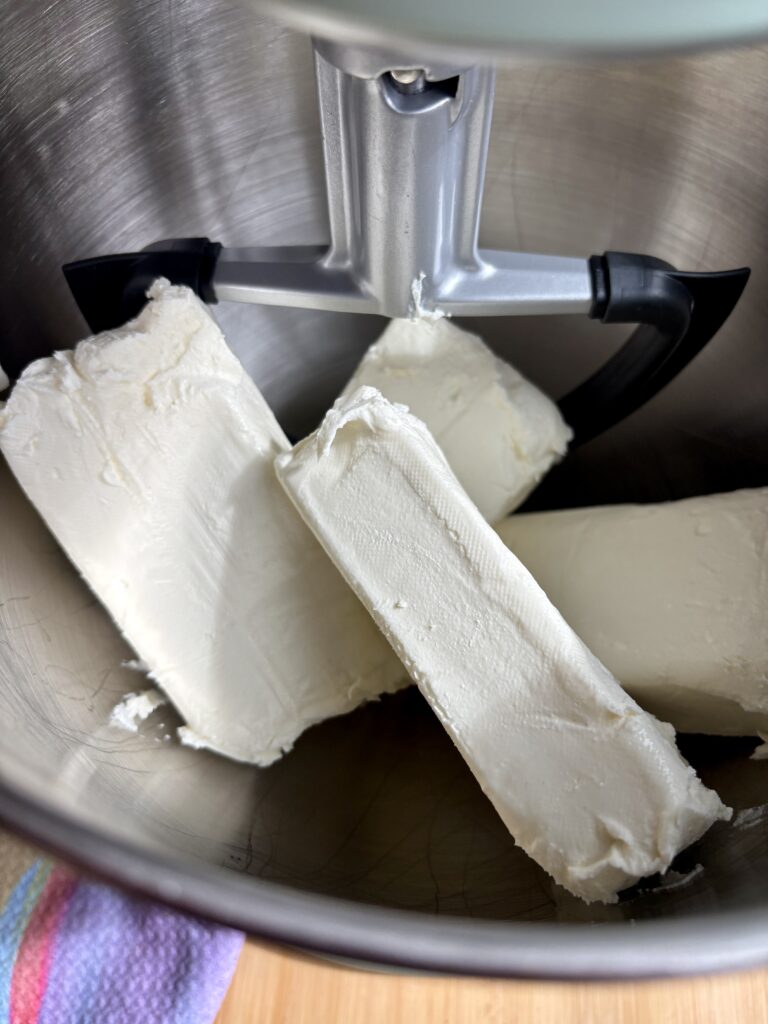
- Cream Cheese: The foundation of this cheesecake! Use full-fat, brick-style cream cheese for the richest flavor and smoothest texture. Make sure it’s fully softened before mixing to avoid lumps.
- Granulated Sugar: Sweetens the filling while balancing the tanginess of the cream cheese and sour cream.
- Cornstarch: Helps stabilize the filling and bind some of its moisture. This is especially useful in a fruit-based cheesecake, where bananas contribute additional water.
- Overripe Bananas: The star of the recipe! Choose bananas with plenty of brown spots for a naturally sweeter, more developed banana flavor. Cooking them before adding them to the filling helps concentrate that flavor and reduce excess moisture.
- Espresso Powder: Optional, but recommended! Just ¼ teaspoon adds a subtle depth that complements the banana, vanilla, and caramelized cookie flavors. It shouldn’t make the cheesecake taste like coffee.
- Ground Cinnamon: Adds a gentle warmth that complements the sweet banana filling.
- Sour Cream: Adds a subtle tang and helps create a smooth, creamy cheesecake texture. Full-fat sour cream works best.
- Heavy Cream: Adds richness and helps soften the dense texture of the cream cheese filling.
- Large Eggs: Provide structure and help the cheesecake set during baking. Room-temperature eggs incorporate more easily into the batter.
- Vanilla Bean Paste: Adds a rich vanilla flavor that pairs beautifully with bananas. The vanilla bean flecks are an added bonus!
Recipe Variations
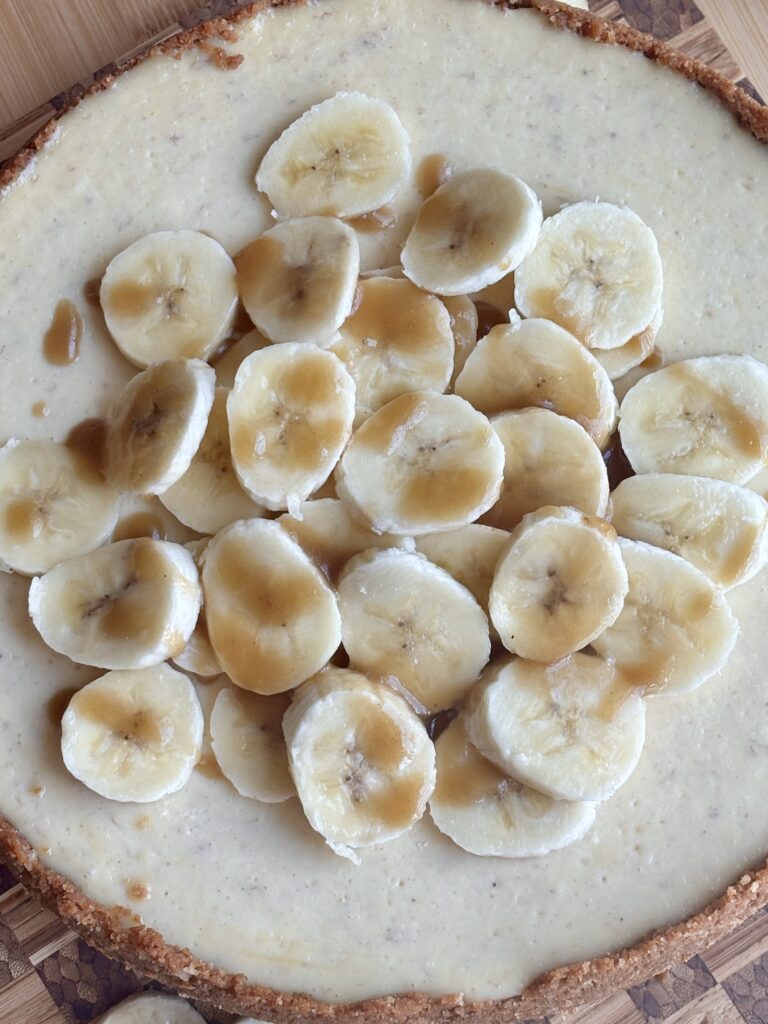
- Banana Pudding Cheesecake: For a banana pudding-inspired presentation, top the fully chilled cheesecake with freshly whipped cream, crushed Nilla wafers, and fresh banana slices just before serving.
- Bananas Foster Cheesecake: Add a topping of sautéed bananas cooked with butter, brown sugar, and cinnamon. Allow the topping to cool slightly before spooning it over individual slices. This variation adds a warm, caramelized banana flavor.
- Chocolate Banana Cheesecake: Drizzle the chilled cheesecake with chocolate ganache, hot fudge, or melted dark chocolate before serving. Chocolate and banana are always a delicious combination!
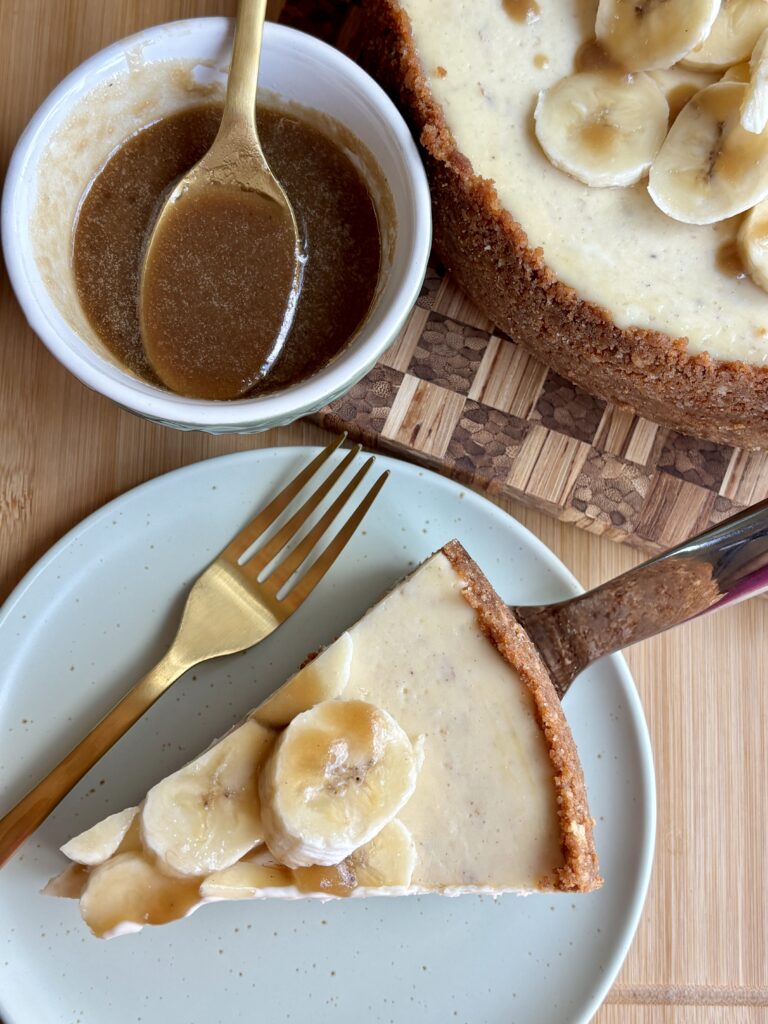
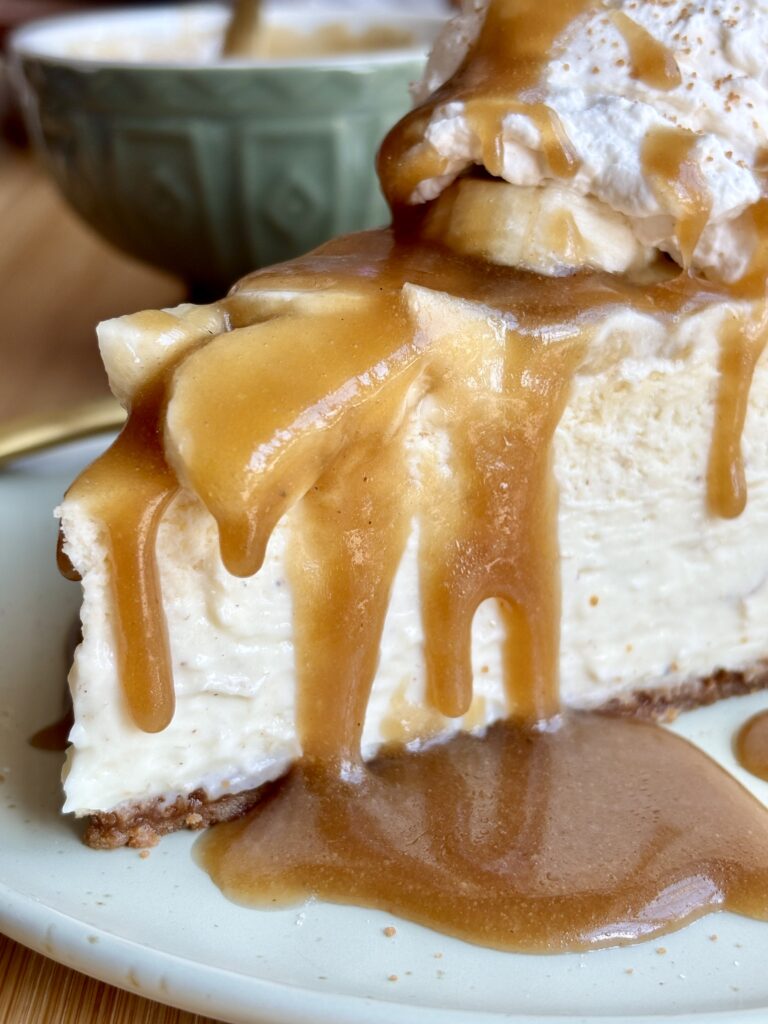
- Salted Caramel Banana Cheesecake: Finish each slice with homemade salted caramel sauce and a small pinch of flaky sea salt. The caramel complements the Biscoff crust and sweet banana filling beautifully.
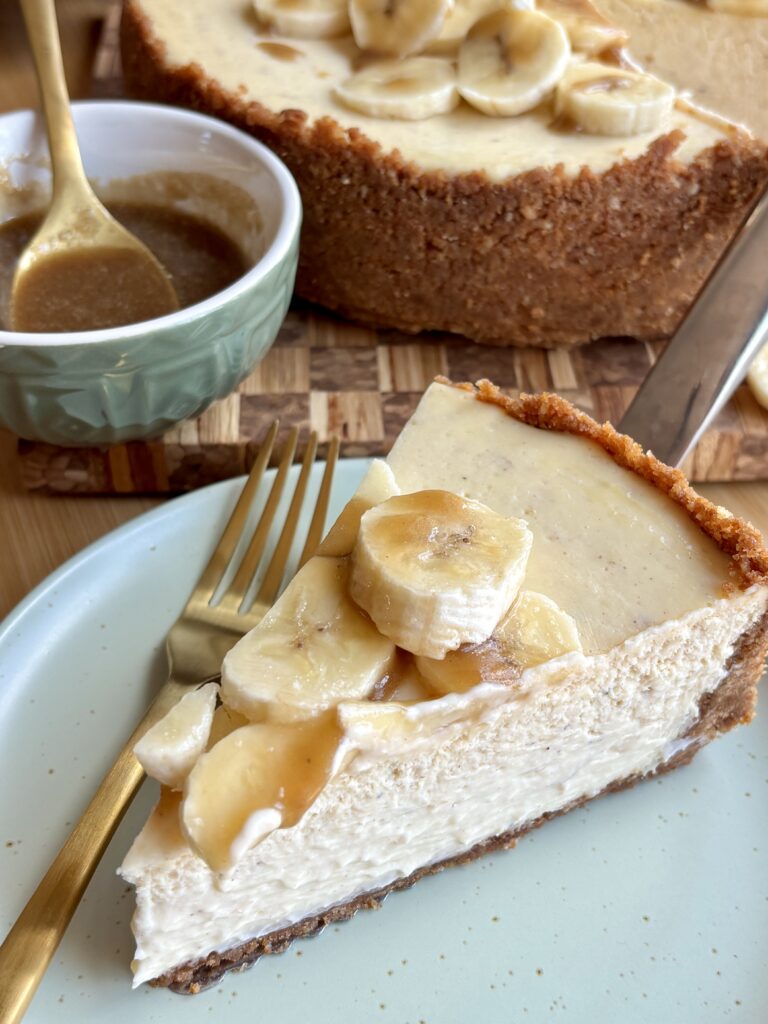
- Toffee Banana Cheesecake: Finish each slice with homemade toffee sauce and a small pinch of flaky sea salt. Just like with the salted caramel, the toffee complements the Biscoff crust and sweet banana filling really well.
Pro Tips
- Use very ripe bananas. Bananas with plenty of brown spots provide a sweeter, more pronounced banana flavor. Avoid bananas that smell fermented or show signs of spoilage.
- Measure the bananas before cooking. Aim for approximately 1 cup of mashed banana before reducing it. Using significantly more banana can change the moisture balance and affect the cheesecake’s texture.
- Cook the bananas until thickened. The banana mixture should look noticeably thicker after cooking. Reducing the moisture helps keep the filling creamy rather than watery.
- Cool the bananas completely. Adding hot bananas to the cheesecake filling can warm the cream cheese unevenly and affect the batter’s consistency.
- Use full-fat brick-style cream cheese. The whipped or spreadable cream cheese contains different amounts of moisture and air, which can affect the cheesecake’s texture.
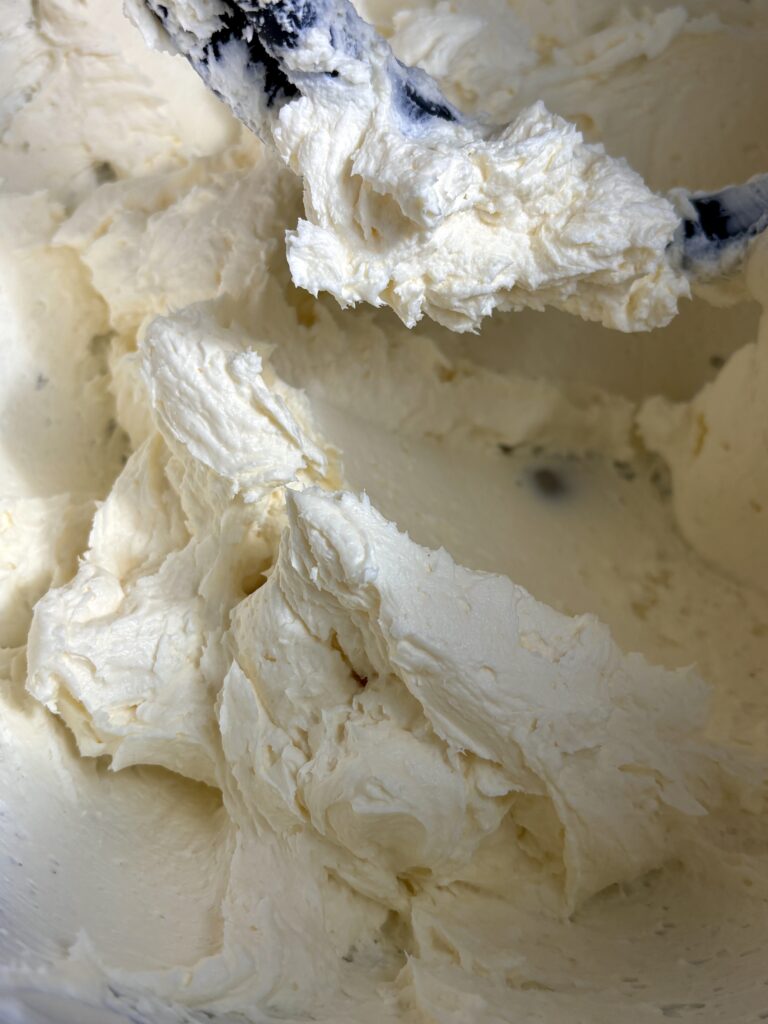
- Scrape down the mixing bowl frequently while mixing. Cream cheese tends to cling to the sides and bottom of the bowl. Scraping helps ensure a smooth filling without excessive mixing.
- Mix the eggs on low speed. Adding too much air can cause the cheesecake to puff up and crack during cooling.
- Use a leak-resistant water bath setup. A springform pan is convenient, but water can seep through its seams. Protecting the pan with foil and an outer solid cake pan helps keep the crust from becoming soggy.
- Don’t rely on baking time alone. Ovens vary, so start checking around 65 minutes. Look for set edges and a gently jiggling center rather than waiting for the entire cheesecake to become firm.
- Avoid opening the oven repeatedly. The frequent temperature changes this causes can interfere with even baking. Wait until near the end of the suggested baking time before checking for doneness.
- Give the cheesecake plenty of time to cool. Slowly cooling in the oven helps reduce sudden contraction of the cake and cracking.
- Chill overnight when possible. An overnight rest allows the filling to become fully firm and makes slicing much easier.
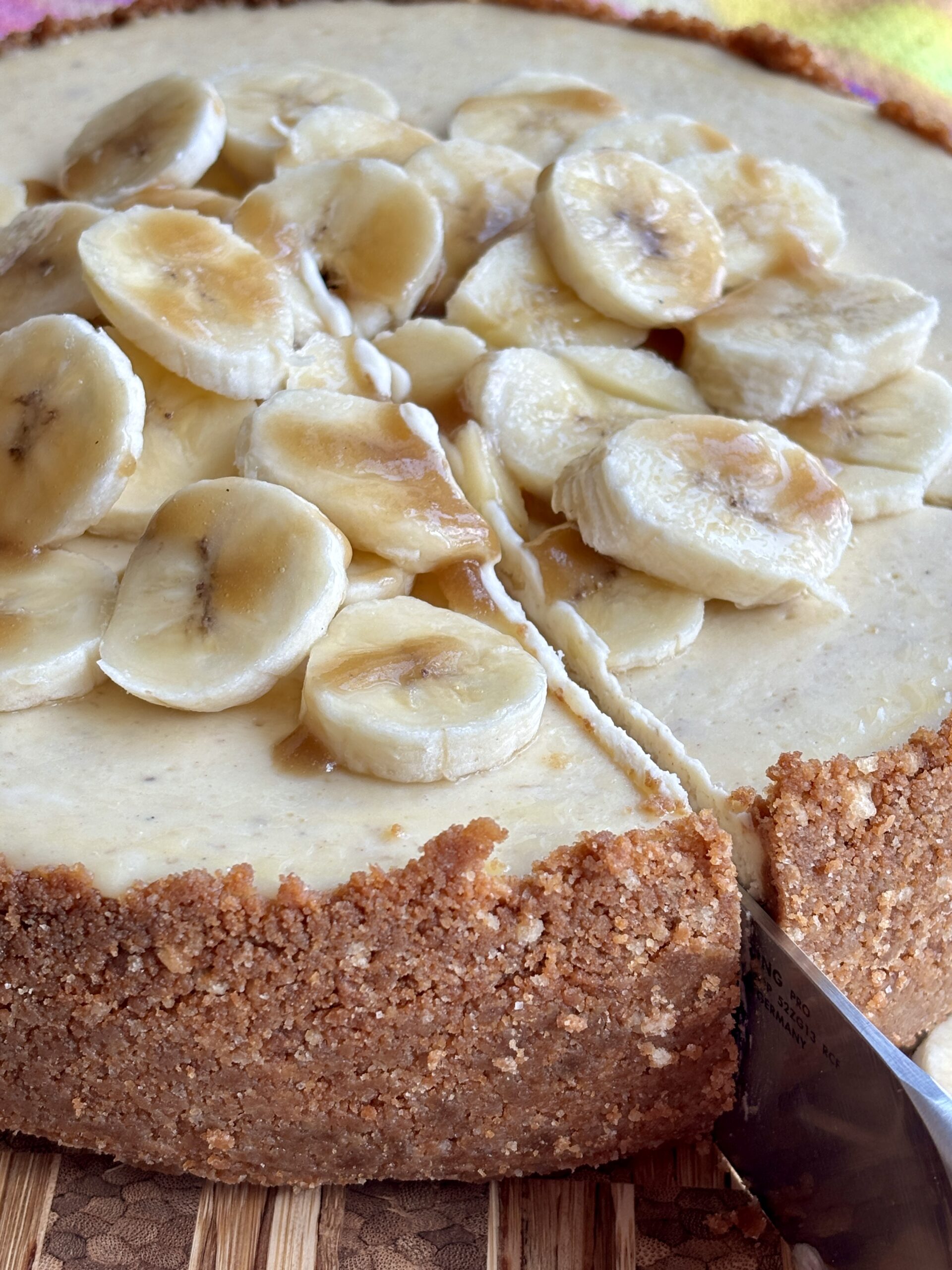
- Use a warm knife for clean slices. Dip a sharp knife into hot water, wipe it dry, and cut one slice at a time. Clean the blade between slices for the prettiest presentation. (Although, as evidenced by some of my pictures I often do not have the patience for this. But this is how you could accomplish the cleanest slices).
- Add the toppings just before serving. Fresh banana slices can brown, and cookie crumbs can soften when refrigerated. Add them shortly before serving for the best appearance and texture.
Why Cooking Down the Bananas Makes a Difference
One of the most important steps in this recipe is cooking the mashed bananas before adding them to the cheesecake batter.
Bananas contain a significant amount of moisture, and adding them directly to a cheesecake filling can introduce extra liquid that affects how the filling sets.
- Cooking the mashed bananas in a skillet for a few minutes helps in several ways:
- Removes excess moisture: As the bananas cook, some of their water evaporates. This reduces the amount of additional liquid going into the cheesecake batter and helps maintain a rich, creamy consistency.
- Concentrates the banana flavor: Removing some of the water makes the banana flavor more concentrated. This is especially helpful because cream cheese, sour cream, and heavy cream are all rich ingredients that can mellow the taste of fruit.
- Enhances their natural sweetness: Cooking concentrates the bananas’ existing sugars and flavor, creating a sweeter tasting, more pronounced banana mixture without adding extra sugar.
- Helps the filling maintain its texture: Reducing excess moisture helps the filling bake more predictably and reduces the chance of a loose or overly soft center.
How to Cook Down Bananas for Cheesecake
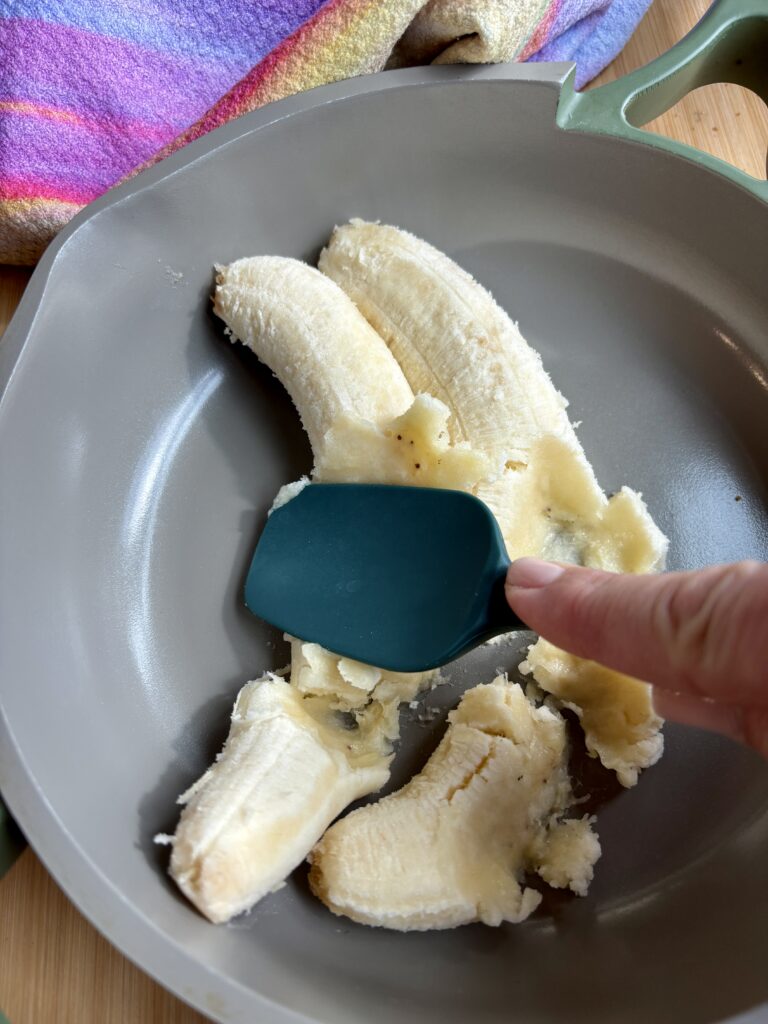
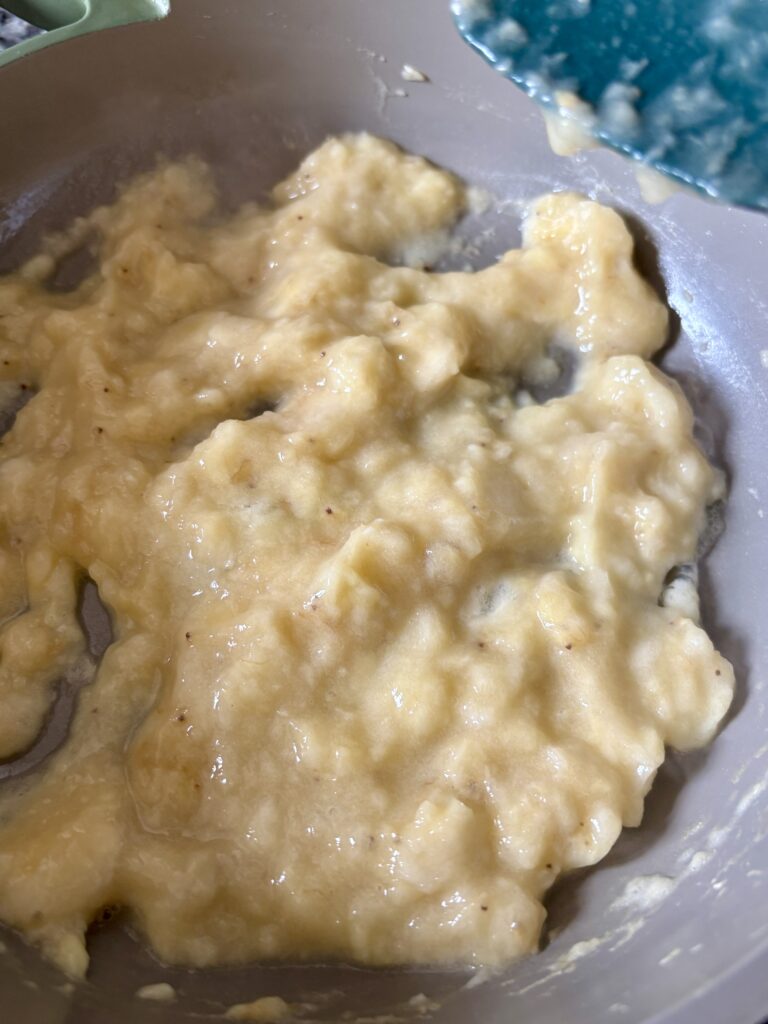
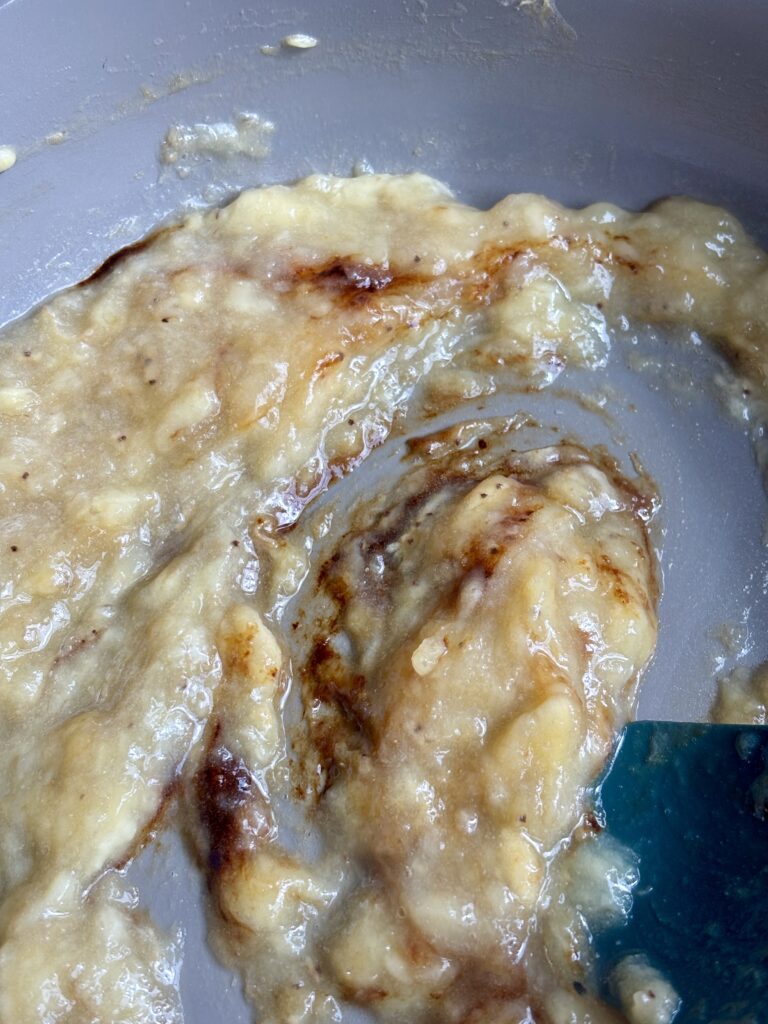
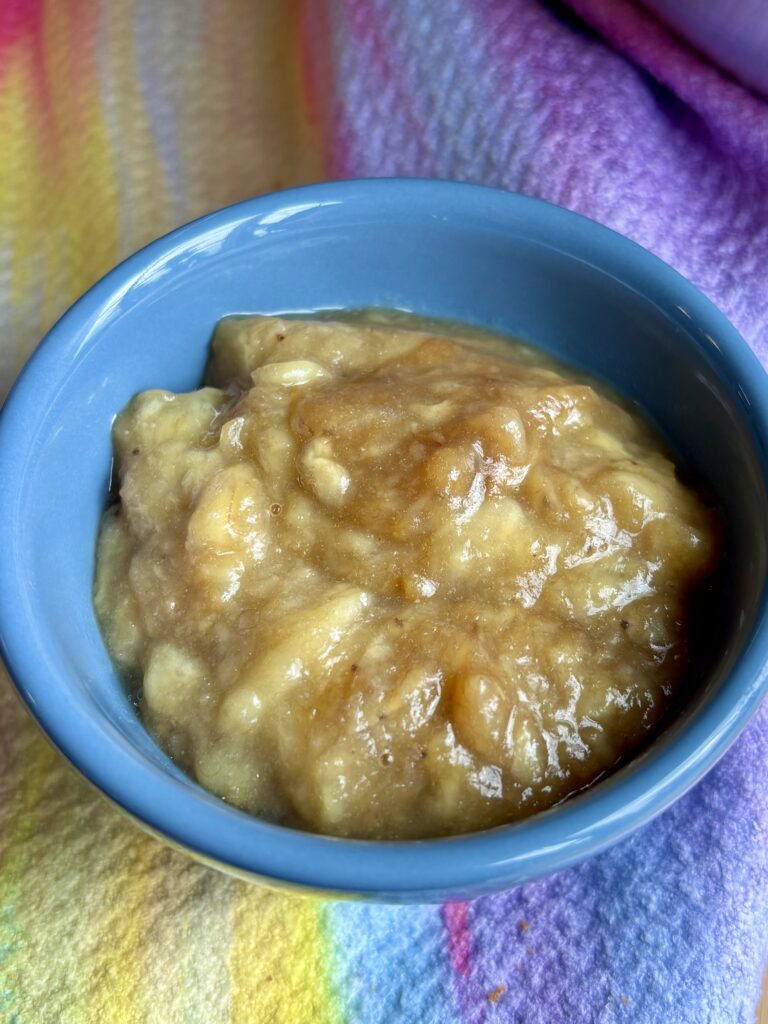
- Mash two overripe bananas until mostly smooth, then transfer them to a small skillet over medium heat. Cook for approximately 3–4 minutes, stirring frequently, until the bananas thicken slightly and some of their moisture evaporates. At this point, the mixture should resemble a thick banana purée rather than a watery mash.
- Avoid aggressively browning or scorching the bananas. The goal is to reduce moisture and concentrate flavor, not create a deeply caramelized banana mixture.
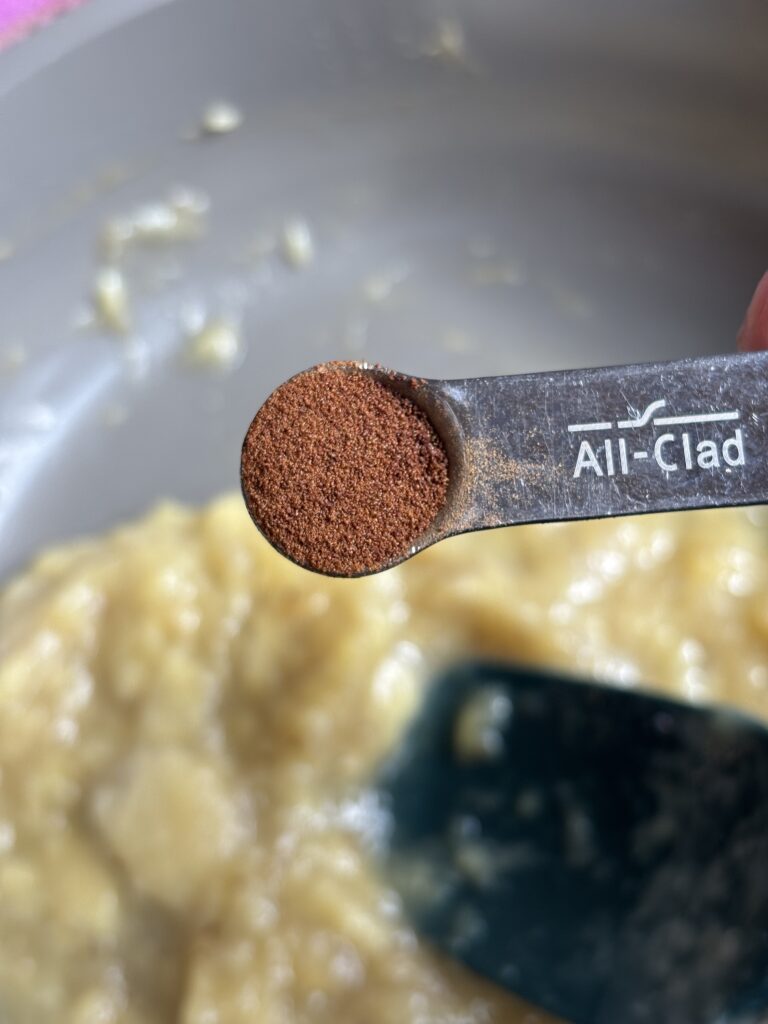
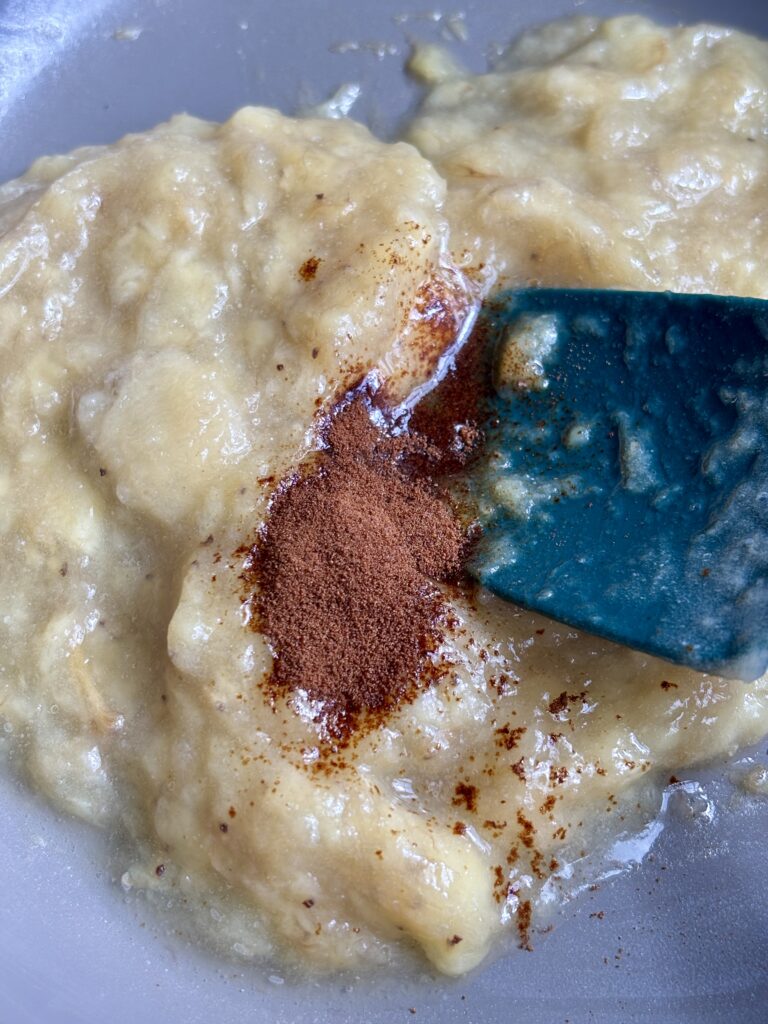
- Stir in the optional espresso powder while the bananas are warm, then allow the mixture to cool completely before adding it to the cheesecake batter.
Pro Tip: For more consistent results, measure the mashed bananas before cooking. Two medium bananas should provide approximately 1 cup, but banana sizes vary. If your mixture still looks watery after 3–4 minutes, continue cooking briefly until it thickens.
Can I Substitute?
Yes! Like always though, any substitutions made to the recipe can result in a change in texture and/or flavor.
- Biscoff Cookies: Substitute with graham crackers, digestive biscuits, or additional Nilla wafers. Each will change the flavor slightly, but all can work in a cookie crumb crust.
- Nilla Wafers: Replace with additional Biscoff cookies, graham crackers, or another crisp vanilla cookie.
- Unsalted Butter: Salted butter can work in the crust. Reduce or omit the additional salt to compensate.
- Heavy Cream: Half-and-half can work in a pinch, but the filling may be slightly less rich. This substitution hasn’t been tested in this specific recipe.
- Vanilla Bean Paste: Substitute with an equal amount of pure vanilla extract.
- Espresso Powder: Simply omit it if you prefer. The cheesecake will still have plenty of banana flavor.
Dietary Substitutions
- Gluten-Free: Use certified gluten-free vanilla cookies or graham cracker-style cookies in place of the Biscoff and Nilla wafers. Check that all remaining packaged ingredients are gluten-free. The filling ingredients are generally gluten-free, but labels should always be checked.
- Nut-Free: The recipe doesn’t intentionally include nuts. However, check cookie and ingredient packaging for cross-contact warnings if preparing it for someone with a nut allergy.
Leftovers and Storage
- Refrigerator:
- Store leftover banana cheesecake in an airtight container or cover it tightly with plastic wrap. Refrigerate for up to 4 days for best quality.
- If the cheesecake has fresh banana slices or whipped cream on top, those toppings may deteriorate sooner. For the best results, store the cheesecake without toppings and add them just before serving.
- Store leftover banana cheesecake in an airtight container or cover it tightly with plastic wrap. Refrigerate for up to 4 days for best quality.
- Freezing:
- For individual slices, chill the cheesecake completely and then slice into individual portions. The nwrap each slice tightly in plastic wrap and place the wrapped slices in a freezer-safe container or bag. Freeze for up to 1–2 months for best texture and flavor.
- For a whole cheesecake, freeze it uncovered until firm, then wrap it tightly in plastic wrap and an additional protective layer.
- How to Thaw Frozen Cheesecake
- Transfer the frozen cheesecake to the refrigerator and allow it to thaw overnight. Individual slices may thaw more quickly, depending on their size.
- Avoid thawing at room temperature for extended periods because cheesecake contains perishable dairy and eggs.
- Can You Make Banana Cheesecake Ahead of Time?
- Absolutely! This is one of my favorite things about baked cheesecake. Prepare it a day before serving, allow it to cool properly, and refrigerate overnight. The filling will become firm and sliceable, and you won’t have to worry about making dessert on the day of your gathering.
- How Long Can Cheesecake Sit Out?
- For food safety, don’t leave cheesecake at room temperature for more than 2 hours total, or 1 hour if the temperature is above 90°F. Return leftovers to the refrigerator promptly.
How to Prevent Cheesecake from Cracking
A smooth, crack free cheesecake comes down to controlling the amount of air in the batter, baking it gently, and avoiding sudden temperature changes. Cracks don’t necessarily mean a cheesecake was made incorrectly, and they certainly don’t affect how delicious it tastes. However, these tips can help prevent them.
1. Use a Water Bath
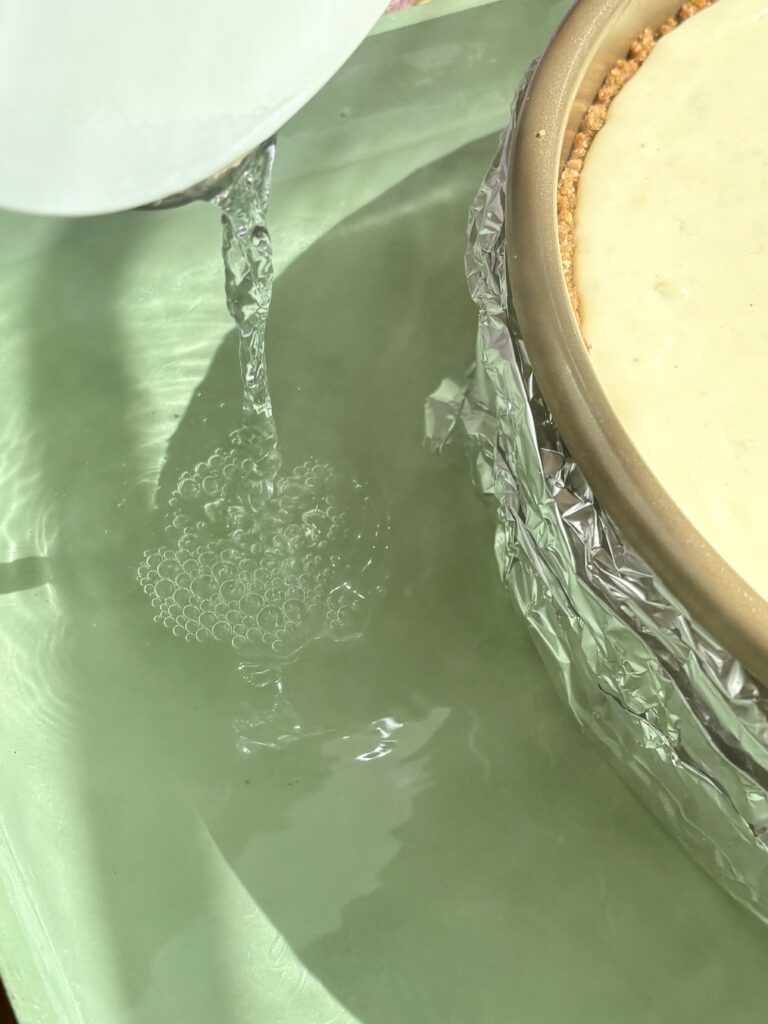
A water bath surrounds the cheesecake pan with hot water while it bakes. The water helps moderate the temperature around the pan and creates a humid baking environment, encouraging the filling to bake more gently and evenly. This helps prevent the edges from overbaking before the center has finished setting.
To prepare a water bath:
- Wrap the outside of your springform pan with multiple layers of heavy-duty aluminum foil.
- Place the cheesecake pan inside a larger roasting pan.
- Pour hot water into the roasting pan until it reaches approximately halfway up the sides of the springform pan.
- Carefully transfer everything to the oven.
Important: Foil doesn’t always create a completely waterproof seal. For extra protection, place the foil-wrapped springform pan inside a slightly larger solid cake pan before placing it in the water bath. Make sure the outer pan fits comfortably inside your roasting pan.
2. Start with Room Temperature Ingredients
Cold cream cheese can create lumps, which may tempt you to overmix the filling. Fully softened cream cheese, room temperature eggs, and room temperature sour cream combine more smoothly with less mixing.
3. Don’t Overmix the Eggs
Once the eggs go into the batter, mix on low speed just until each egg disappears. Overmixing incorporates excess air, which can cause the cheesecake to rise excessively during baking and then collapse as it cools. That rise-and-fall movement can contribute to cracks.
4. Bake at a Gentle Temperature
This cheesecake bakes at 325°F, which allows the filling to set gradually. Baking at high temperatures can cause the outer edges to firm up too quickly while the center remains undercooked.
5. Don’t Overbake
One of the biggest causes of cheesecake cracks is overbaking.
The cheesecake is ready when the outer edges look set but the center still has a slight jiggle. The middle should move gently as one piece when you lightly shake the pan, rather than looking liquid or sloshy.
6. Let the Cheesecake Cool Slowly in the Oven
Sudden temperature changes can cause the cheesecake to contract too quickly, resulting in cracks.
Once the cheesecake finishes baking, turn off the oven and crack the oven door slightly. Leave the cheesecake inside for approximately 2 hours to cool gradually.
This slow cooling process is one of the most helpful steps for achieving a smooth top.
7. Chill Completely Before Slicing
Even when a cheesecake looks fully set, it needs time in the refrigerator to develop its final texture. Chill for at least 4 hours, preferably overnight, before removing the springform ring and slicing.
But, I Still Have A Few Questions…
What does banana cheesecake taste like?
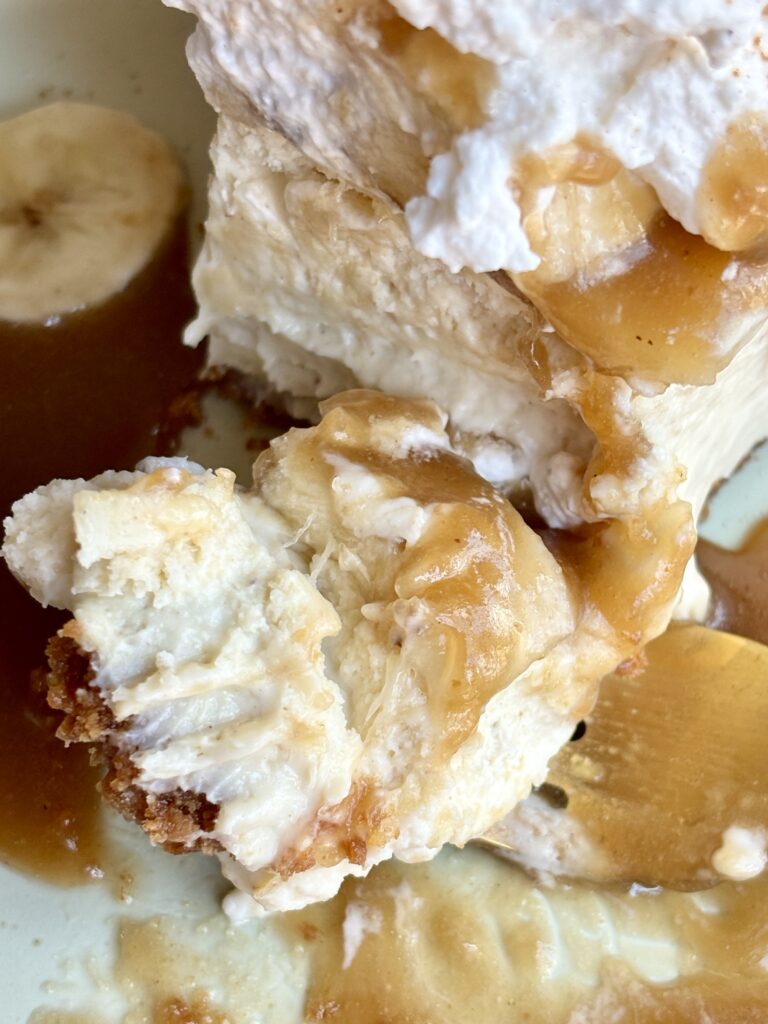
Banana cheesecake combines the rich, tangy flavor of traditional cheesecake with the natural sweetness of ripe bananas. The filling is smooth, creamy, and full of real banana flavor, while the Biscoff Nilla wafer crust adds buttery vanilla and warm caramelized spice.
Why do you cook the bananas before adding them to cheesecake?
Cooking the bananas removes excess moisture and concentrates their natural sweetness and flavor. This helps create a rich, creamy filling with a more pronounced banana taste without adding unnecessary liquid to the cheesecake batter.
Can I use fresh mashed bananas without cooking them?
While some cheesecake recipes use raw mashed bananas, I recommend cooking them for this recipe. Skipping this step introduces additional moisture, which can affect the texture and how the cheesecake sets during baking.
How ripe should bananas be for banana cheesecake?
Choose very ripe bananas with plenty of brown spots. The riper the bananas, the sweeter and more flavorful they’ll be. They also mash more easily, creating a smoother filling.
Can I use frozen bananas?
You can try using previously frozen bananas, but they release extra moisture as they thaw. Thaw them completely, measure approximately 1 cup of mashed banana, and cook them down as directed. I haven’t tested frozen bananas in this particular recipe, so fresh overripe bananas are my first choice.
Can I use banana extract instead of real bananas?
I wouldn’t recommend replacing the bananas with extract. Real bananas contribute flavor, moisture, and texture to the cheesecake. Banana extract may enhance the flavor, but it won’t provide the same results on its own.
Does the espresso powder make the cheesecake taste like coffee?
No, the small amount of espresso powder is intended to enhance the warm banana, vanilla, and caramelized cookie flavors without adding a noticeable coffee taste. You can leave it out if you prefer.
Why is there cornstarch in the cheesecake filling?
Cornstarch helps stabilize the cheesecake and bind some of the moisture from the bananas and dairy ingredients. This helps the filling set while maintaining a smooth, creamy texture.
Do I need to use a water bath?
Not technically, but I highly recommend it! A water bath helps the cheesecake bake gently and evenly while maintaining a humid environment in the oven. This reduces the risk of overbaked edges and cracks on the surface.
How do I keep water from getting into my cheesecake crust?
Wrap the outside of your springform pan tightly with multiple layers of heavy-duty aluminum foil. For extra protection, place the wrapped springform pan inside a slightly larger solid cake pan before setting it into the water bath. This helps prevent water from leaking into the crust.
Why did my banana cheesecake crack?
Cheesecake can crack from overbaking, overmixing the batter, or cooling too quickly. To help prevent cracks, use room-temperature ingredients, mix the eggs on low speed, bake in a water bath, and allow the cheesecake to cool gradually in the oven with the door slightly open.
Can I fix a cracked cheesecake?
While you can’t completely repair a crack, it won’t affect how delicious your cheesecake tastes! Cover the top with whipped cream, caramel sauce, crushed cookies, or another favorite topping.
How do I know when banana cheesecake is done baking?
The outer edges should look set, while the center should still have a slight jiggle when you gently shake the pan. The center should move as one piece rather than look liquid. The cheesecake will continue setting as it cools and chills.
Why is my cheesecake still jiggly after baking?
A slight jiggle in the center is completely normal! Cheesecake continues to firm up as it cools and refrigerates. However, if the center looks liquid or moves excessively, it may need additional baking time.
Why did my cheesecake sink in the middle?
A cheesecake may sink if too much air gets incorporated into the batter or if the center hasn’t baked sufficiently. Some settling during cooling is normal, but excessive sinking can indicate overmixing or underbaking.
Why is my banana cheesecake grainy instead of creamy?
Graininess can result from overbaking or using cream cheese that wasn’t fully softened. For the smoothest filling, bring your ingredients to room temperature, beat the cream cheese until completely smooth, and avoid overmixing once you add the eggs.
Can I make this cheesecake without a stand mixer?
Absolutely! A hand mixer works well. Beat the softened cream cheese until smooth, then use low speed to incorporate the remaining ingredients, especially the eggs.
Can I use a different cookie crust?
Yes, you do you! Graham crackers, all Nilla wafers, or all Biscoff cookies make delicious alternatives. Each creates a slightly different flavor, but all pair beautifully with the banana filling.
Can I make banana cheesecake ahead of time?
Absolutely, and I actually recommend it! Making the cheesecake a day ahead allows plenty of time for cooling and chilling. An overnight rest helps the filling firm up, making it easier to slice and serve.
How long does banana cheesecake need to chill?
Refrigerate the cheesecake for at least 4 hours after the 2 hours of cooling in the oven, although overnight is even better. This gives the filling enough time to fully set and develop its rich, creamy texture.
Can I put warm cheesecake directly into the refrigerator?
Allow the cheesecake to cool gradually in the oven first. Once you remove it from the water bath, let it cool further before refrigerating, but don’t leave it at room temperature for more than 2 hours after removing it from the oven.
Can I freeze banana cheesecake?
Yes! Wrap the completely cooled and chilled cheesecake, or individual slices, tightly in plastic wrap, followed by a layer of aluminum foil or a freezer-safe container. Freeze for up to 1–2 months for the best quality, then thaw overnight in the refrigerator before serving.
Will banana cheesecake turn brown?
The baked cheesecake filling may have a slightly beige color from the bananas, cinnamon, and vanilla. This is completely normal! Fresh banana slices used as a topping can brown after cutting, so add them just before serving.
What toppings go well with banana cheesecake?
Fresh whipped cream, sliced bananas, crushed Biscoff cookies, Nilla wafers, salted caramel sauce, toffee sauce, hot fudge, and chocolate ganache are all delicious options. You can also serve it plain and let the creamy banana filling and buttery cookie crust shine.
Can I make banana cheesecake in an 8-inch springform pan?
An 8-inch pan will create a thicker cheesecake and likely require a longer baking time. Make sure the pan is deep enough to hold the filling without overflowing. I recommend using the specified 9-inch pan for the most predictable results.
Can I use low-fat cream cheese?
I recommend full-fat, brick-style cream cheese for the richest flavor and creamiest texture. Reduced-fat cream cheese has a different moisture content and may produce a softer filling.
Other Recipes You’ll Love
Let’s engage!
Make sure to tag @thehomechefmomma on Instagram or Facebook, and leave a review or comment if you make these. I always get so excited to see your creations, variations of the recipe, and feedback! Just remember to be kind in your comments, there is still a person behind this screen! 🙂
Creamy Banana Cheesecake
Ingredients
Biscoff Nilla Wafer Crust
- 1 cup Biscoff cookies about 25–27 Lotus Biscoff cookies
- 1 cup Nilla wafers about 30–35 Nilla wafers
- ¼ teaspoon ground cinnamon
- 8 tablespoons 1 stick unsalted butter, melted
- 2 tablespoons granulated sugar
- ½ teaspoon salt
Banana Cheesecake Filling
- 32 ounces full-fat cream cheese fully softened
- 1 cup granulated sugar
- 1 tablespoon cornstarch
- 2 overripe bananas about 1 cup mashed, before cooking
- ¼ teaspoon espresso powder optional, recommended
- ½ teaspoon ground cinnamon
- ½ cup full-fat sour cream room temperature
- ¼ cup heavy cream
- 5 large eggs room temperature
- 1½ tablespoons vanilla bean paste
Instructions
- Preheat the oven to 325°F. Lightly grease a 9-inch springform pan and line the bottom with parchment paper. Wrap the outside tightly with multiple layers of heavy-duty aluminum foil to protect it from the water bath. For extra leak protection, place the wrapped springform pan inside a slightly larger solid pan.
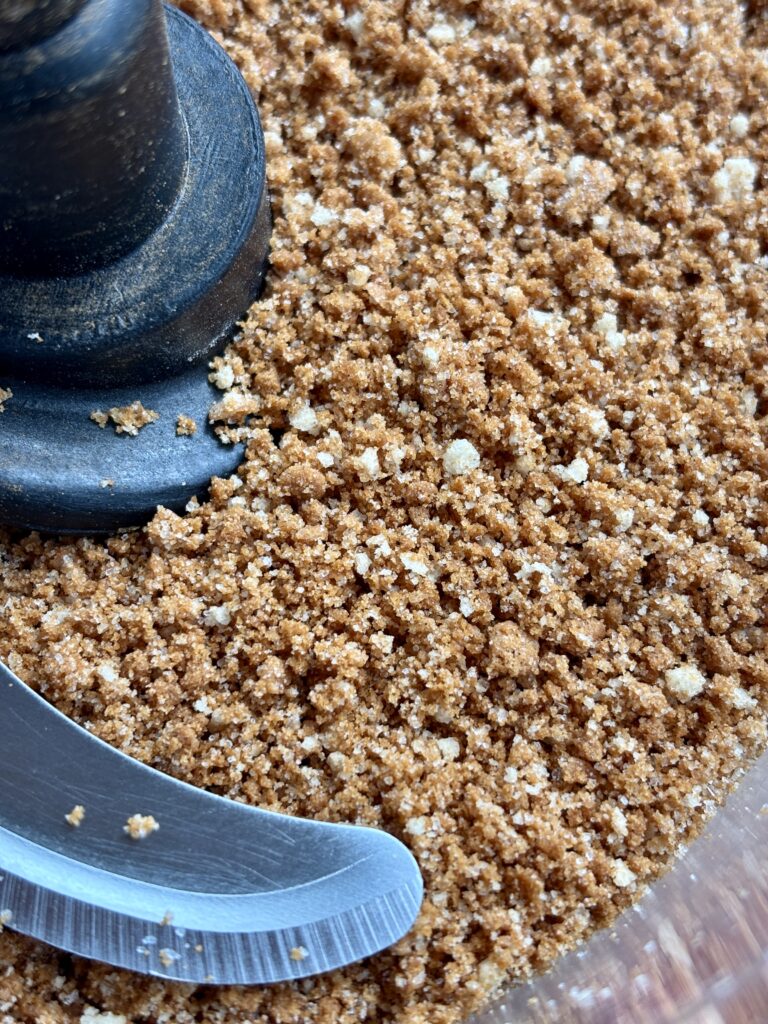
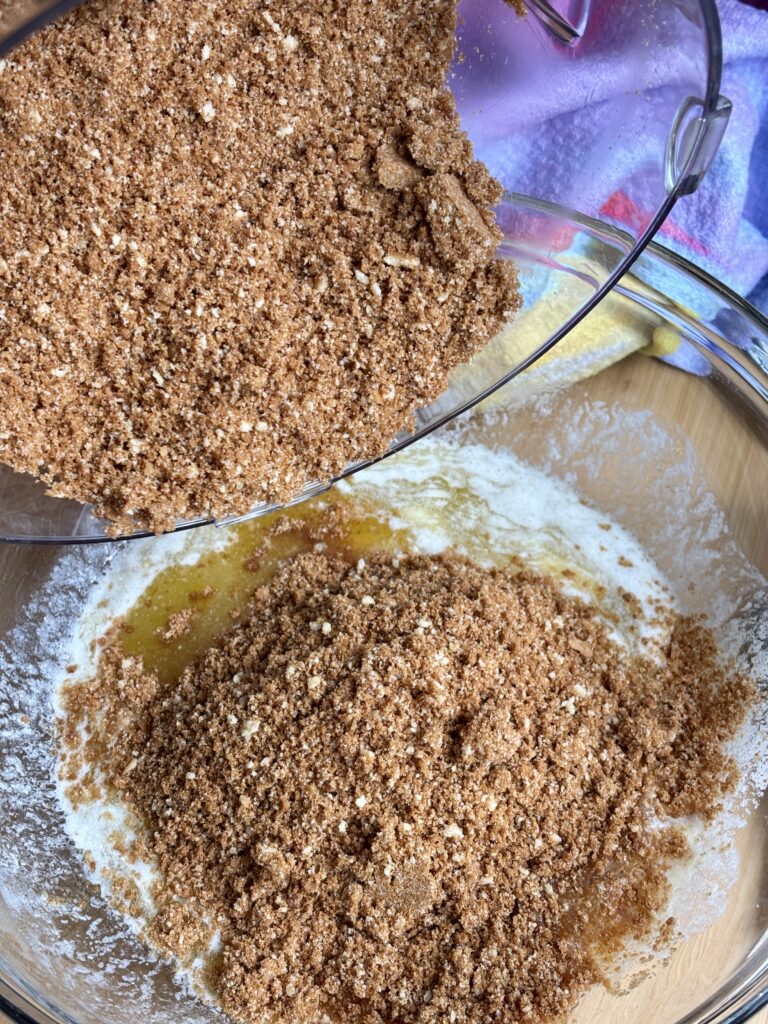
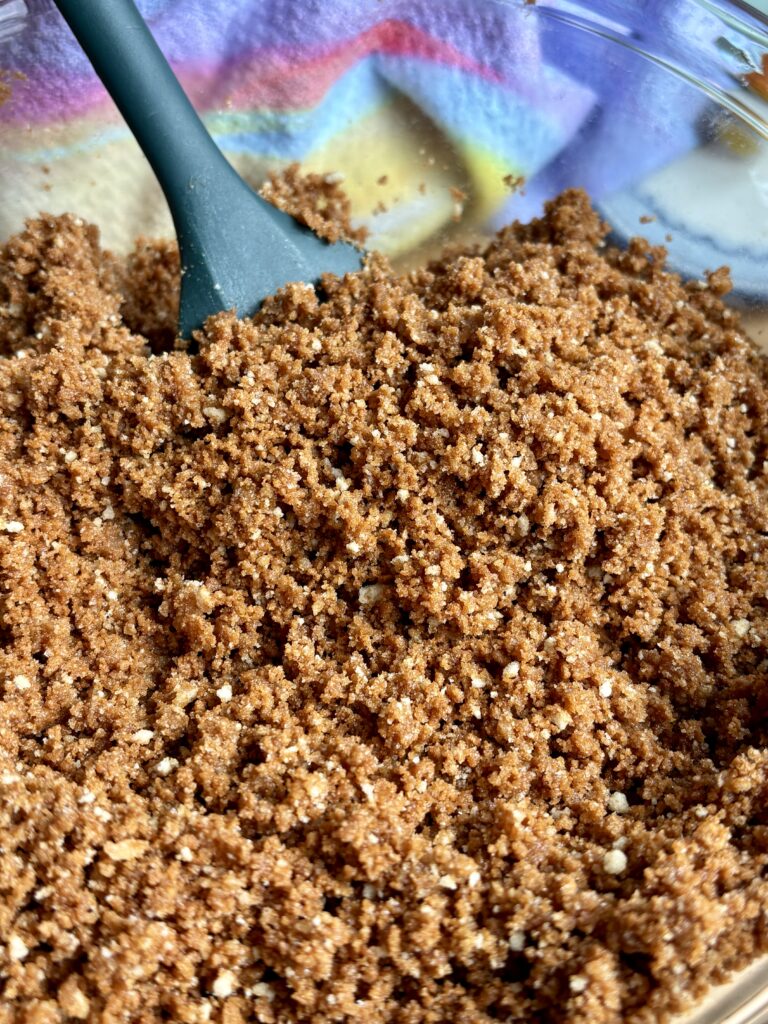
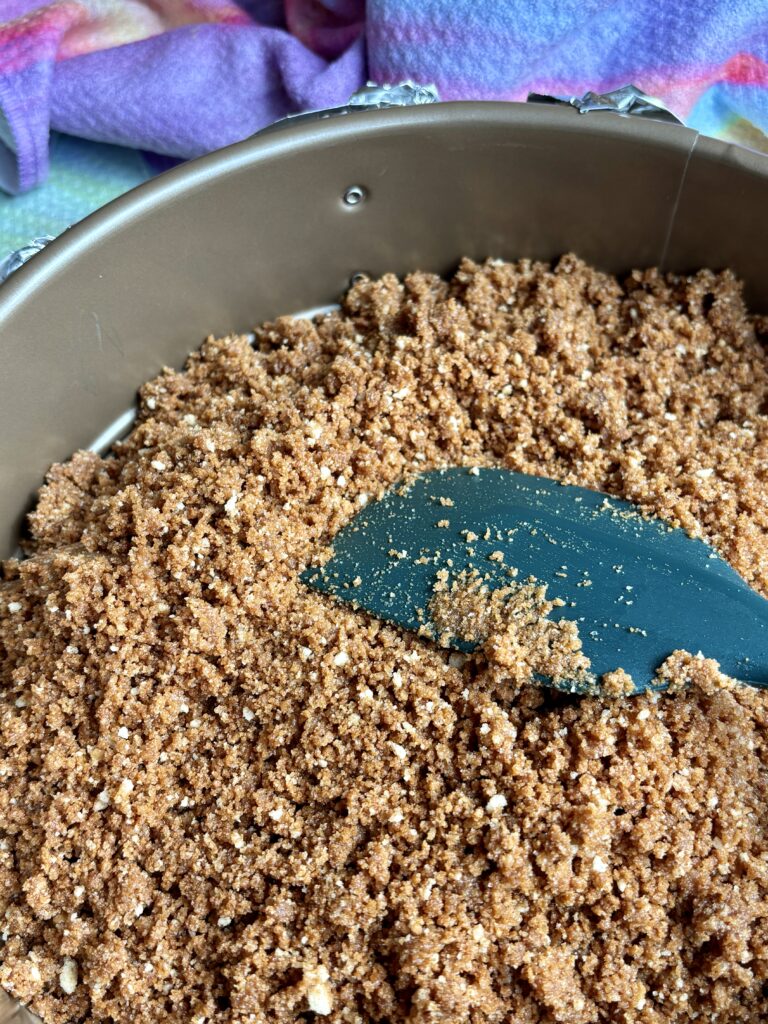
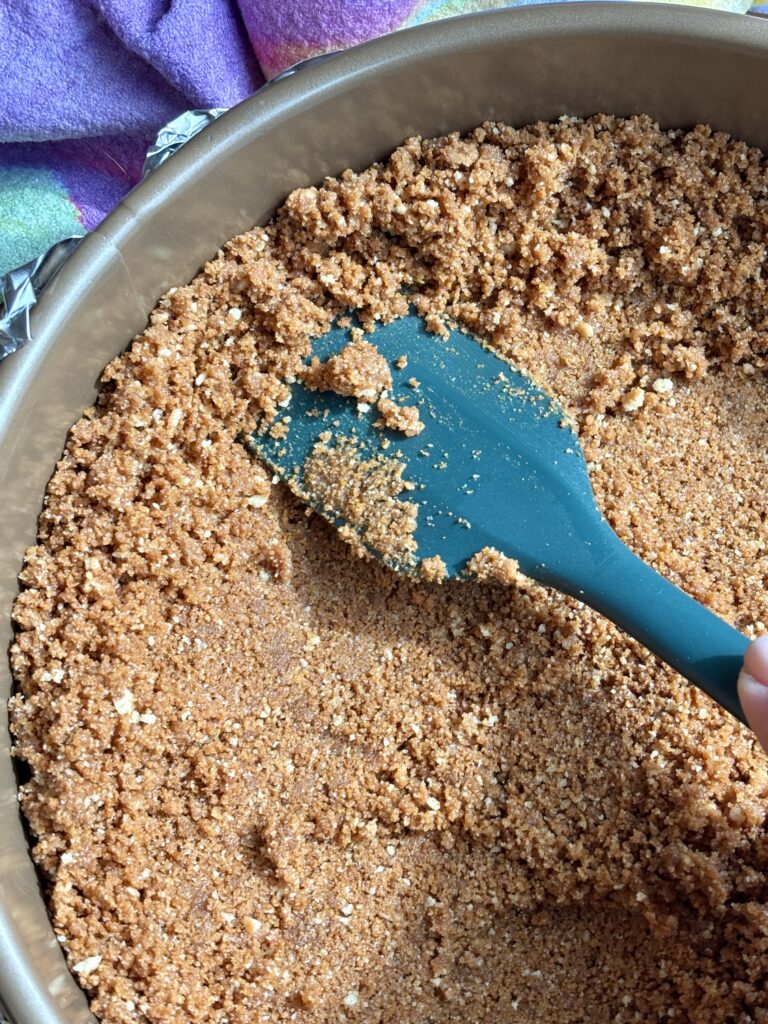
- Add the Biscoff cookies, Nilla wafers, cinnamon, granulated sugar, and salt to a food processor. Pulse until it is all combined with fine crumbs. Then add to a medium bowl with the melted butter. Mix until the crumbs are evenly moistened. Press the mixture firmly into the bottom and slightly up the sides of the prepared springform pan. Bake for 8–10 minutes, then remove from the oven and allow to cool while preparing the filling.
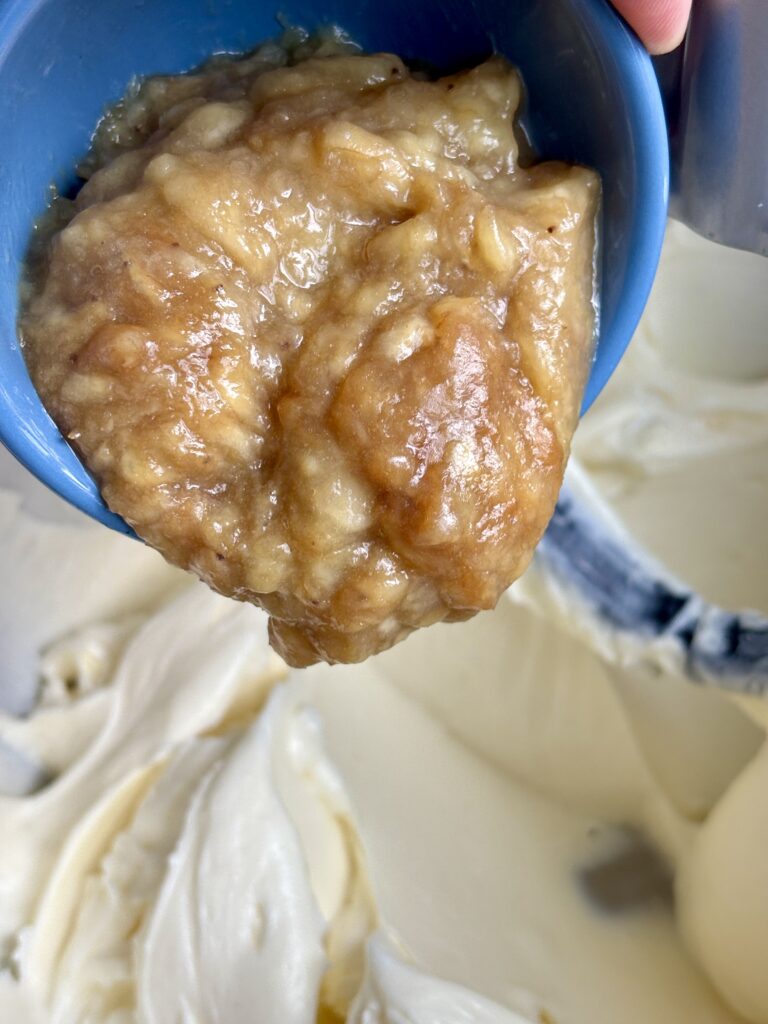
- Mash the overripe bananas until mostly smooth. Transfer to a small skillet over medium heat and cook for 3–4 minutes, stirring frequently, until the mixture thickens slightly and some excess moisture evaporates. Stir in the optional espresso powder while warm. Remove from heat and allow the banana mixture to cool completely.
- In the bowl of a stand mixer fitted with the paddle attachment, beat the fully softened cream cheese on medium speed until completely smooth and free of lumps. Scrape down the sides and bottom of the bowl as needed.
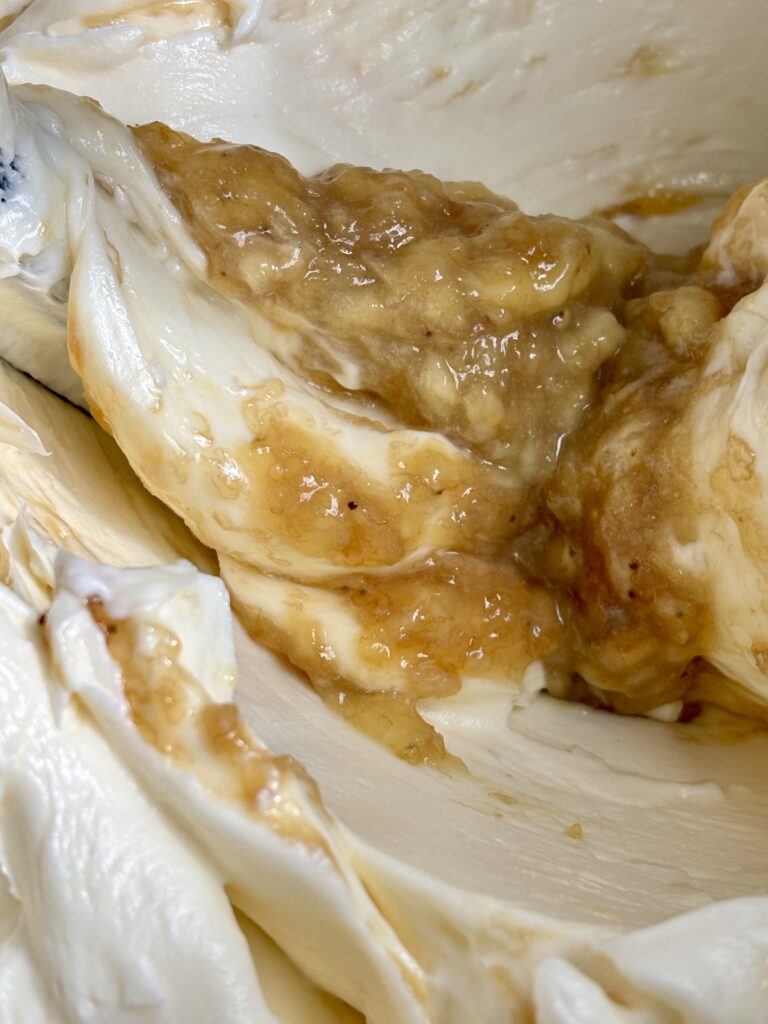
- Add the granulated sugar and cornstarch. Mix on low speed until incorporated. Add the cooled banana mixture and continue mixing on low until evenly combined.
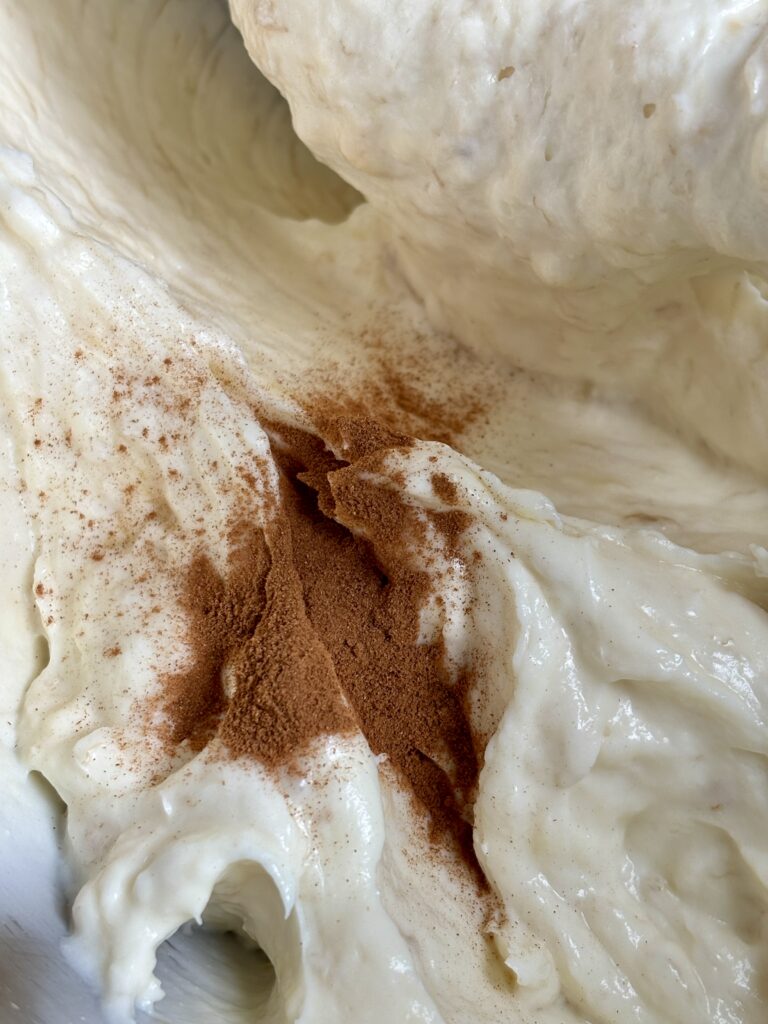
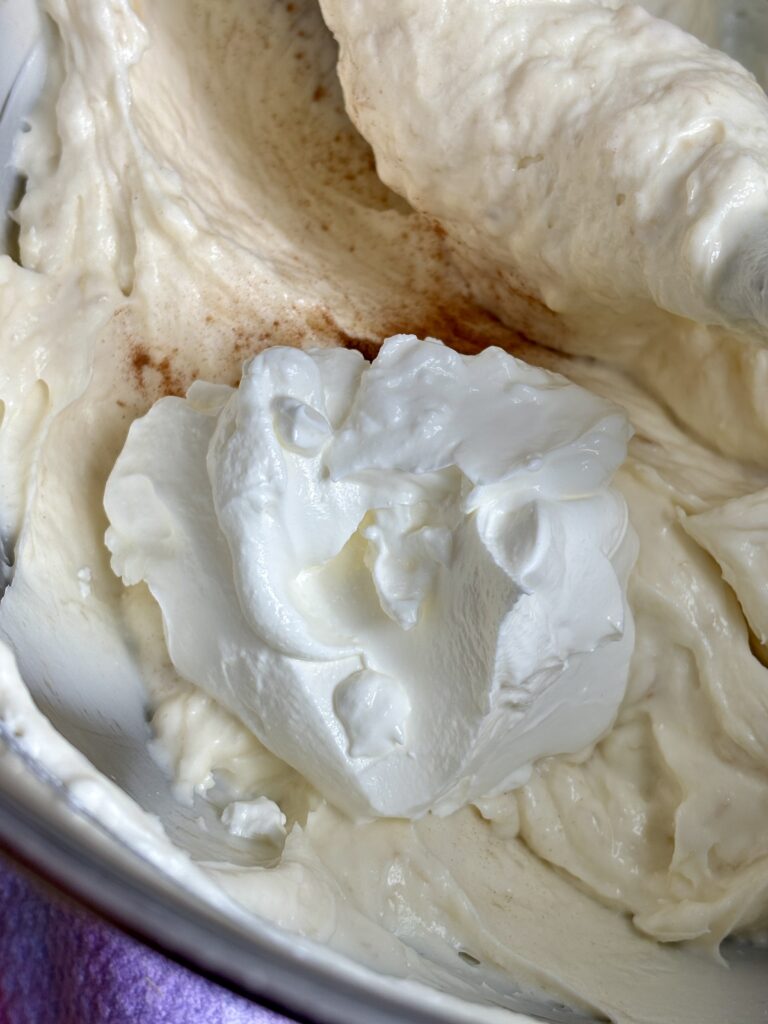
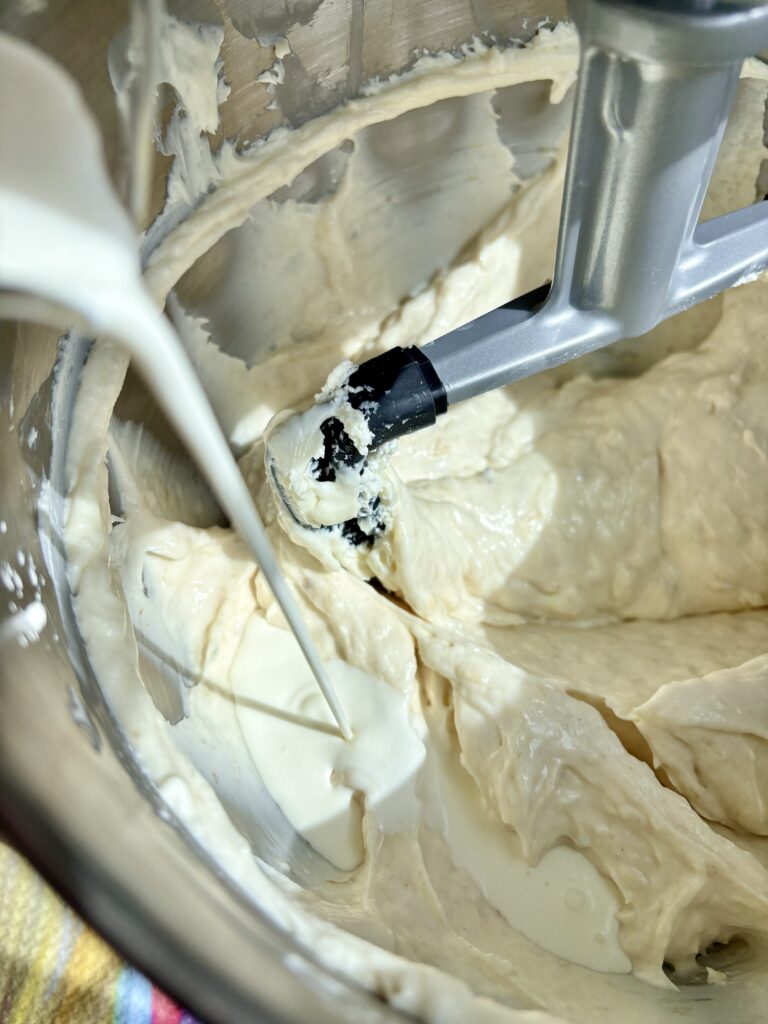
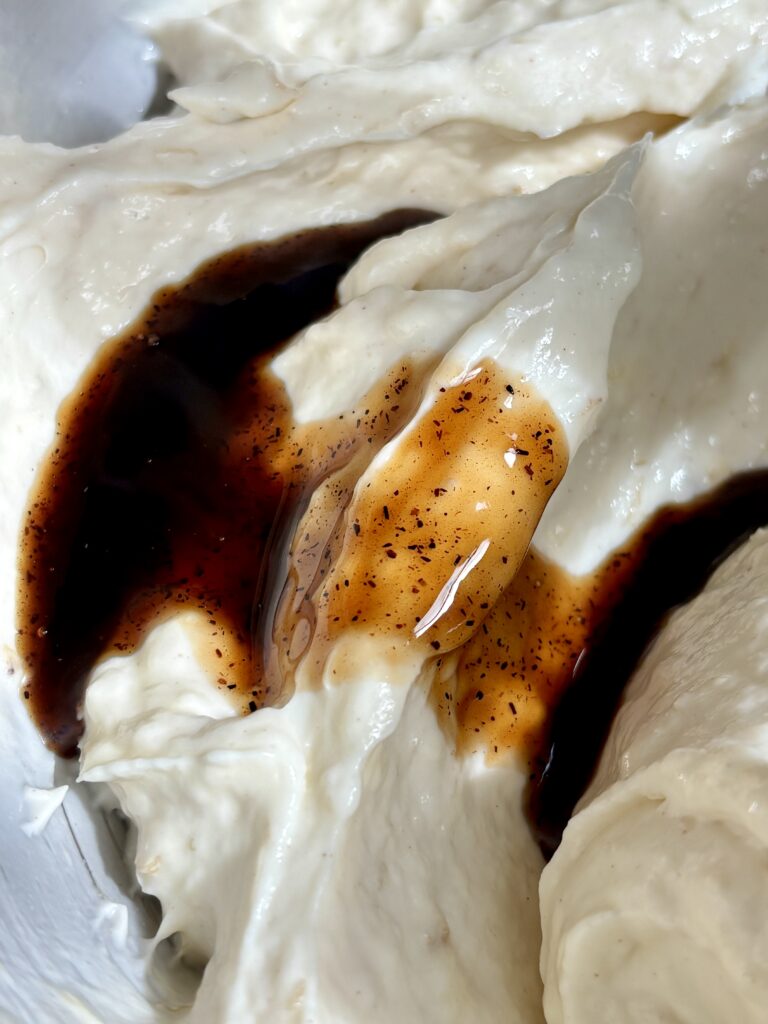
- Add the sour cream, heavy cream, vanilla bean paste, and cinnamon. Mix on low speed until smooth, scraping down the bowl as necessary.
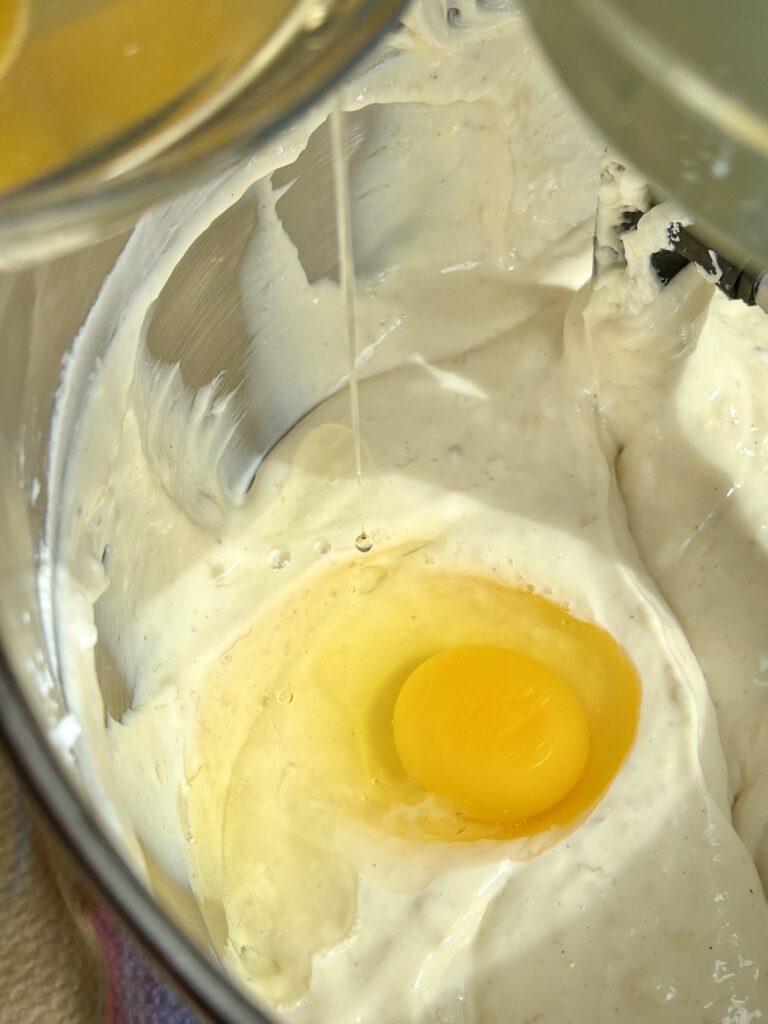
- Add the eggs one at a time, mixing on low speed just until each egg is incorporated before adding the next. Avoid overmixing, as incorporating too much air can cause the cheesecake to rise and crack during baking.
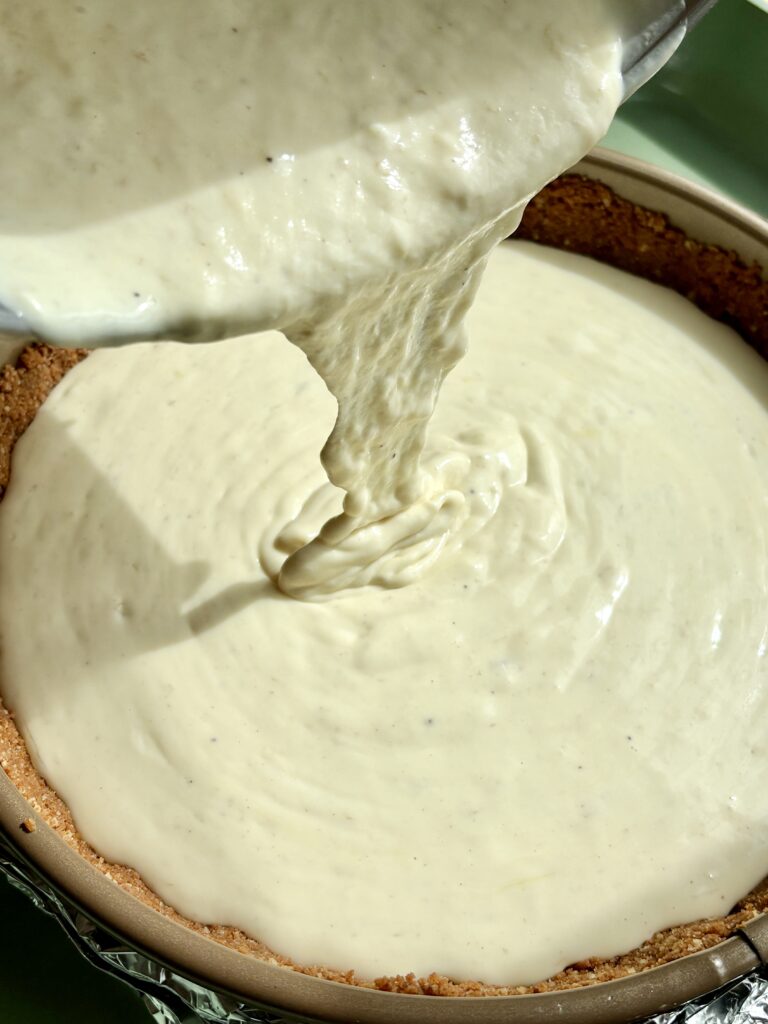
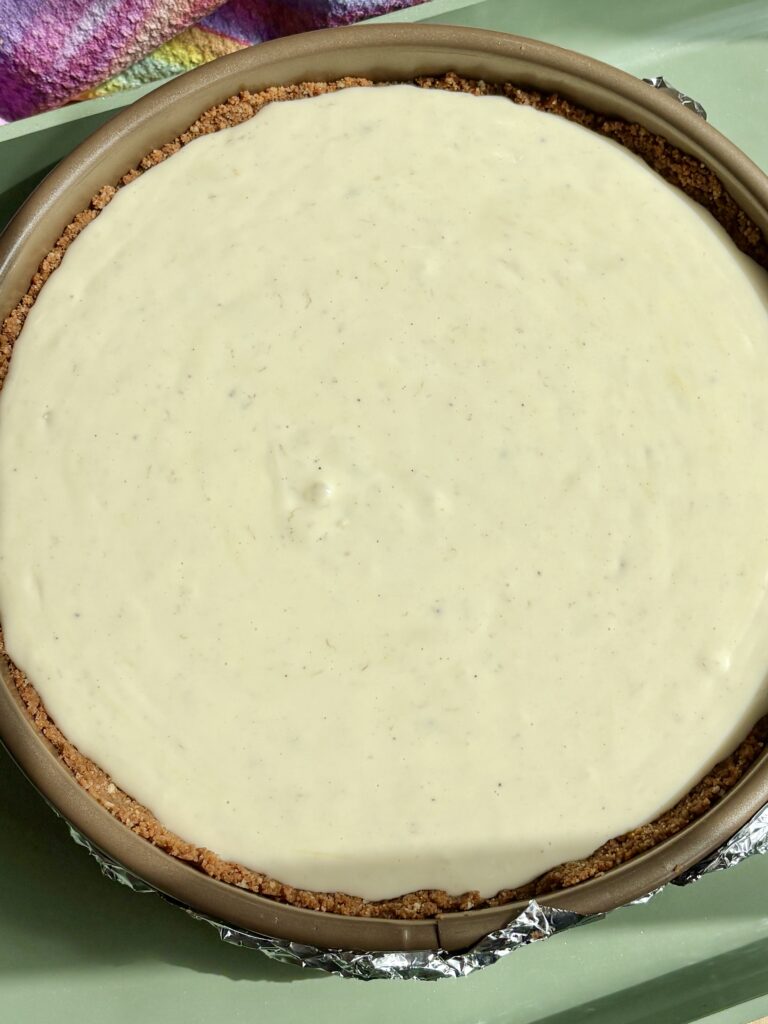
- Pour the cheesecake filling over the cooled crust and smooth the top. Place the protected springform pan inside a large roasting pan. Carefully pour hot water into the roasting pan until it reaches approximately halfway up the sides of the springform pan, or the protective outer pan if using one.
- Carefully transfer the roasting pan to the oven. Bake at 325°F for approximately 65–75 minutes, until the edges are set and the center still has a slight jiggle. The center should move gently as one piece rather than appear liquid. Avoid overbaking.
- Turn off the oven and crack the oven door slightly open. Leave the cheesecake inside for approximately 2 hours to cool gradually. This helps reduce sudden temperature changes that can cause cracks.
- Carefully remove the cheesecake from the water bath and discard the foil. Allow it to cool further at room temperature if needed, then refrigerate promptly. Do not leave it at room temperature for more than 2 hours after removing it from the oven.
- Refrigerate for at least 4 hours, preferably overnight, until completely chilled and set. Carefully remove the springform ring. Slice with a sharp knife, wiping the blade clean between cuts. Serve chilled, plain or with your favorite toppings.
Notes
-
Bananas: Use approximately 1 cup of mashed bananas before cooking. The cooked mixture will have a slightly reduced volume.
-
Room-temperature ingredients: Fully soften the cream cheese and bring the eggs and sour cream to room temperature before mixing.
-
Water bath: Use a well-protected springform pan to prevent water from leaking into the crust.
-
Doneness: The edges should be set with a slight jiggle in the center. Don’t wait for the entire cheesecake to become firm in the oven.
-
Cooling: Slow cooling helps prevent cracks. Refrigerate within 2 hours after removing the cheesecake from the oven.
-
Make ahead: For the best texture and cleanest slices, chill overnight.
-
Storage: Refrigerate in an airtight container for up to 4 days or freeze for 1–2 months for best quality.
Banana Cheesecake | banana cheesecake recipe | homemade banana cheesecake | baked banana cheesecake | creamy banana cheesecake | banana pudding cheesecake | banana cream cheesecake | Biscoff banana cheesecake | Nilla wafer cheesecake crust | banana cheesecake with real bananas | banana cheesecake with sour cream | easy banana cheesecake recipe | cheesecake with ripe bananas | banana dessert recipes | make ahead cheesecake | cheesecake water bath | how to prevent cheesecake cracks | banana cheesecake with cookie crust | best banana cheesecake recipe

Nutritional Content Disclaimer
I choose not to include nutritional information with my recipes, as these values can be calculated from the ingredients provided. With my background as a pediatric nurse practitioner and my own family experience with disordered eating, I understand how focusing on numbers can affect our relationship with food. My philosophy is that all foods have a place—sweet, savory, nourishing, or indulgent. I aim to share recipes that support a healthy, joyful approach to eating. My hope is that this space also encourages a balanced, healthy relationship with food for you and your family too.