
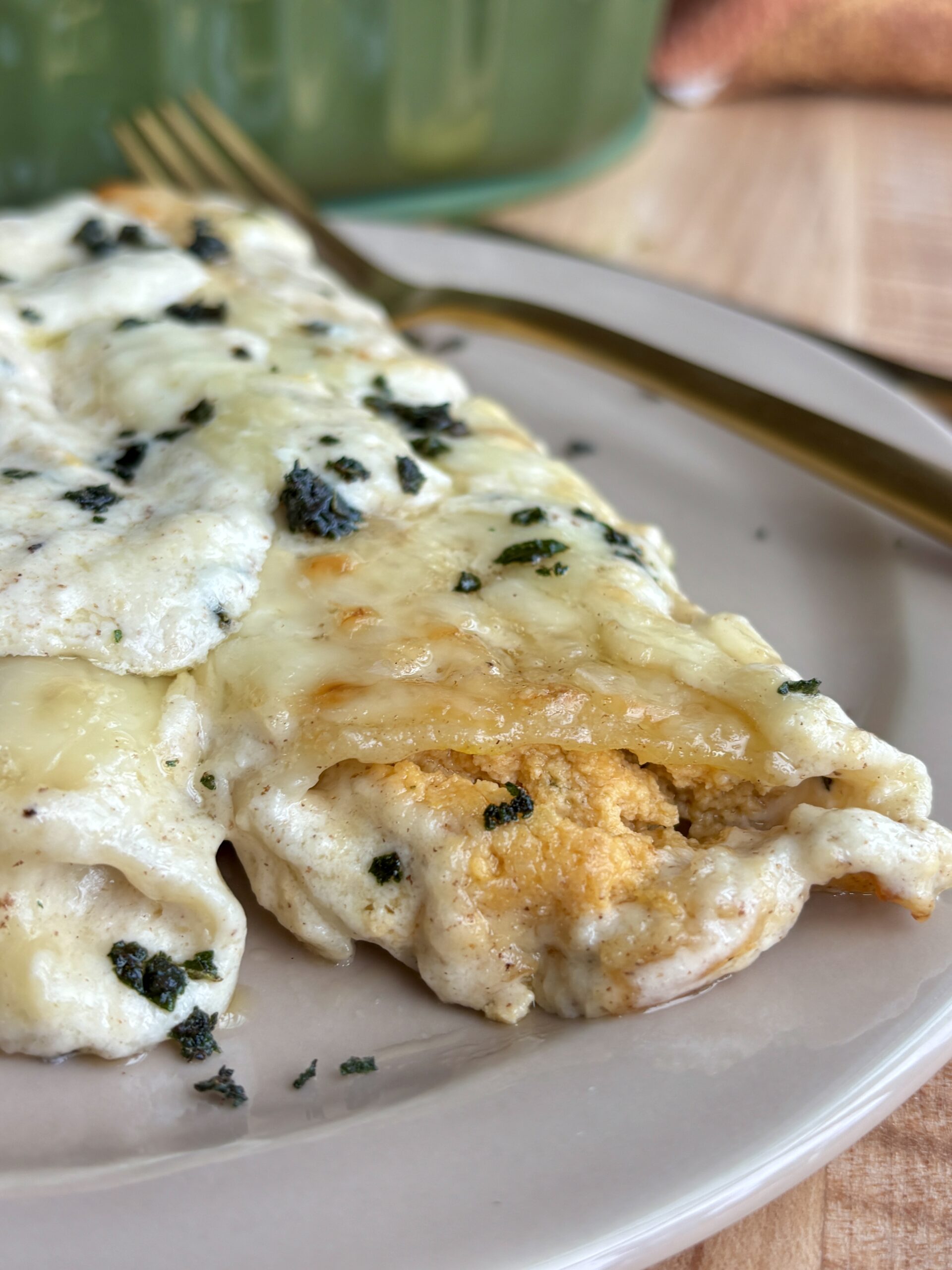
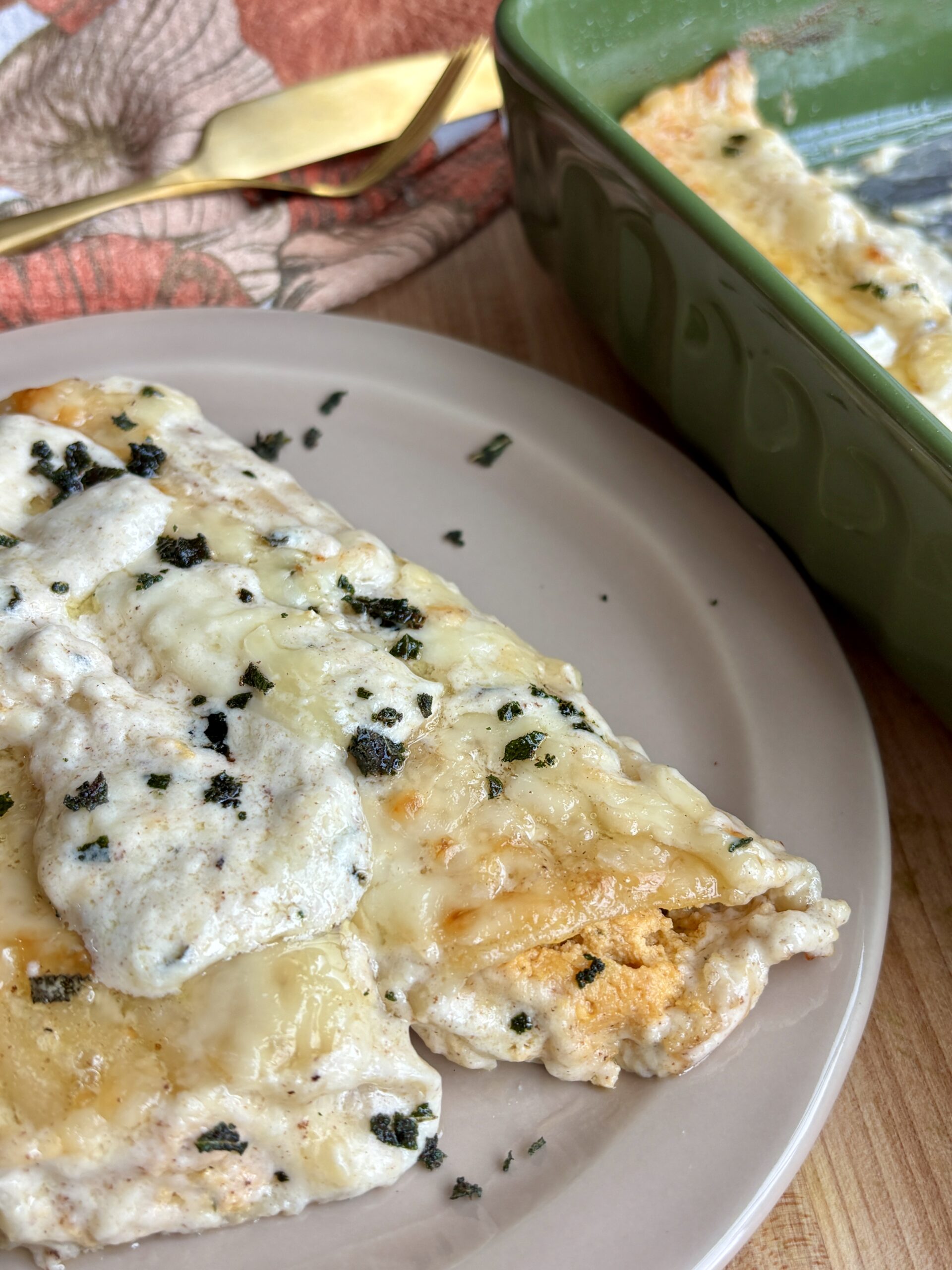
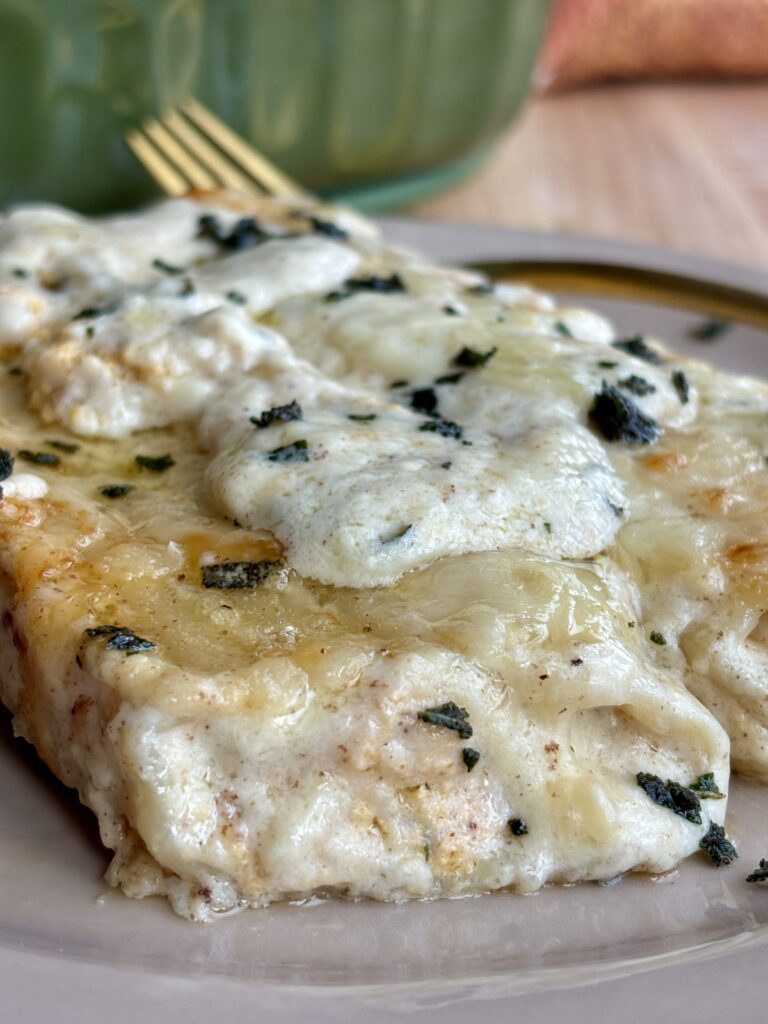
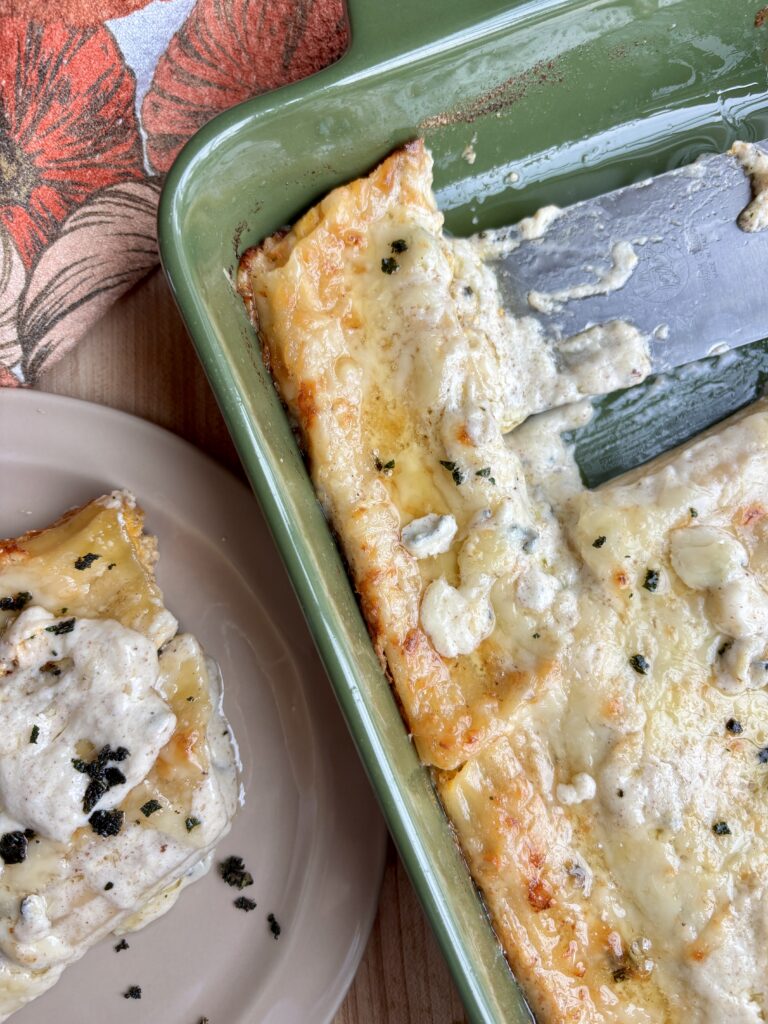
If you’re looking for a cozy fall dinner that feels cozy, comforting, and special, then this Pumpkin Manicotti with Brown Butter Sage Cream Sauce needs to make it to your table. It tastes like a cool, savory fall day in all the best ways possible.
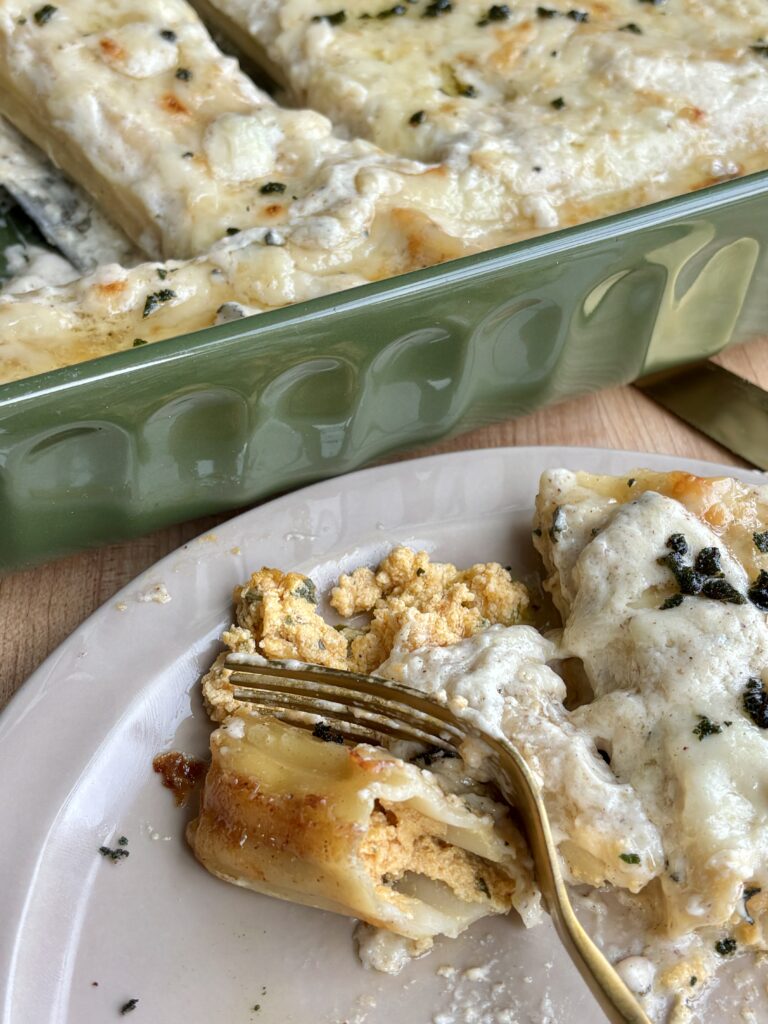
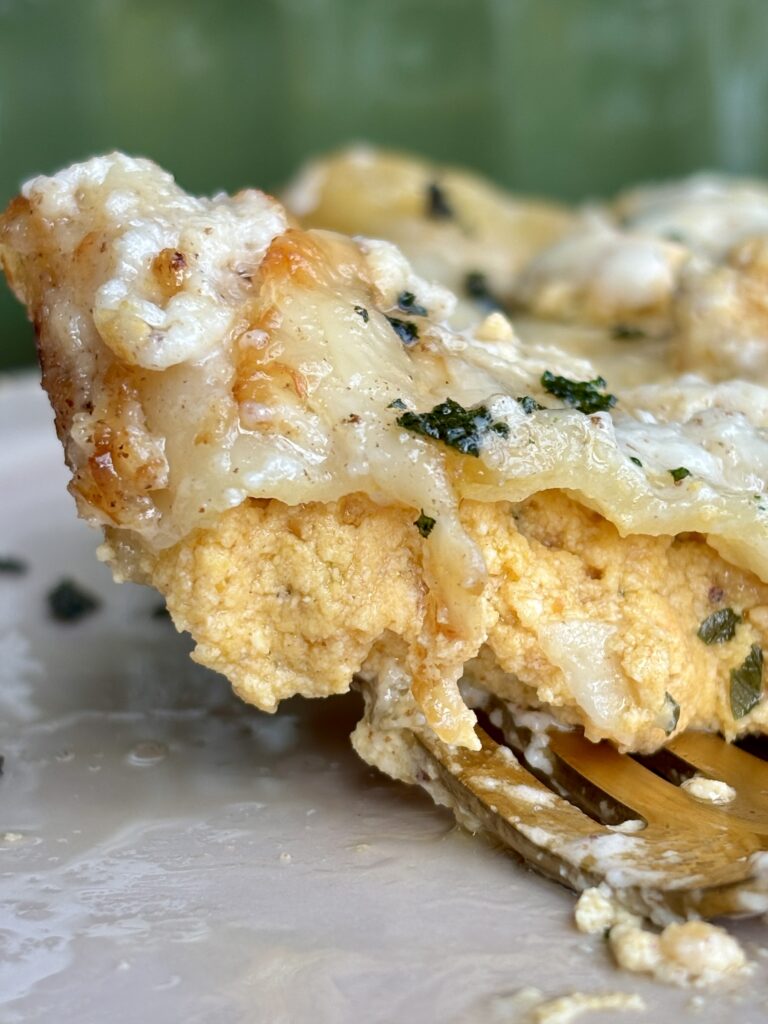
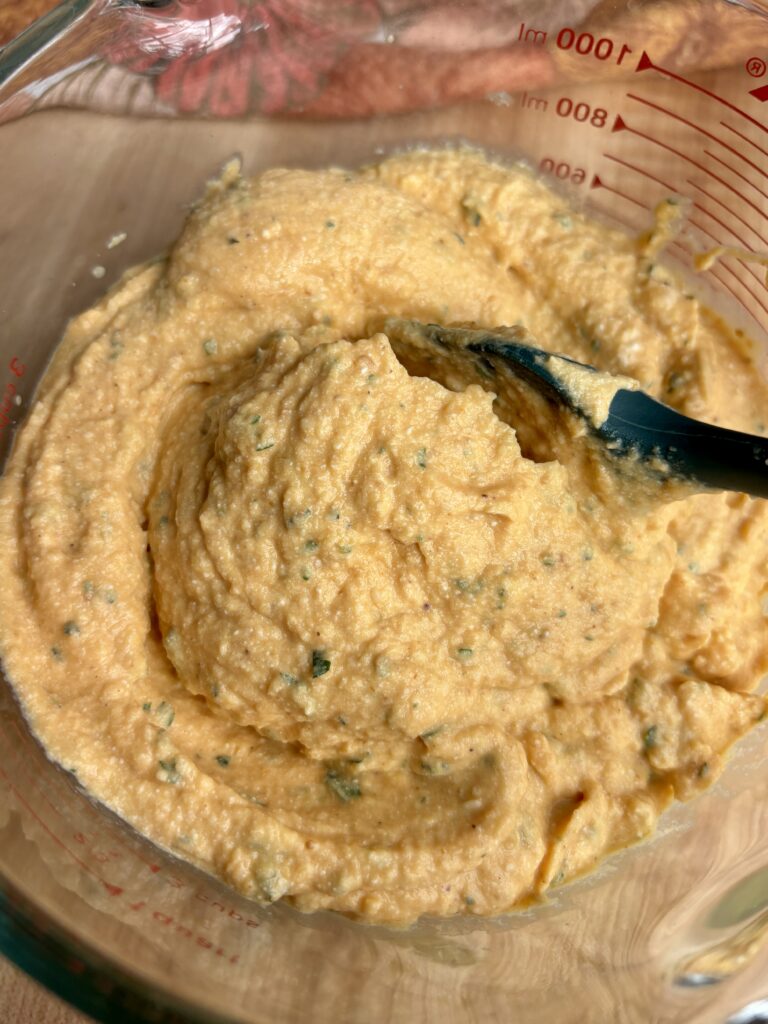
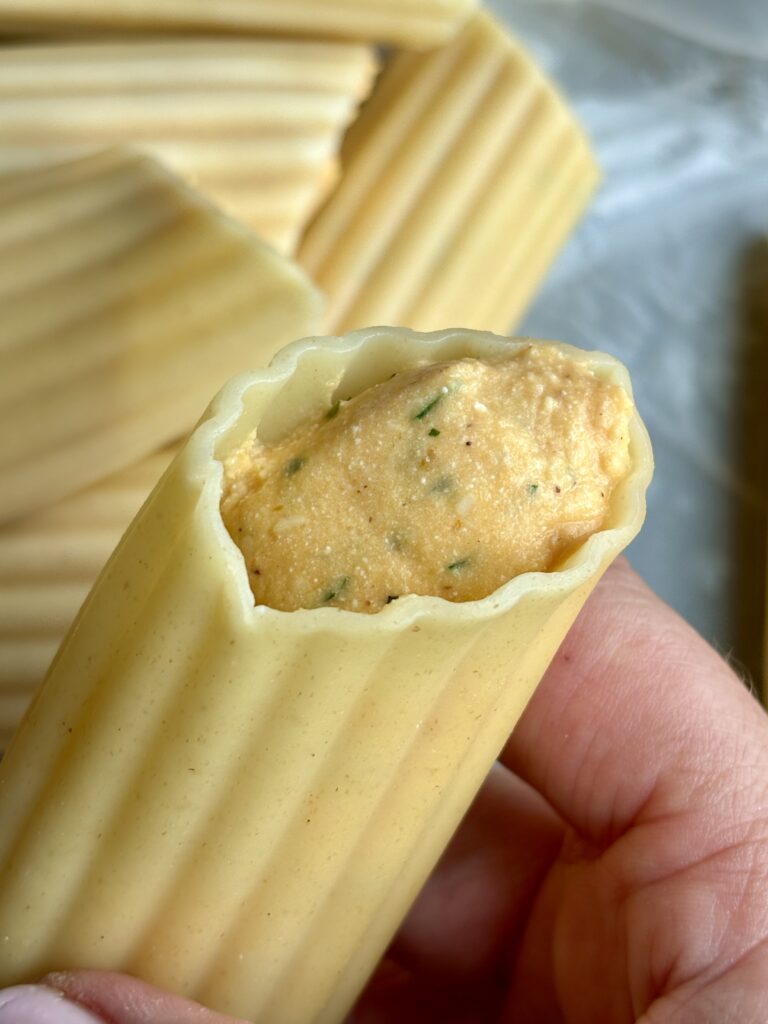
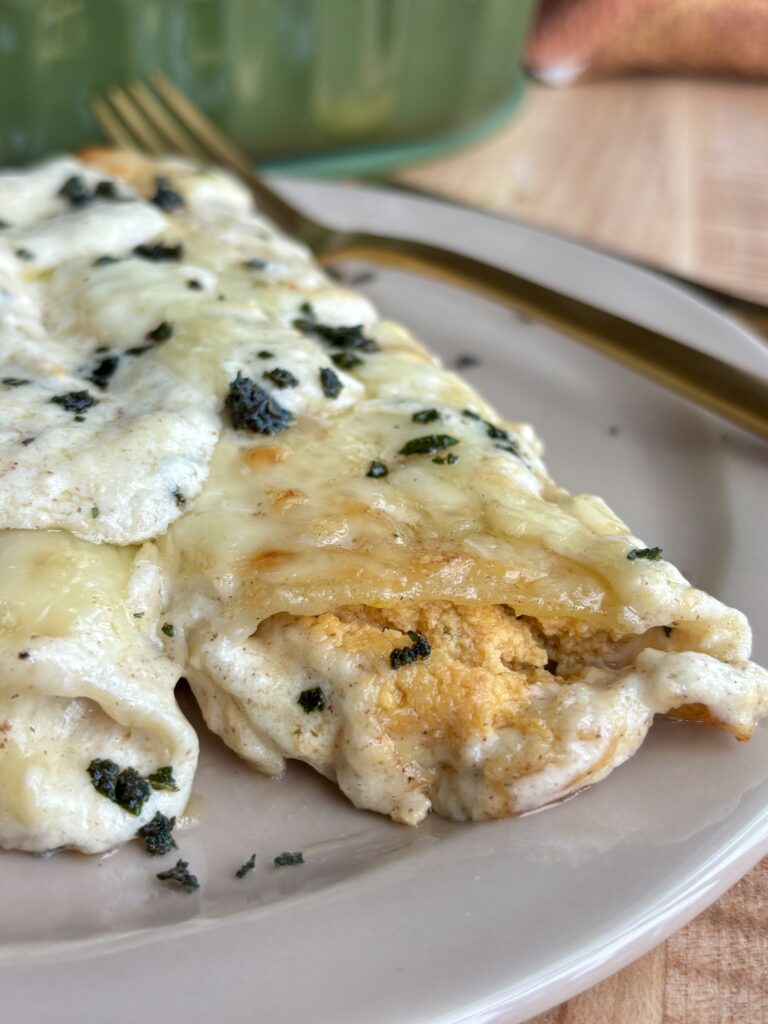
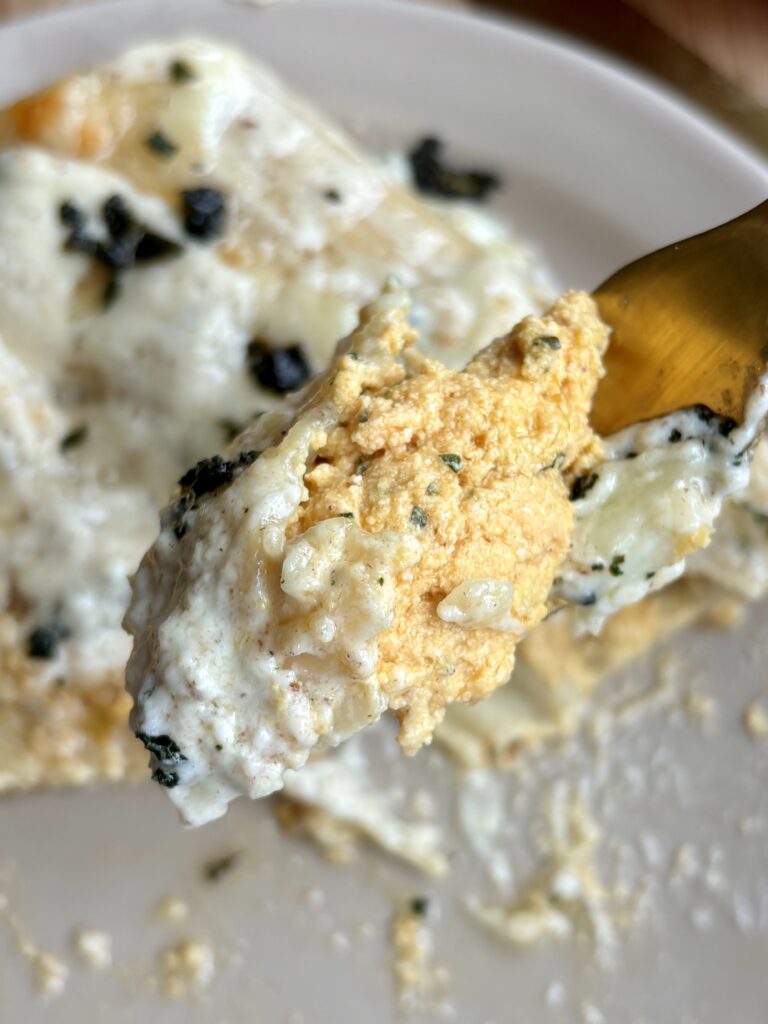
Tender manicotti shells are filled with a creamy pumpkin and ricotta mixture flavored with Parmesan, garlic, fresh herbs, nutmeg, a touch of cinnamon, and just a hint of maple syrup. The pumpkin is subtle and savory, adding earthy sweetness and beautiful color without making this taste like pumpkin pie.
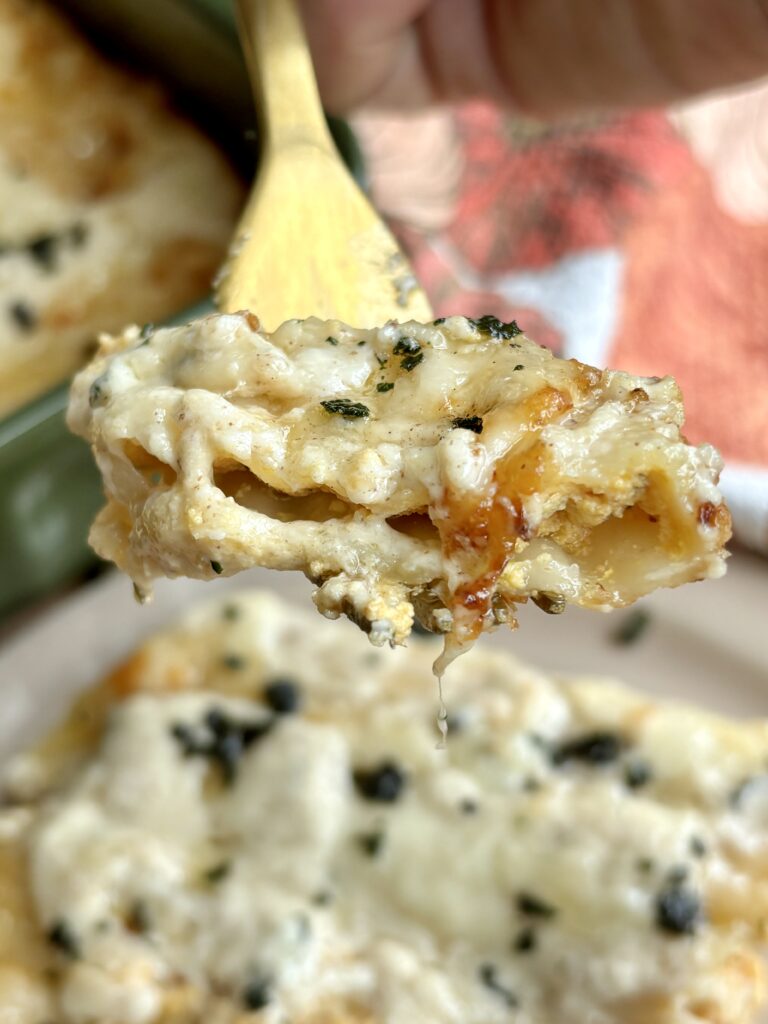
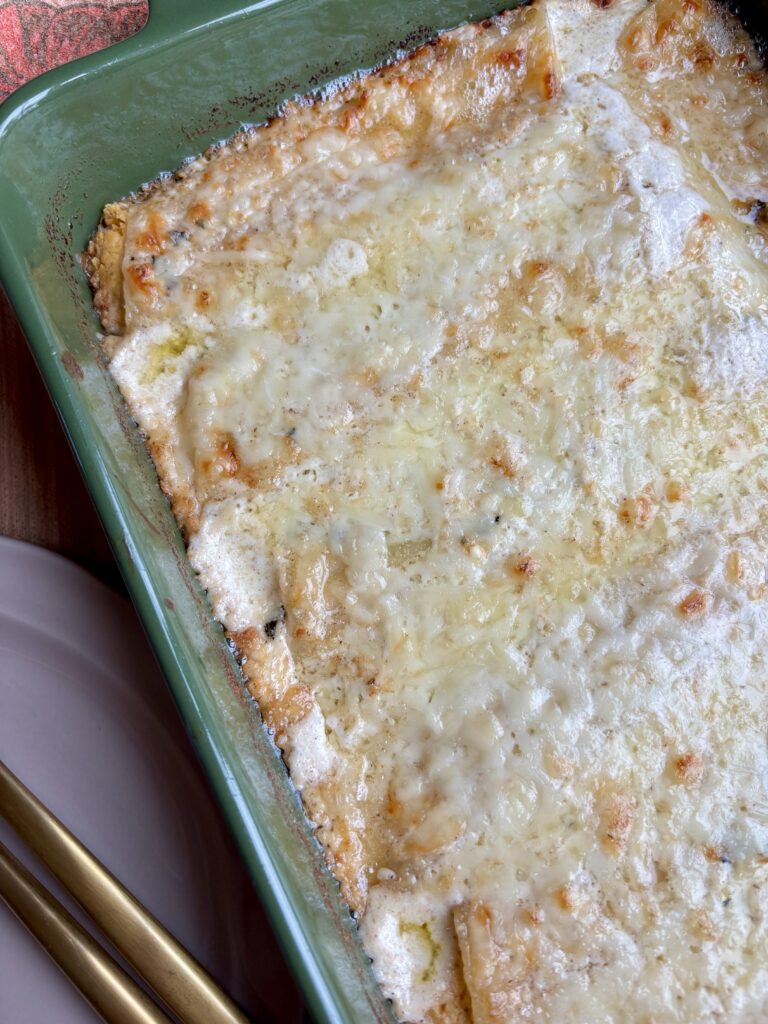
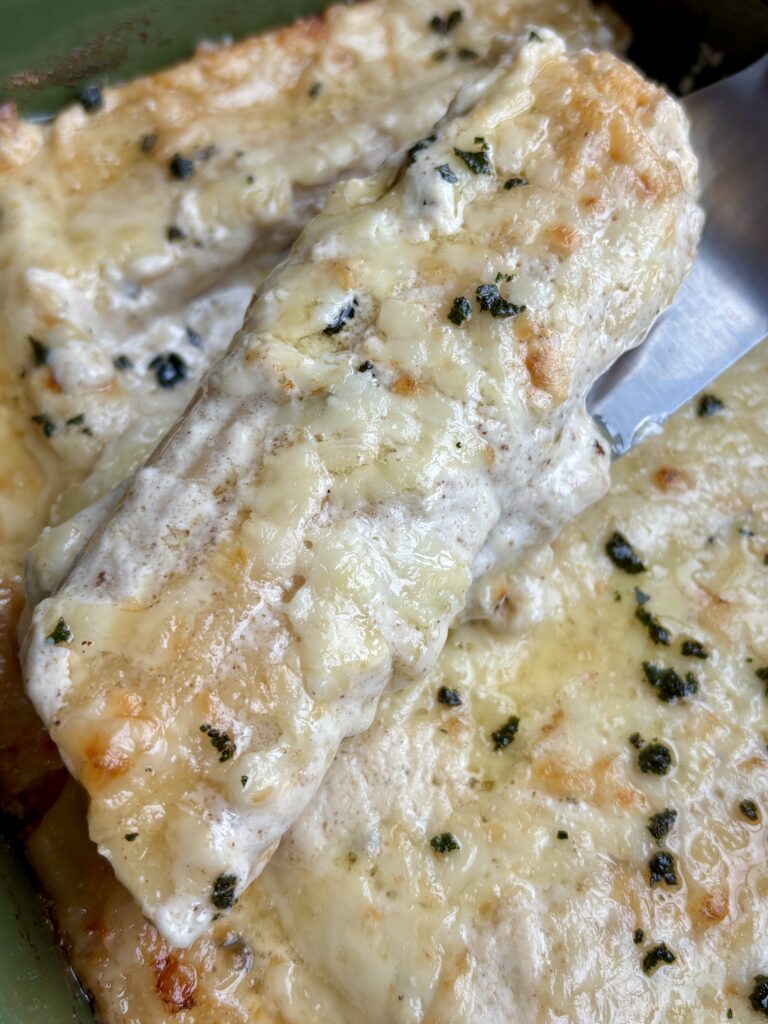
Everything gets covered in a rich brown butter sage cream sauce, topped with freshly grated Gruyère, and baked until bubbling, golden, and irresistibly cheesy. The brown butter adds a nutty richness, while fresh sage, Parmesan, and Gruyère keep this firmly in savory dinner territory.
It is perfect for a cozy, fall family dinner or small gathering. Serve it with a crisp green salad, roasted vegetables, or crusty bread for soaking up every last bit of that sauce.
Why you’ll love this recipe!
What ingredients do I need?
- For the Pumpkin Ricotta Filling
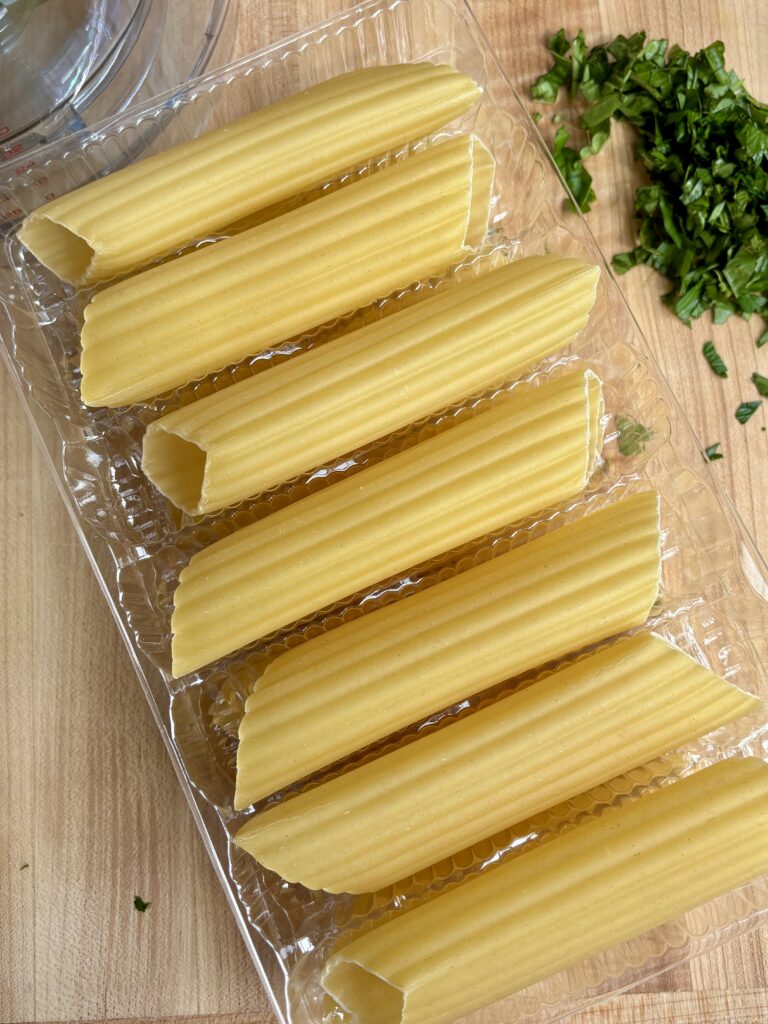
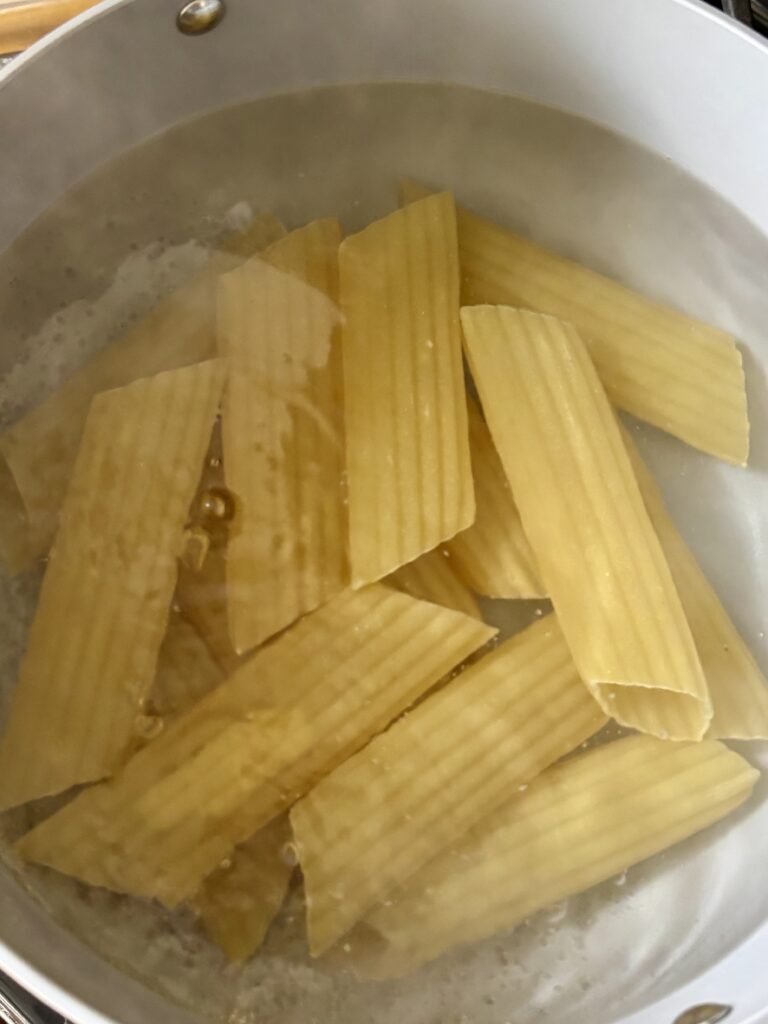
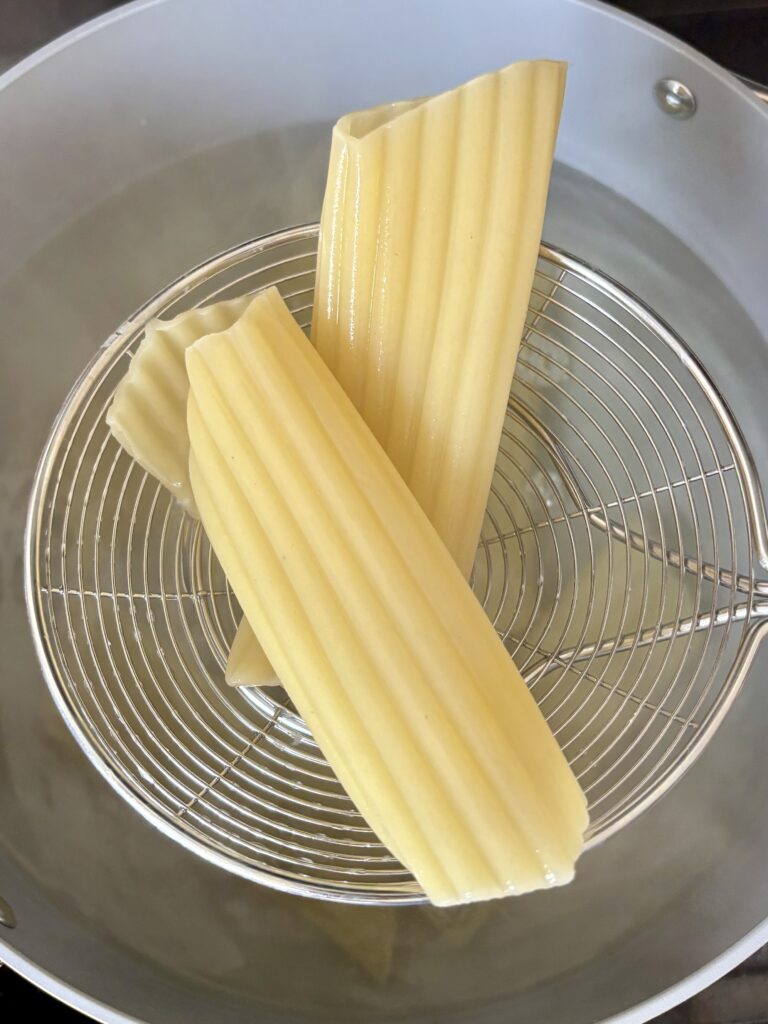
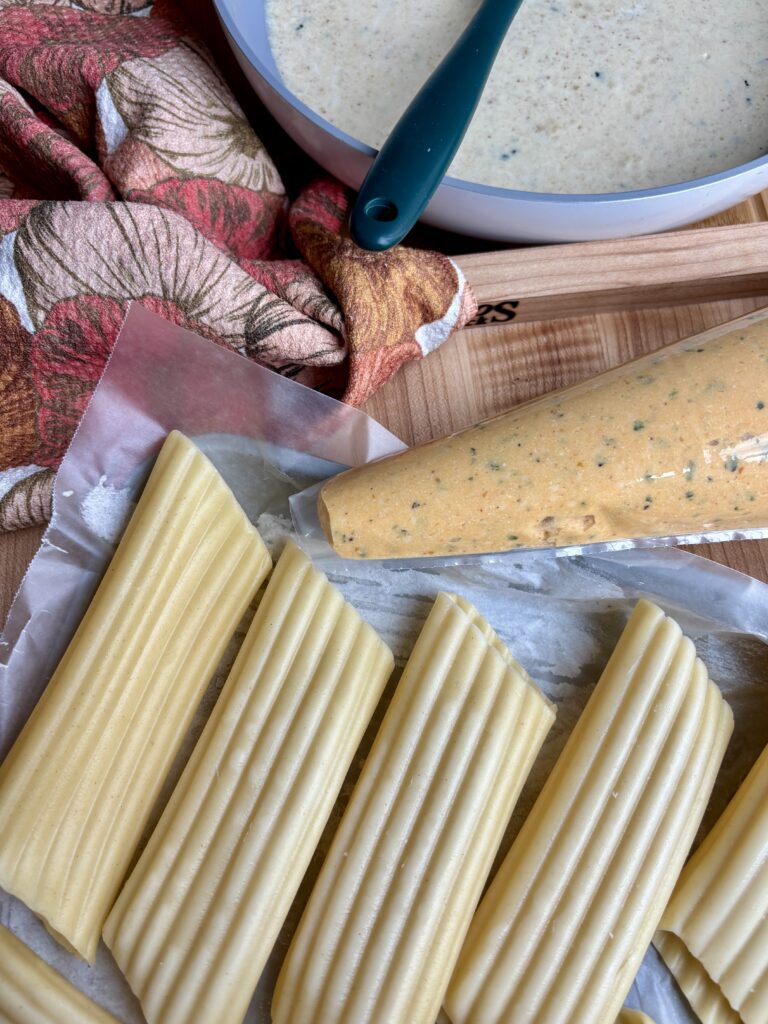
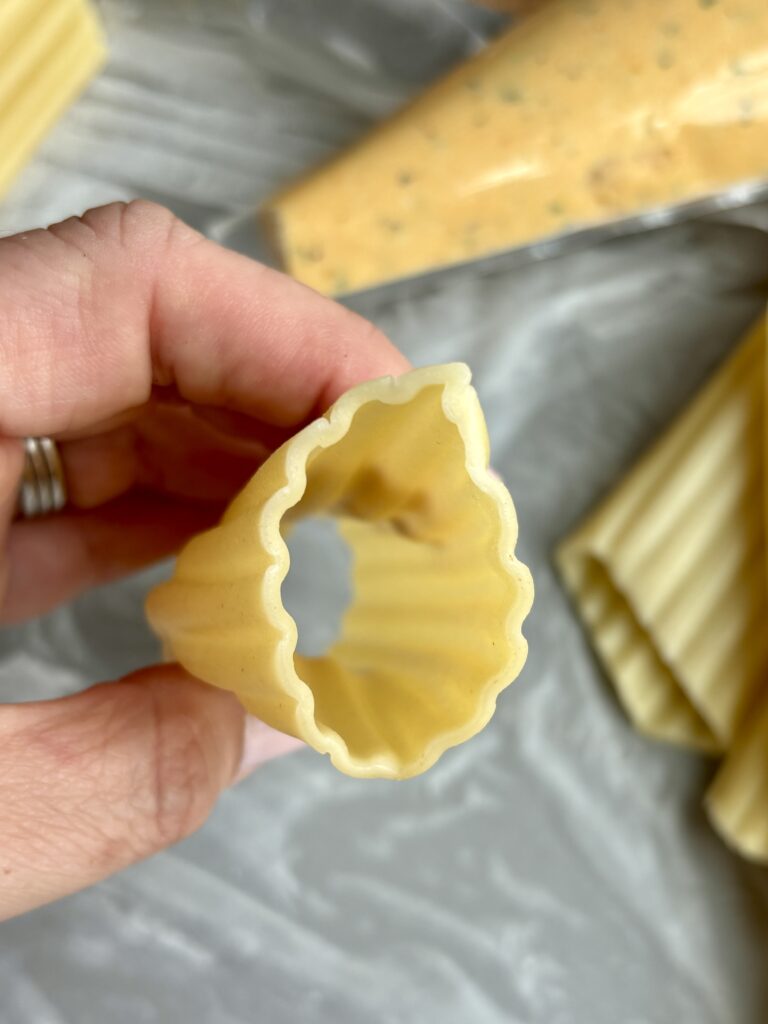
- Manicotti shells: Cook the shells, based on the packaging, just until al dente. They will continue cooking in the oven, so you don’t want them completely soft before assembling.
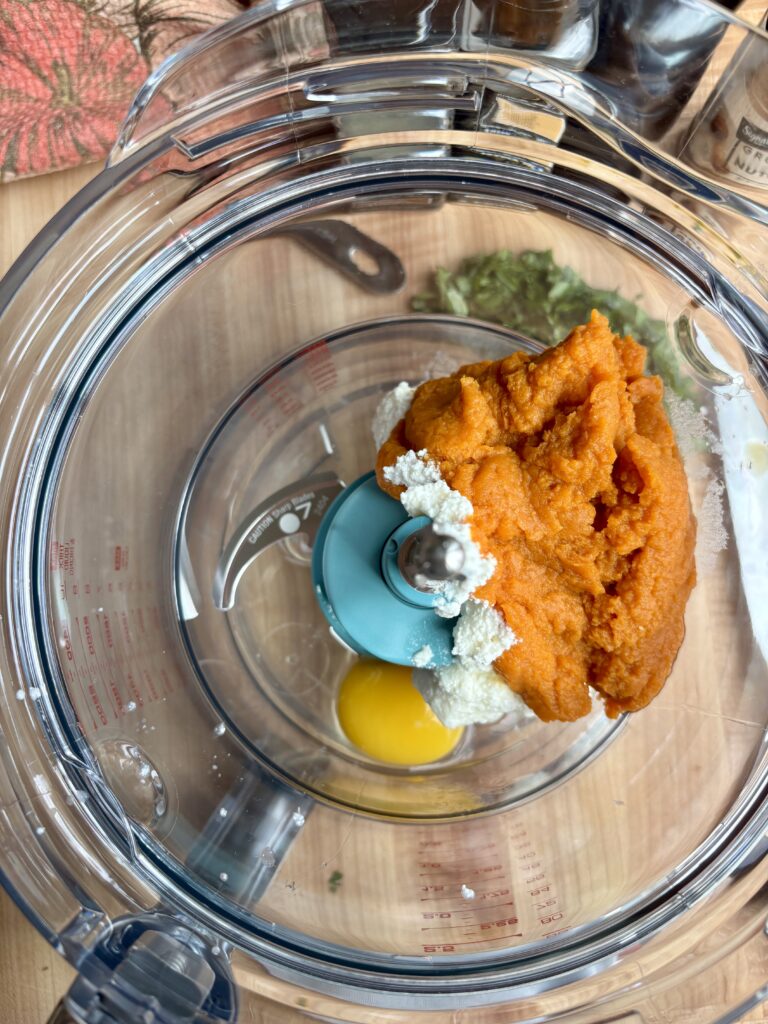
- Pumpkin puree: Use plain canned pumpkin puree, not pumpkin pie filling. The pumpkin adds subtle earthy sweetness, color, and creaminess to the filling.
- Whole-milk ricotta: Whole-milk ricotta gives the filling the richest, creamiest texture. Drain it well before using to prevent a watery filling.
- Egg: Helps bind the ricotta filling together as it bakes.
- Parmesan: Freshly grated Parmesan adds salty, nutty flavor to the pumpkin and ricotta.
- Garlic powder and onion powder: Add savory flavor throughout the filling without overpowering the pumpkin.
- Fresh basil and parsley: Fresh herbs brighten the rich filling and keep it from feeling too heavy.
- Nutmeg: Just a small amount adds warmth and works especially well with pumpkin and ricotta.
- Cinnamon: A tiny amount enhances the warm fall flavors without making the filling taste sweet.
- Maple syrup: Just one teaspoon adds a subtle rounded sweetness that complements the pumpkin. You shouldn’t taste a strong maple flavor.
- For the Brown Butter Sage Cream Sauce
- Unsalted butter: Browning the butter creates the nutty flavor that makes this sauce so special.
- Fresh sage: Sage and pumpkin are a classic fall combination, and the fresh sage becomes incredibly fragrant when cooked in brown butter.
- All-purpose flour: Helps lightly thicken the cream sauce.
- Heavy cream: Creates a rich, velvety sauce that coats the manicotti.
- Parmesan: Melts into the cream sauce and adds plenty of savory, salty flavor.
- Black pepper and kosher salt: Finish the sauce and balance the richness.
- For the Topping
- Gruyère: Gruyère melts beautifully and adds a nutty, slightly sharp flavor to the top of the manicotti. It also gives you those gorgeous golden, bubbling edges.
Recipe Variations
- Add spinach: Stir ½–1 cup of finely chopped, cooked spinach into the pumpkin ricotta filling. Make sure to squeeze out as much excess moisture as possible first.
- Add crispy pancetta: Cook finely diced pancetta until crisp, then sprinkle some into the filling or over the top before serving. The salty pancetta is delicious with pumpkin and brown butter.
- Add mushrooms: Sauté finely chopped mushrooms until deeply browned and most of their moisture has cooked away, then fold them into the filling.
- Make it extra cheesy: Fold a little shredded mozzarella to the pumpkin ricotta filling for an extra stretchy, cheesy center.
- Add extra crispy sage: Fry a few whole sage leaves in butter until crisp and use them to garnish the baked manicotti. This is especially pretty for a fall dinner.
- Add a little heat: A pinch of crushed red pepper flakes in the brown butter sage sauce adds a subtle kick that can work surprisingly well with the creamy pumpkin filling.
Pro Tips
- Drain the ricotta really well. This is one of the most important steps. Watery ricotta can make the filling loose and cause excess liquid in the finished dish. If your ricotta looks particularly wet, let it drain in a fine-mesh sieve lined with cheesecloth or paper towels for 30 minutes to an hour. I would also recommend doing this with your pumpkin puree if it seems to have a lot of moisture too.
- Don’t overcook the manicotti shells. Cook them just until al dente according to the package directions. They will continue cooking while the manicotti bakes.
- Use plain pumpkin puree. Do not use canned pumpkin pie filling. Pumpkin pie filling contains added sugar and spices and will make the filling too sweet.
- Don’t rush the brown butter. Watch the butter closely as it browns. You want golden-brown milk solids and a nutty aroma, not dark or burnt butter. Once it starts browning, it can go from perfect to burnt quickly.
- Keep the sauce slightly loose. Don’t reduce the cream sauce too much on the stovetop. It will continue thickening in the oven as it cooks and as the Parmesan melts into it.
- Use freshly grated cheese. Freshly grated Parmesan and Gruyère melt much more smoothly than many pre-shredded cheeses.
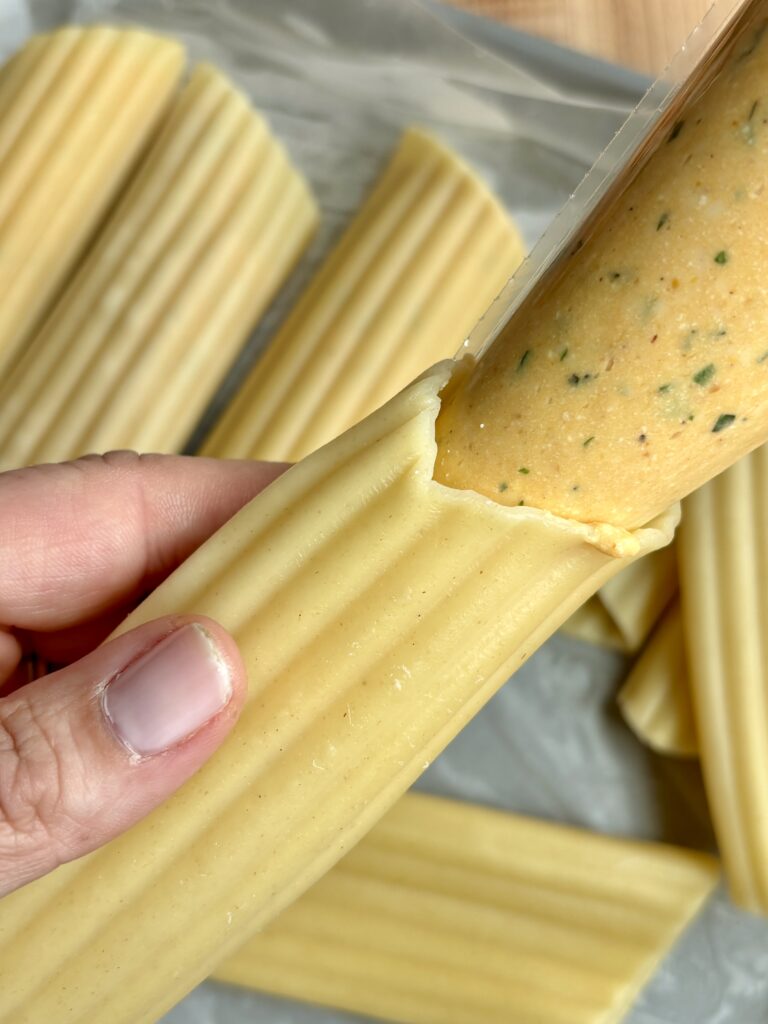
- Use a piping bag to fill the shells. This is by far the easiest and least messy way to fill manicotti. A large zip-top bag with one corner snipped off works just as well.
- Don’t skip the resting time. Let the manicotti rest for 5–10 minutes after baking. This gives the filling a chance to set slightly and makes the pasta easier to serve.
- Watch the broiler. If you want that deeply golden Gruyère topping, broil for only 1–2 minutes and stay close. The cheese can go from beautifully browned to burnt very quickly.
Can I Substitute?
Yes! Like always though, any substitutions made to the recipe can result in a change in texture and/or flavor.
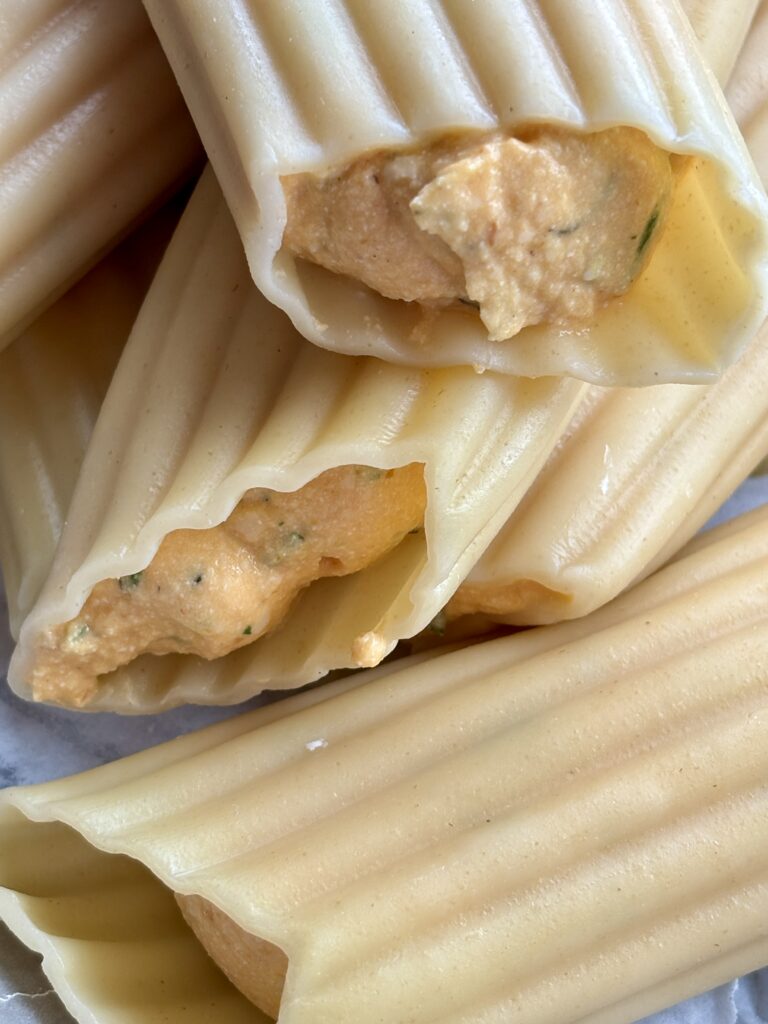
- Manicotti shells: Cannelloni shells can be used if you can find them. The terms are often used interchangeably in American grocery stores, although traditional manicotti and cannelloni aren’t exactly the same pasta.
- Pumpkin puree: Butternut squash puree can be used in the same amount for a slightly sweeter, nuttier variation.
- Whole-milk ricotta: Part-skim ricotta will work, but the filling won’t be quite as rich and creamy.
- Fresh herbs: If needed, you can substitute dried herbs. Use about 1 teaspoon dried parsley and ½ teaspoon dried basil.
- Gruyère: Fontina, swiss, mozzarella, or a mild white cheddar can be substituted. Gruyère is my first choice because of its nutty flavor, but several good melting cheeses will work.
- Heavy cream: Half-and-half can be used for a lighter sauce, although the sauce will be slightly less rich.
- Fresh sage: If fresh sage isn’t available, you can use about 1 teaspoon dried sage, although fresh sage will give you the best flavor.
Dietary Substitutions
- Vegetarian: This recipe is naturally vegetarian as written.
- Gluten-free: Use gluten-free manicotti or cannelloni shells and substitute a gluten-free all-purpose flour blend for the flour in the sauce. Always check your cheese and other packaged ingredients if you need the recipe to be strictly gluten-free.
Leftovers and Storage
- Refrigerator: Allow leftover pumpkin manicotti to cool slightly, then transfer it to an airtight container or cover the baking dish tightly with foil or plastic wrap. Refrigerate for up to 3–4 days.
- Reheating
- Oven: For the best texture, reheat individual portions in the oven at 350°F until warmed through. Cover loosely with foil to keep the pasta and sauce from drying out.
- Microwave: You can also microwave individual portions in short intervals until heated through. The sauce may separate slightly when reheated in the microwave, but the flavor will still be delicious.
- Freezing: This manicotti can be frozen either before or after baking. For the best texture, I recommend assembling the manicotti without baking, covering it very tightly, and freezing it. Thaw overnight in the refrigerator before making the sauce, assembling, and then baking as directed.
- If baking directly from frozen, add additional baking time and make sure the center reaches a safe serving temperature.
- Make Ahead: You can assemble the entire dish up to 24 hours ahead of time. Cover tightly and refrigerate until you’re ready to bake. If the dish is going straight from the refrigerator into the oven, it may need a few extra minutes of baking time.
Troubleshooting
- My manicotti shells are tearing while I fill them
- Make sure the pasta isn’t overcooked. It should be al dente and sturdy enough to handle. Let the shells cool slightly before filling, and use a piping bag or zip-top bag to make filling easier.
- My filling is too loose
- The ricotta or pumpkin likely contained too much moisture. Drain the ricotta well and make sure your pumpkin puree isn’t watery. Refrigerating the filling for 15–20 minutes can also make it easier to pipe.
- My sauce broke or looks greasy
- The sauce may have gotten too hot after the cheese was added. Remove the sauce from the heat before adding the Parmesan and whisk until smooth. Avoid boiling the sauce once the cheese is incorporated.
- My cheese is browning before the pasta is hot
- Cover the dish loosely with foil and continue baking until heated through. Remove the foil toward the end of baking so the cheese can brown.
- My manicotti seems dry
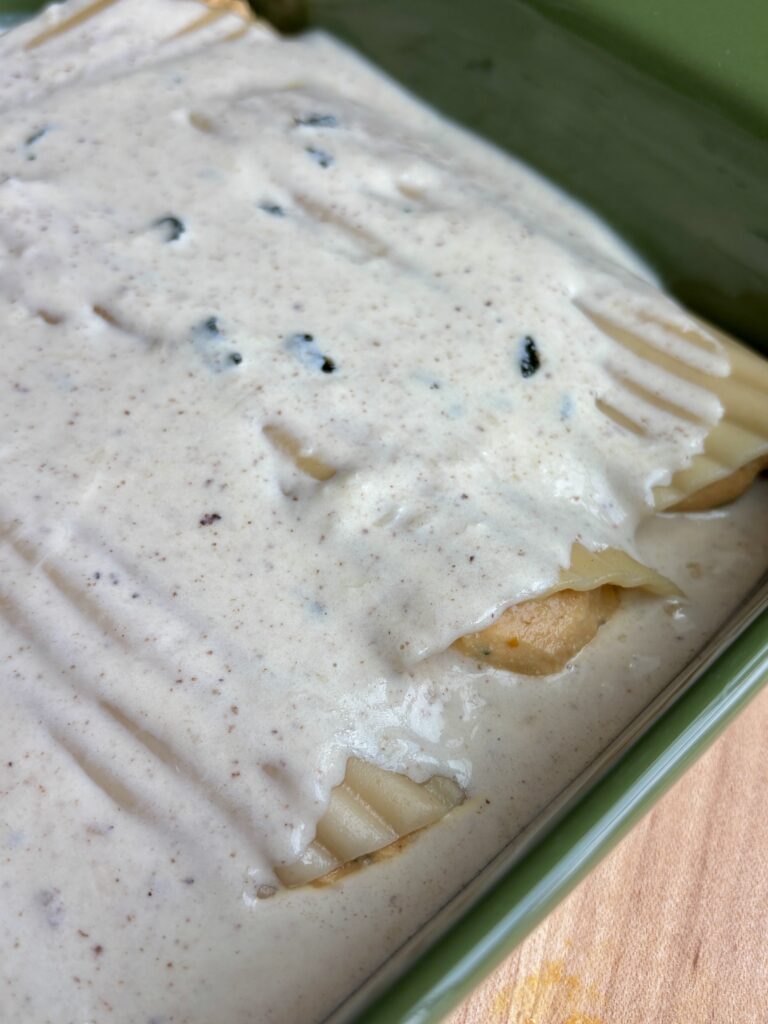
- Make sure the shells are well covered with sauce before baking. The pasta absorbs some of the sauce as it cooks, so you don’t want the dish to go into the oven with dry or exposed pasta.
- My sauce is too thick after baking
- The sauce naturally thickens as it cools. Let the manicotti rest for just 5–10 minutes rather than letting it sit for a long time before serving. A little extra Parmesan or cream sauce spooned over individual portions can also help.
But, I Still Have A Few Questions…
Can I use cannelloni instead of manicotti?
Yes. Cannelloni and manicotti are similar stuffed pasta dishes, and the shells can generally be used interchangeably in this recipe. Just follow the cooking directions on the package because shell size and cooking times can vary.
Does this Pumpkin Manicotti taste sweet?
No. The pumpkin flavor is subtle and savory. Parmesan, garlic, sage, brown butter, Gruyère, and black pepper balance the small amount of maple syrup and cinnamon in the filling. The finished dish tastes like a cozy fall pasta rather than a sweet pumpkin dish.
Can I taste the pumpkin?
Yes, but it isn’t overpowering. The pumpkin gives the ricotta filling an earthy flavor, color, and a subtle sweetness while allowing the cheese and herbs to remain prominent.
Can I use pumpkin pie filling instead of pumpkin puree?
No, I don’t recommend it. Pumpkin pie filling contains added sugar and spices and will make the filling too sweet. Use plain canned pumpkin puree.
Do I need to drain the pumpkin puree?
If your pumpkin puree looks particularly watery, it’s a good idea to drain it briefly. Most canned pumpkin puree can be used as-is, but removing excess moisture helps keep the filling thick and creamy.
Why does my ricotta filling seem watery?
The most common cause is excess moisture in the ricotta or pumpkin. Drain the ricotta well and make sure your pumpkin puree isn’t unusually watery. Avoid adding extra liquid to the filling.
Can I make the pumpkin ricotta filling ahead of time?
Yes. The filling can be prepared up to 1 day ahead and stored covered in the refrigerator until you’re ready to fill the pasta.
Can I assemble the manicotti ahead of time?
Absolutely. Assemble the entire dish, cover it tightly, and refrigerate for up to 24 hours before baking. This makes it a great dinner-party or holiday recipe.
Can I use part-skim ricotta?
Yes, but whole-milk ricotta gives the filling a richer and creamier texture. If using part-skim ricotta, make sure to drain it especially well.
Can I add spinach to the filling?
Yes. Cook the spinach first and squeeze out as much moisture as possible before adding it to the filling. About ½–1 cup of cooked, finely chopped spinach works well.
Can I make this recipe without sage?
Yes, although sage is one of the flavors that makes this dish feel especially fall-inspired. If you don’t like sage, you can leave it out or substitute a small amount of fresh thyme.
Can I use dried sage instead of fresh sage?
Yes, you can use about 1 teaspoon dried sage in the sauce. However, fresh sage will give the sauce a brighter, more aromatic flavor.
How do I know when the butter is browned?
The butter will foam as it cooks, then the milk solids will begin turning golden brown. You’ll also notice a nutty, toasted aroma. Remove it from the heat once it’s golden brown, because it can burn quickly.
What if my brown butter turns very dark?
If the butter smells bitter or burnt, it’s best to just start over. Properly browned butter should smell nutty and toasted rather than acrid or smoky.
Why is my cream sauce too thick?
The sauce may have reduced too much or cooked for too long. Add a small splash of heavy cream or milk and whisk until smooth. Remember that the sauce will thicken more in the oven.
Why is my cream sauce too thin?
Give it another minute or two over medium-low heat, stirring frequently. The Parmesan will also help thicken the sauce. Avoid reducing it too aggressively because the sauce needs to remain loose enough to coat the pasta while it bakes.
Can I use another cheese instead of Gruyère?
Yes. Fontina, swiss, mozzarella, or mild white cheddar are all good alternatives. Gruyère gives the dish a particularly nutty, savory flavor that I absolutely love and melts beautifully.
How long do leftovers last?
Leftover manicotti can be refrigerated in an airtight container for 3–4 days.
Can I reheat Pumpkin Manicotti in the microwave?
Yes. Reheat individual portions in short intervals until hot throughout. For the best texture and a more bubbly, creamy sauce, reheating in a covered baking dish in the oven is preferable.
What should I serve with Pumpkin Manicotti?
A simple green salad, roasted Brussels sprouts, roasted broccoli, garlic bread, or crusty bread all pair beautifully with this rich pasta. A crisp salad is especially nice because it balances the creamy sauce.
Can I make this recipe for a larger group?
Yes. The recipe can be doubled and divided between two baking dishes. This makes it a great option for a fall dinner party, holiday gathering, or family meal.
Other Recipes You’ll Love
Let’s engage!
Make sure to tag @thehomechefmomma on Instagram or Facebook, and leave a review or comment if you make these. I always get so excited to see your creations, variations of the recipe, and feedback! Just remember to be kind in your comments, there is still a person behind this screen! 🙂
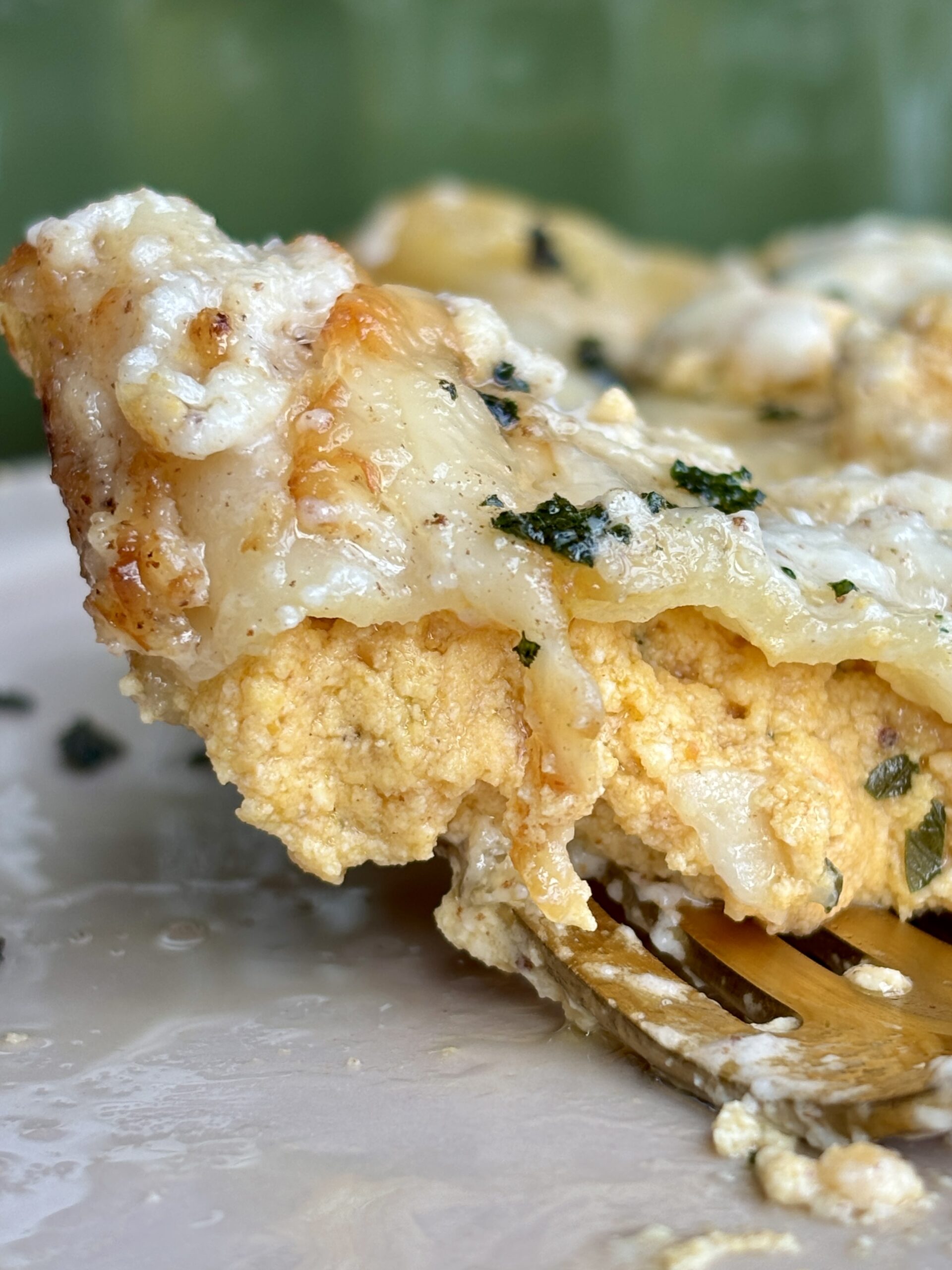
Pumpkin Manicotti with Brown Butter Sage Cream Sauce
Ingredients
Pumpkin Ricotta Filling
- 8 –10 manicotti shells cooked al dente according to package directions
- ¾ cup pumpkin puree
- 16 ounces whole-milk ricotta well drained
- 1 large egg
- ⅔ cup freshly grated Parmesan cheese
- 1 teaspoon kosher salt
- ½ teaspoon garlic powder
- ½ teaspoon onion powder
- Black pepper to taste
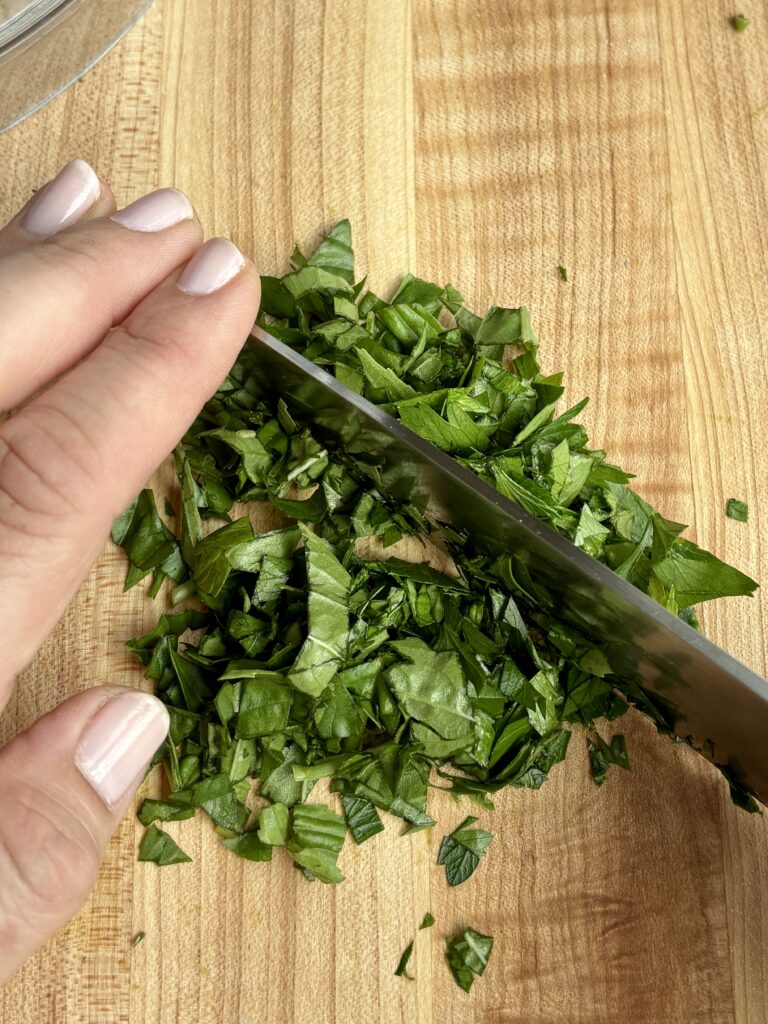
- 1 tablespoon fresh basil finely chopped
- 1 tablespoon fresh parsley finely chopped
- ⅛ teaspoon freshly grated nutmeg
- ¼ teaspoon ground cinnamon
- 1 teaspoon pure maple syrup
Brown Butter Sage Cream Sauce
- 4 tablespoons unsalted butter
- 1 tablespoon fresh sage finely chopped
- 1 tablespoon all-purpose flour
- 1½ cups heavy cream
- ¾ cup freshly grated Parmesan cheese
- Black pepper to taste
- Pinch of kosher salt
For Topping
- 1 cup freshly grated Gruyère cheese
Instructions
- Cook the manicotti shells according to package directions, stopping when they are just al dente. Drain and set aside to cool slightly.
- Preheat oven to 375°F. Lightly grease a 9×13-inch baking dish.
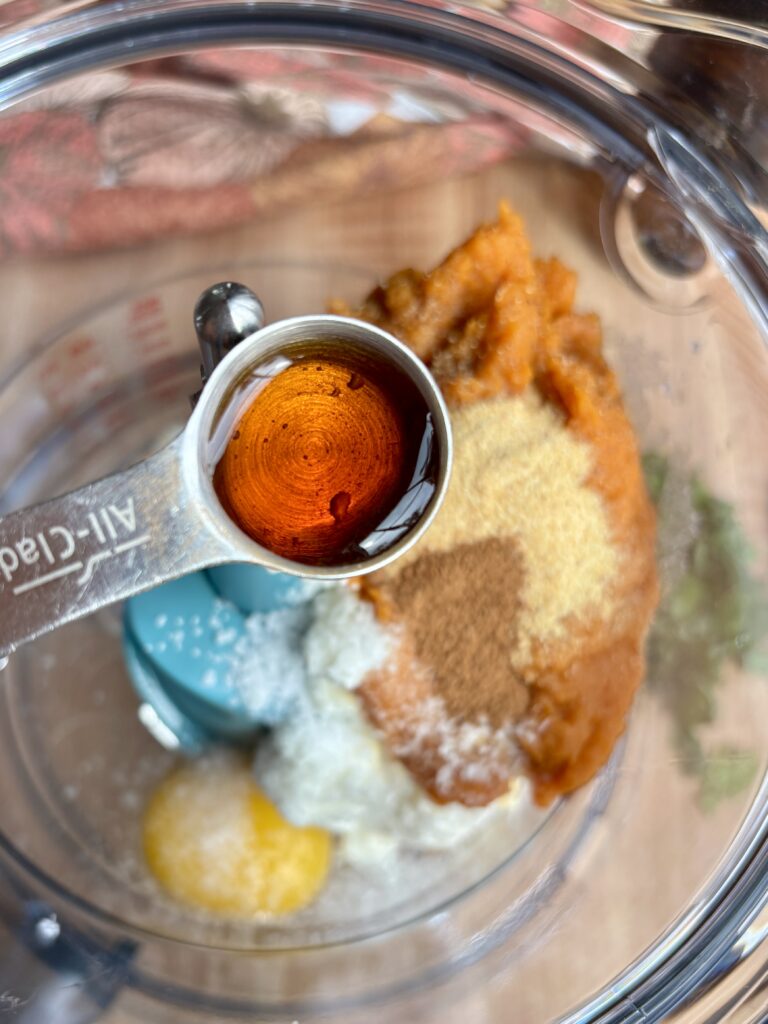
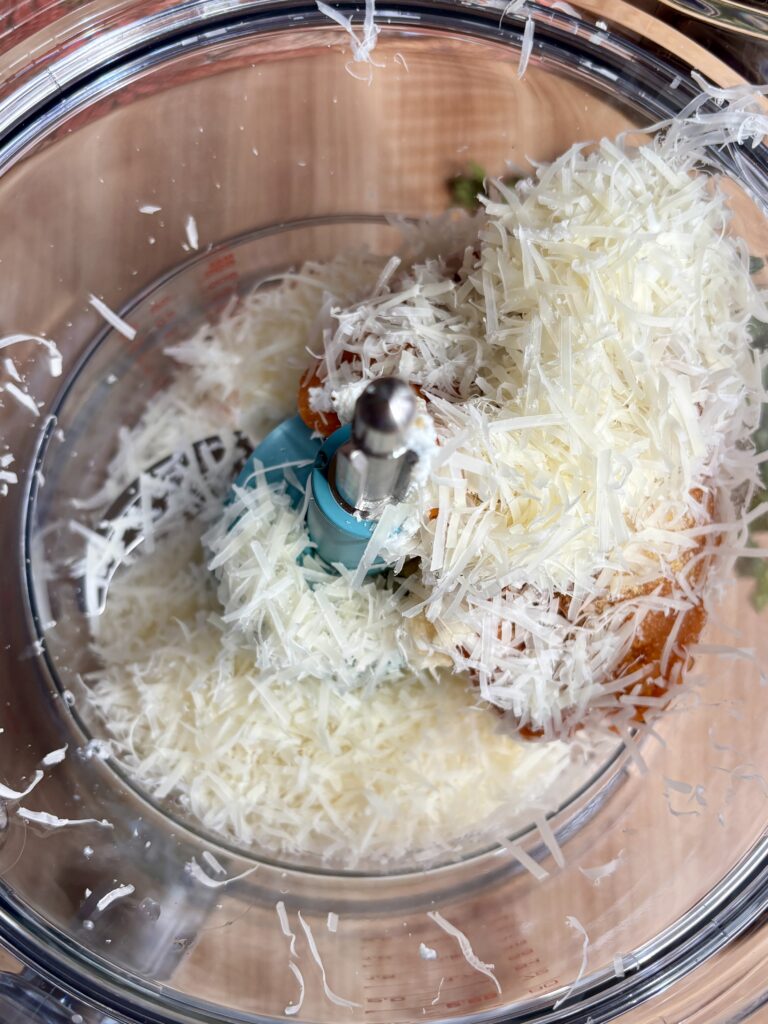
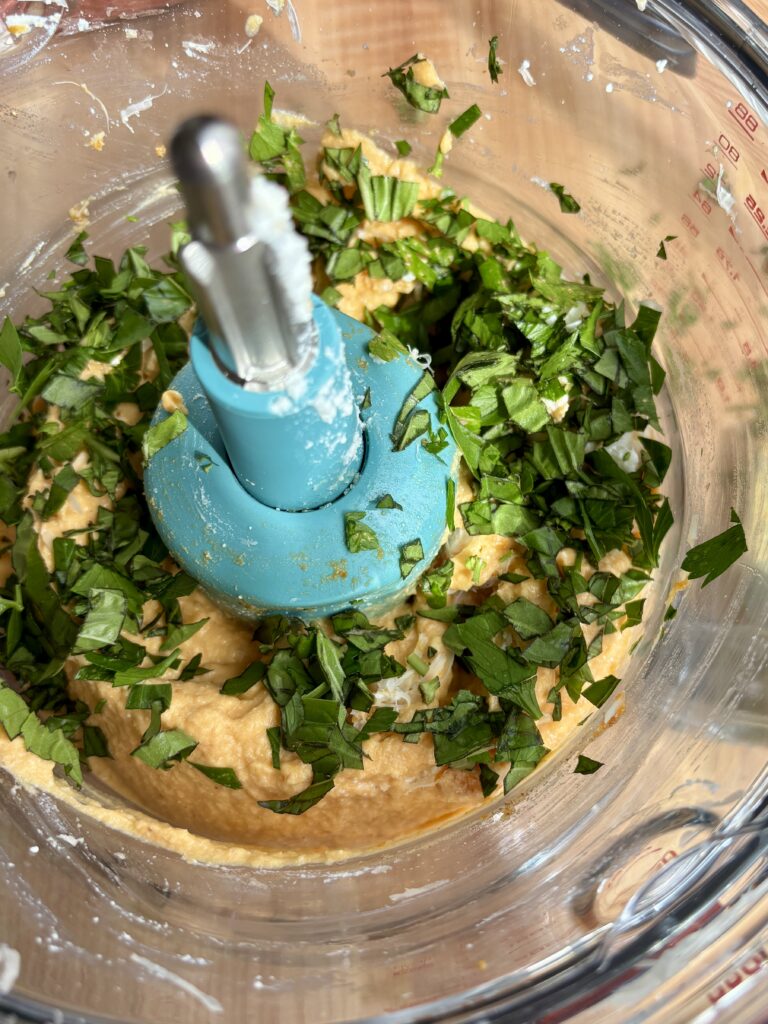
- In a large bowl, combine the pumpkin puree, drained ricotta, egg, Parmesan, kosher salt, garlic powder, onion powder, black pepper, basil, parsley, nutmeg, cinnamon, and maple syrup. Stir until smooth and evenly combined.
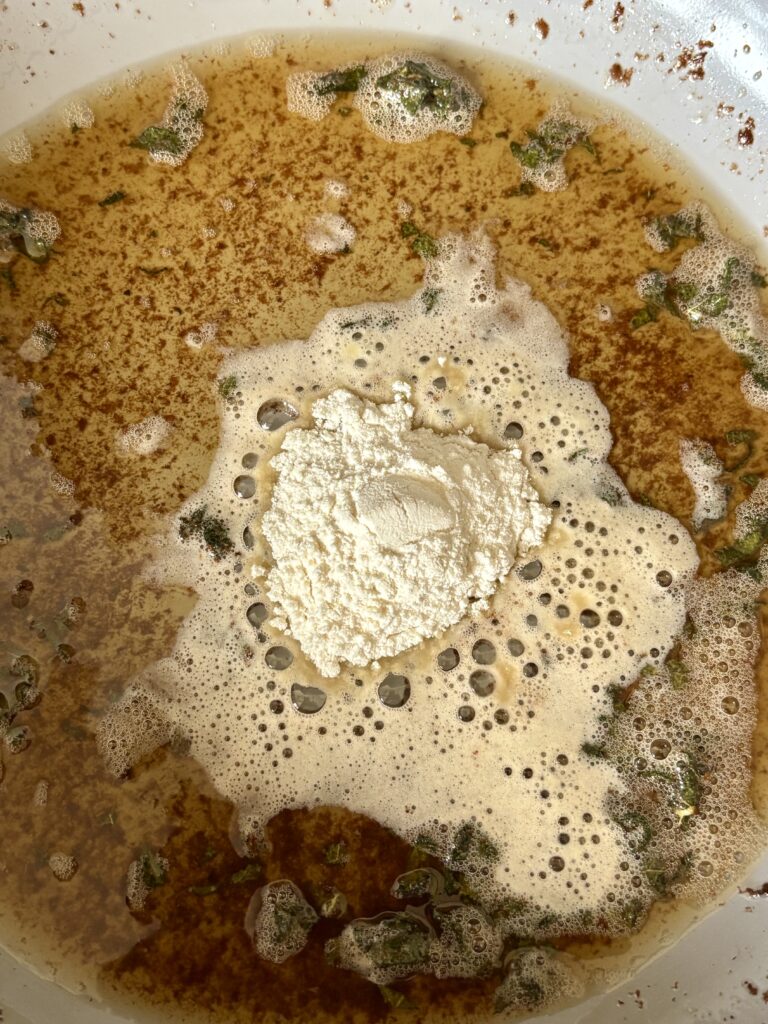
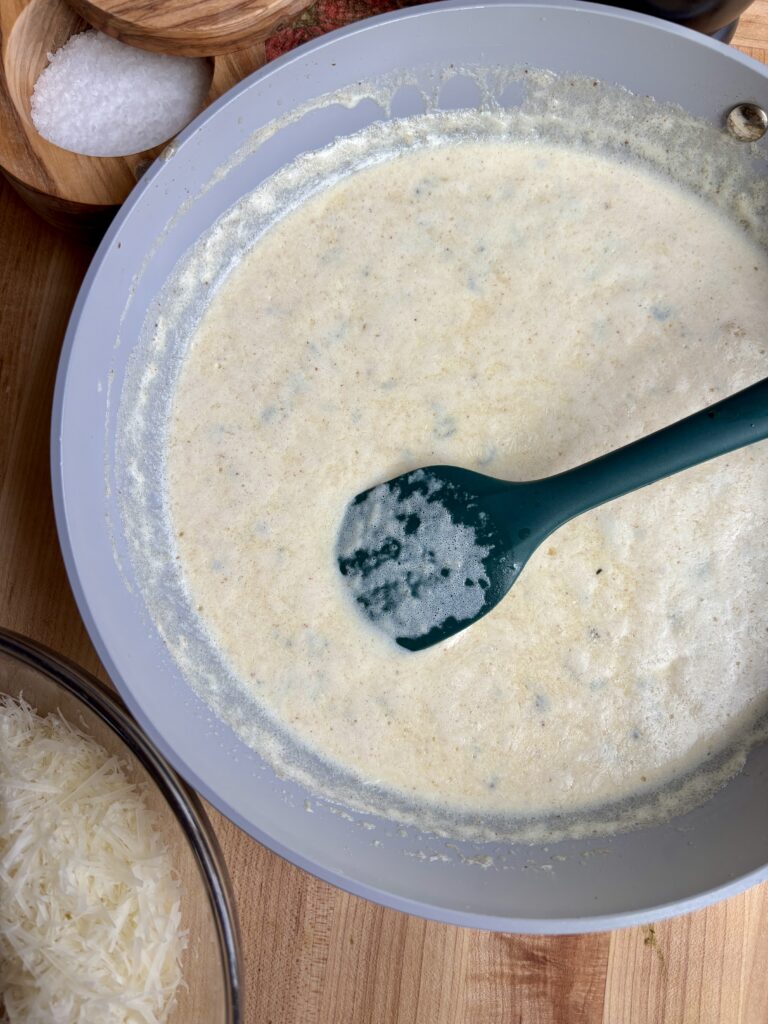
- Add the butter to a medium saucepan over medium heat. Cook until melted and foamy. Continue cooking, swirling the pan occasionally, until the milk solids turn golden brown and the butter smells nutty and fragrant.
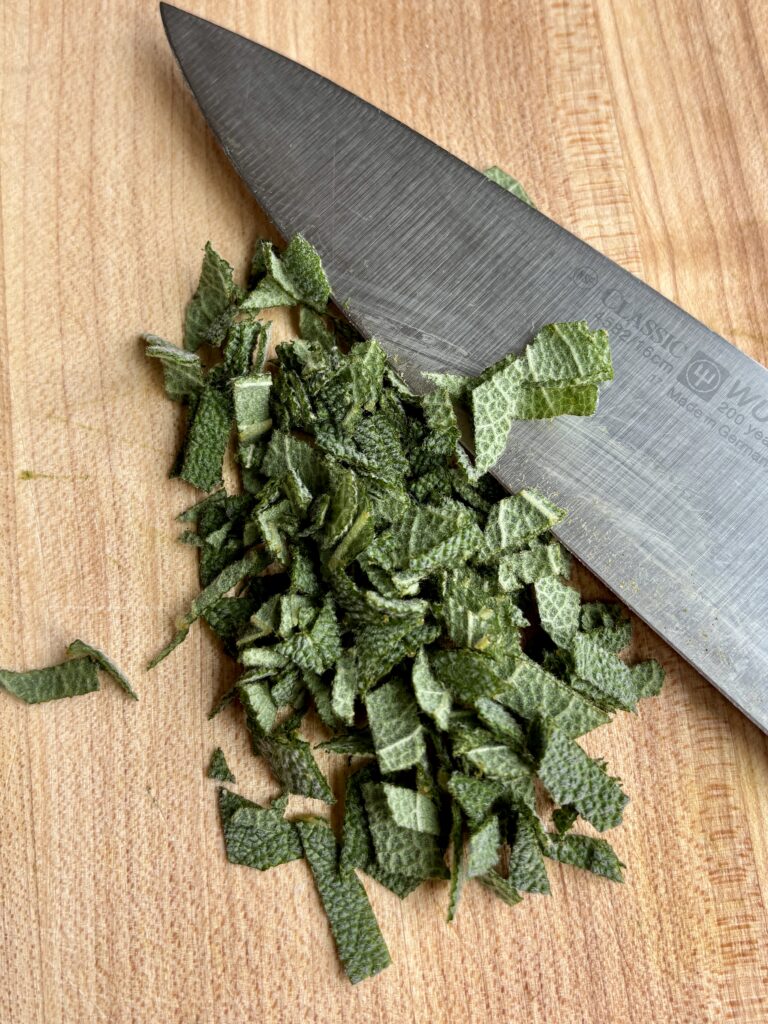
- Add the chopped sage and cook for 30–60 seconds, until fragrant. Remove some of the fried sage and set aside for topping later.
- Reduce the heat to medium-low and whisk in the flour. Cook for about 1 minute, whisking constantly.
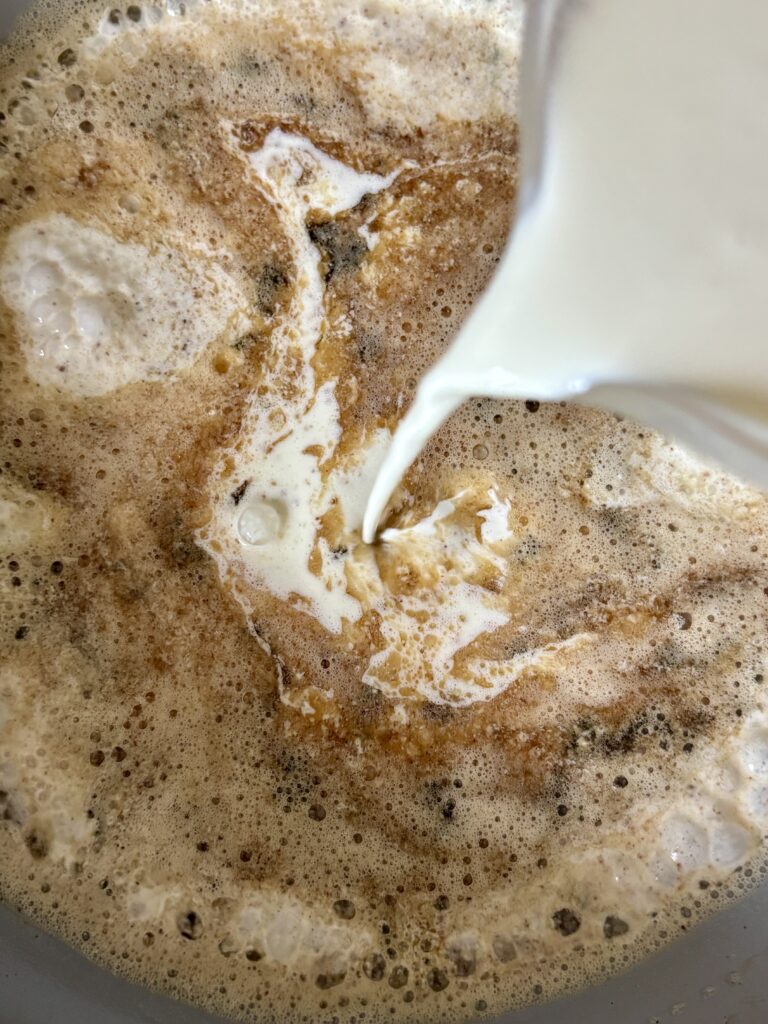
- Slowly whisk in the heavy cream until smooth. Cook for 3–5 minutes, stirring frequently, until the sauce has slightly thickened.
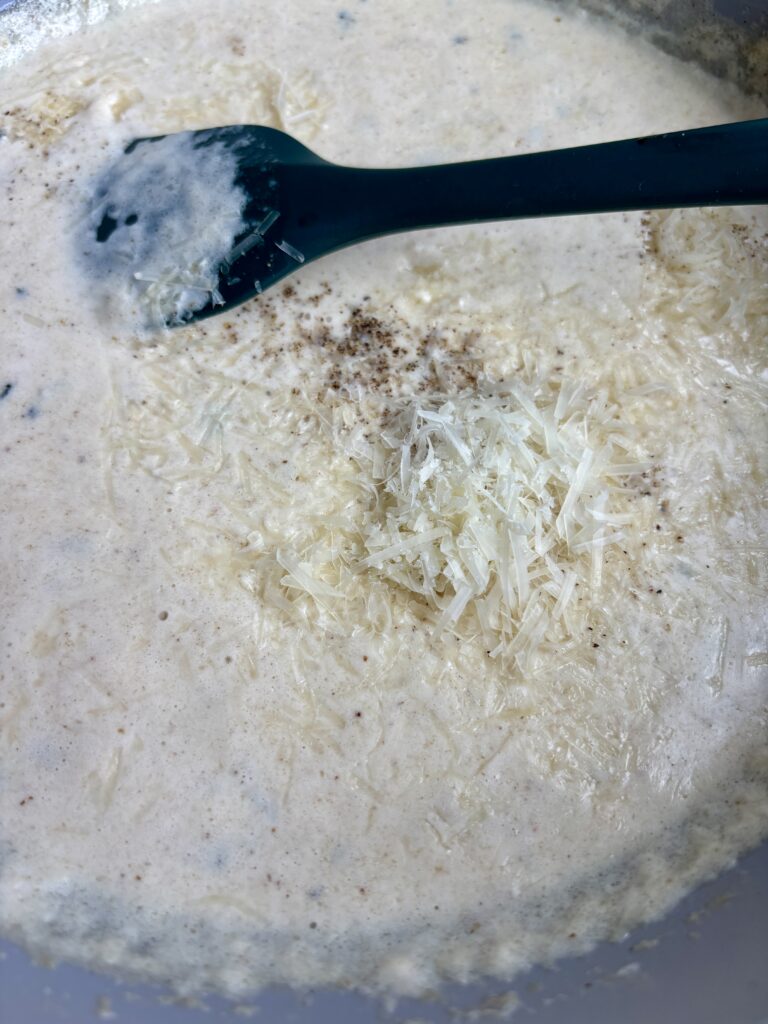
- Remove the saucepan from the heat. Whisk in the Parmesan until smooth and creamy. Season with black pepper and a pinch of kosher salt. Taste and adjust seasoning as needed.
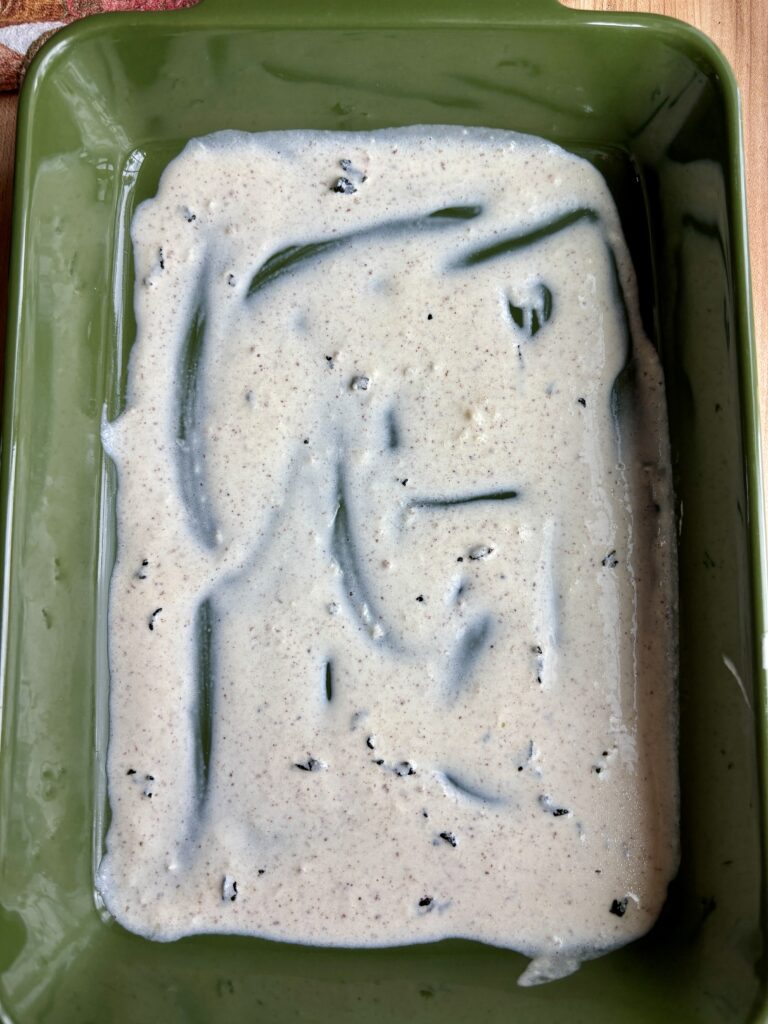
- Spread a thin layer of the brown butter sage cream sauce across the bottom of the prepared baking dish.
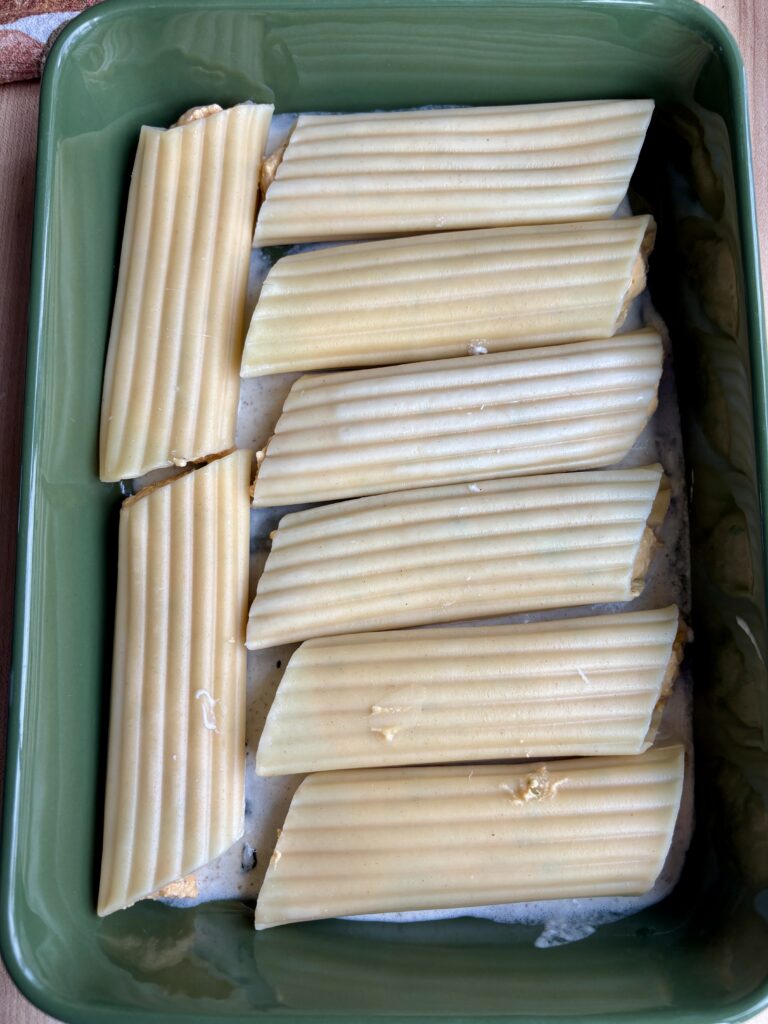
- Transfer the pumpkin ricotta filling to a piping bag or large zip-top bag with one corner snipped off. Carefully pipe the filling into each manicotti shell. You can also use a small spoon if preferred.
- Place the filled manicotti in a single layer in the prepared baking dish.
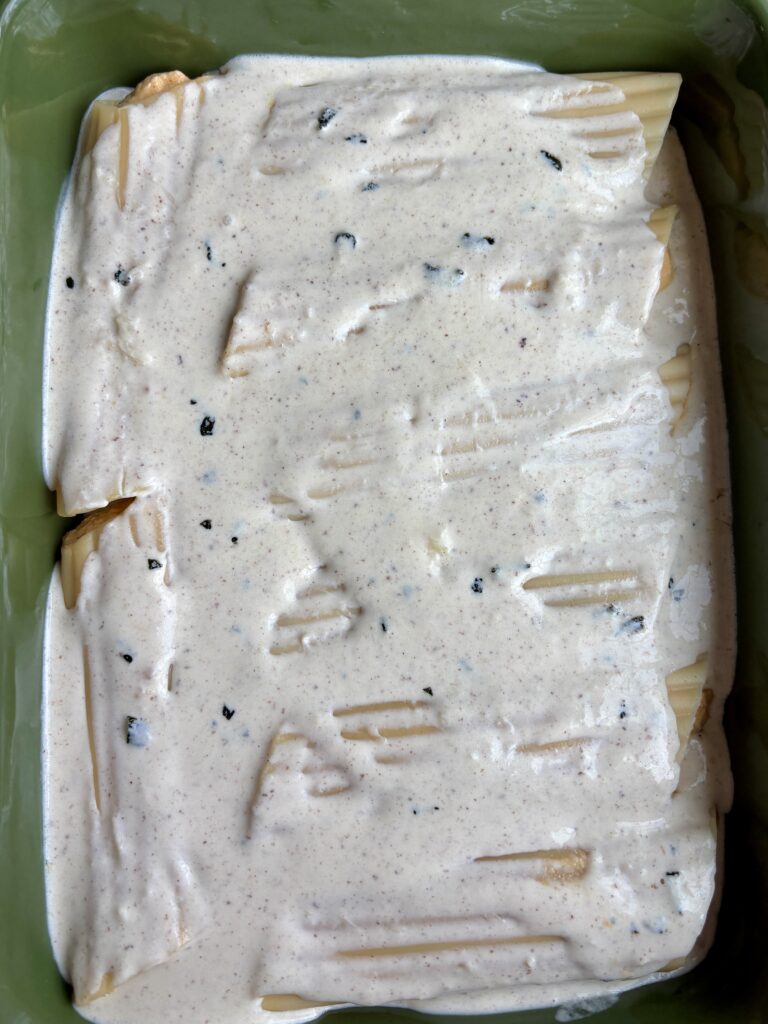
- Pour the remaining brown butter sage cream sauce evenly over the manicotti, making sure the pasta is well covered.
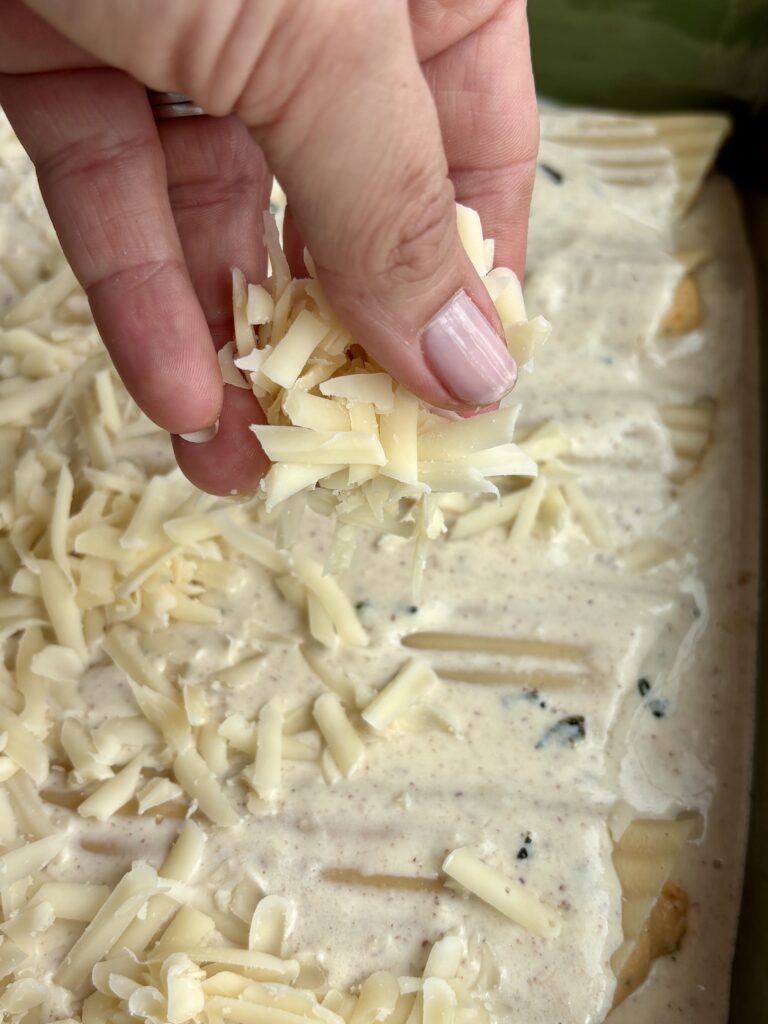
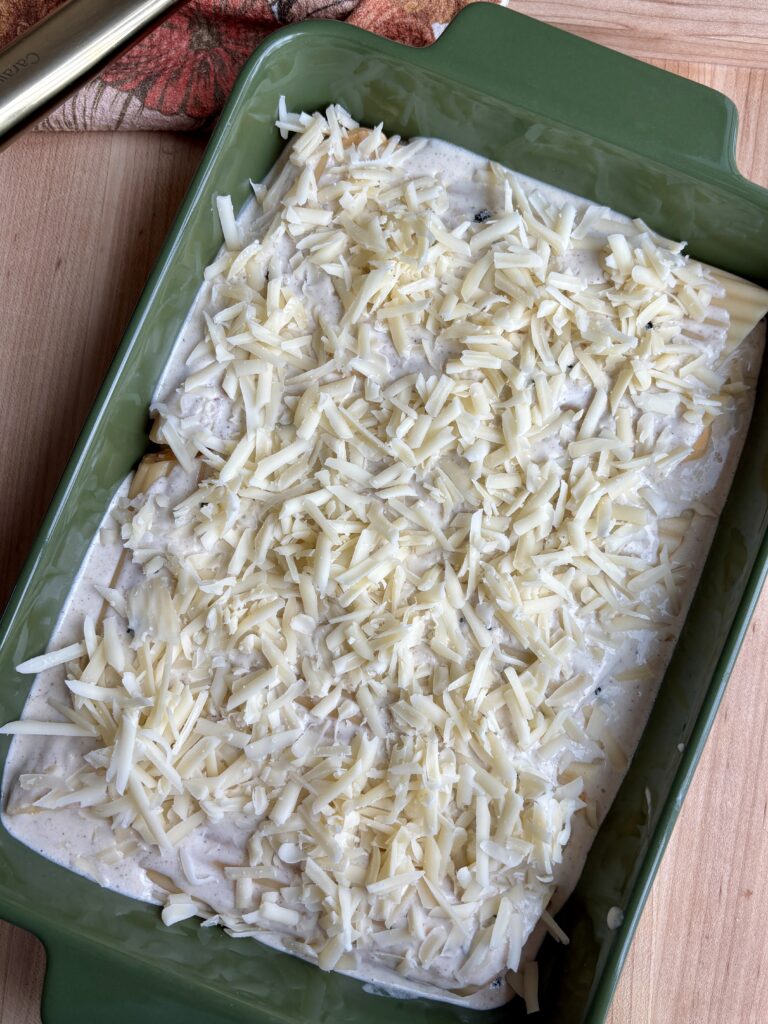
- Sprinkle the Gruyère evenly over the top.
- Loosely cover the baking dish with foil and bake for 20 minutes.
- Remove the foil and continue baking for 8–10 minutes, until the cheese is melted and bubbling and the edges are lightly golden.
- Optional: For a deeper golden-brown topping, broil for 1–2 minutes, watching closely so the cheese doesn’t burn.
- Let the manicotti rest for 5–10 minutes before serving. Garnish with freshly grated Parmesan, freshly cracked black pepper, and crispy sage leaves if desired.
Notes
- Drain the ricotta well for the best filling texture.
- Use plain pumpkin puree, not pumpkin pie filling.
- Cook the manicotti shells just until al dente.
- Freshly grated Parmesan and Gruyère melt more smoothly than pre-shredded cheese.
- Keep the cream sauce slightly loose; it will thicken as it bakes.
- A piping bag or zip-top bag makes filling the manicotti much easier.
- Don’t skip the 5–10 minute resting period before serving.
pumpkin manicotti | pumpkin cannelloni | pumpkin pasta recipe | savory pumpkin pasta | fall pasta recipes | pumpkin ricotta filling | pumpkin ricotta pasta | brown butter sage sauce | brown butter sage cream sauce | pumpkin manicotti recipe | fall dinner recipes | cozy fall recipes | baked manicotti | stuffed manicotti | creamy pumpkin pasta | pumpkin dinner recipe | savory pumpkin recipes | pumpkin and ricotta pasta

Nutritional Content Disclaimer
I choose not to include nutritional information with my recipes, as these values can be calculated from the ingredients provided. With my background as a pediatric nurse practitioner and my own family experience with disordered eating, I understand how focusing on numbers can affect our relationship with food. My philosophy is that all foods have a place—sweet, savory, nourishing, or indulgent. I aim to share recipes that support a healthy, joyful approach to eating. My hope is that this space also encourages a balanced, healthy relationship with food for you and your family too.