
Learning proper knife cuts is one of the most valuable cooking skills you can develop. Not only will it make your food look better, but consistent cuts help ingredients cook evenly, absorb flavor more effectively, and create better texture in the finished dish. And just as importantly, good knife skills help keep you safe. Not understanding your knife, or how to use it properly, can put those fingers of yours at risk.
Whether you’re dicing onions for soup, slicing vegetables for a stir-fry, or mincing garlic for pasta sauce, understanding the fundamentals of knife work will make you a more confident, efficient, and safe cook.
The good news? You don’t need a drawer full of expensive knives to get started. In fact, most home cooks can handle nearly every kitchen task with just three essential knives, which I’ll cover below. That said, I do recommend investing in a quality set of kitchen knives, like this 3 piece Zwilling Pro Starter Set. Using a steak knife to dice an onion is another great way to end up in the emergency room and it’s just not worth it.
Take a few minutes to scroll through this post, Knife Cuts 101: The Essential Guide Every Home Cook Needs and start building your knife skills. Not only will it make cooking easier, but it’s also a lot of fun!
What Knives do you recommend?
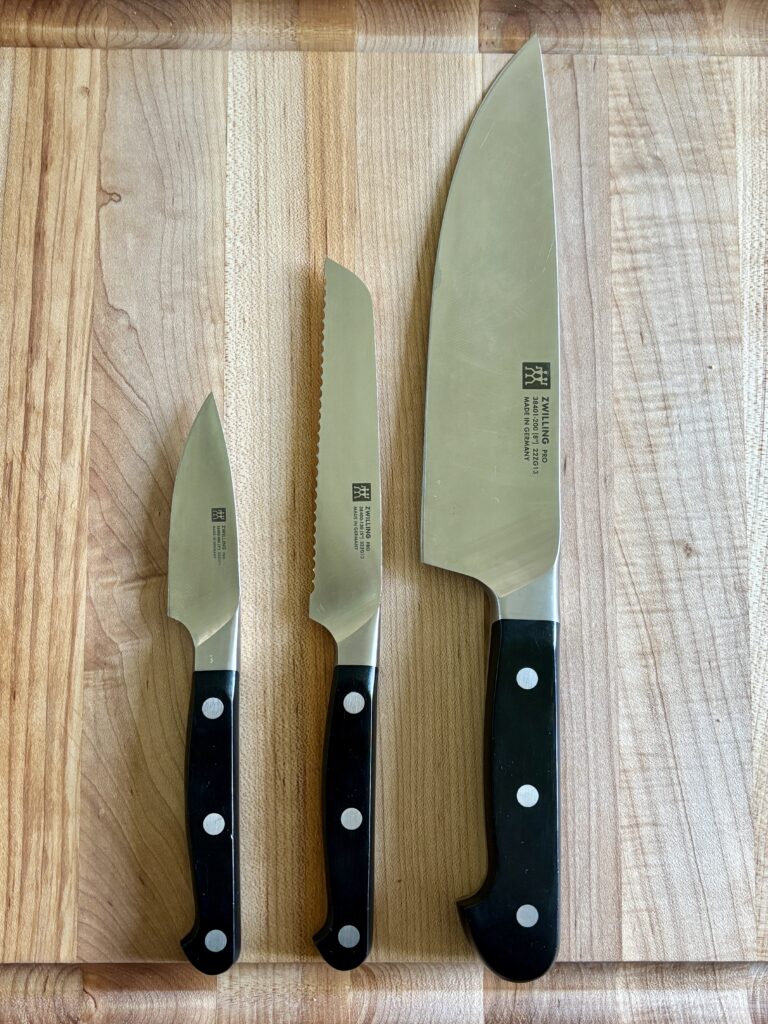
When building your kitchen knife collection, it’s tempting to think you need a specialty knife for every task. The reality is that three well-made knives can handle almost everything you’ll encounter in a home kitchen.
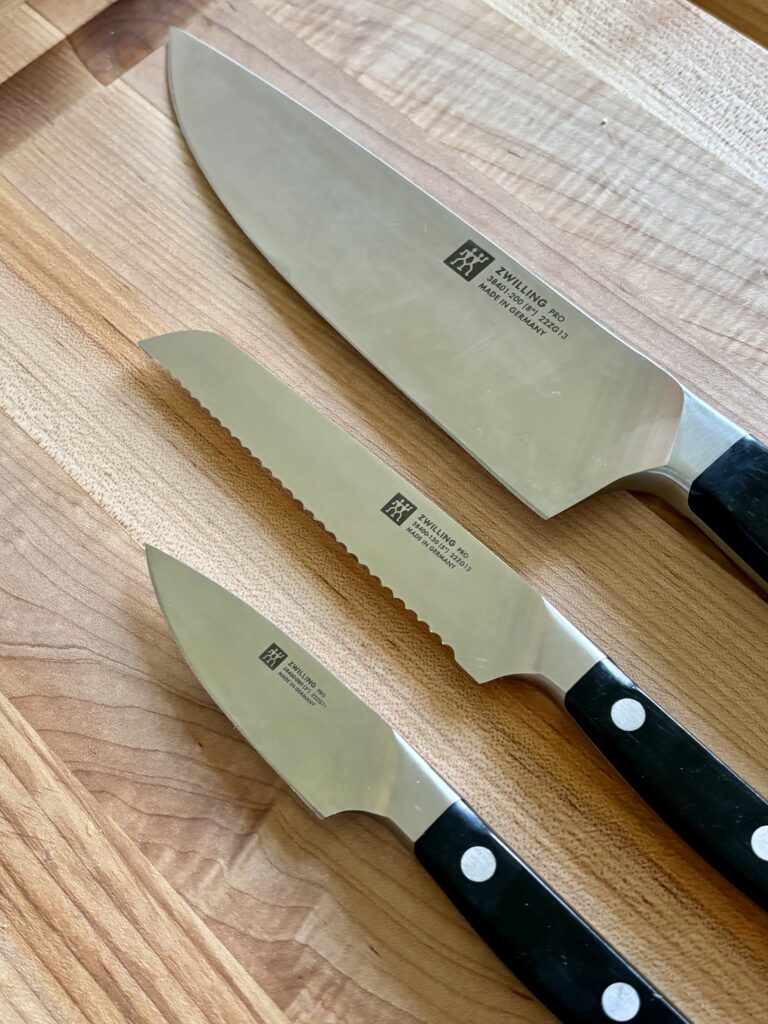
A quality starter set, such as the Zwilling Pro 3-Piece Starter Set, includes the three knives I recommend most often:
Chef’s Knife (8-Inch)
The chef’s knife is the workhorse of your kitchen. If you only own one knife, this should be it.
Use it for:
- Chopping vegetables
- Slicing fruits
- Dicing onions
- Mincing herbs
- Cutting meat
- Breaking down larger ingredients
A chef’s knife handles approximately 80–90% of your everyday kitchen tasks.
Paring Knife
Small but mighty, a paring knife gives you precision and control for detailed work.
Use it for:
- Peeling fruits and vegetables
- Coring strawberries
- Deveining shrimp
- Trimming vegetables
- Small, delicate cuts
Whenever a chef’s knife feels too large for the job, reach for a paring knife.
Serrated Knife
The saw-like edge of a serrated knife is designed to grip foods with tough exteriors and soft interiors.
Use it for:
- Slicing bread
- Cutting tomatoes
- Cutting citrus fruits
- Layer cakes
- Delicate baked goods
The serrated edge cuts cleanly without crushing soft foods.
Together, these three knives can accomplish virtually every cutting task you’ll encounter in a home kitchen, making them the perfect place to start.
Parts of a Knife
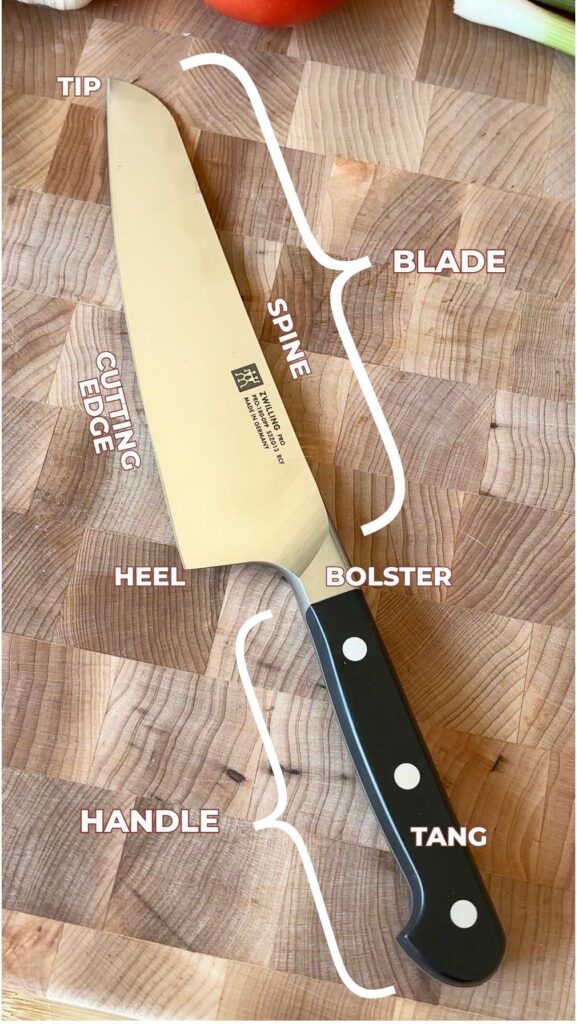
Understanding basic knife anatomy (see Image below) will help you to use and maintain your knives properly.
- Tip: The pointed end of the blade used for precision tasks.
- Blade: The cutting portion of the knife.
- Cutting Edge: The sharpened cutting surface.
- Spine: The thick, unsharpened top of the blade.
- Heel: The rear portion of the blade closest to the handle, often used for tougher cuts.
- Bolster: The thicker section between the blade and handle that adds balance and stability.
- Tang: The portion of the blade extending into the handle.
- Handle: Where you grip and control the knife.
Knowing these parts makes it easier to understand knife care, sharpening, and proper technique.
How do you hold and use your knife?
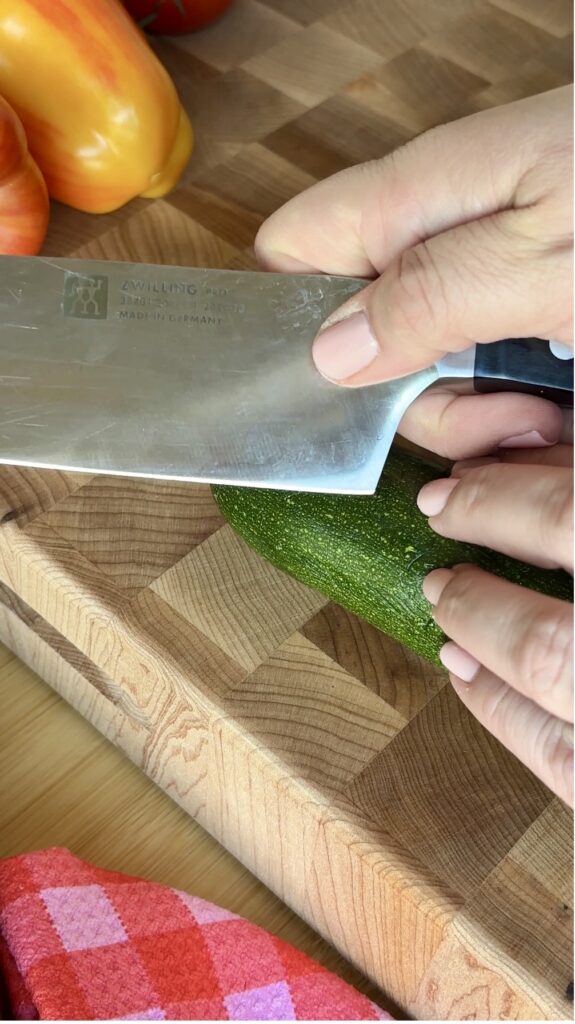
Before learning knife cuts, it’s important to learn how to hold a knife safely and efficiently.
The Pinch Grip (cutting hand)
Professional chefs typically use what’s called a pinch grip.
To do this:
- Place your thumb on one side of the blade.
- Place your index finger on the opposite side.
- Wrap your remaining fingers around the handle.
This grip provides better control, stability, and precision than gripping the handle alone.
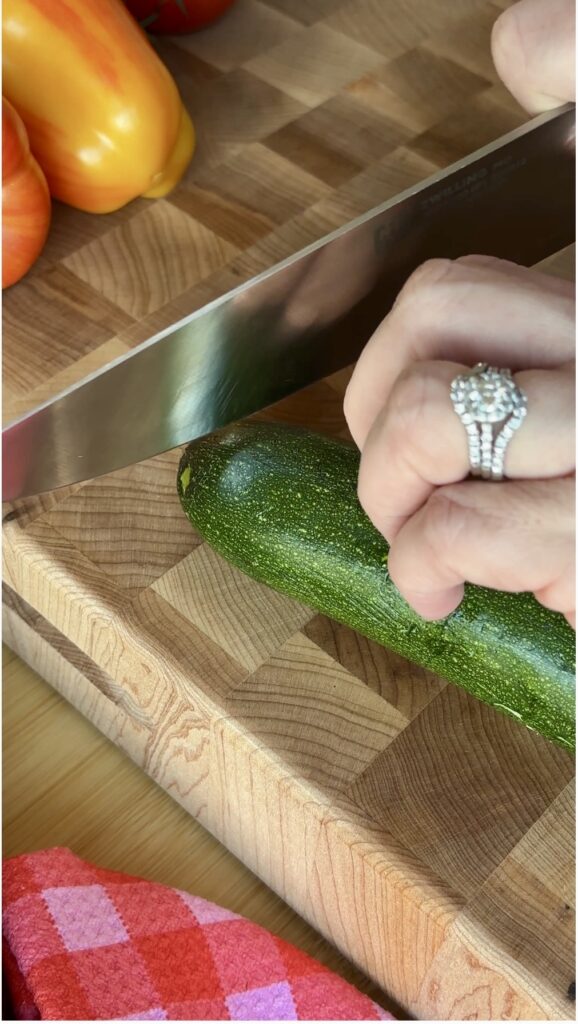
The Claw Grip (non-cutting hand)
Your non-cutting hand should form a “claw.”
- Curl fingertips inward.
- Keep knuckles facing the blade.
- Let the side of the knife gently guide against your knuckles.
This technique protects your fingertips while maintaining control over the ingredient you’re cutting.
Let the Knife Do the Work
Avoid forcing the blade through food.
Instead:
- Use smooth slicing motions.
- Rock the chef’s knife when chopping.
- Maintain a stable cutting board.
- Work slowly until the motion becomes natural.
Speed comes with practice. Focus on consistency and safety first.
Knife Safety
Remember, good knife skills always begin with safe habits! Some safety tips are listed below
- Always use a stable cutting board: Placing a damp kitchen towel beneath your cutting board can help to prevent slipping.
- Pay attention while cutting: Distractions are one of the most common causes of kitchen injuries. Keep your eyes on your work and avoid rushing.
- Carry your knives correctly: When walking with a knife: Hold it at your side, keep the blade pointed downward, and announce “knife behind” if others are nearby.
- Never try to catch a falling knife: Step back and just let it fall. A damaged knife is far easier to replace than an injured hand.
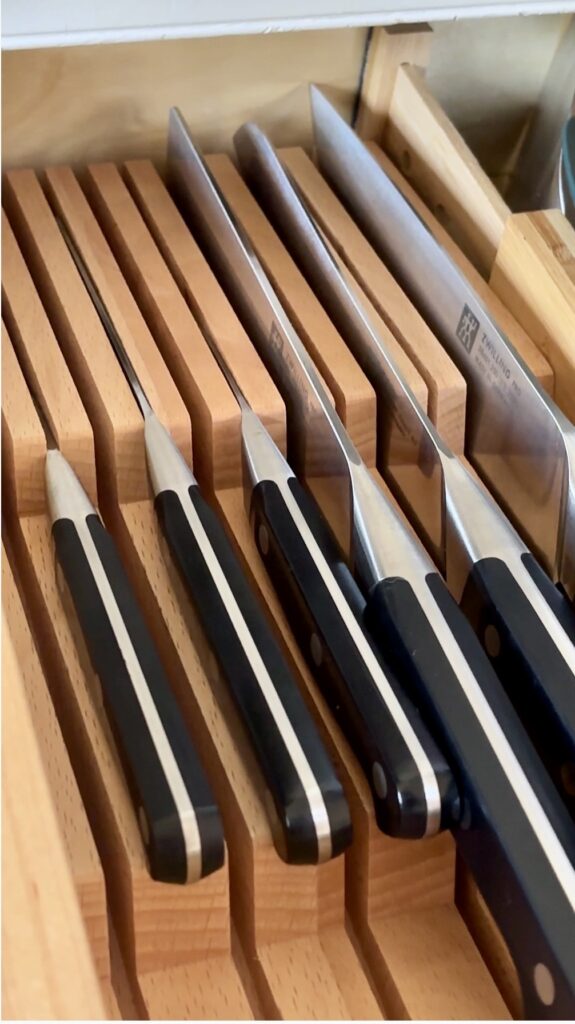
- Store them safely: Use a countertop knife block or in drawer knife organizer. This will prevent hands from going into a drawer and getting cut on an open knife.
Knife Care and Maintenance
A quality knife can last decades when properly cared for.
Wash Knives by Hand
Dishwashers are hard on knife blades and handles and will dull the blades more over time.
Instead:
- Wash them immediately after use using warm water and mild soap
- Then immediately dry thoroughly before storing.
Keep Knives Sharp
A sharp knife is actually safer than a dull one because it requires less force needed to cut.
You can maintain your knives by:
- Honing them regularly
- Sharpening as needed
- Having them professionally sharpened when necessary
Use Appropriate Cutting Surfaces
Best cutting boards:
- Wood (I really love my John Boos Boards and this Caraway Set)
- End-grain wood (Love my John Boos Rustic Cherry Wood Board)
- Wood Pulp Composite (Like this set from Epicurean)
Avoid:
- Glass
- Marble
- Granite
- Ceramic
These hard surfaces will dull your blades quickly.
Essential Knife Cuts Every Home Cook Should Know
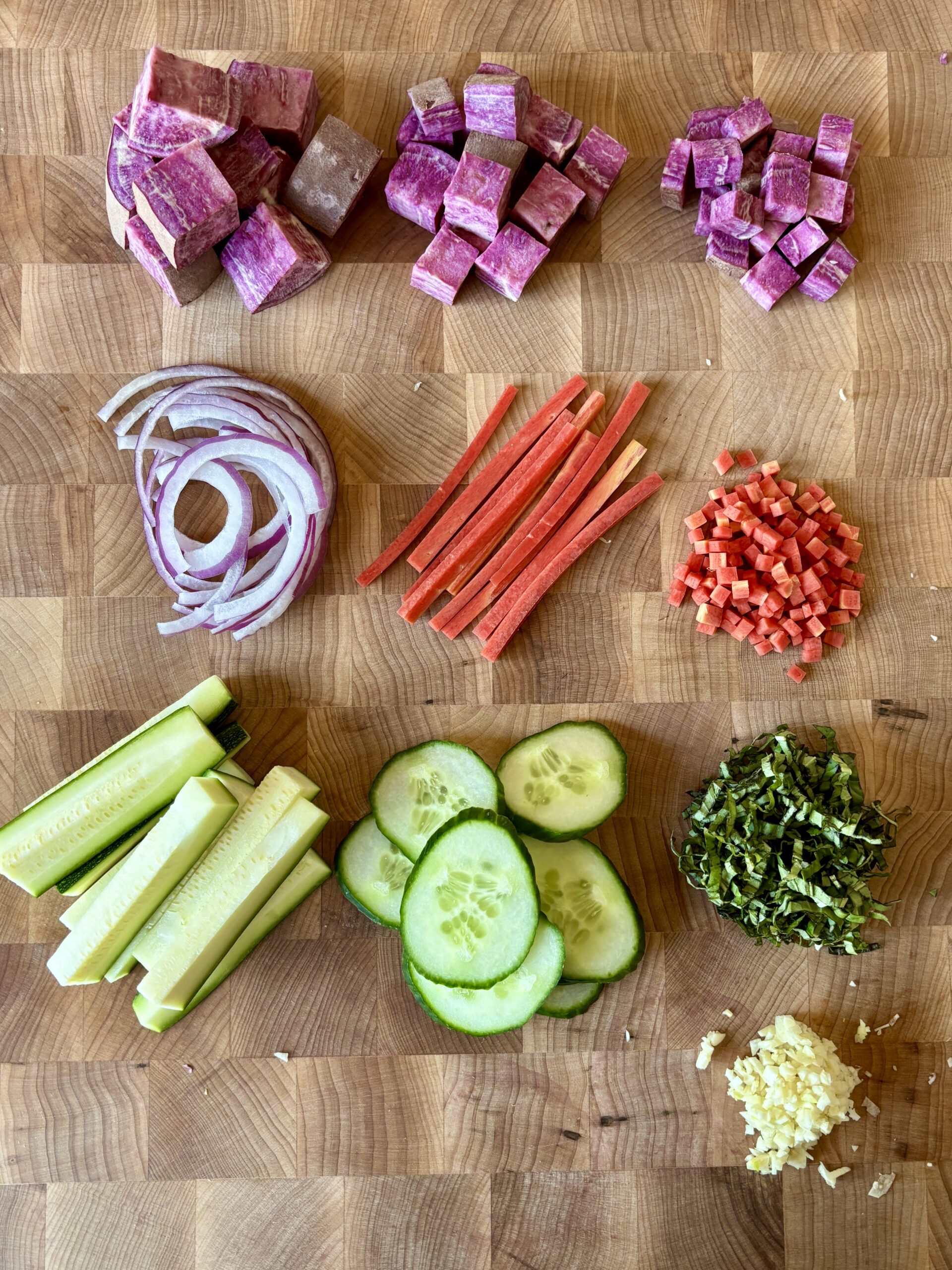
These 8 knife cuts below form the foundation of countless recipes. Understanding what each are when you see them in a recipe will improve your entire cooking experience!
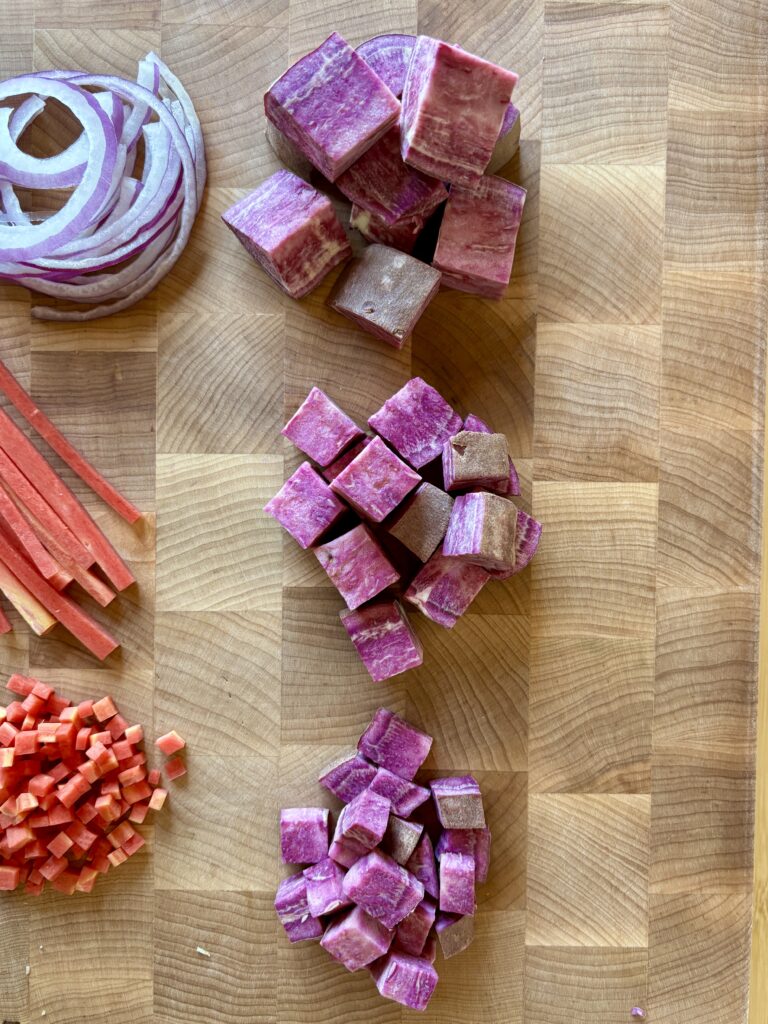
Large Dice
Size: Approximately ¾ inch cubes
Large dice is commonly used for:
- Roasted vegetables
- Soups
- Stews
- Pot roasts
The larger size helps ingredients hold their shape during longer cooking times.
Medium Dice
Size: Approximately ½ inch cubes
Medium dice is one of the most versatile cuts.
You’ll often see it used in:
- Chili
- Soups
- Stuffing
- Sheet pan meals
This size balances cooking speed with texture.
Small Dice
Size: Approximately ¼ inch cubes
Small dice is ideal when you want ingredients to distribute evenly throughout a dish.
Common uses include:
- Salsas
- Sauces
- Fried rice
- Vegetable fillings
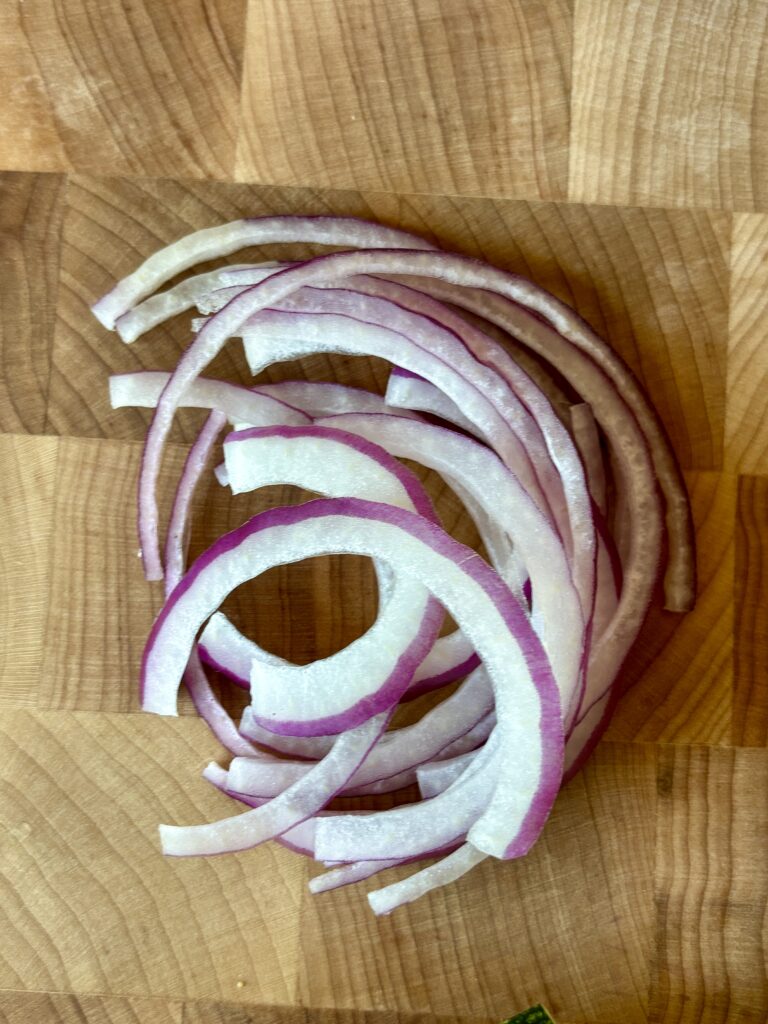
Slicing
Slicing creates thin, flat pieces of food.
Common examples:
- Cucumbers
- Tomatoes
- Onions
- Mushrooms
- Chicken breast
The thickness may vary depending on the recipe.
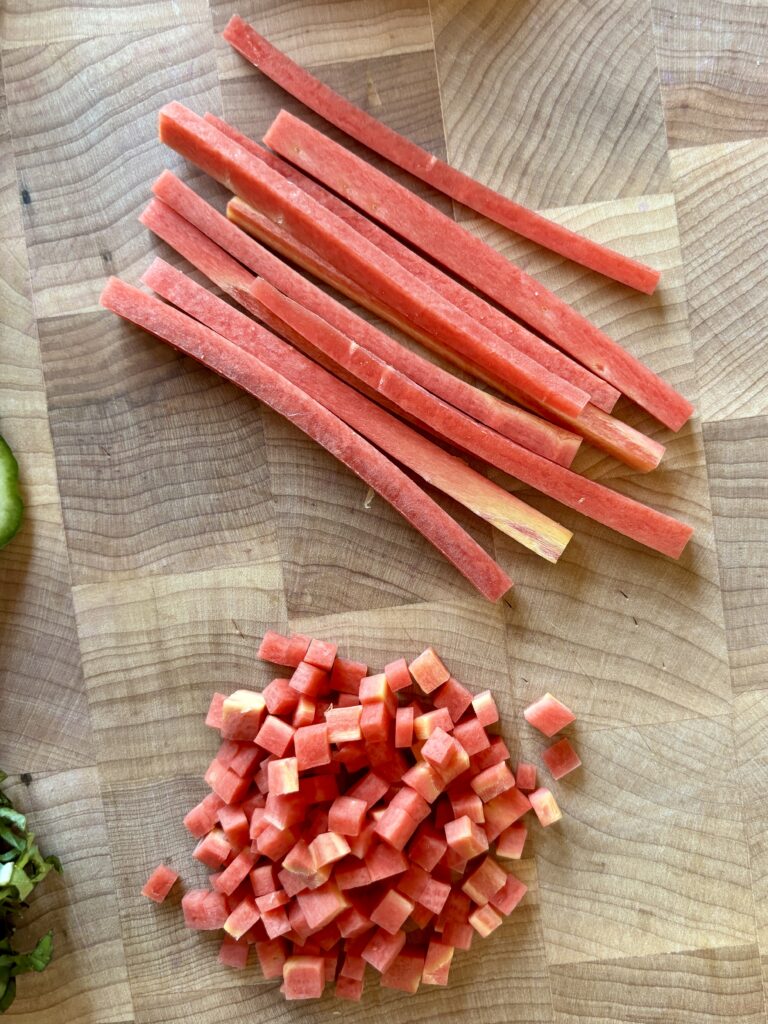
Julienne
Size: Approximately ⅛ inch by ⅛ inch by 2 inches
Julienne creates thin matchstick-shaped pieces.
Common uses:
- Stir-fries
- Salads
- Garnishes
- Slaws
Julienne is also the starting point for creating a brunoise.
Brunoise
Size: Approximately ⅛ inch cubes
Brunoise begins with a julienne cut, which is then diced into tiny cubes.
Common uses:
- Fine sauces
- Elegant garnishes
- Soups
- Professional plating
Because the pieces are so small, they cook very quickly and distribute evenly throughout a dish. I love using this cut in my Creamy Carrot Risotto!
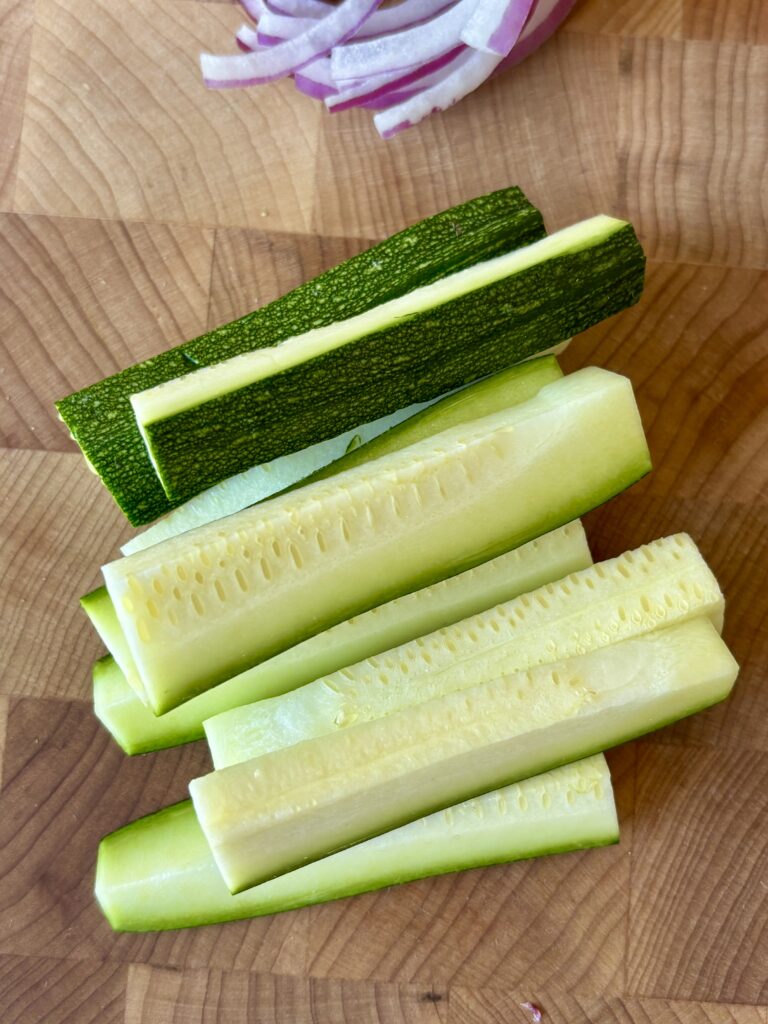
Batonnet
Size: Approximately ¼ inch by ¼ inch by 2 inches
A batonnet resembles a thick matchstick.
Common uses:
- Vegetable platters
- French fries
- Crudité boards
- Stir-fries
This cut also serves as the foundation for smaller cuts.
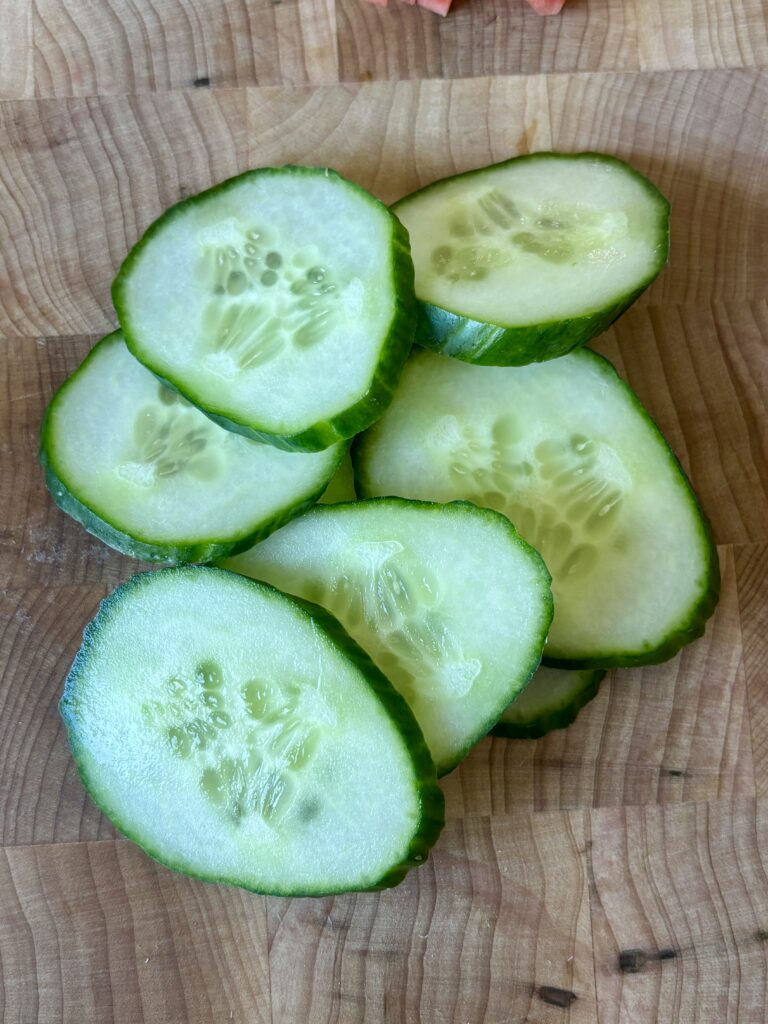
Diagonal Cut (Bias Cut)
A diagonal cut is made by slicing food at an angle.
You’ll often see this technique used for:
- Carrots
- Green onions
- Asparagus
- Zucchini
- Cucumbers
This cut creates more surface area, improves presentation, and can help ingredients cook slightly faster.
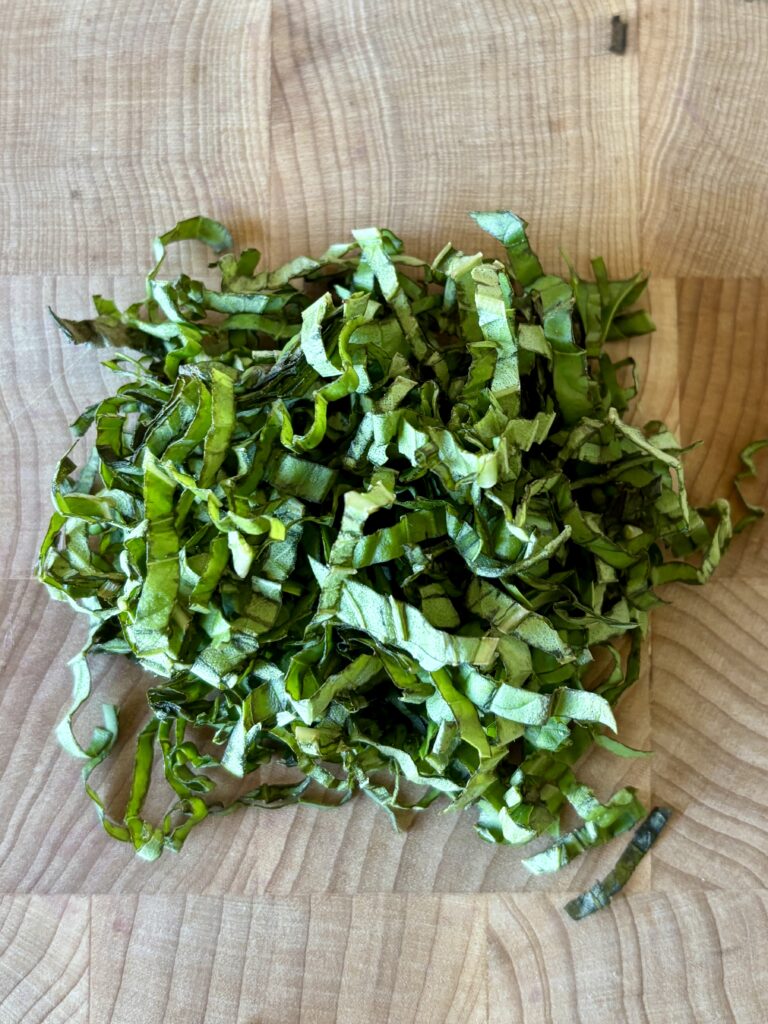
Chiffonade
Chiffonade creates thin ribbons from leafy ingredients.
Most often used with:
- Basil
- Mint
- Spinach
- Lettuce
To chiffonade, stack leaves, roll them tightly, and slice into thin strips.
This elegant cut is commonly used for garnishes and salads.
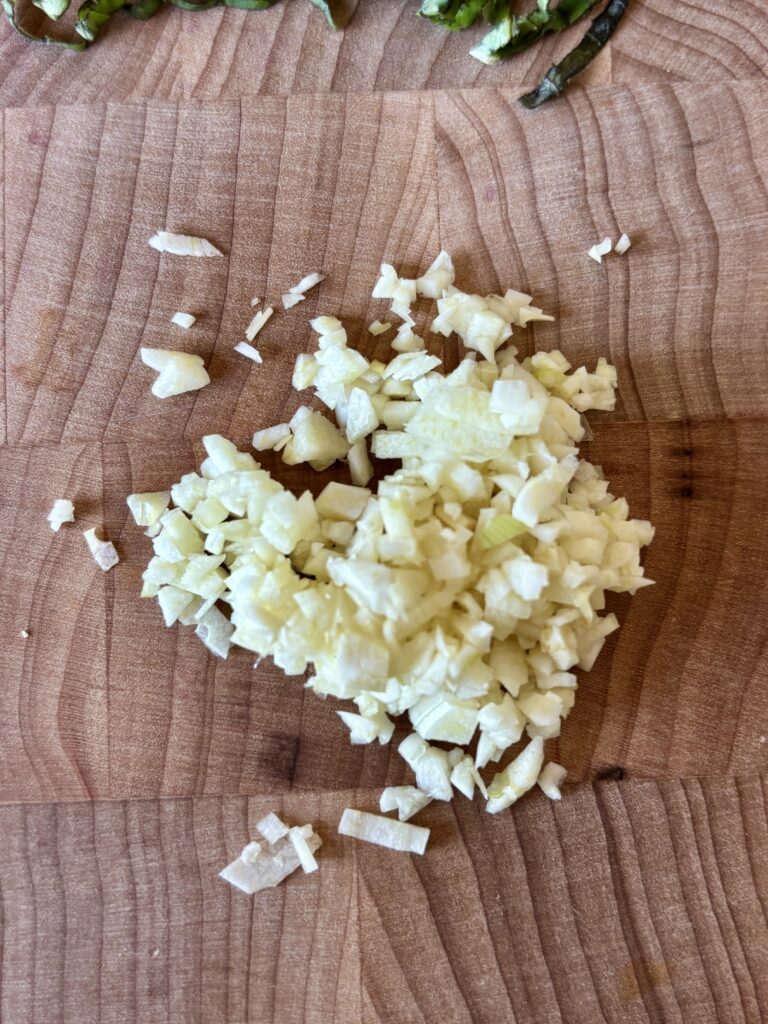
Mincing
Mincing creates extremely small pieces.
Most commonly used for:
- Garlic
- Shallots
- Ginger
- Fresh herbs
Mincing allows ingredients to release maximum flavor throughout a recipe.
Why Consistent Knife Cuts Matter
Knife cuts aren’t just about making food look pretty, uniform pieces also cook at the same rate. When vegetables are cut into similar sizes, they become tender at the same time. This prevents some pieces of your dish from becoming mushy while others remain undercooked.
Consistent cuts also improve flavor distribution. Ingredients of similar size will absorb seasonings, marinades, and sauces more evenly, resulting in a better tasting dish. Just a little extra attention to your knife work can dramatically improve the final result of your recipes.
- Benefits of proper knife cuts include:
- Even cooking
- Better texture
- More attractive presentation
- Improved flavor distribution
- Faster cooking times
- Greater kitchen confidence
Knife Cuts 101: Final Thoughts
Knife skills are one of the most important foundations of cooking. You don’t need professional training or an expensive knife collection to get started—just a few quality knives, a safe technique, and a little practice.
Focus on consistency rather than speed. As your cuts become more uniform, you’ll notice better cooking results, improved presentation, and greater confidence in the kitchen. Master these basic knife cuts, care for your knives properly, and you’ll have skills that improve every recipe you make.
Other Recipes You’ll Love
Let’s engage!
Make sure to tag @thehomechefmomma on Instagram or Facebook, and leave a review or comment if you make these. I always get so excited to see your creations, variations of the recipe, and feedback! Just remember to be kind in your comments, there is still a person behind this screen! 🙂
knife cuts 101 | knife skills for beginners | basic knife cuts | kitchen knife guide | how to hold a knife | knife safety tips | knife care guide | chef knife skills | large dice | medium dice | small dice | chiffonade | julienne cut | batonnet cut | brunoise cut | how to mince garlic | slicing vegetables | diagonal cut vegetables | kitchen knife basics | cooking skills for beginners | knife techniques for home cooks | parts of a knife | best knives for beginners | Zwilling Pro knife set | knife storage tips | how to sharpen knives | beginner cooking techniques | culinary knife cuts | home cooking knife skills | kitchen fundamentals

Nutritional Content Disclaimer
I choose not to include nutritional information with my recipes, as these values can be calculated from the ingredients provided. With my background as a pediatric nurse practitioner and my own family experience with disordered eating, I understand how focusing on numbers can affect our relationship with food. My philosophy is that all foods have a place—sweet, savory, nourishing, or indulgent. I aim to share recipes that support a healthy, joyful approach to eating. My hope is that this space also encourages a balanced, healthy relationship with food for you and your family too.