
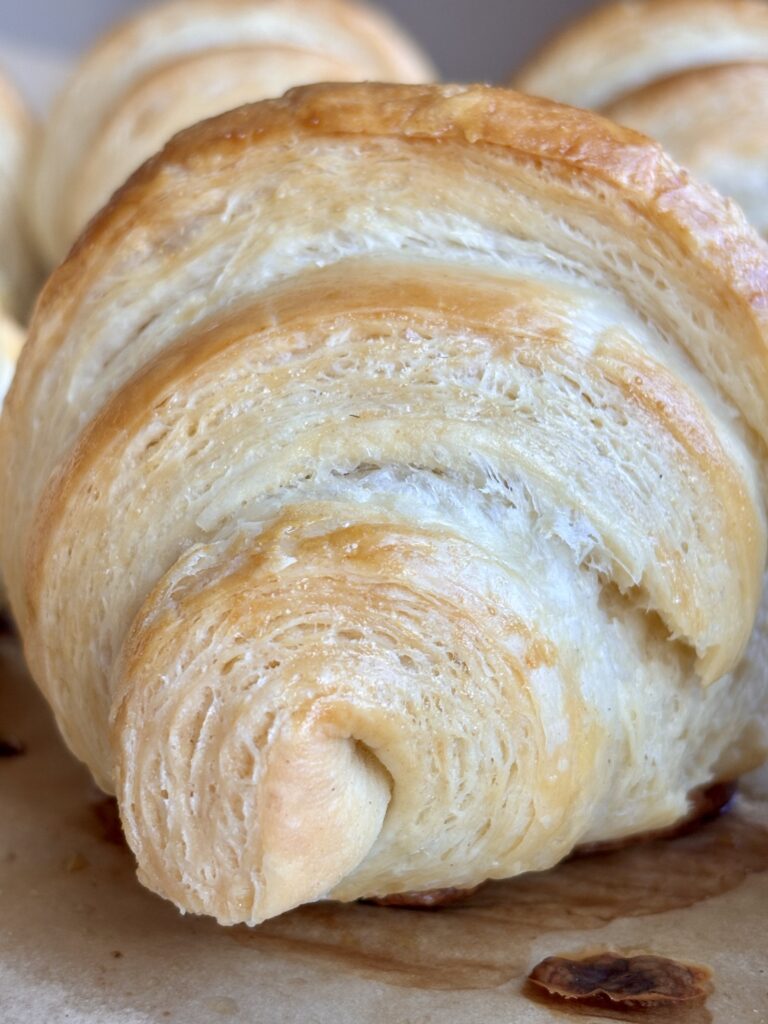
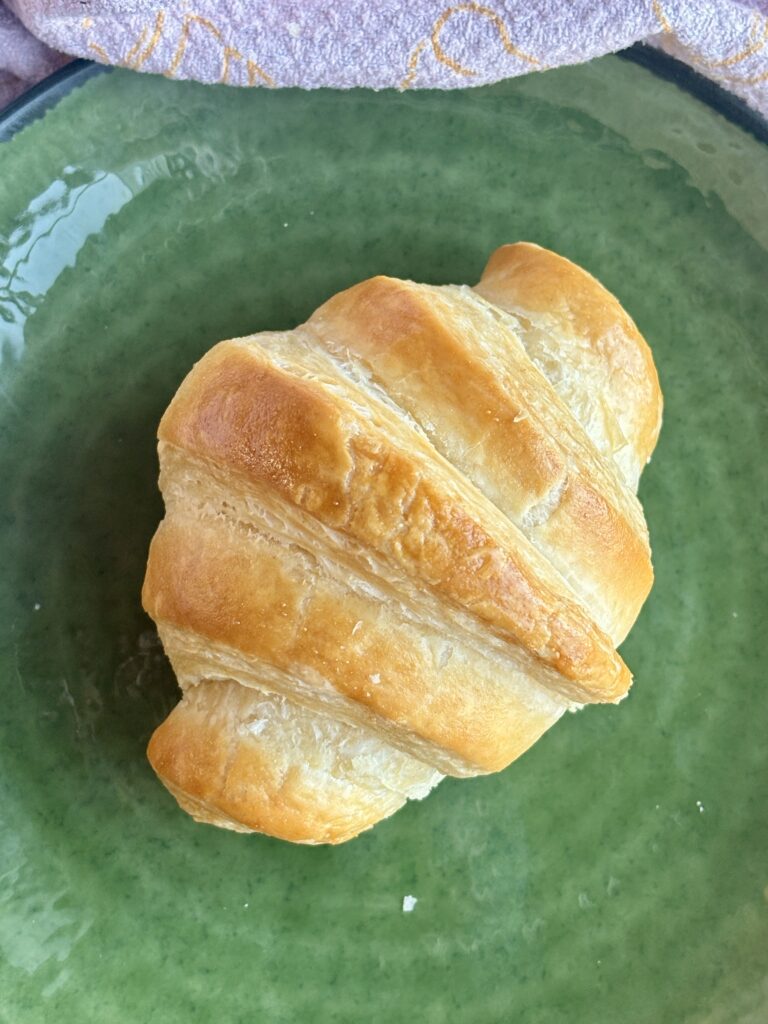
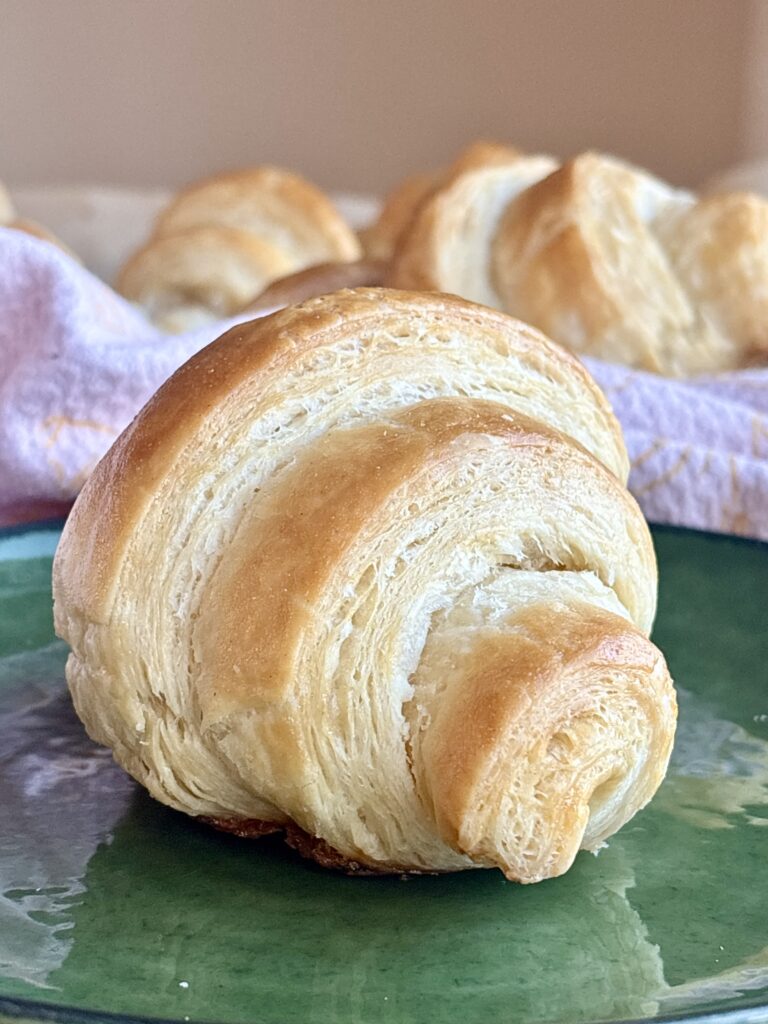
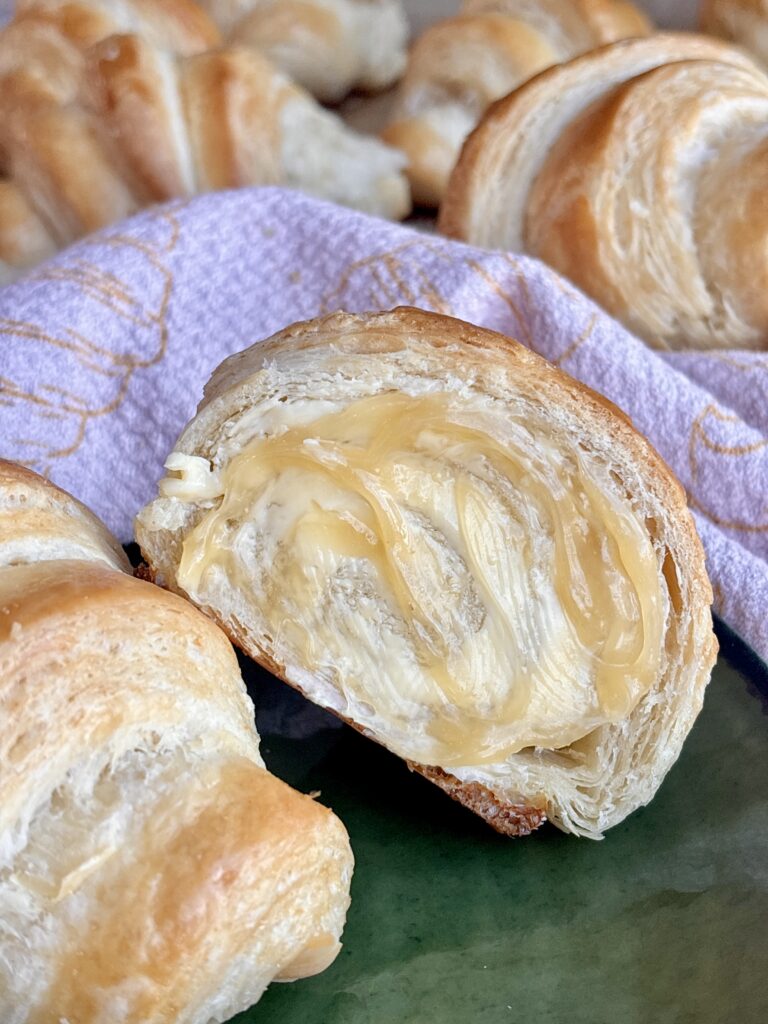
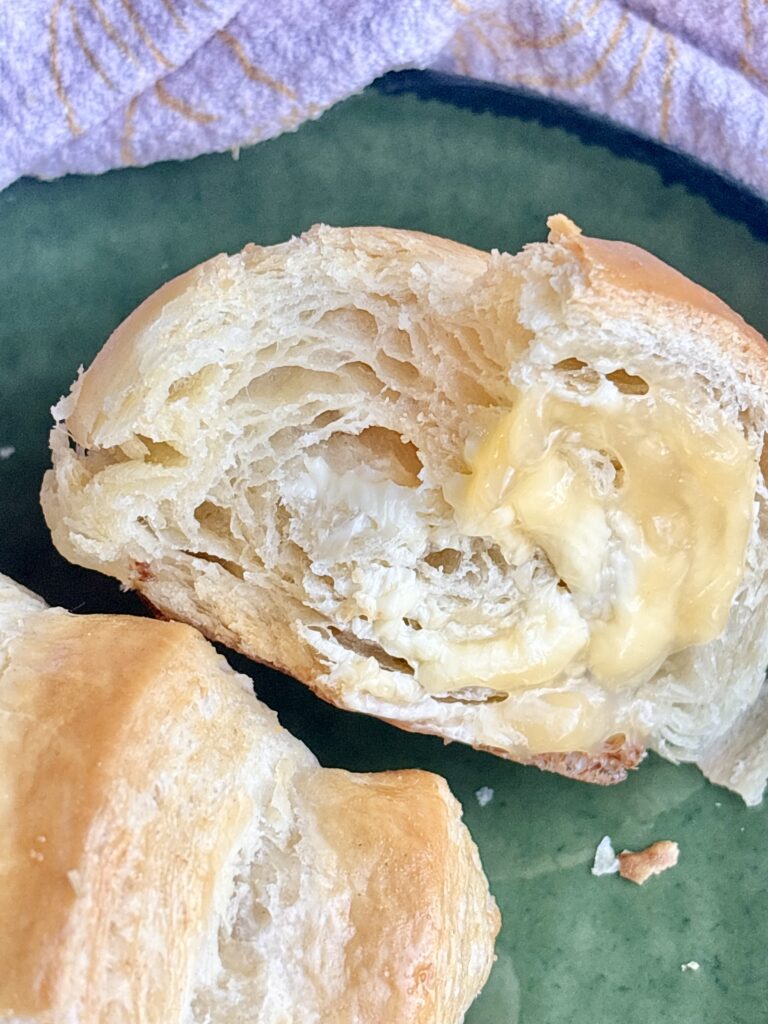
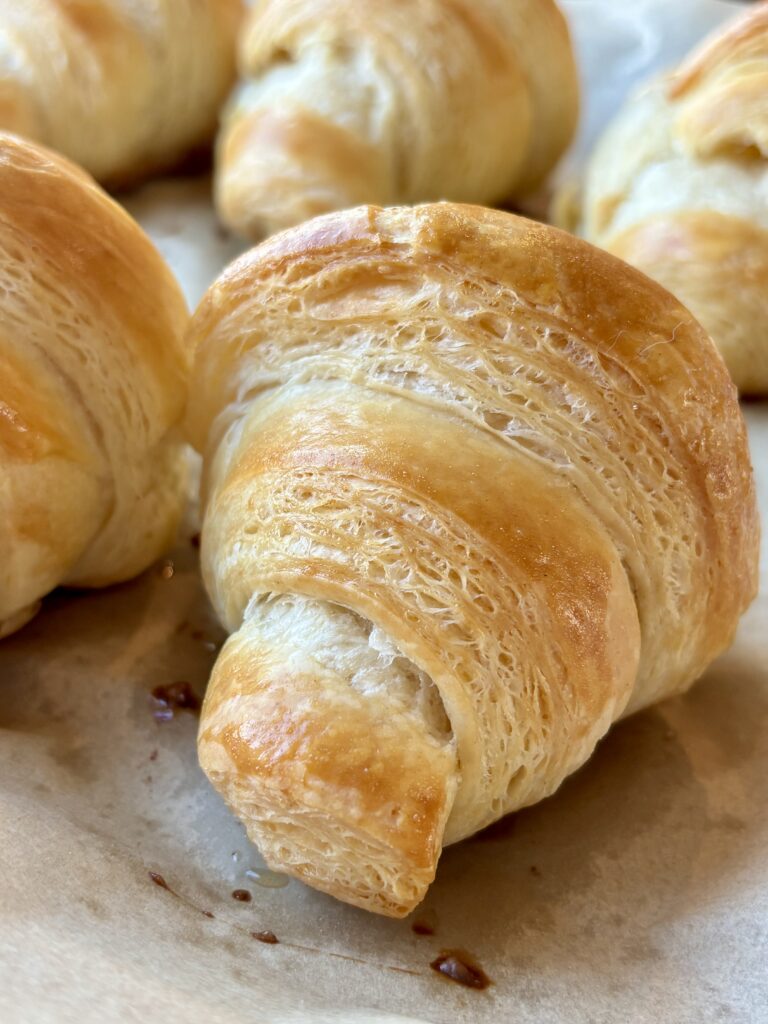
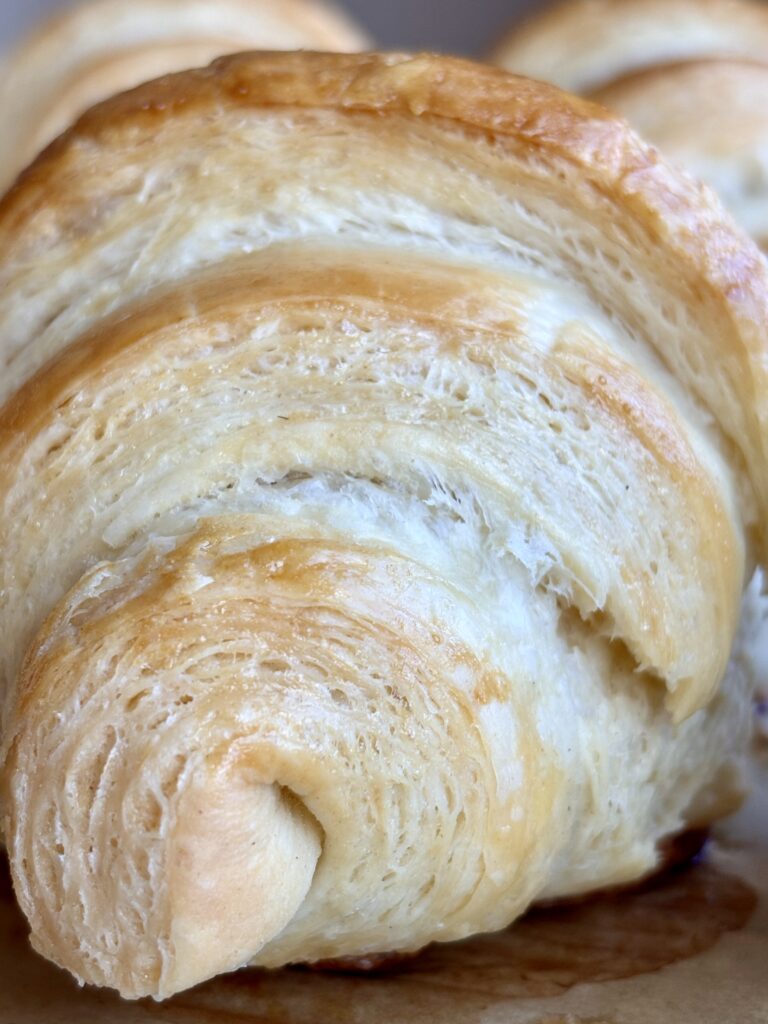
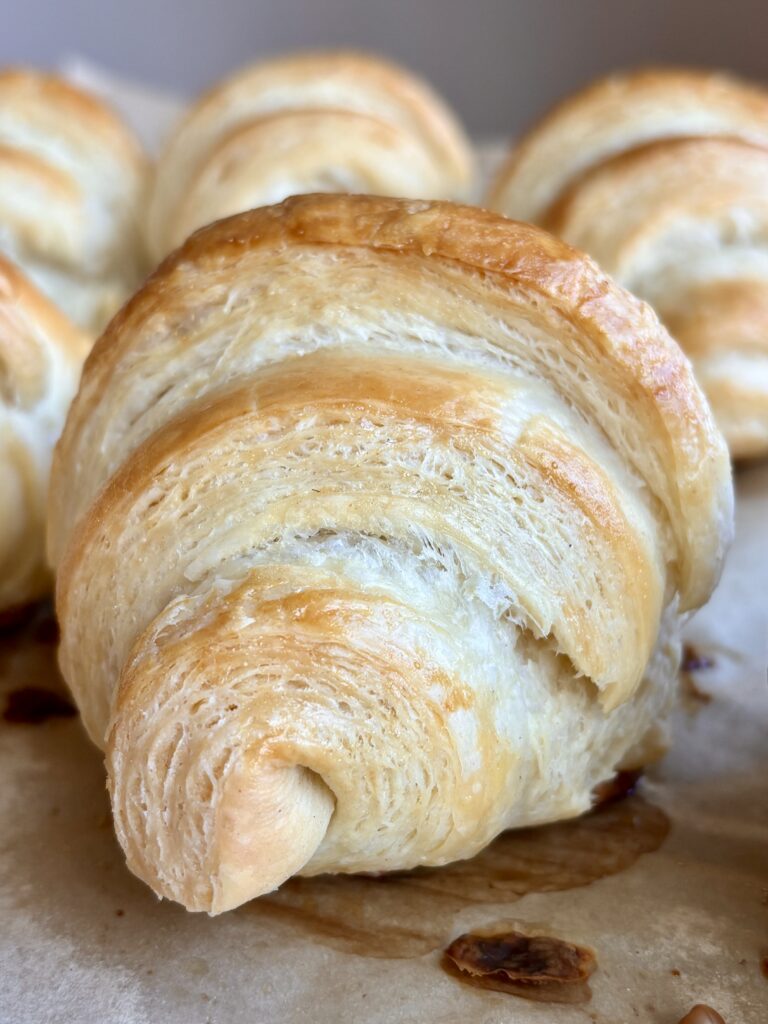
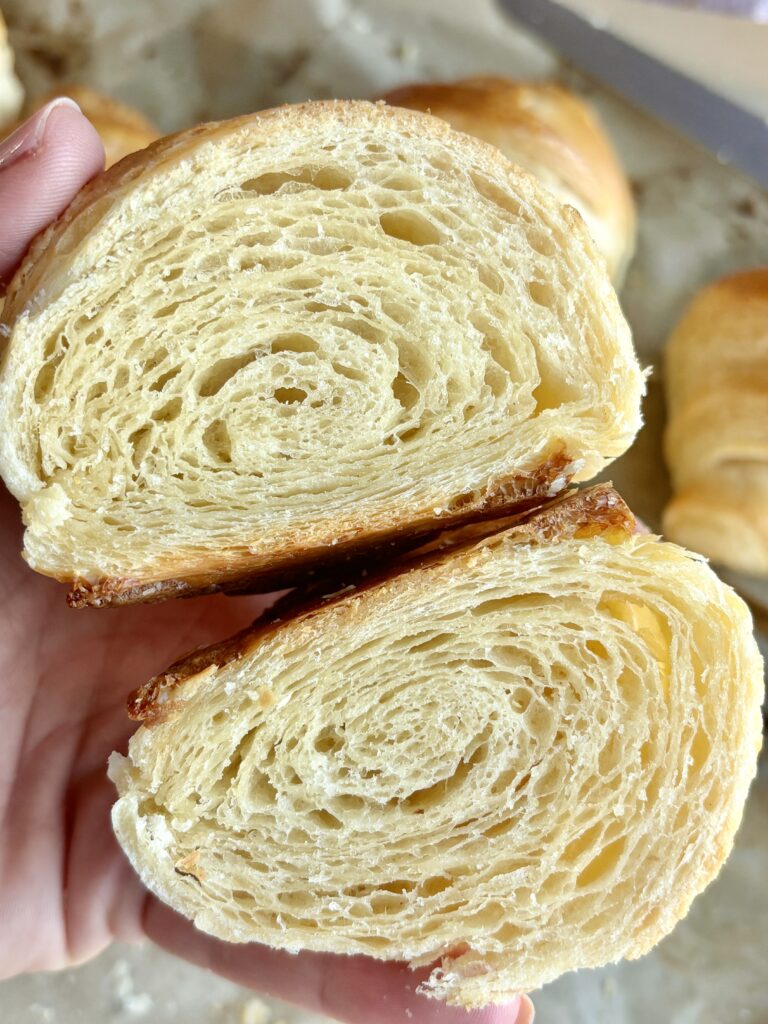
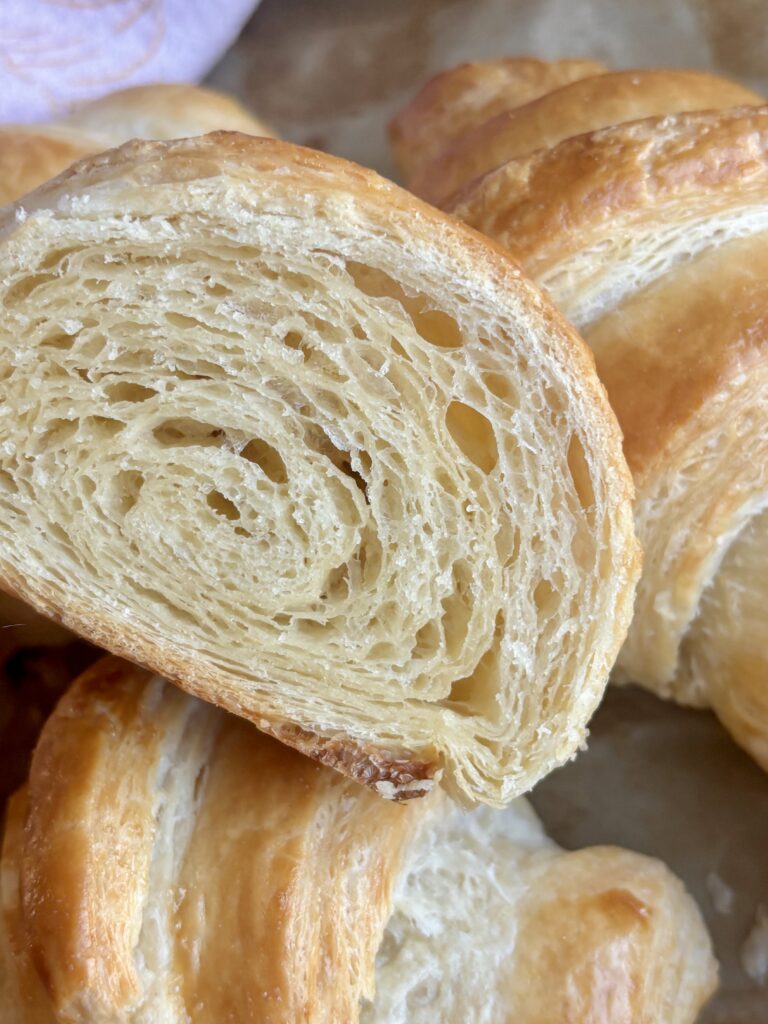
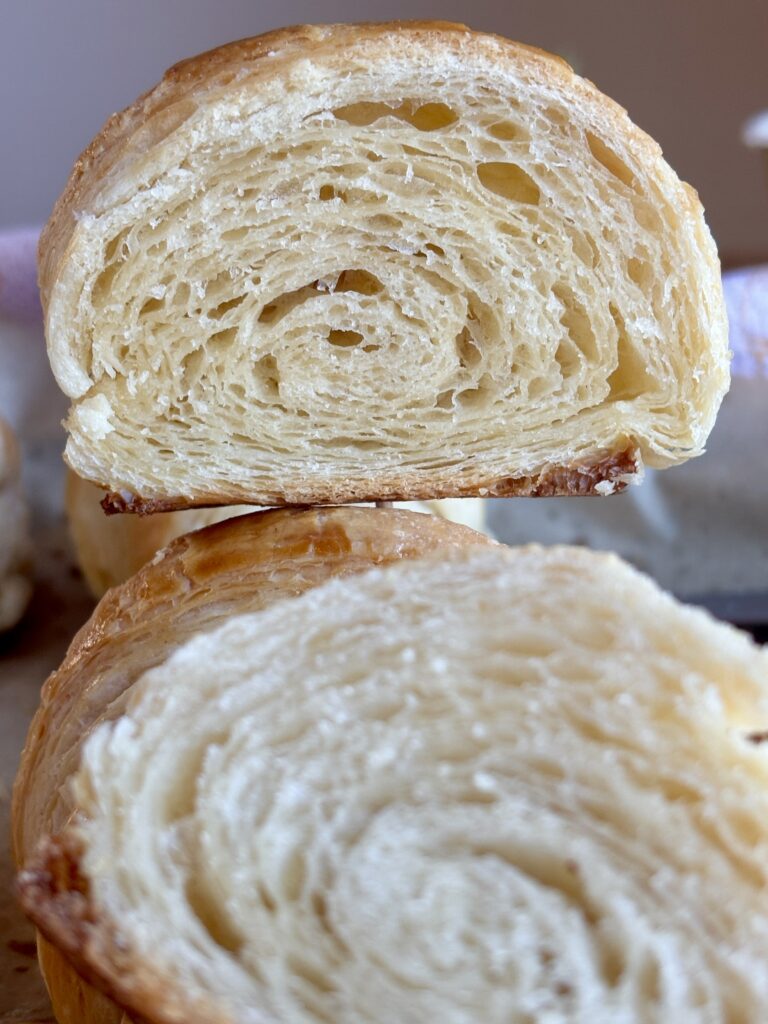
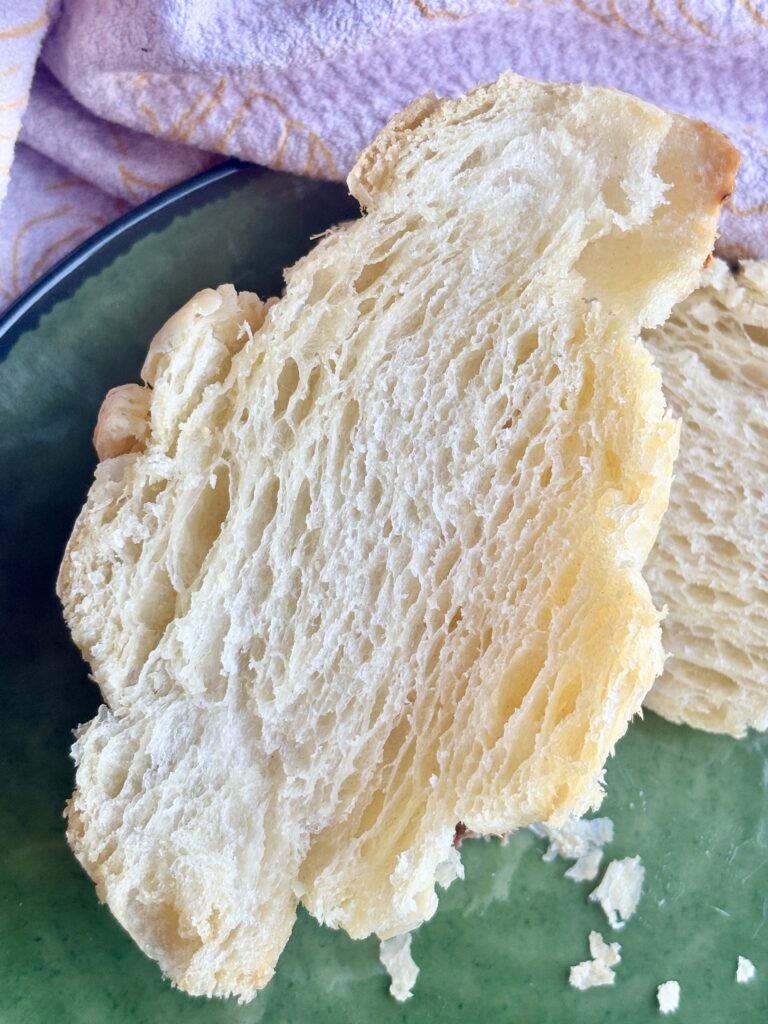
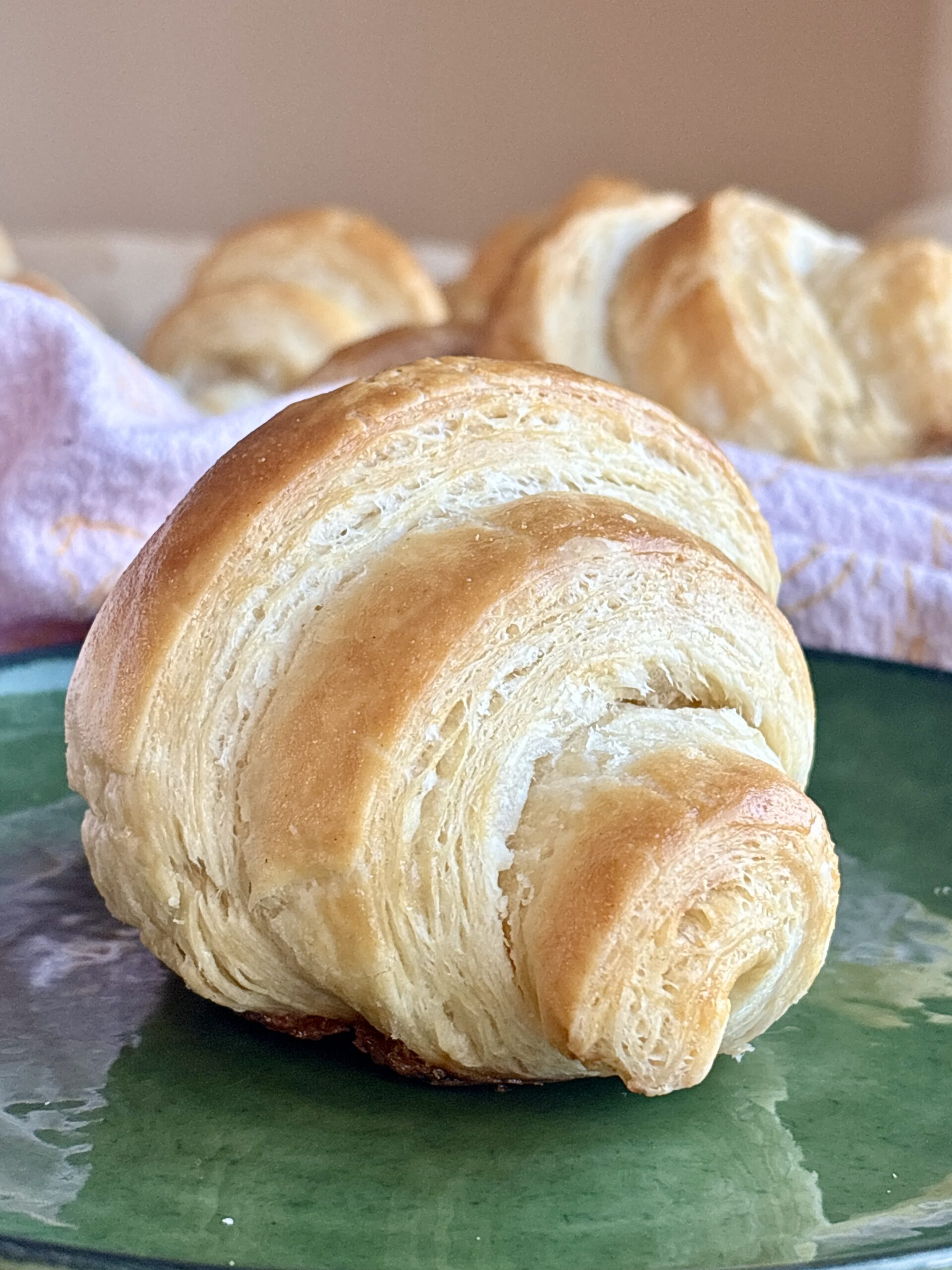
There is something truly special about pulling a tray of golden, flaky croissants out of your own oven. The crisp, flaky layers, the rich buttery aroma, and that light, airy honeycomb interior. And while croissants have a reputation for being intimidating, this recipe is designed to be approachable, reliable, and deeply rewarding.
This year, one of my personal kitchen goals has been mastering croissants, and this recipe for Classic Flaky Croissants is truly a labor of love. After testing, tweaking, and learning through every fold and chill, this version is the one I keep coming back to. It’s structured to guide you through the process step by step so you can confidently create bakery quality croissants in your own kitchen.
And one thing I cannot stress enough, using quality butter matters. Since butter is the star of the lamination, using a high quality, high fat European style butter will give you better flavor, better layers, and a more tender, flaky result.
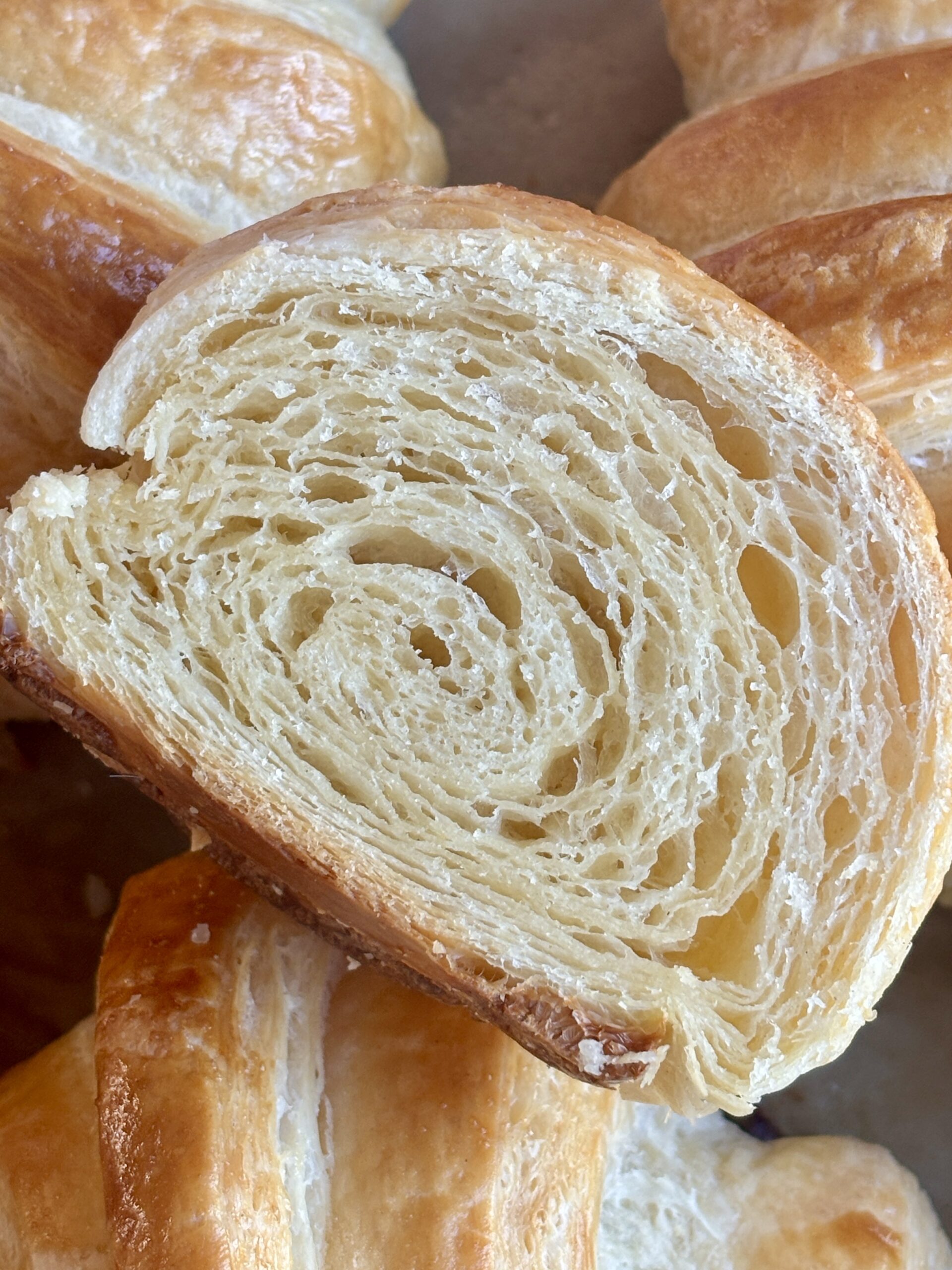
Why you’ll love this recipe!
What ingredients do I need?
- Bread Flour and All-Purpose Flour: The combination gives structure and tenderness—bread flour builds strength, while all-purpose keeps the crumb light.
- Milk: Adds richness and softness to the dough.
- Active Dry Yeast: Creates the rise and airy interior.
- Sugar: Feeds the yeast and adds subtle sweetness.
- Salt: Balances flavor and strengthens the dough.
- Unsalted Butter (Dough): Adds flavor and tenderness to the base dough.
- Lamination Butter: This is the most important ingredient. High quality butter (preferably European-style with higher fat content) creates those distinct, flaky layers and rich flavor.
- Egg and Cream (Egg Wash): Gives croissants that deep golden, glossy finish.
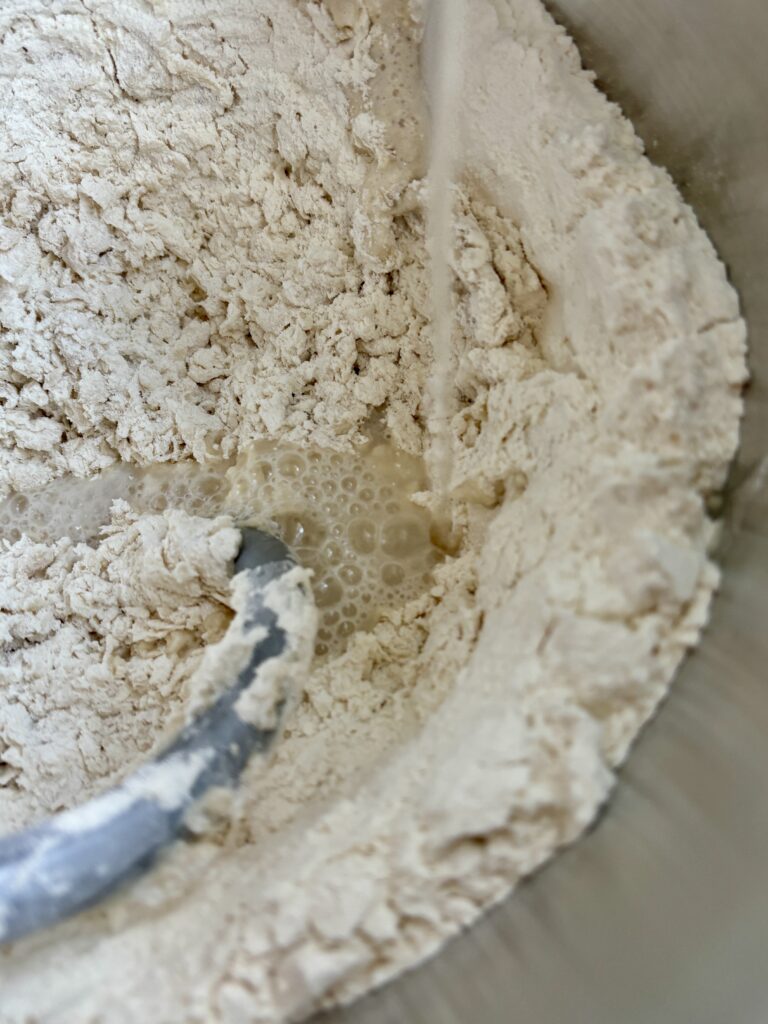
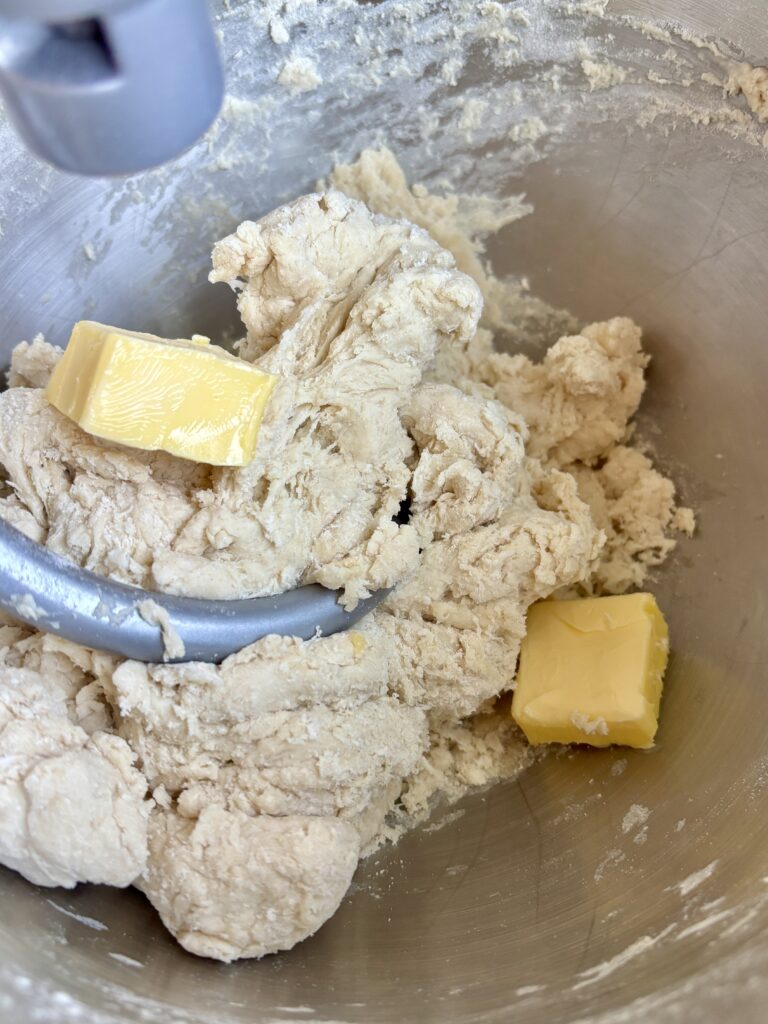
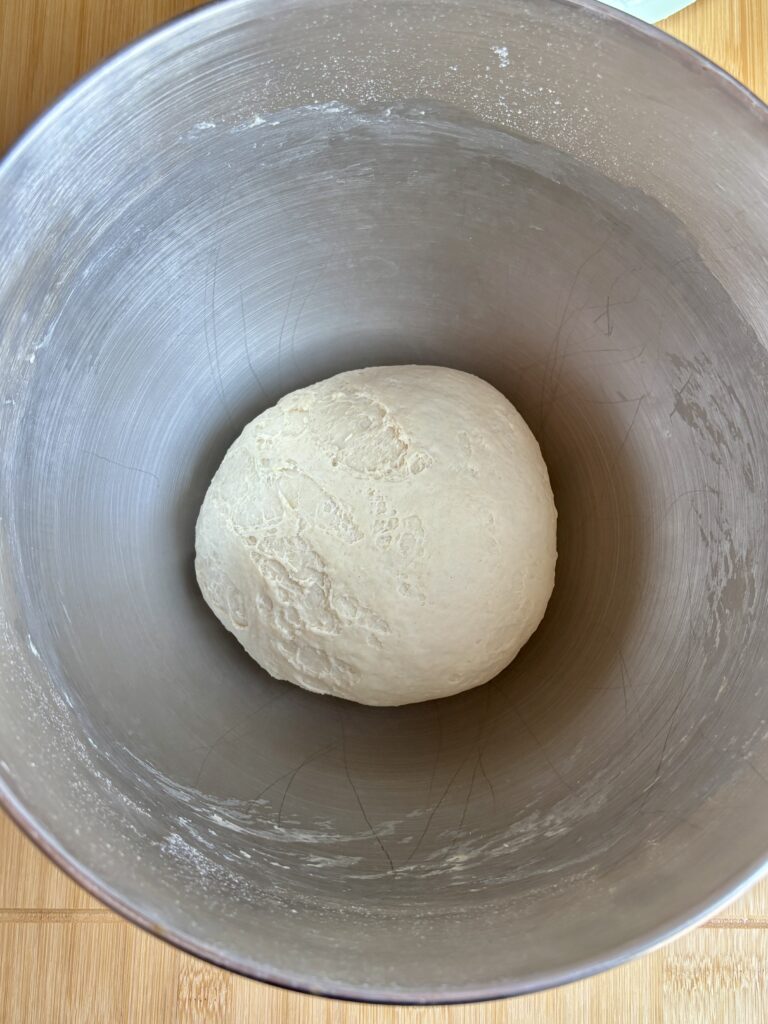
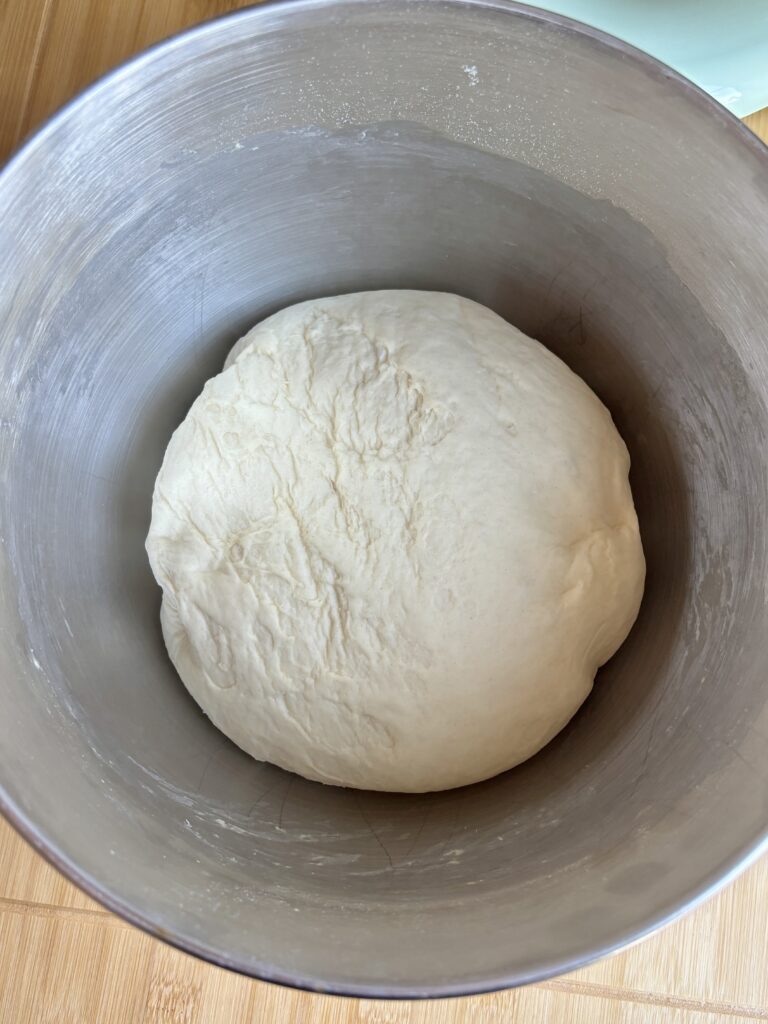
Making the Dough
Why Does Butter Quality Matter?
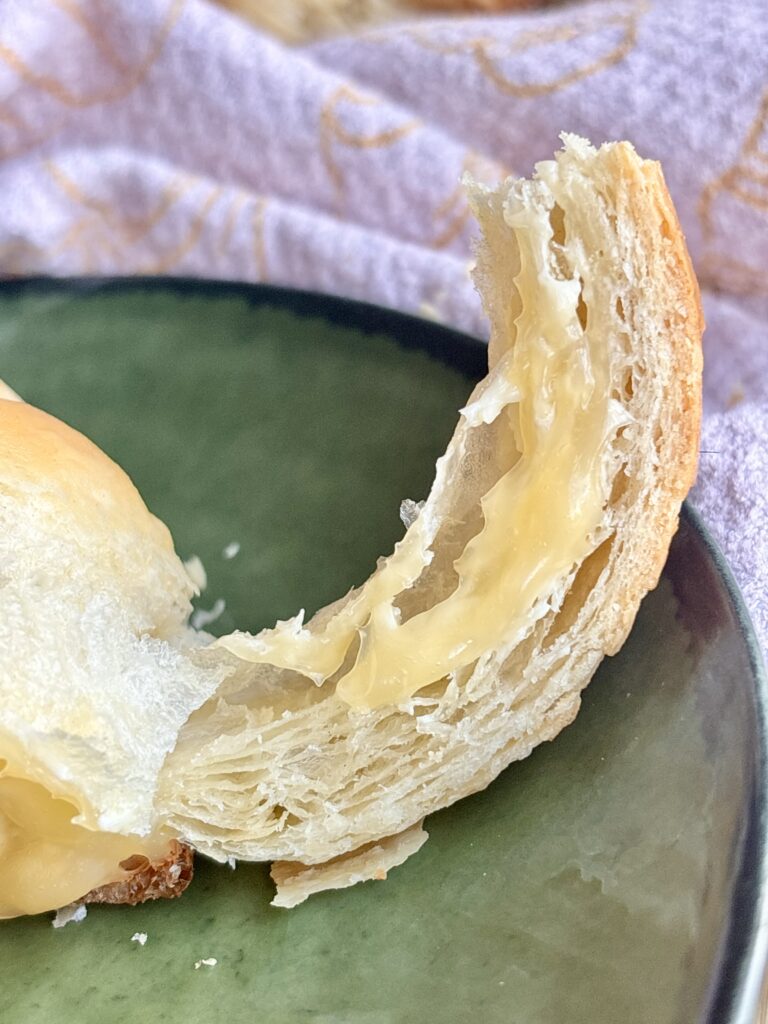
When it comes to croissants, butter isn’t just an ingredient. It’s the foundation of the entire recipe! During lamination, butter is what creates the layers that puff and separate in the oven.
Higher quality butter (like European-style butter) has:
- Higher fat content
- Lower water content
- Better plasticity (it rolls without breaking)
This in turn means:
- cleaner layers
- better rise
- less leaking
- richer flavor
So, if there’s one place to invest in this recipe, it is most definitely the butter.
Butter Prep and Lamination 1
Recipe Variations
- Let’s just keep it classic this time!
Pro Tips
- Keep everything cold! Your dough and butter should always feel similar in firmness. If either gets too soft, chill immediately. This is the key to clean, defined layers.
- Use high quality butter: A European-style butter with higher fat content will give you better lamination, richer flavor, and less risk of leaking.
- Watch the butter consistency: If butter cracks while rolling, then it’s too cold, let it sit a few minutes. If it smears, it’s too warm, chill the dough before continuing.
- Roll evenly and gently: Apply even pressure when rolling to keep layers consistent. Avoid pressing too hard, which can compress the layers.
- Don’t rush the chill times: Resting the dough between folds relaxes the gluten and keeps the butter cold, which is essential for flakiness.
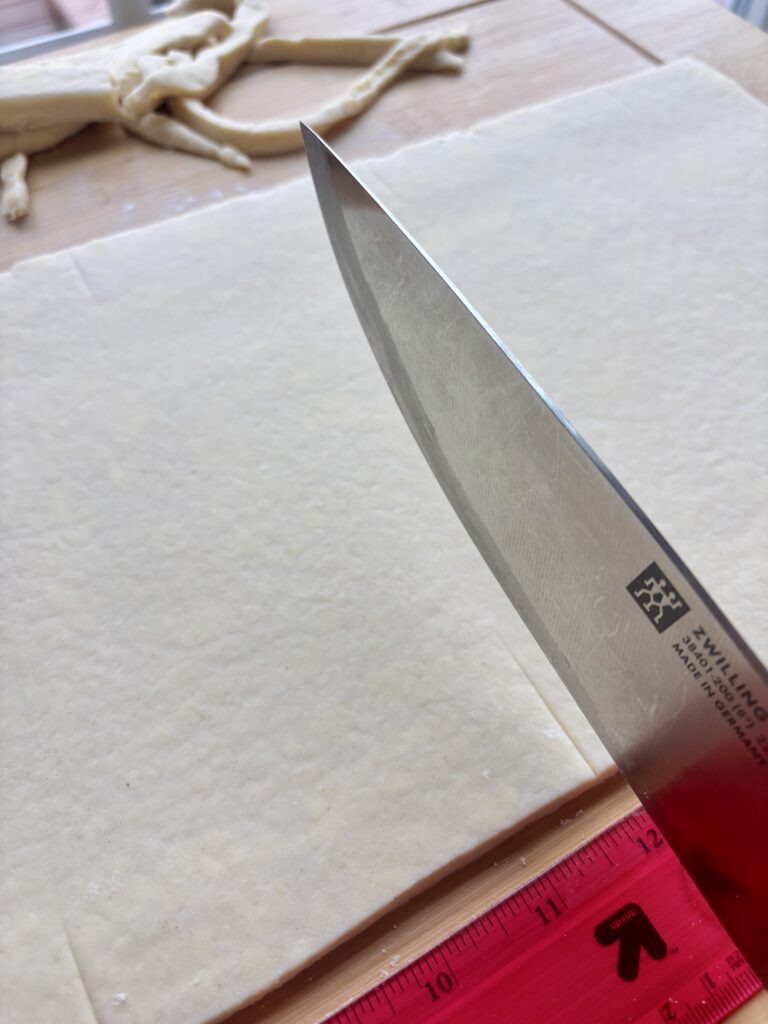
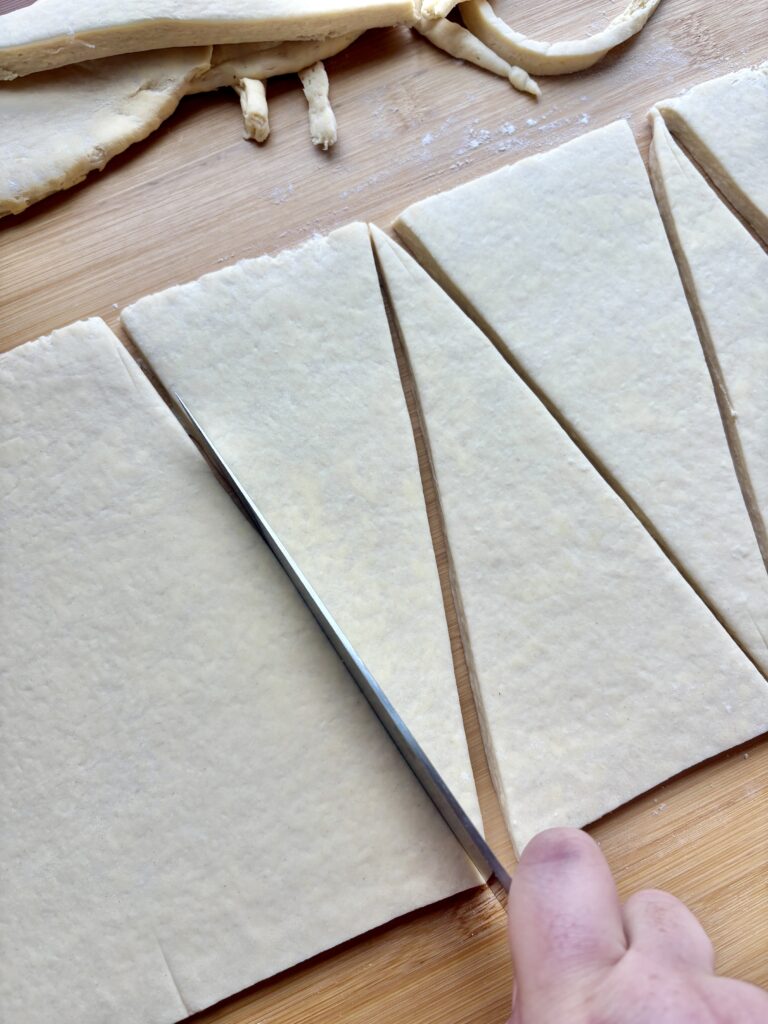
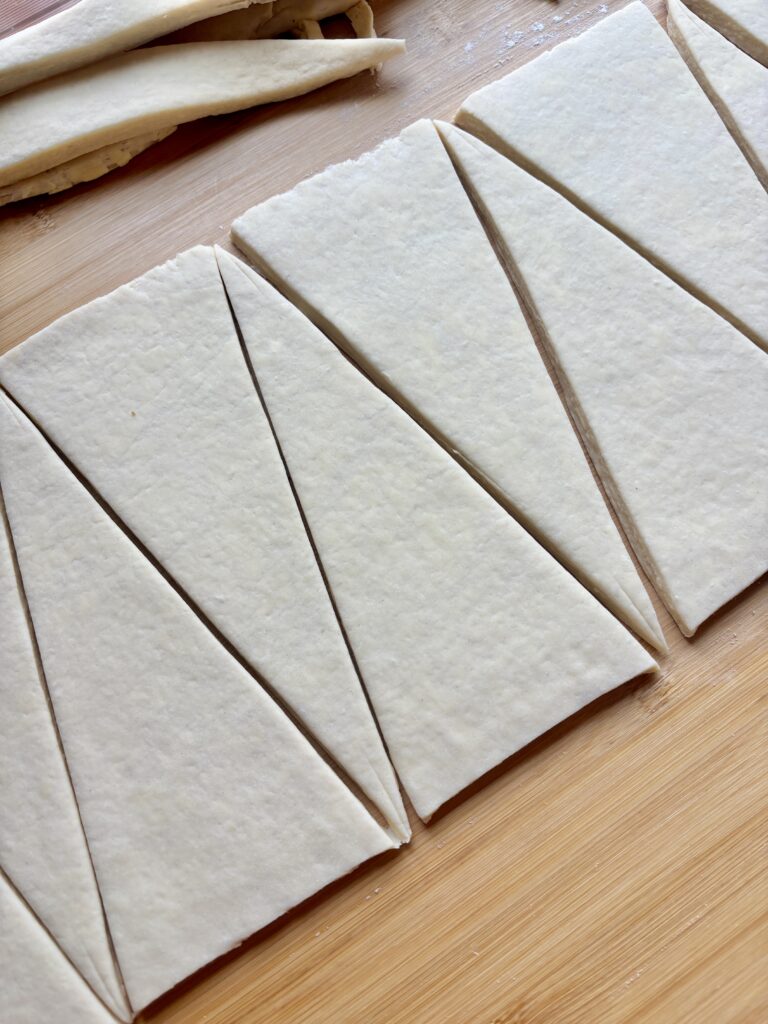
- Use a ruler for shaping! Listen, I am not one for perfect precision, often I say “this is good enough”, but when it comes to these, I’m alway precise and pulling out my ruler! Even triangles means evenly baked croissants. It makes a bigger difference than you think.
- Proof properly: No shortcuts, just trust the process! Croissants should be puffy, airy, and slightly jiggly before baking. This step is critical and where I was making my mistakes during all my trials. Under-proofed croissants will leak butter and bake up dense.
- Bake in a fully preheated oven: Give your oven at least 30–40 minutes to fully heat. Proper oven spring depends on consistent, high heat.
- Let them cool slightly before serving: As tempting as it is, letting croissants rest for 10 minutes helps set the interior structure and improves texture.
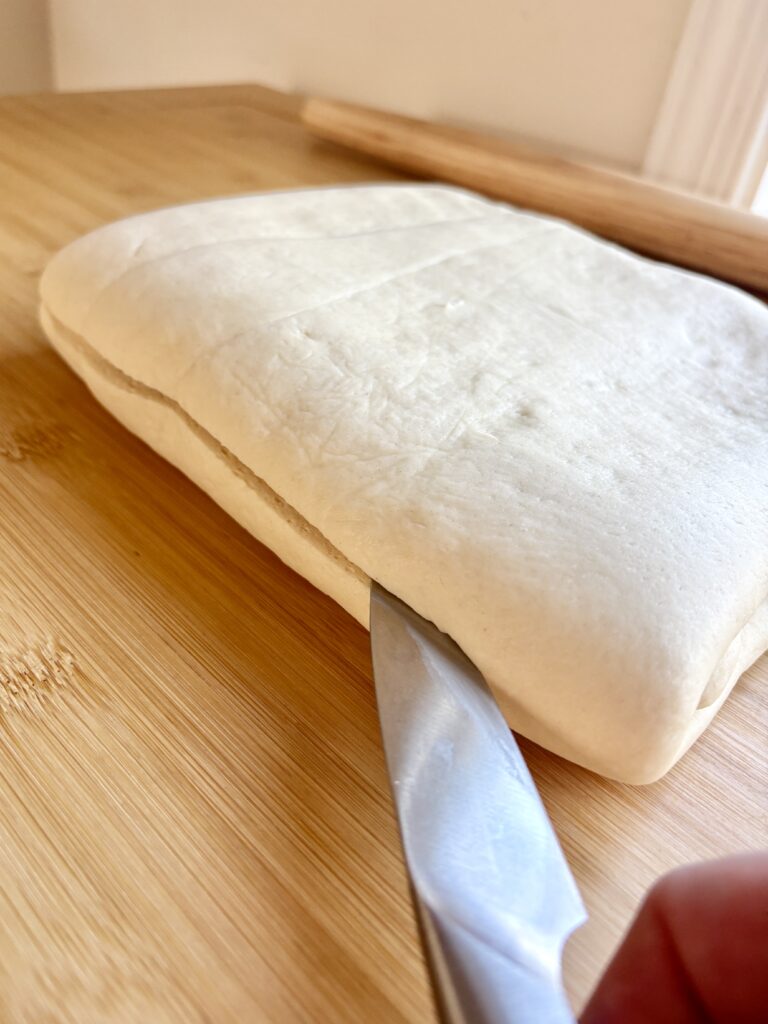
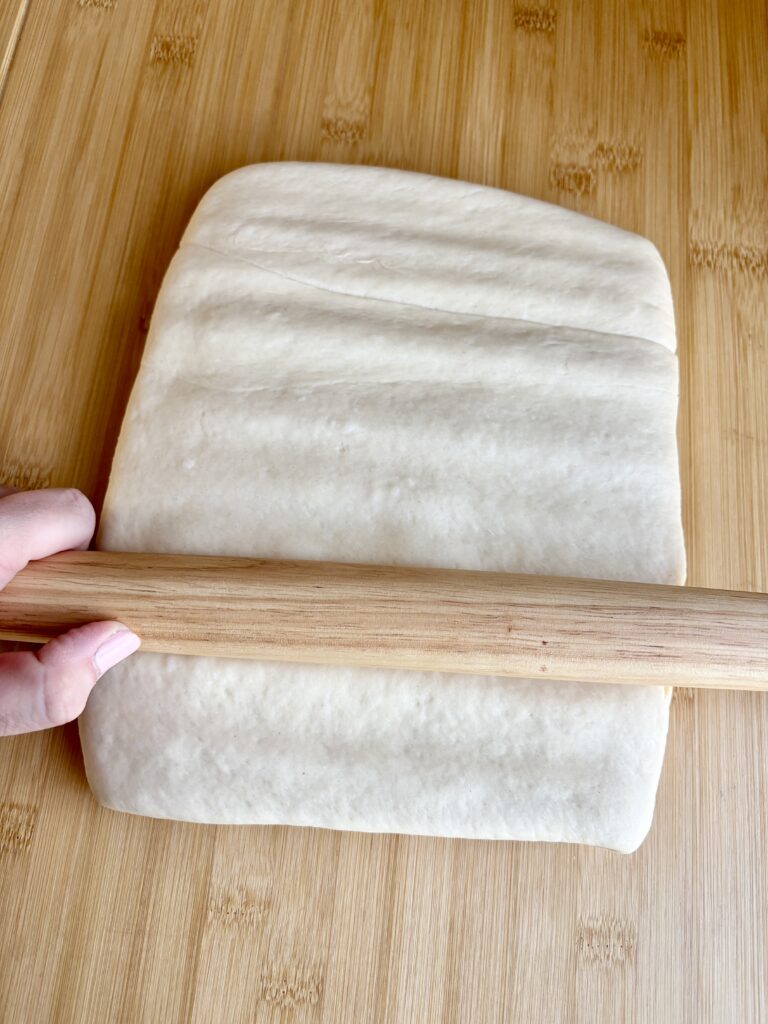
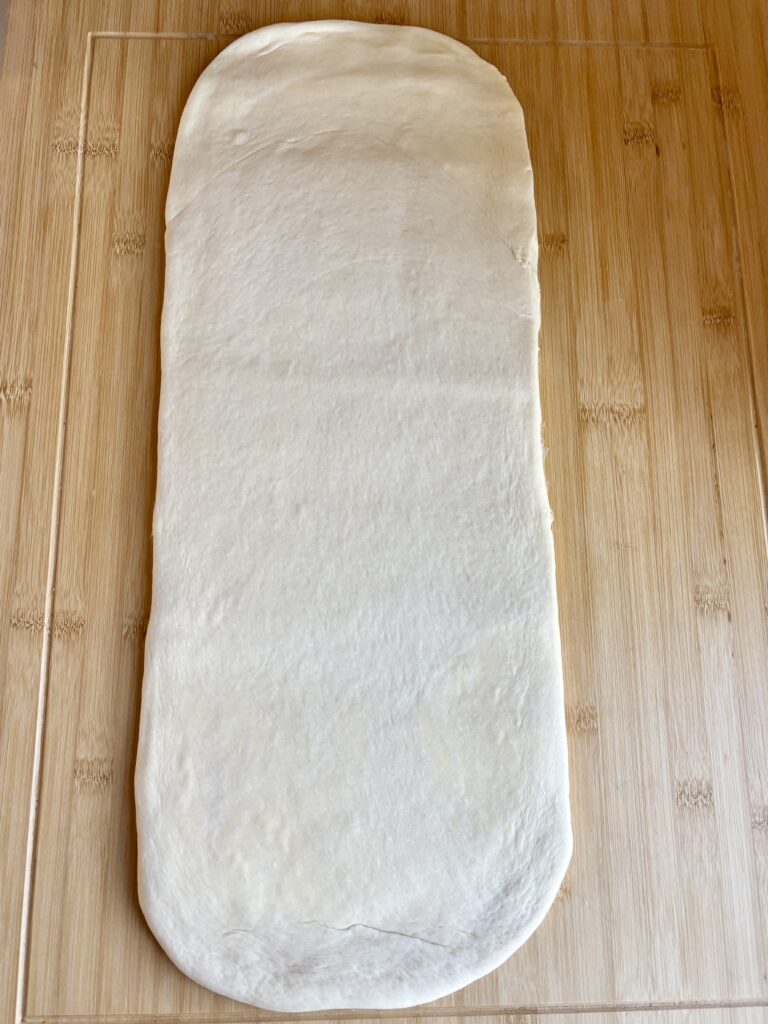
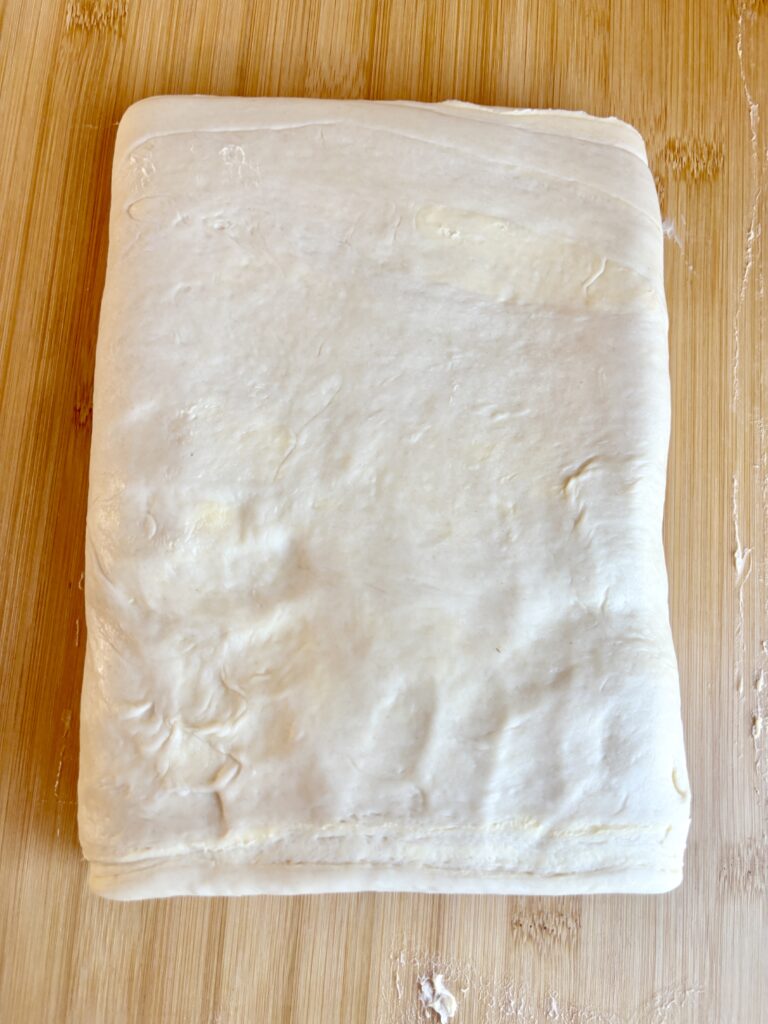
Lamination 2-4
Can I Substitute?
Eh. Typically, I offer recipe substitutions, but honestly I wouldn’t risk it here!
Shaping the Croissants
Leftovers and Storage
Croissants are always best enjoyed fresh, but they store and reheat beautifully with the right method.
- Room Temperature: Store in an airtight container for up to 2 days. Keep them in a cool, dry place to prevent them from becoming soft or stale.
- Reheating: To bring them back to life, warm in a 325°F oven for 5–8 minutes. This helps re-crisp the exterior and refresh the flaky layers. Avoid microwaving, as it can make them soft and slightly chewy.
- Refrigerator: Not recommended, as it can dry them out and affect texture.
- Freezing (Baked): Let croissants cool completely, then freeze in an airtight container for up to 2 months. Reheat directly from frozen at 350°F for 8–12 minutes.
- Freezing (Unbaked): Freeze right after shaping. When ready to bake, thaw overnight in the refrigerator and then proof at room temperature (2-3 hours) until puffy and jiggly, then bake as directed.
- Best Texture Tip: For the flakiest, most bakery style texture, always reheat in the oven, not the microwave!
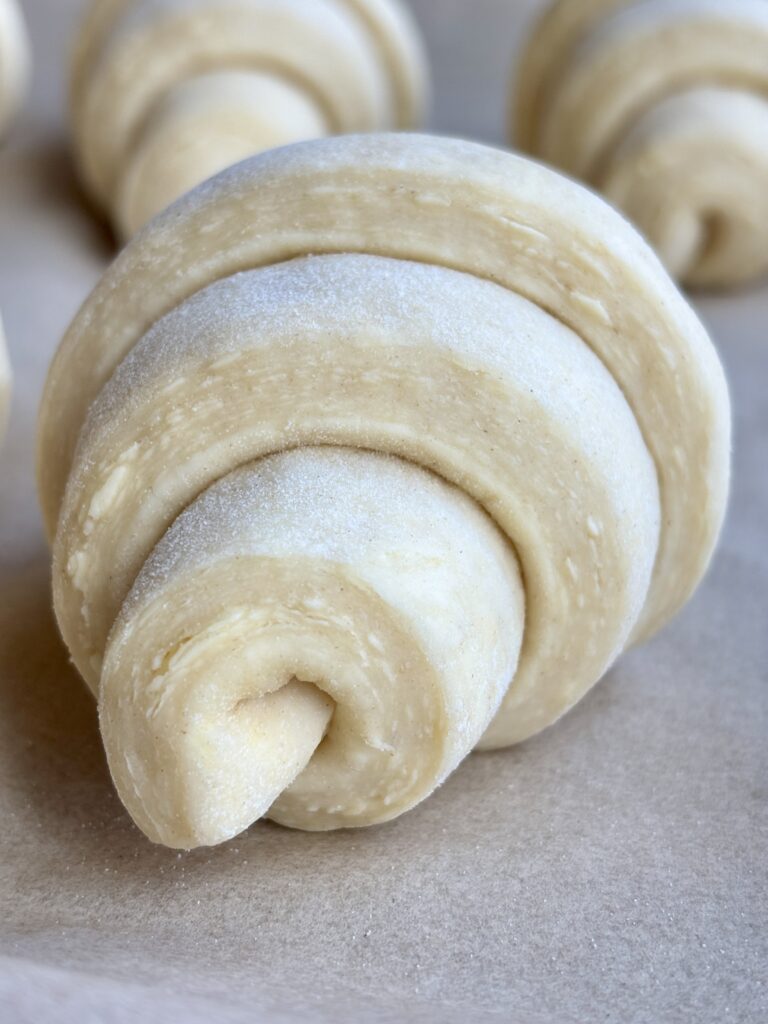
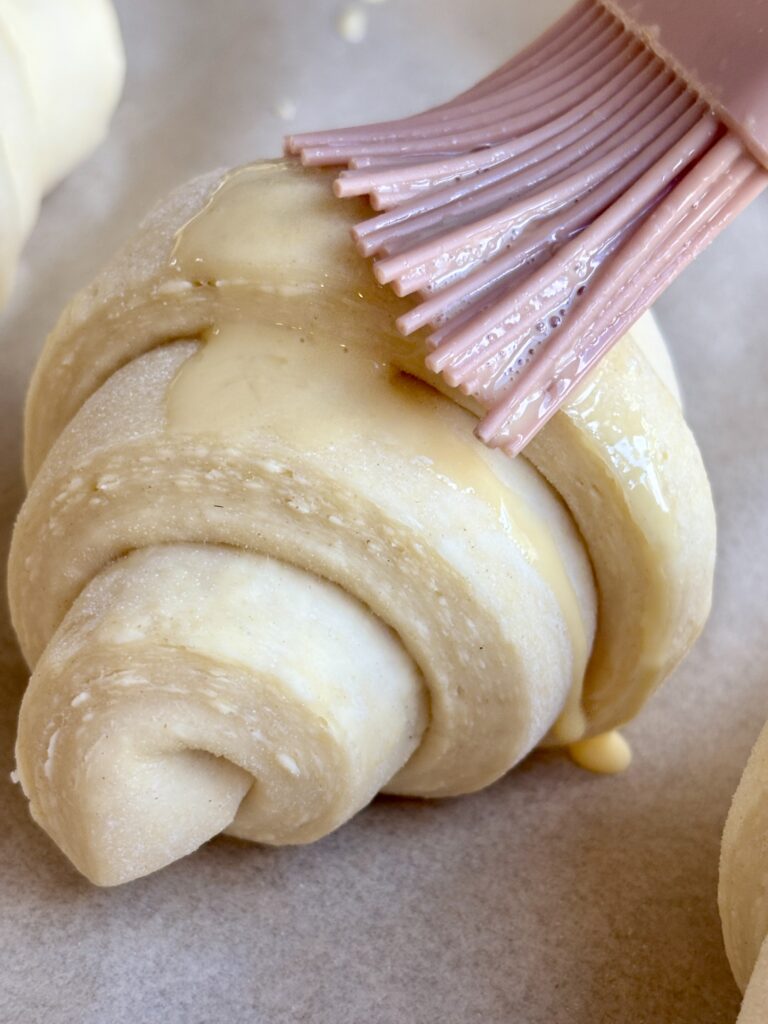
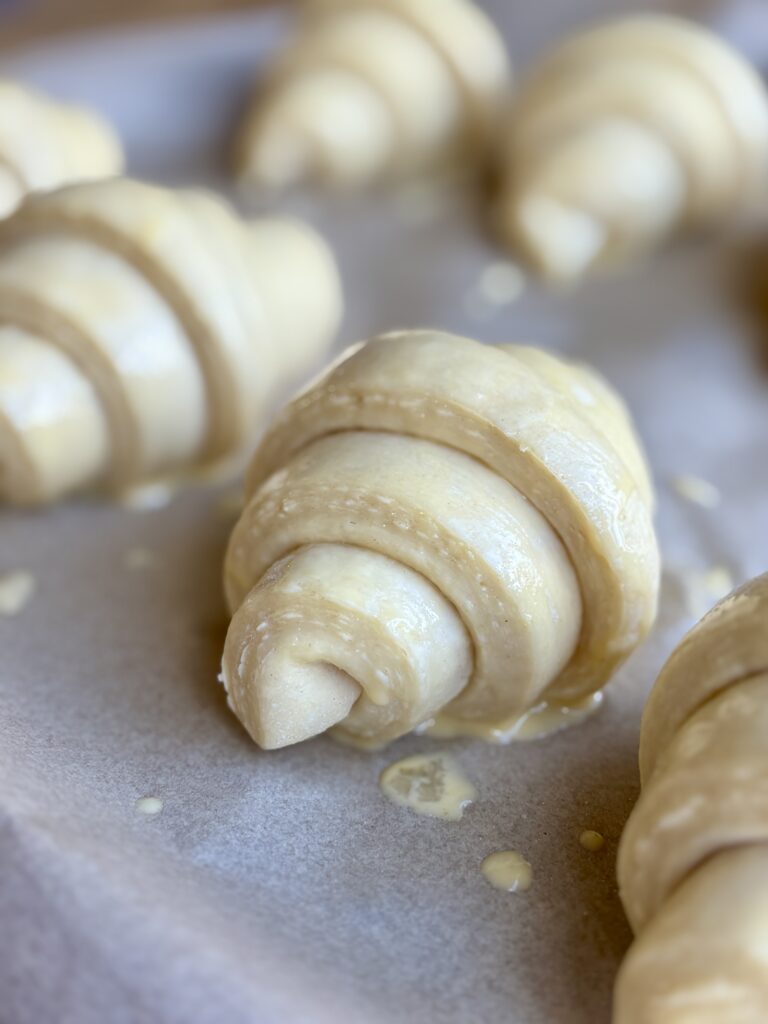
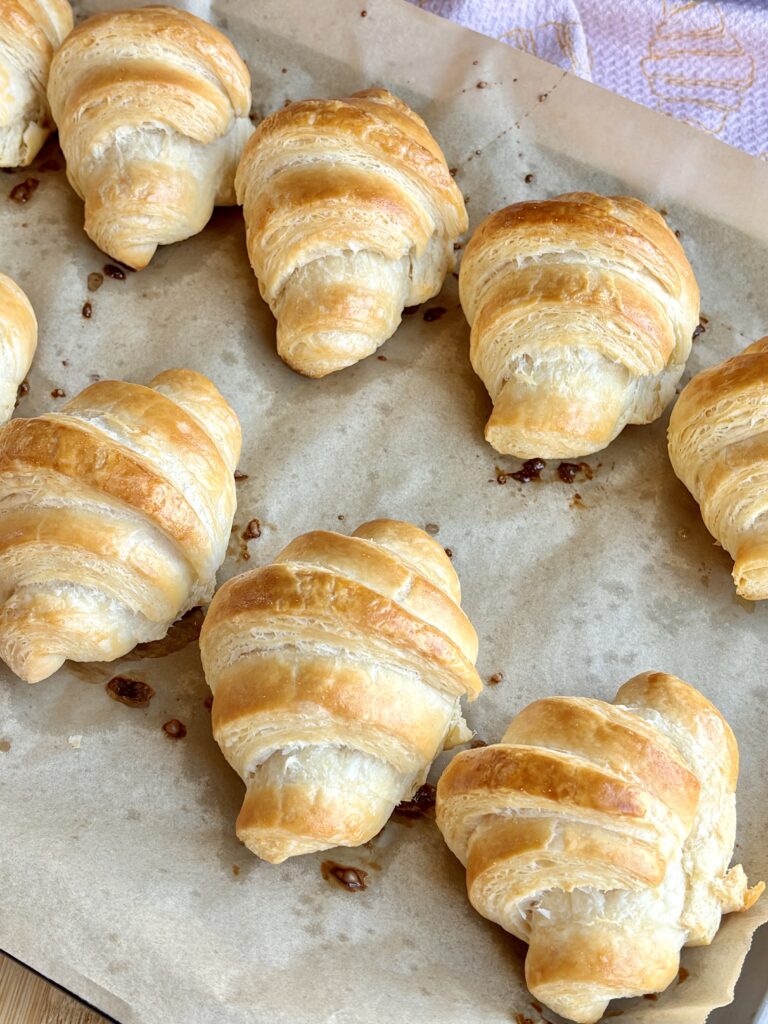
Final Proofing, Egg Wash, and to the Oven
Common Mistakes (and How to Fix Them)
Butter Leaking During Baking
Why it happens:
- Dough got too warm during lamination
- Butter was too soft or too hard (not matching dough consistency)
- Croissants were under proofed
How to fix it:
- Keep dough and butter at similar firmness (cool but pliable)
- Chill immediately if butter starts smearing
- Proof fully! Look for a jiggle and puffed layers (this is where I kept failing, I wasn’t trusting the process!)
- Lightly dust with flour and seal if butter peeks through
Dense Croissants
Cause: Under proofing
Fix: Let them proof longer until visibly puffy
Greasy Croissants
Cause: Over proofing
Fix: Reduce proof time slightly
Layers Not Defined
Cause: Butter broke or melted into dough
Fix: Keep everything cold and work quickly
But, I Still Have A Few Questions…
Why is my butter leaking out during baking?
This usually means the dough became too warm during lamination or the croissants were under proofed. Keep everything cool and proof fully before baking.
Can I make croissants in one day?
It’s possible, but not recommended. The overnight rest improves flavor and makes the process much easier.
How do I know when croissants are fully proofed?
They should look puffy (edges are rounded), feel light, and have a slight jiggle when gently shaken.
Can I freeze croissants?
Yes! Freeze them after shaping or after baking. Unbaked frozen croissants should be thawed, covered in the fridge overnight and cooked per recipe instructions. Frozen baked croissants should be reheated in the oven at 300°F for a few minutes for the best texture.
Why are my croissants dense inside?
They were likely under proofed. Give them more time to rise before baking the next time.
Why are my croissants greasy?
This usually means they were over proofed or the butter melted into the dough.
What’s the best butter to use?
High fat European-style butter gives the best flavor and flakiest layers.
Other Recipes You’ll Love
Let’s engage!
Make sure to tag @thehomechefmomma on Instagram or Facebook, and leave a review or comment if you make these. I always get so excited to see your creations, variations of the recipe, and feedback! Just remember to be kind in your comments, there is still a person behind this screen! 🙂
Ingredients
Dough
- ⅔ cup warm milk 105–110°F (40–43°C)
- 2 tbsp granulated sugar
- ¾ cup cold water
- 3 tsp active dry yeast
- 2½ cups bread flour
- 1½ cups all-purpose flour
- 1 tsp salt
- 2 tbsp unsalted butter softened
Lamination Butter
- 1½ cups unsalted butter, cold
Egg Wash
- 1 egg
- 1 tbsp heavy cream
Instructions
Day 1 – Make Dough
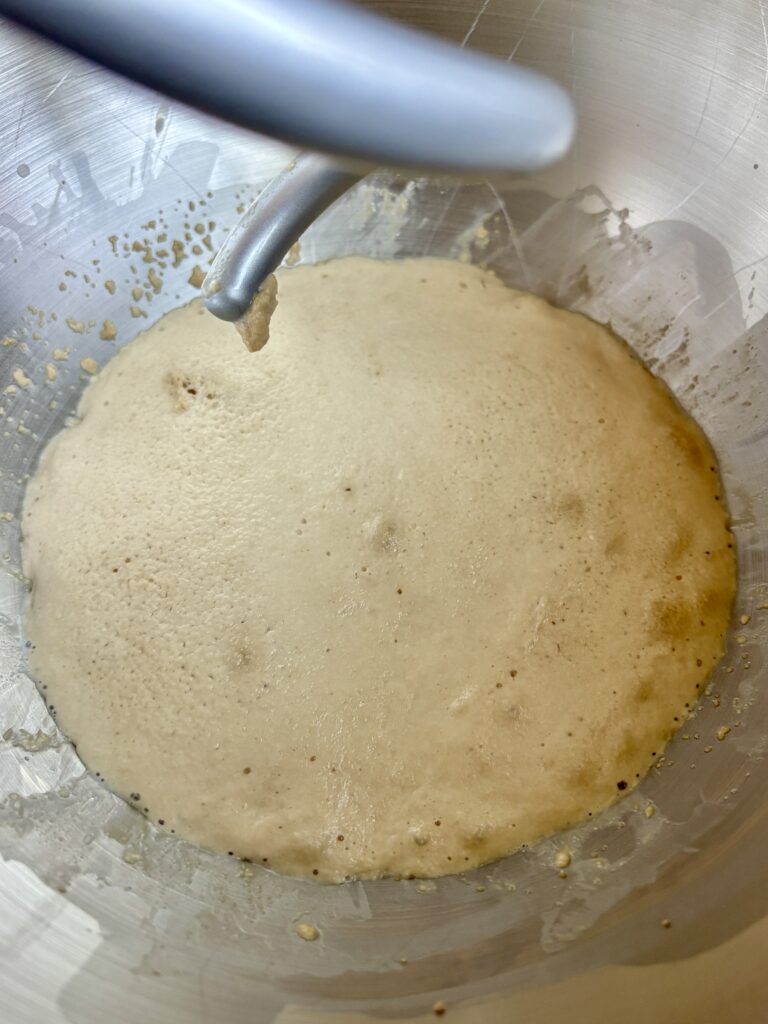
- In a small bowl, combine warm milk, sugar, and yeast. Let sit 5–10 minutes until foamy.
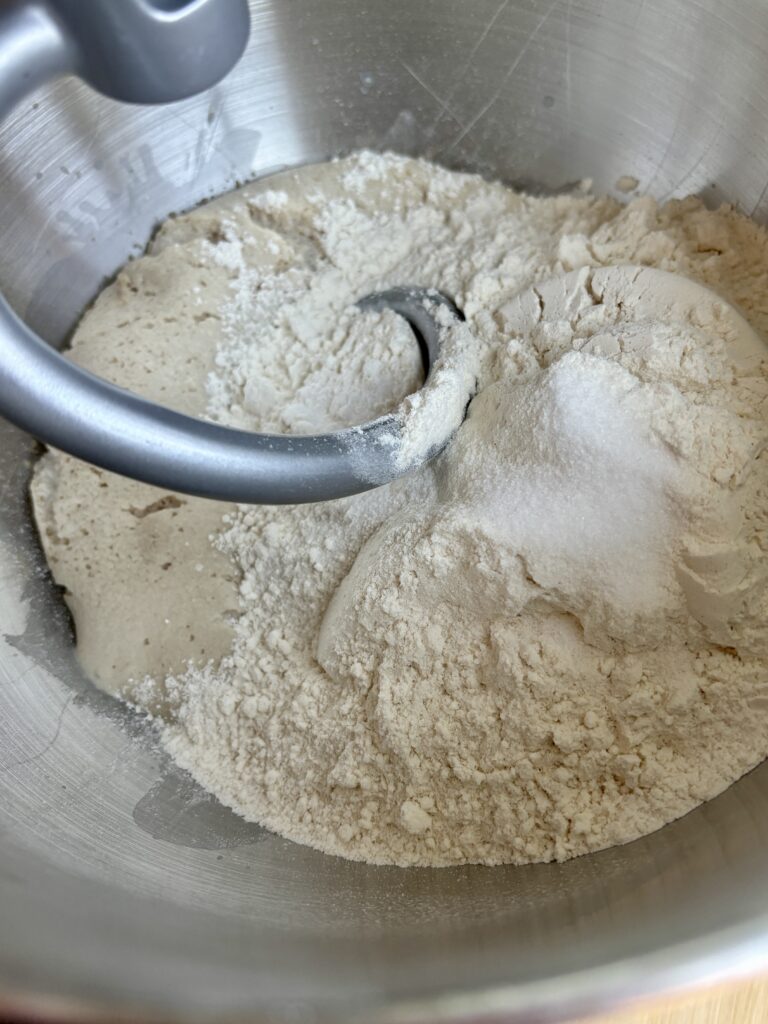
- In a stand mixer bowl, combine bread flour, all-purpose flour, and salt.
- Add yeast mixture and cold water. Mix until a shaggy dough forms.
- Add softened butter and knead 6–8 minutes until smooth and slightly tacky.
- Cover and let rest 1 hour until slightly puffy.
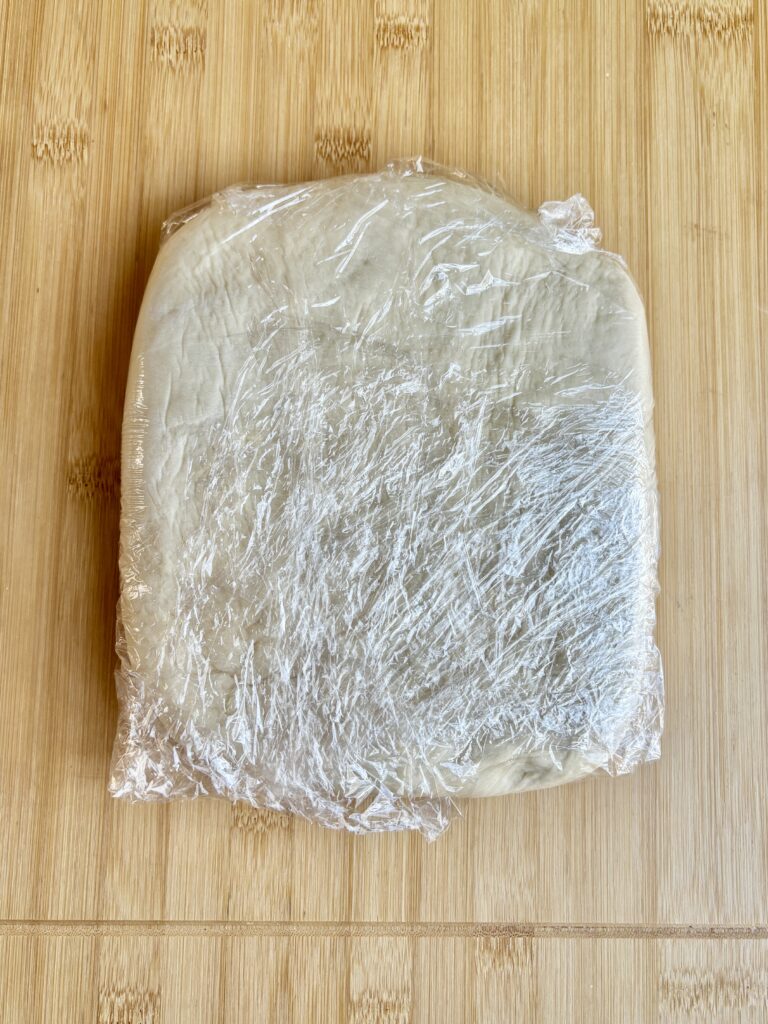
- Shape dough into an 8×10-inch rectangle, wrap tightly, and refrigerate 1–2 hours.
Prepare Lamination Butter
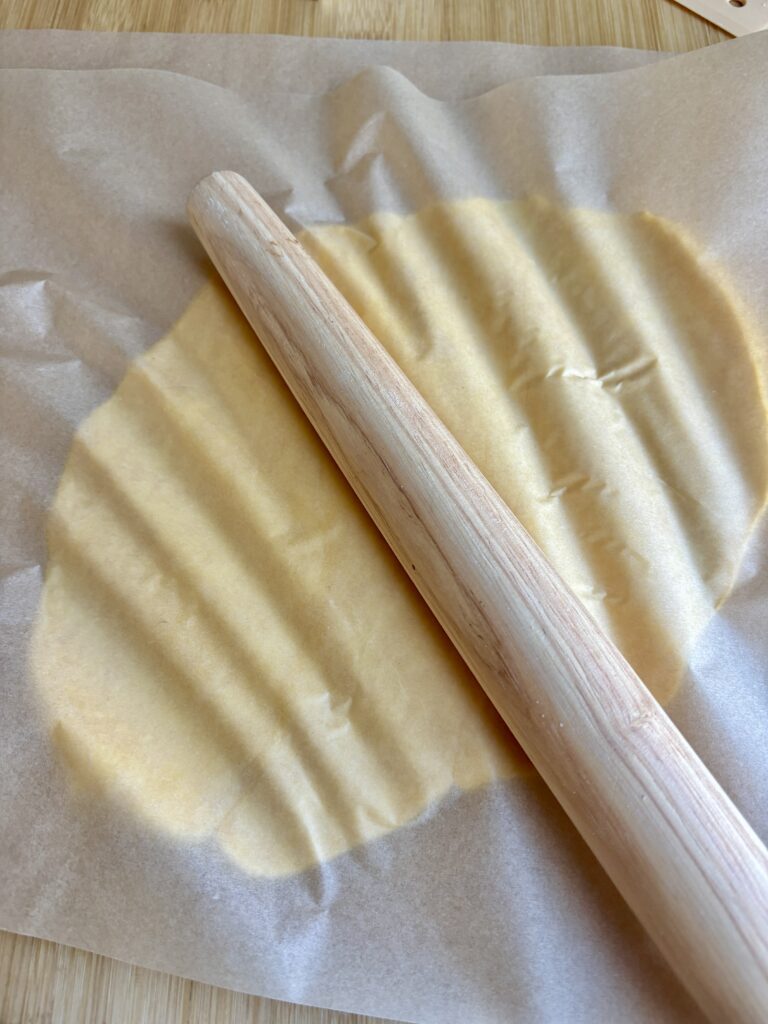
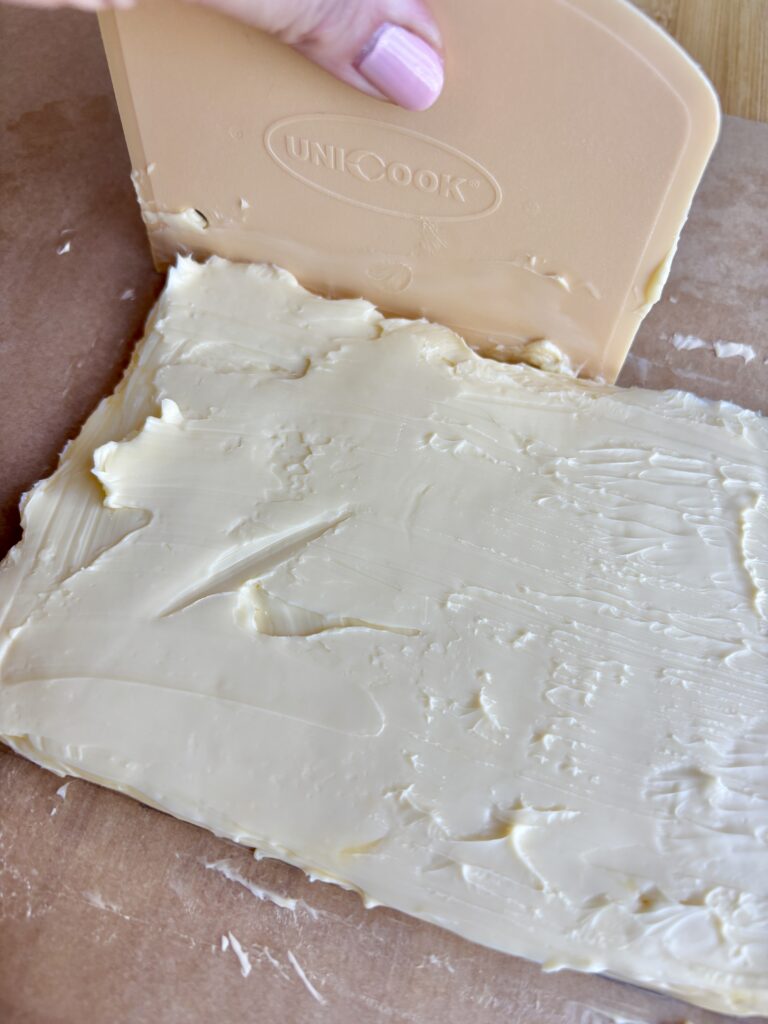
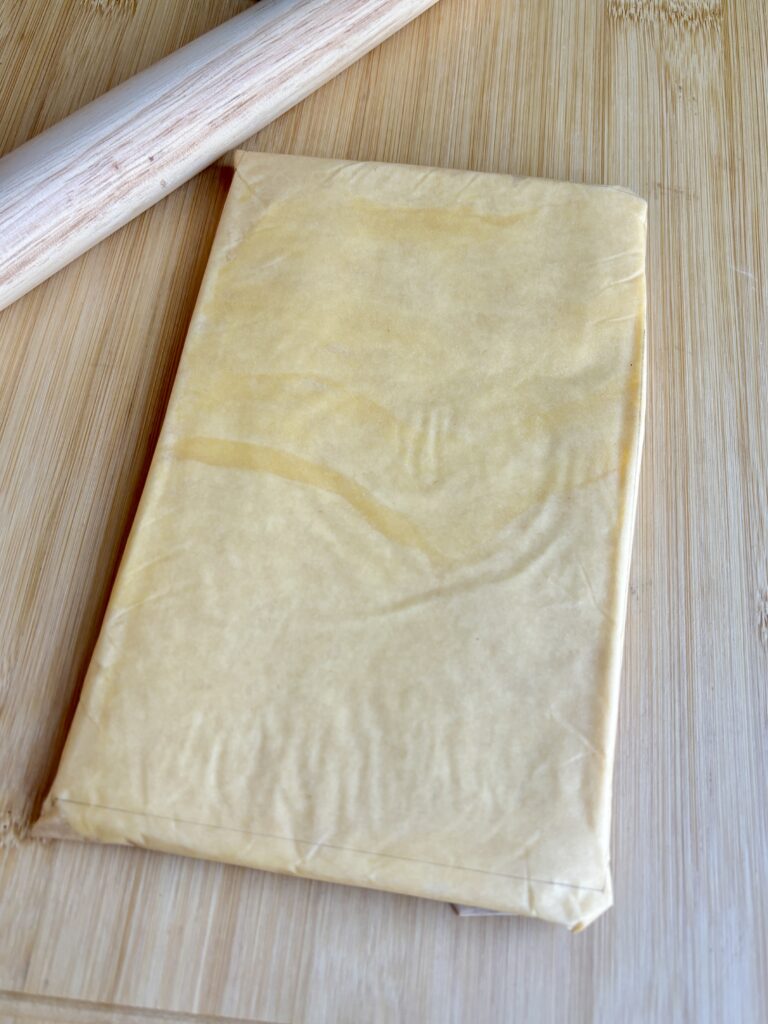
- Place butter between parchment paper and pound or roll into an 8×5-inch rectangle (making sure it all sticks are well combined).
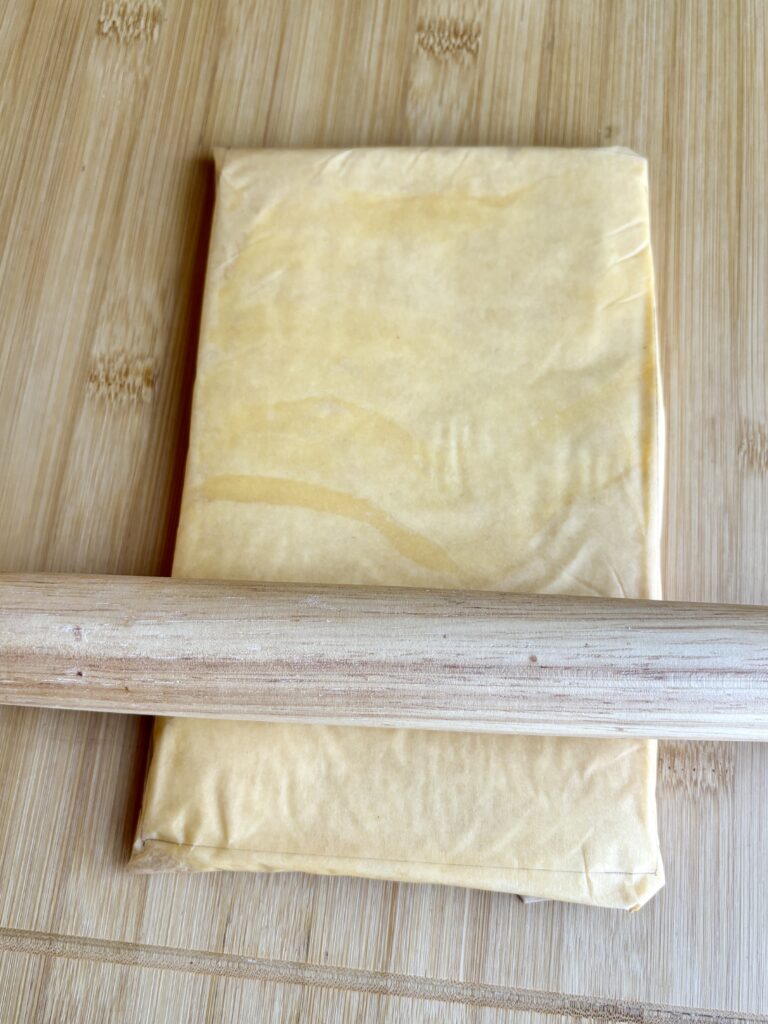
- Chill until firm but pliable. Butter should match the consistency of the dough. (If it is alittle too firm when removing from the fridge, use the rolling pin to gently pound it to soften it up)
Day 1 – Lamination
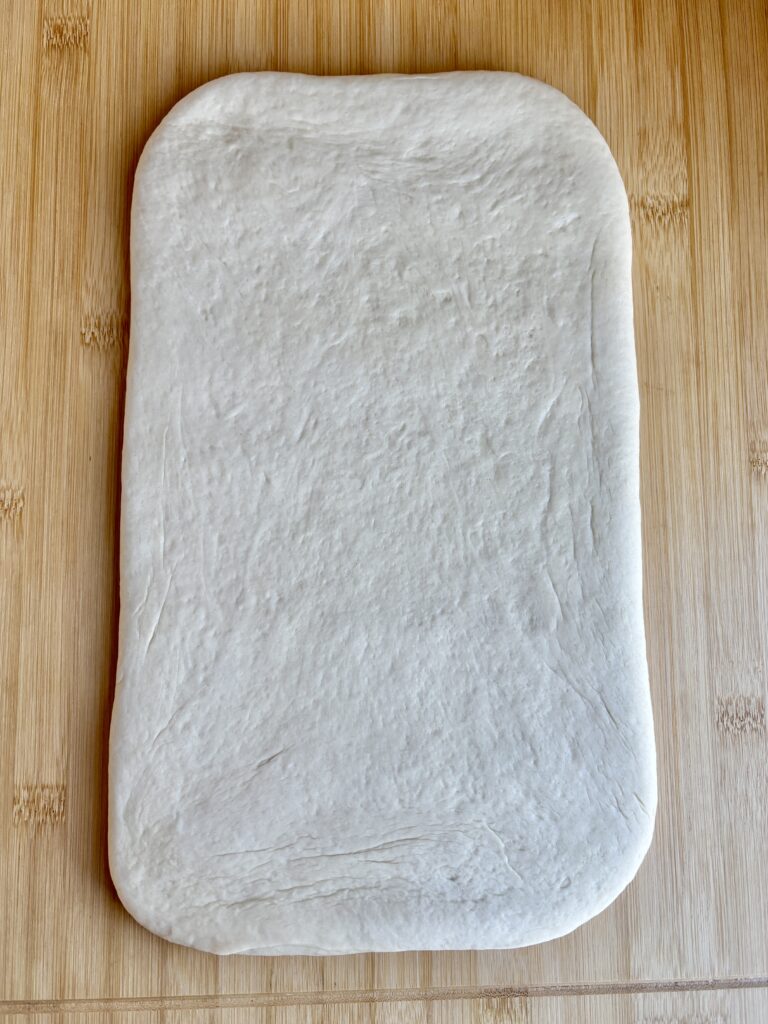
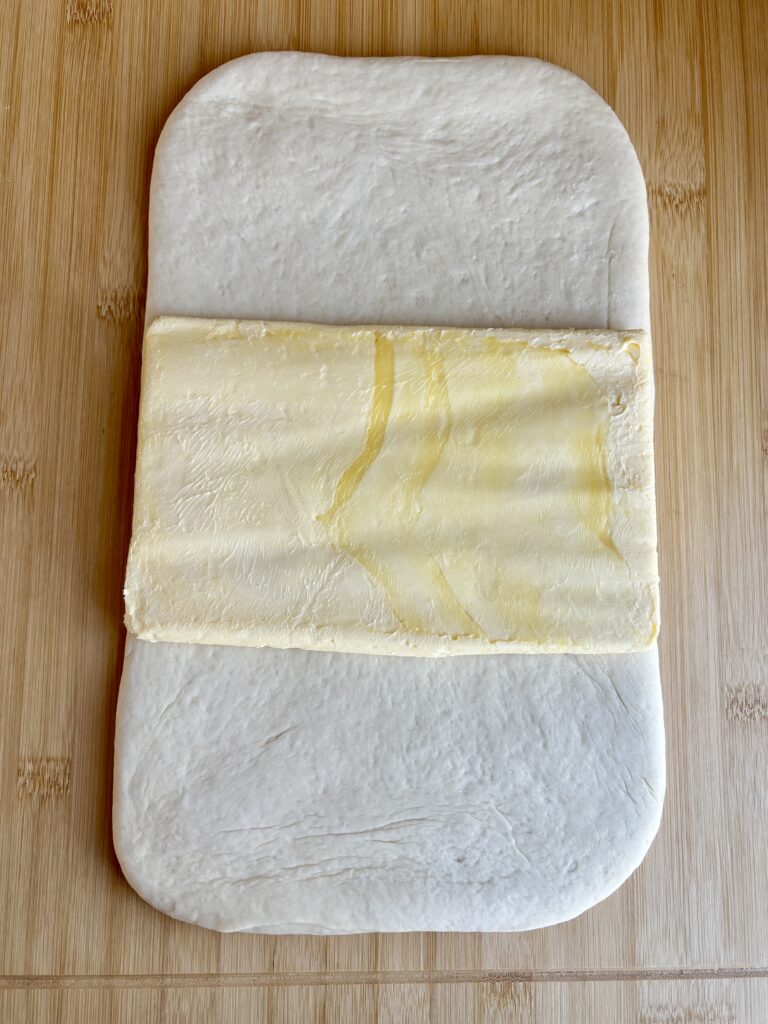
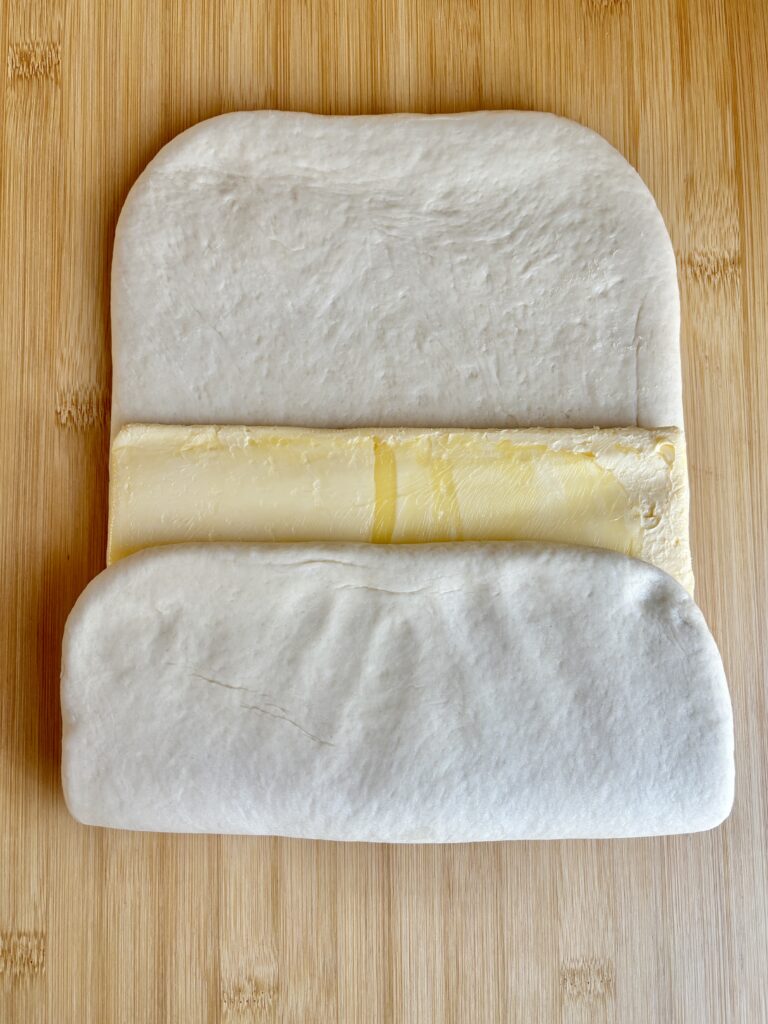
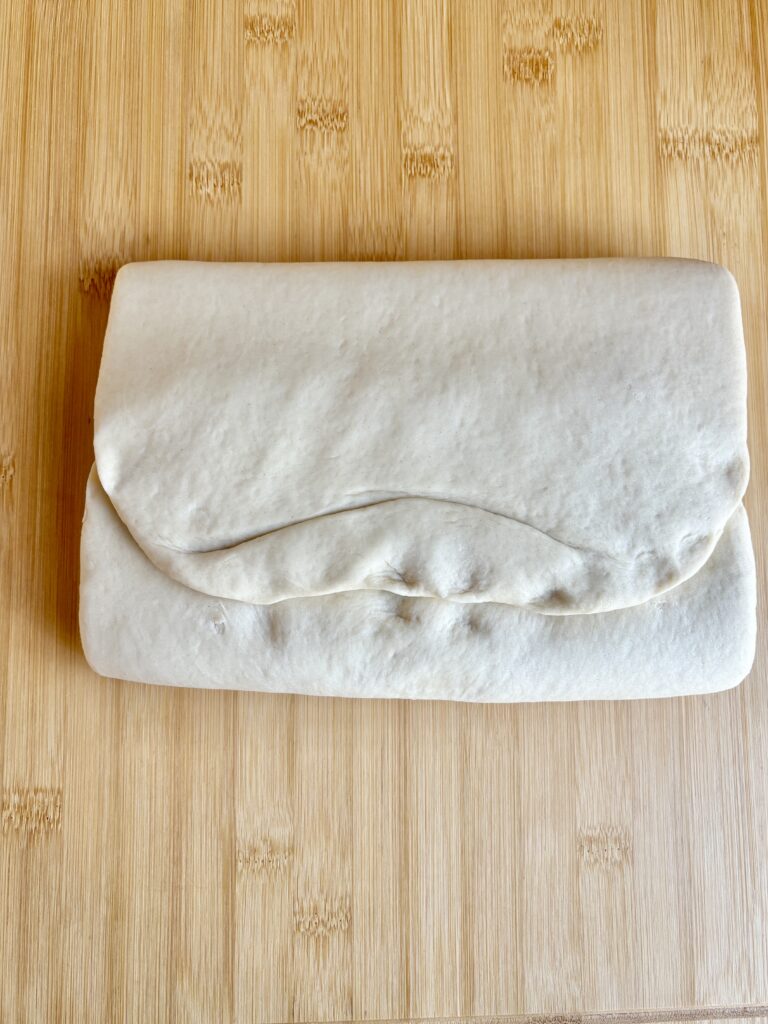
- Roll chilled dough into an 8½x12-inch rectangle. Place butter in the center and fold dough over to fully enclose. Seal edges.
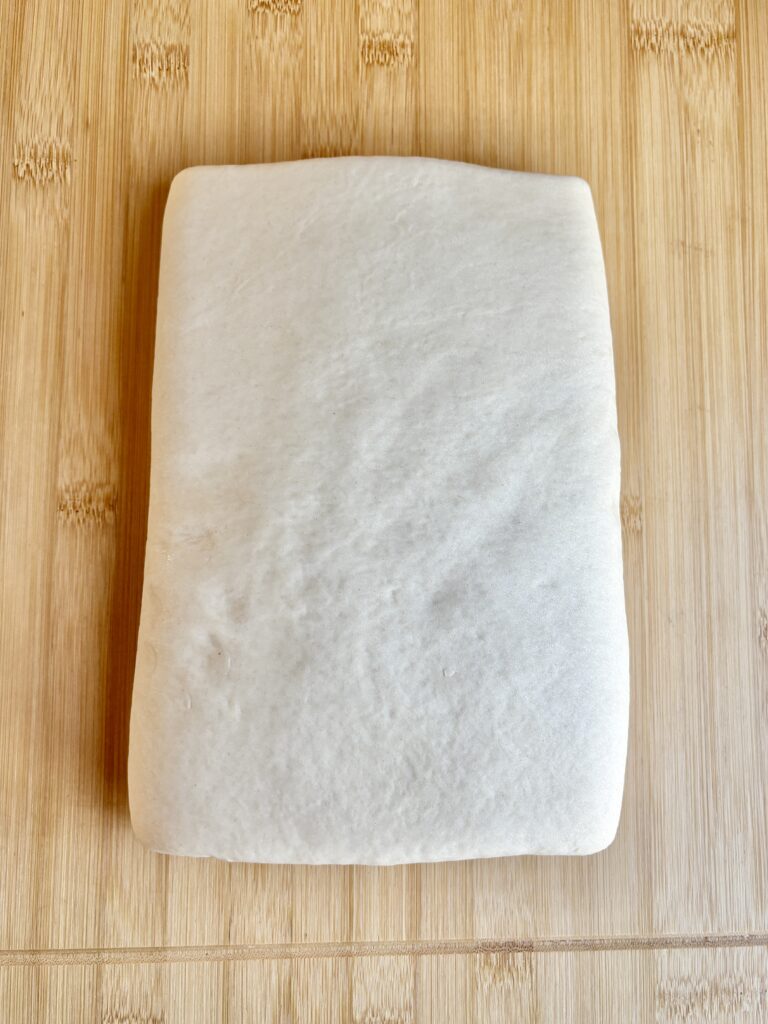
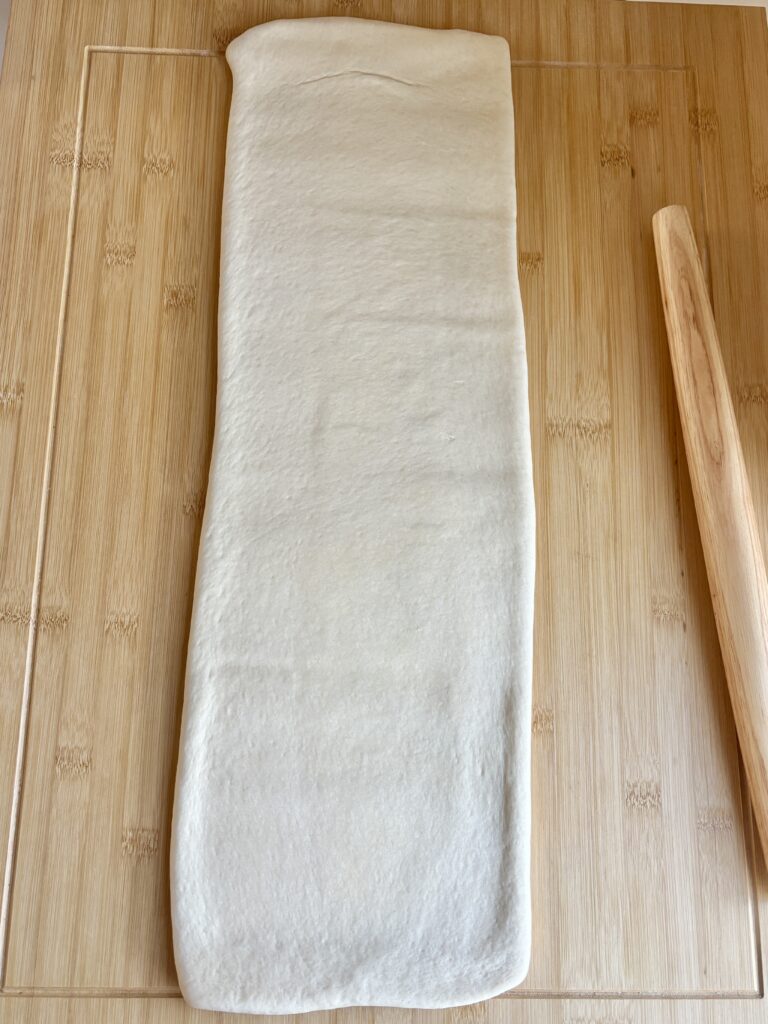
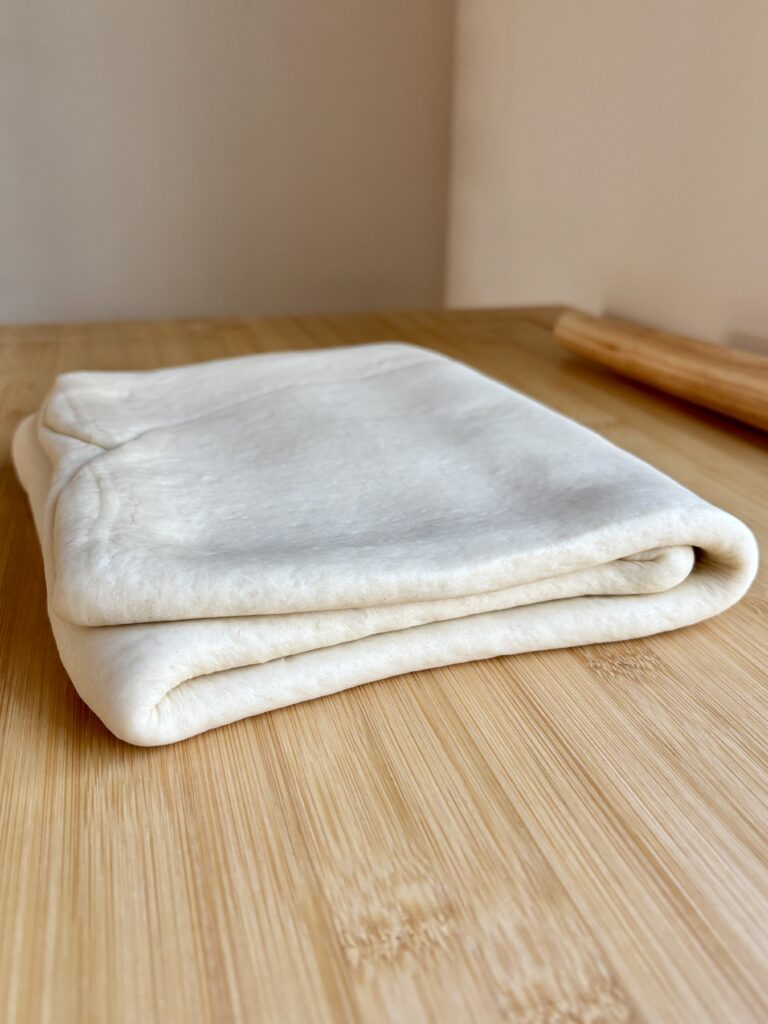
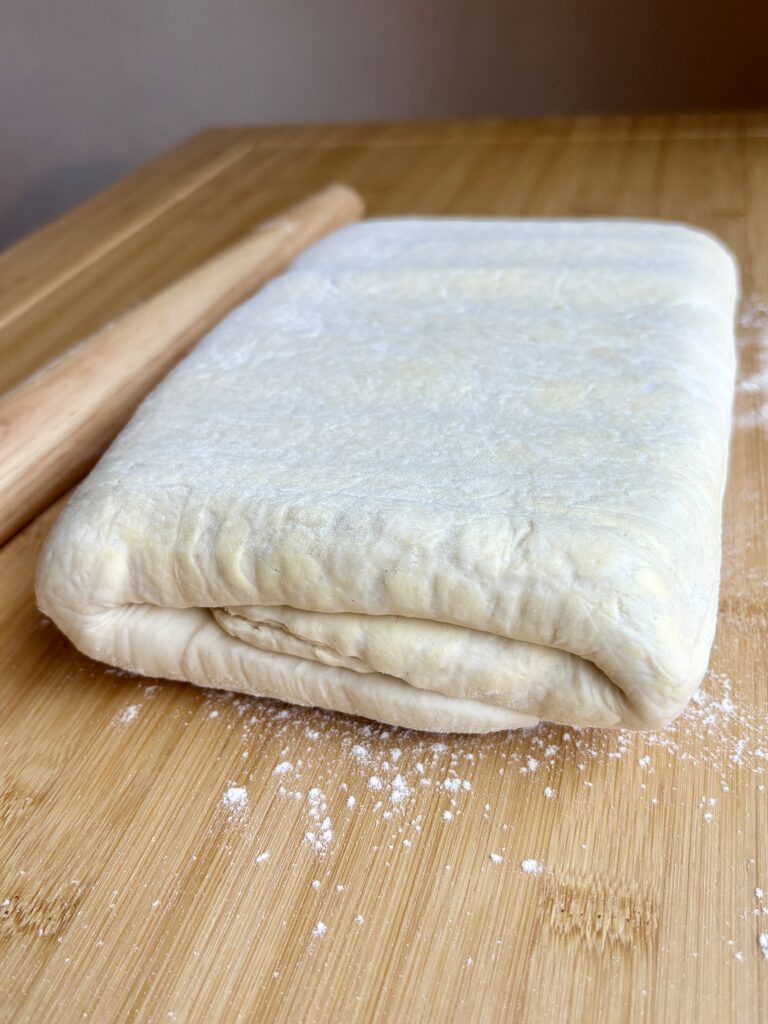
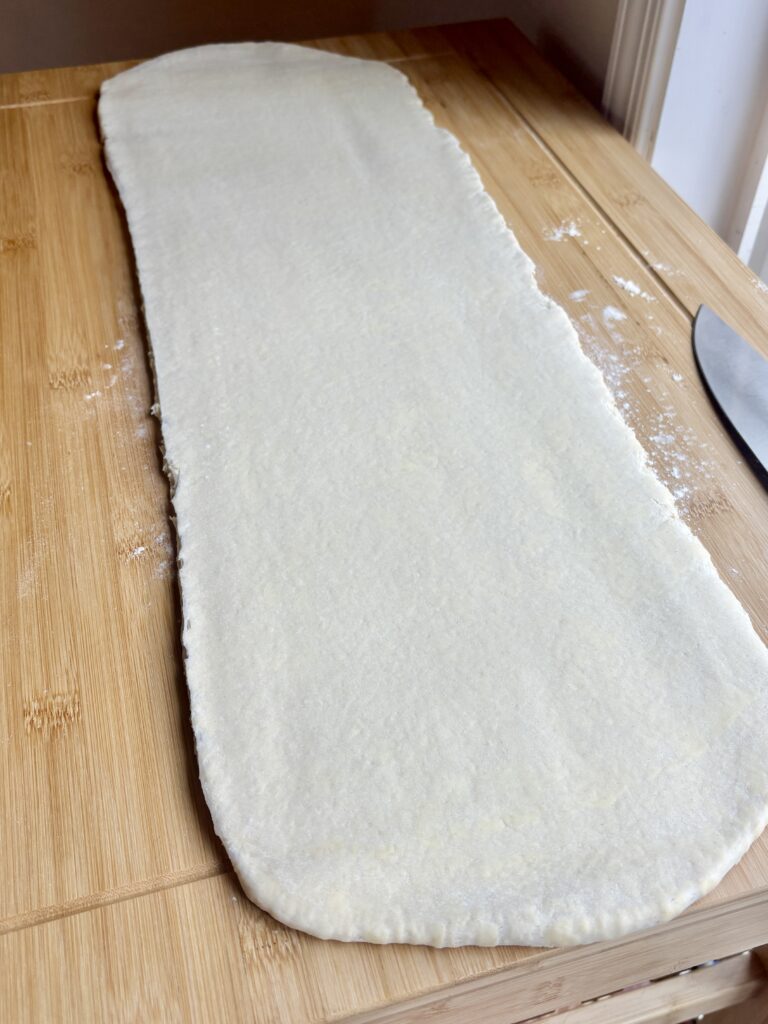
- Roll into an 8×24-inch rectangle. Fold into thirds like a letter, wrap, and chill for 30–45 minutes.
- Repeat this lamination process of rolling and folding for a total of 4 folds, chilling 30–45 minutes between each fold. I also like to make a shallow cut along the side of the folded side before rolling to help it roll out evenly.
- After final fold, chill at least 1 hour or overnight (up to 24 hours).
Day 2 – Shape Croissants
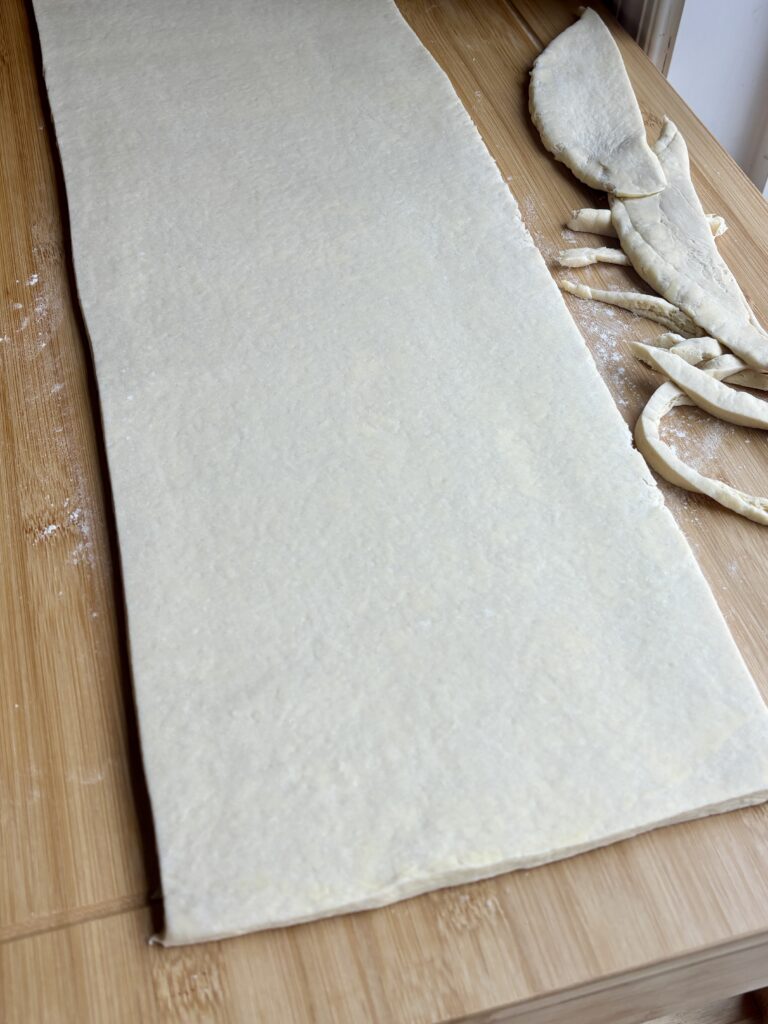
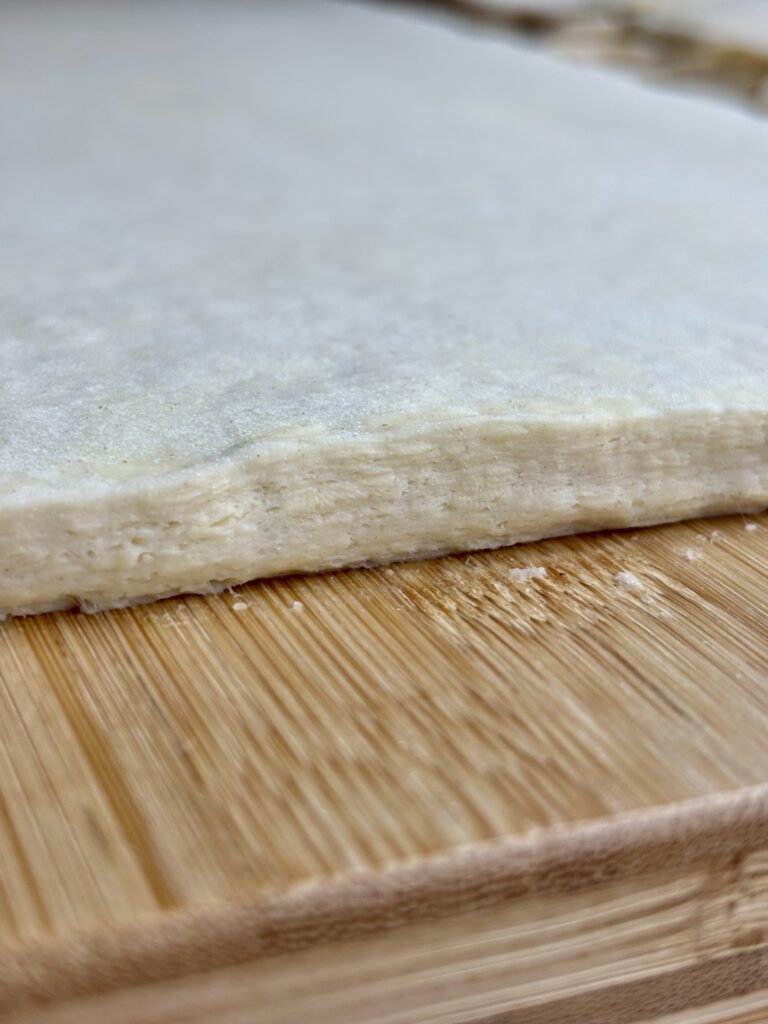
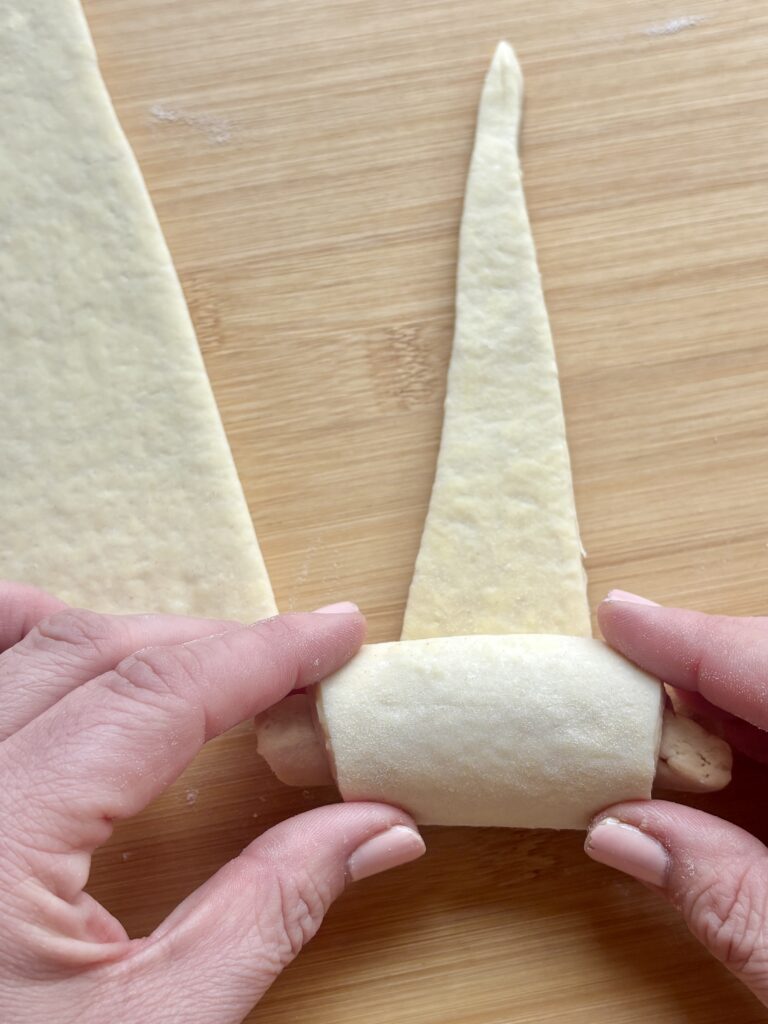
- Roll dough into a 10×24-inch rectangle, about ⅛-inch thick. Trim edges.
- Cut triangles with a 4-inch base and about 8-inch height.
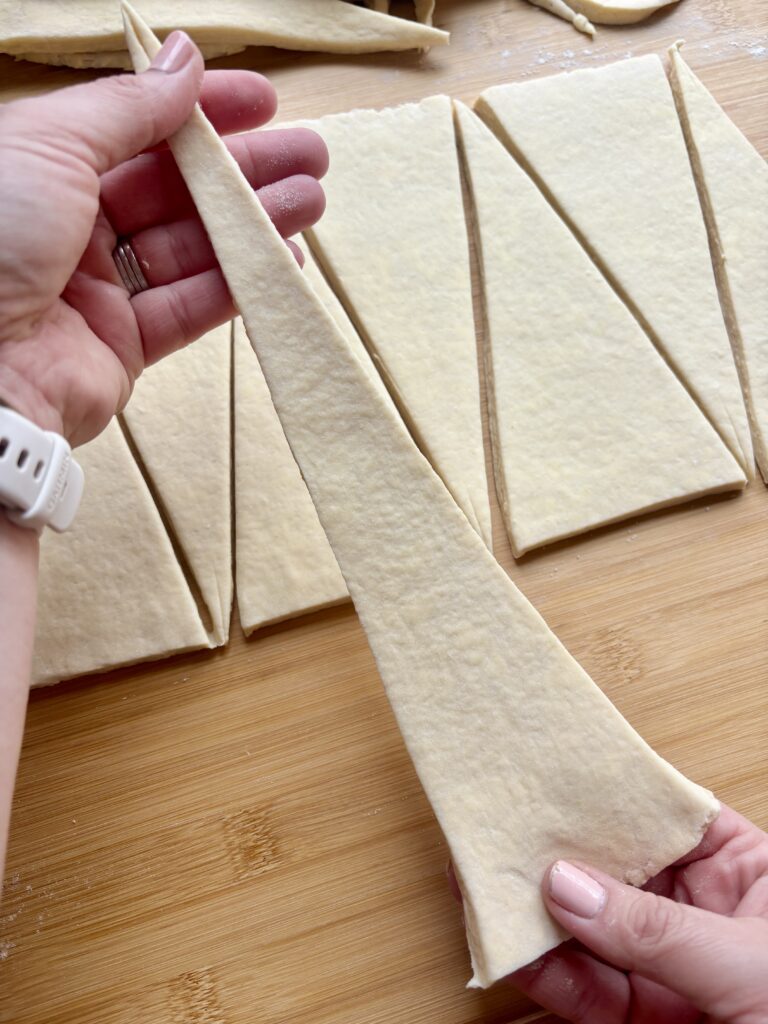
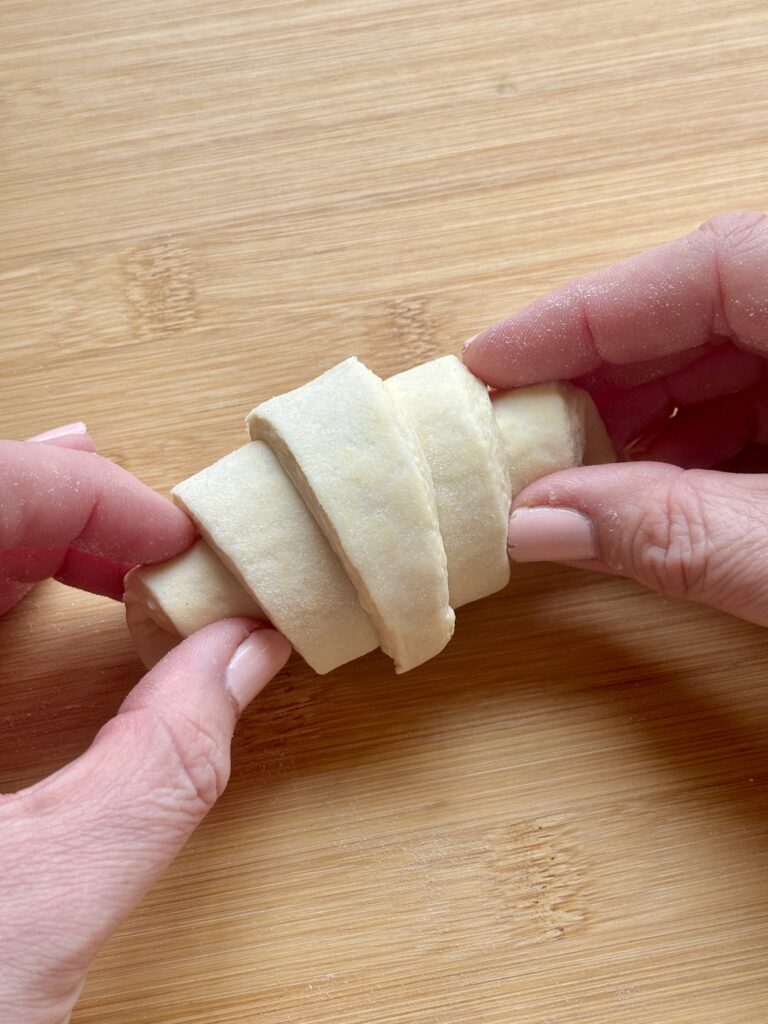
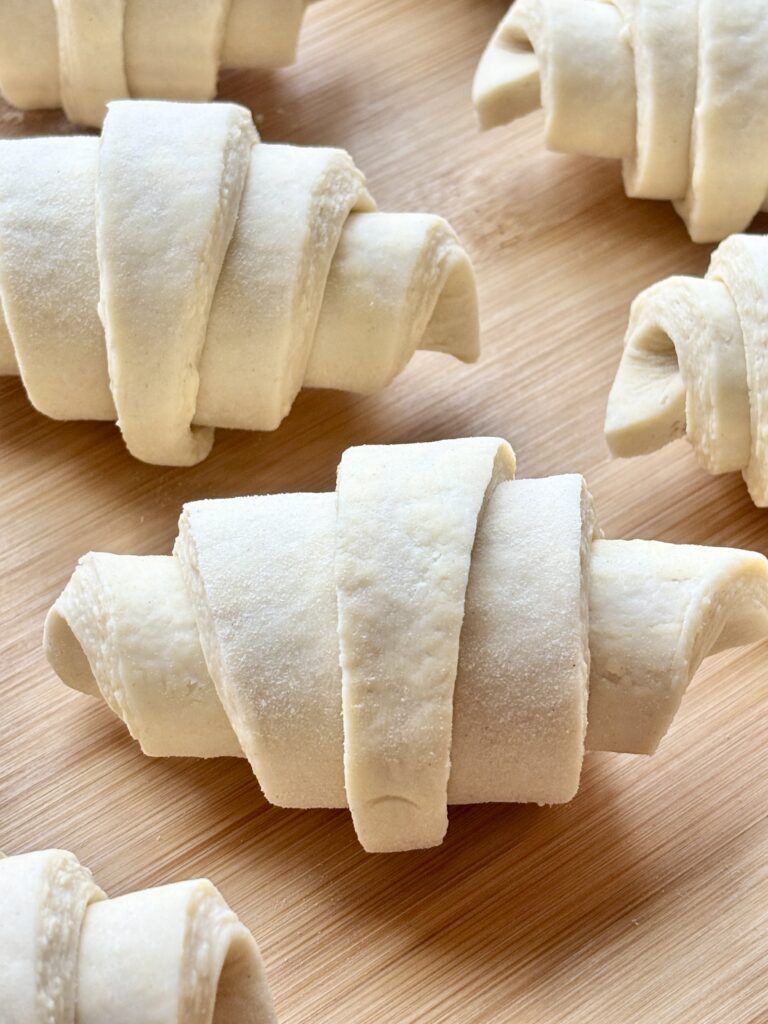
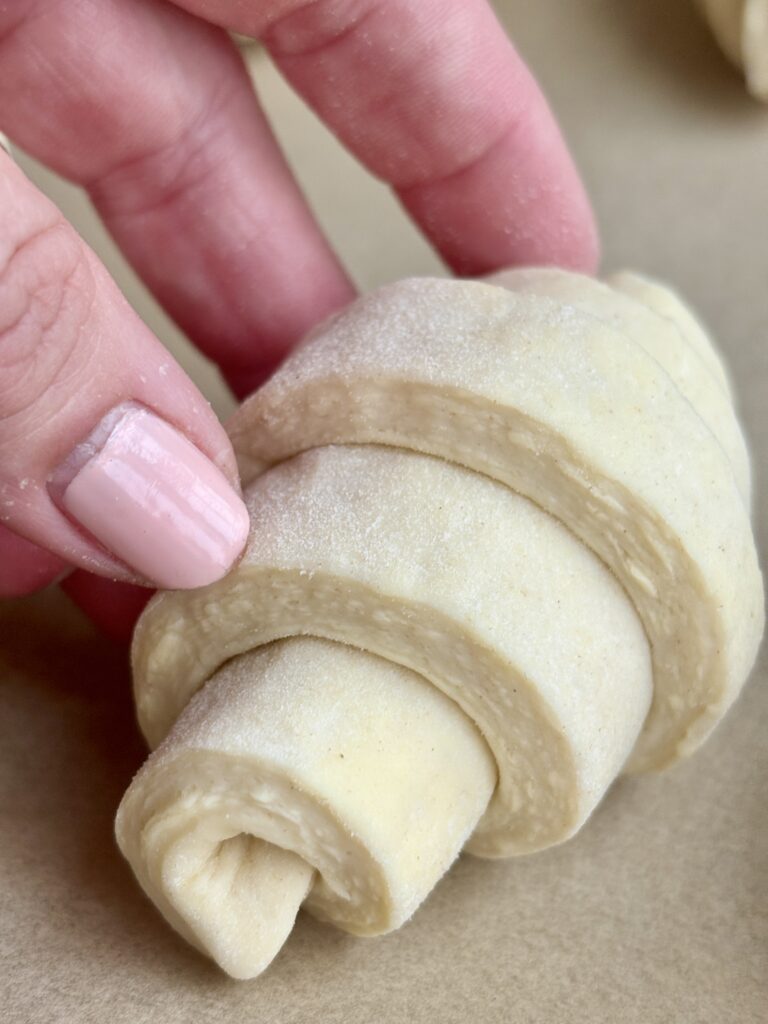
- Gently stretch each triangle, then roll from base to tip. Curve ends slightly inward.
- Place on parchment-lined baking sheets.
Final Proof
- Let croissants proof at 70–75°F for 2–3 hours, until puffy and slightly jiggly. (This may take longer, or shorter, depending on the temperature of your kitchen.)
Bake
- Preheat oven to 425°F for at least 40 minutes.
- Whisk egg and cream, then brush croissants evenly.
- Bake at 425°F for 7-8 minutes, then reduce temperature to 375°F and bake an additional 18–20 minutes until deep golden brown.
- Cool for 10 minutes before serving.
Notes
- Keep dough and butter cold at all times
- Butter and dough should feel the same firmness
- Final dough thickness: ~⅛ inch
- Chill whenever dough feels soft
- Light flour dusting can help seal butter if needed
- Trust the process! Make sure it gets a good final proofing or butter will leak!
Flaky Croissants Recipe | Homemade Croissants | Classic French Croissants | Laminated Dough Recipe | How to Make Croissants | Buttery Croissants | Bakery Style Croissants | Croissant Recipe Easy | Fail Proof Croissants | Flaky Croissants | Croissant Lamination | Step by Step Croissant Recipe | Croissant Baking Tips | Classic Croissants

Nutritional Content Disclaimer
I choose not to include nutritional information with my recipes, as these values can be calculated from the ingredients provided. With my background as a pediatric nurse practitioner and my own family experience with disordered eating, I understand how focusing on numbers can affect our relationship with food. My philosophy is that all foods have a place—sweet, savory, nourishing, or indulgent. I aim to share recipes that support a healthy, joyful approach to eating. My hope is that this space also encourages a balanced, healthy relationship with food for you and your family too.