
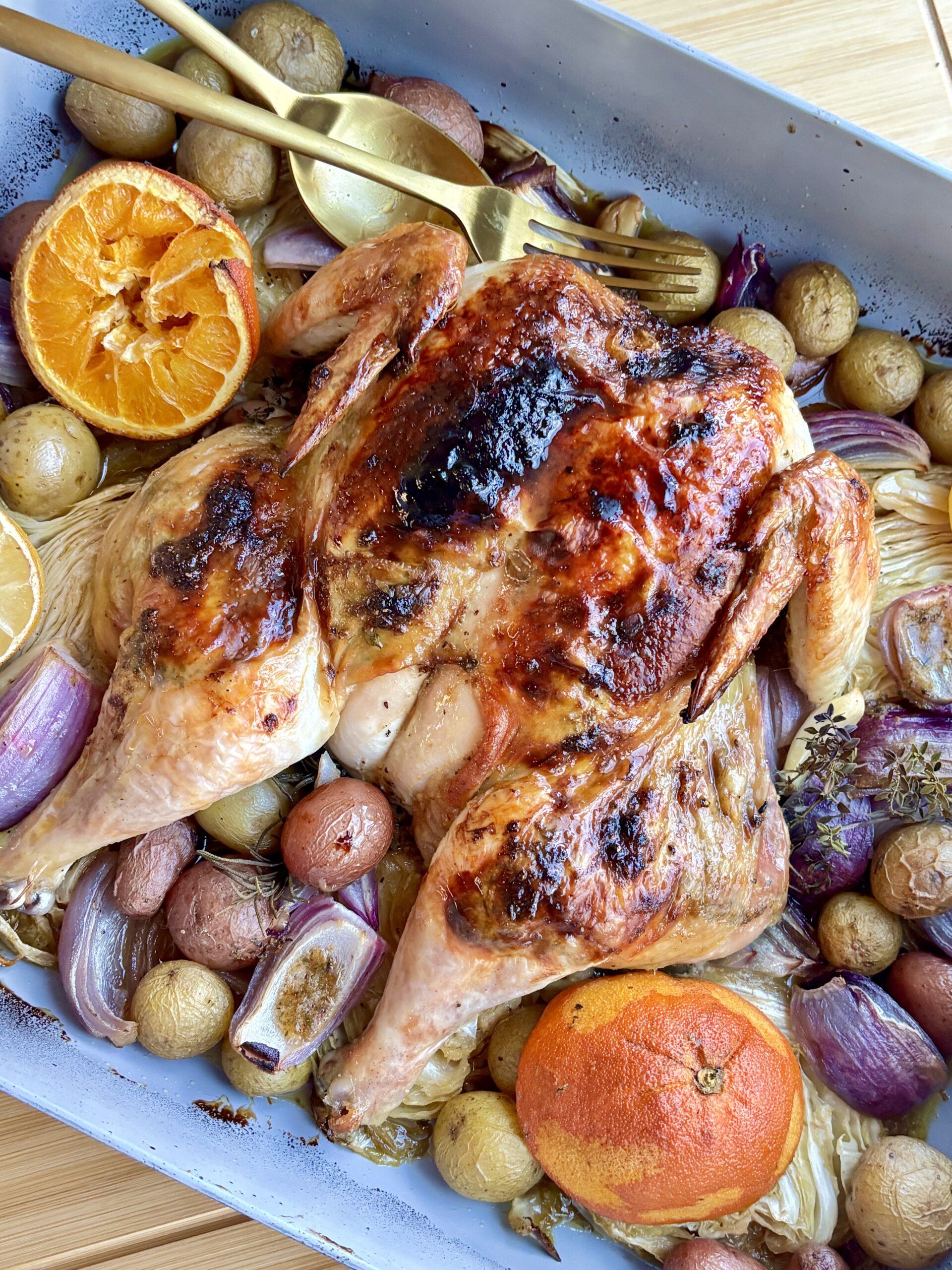
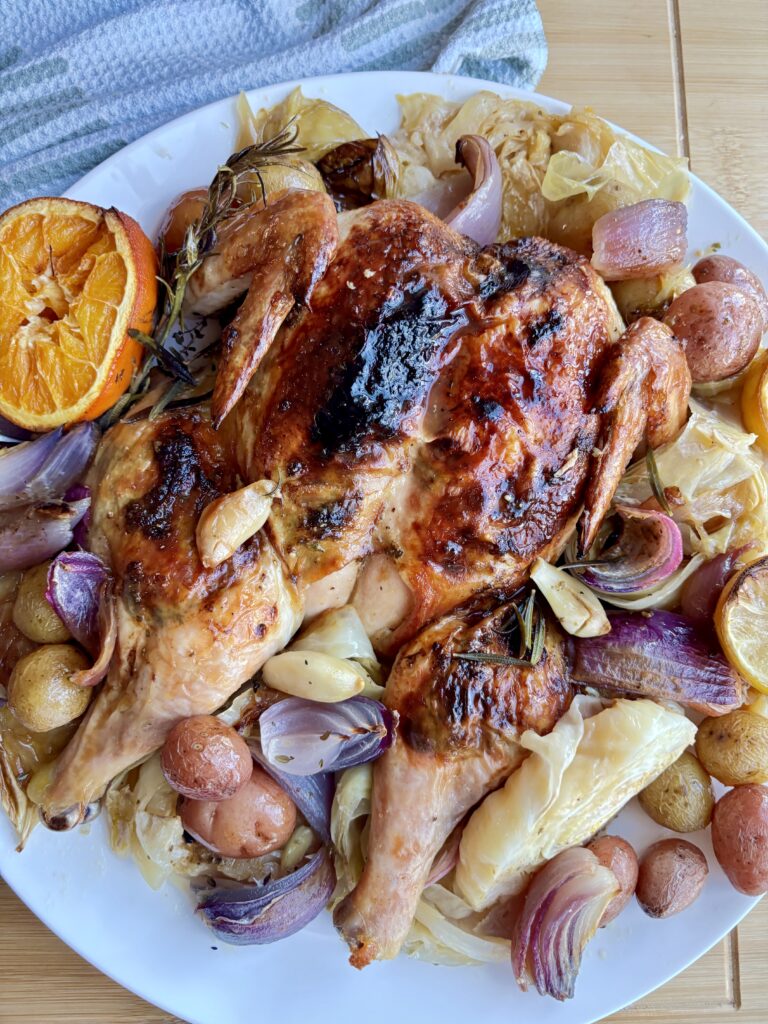
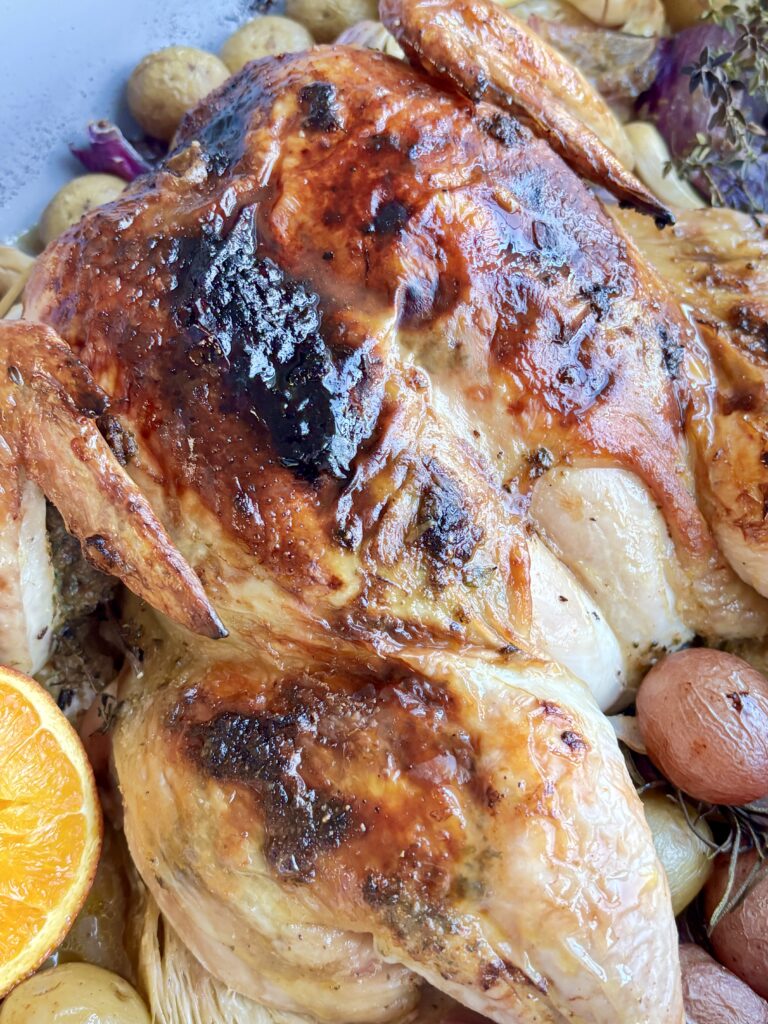
A cozy, flavorful roasted chicken dinner is the epitome of a comforting meal in my opinion. And this Citrus Herb Butter Spatchcock Chicken is no exception. It is impressive enough for a Sunday dinner, but still approachable enough to make any night of the week.
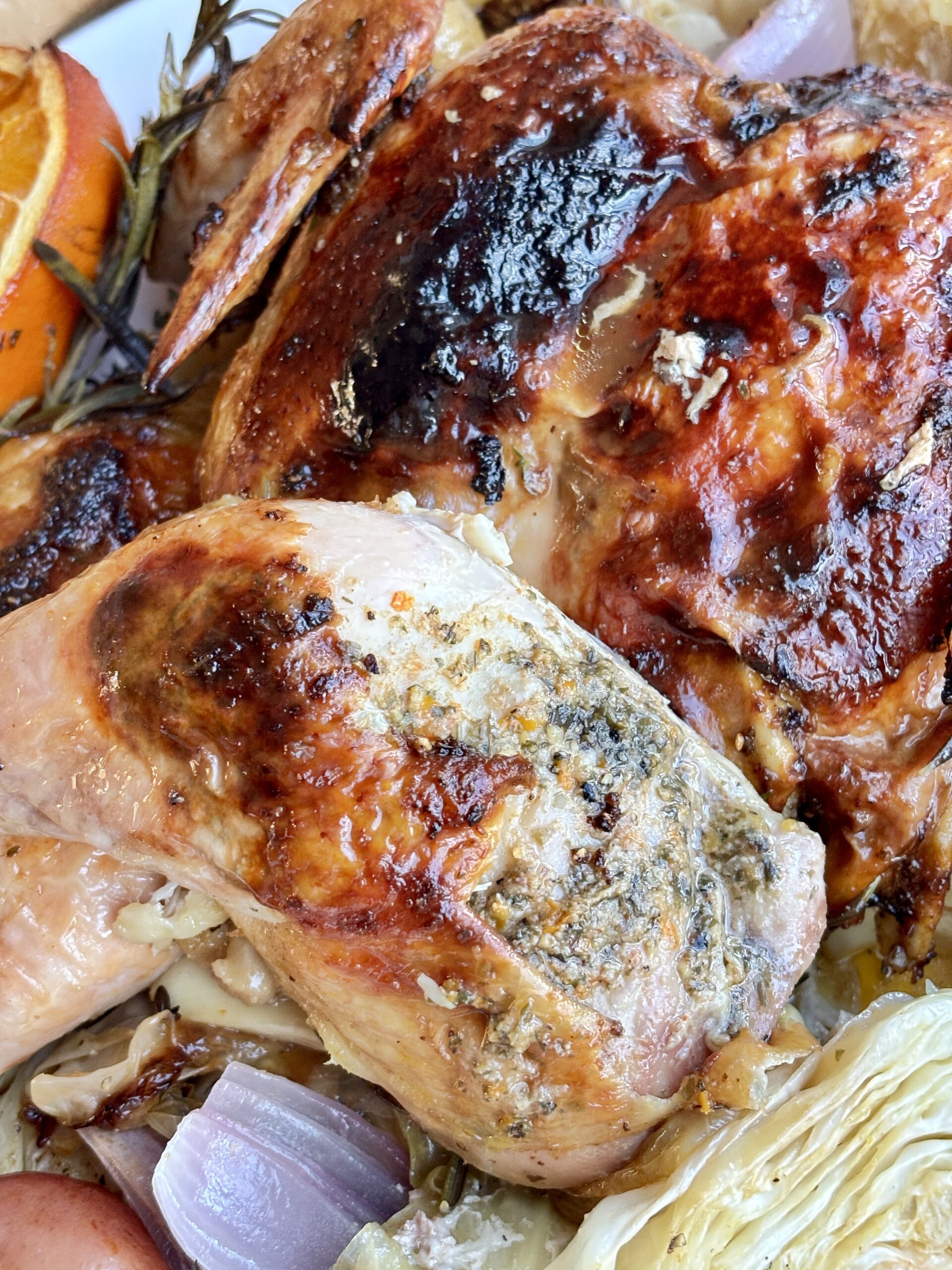
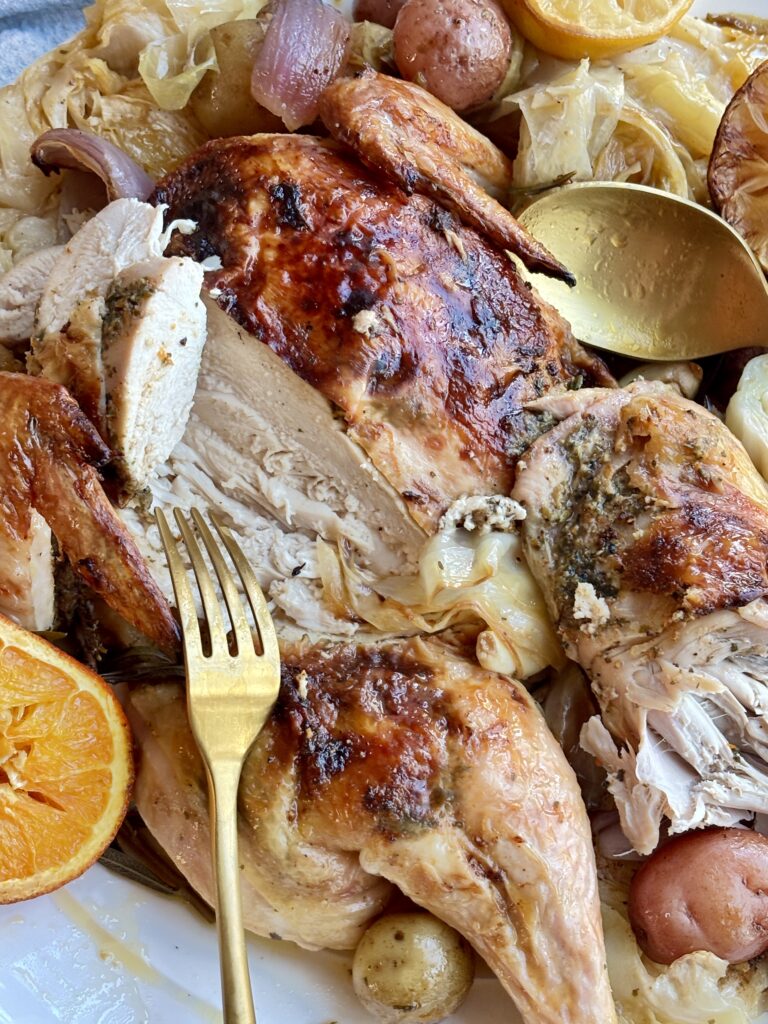
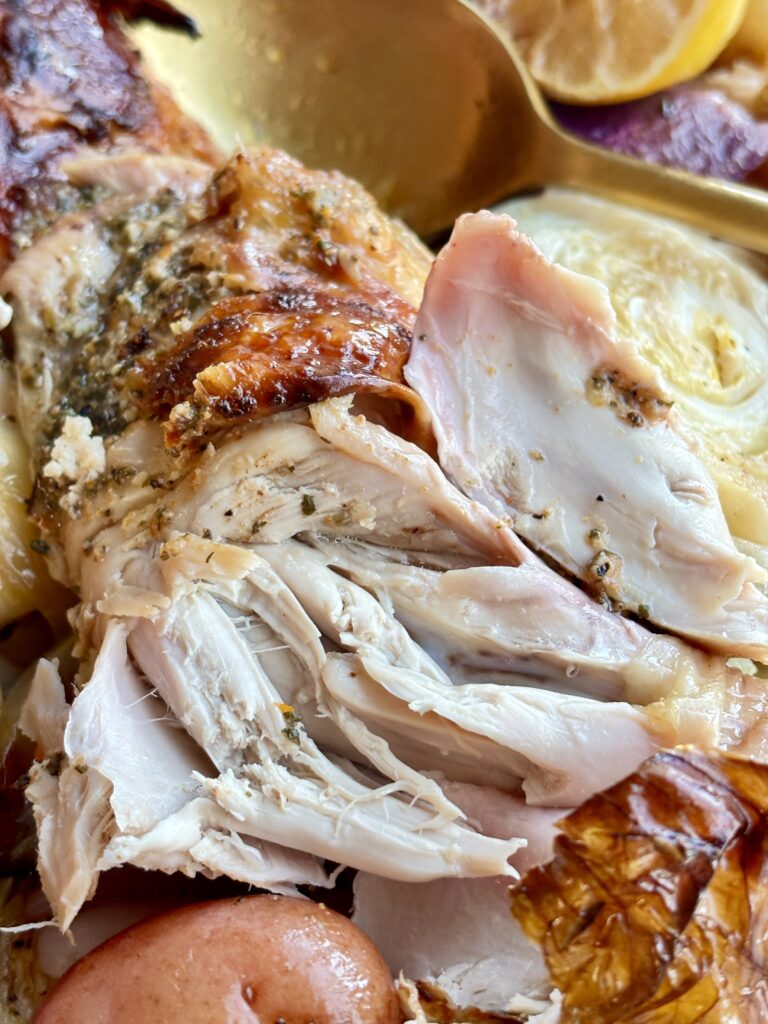
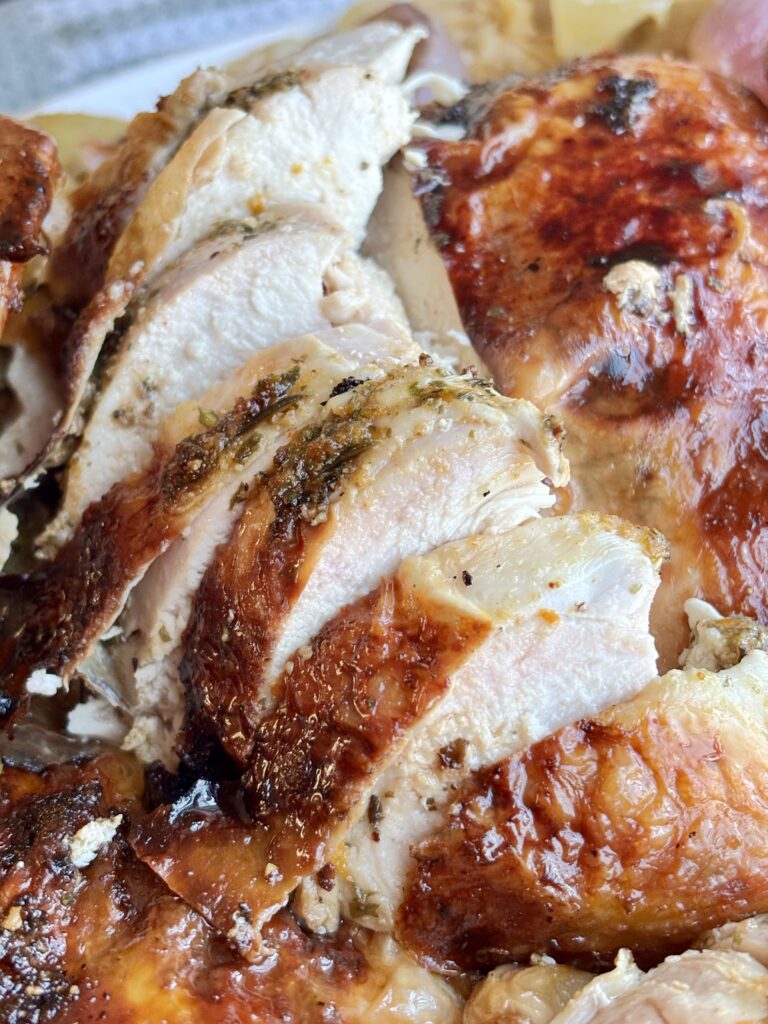
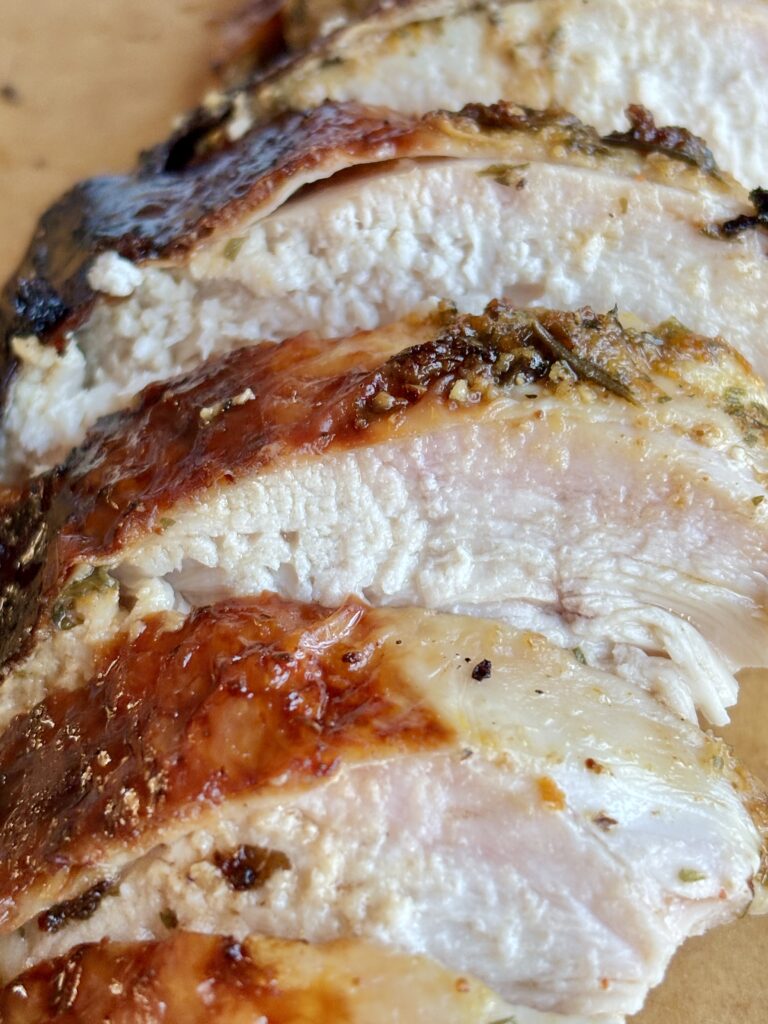
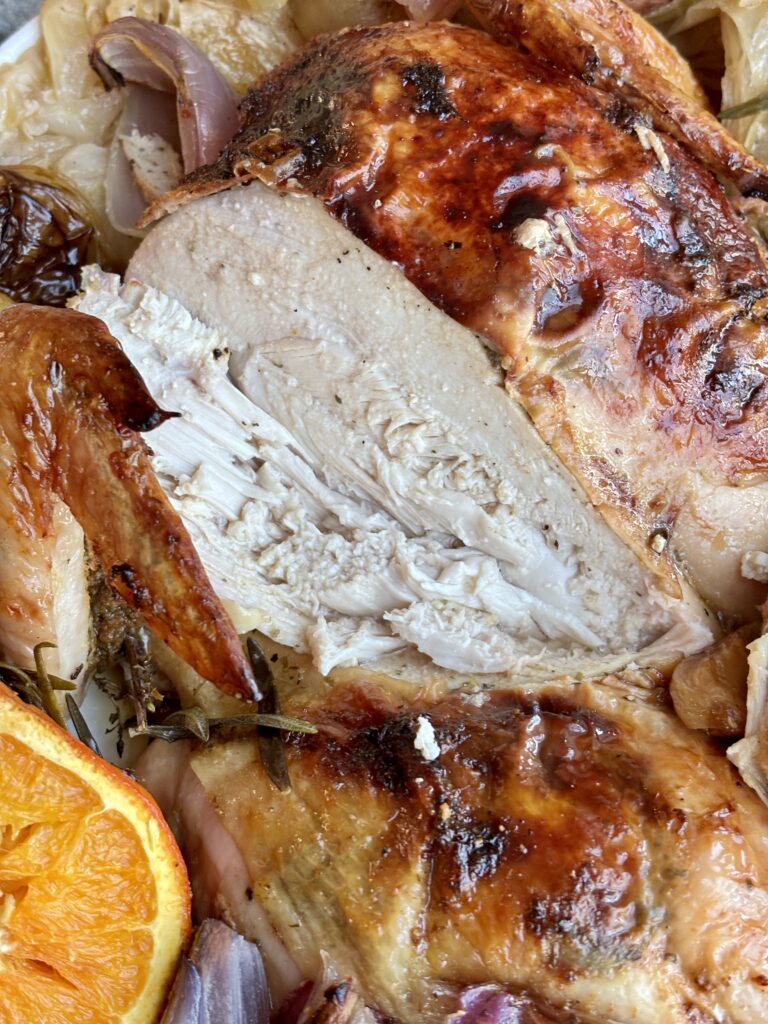
A whole chicken is coated in a rich, fragrant citrus herb butter made with garlic, rosemary, thyme, lemon and orange zest, and other aromatic seasonings. Then it’s roasted until the skin is beautifully golden and crispy, while the meat underneath stays incredibly juicy and tender.
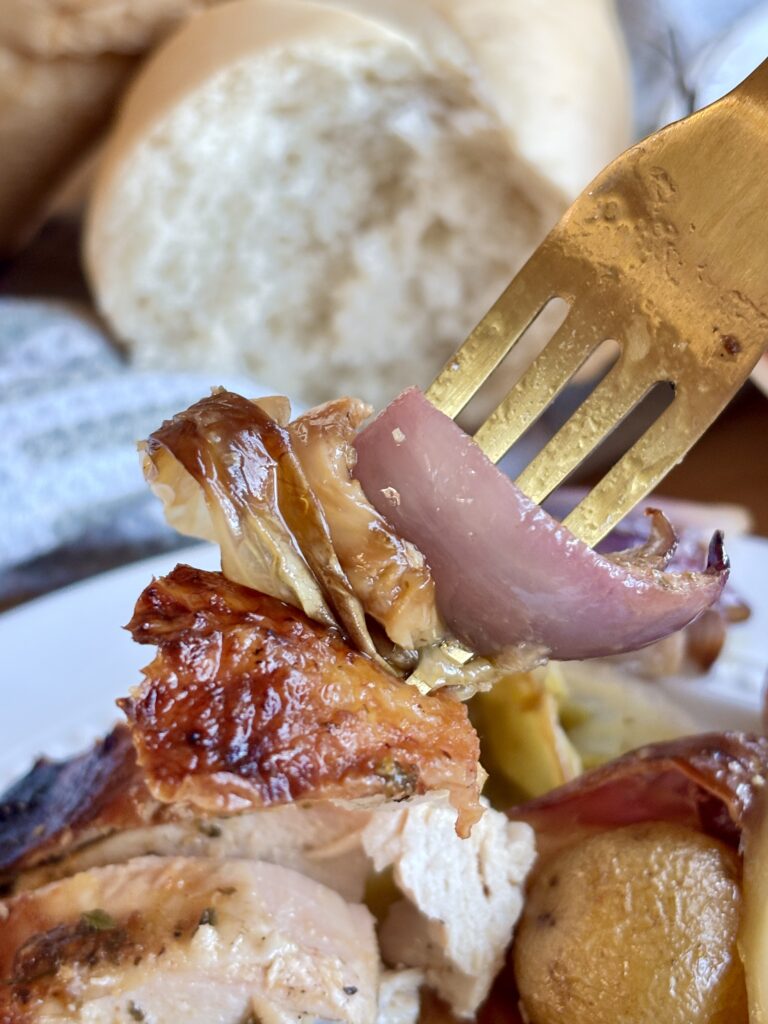
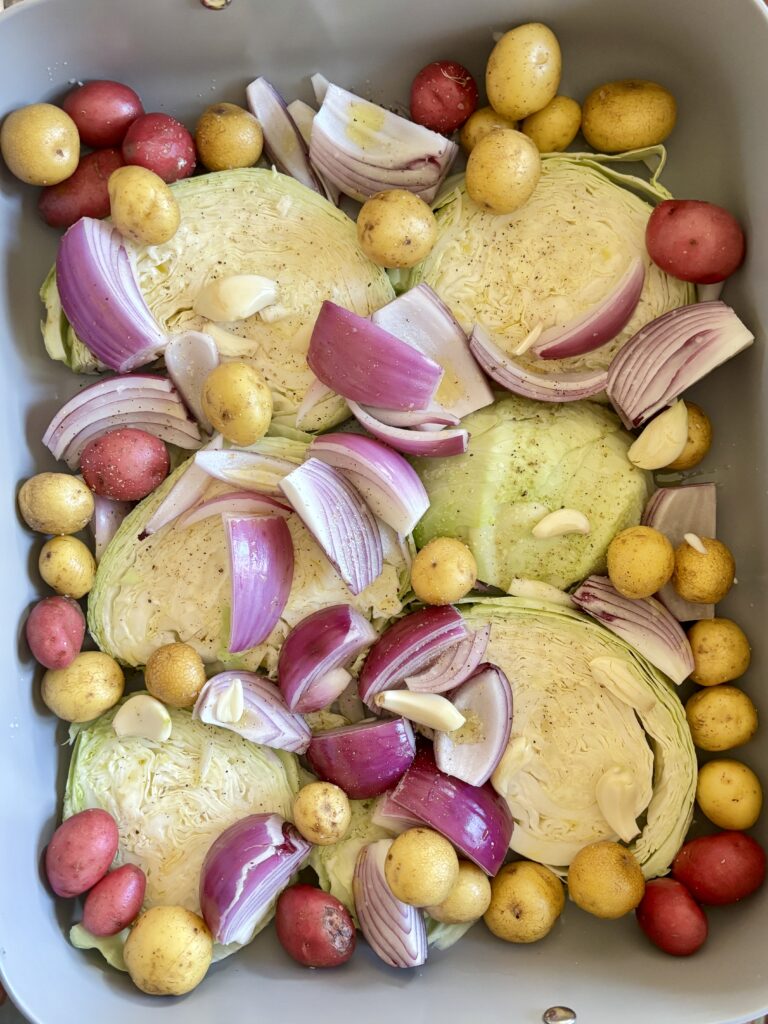
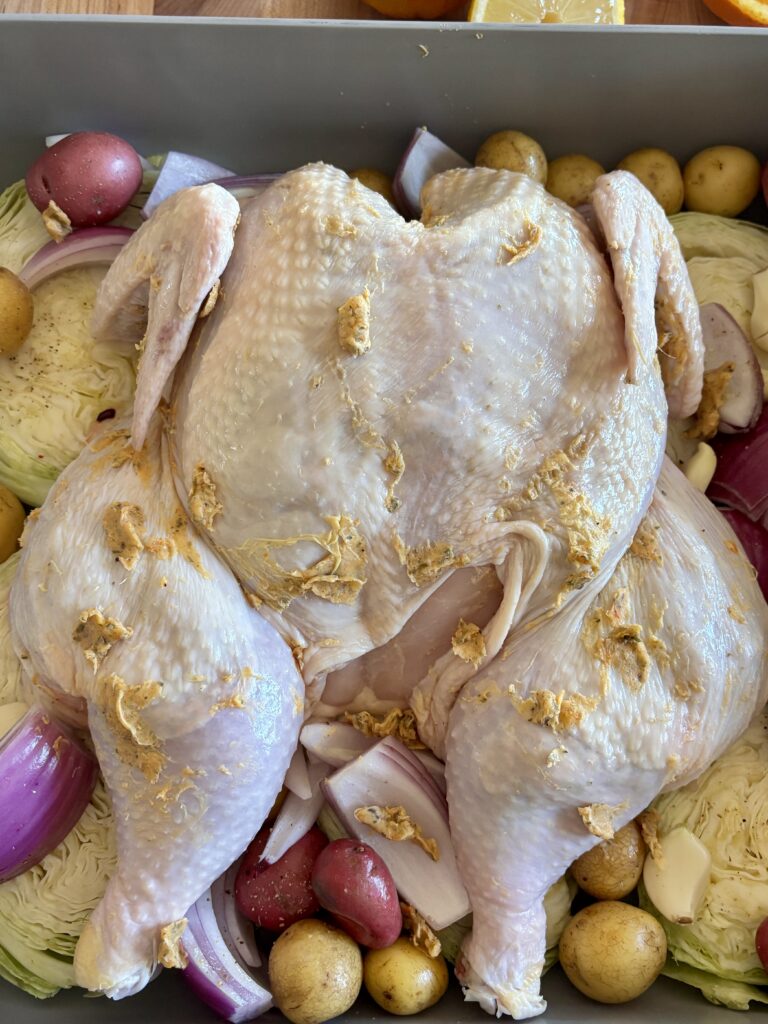
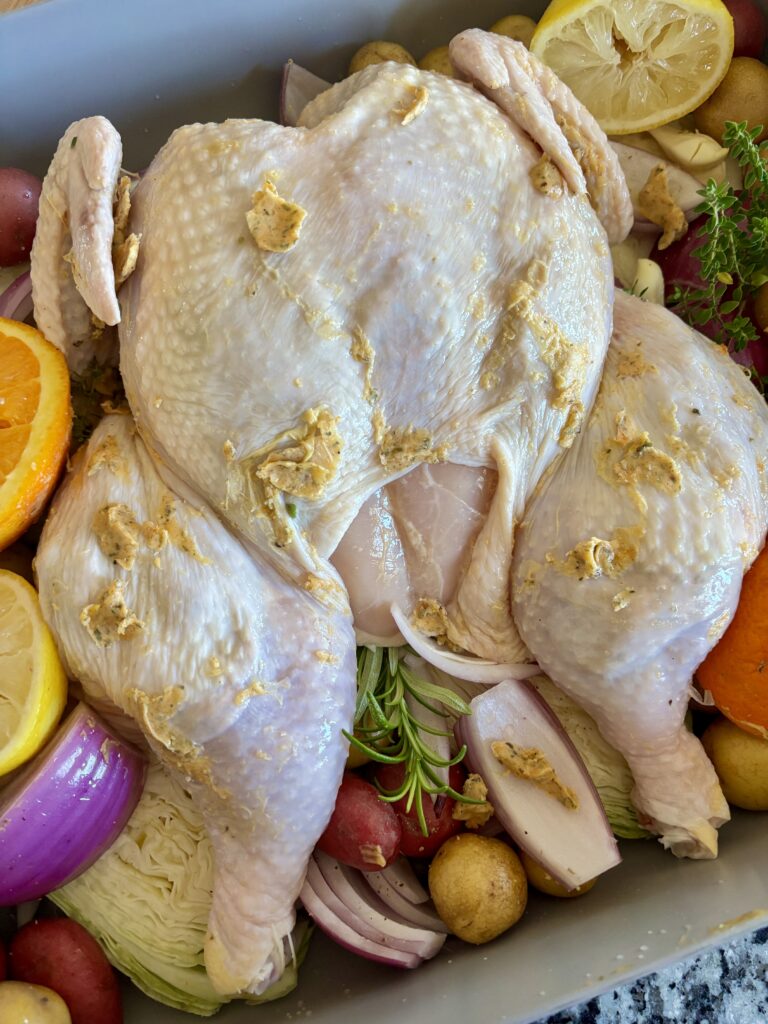
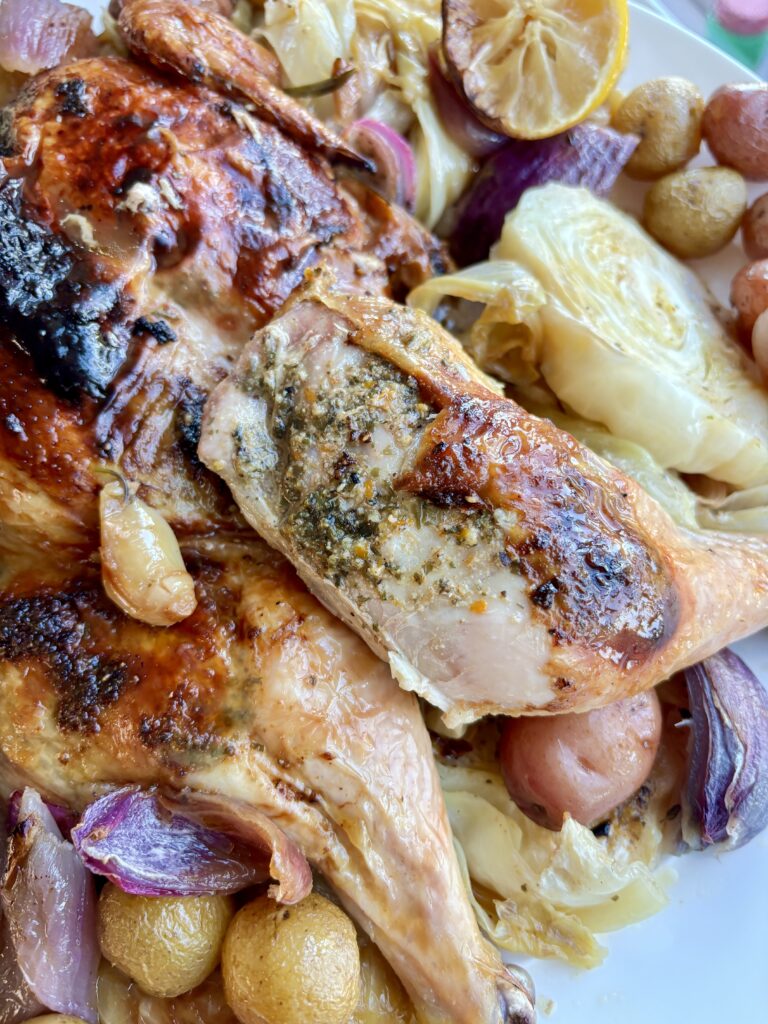
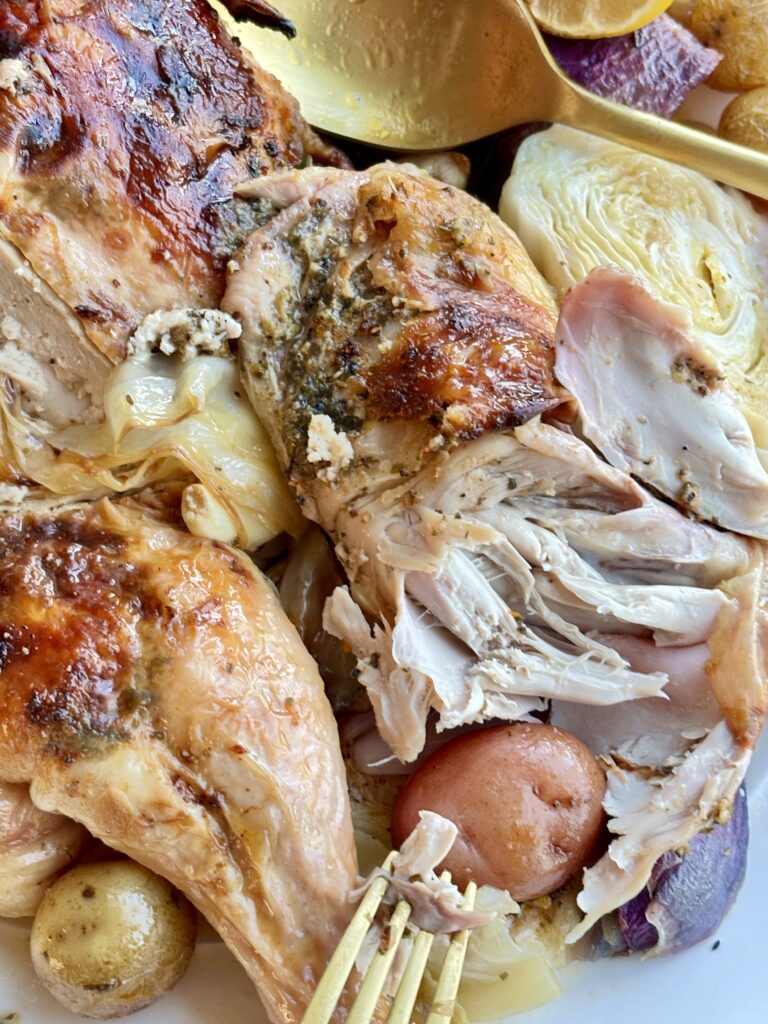
One of my favorite parts of this recipe though may just be the vegetables. The chicken roasts directly over thick cabbage steaks, red onion wedges, whole garlic cloves, and baby potatoes. This allows all those buttery, savory pan drippings to soak into the vegetables as everything cooks. The cabbage becomes tender and buttery, while baby potatoes, garlic, and onions roast around the edges until golden and caramelized.
It’s a complete, cozy chicken dinner made in one pan, with bright citrus, warm herbs, savory garlic, and just a subtle hint of maple sweetness. And if you’ve never spatchcocked a chicken before, don’t worry! It’s much easier than it sounds, and I’ll walk you through the entire process below.
I promise you, you’ll be making is chicken dinner on repeat throughout the year!
Why you’ll love this recipe!
What Is Spatchcock Chicken?
Spatchcocking, also called butterflying, is a method of preparing a whole chicken by removing the backbone and flattening before roasting. Instead of roasting the chicken in its traditional rounded shape, spatchcocking allows it to lie relatively flat in the pan. This exposes more of the skin to the oven’s heat and helps the chicken cook more evenly and quickly.
Below are several reasons why I really like this method:
- More even cooking: Because the chicken is flattened, the breasts and thighs cook more evenly than they would in a traditional whole roast chicken.
- Crispier skin: More of the skin faces upward and is exposed to the oven’s dry heat, helping it become beautifully golden and crisp.
- Shorter cooking time: A spatchcocked chicken generally cooks faster than a whole chicken roasted.
- Easier seasoning: Flattening the chicken makes it easier to distribute distribute the seasonings.
- Perfect for roasting over vegetables: The flattened chicken creates a broad surface that rests beautifully over the cabbage and onions (as in this recipe) or other vegetables, allowing them to absorb all the flavorful drippings.
How to Spatchcock a Whole Chicken
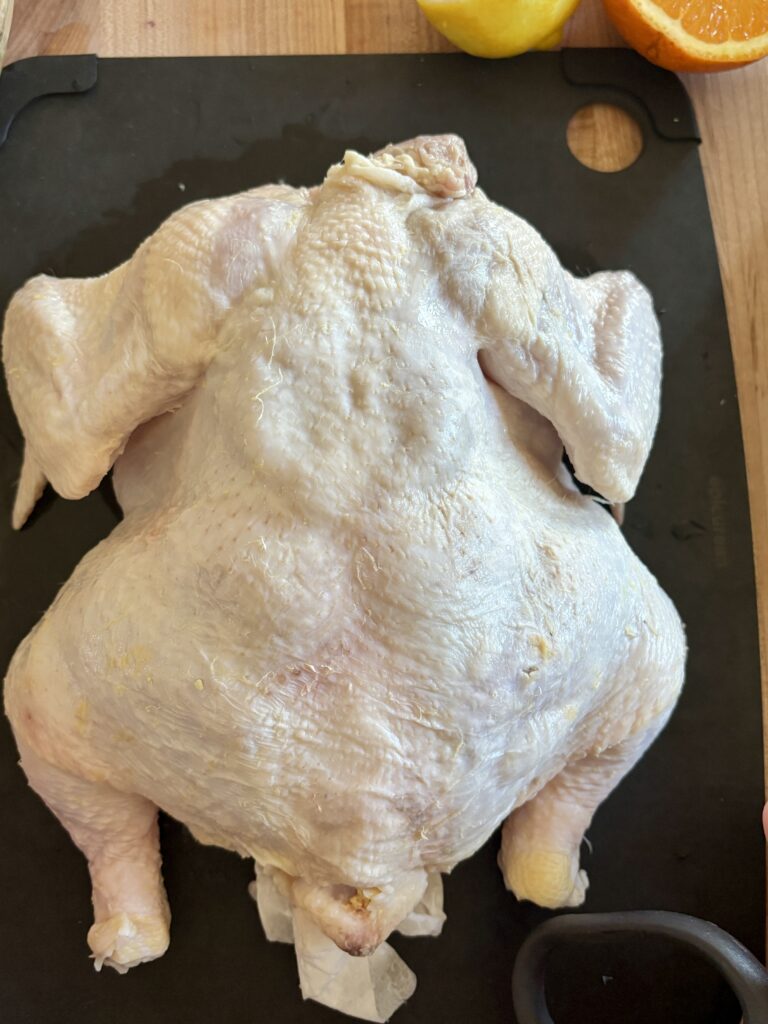
Step 1: Position the chicken
Remove the chicken from its packaging, take out any giblets, and place it breast-side down on a sturdy cutting board. The backbone should be facing upward. Pat away excess moisture so the chicken is easier to handle.
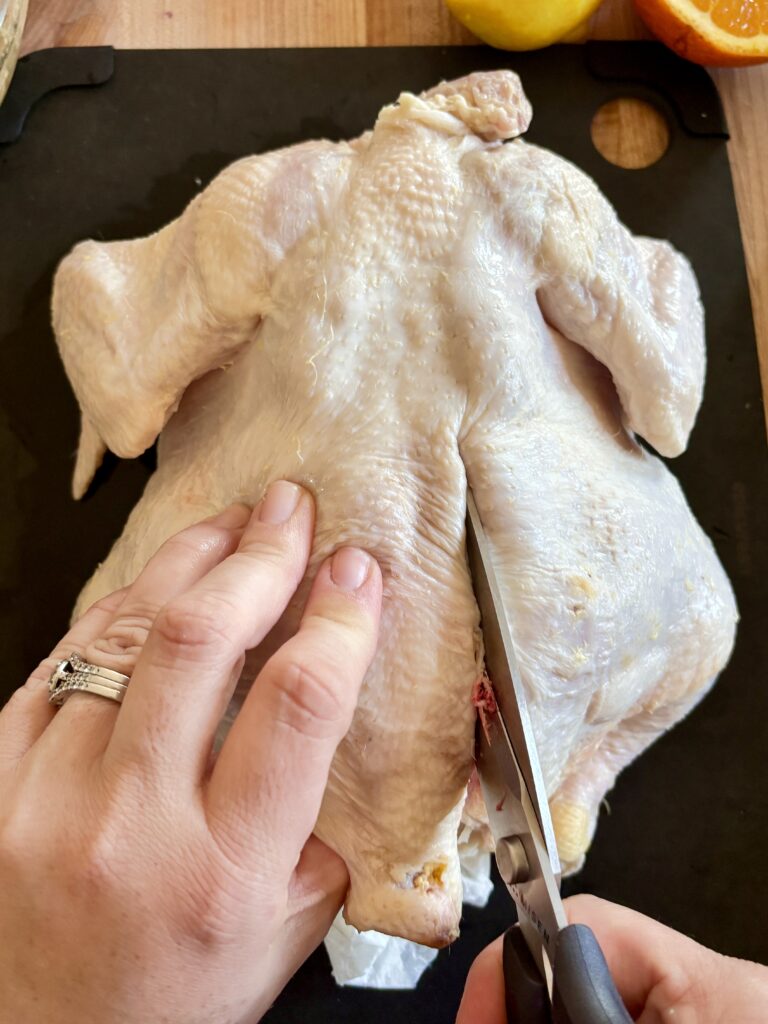
Step 2: Cut along one side of the backbone
Using sharp, heavy-duty kitchen shears (I love mine from MISEN), begin cutting along one side of the backbone, working from the tail end toward the neck. You’ll need to cut through the rib bones, so use steady pressure.
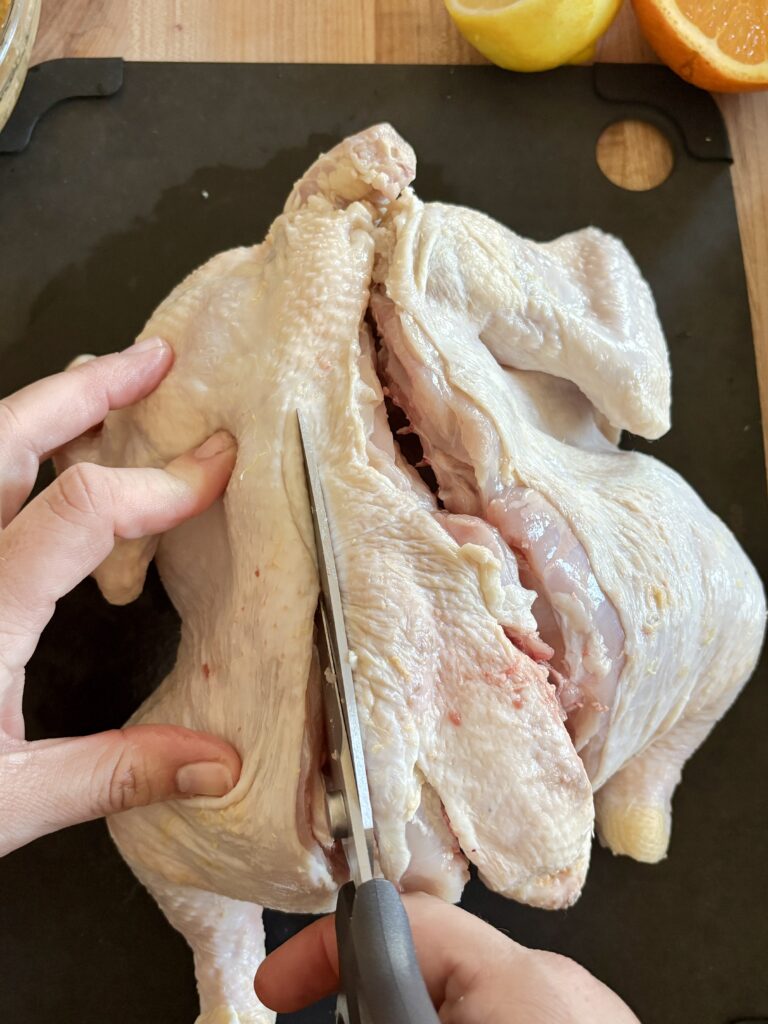
Step 3: Remove the backbone
Repeat the process along the opposite side of the backbone until it can be completely removed.
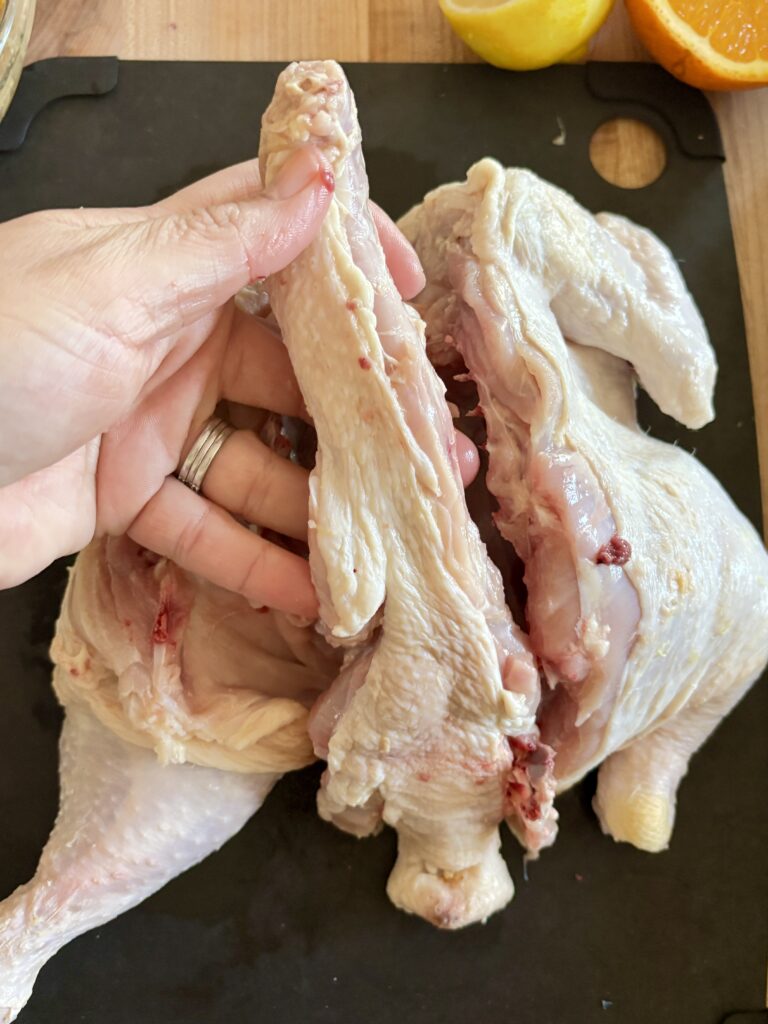
Step 3 continued
You can save the backbone for homemade chicken stock, if desired, or just toss.
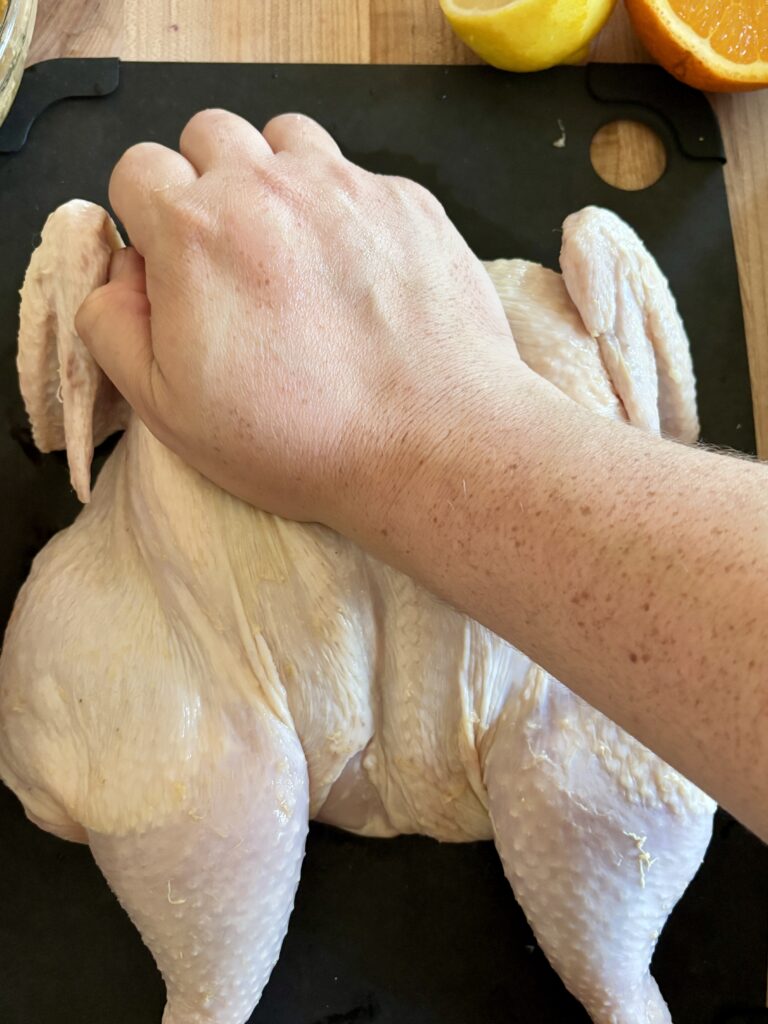
Step 4: Flatten the chicken
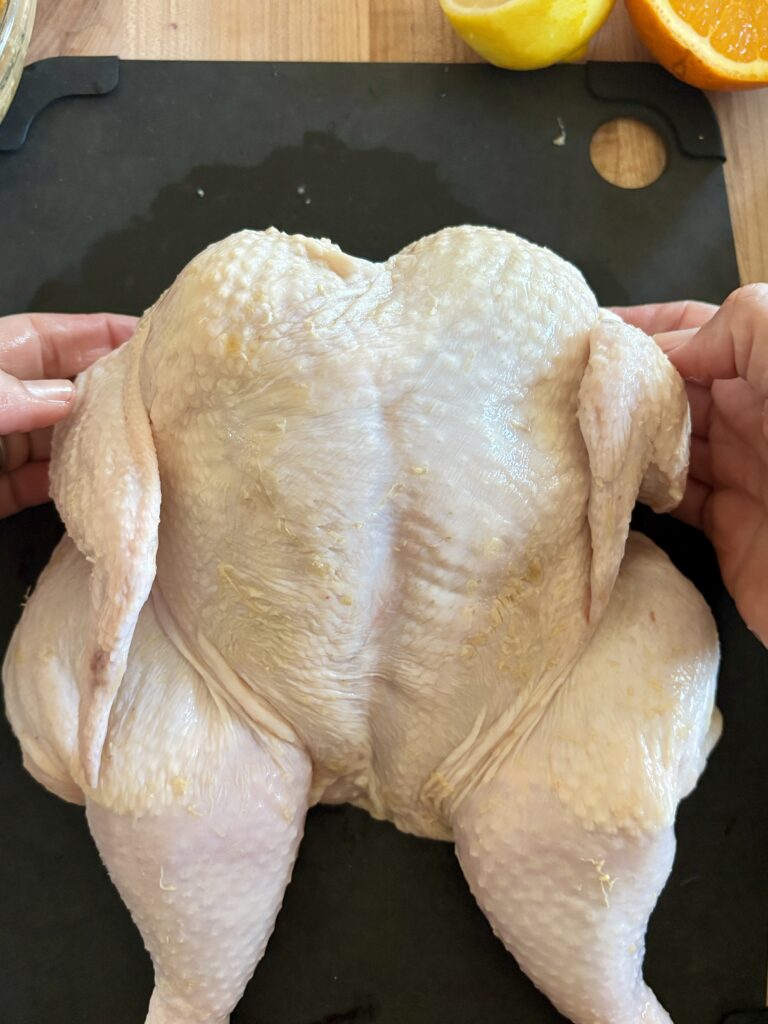
Flip the chicken breast-side up and spread it open. Place the heels of your hands over the center of the breastbone and press down firmly until the breastbone cracks and the chicken lies relatively flat.
Step 5: Prepare it for seasoning
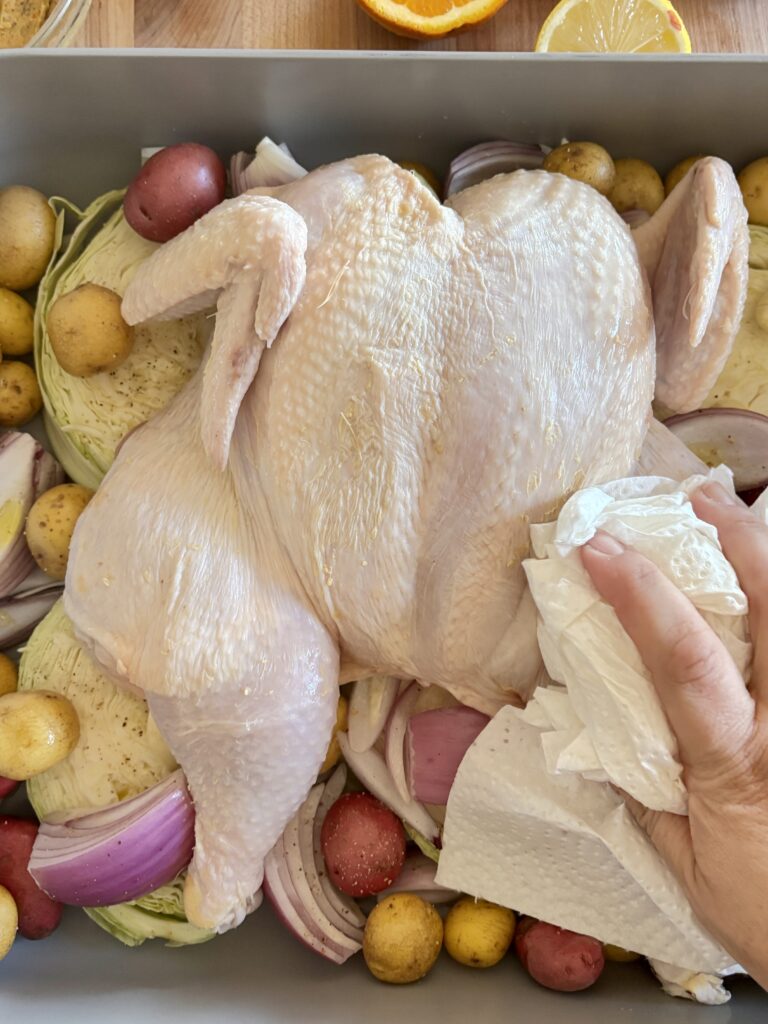
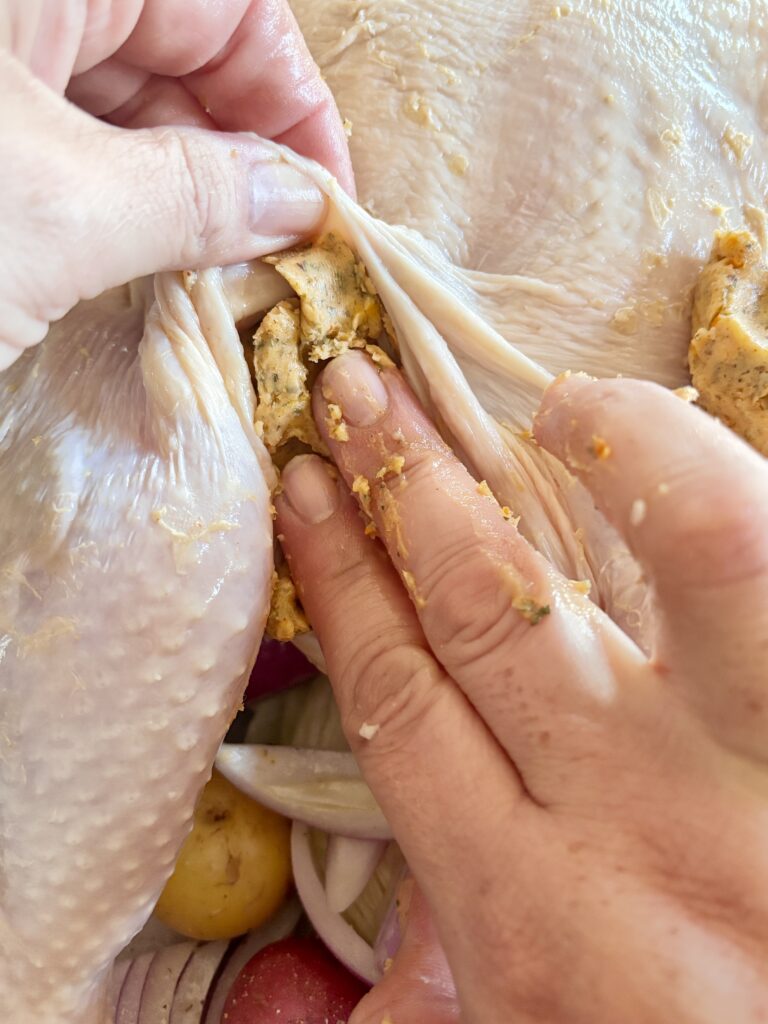
Tuck the wing tips behind the breasts if desired (I tend to skip this step), then thoroughly pat the chicken dry with paper towels. Carefully loosen the skin over the breasts and thighs to make room for spreading the citrus herb butter.
Food safety tip: Avoid rinsing raw chicken, which can spread bacteria around the sink. Wash your hands thoroughly after handling it, and clean and sanitize the cutting board, shears, countertops, and any utensils that touch the raw chicken.
Do I Need Special Equipment to Spatchcock a Chicken?
Not really! The most important tool is a sturdy pair of sharp kitchen shears. Poultry shears are ideal because they’re designed to cut through small bones and cartilage. I also recommend using a large, stable cutting board with a nonslip surface.
If you’d rather skip this step, you can ask your butcher to remove the backbone and flatten the chicken for you. Or I have seen spatchcock chickens in the regular grocery store as well. It will likely just be an upcharge.
What ingredients do I need?
- For the Chicken
- Whole Chicken: Use a 5–6 pound whole chicken, preferably one without added salt or seasoning solution. A spatchcocked chicken roasts more evenly and provides plenty of meat for approximately six servings.
- Fresh Lemon: Adds bright citrus aroma and acidity. The zest flavors the butter, while the halved lemon roasts alongside the chicken and can be squeezed over the vegetables before serving.
- Fresh Orange: Adds a slightly sweeter citrus flavor that complements the garlic, herbs, and maple seasoning.
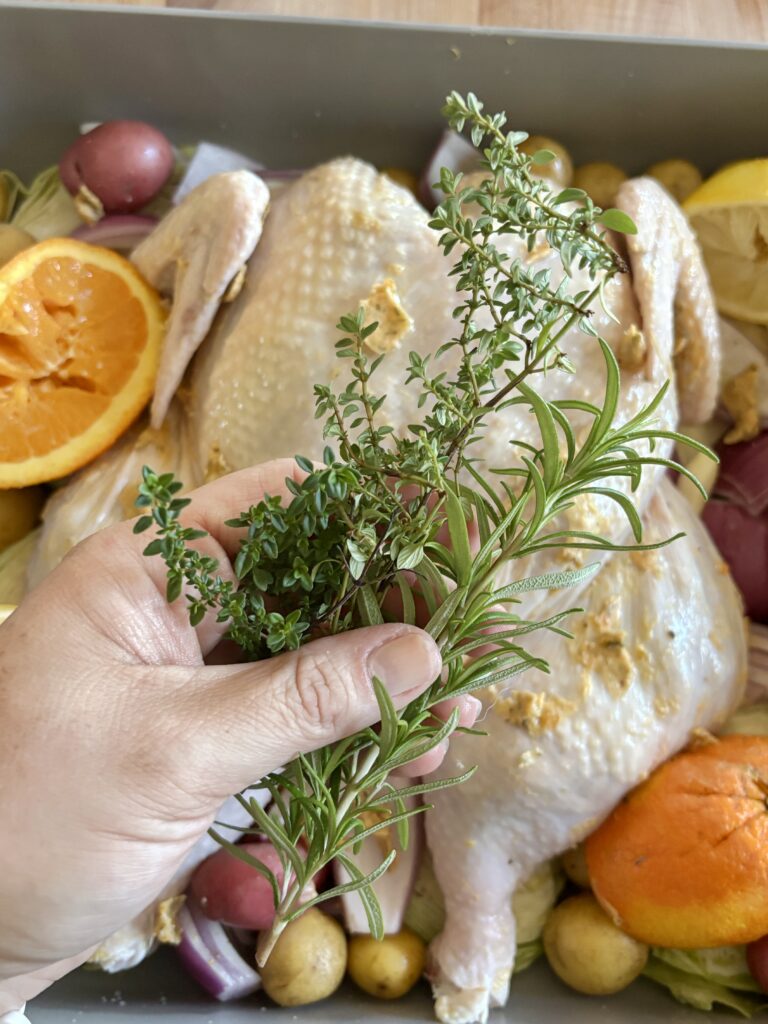
- Fresh Rosemary: Provides a woodsy, fragrant flavor that pairs beautifully with roasted chicken and citrus.
- Fresh Thyme: Adds a delicate earthy flavor that balances the richness of the butter.
- For the Citrus Herb Butter
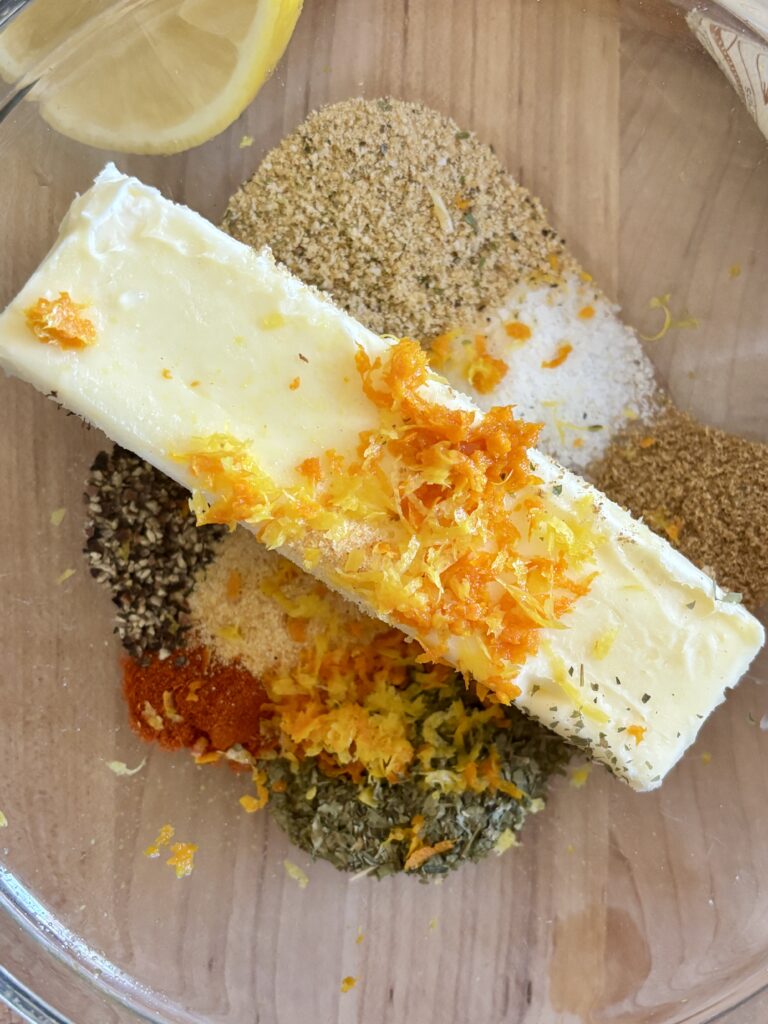
- Unsalted Butter: Creates the rich, flavorful base for the seasoning mixture. Using unsalted butter allows you to control the salt level.
- Garlic Powder: Adds savory garlic flavor and distributes evenly throughout the butter.
- Fresh Orange Zest: Adds fragrant citrus oils and a subtle sweetness without introducing extra liquid.
- Fresh Lemon Zest: Brightens the herb butter and complements the rich chicken.
- Ground Coriander: Adds a warm, slightly citrusy flavor that works especially well with lemon and orange.
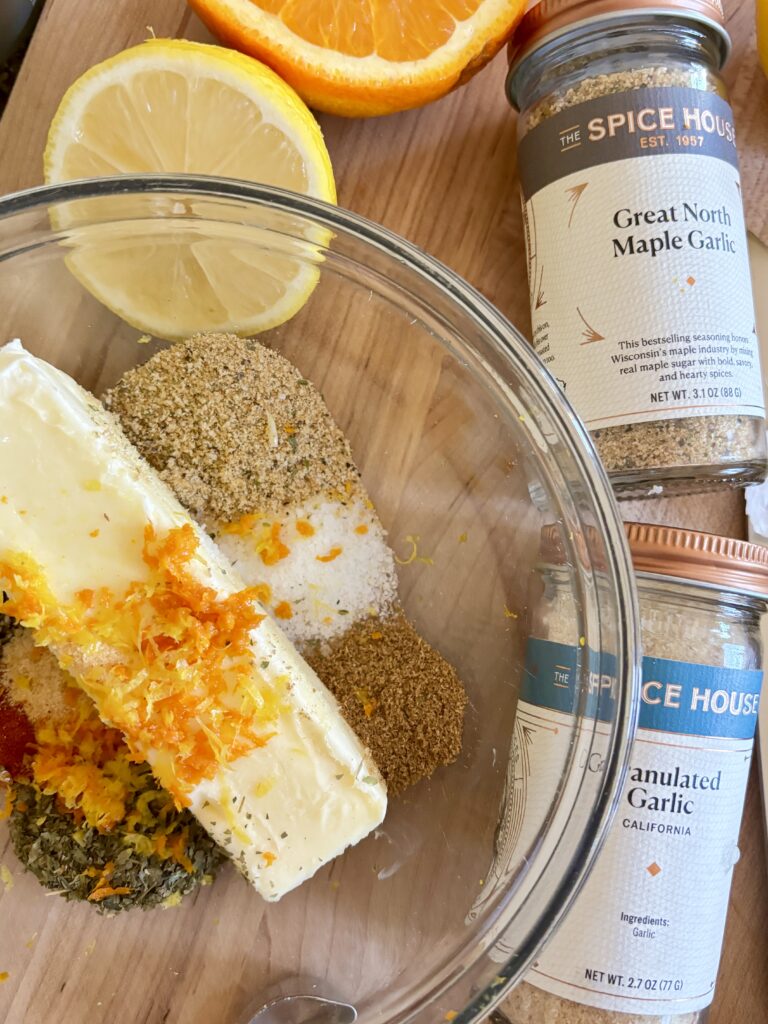
- The Spice House Great North Maple Garlic Seasoning: One of my favorite additions to this recipe! It adds a delicious combination of savory garlic and subtle maple sweetness that complements the citrus and herbs without making the chicken taste sweet. (I also have a quick and easy substitution below if you can’t find this seasoning. It isn’t a perfect match, but it gives you some of the flavors).
- Paprika: Adds mild pepper flavor and helps give the chicken its beautiful golden color.
- Kosher Salt: Seasons the chicken throughout and brings out the flavors of the citrus, herbs, and spices.
- Freshly Cracked Black Pepper: Adds a subtle warmth and savory depth.
- Dried Parsley: Adds an additional layer of herbal flavor and blends easily into the butter.
- For the Roasted Vegetables
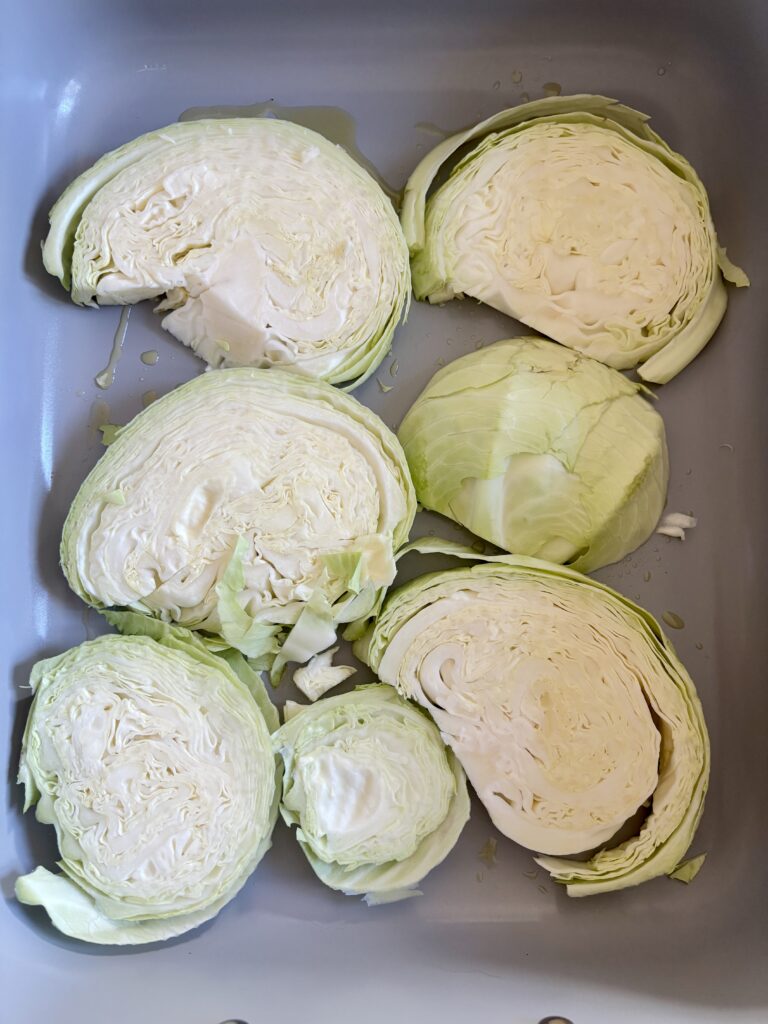
- Green Cabbage: Thick cabbage steaks create a flavorful bed for the chicken. As they roast, they absorb the buttery pan drippings and become incredibly tender.
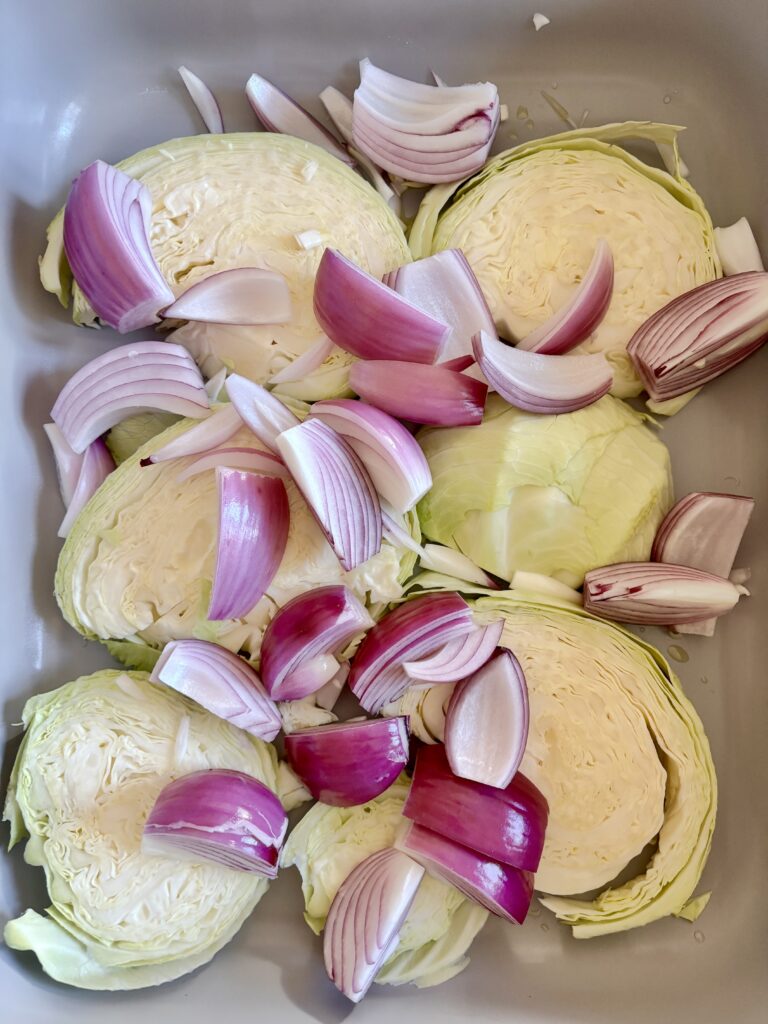
- Red Onions: Develop a mellow sweetness as they roast, balancing the savory chicken and herbs.
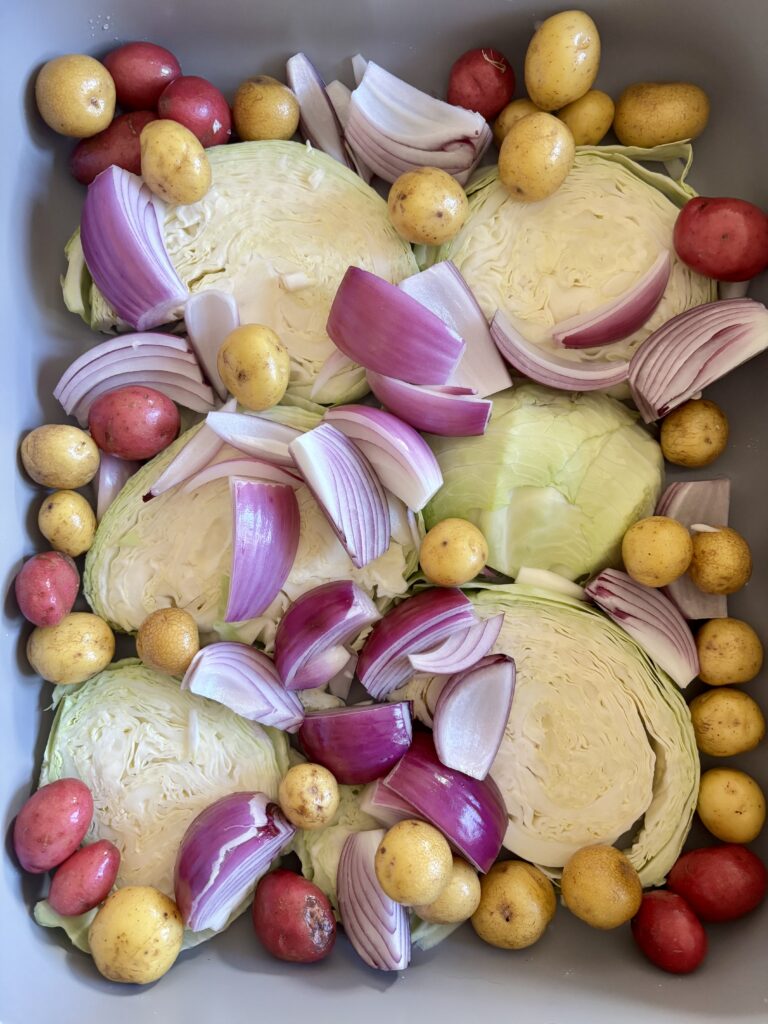
- Baby Potatoes: Become tender inside with lightly caramelized edges. Their mild flavor makes them perfect for soaking up the pan drippings.
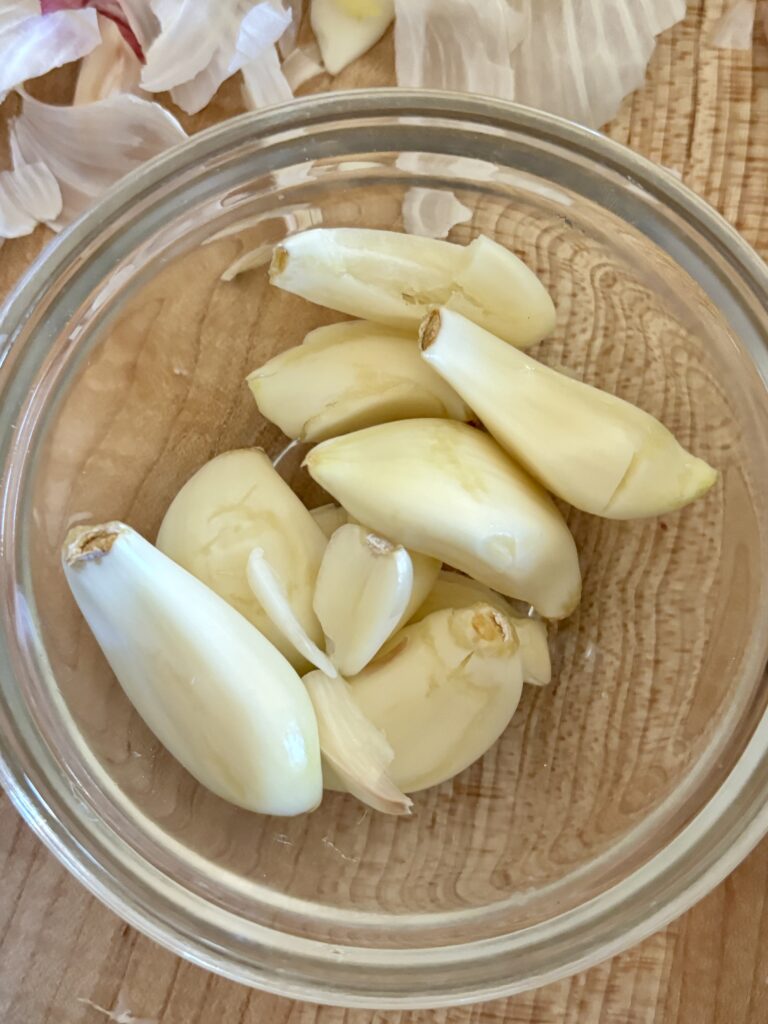
- Whole Garlic Cloves: As the chicken roasts, the whole garlic cloves become incredibly soft, buttery, and mellow, soaking up all those flavorful pan drippings and adding a delicious, subtle sweetness to the cabbage and onions underneath.
- Extra Virgin Olive Oil: Helps the vegetables roast evenly and develop golden edges.
- Kosher Salt and Black Pepper: Simple seasonings that allow the vegetables and chicken drippings to shine.
Recipe Variations
- Honey Citrus Chicken: Add 1–2 teaspoons honey to the herb butter for a slightly sweeter finish. Watch the skin closely during roasting, as the added sugar may brown more quickly.
- Lemon Rosemary Chicken: Use double the lemon zest and roasted lemon without the orange for a brighter, more herb-forward variation.
- Maple Herb Chicken: Add a small amount of pure maple syrup, about 1 tbsp, to the herb butter for a more noticeable maple flavor.
- Roasted Root Vegetable Chicken: Substitute carrots, parsnips, turnips, or sweet potatoes for some of the baby potatoes.
- Citrus Herb Chicken with Gravy: Serve the roasted chicken with a homemade gravy made from the pan drippings or a separate caramelized onion gravy.
Pro Tips
- Pat the chicken completely dry. Moisture on the surface of the chicken prevents the skin from crisping properly. Use paper towels to thoroughly dry the chicken before applying the herb butter.
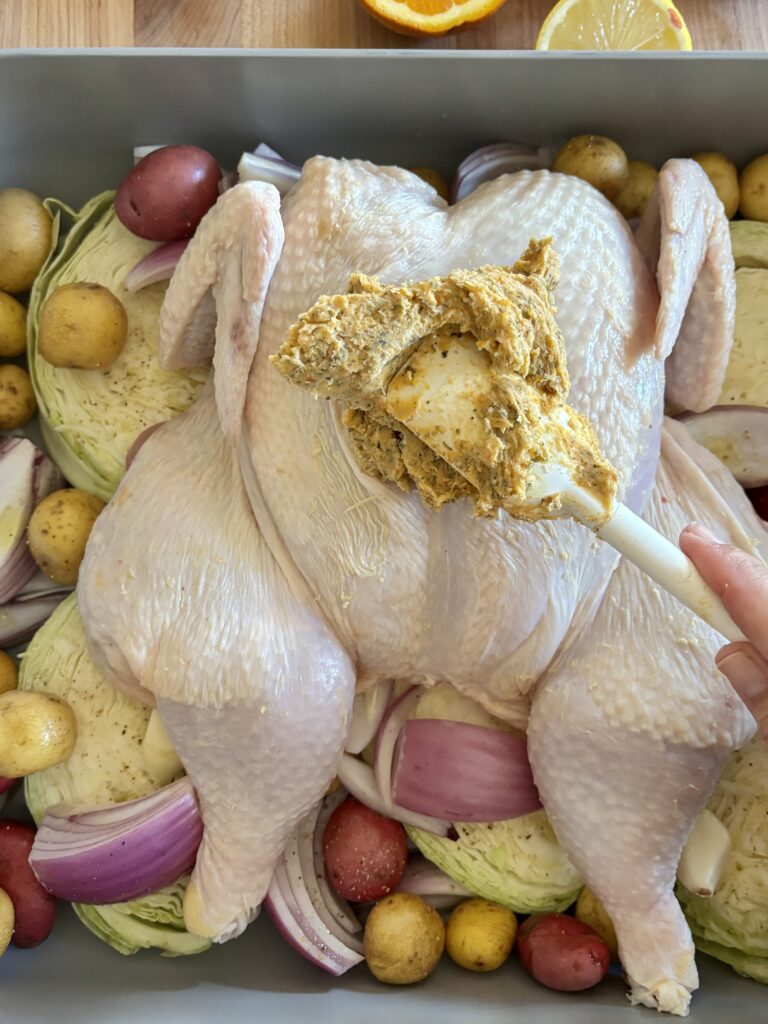
- Use softened butter, not melted butter. Softened butter is much easier to spread underneath the chicken skin and will stay in place as you season the meat.
- Season underneath the skin. This is one of the most important steps! Spreading most of the citrus herb butter directly over the meat allows the flavor to penetrate more effectively while helping the exposed skin brown.
- Don’t overcrowd the roasting pan. A 5–6 pound chicken takes up quite a bit of space once flattened. Use a large roasting pan and spread the vegetables into a single layer as much as possible.
- Keep the cabbage steaks thick. Slice the cabbage into approximately 1-inch-thick steaks, keeping the core intact. This helps the pieces hold together as they roast beneath the chicken.
- Cut the vegetables as evenly. You can leave really small baby potatoes whole, halve medium potatoes, and quarter larger ones.
- Use a meat thermometer. Cooking times vary depending on the size of the chicken, your oven, and the roasting pan. A reliable instant-read thermometer is the best way to ensure the chicken is cooked properly without drying it out.
- Watch the skin closely during roasting. The maple garlic seasoning contains sweet notes that may encourage extra browning. If the skin begins getting too dark before the chicken is fully cooked, loosely tent the darkest areas with foil.
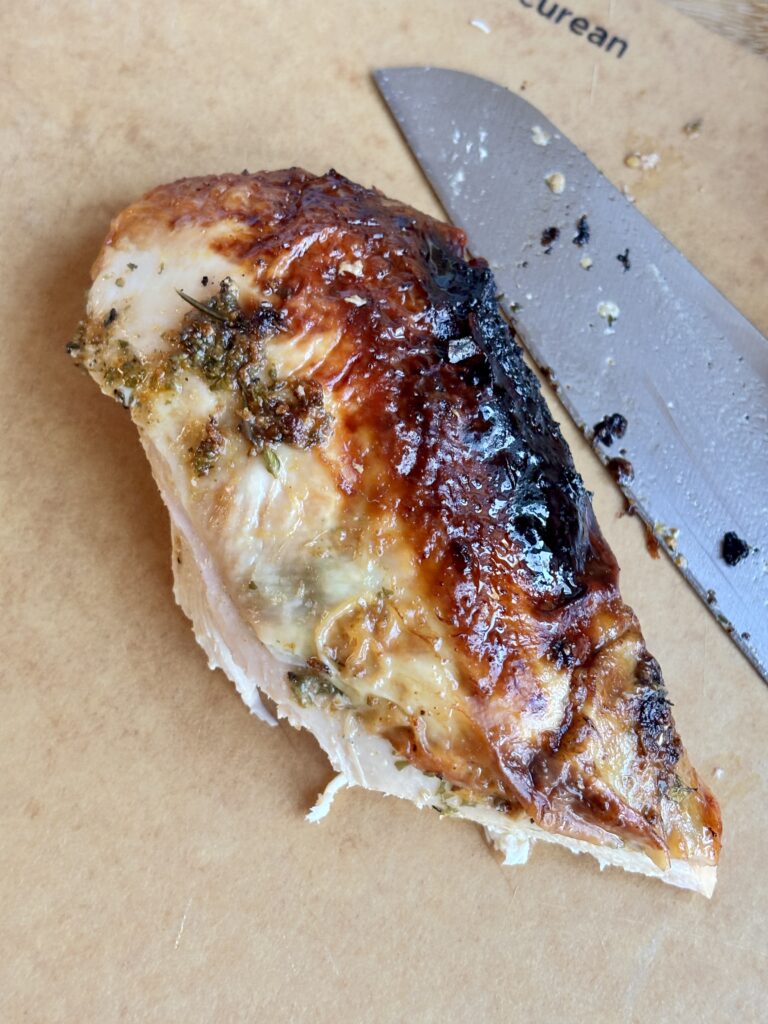
- Let the chicken rest before carving. Resting for 10–15 minutes allows the juices to redistribute, resulting in more tender, juicy meat.
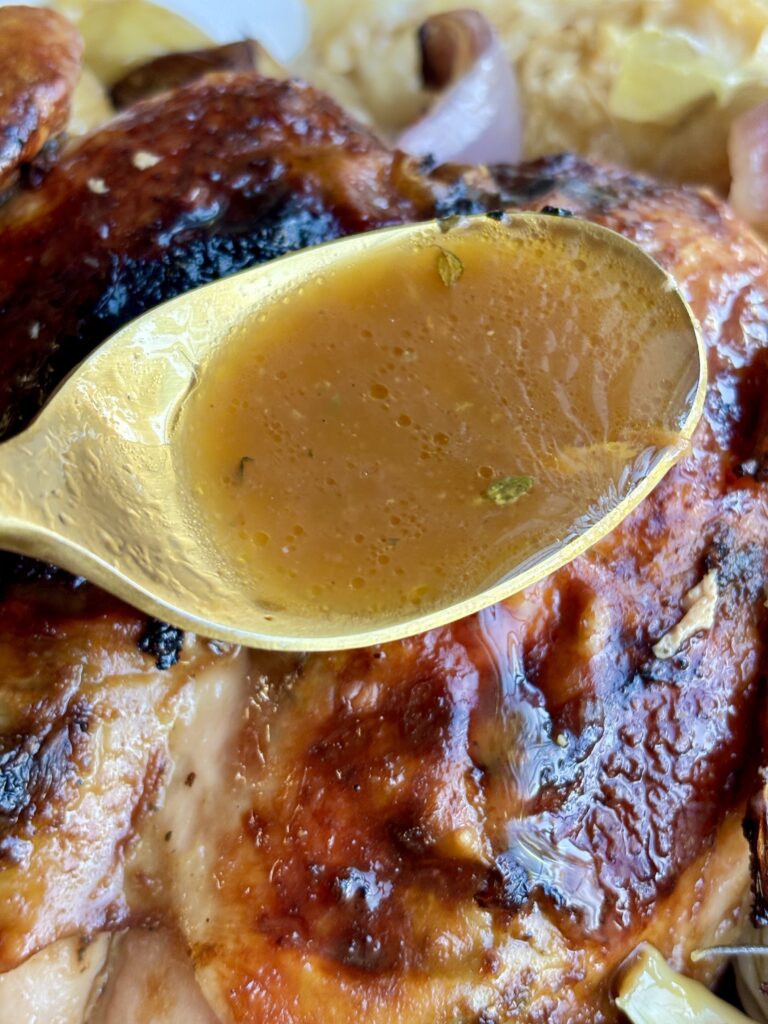
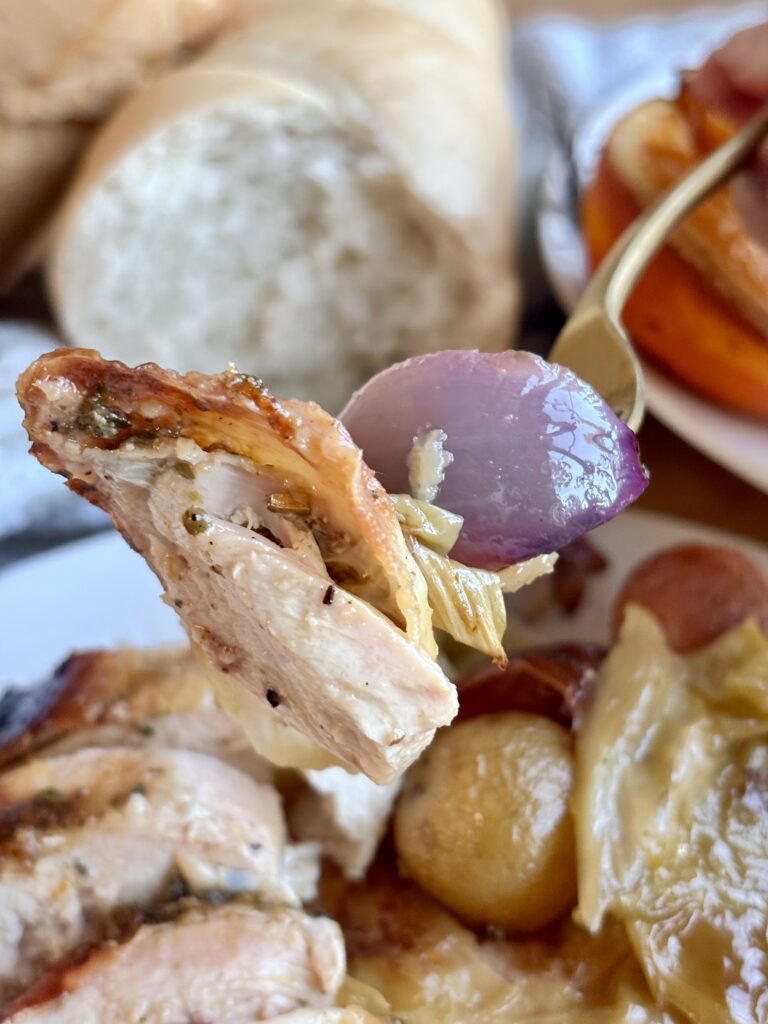
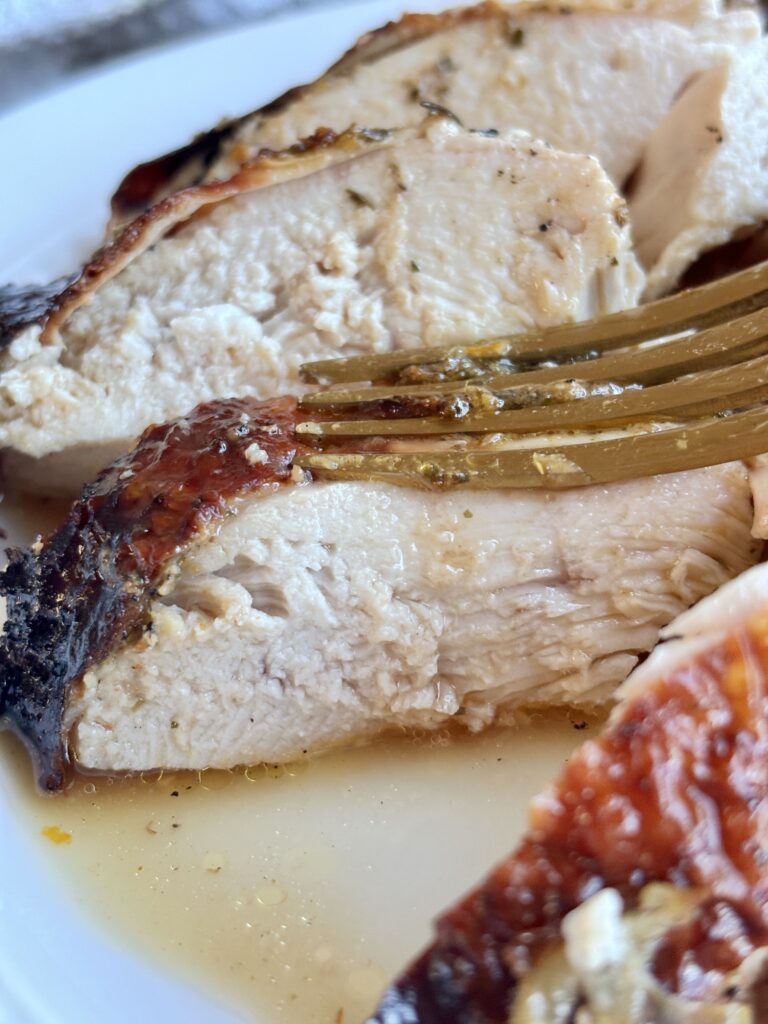
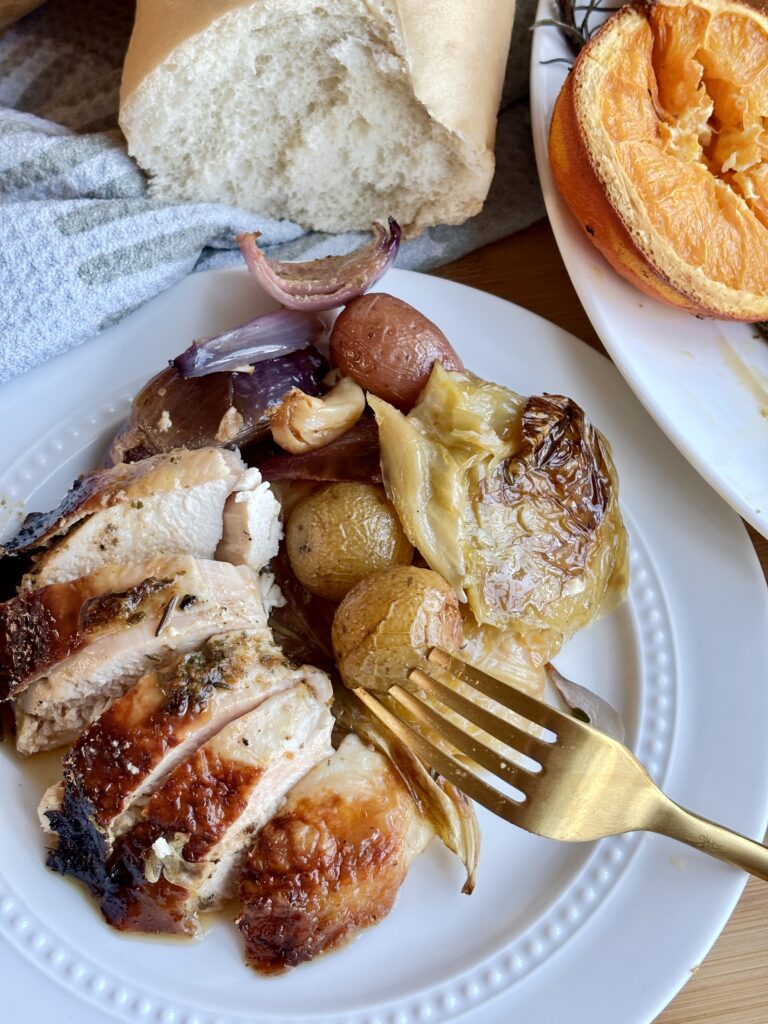
- Don’t discard the pan drippings. Those buttery, citrusy chicken juices are packed with flavor! Spoon them over the cabbage, onions, and potatoes before serving. Or grab a loaf of crusty bread and soak it right up!
Can I Substitute?
Yes! Like always though, any substitutions made to the recipe can result in a change in texture and/or flavor.
- Fresh rosemary and thyme: You can substitute dried herbs for the fresh herbs used around the chicken. As a general guideline though, use approximately one-third as much dried herb as fresh, since dried herbs are much more concentrated.
- Unsalted butter: You can use salted butter, just reduce the additional kosher salt to account for the salt already in the butter.
- Fresh lemon and orange: You can use all lemon, or all orange, if that’s what you have available. Lemon provides a brighter, more acidic flavor, while orange adds a slightly sweeter note.
- Cabbage: Thick wedges of fennel or additional onions would be delicious underneath the chicken. Keep in mind that different vegetables will absorb moisture and cook differently.
- Baby potatoes: Sweet potatoes are a wonderful alternative, especially during fall. Cut them into large, even pieces so they don’t become overly soft before the chicken finishes roasting.
- Whole chicken: You can adapt the citrus herb butter for bone-in, skin-on chicken thighs, but the roasting time and amount of vegetables may need to be adjusted quite a bit.
Dietary Substitutions
- Dairy-Free: To make this Citrus Herb Spatchcock Chicken dairy-free, replace the unsalted butter with an equal amount of dairy-free baking butter or a combination of olive oil and dairy-free butter. Choose a plant-based butter that can withstand high roasting temperatures. The chicken will still develop beautifully golden skin with plenty of citrus, garlic, and herb flavor.
- Low-Sodium: Choose a whole chicken without added salt or seasoning solutions, use unsalted butter, and reduce the kosher salt in the herb butter and vegetables. You can also prepare the homemade maple garlic seasoning substitute to better control the sodium content. Fresh citrus zest, garlic, and herbs will help keep the chicken flavorful even with less salt.
- Lower-Carbohydrate: The chicken itself is naturally low in carbohydrates, but the potatoes, carrots, and maple garlic seasoning contribute additional carbohydrates. For a lower-carbohydrate meal, replace the potatoes with cauliflower florets, zucchini, or additional cabbage. You can also omit the brown sugar from the homemade seasoning substitute. Remember though that substituting other vegetables may require you to change their cook time. Vegetables like zucchini may need to be added halfway through roasting instead.
Leftovers and Storage
- Refrigerator: Allow the chicken and vegetables to cool slightly, then transfer them to separate airtight containers. Refrigerate promptly, within 2 hours of cooking, and store for up to 3–4 days.
- Freezer: Remove the cooked chicken from the bones and transfer the meat to a freezer-safe container or bag. Freeze for up to 3 months for the best quality. The roasted vegetables can also be frozen, although the cabbage and onions may become softer after thawing (which isn’t something I prefer).
- Reheating: Reheat the chicken in a covered baking dish with a splash of chicken broth at 325°F until heated through to 165°F. For crispier skin, uncover it toward the end of reheating. Reheat the vegetables separately in the oven or a skillet.
- Using the Chicken Bones: Save the chicken carcass and backbone to make homemade chicken stock. Freeze the bones if you’re not planning to make stock right away.
- Make Ahead: You can spatchcock the chicken up to a day in advance and keep it covered in the refrigerator. The citrus herb butter can also be prepared ahead and refrigerated. Allow the butter to soften to room temperature before spreading it over the chicken.
Troubleshooting
My chicken skin isn’t crispy
Excess moisture on the skin is one of the most common causes. Pat the chicken thoroughly dry before applying the butter, and avoid spreading too much butter over the outside. An overcrowded roasting pan can also create steam, preventing the skin from crisping properly.
The chicken breast is dry
The breast meat may have been overcooked. Begin checking the internal temperature around 50 minutes and remove the chicken when the thickest part of the breast reaches 165°F. Allow the chicken to rest before carving.
The thighs still undercooked, but the breasts are done
Although spatchcocking helps the chicken cook more evenly, the thighs and breasts can still finish at slightly different times. Check both areas with a meat thermometer. If the breast is cooking faster, loosely shield it with foil while the thighs finish.
The herb butter slid right off the chicken
The butter may have been too warm or the chicken skin may have been wet. Use softened, spreadable butter rather than melted butter, and thoroughly dry the chicken before seasoning. Applying most of the butter underneath the skin also helps keep it in place.
The chicken skin is browning too quickly
The maple garlic seasoning contains sweet notes that can encourage browning. If the skin becomes too dark before the chicken is fully cooked, loosely tent the browned areas with foil and continue roasting until the proper internal temperature is reached.
Vegetables are still too firm after roasting
The vegetables may have been cut too large, or the pan may have been overcrowded. Cut them into evenly sized pieces and spread them into a single layer. If necessary, remove the cooked chicken and continue roasting the vegetables longer until tender.
The vegetables are soggy instead of caramelized
Overcrowding the pan is usually the culprit. Vegetables release moisture as they cook, and if they’re packed too tightly, they steam rather than roast. Use a larger pan or divide the vegetables between two pans.
The cabbage is very soft
The cabbage underneath the chicken absorbs the buttery pan drippings and cooks in a moist environment, so it will become much softer than traditionally roasted cabbage. This is intentional! If you prefer crispier cabbage, roast some of the wedges separately.
It is taking a long time for the chicken to took
Cooking time depends on the chicken’s weight, oven temperature, pan material, and how crowded the roasting pan is. A 6-pound chicken may require more time than a smaller chicken. Always check for doneness with a thermometer.
My pan drippings are burnt
A large, shallow pan can allow exposed drippings to brown quickly at high temperatures. If you notice smoking or burning, add a small splash of water or unsalted chicken broth to the hot pan, avoiding pouring it over the chicken skin though, which will prevent it from getting crispy.
But, I Still Have A Few Questions…
What does spatchcock mean?
Spatchcocking is a method of preparing poultry by removing the backbone and flattening the bird before cooking. It helps the chicken roast more evenly and exposes more of the skin to the oven’s heat.
Is spatchcock chicken better than traditional roast chicken?
Both methods are delicious, but spatchcocking offers several advantages. It often reduces cooking time, encourages more even cooking, and helps more of the skin become golden and crispy.
Can I ask the butcher to spatchcock my chicken?
Absolutely! Many butcher counters can remove the backbone and flatten the chicken for you, saving you a step at home. I have also seen spatchcocked chicken available at my local grocery store as well.
What size chicken works best for this recipe?
A whole chicken weighing approximately 5–6 pounds is recommended. Smaller chickens will cook more quickly, while larger chickens may need additional roasting time.
Can I prepare the chicken ahead of time?
Yes. You can spatchcock the chicken the day before and refrigerate it until you’re ready to cook. The citrus herb butter can also be mixed in advanced.
Do I need a roasting rack?
Nope! The cabbage steaks and red onions act as a natural bed for the chicken, allowing the vegetables to absorb the delicious pan drippings as everything roasts. This results in so much flavor in the vegetables as well.
Can I make this recipe without The Spice House Great North Maple Garlic Seasoning?
Absolutely! I love this seasoning so much, so if you can buy it I would. However, I understand that isn’t always possible. So if this is the case I would recommend using the homemade maple garlic seasoning substitute I included in the recipe. It combines garlic powder, onion powder, and light brown sugar for a similar sweet-savory flavor.
Can I use a smaller chicken?
Yes. A smaller chicken will generally require less roasting time though. Begin checking the internal temperature earlier and adjust the amount of vegetables if needed. You may want to start roasting the vegetables about 10-15 minutes before adding the chicken. This recipe could work really well with 2 cornish hens as well!
Can I make this recipe with chicken thighs instead?
Yes, the citrus herb butter can be used with bone-in, skin-on chicken thighs. The cooking time will be shorter, and you may need to adjust the vegetables or start them roasting before adding the chicken.
Can I use a cast iron skillet?
Yes, as long as it’s large enough to hold the flattened chicken without overcrowding the skillet. You may need to roast the potatoes separately.
What can I serve with spatchcock chicken?
Since this recipe already includes roasted cabbage, onions, and potatoes, it’s a complete meal on its own. However, crusty bread, a simple green salad, or homemade gravy would make wonderful additions.
Can I use the pan drippings to make gravy?
Absolutely! If you have enough drippings remaining, you can use them as the flavorful base for homemade chicken gravy.
Other Recipes You’ll Love

Let’s engage!
Make sure to tag @thehomechefmomma on Instagram or Facebook, and leave a review or comment if you make these. I always get so excited to see your creations, variations of the recipe, and feedback! Just remember to be kind in your comments, there is still a person behind this screen! 🙂
Citrus Herb Butter Spatchcock Chicken
Ingredients
For the Chicken
- 1 whole chicken 5–6 pounds, spatchcocked, backbone removed
- 1 lemon halved
- 1 orange halved
- 1 –2 sprigs fresh rosemary
- 2 –3 sprigs fresh thyme
For the Citrus Herb Butter
- ½ cup unsalted butter 1 stick, softened
- 1 teaspoon garlic powder
- 1 teaspoon fresh orange zest
- 1 teaspoon fresh lemon zest
- 1 teaspoon ground coriander
- 2 teaspoons The Spice House Great North Maple Garlic Seasoning or homemade substitute below
- 1 teaspoon paprika
- 2 teaspoons kosher salt
- 1 teaspoon freshly cracked black pepper
- 2 teaspoons dried parsley
Homemade Maple Garlic Seasoning Substitute (Optional-Use in place of the 2 teaspoons of prepared maple garlic seasoning):
- 1 teaspoon garlic powder
- ½ teaspoon onion powder
- 1 teaspoon light brown sugar
For the Roasted Vegetables
- 1 small green cabbage cut into 1-inch-thick steaks
- 3 medium red onions peeled and cut into thick wedges
- 8 garlic cloves whole, slightly smashed
- 1 pound baby potatoes halve if large
- 3 tablespoons olive oil divided
- 1 teaspoon kosher salt divided
- ½ teaspoon freshly cracked black pepper
Instructions
- Preheat the oven to 425°F. Position an oven rack in the lower-middle portion of the oven. Lightly grease a very large metal roasting pan or rimmed baking sheet with high sides.
- If the chicken has not already been prepared, place it breast-side down on a sturdy cutting board. Using sharp kitchen shears, cut along both sides of the backbone and remove it. Flip the chicken breast-side up and press firmly on the breastbone until the chicken flattens. Pat the chicken thoroughly dry with paper towels.
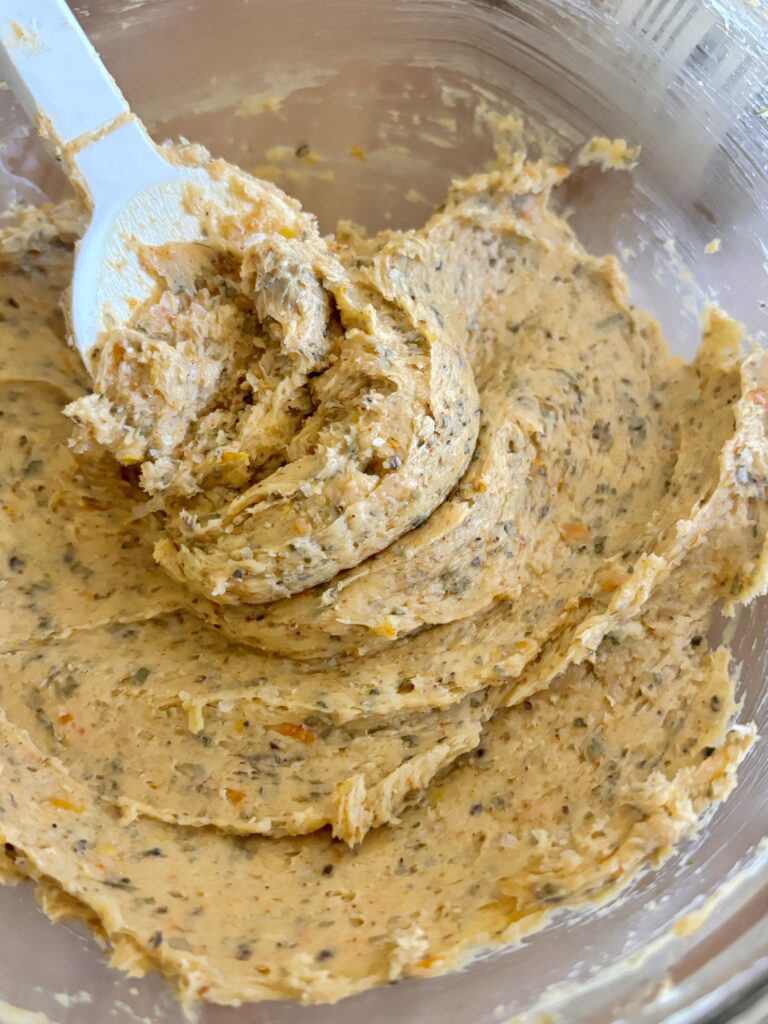
- In a small bowl, combine the softened butter, garlic powder, orange zest, lemon zest, ground coriander, Great North Maple Garlic Seasoning (or homemade substitute), paprika, kosher salt, black pepper, and dried parsley. Mix until smooth and evenly combined.
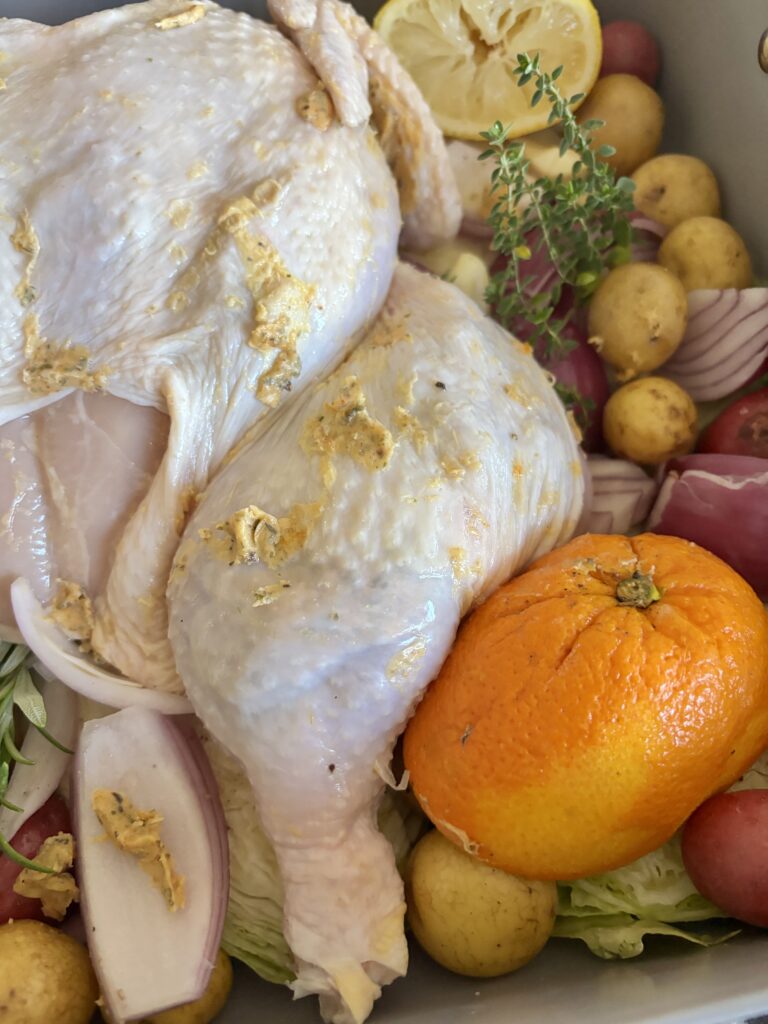
- Carefully loosen the skin over the chicken breasts and thighs without tearing it. Spread approximately two-thirds of the citrus herb butter underneath the skin, distributing it evenly over the meat. Rub the remaining butter over the outside of the chicken, including the legs and wings.
- Arrange the thick cabbage steaks and red onion wedges in the center of the roasting pan, creating a bed for the chicken. Drizzle with 1 tablespoon olive oil and season with approximately ½ teaspoon kosher salt and a pinch of black pepper.
- Arrange the potatoes and garlic surrounding the cabbage and onions. Spread into a single layer as much as possible. Drizzle with a little more olive oil and kosher salt.
- Place the spatchcocked chicken breast-side up directly on top of the cabbage and red onions. Tuck the rosemary and thyme sprigs around the chicken and vegetables. Squeeze lemon and orange juice over the chicken and then arrange the halved lemon and orange cut-side up in any available spaces around the pan.
- Transfer the pan to the preheated oven and roast for approximately 55–75 minutes, depending on the size of the chicken and the roasting pan. Begin checking the internal temperature around 50 minutes. The chicken is fully cooked when the thickest part of the breast and thigh reaches at least 165°F, without touching bone. For especially tender dark meat, the thighs can reach approximately 175–185°F. If the exposed vegetables begin browning too quickly, loosely cover those areas with foil.
- Once the chicken reaches the proper internal temperature, carefully transfer it to a large cutting board and allow it to rest for 10–15 minutes before carving.
- Check the potatoes for tenderness. If needed, return the roasting pan to the oven for another 10–15 minutes, increasing the temperature to 450°F to encourage additional caramelization. The cabbage underneath the chicken should be tender and buttery, while the exposed edges develop a deeper roasted flavor.
- Squeeze a little roasted lemon over the cabbage and onions, if desired. Spoon some of the pan drippings over the vegetables. Carve the chicken and serve with the roasted cabbage, red onions, potatoes, and carrots. Garnish with fresh rosemary or thyme.
Notes
citrus herb spatchcock chicken | spatchcock chicken recipe | citrus herb butter chicken | roasted spatchcock chicken | garlic herb spatchcock chicken | maple garlic chicken | whole roasted chicken with vegetables | spatchcock chicken with cabbage | one pan roasted chicken dinner | crispy skin roast chicken | lemon orange roast chicken | herb butter roast chicken | Sunday chicken dinner | how to spatchcock a chicken | easy whole chicken recipe | roasted chicken with potatoes and carrots | fall chicken dinner recipes

Nutritional Content Disclaimer
I choose not to include nutritional information with my recipes, as these values can be calculated from the ingredients provided. With my background as a pediatric nurse practitioner and my own family experience with disordered eating, I understand how focusing on numbers can affect our relationship with food. My philosophy is that all foods have a place—sweet, savory, nourishing, or indulgent. I aim to share recipes that support a healthy, joyful approach to eating. My hope is that this space also encourages a balanced, healthy relationship with food for you and your family too.