

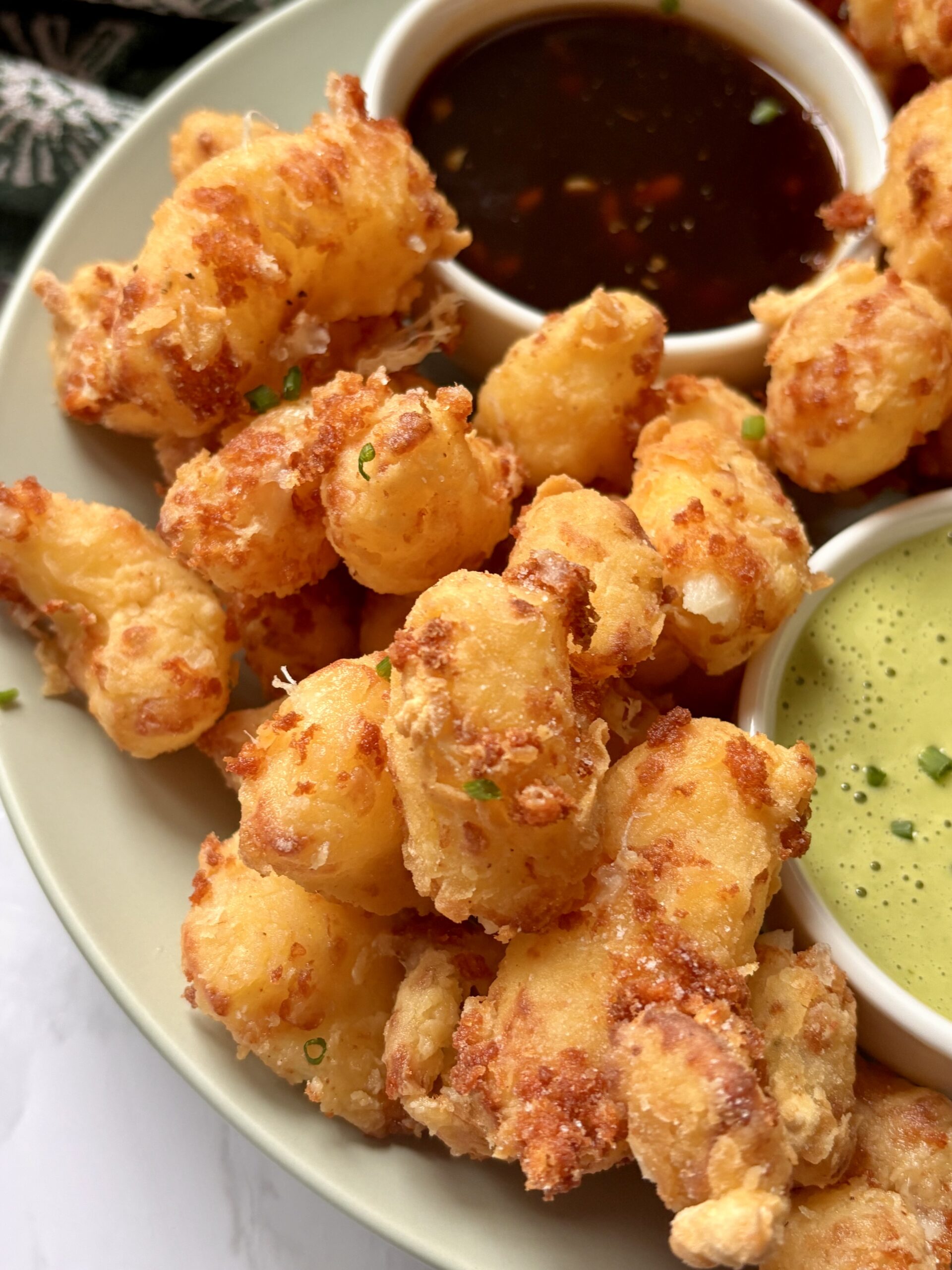
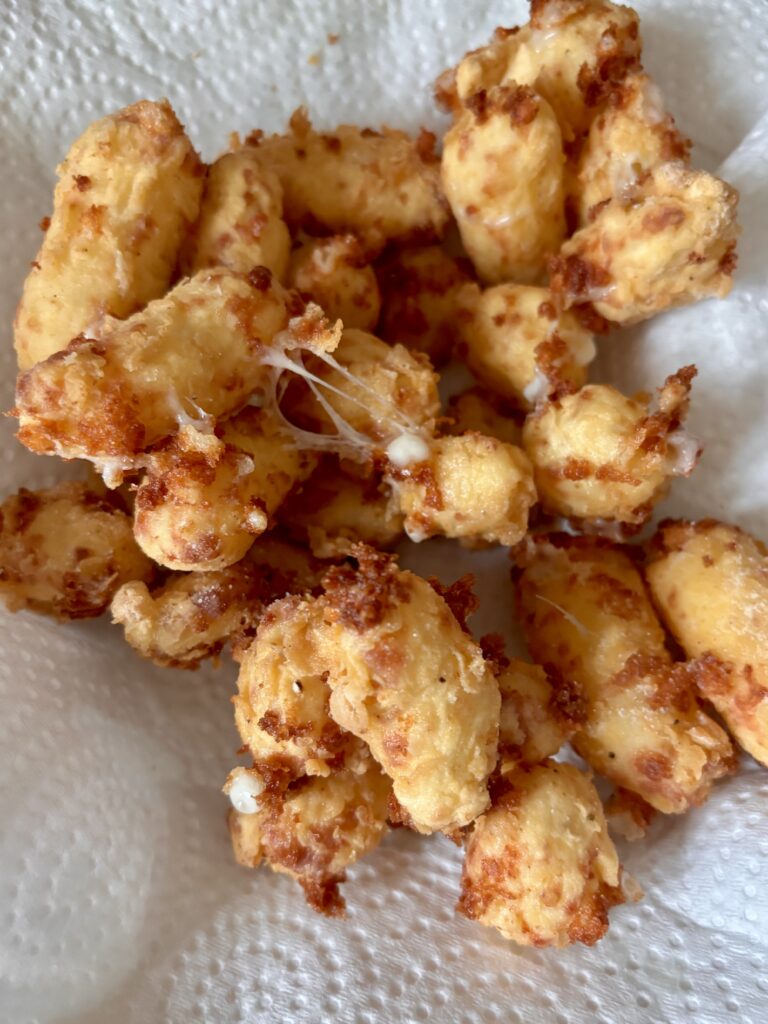
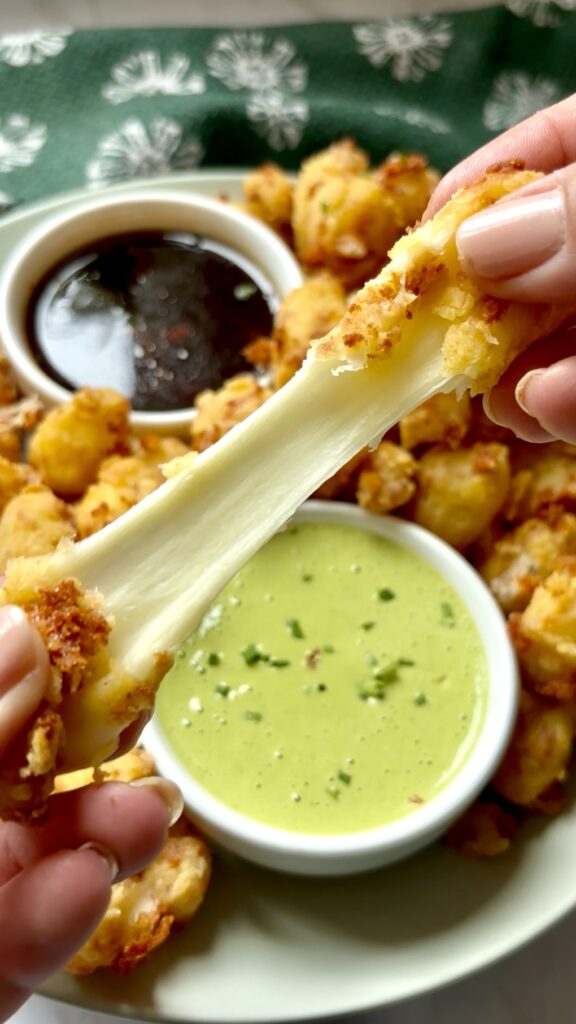
Golden, crispy, and irresistibly cheesy, these Fried Cheese Curds are the ultimate snack or appetizer for any occasion. Made with fresh cheese curds lightly coated in a seasoned, airy breading and fried to perfection. They deliver a satisfying crunch with every bite while keeping the cheese gooey and melty inside.
These are perfect for game day, parties, family gatherings, or a cozy night in. This recipe is easy and comes together in under 30 minutes. Whether you’re serving them as a crowd-pleasing appetizer, a fun snack, or a playful addition to your comfort food menu, these Fried Cheese Curds are guaranteed to impress.
Why you’ll love this recipe!
What ingredients do I need?
- Cheddar Cheese Curds – Fresh, squeaky curds that are patted dry to ensure the coating sticks and fries evenly.
- All-Purpose Flour – Forms the base of the light breading, creating a crisp exterior.
- Cornstarch – Adds extra crunch and prevents the coating from getting soggy.
- Baking Powder – Helps the breading puff slightly for a lighter, airy texture.
- Paprika – Provides subtle smoky sweetness and enhances color.
- Garlic Powder – Adds savory depth without overpowering the cheese.
- Salt & Pepper – Season the flour mixture to highlight the flavor of the curds.
- Eggs – Bind the flour coating to the cheese; whisked with milk or sparkling water for extra lightness.
- Club Soda or Milk (optional) – Lightens the egg wash for a thinner, crispier coating.
- Oil for Frying – Neutral oil with a high smoke point to fry curds to golden perfection.
Recipe Variations
- Spicy version: Add cayenne pepper or smoked paprika to the dry mix for an extra kick.
- Herby version: Mix finely chopped fresh herbs (like parsley, thyme, or chives) into the flour for an aromatic touch.
- Swap out the cheese used: Trade traditional cheese curds for mozzarella or a mix of cheddar curds for different flavor profiles.
Pro Tips
- Pat Curds Dry: Make sure cheese curds are completely dry to prevent soggy coating and reduce oil splatter.
- Double-Dredge for Extra Crisp: Coat curds in flour, then egg wash, then a light second flour coating for maximum crunch.
- Check Oil Temperature:
- With a Thermometer: Heat oil to 350–360°F (175–180°C) for perfect frying.
- Without a Thermometer: Dip the end of a wooden spoon into the oil. Tiny bubbles forming and rising steadily indicate the oil is ready. Vigorous bubbles or smoking means it’s too hot—lower the heat.
- Fry in Small Batches: Avoid overcrowding the pan to maintain consistent temperature and even crispiness.
- Serve Immediately: Fried cheese curds are best enjoyed hot and melty straight from the oil.
- Drain Properly: Place fried curds on paper towels or a wire rack to remove excess oil. And then immediately sprinkle with a little salt.
Can I Substitute?
Yes! Like always though, any substitutions made to the recipe can result in a change in texture and/or flavor.
- Gluten-Free: Substitute all-purpose flour with a gluten-free flour blend or rice flour.
- Dairy-Free/Vegan: Use vegan cheese curds and a plant-based milk for the egg wash.
Leftovers and Storage
- Best served immediately for maximum crispiness.
- Store leftover fried cheese curds in an airtight container in the fridge for up to 24 hours.
- To reheat, place in a 375°F oven for 5–7 minutes to restore crispiness.
- Avoid microwaving to prevent soggy breading
But, I Still Have A Few Questions…
How do you keep cheese curds from leaking while frying?
Pat cheese curds completely dry and fry at the correct oil temperature to prevent leakage.
Can I make them ahead of time?
Fried Cheese Curds are best served immediately. But, you can coat curds and refrigerate for up to 2 hours before frying. Fry just before serving.
How do I make them extra crispy?
Double dredging with flour and using club soda water in the egg wash creates an extra light and crispy coating.
What are the best cheese curds for frying?
Fresh, mild cheddar or mozzarella curds work best because they melt perfectly and have a tender texture.
Can I bake them instead of frying?
Yes! Coat as usual, place on a parchment-lined baking sheet, and bake at 400°F for 10–12 minutes until golden, turning halfway. However, frying yields the crispiest result.
What dipping sauces pair well with fried cheese curds?
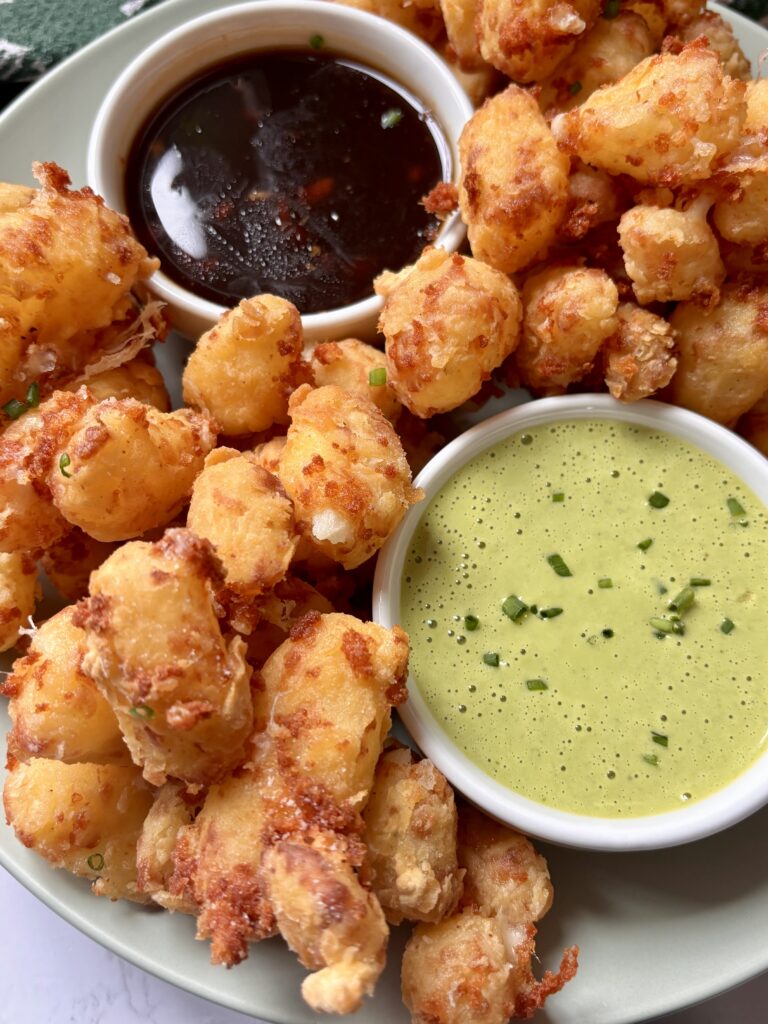
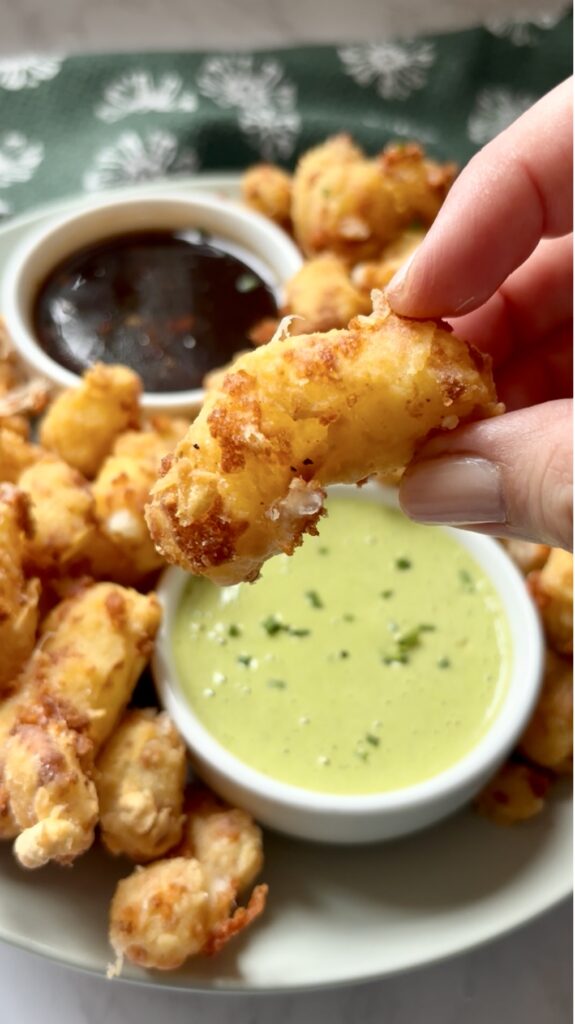
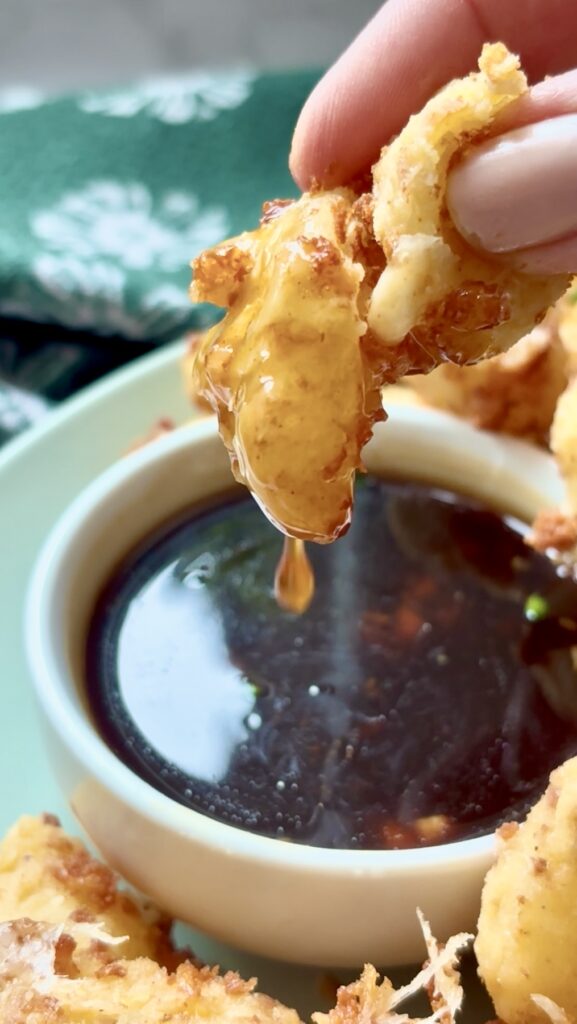
I love pairing these with my Miso Green Goddess Dip and Sweet Chili Dipping Sauce. But ranch, marinara, honey mustard, sriracha aioli, or a simple garlic aioli complement the curds well.
Other Recipes You’ll Love
Let’s engage!
Make sure to tag @thehomechefmomma on Instagram or Facebook, and leave a review or comment if you make these. I always get so excited to see your creations, variations of the recipe, and feedback! Just remember to be kind in your comments, there is still a person behind this screen! 🙂
Fried Cheese Curds
Ingredients
- 16 oz Cheddar cheese curds pat dry
- 1 cup All-purpose flour
- 2 tbsp Cornstarch
- 1/4 tsp baking powder
- 1/4 tsp paprika
- 1/4 tsp garlic powder
- 2 eggs whisked with 2 tbsp club soda water (optional)
- Oil for frying neutral, like canola or vegetable
Instructions
Prepare Dry Mix
- Combine flour, cornstarch, baking powder, paprika, garlic powder, salt, and pepper in a shallow bowl.
Prepare Egg Wash
- Beat eggs with a splash of milk or club soda water for a lighter coating.
Coat the Cheese Curds
- Pat cheese curds completely dry.
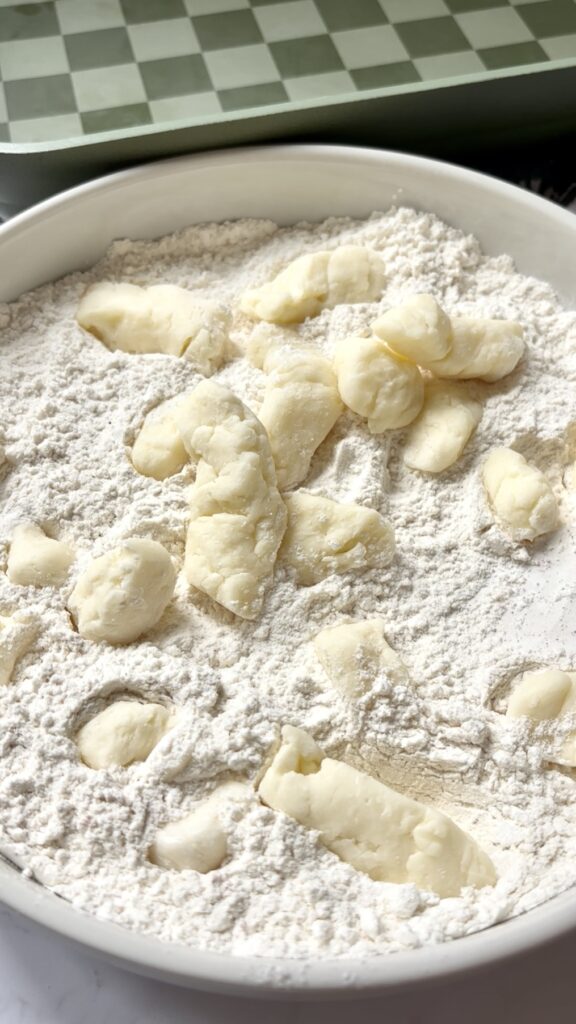
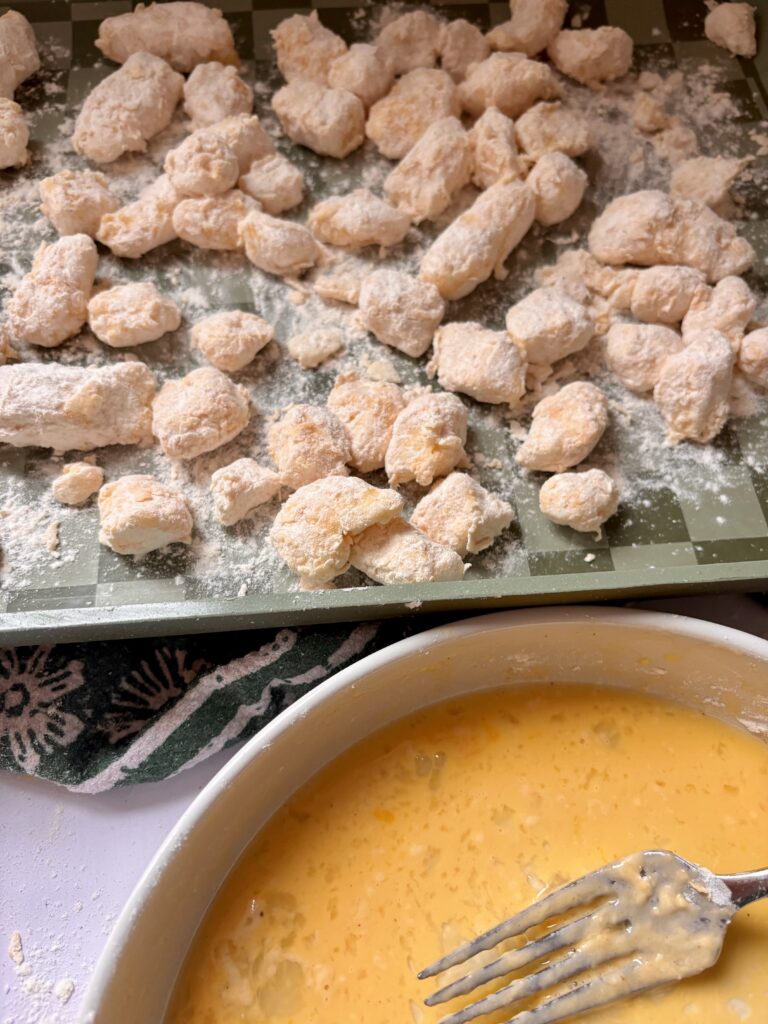
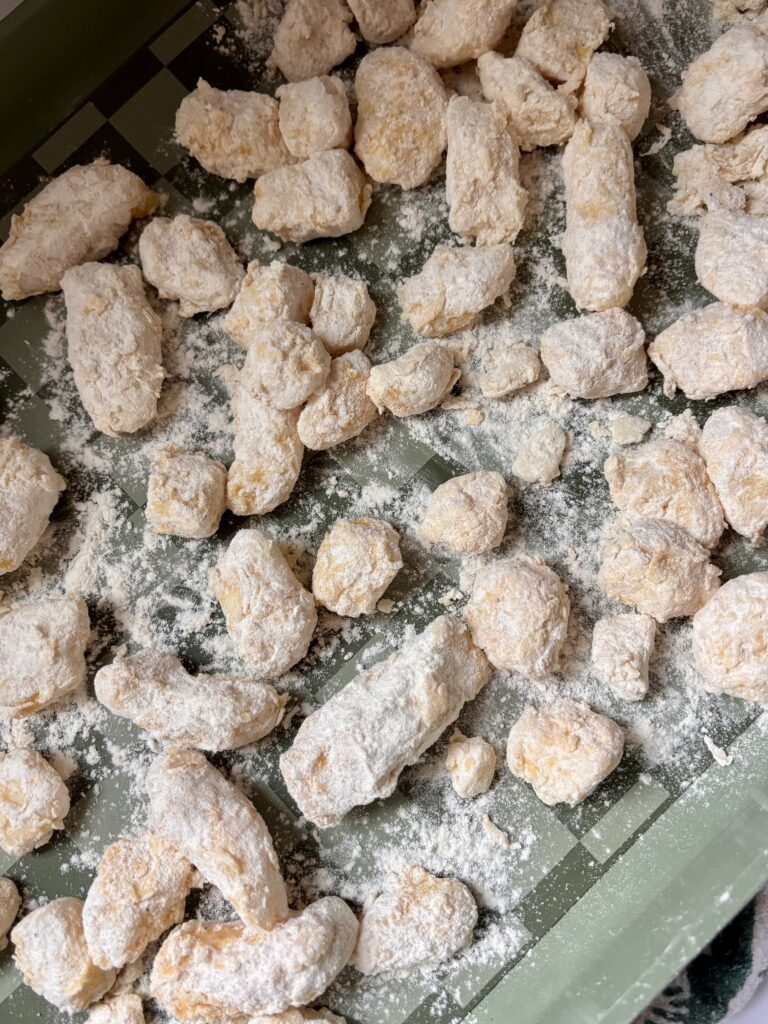
- Step 1: Lightly dredge in the seasoned flour.
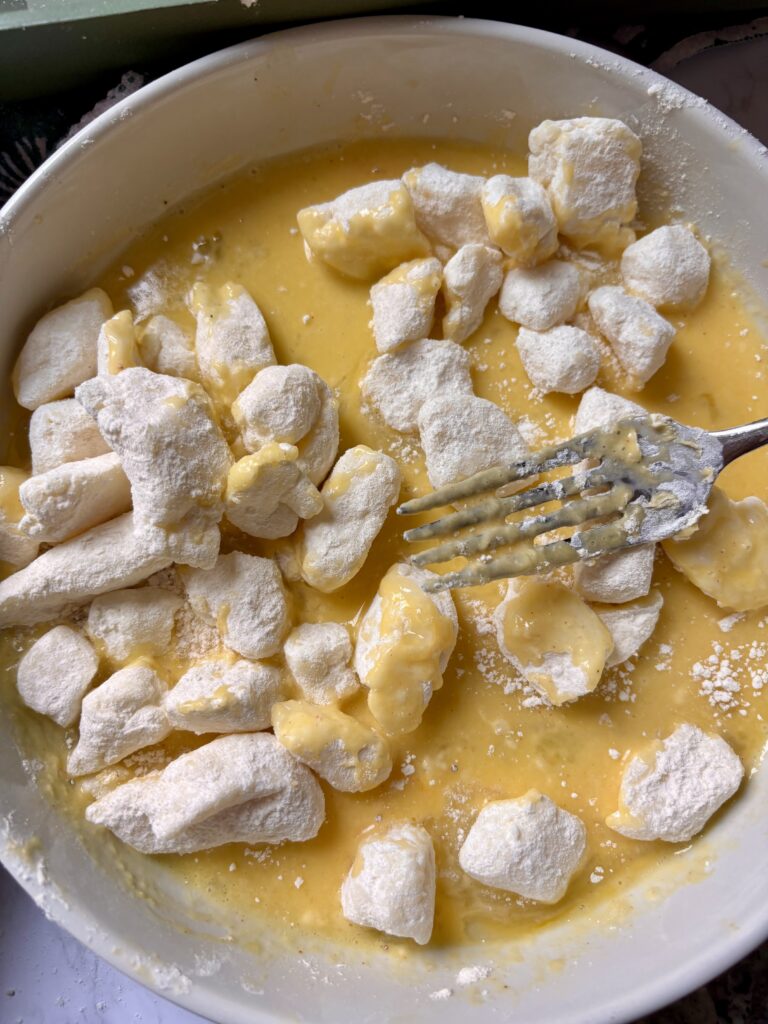
- Step 2: Dip in the egg wash, coating just enough to stick.
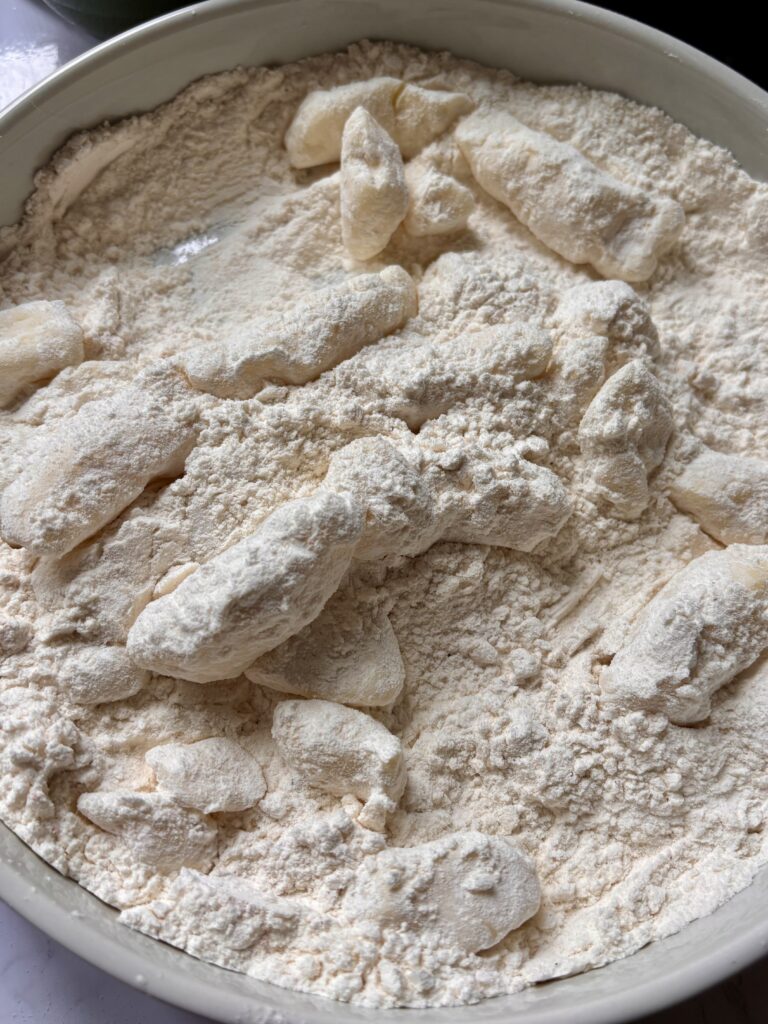
- Step 3: Return to flour for a thin final coating and shake off excess.
Fry Curds
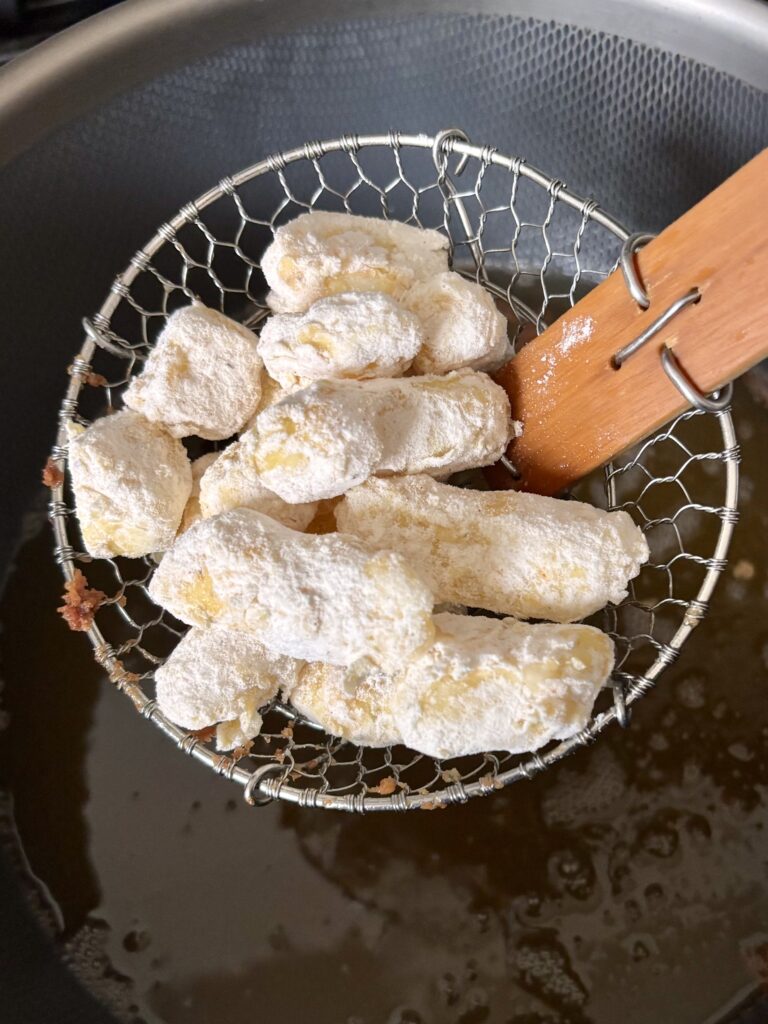
- Heat oil to 350–360°F (175–180°C).
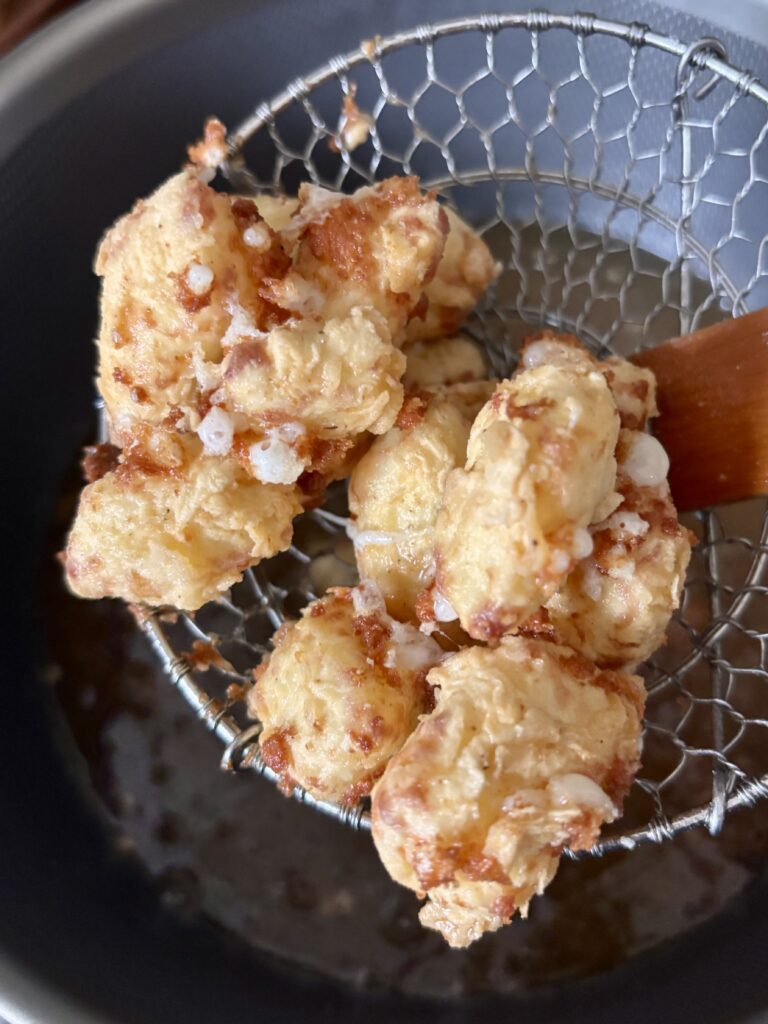
- Fry curds in small batches for 1–2 minutes until golden brown. Avoid overcrowding the pan.
- Drain on paper towels and serve immediately.
Fried Cheese Curds | Crispy Cheese Curds | Homemade Fried Cheese Curds | Easy Appetizer Recipes | Game Day Snacks | Holiday Recipes | Melty Cheese Snack | Party Recipes | Party Appetizers | Cheesy Recipes | Fried Cheese Recipe | Lightly Fried Cheese Curds | Lightly Fried | How to Fry Cheese Curds

Nutritional Content Disclaimer
I choose not to include nutritional information with my recipes, as these values can be calculated from the ingredients provided. With my background as a pediatric nurse practitioner and my own family experience with disordered eating, I understand how focusing on numbers can affect our relationship with food. My philosophy is that all foods have a place—sweet, savory, nourishing, or indulgent. I aim to share recipes that support a healthy, joyful approach to eating. My hope is that this space also encourages a balanced, healthy relationship with food for you and your family too.