
If you’re looking for a cozy, comforting soup that’s a little different from the usual, this Creamy Roasted Celery Root Soup is one you need to try!
Celery root, also known as celeriac, has a mild, earthy, slightly nutty flavor that becomes even more delicious when roasted. For this soup, I roast it alongside cauliflower, apples, leeks, and garlic to bring out all those wonderful flavors. The apples add just a touch of sweetness, while fresh thyme and sage bring everything together.
Once roasted, the vegetables simmer in chicken bone broth before getting blended with crème fraîche and butter until incredibly smooth and creamy.
And while the soup itself is delicious, the toppings might be my favorite part! Crispy artichokes, crunchy rye croutons, fresh chives, and a drizzle of good olive oil add the perfect contrast to that rich, velvety soup.
It’s comforting, full of flavor, and a little unexpected in the best way. Perfect for a cozy fall dinner, a chilly winter day, or even as a starter for your holiday table.

Why you’ll love this recipe!

What Is Celery Root?
If you’ve ever spotted a large, knobby, slightly intimidating looking vegetable in the produce section, there’s a good chance it was celery root!
Also known as celeriac, celery root is a root vegetable with rough, brown skin and a firm, creamy white interior. Despite its name, it isn’t simply the root of the celery stalks you typically buy at the grocery store. It’s a variety of celery grown specifically for its enlarged, edible root.
Its flavor is mild and earthy, with subtle notes of celery, parsley, and a slightly nutty sweetness.
Unlike celery stalks, which have a crisp, fibrous texture, celery root becomes tender and creamy when cooked. This makes it especially delicious in soups, purees, mashes, and roasted vegetable dishes.
And when roasted, celery root develops a slightly sweeter, more concentrated flavor. Once blended, it creates a naturally thick, smooth consistency without requiring flour or another traditional thickener.
In this recipe, the celery root works alongside roasted cauliflower to create the creamy base, while apples, leeks, garlic, and fresh herbs add layers of flavor.

What Does Celery Root Taste Like?
Celery root has a mild, earthy flavor that’s somewhat similar to celery, but it’s less sharp and more delicate. It also has subtle nutty notes and a gentle sweetness, especially after roasting.
If you’ve never tried it before, think of it as somewhere between celery, parsley root, and a mild root vegetable like turnip, but with its own distinct flavor. The flavor becomes even more mellow when cooked, making it perfect for creamy soups.



What ingredients do I need?
- Soup
- Celery Root (Celeriac): The star of this recipe! Celery root has a mild, earthy, slightly nutty flavor that becomes sweeter and more concentrated when roasted. Once blended, it creates a naturally thick, creamy texture that makes it perfect for homemade soup.
- Cauliflower: Roasted cauliflower adds body, a subtle nutty flavor, and extra creaminess without overpowering the celery root. It blends beautifully with the other vegetables to create a smooth, velvety consistency.
- Apples: Apples add a subtle natural sweetness that balances the earthy celery root and savory vegetables. Roasting them helps soften their texture and develop their flavor. You don’t need an overly sweet variety; a firm apple with a good balance of sweetness and tartness works beautifully.
- Leeks: Leeks have a mild, sweet onion flavor that becomes even more delicate when roasted. They add savory depth without the sharper bite of traditional onions. Be sure to clean them thoroughly, as dirt and grit can hide between their layers.
- Garlic: Whole garlic cloves roast alongside the vegetables, becoming soft, mellow, and slightly sweet. Roasting takes away much of garlic’s sharpness and adds a rich, savory flavor to the finished soup.
- Extra Virgin Olive Oil: Olive oil helps the vegetables roast evenly and develop flavor. I also love finishing the soup with a drizzle of good-quality extra virgin olive oil for additional richness.
- Paprika: A little paprika adds warmth and a subtle savory depth that complements the roasted vegetables.
- Kosher Salt and Black Pepper: These simple seasonings help bring out the natural flavors of the vegetables and balance the finished soup.
- Fresh Thyme: Fresh thyme adds a delicate, earthy flavor that pairs beautifully with celery root, cauliflower, and roasted garlic.
- Fresh Sage: Sage brings a warm, aromatic flavor that gives this soup its cozy fall and winter character.
- Chicken Bone Broth: Chicken bone broth adds savory depth and creates the liquid base for the soup. I especially love using bone broth for its rich flavor, but regular chicken broth works well too.
- Crème Fraîche: Crème fraîche gives the soup a luxurious, creamy finish with a subtle tang that balances the sweetness of the roasted vegetables. Mascarpone can also be used for a richer, milder flavor.
- Unsalted Butter: Butter adds richness and helps round out the earthy, savory flavors. Since the soup uses relatively few finishing ingredients, good-quality butter makes a difference.
- Optional Crispy Artichoke Topping
- Canned Artichokes: Canned artichokes become deliciously crispy when coated with cornstarch and pan-fried. Their slightly tangy flavor provides a wonderful contrast to the rich soup.
- Cornstarch: A light coating of cornstarch helps create a crisp exterior on the artichokes.
- Olive Oil: Used for pan-frying the artichokes until golden and crispy.
- Salt: A small pinch enhances the flavor of the crispy artichokes.
- Additional Toppings
- Rye Croutons: Crunchy rye croutons add texture and a slightly earthy, toasted flavor that complements the celery root.
- Fresh Chives: Chopped chives add freshness, color, and a delicate onion flavor.
- Extra Virgin Olive Oil: A finishing drizzle adds richness and enhances the soup’s smooth texture.
- Licorice Salt: This optional finishing salt adds a subtle licorice-like flavor that complements the earthy celery root. Use it sparingly, as the flavor can be quite distinctive.


Recipe Variations
- Roasted Celery Root and Pear Soup: Replace the apples with firm pears for a slightly sweeter, more delicate flavor.
- Roasted Celery Root and Potato Soup: Replace some of the cauliflower with Yukon Gold potatoes for a thicker, heartier soup.
- Celery Root Soup with Crispy Bacon: Finish each bowl with crumbled crispy bacon for a salty, smoky contrast to the creamy soup.
- Celery Root Soup with Prosciutto: Add pieces of crispy prosciutto just before serving for a savory, crunchy topping.
- Celery Root Soup with Toasted Pumpkin Seeds: Replace the crispy artichokes or croutons with toasted pumpkin seeds for a nutty crunch. You can even try my Candied Pumpkin Seeds on top!
- Extra Creamy Celery Root Soup: Use mascarpone in place of crème fraîche for a richer, slightly sweeter finish without as much tang.
Pro Tips
- Don’t skip roasting the vegetables. Roasting is one of the most important steps in this recipe. It brings out the natural sweetness of the celery root, cauliflower, apples, leeks, and garlic while creating deeper, more concentrated flavors.
- Cut the vegetables into similar-sized pieces. Evenly sized vegetables will roast more consistently. Since the apples and leeks soften faster than celery root, keep an eye on everything toward the end of roasting.
- Clean the leeks thoroughly. Leeks can trap dirt and grit between their layers. Slice them lengthwise and rinse carefully under cold water, separating the layers as needed.
- Give the vegetables enough room to roast. Spread them across a large baking sheet without overcrowding. Use two baking sheets if necessary to encourage browning rather than steaming.
- Don’t worry about a little caramelization. Those golden edges on the cauliflower, celery root, and leeks add wonderful flavor. Just avoid letting the garlic or delicate leek pieces burn.
- Use fresh thyme and sage. Fresh herbs add a beautiful earthy aroma that complements the roasted vegetables. Keep the herb sprigs and leaves easy to remove before blending.
- Choose a flavorful broth. Chicken bone broth adds richness and savory depth. If using vegetable broth, choose one with a flavor you enjoy because it makes up a significant portion of the soup.
- Blend until completely smooth. Celery root can retain a slightly fibrous texture if it isn’t blended thoroughly. Take your time blending for the silkiest consistency.
- Use caution when blending hot soup. An immersion blender makes blending directly in the pot convenient. If using a countertop blender, work in small batches and follow the manufacturer’s instructions for hot liquids.
- Add the crème fraîche and butter after blending. This allows the dairy ingredients to incorporate evenly into the smooth vegetable puree. Keep the heat gentle after adding them to help maintain a creamy texture.
- Adjust the thickness gradually. Celery roots and cauliflower heads vary in size. If the finished soup seems too thick, add a little warm broth until it reaches your preferred consistency.
- Dry the artichokes thoroughly. Excess moisture prevents the artichokes from crisping properly and can cause hot oil to splatter. Drain and pat them dry before coating with cornstarch.
- Don’t overcrowd the artichokes. Give the artichoke pieces room to brown in the skillet. Cook in batches if necessary for the crispiest results.
- Add crunchy toppings just before serving. Rye croutons and crispy artichokes will soften if they sit in the soup too long. Wait until you’re ready to serve before adding them.
- Finish with good olive oil. A drizzle of extra virgin olive oil adds richness and complements the earthy flavors of the roasted vegetables.
Why Roasting the Vegetables Makes Such a Difference
One of the things that makes this soup so flavorful is roasting the vegetables before adding them to the broth. While you can certainly make vegetable soup by simmering everything together, roasting creates a deeper flavor that you simply don’t get from boiling alone.
As the celery root, cauliflower, leeks, apples, and garlic roast, their surfaces begin to brown and their natural flavors become more concentrated. The cauliflower develops a subtle nuttiness, the apples become sweeter, and the garlic and leeks turn mellow and fragrant. The celery root also softens and develops a richer, slightly sweet flavor that blends beautifully into the finished soup.
Once you combine those roasted vegetables with the chicken bone broth, fresh thyme, and sage, you create a soup with multiple layers of flavor. And because the vegetables have already softened during roasting, they blend into an incredibly smooth puree.



Can I Substitute?
Yes! Like always though, any substitutions made to the recipe can result in a change in texture and/or flavor.
- Celery Root: Parsnips can replace some or all of the celery root, although they have a sweeter flavor. Yukon Gold potatoes are another option for creating a creamy texture, but they won’t provide the same earthy, celery-like flavor.
- Cauliflower: Yukon Gold potatoes can replace cauliflower for a thicker, starchier soup. The finished texture will be slightly different.
- Apples: Pears make a wonderful substitute and add a delicate sweetness. Choose a firm pear that will hold up during roasting.
- Leeks: Sweet yellow onions or shallots can replace leeks. Both provide savory flavor, although onions have a slightly sharper taste.
- Fresh Garlic: Roasted garlic provides the best flavor, but you can use garlic that’s already been roasted and stored safely in the refrigerator. Add it when blending the soup.
- Chicken Bone Broth: Regular chicken broth or vegetable broth works well. Vegetable broth is a great option if you want to make the soup vegetarian.
- Crème Fraîche: Mascarpone is the closest alternative for a rich, creamy finish, although it has a milder flavor. Full-fat sour cream can also work, but it adds more tang and should be stirred in gently off the heat to reduce the chance of curdling.
- Unsalted Butter: Salted butter can be used, but adjust the additional salt accordingly. Olive oil also works if you prefer to omit butter.
- Fresh Thyme: Dried thyme can work in a pinch. Use approximately one-third of the amount of fresh thyme since dried herbs are more concentrated.
- Fresh Sage: Dried rubbed sage can replace fresh sage, but use a small amount because its flavor is more concentrated.
- Rye Croutons: Sourdough croutons, homemade garlic croutons, or toasted pumpkin seeds are all delicious alternatives.
- Licorice Salt: Simply omit it if unavailable. A little flaky sea salt makes a delicious finishing touch.
Dietary Substitutions
- Vegetarian: Replace the chicken bone broth with vegetable broth. The remaining soup ingredients are vegetarian-friendly.
- Vegan: Use vegetable broth, replace the butter with olive oil, and omit the crème fraîche or use a suitable unsweetened plant-based alternative. The soup will have a slightly different richness and texture.
- Dairy-Free: Omit the crème fraîche and butter, replacing the butter with olive oil if desired. The roasted celery root and cauliflower naturally create a creamy texture when blended, so the soup can still be smooth without dairy.
- Gluten-Free: The soup base doesn’t require flour or other gluten-containing ingredients. Use gluten-free broth and serve with gluten-free croutons or toasted pumpkin seeds instead of rye croutons.
- Nut-Free: The original soup contains no nuts. Check packaged broth, toppings, and other ingredients for potential cross-contact if preparing it for someone with a nut allergy.
How to Peel and Prepare Celery Root
Celery root has thick, uneven skin that requires a little more preparation than most vegetables.
- Trim the top and bottom of the celery root to create flat, stable surfaces.
- Place it upright on a cutting board.
- Use a sharp knife to carefully remove the thick outer skin, following the shape of the vegetable.
- Remove any remaining rough or fibrous areas.
- Cut the peeled celery root into evenly sized cubes for roasting.
Because celery root can be quite firm, I recommend using a sharp chef’s knife rather than relying on a vegetable peeler for the entire job.
Try to cut the pieces into similar sizes so they roast evenly alongside the cauliflower, apples, and leeks.


Leftovers and Storage
- Refrigerator: Allow the soup to cool slightly, then transfer it to shallow, airtight containers and refrigerate promptly. Store leftover Creamy Roasted Celery Root Soup in the refrigerator for up to 3–4 days.
- Keep the crispy artichokes, croutons, and other toppings separate to preserve their texture.
- Freezer: Transfer cooled soup to freezer-safe containers, leaving a little room for expansion. Individual portions are especially convenient for quick lunches or dinners. This soup can be frozen for up to 2–3 months for best quality.
- Because this soup contains crème fraîche and butter, the texture may change slightly after freezing and thawing. It may require a good stir or brief blending to restore its creamy consistency.
- For the best freezer texture, you can also freeze the blended soup before adding the crème fraîche and butter, then stir those ingredients in when reheating.
- How to Reheat: Reheat refrigerated soup in a saucepan over medium-low heat, stirring occasionally, until thoroughly heated. If the soup has thickened, add a little broth or water to loosen it.
Troubleshooting
Soup Is Too Thick: The celery root and cauliflower naturally create a thick puree, and the soup may thicken further as it cools. Add warm chicken or vegetable broth a little at a time, blending or stirring until you reach your preferred consistency.
Soup Is Too Thin: Return the soup to the stovetop and simmer uncovered over medium-low heat, stirring occasionally, until some of the liquid evaporates. Avoid boiling vigorously after adding the crème fraîche.
Soup Isn’t Completely Smooth: Celery root can retain some fibrous texture, particularly if the vegetables weren’t cooked until tender or the soup wasn’t blended thoroughly. Continue blending until smooth. For an especially silky finish, pass the soup through a fine-mesh strainer.
Soup Tastes Bland: Start by checking the salt. Roasted vegetables and broth need adequate seasoning to bring out their flavors. Add salt gradually and taste again. A small squeeze of lemon juice can also brighten the soup if it tastes flat.
Soup Tastes Too Sweet: The apples and roasted leeks contribute natural sweetness. Balance an overly sweet soup with a little additional salt, black pepper, or a small splash of fresh lemon juice.
Soup Has a Grainy Texture: The vegetables may need additional cooking or blending time. If the graininess appeared after adding the dairy, excessive heat may have caused some separation. Gentle blending may help improve the texture.
Crispy Artichokes Are Soggy: The artichokes may have contained too much moisture or the skillet may have been overcrowded. Pat them dry thoroughly, use a light coating of cornstarch, and cook in a single layer until golden.


But, I Still Have A Few Questions…
What is celery root?
Celery root, also known as celeriac, is a root vegetable grown for its large, edible root. It has rough, knobby skin and a firm, pale interior. Its flavor is mild, earthy, slightly nutty, and reminiscent of celery.
Is celery root the same as celeriac?
Yes! Celery root and celeriac are two names for the same vegetable.
Is celery root the root of regular celery?
Not exactly. Celeriac is a variety of celery specifically cultivated for its enlarged root, while the celery commonly sold in grocery stores is grown primarily for its stalks.
What does celery root taste like?
Celery root has a mild, earthy flavor with subtle celery-like notes and a slightly nutty sweetness. Roasting helps mellow its flavor and brings out its natural sweetness.
Does celery root taste like potatoes?
Celery root has a somewhat similar texture to potatoes when cooked, but its flavor is more earthy and aromatic. It has distinct celery-like notes that make it especially delicious in soups and purees.
Do I need to peel celery root before making soup?
Yes. Celery root has a thick, rough outer skin that should be removed before cooking. Use a sharp knife to trim away the skin and any fibrous areas.
How do I cut celery root safely?
Trim the top and bottom to create flat surfaces, then place the root upright on a cutting board. Carefully slice away the thick skin with a sharp knife before cutting the flesh into cubes.
Can I substitute potatoes for celery root?
You can use Yukon Gold potatoes, although the finished soup will have a different flavor. Potatoes create a creamy texture, but don’t provide the earthy, celery-like flavor that makes this recipe unique.
Can I use frozen cauliflower?
Yes. Frozen cauliflower can work, although it may release additional moisture and won’t necessarily develop the same roasted flavor as fresh cauliflower. Roast from frozen until the excess moisture evaporates and the cauliflower begins to brown.
Why are apples added to celery root soup?
Apples provide a subtle natural sweetness that balances the earthy celery root, savory leeks, and roasted garlic. They also help round out the flavor without making the soup taste like an apple-based dish.
What type of apples work best?
A firm apple with a balance of sweetness and tartness works well. Honeycrisp, Pink Lady, or Granny Smith are reasonable options, although each will create a slightly different flavor.
Can I use pears instead of apples?
Absolutely! Pears add a delicate sweetness that complements celery root beautifully. Choose firm pears so they hold up during roasting.
Do I have to roast the vegetables?
I highly recommend it. Roasting develops the natural sweetness of the vegetables and creates deeper, more complex flavors than simmering alone.
Can I make this soup without roasting the vegetables?
You can cook the vegetables directly in the broth until tender, but the finished soup will have a milder flavor without the caramelized notes from roasting. In my opinion, you lose a lot of flavor because of that.
Why does this recipe use cauliflower?
Cauliflower adds body, creaminess, and a subtle nutty flavor. It blends beautifully with celery root and helps create a smooth soup without requiring flour or other thickeners.
Can I use vegetable broth instead of chicken bone broth?
Yes! Vegetable broth works beautifully and makes the soup suitable for vegetarian diets. Choose a flavorful broth for the best results.
Can I use regular chicken broth instead of bone broth?
Absolutely. Regular chicken broth works well. I prefer bone broth for its rich, savory flavor and extra protein, but either option will create a delicious soup.
What is crème fraîche?
Crème fraîche is a cultured cream with a rich texture and a slightly tangy flavor. It adds creaminess while balancing the sweetness of the roasted vegetables.
Can I substitute mascarpone for crème fraîche?
Yes. Mascarpone creates a rich, creamy finish but has a milder, less tangy flavor. It’s an excellent substitute if you prefer a slightly sweeter, more buttery taste.
Can I use sour cream instead of crème fraîche?
Yes. Full-fat sour cream can work, although it has a more pronounced tang. Stir it in gently over low heat or off the heat to reduce the risk of curdling.
Can I make this soup without cream or dairy?
Absolutely! The roasted celery root and cauliflower naturally create a creamy texture when blended. Omit the crème fraîche and butter or use suitable dairy-free alternatives.
Can I make this soup vegan?
Yes. Use vegetable broth, replace the butter with olive oil, and omit the crème fraîche or use an unsweetened plant-based alternative.
Is celery root soup gluten-free?
The soup base doesn’t require gluten-containing ingredients. Use gluten-free broth and substitute gluten-free croutons or toasted seeds for the rye croutons.
Why is my celery root soup too thick?
Celery root and cauliflower create a naturally thick puree. Add warm broth gradually until the soup reaches your preferred consistency.
Why is my soup too thin?
The vegetables may have contained more moisture than expected, or the soup may need additional reduction. Simmer uncovered until some of the liquid evaporates.
How do I make celery root soup extra smooth?
Blend thoroughly using an immersion blender or countertop blender. For an especially silky texture, pass the finished soup through a fine-mesh strainer.
Can I use a regular blender instead of an immersion blender?
Yes. A countertop blender can create an exceptionally smooth texture. Blend in small batches and follow the manufacturer’s instructions for handling hot liquids.
Why is my soup grainy?
The vegetables may not have cooked long enough or may need additional blending. Make sure the celery root is completely tender before pureeing.
Can I add more garlic?
Absolutely. Roasted garlic has a mellow, slightly sweet flavor, so adding a few extra cloves can create a more pronounced garlic flavor without overwhelming the soup.
What are crispy artichokes?
Crispy artichokes are pieces of artichoke hearts or leaves that are dried, lightly coated with cornstarch, and pan-fried until golden. They add a savory, crunchy contrast to the creamy soup.
Can I use frozen artichokes for the topping?
You can experiment with thawed frozen artichokes, but make sure to drain and dry them thoroughly. Excess moisture can prevent crisping and cause oil to splatter.
Can I make the crispy artichokes ahead of time?
Yes, although they’re best served freshly cooked. Reheat them in a skillet or oven to restore some of their crispness.
What can I use instead of crispy artichokes?
Toasted pumpkin seeds, crispy chickpeas, croutons, crispy bacon, or prosciutto are all delicious alternatives.
What is licorice salt?
Licorice salt is a seasoned salt that contains licorice flavor, often from licorice root powder. It adds a distinctive sweet, earthy, slightly herbal note. It’s completely optional in this recipe.
What bread goes well with celery root soup?
Crusty sourdough, dinner rolls, homemade biscuits, rye bread, and toasted baguette are all delicious options.
Can I make celery root soup ahead of time?
Yes! Prepare it up to 2 days in advance and refrigerate in an airtight container. Reheat gently before serving and add the toppings just before serving.
How long does celery root soup last in the refrigerator?
Store the soup in an airtight container in the refrigerator for up to 3–4 days.
Can I freeze creamy celery root soup?
Yes. Freeze it in airtight, freezer-safe containers for up to 2–3 months for best quality. The dairy may cause slight texture changes after thawing, but gentle reheating and blending can help restore the creamy consistency.
Can I double this recipe?
Yes! Double the ingredients and use additional baking sheets so the vegetables have room to roast. You may need a larger pot for simmering and blending.
Can I serve this soup as a holiday appetizer?
Absolutely! Its creamy texture and elegant toppings make it a wonderful first course for Thanksgiving, Christmas, or other fall and winter gatherings.
Other Recipes You’ll Love



Let’s engage!
Make sure to tag @thehomechefmomma on Instagram or Facebook, and leave a review or comment if you make these. I always get so excited to see your creations, variations of the recipe, and feedback! Just remember to be kind in your comments, there is still a person behind this screen! 🙂
Creamy Roasted Celery Root Soup
Ingredients
- 1 large celery root cubed
- 1/2 head of cauliflower roughly chopped
- 2 small apples peeled and cut off core
- 2 large or 3 small leeks trimmed and cut in half
- 6 garlic cloves left whole
- 2 tbsp extra virgin olive oil
- Paprika salt and pepper
- 3 springs of thyme
- 6 fresh sage leaves
- 4 c. Chicken bone broth
- 4 oz Creme Fraiche or marsacpone cheese
- 2 tbsp unsalted butter get the good stuff if you can
Crispy artichokes (optional)-
- Enough olive oil to coat the bottom of the pan
- 1 can artichokes drain and then dried on a paper towel, chop roughly
- 1 1/2 tbsp cornstarch
- Pinch salt
Instructions
- Preheat the oven to 425°F. Prepare a large rimmed baking sheet.
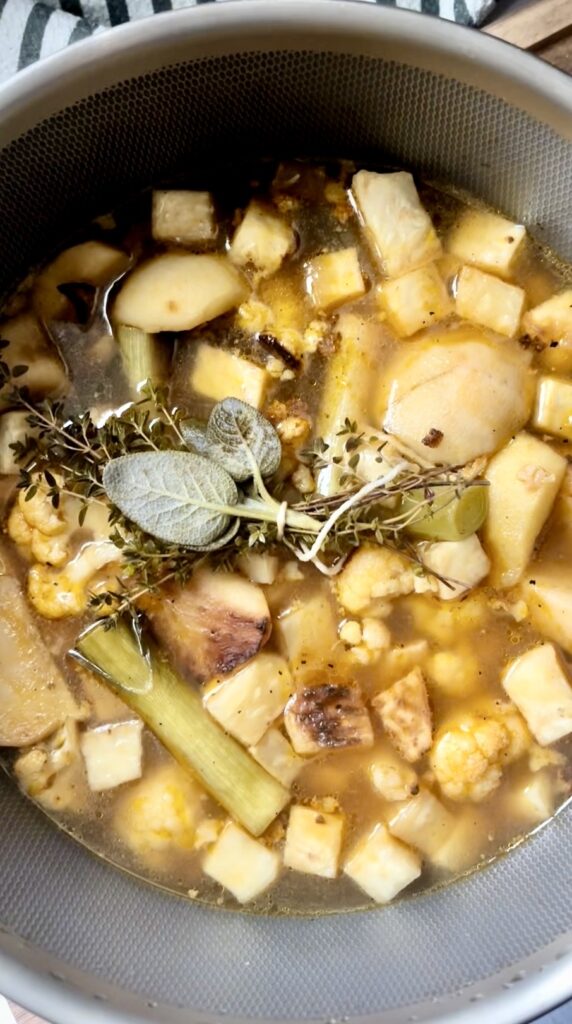
- Arrange the cubed celery root, chopped cauliflower, peeled apples, halved leeks, and whole garlic cloves on the baking sheet.
- Season with paprika, kosher salt, and freshly ground black pepper. Drizzle with 2 tablespoons of extra virgin olive oil and toss to coat.
- Spread the vegetables into an even layer and roast for approximately 25 minutes, flipping halfway through, until tender and lightly golden. If necessary, continue roasting until the celery root is fork-tender.
- Transfer the roasted vegetables to a large pot or Dutch oven.
- Add the chicken bone broth, fresh thyme sprigs, and sage leaves.
- Bring the mixture to a boil, then cover, reduce the heat to low, and simmer for approximately 45 minutes to allow the flavors to develop.
- Remove the thyme sprigs and sage leaves.
- Using an immersion blender, carefully puree the soup until completely smooth and creamy.
- Alternatively, transfer the soup to a countertop blender in batches, following the manufacturer’s instructions for blending hot liquids.
- Add the crème fraîche or mascarpone cheese and unsalted butter to the blended soup.
- Blend again until completely incorporated and silky smooth.
- Return the pot to low heat and gently simmer for another 10 minutes, stirring occasionally.
- Taste and adjust the salt and pepper as needed. Add a splash of additional broth if the soup is thicker than desired.
- While the soup finishes simmering, drain the canned artichokes thoroughly and pat dry with paper towels.
- Roughly chop the artichokes and toss with 1½ tablespoons of cornstarch and a pinch of salt until lightly coated.
- Heat enough olive oil to coat the bottom of a large skillet over medium heat.
- Test the oil with a small artichoke piece. If it sizzles gently, add the remaining artichokes in a single layer.
- Cook, turning occasionally, until golden brown and crispy.
- Transfer to a paper towel-lined plate to drain. (You may need to do this in batches in order to not overcrowd the pan).
- Ladle the warm soup into serving bowls.
- Top with rye croutons, crispy artichokes, and freshly chopped chives.
- Finish with a drizzle of good extra virgin olive oil and a small sprinkle of licorice salt, if desired.
- Serve immediately.
Notes
-
Celery Root: Peel thoroughly and cut into evenly sized pieces for consistent roasting.
-
Roasting: Don’t skip roasting the vegetables. It creates deeper flavor and natural sweetness.
-
Broth: Substitute regular chicken broth or vegetable broth for the chicken bone broth.
-
Dairy: Mascarpone can replace crème fraîche. Omit the dairy for a dairy-free version, adjusting the richness to taste.
-
Apples: Firm pears can replace the apples for a slightly different sweetness.
-
Texture: Blend thoroughly for a silky finish. Add extra broth if the soup is too thick.
-
Crispy Artichokes: Dry thoroughly before coating with cornstarch for the best results.
-
Toppings: Rye croutons, chives, olive oil, and licorice salt are optional but add wonderful flavor and texture.
-
Storage: Refrigerate leftover soup for up to 3–4 days or freeze for up to 2–3 months for best quality.
creamy Roasted Celery Root Soup | roasted celery root soup | creamy celery root soup | celeriac soup recipe | roasted celeriac soup | celery root and cauliflower soup | celery root apple soup | homemade celery root soup | easy celeriac soup | roasted vegetable soup | creamy fall soup | cozy winter soup | celery root recipes | soup with crème fraîche | roasted garlic celery root soup | celery root soup with leeks | creamy vegetable soup | homemade fall soup recipes | soup with crispy artichokes | elegant holiday soup | Thanksgiving soup appetizer | celery root puree soup

Nutritional Content Disclaimer
I choose not to include nutritional information with my recipes, as these values can be calculated from the ingredients provided. With my background as a pediatric nurse practitioner and my own family experience with disordered eating, I understand how focusing on numbers can affect our relationship with food. My philosophy is that all foods have a place—sweet, savory, nourishing, or indulgent. I aim to share recipes that support a healthy, joyful approach to eating. My hope is that this space also encourages a balanced, healthy relationship with food for you and your family too.