
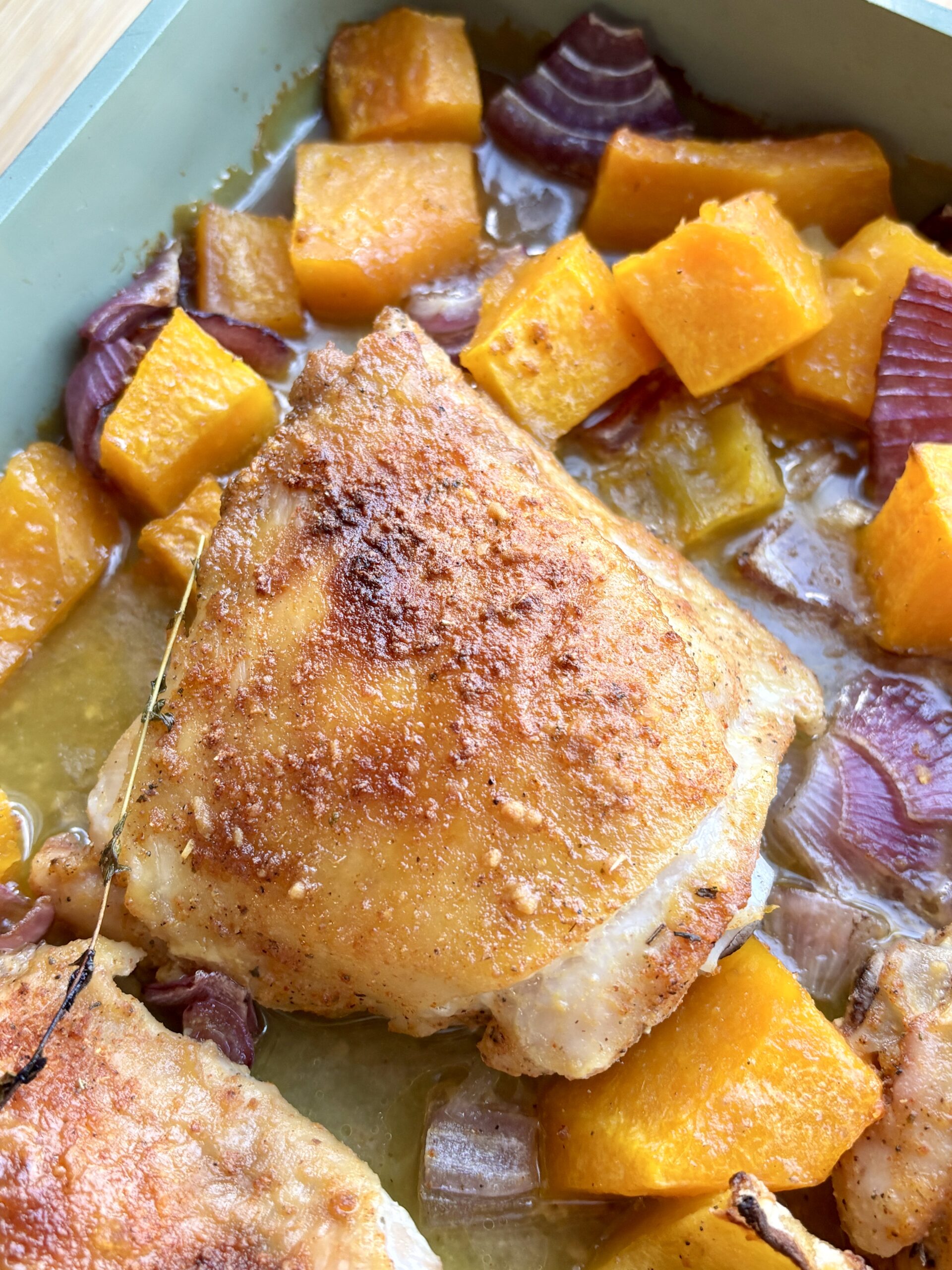
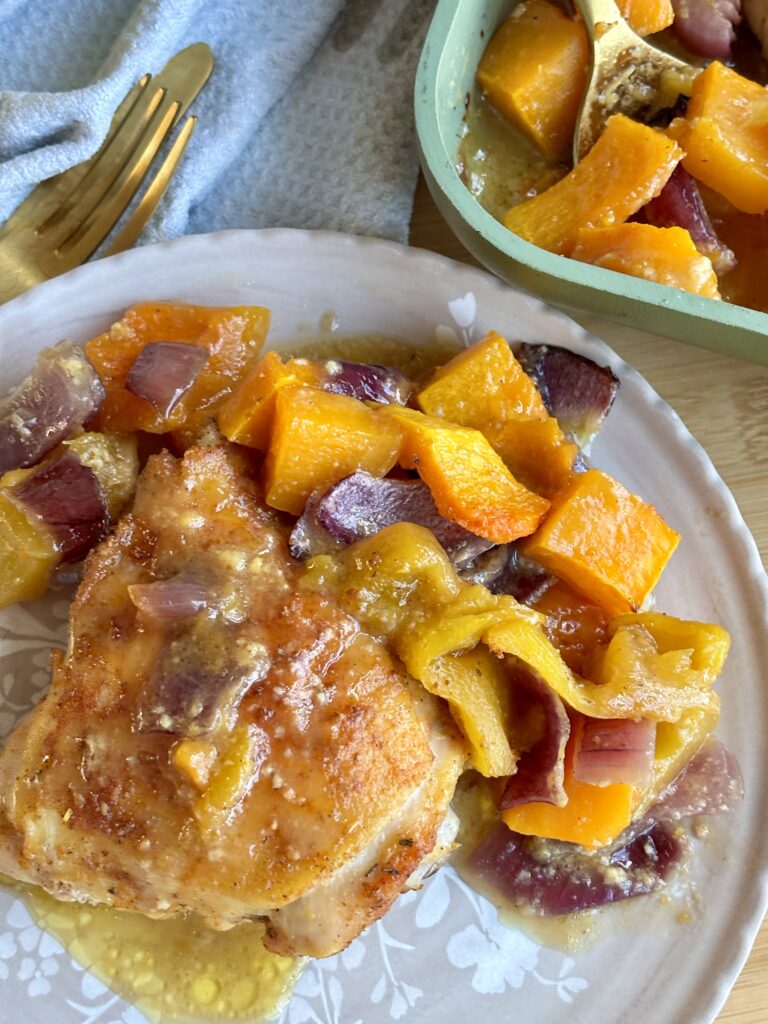
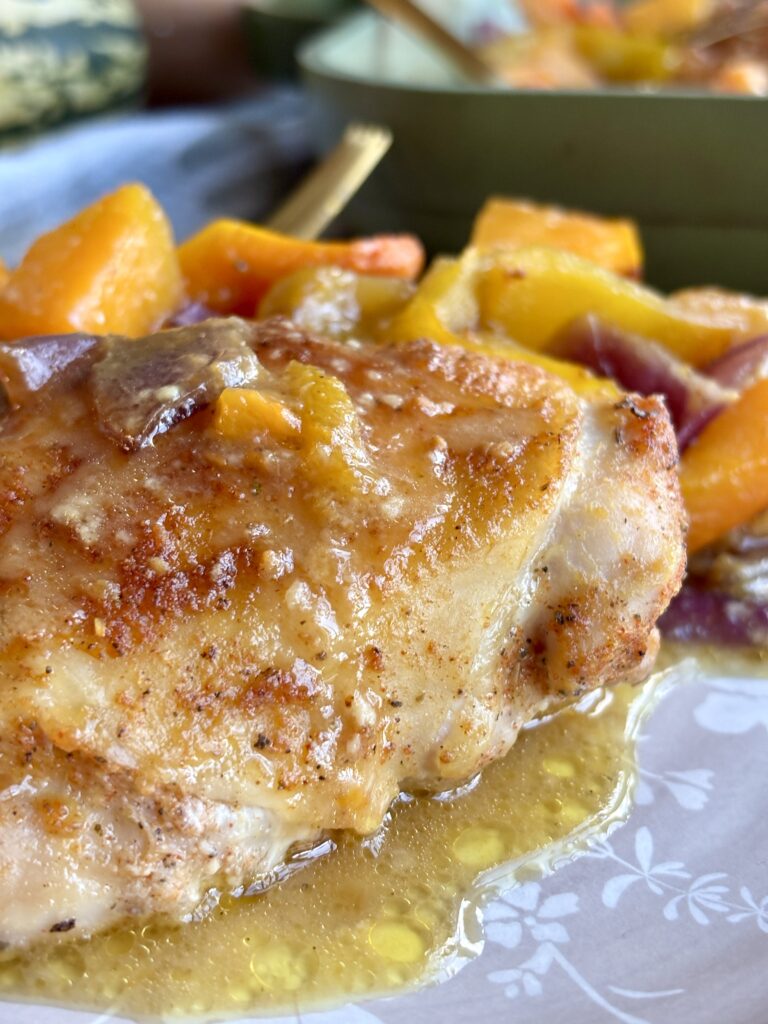
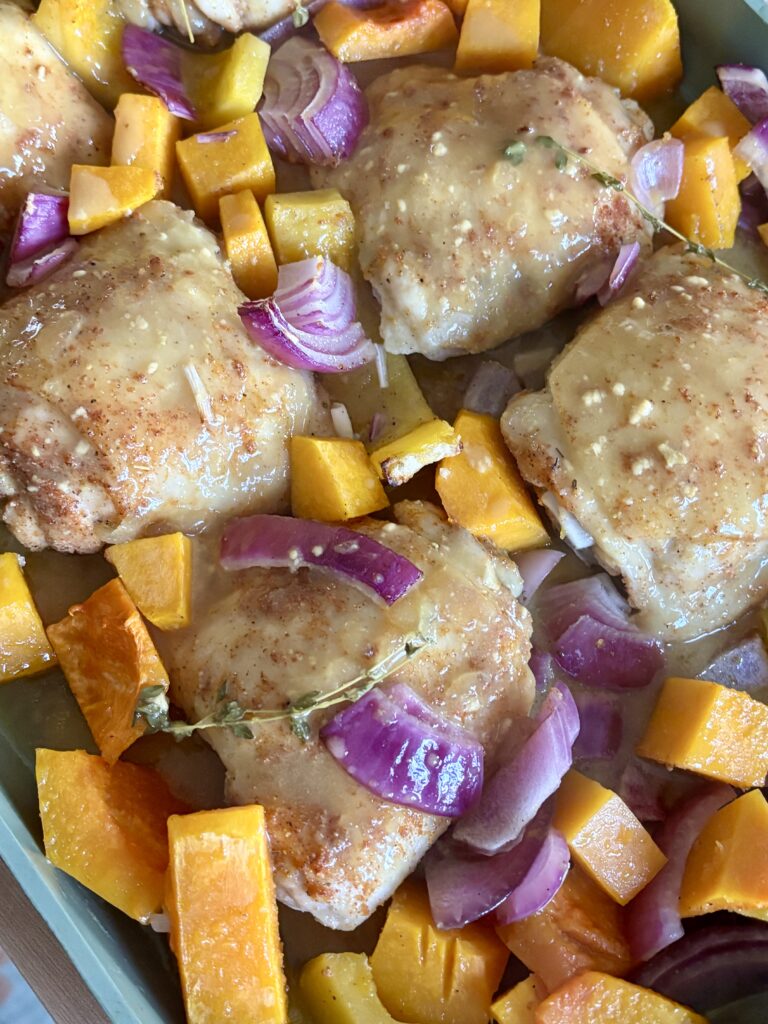
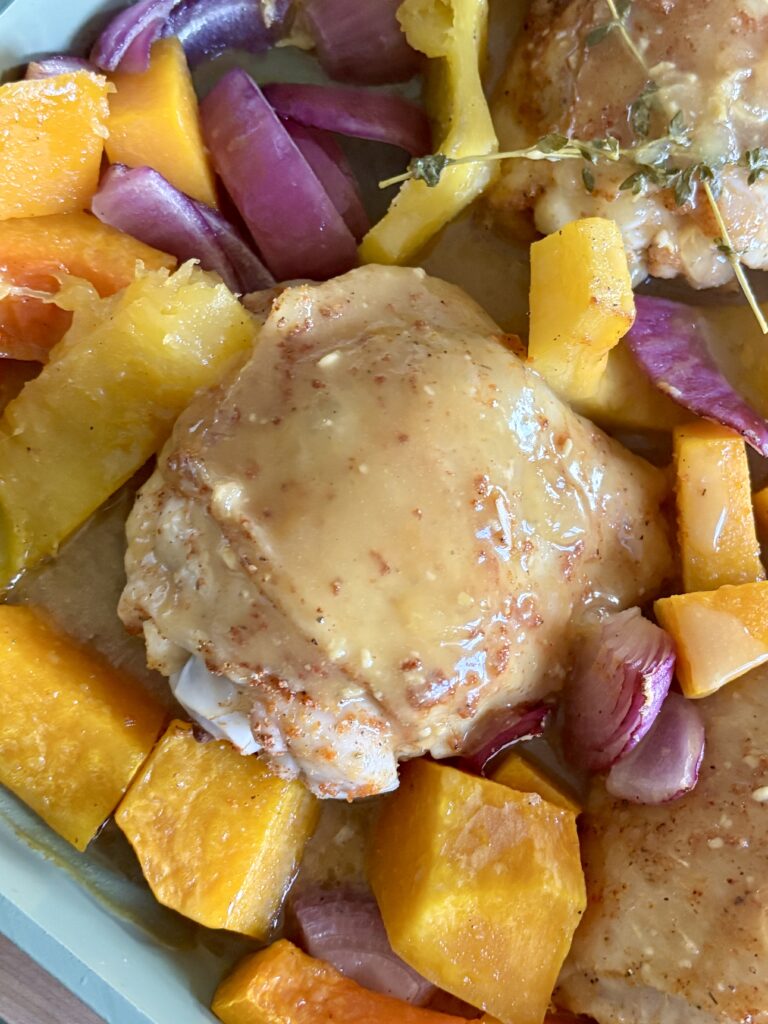
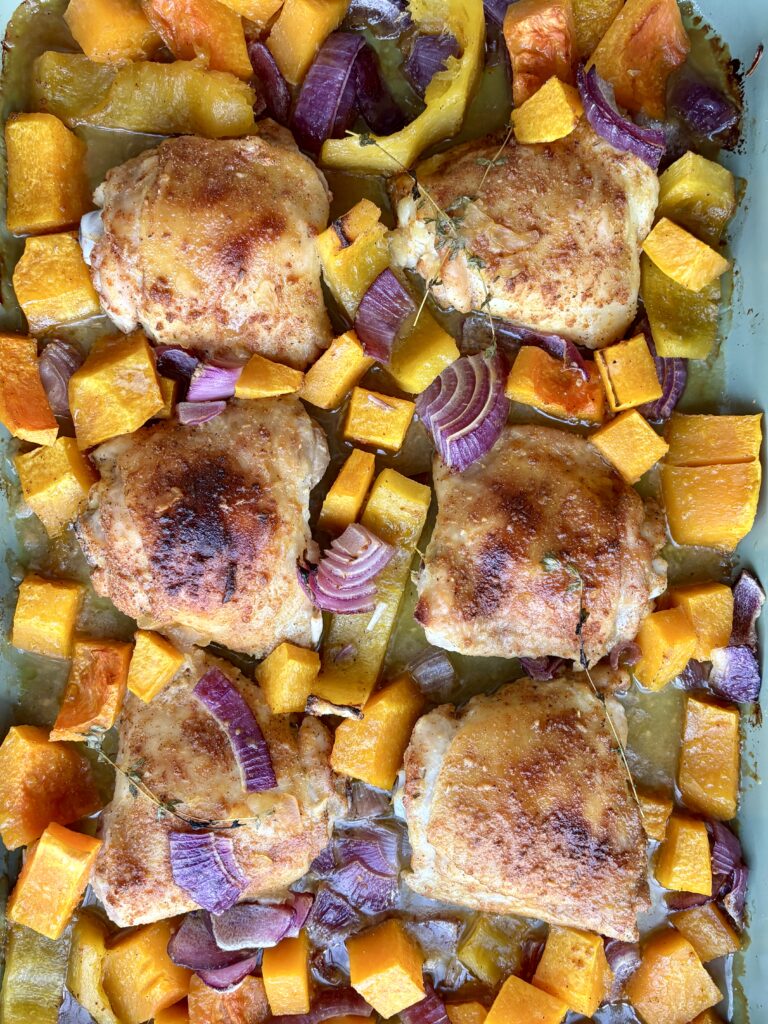
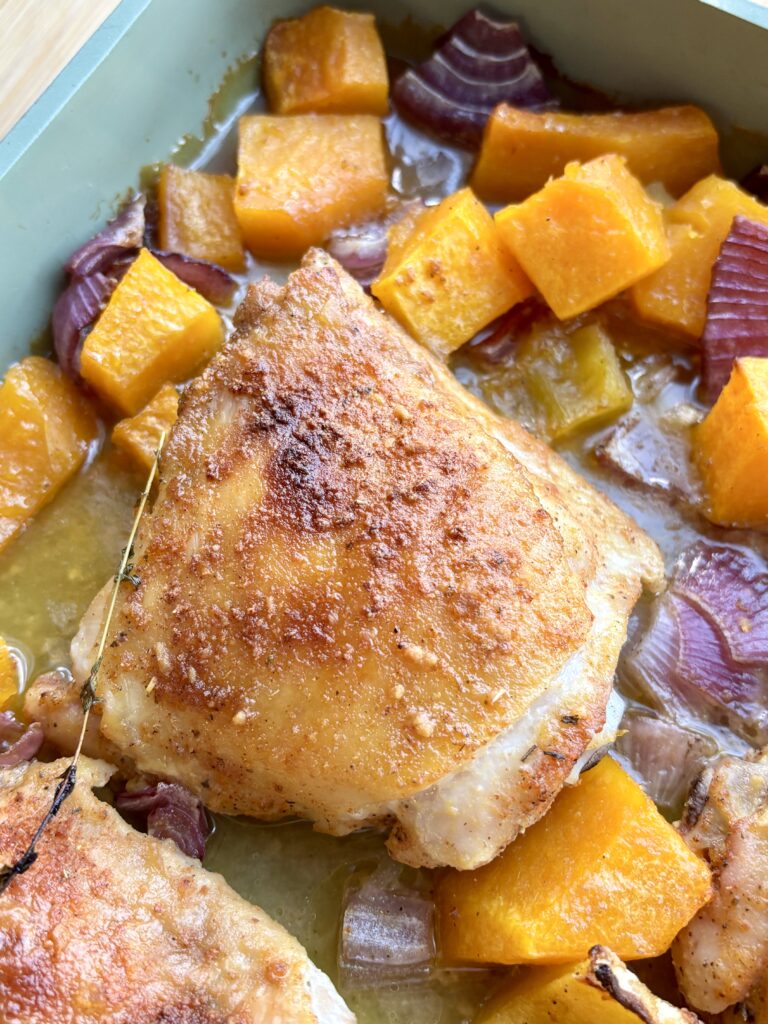
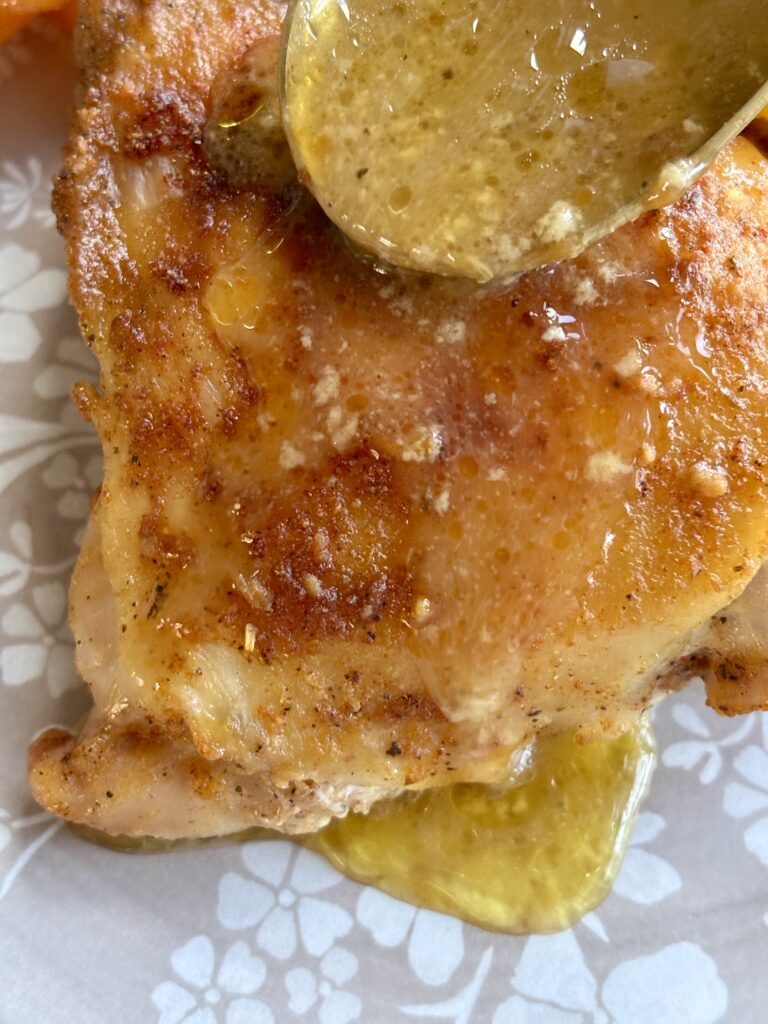
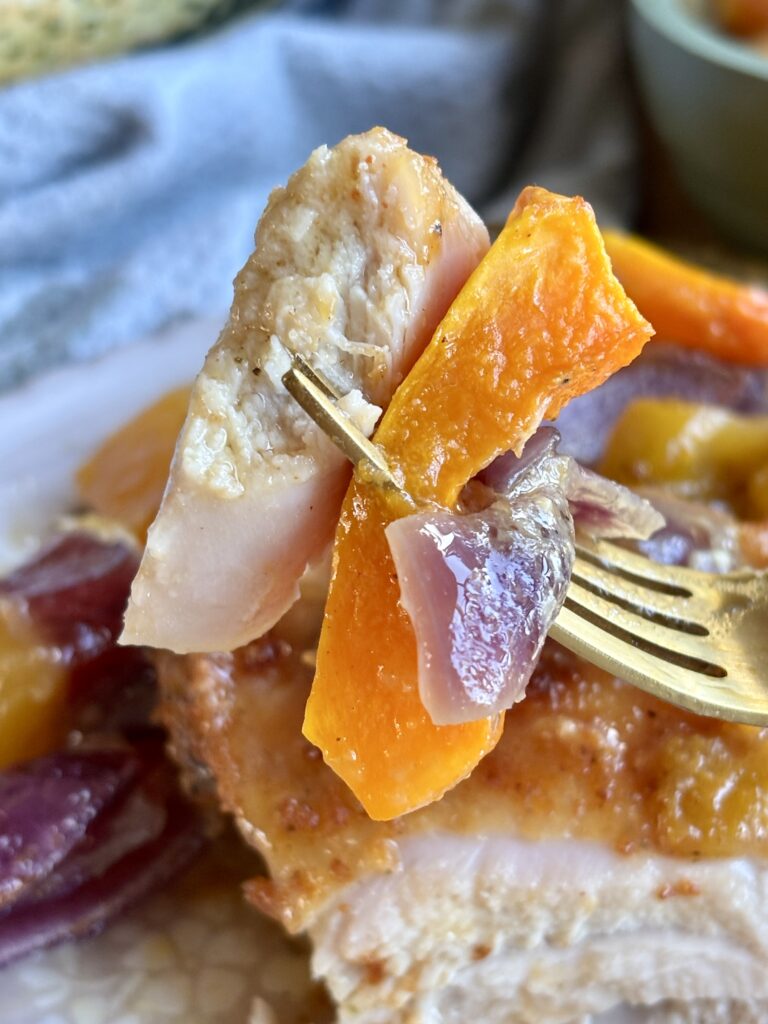
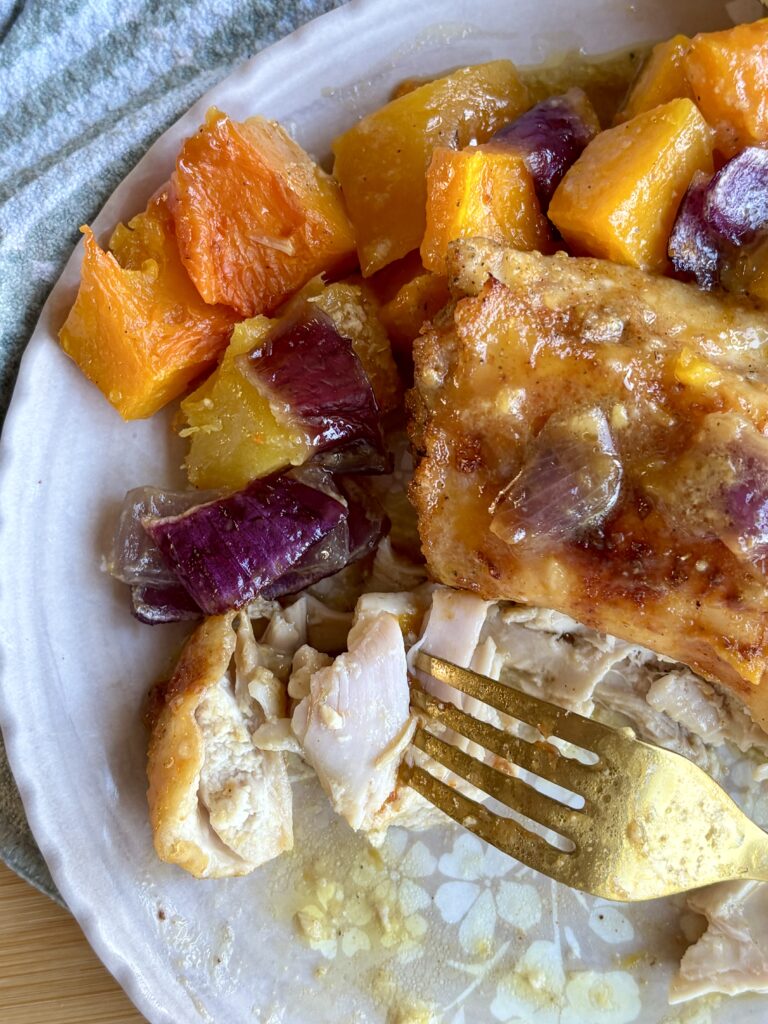
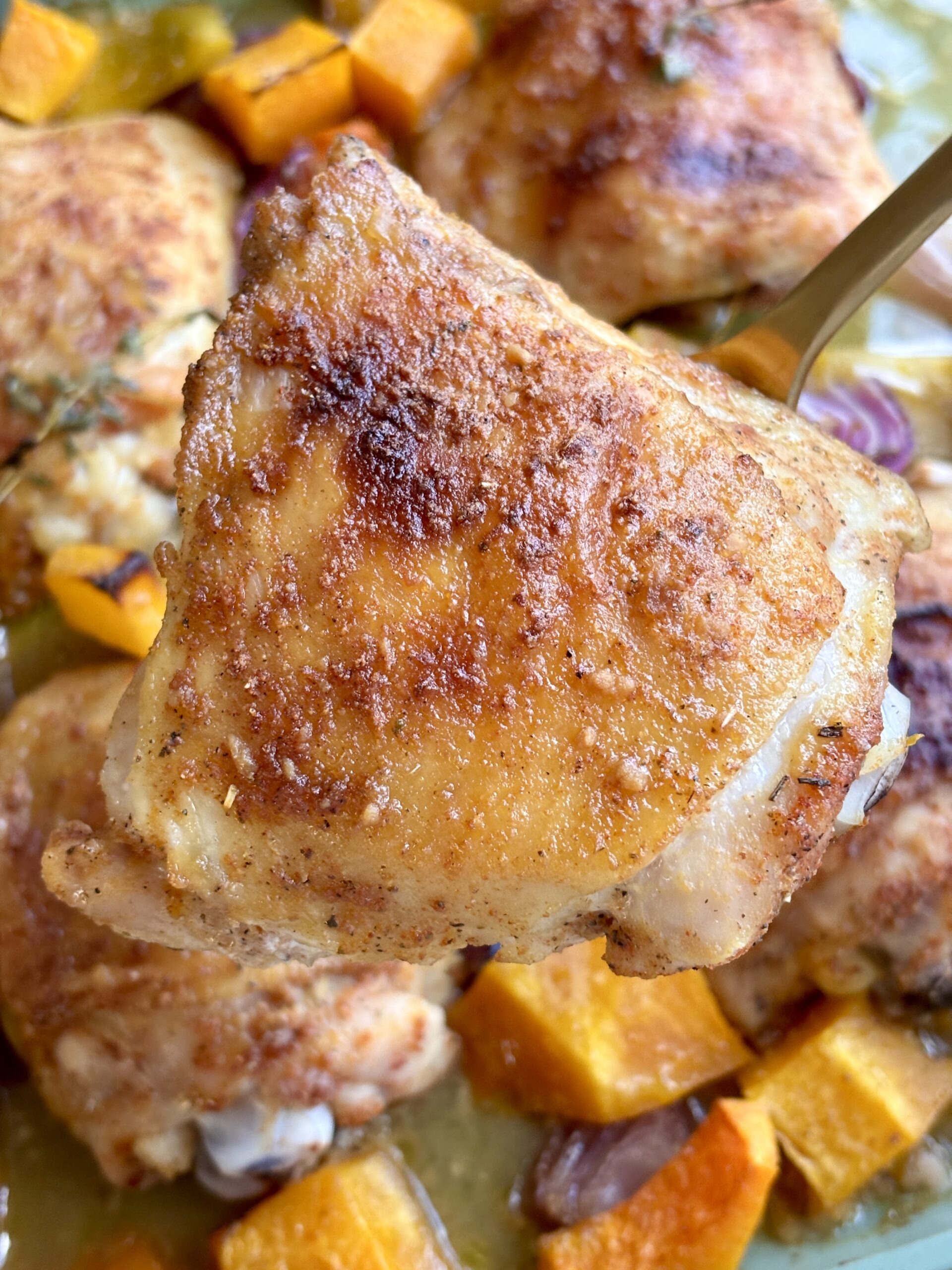
There is something about a cozy fall dinner that just hits differently, especially when you can make the whole thing on one pan! These Sheet Pan Maple Dijon Chicken Thighs are made with juicy, perfectly seasoned bone-in chicken thighs, tender roasted butternut squash, and sweet red onions, all coated in a delicious maple Dijon glaze.
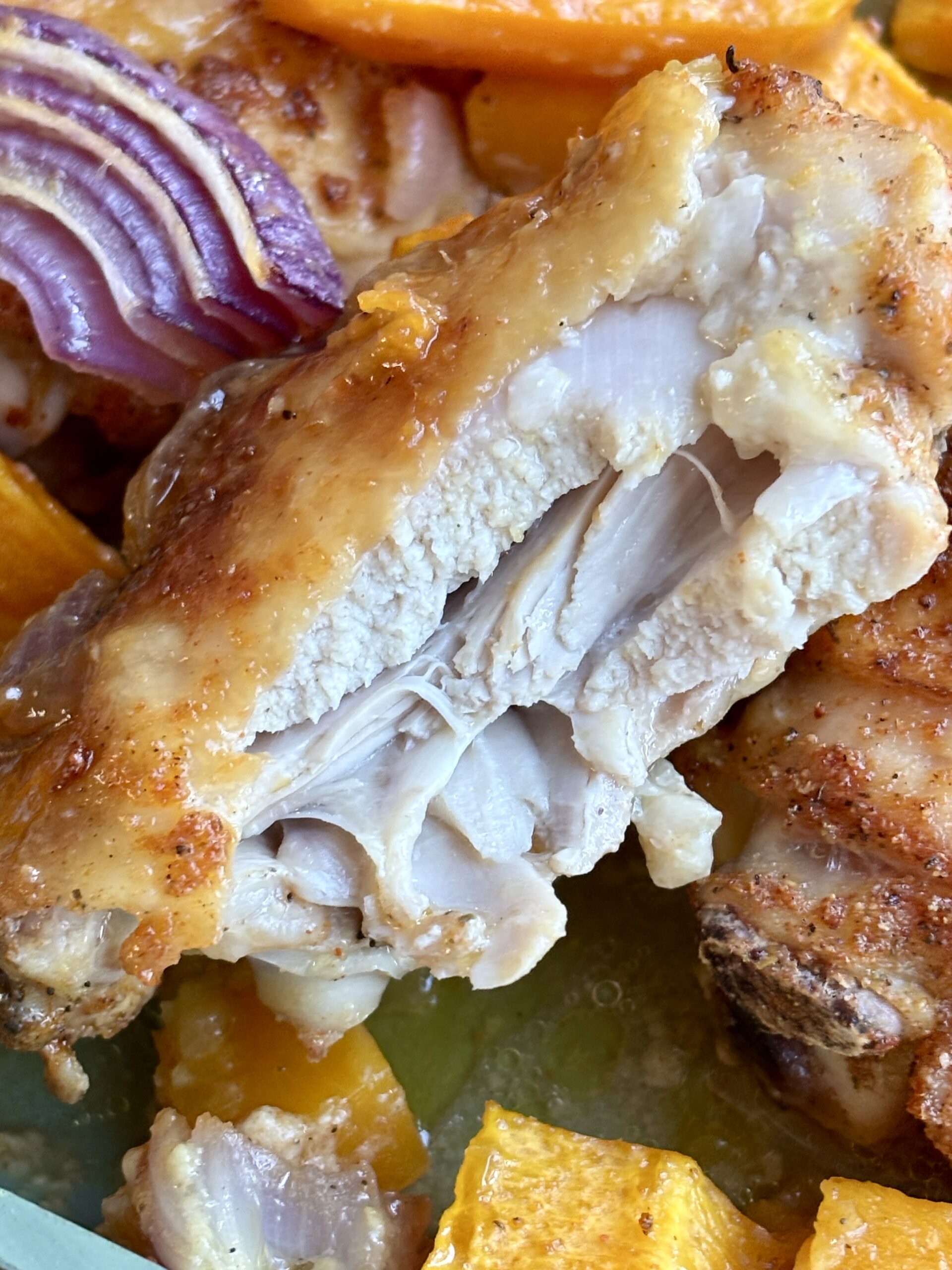
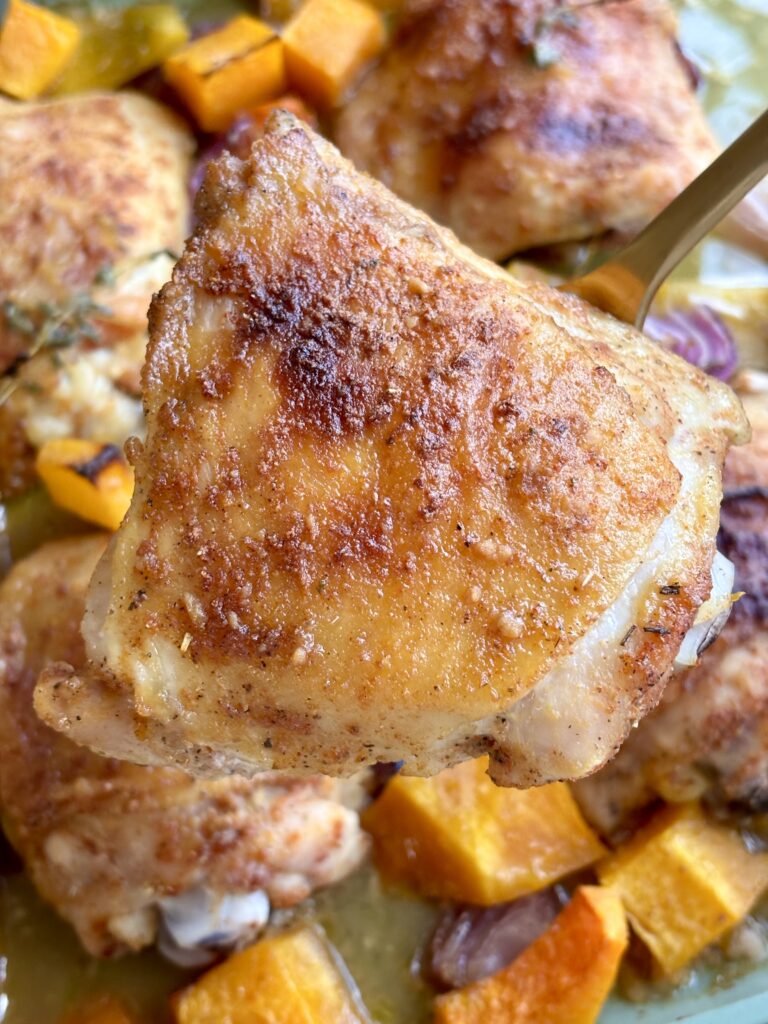
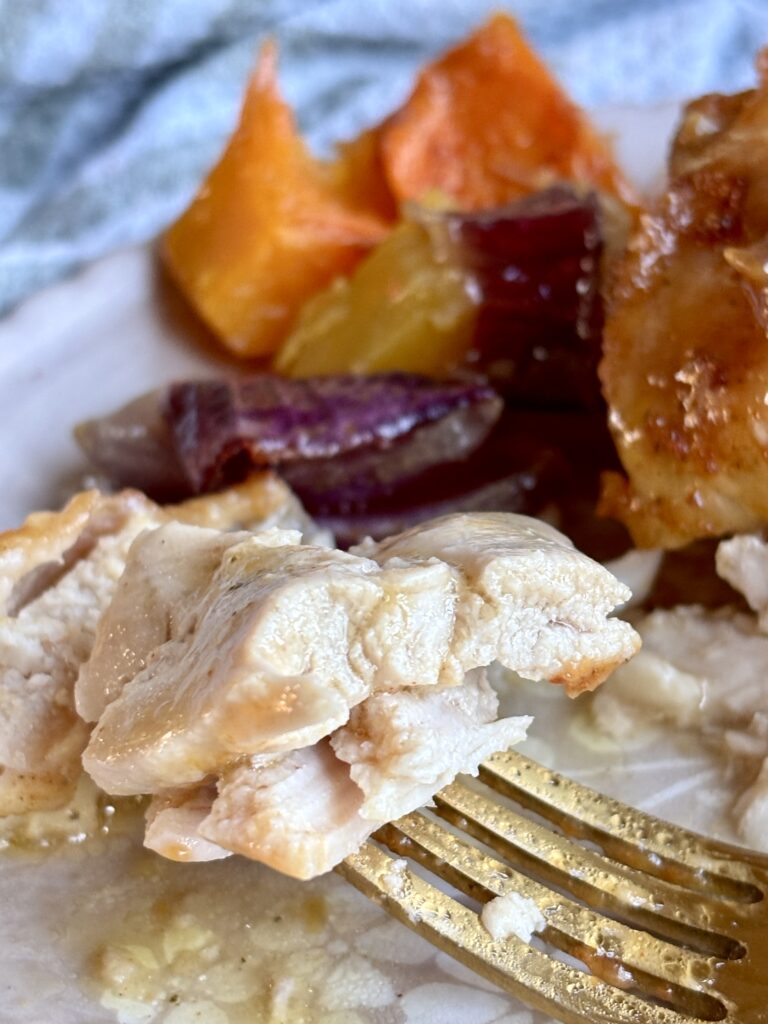
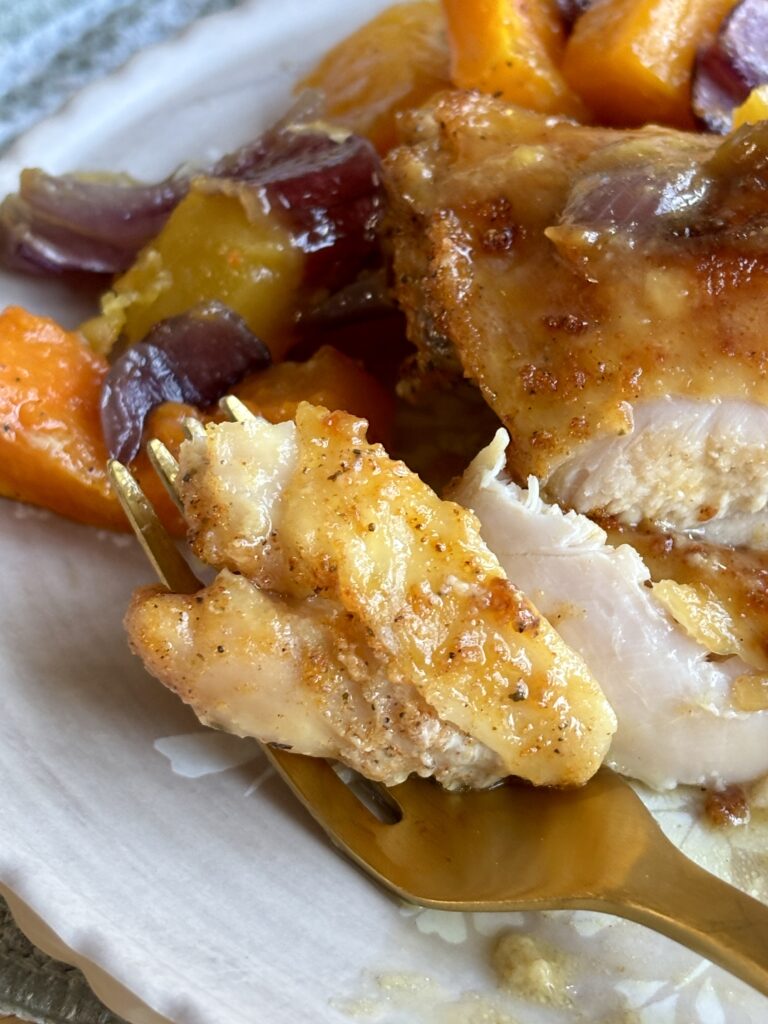
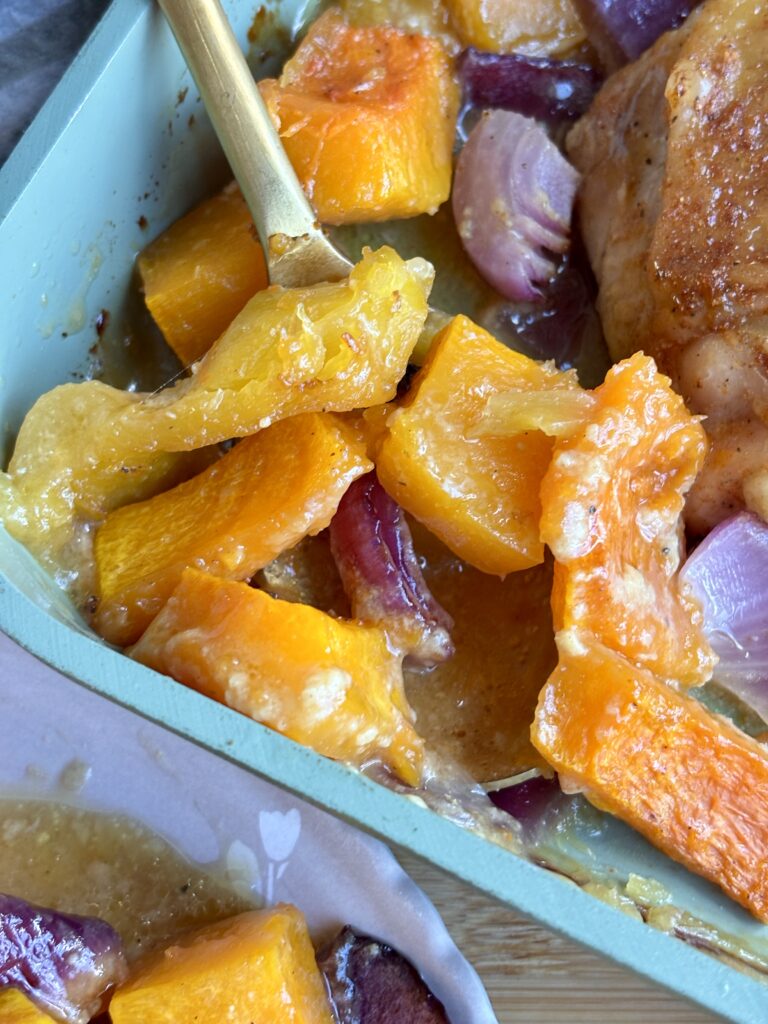
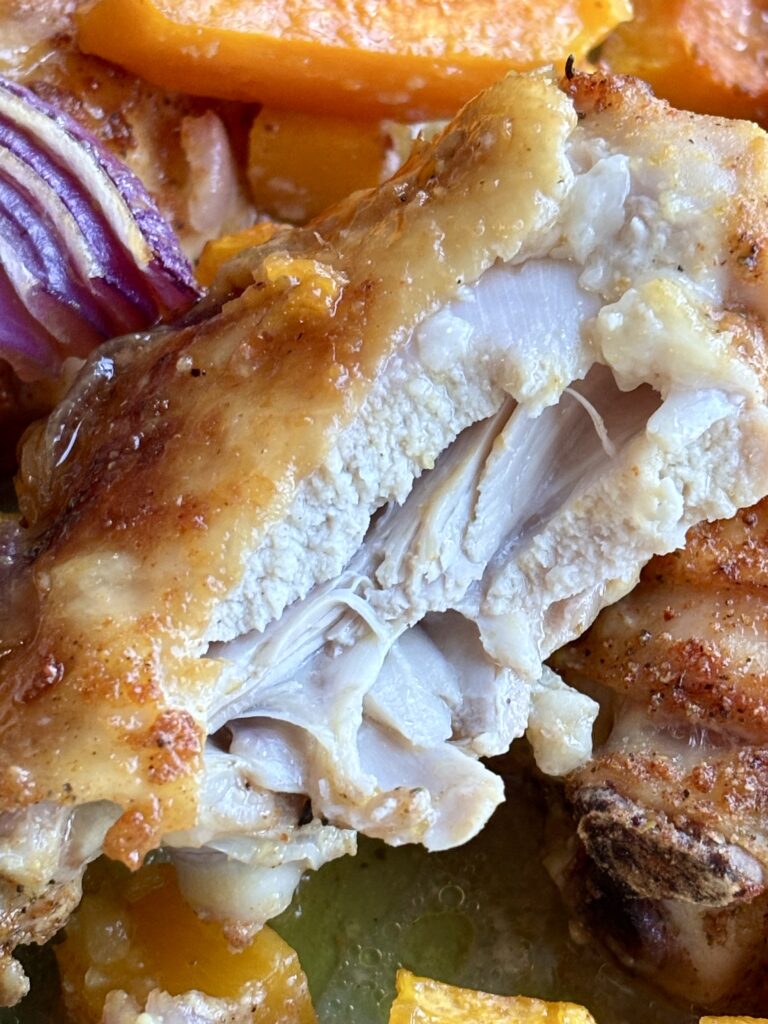
The chicken roasts until the skin turns beautifully golden and the meat is juicy and tender, while the butternut squash caramelizes around the edges and the red onion becomes wonderfully sweet. But the maple Dijon glaze is what really brings everything together. It’s a little sweet, a little tangy, and packed with so much savory flavor from Dijon mustard, maple syrup, fresh thyme, and chicken broth.
I love recipes like this because they feel special enough for a Sunday dinner, but are easy enough to make on a busy weeknight. Everything cooks together, there’s minimal cleanup, and you get a complete, comforting meal without juggling a bunch of different pots and pans.
And while this recipe has all those cozy fall flavors, it’s absolutely one you’ll want to make long after autumn ends.
Other one pan meals to check out: One Pan Meatball Parmesan Bake, One Pan Braised Chicken Thighs and Leeks, Sheet Pan Pesto Chicken Parmesan, One Pan Beef and Scallions
Why you’ll love this recipe!
What Makes This Maple Dijon Glaze So Good?
The glaze is really what takes this sheet pan chicken dinner to the next level.
Instead of simply mixing maple syrup and mustard together, this version uses chicken broth, concentrated chicken base, fresh thyme, and a little vinegar to create a flavorful sauce that coats the chicken thighs and vegetables as they finish roasting.
Dijon mustard adds a sharp, savory tang without making the sauce overwhelmingly mustardy. Pure maple syrup balances that tanginess with a gentle sweetness and helps the glaze caramelize in the oven.
The chicken broth and chicken base add richness and depth, while fresh thyme brings an earthy, aromatic flavor that pairs beautifully with the roasted butternut squash.
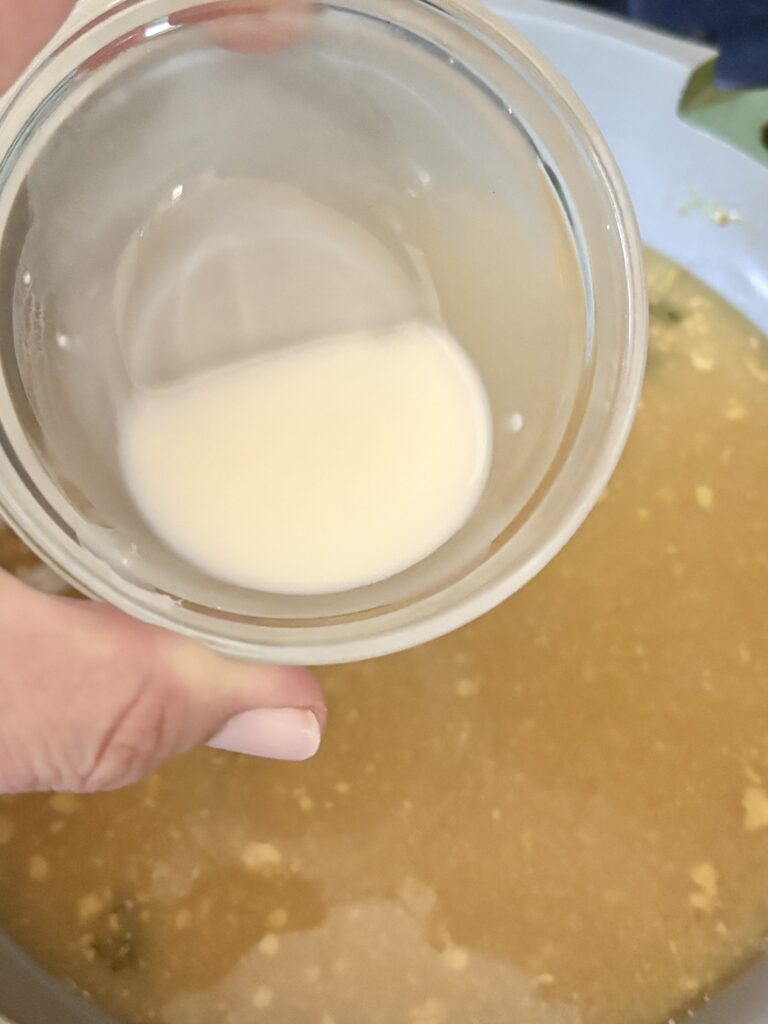
Finally, a small amount of cornstarch helps thicken the sauce just enough to help it cling to the chicken instead of immediately running off.
The result is a glossy, savory-sweet glaze that makes every bite a little more delicious.
What ingredients do I need?
- For the Chicken
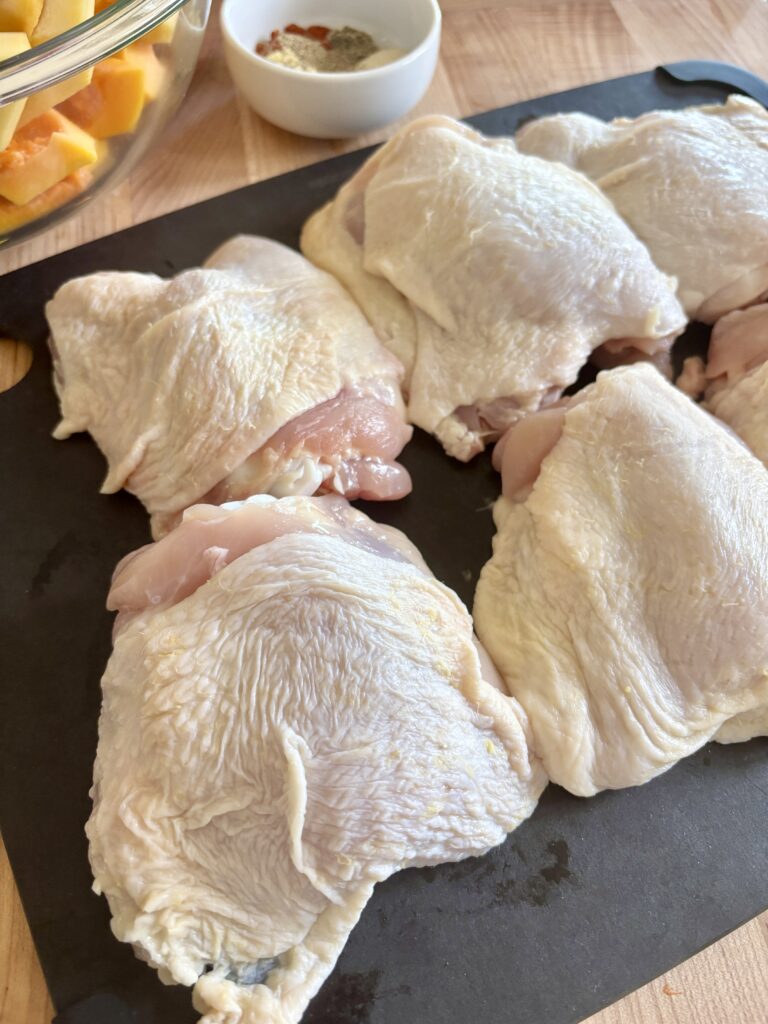
- Bone-in, skin-on chicken thighs: This recipe uses 6–8 chicken thighs, depending on their size. Chicken thighs are especially flavorful and ideal for sheet pan dinners because the dark meat stays juicy during roasting. Keeping the skin on also helps create a beautifully golden, flavorful exterior.
- Extra Virgin Olive oil: Helps the seasonings adhere to the chicken and encourages the skin to brown.
- Kosher salt and black pepper: Essential for bringing out the natural flavor of the chicken.
- Garlic powder and onion powder: Add savory depth and help create a delicious seasoned exterior.
- Ground mustard: Reinforces the Dijon flavor in the glaze and adds a subtle warmth.
- Dried sage: Brings a cozy, earthy flavor that pairs especially well with chicken and butternut squash.
- Paprika: Adds mild warmth and beautiful color to the roasted chicken.
- For the Vegetables
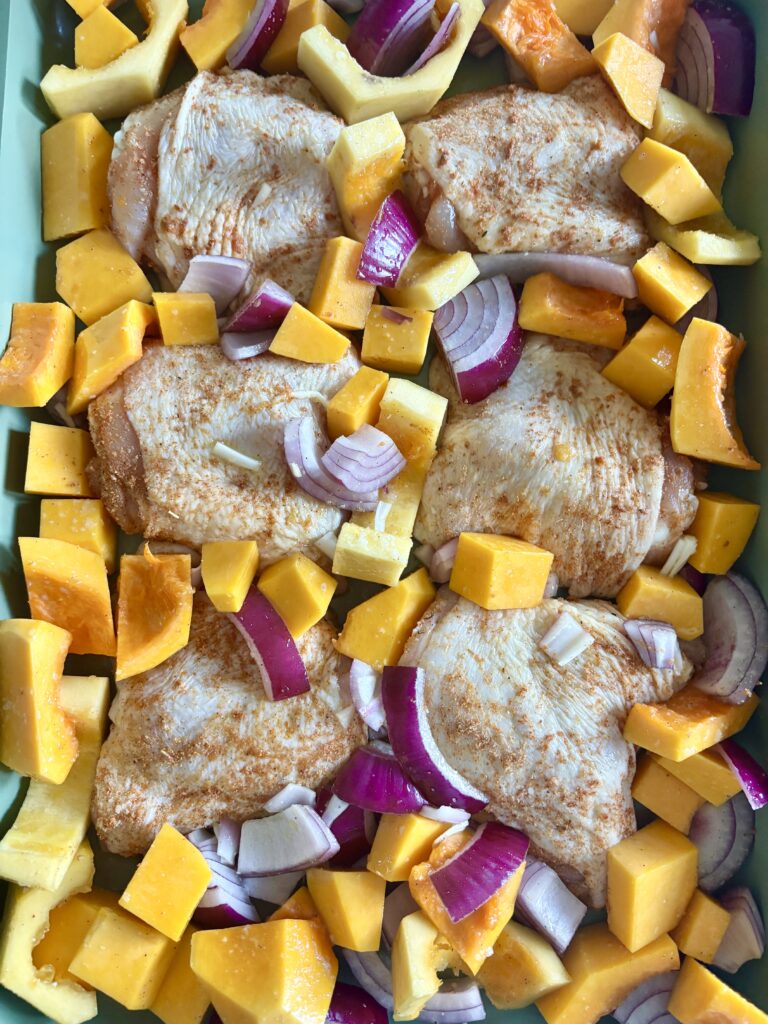
- Butternut squash: Roasts until tender with caramelized edges and a naturally sweet, slightly nutty flavor. Cut it into evenly sized, fairly large pieces so it doesn’t become mushy before the chicken finishes cooking.
- Red onion: Becomes sweet and tender as it roasts, adding another layer of flavor to the dish.
- Extra Virgin Olive oil, kosher salt, and black pepper: Help the vegetables roast evenly and develop delicious caramelized edges.
- For the Maple Dijon Glaze
- Chicken broth: Creates the savory base of the glaze and keeps it from becoming overly thick or sweet.
- Dijon mustard: Adds tanginess and depth. I recommend smooth Dijon mustard for the most consistent glaze.
- Pure maple syrup: Adds natural sweetness and helps the glaze caramelize as it roasts.
- Fresh thyme: Brings a subtle herbal flavor that complements the sage and maple syrup.
- Apple cider vinegar: Brightens the glaze and balances the sweetness. Distilled white vinegar also works.
- Better Than Bouillon chicken base: Concentrates the savory chicken flavor and gives the sauce more depth.
- Cornstarch and water: Form a simple slurry that thickens the glaze slightly.
Recipe Variations
- Maple Dijon Chicken with Brussels Sprouts: Replace some of the butternut squash with halved Brussels sprouts. Add them partway through roasting if they’re small to prevent overcooking.
- Maple Dijon Chicken with Apples: Add thick slices of a firm apple, such as Honeycrisp or Granny Smith, during the final 15–20 minutes of roasting for a sweet and savory fall variation.
- Spicy Maple Dijon Chicken: Add ¼–½ teaspoon crushed red pepper flakes or a pinch of cayenne pepper to the glaze.
- Garlic Herb Maple Dijon Chicken: Add a few lightly smashed garlic cloves and extra fresh thyme sprigs to the roasting pan.
- Maple Dijon Chicken with Potatoes: Swap the squash for small potatoes cut into evenly sized pieces. Depending on their size, they may need a head start before adding the chicken.
Pro Tips
- Pat the chicken thighs completely dry before seasoning. Use paper towels to remove excess moisture before adding the olive oil and seasonings. This helps the skin roast rather than steam, encouraging a crispy and beautifully golden exterior.
- Use bone-in, skin-on chicken thighs. They’re my favorite choice for this recipe because they stay juicy, have plenty of flavor, and develop a delicious golden skin. They’re also more forgiving than chicken breasts if they cook a little longer. (Oh and they are more cost effective!)
- Cut the butternut squash into even pieces. Aim for approximately 1–1½-inch chunks. Smaller pieces may become too soft before the chicken finishes cooking, especially after adding the glaze.
- Don’t overcrowd the pan. Arrange the chicken thighs and vegetables in a single layer with a little space between them. If you’re using eight large chicken thighs, you may need two baking sheets to avoid overcrowding.
- Roast the chicken skin-side up. Keep the skin facing upward throughout roasting. There’s no need to flip the chicken thighs.
- Add the glaze toward the end of roasting. Allow the chicken and vegetables to roast for approximately 20–25 minutes before adding the maple Dijon glaze. This gives the chicken skin time to brown and the vegetables time to begin caramelizing before the maple syrup cooks down.
- Reserve some glaze for serving. Set aside a few tablespoons of the prepared glaze before spooning the rest over the chicken. Add the reserved glaze just before serving for an extra glossy finish.
- Use a meat thermometer. Chicken thighs are safe to eat once they reach 165°F, but I prefer cooking bone-in thighs closer to 175–185°F for especially tender, juicy dark meat. Insert the thermometer into the thickest part of the thigh without touching the bone.
- Broil for extra caramelization. If you’d like a little more color on the chicken, broil for 1–3 minutes at the end of roasting. Keep a close eye on the pan because the maple syrup can burn quickly.
Can I Substitute?
Yes! Like always though, any substitutions made to the recipe can result in a change in texture and/or flavor.
- Chicken thighs, bone-in, skin-on:
- Boneless, skinless chicken thighs: These work beautifully, but they’ll cook faster than bone-in thighs. Give the vegetables a 10–15-minute head start before adding the chicken, then adjust the cooking time accordingly.
- Chicken drumsticks: You can substitute drumsticks for chicken thighs. Depending on their size, they may need slightly longer in the oven.
- Chicken breasts: Boneless chicken breasts are another option, although they’re leaner and more prone to drying out. Add them after the vegetables have started roasting for 10 minutes and cook until they reach an internal temperature of 165°F.
- Butternut squash: Peeled and cubed sweet potatoes, or thickly sliced carrots, make a delicious substitute. Cut them into similarly sized pieces for even cooking.
- Red onion: Yellow or sweet onions are a great substitute for the red onion if that’s what you have available.
- Maple Syrup: Honey works in a pinch, although it creates a slightly different flavor and may brown more quickly.
- Fresh thyme: Substitute approximately ⅓ teaspoon dried thyme for the teaspoon of fresh thyme.
- Chicken broth: Use chicken stock in place of broth if preferred.
- Chicken base: If you don’t have Better Than Bouillon, omit it and use a flavorful chicken stock. Taste the glaze and adjust the salt as needed.
Leftovers and Storage
- Refrigerator: Allow the chicken thighs and vegetables to cool slightly, then transfer them to airtight containers and refrigerate within 2 hours of cooking. Store for up to 3–4 days.
- Reheating in the Oven: For the best texture, place the chicken thighs and vegetables in an oven-safe baking dish. Cover loosely with foil and reheat at 350°F until the chicken reaches 165°F. Remove the foil toward the end to help crisp the skin.
- Reheating in the Microwave: Transfer individual portions to a microwave-safe dish and heat until thoroughly warmed. The chicken skin will soften, but the flavor will still be delicious.
- Freezing: The cooked chicken thighs freeze well for up to 2–3 months for best quality. Store them in a freezer-safe container with a little extra glaze to help retain moisture. The butternut squash may become softer after freezing and thawing, so I recommend freezing the chicken separately.
- Thawing: Thaw frozen chicken thighs overnight in the refrigerator before reheating.
- Meal Prep: Divide the chicken thighs and vegetables into individual containers with a little extra maple Dijon glaze. Pair with rice, quinoa, or another grain for an easy lunch or dinner throughout the week.
What to Serve with Maple Dijon Chicken Thighs
This recipe already includes protein and roasted vegetables, so it makes a pretty complete dinner on its own. However, there are plenty of delicious sides that pair beautifully with the sweet and tangy maple Dijon glaze.
- Creamy mashed potatoes: Perfect for soaking up any extra glaze.
- Fluffy white or wild rice: A simple side that complements the chicken without overpowering it.
- Creamy Parmesan polenta: Adds a rich, comforting element that works beautifully with the roasted chicken.
- Warm homemade biscuits: Perfect for serving alongside the chicken and soaking up the sauce.
- A simple green salad: Adds something fresh and crisp to balance the rich flavors.
- Roasted green beans: An easy way to add another vegetable to the meal.
But, I Still Have A Few Questions…
What type of chicken thighs work best for this recipe?
I recommend bone-in, skin-on chicken thighs. The bone helps the chicken cook evenly, while the skin becomes golden and flavorful as it roasts. The dark meat also stays wonderfully juicy, making chicken thighs an excellent choice for sheet pan dinners.
Can I use boneless, skinless chicken thighs?
Absolutely! Boneless, skinless chicken thighs cook faster than bone-in thighs, so I recommend giving the butternut squash and red onions a 10–15-minute head start in the oven. Add the seasoned chicken thighs and continue roasting until they reach an internal temperature of at least 165°F.
How long does it take to bake chicken thighs at 400°F?
Bone-in, skin-on chicken thighs generally take approximately 35–45 minutes at 400°F, depending on their size. Larger thighs may need additional time. Always check the internal temperature rather than relying solely on cooking time.
What temperature should chicken thighs reach?
Chicken thighs are safe to eat at an internal temperature of 165°F. However, because thighs contain more connective tissue than chicken breasts, they often become even more tender when cooked to approximately 175–185°F.
Do I need to flip the chicken thighs while roasting?
No! Keep the chicken thighs skin-side up throughout roasting. This allows the skin to brown while the meat stays juicy. You should, however, turn the vegetables when adding the maple Dijon glaze to encourage even caramelization.
How do I get crispy skin on baked chicken thighs?
Pat the chicken thighs completely dry before seasoning, avoid overcrowding the pan, and roast them uncovered with the skin facing upward. Adding the glaze toward the end of cooking helps the skin brown before it becomes coated in sauce. A quick broil at the end can add additional caramelization as well.
Can I use chicken breasts instead of thighs?
Yes, although chicken breasts are leaner and can dry out more easily. Give the vegetables a head start before adding the chicken breasts, and roast until the thickest part reaches 165°F.
Can I use chicken drumsticks?
Definitely! Drumsticks work well with the same seasoning and maple Dijon glaze. Cooking times may vary depending on their size, so use a meat thermometer to check for doneness.
Can I make this recipe with frozen chicken thighs?
I recommend thawing the chicken thighs completely in the refrigerator before roasting. This allows them to cook more evenly and helps the seasoning adhere to the skin. Cooking frozen chicken alongside the vegetables can also release excess moisture and prevent proper caramelization.
Do I need to peel the butternut squash?
Yes, I recommend peeling the butternut squash before cutting it into chunks. Although the skin is edible, it can remain really tough after roasting.
Can I use frozen butternut squash?
You can, but fresh butternut squash gives the best texture and caramelization. Frozen squash releases more moisture as it cooks and may become softer. Roast it directly from frozen rather than thawing first if you do choose to use it.
Can I substitute sweet potatoes for butternut squash?
Absolutely! Sweet potatoes are a delicious alternative. Peel and cut them into evenly sized chunks so they roast at a similar rate. Their natural sweetness pairs beautifully with the maple Dijon glaze.
What other vegetables can I add?
Carrots, brussels sprouts, parsnips, potatoes, and even thick apple slices work well. Keep in mind that some vegetables cook faster than others, so you may need to adjust when you add them to the pan.
Can I use honey instead of maple syrup?
Yes! Honey creates a delicious sweet and tangy glaze, although it won’t have the same distinct maple flavor. Honey can also caramelize quickly, so watch the chicken carefully toward the end of roasting.
Can I use whole-grain mustard instead of Dijon?
Yes. Whole-grain mustard creates a slightly more textured glaze, yet with a similar tangy flavor. You can also use a combination of smooth Dijon and whole-grain mustard.
Does the maple Dijon glaze taste strongly of mustard?
The Dijon flavor is noticeable, but it shouldn’t be overpowering. The maple syrup balances the mustard’s tanginess, while the chicken broth, thyme, and chicken base add savory depth.
Why is my maple Dijon glaze too thin?
The glaze may need a little more time to simmer and thicken. Make sure to bring it to a gentle simmer after adding the cornstarch slurry. If needed, continue simmering for another minute or two, stirring frequently.
Why is my maple Dijon glaze too thick?
If the glaze becomes too thick, stir in additional chicken broth, one tablespoon at a time, until it reaches a pourable consistency.
Can I make the glaze ahead of time?
Yes! Prepare the glaze up to 2–3 days in advance and store it in an airtight container in the refrigerator. Reheat gently in a saucepan before using, adding a splash of chicken broth if needed.
Can I make this recipe without Better Than Bouillon?
Absolutely. Substitute a flavorful chicken stock for the broth and omit the chicken base. Taste the glaze and adjust the seasonings as needed.
Why aren’t my vegetables caramelizing?
Overcrowding is usually the biggest reason. When vegetables sit too close together, they release moisture and steam instead of roasting. Spread them into a single layer and use two baking sheets if necessary.
Should I cover the chicken thighs while baking?
Nope, there is no need. Roast the chicken uncovered to encourage browning and allow excess moisture to evaporate. Covering the pan traps steam and prevents the chicken skin from developing a golden exterior.
Can I prepare this recipe ahead of time?
Yes! Peel and cut the butternut squash, slice the red onion, and mix the dry chicken seasonings up to 2 days ahead. Store the vegetables in the refrigerator. You can also prepare the glaze in advance. For the best results, assemble and roast everything just before serving.
Can I double this recipe?
Absolutely! Use two large rimmed baking sheets to give the chicken and vegetables enough room to roast properly. Rotate the pans halfway through cooking if needed.
Is this recipe gluten-free?
It can be, but you’ll need to check the labels on the chicken broth, Dijon mustard, and Better Than Bouillon chicken base. Some prepared products may contain gluten or have cross-contact concerns. Cornstarch is naturally gluten-free.
Other Recipes You’ll Love
Let’s engage!
Make sure to tag @thehomechefmomma on Instagram or Facebook, and leave a review or comment if you make these. I always get so excited to see your creations, variations of the recipe, and feedback! Just remember to be kind in your comments, there is still a person behind this screen! 🙂
Sheet Pan Maple Dijon Chicken Thighs
Ingredients
Chicken Thighs
- 6 –8 bone-in skin-on chicken thighs (approximately 2½–3 pounds)
- 1 tablespoon olive oil
- 1 teaspoon kosher salt
- 1 teaspoon garlic powder
- ¼ teaspoon ground mustard
- ½ teaspoon onion powder
- ½ teaspoon dried sage
- ½ teaspoon paprika
- ½ teaspoon freshly ground black pepper
Roasted Vegetables
- 3 cups butternut squash peeled and cut into approximately 1–1½-inch chunks
- 1 small red onion cut into thick slices or wedges
- 1 tablespoon olive oil
- ½ teaspoon kosher salt
- ¼ teaspoon freshly ground black pepper
Maple Dijon Glaze
- 1 cup chicken broth preferably low-sodium
- 3 tablespoons Dijon mustard
- 3 tablespoons pure maple syrup
- 1 teaspoon fresh thyme leaves
- 1 teaspoon apple cider vinegar or distilled white vinegar
- 1 tablespoon Better Than Bouillon chicken base
- ½ teaspoon kosher salt optional and to taste
- 1 teaspoon cornstarch
- 1 teaspoon water
Instructions
Prepare the Chicken and Vegetables
- Preheat the oven to 400°F. Lightly grease a large rimmed baking sheet or shallow roasting pan.
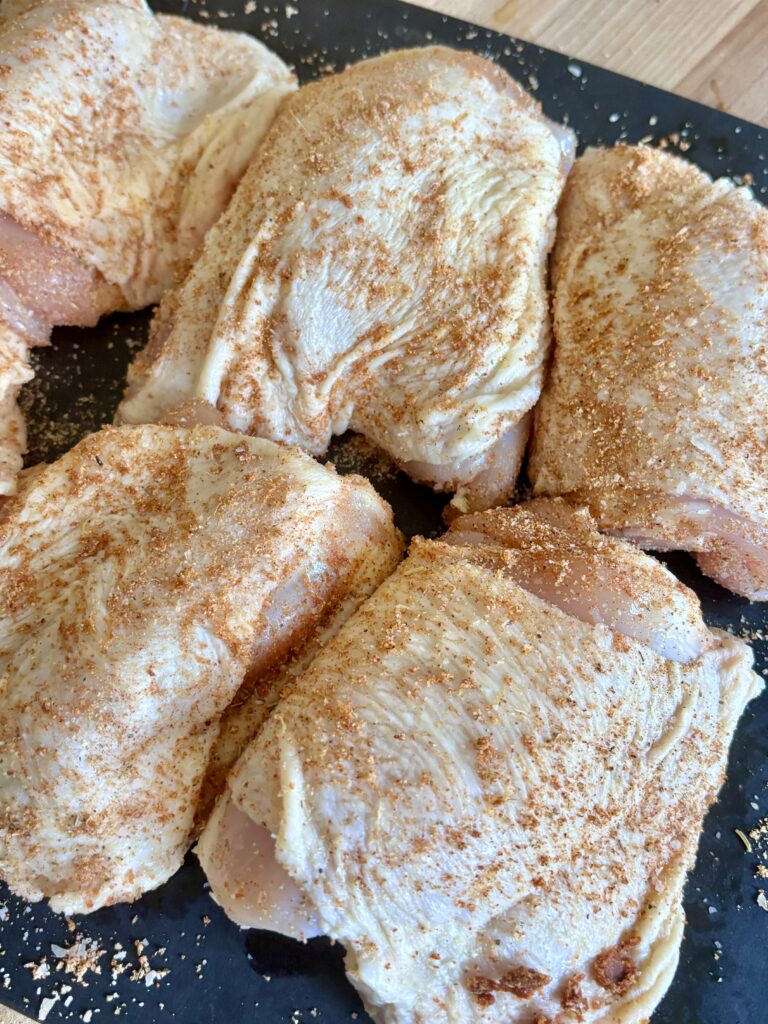
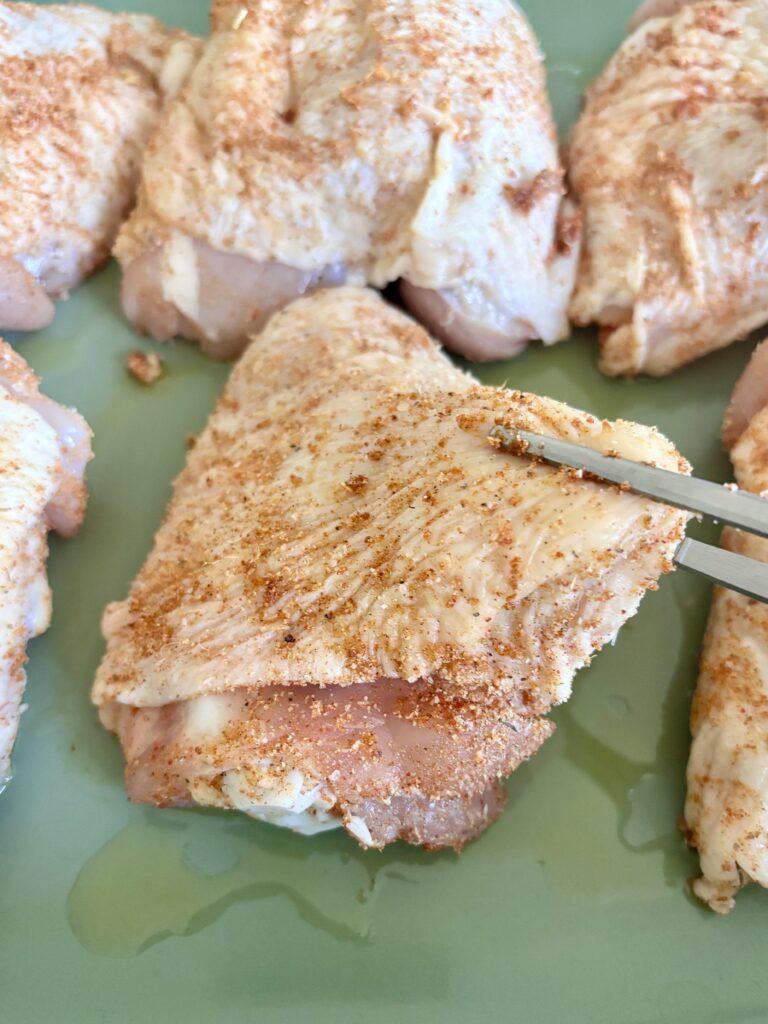
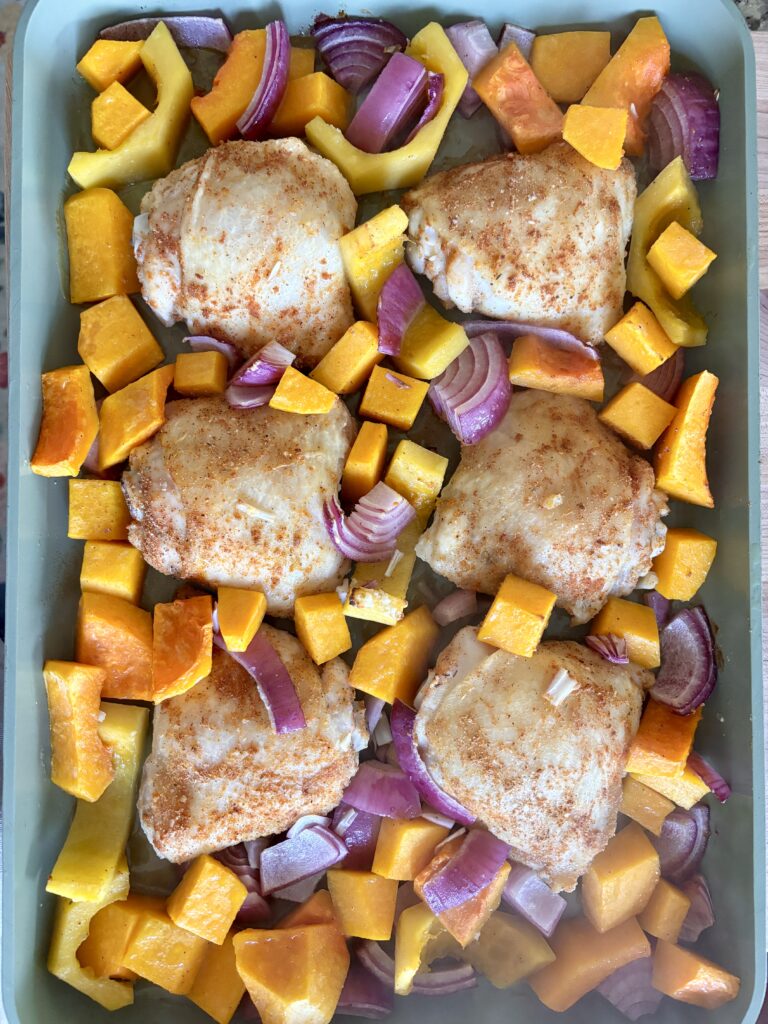
- Pat the chicken thighs completely dry with paper towels. Arrange them skin-side up on the prepared baking sheet and drizzle with olive oil.
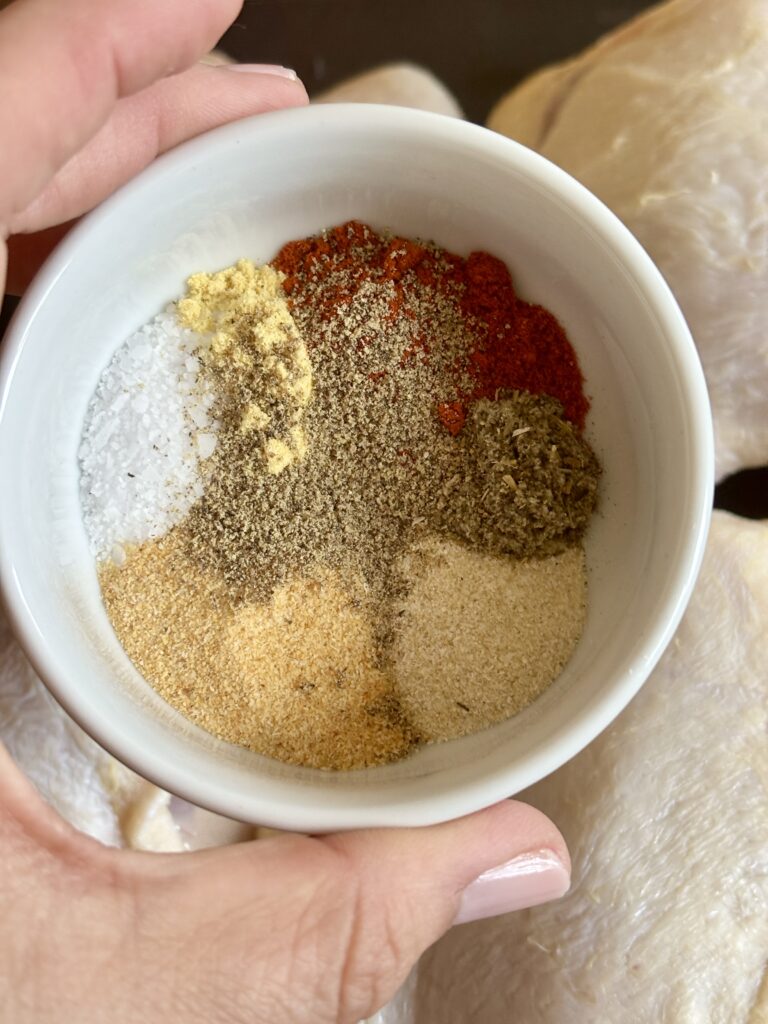
- In a small bowl, combine the kosher salt, garlic powder, ground mustard, onion powder, dried sage, paprika, and black pepper. Sprinkle the seasoning mixture evenly over the chicken thighs, gently rubbing it into the skin.
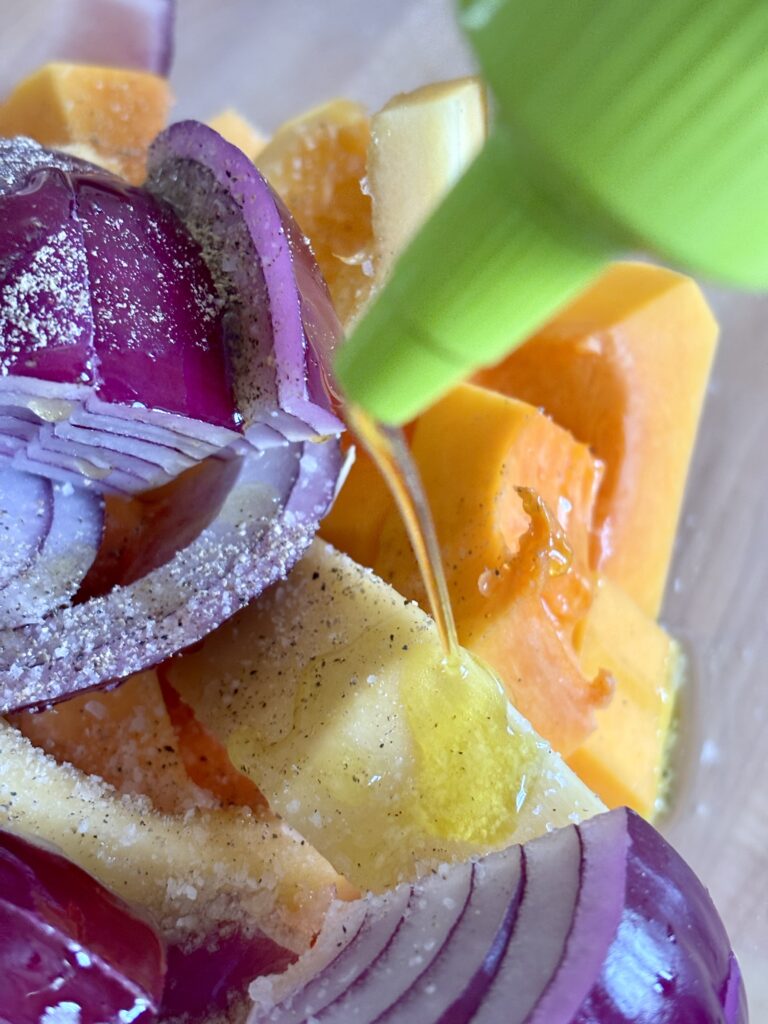
- In a large bowl, combine the cubed butternut squash and sliced red onion. Drizzle with olive oil, then sprinkle with kosher salt and black pepper. Toss until evenly coated.
- Spread the seasoned vegetables around the chicken thighs in a single layer, leaving enough room for the vegetables to roast rather than steam. Use two baking sheets if necessary.
Roast the Chicken Thighs
- Begin roasting. Place the baking sheet in the preheated oven and roast for 20–25 minutes, allowing the chicken skin to begin browning and the vegetables to soften.
Prepare the Maple Dijon Glaze
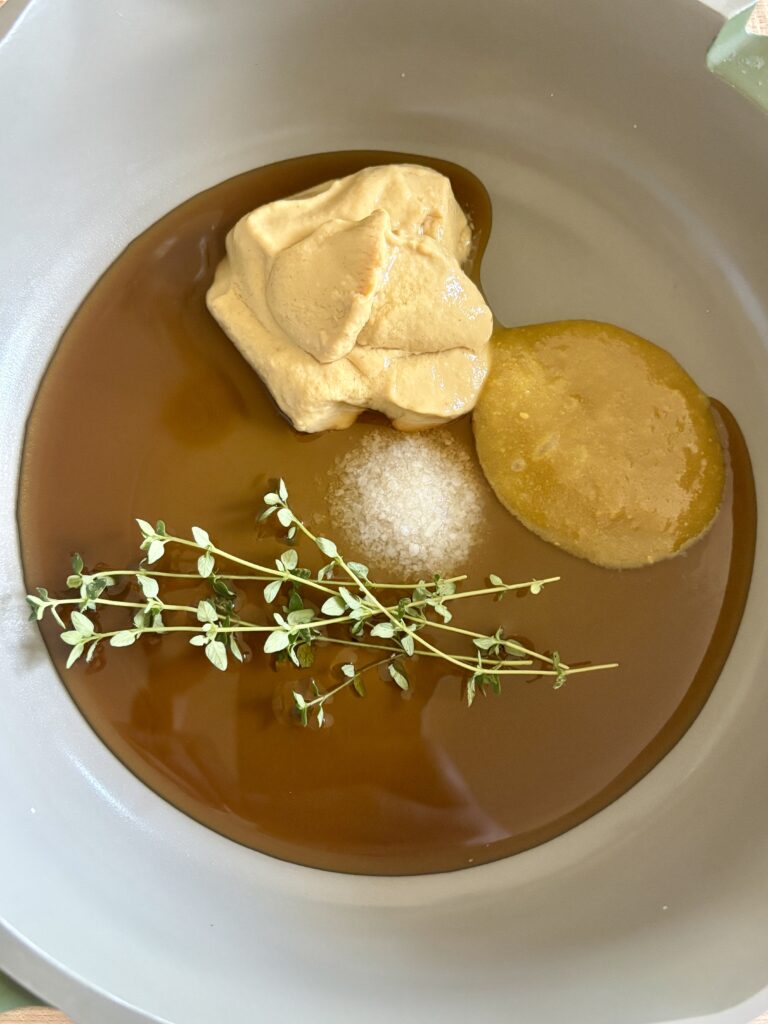
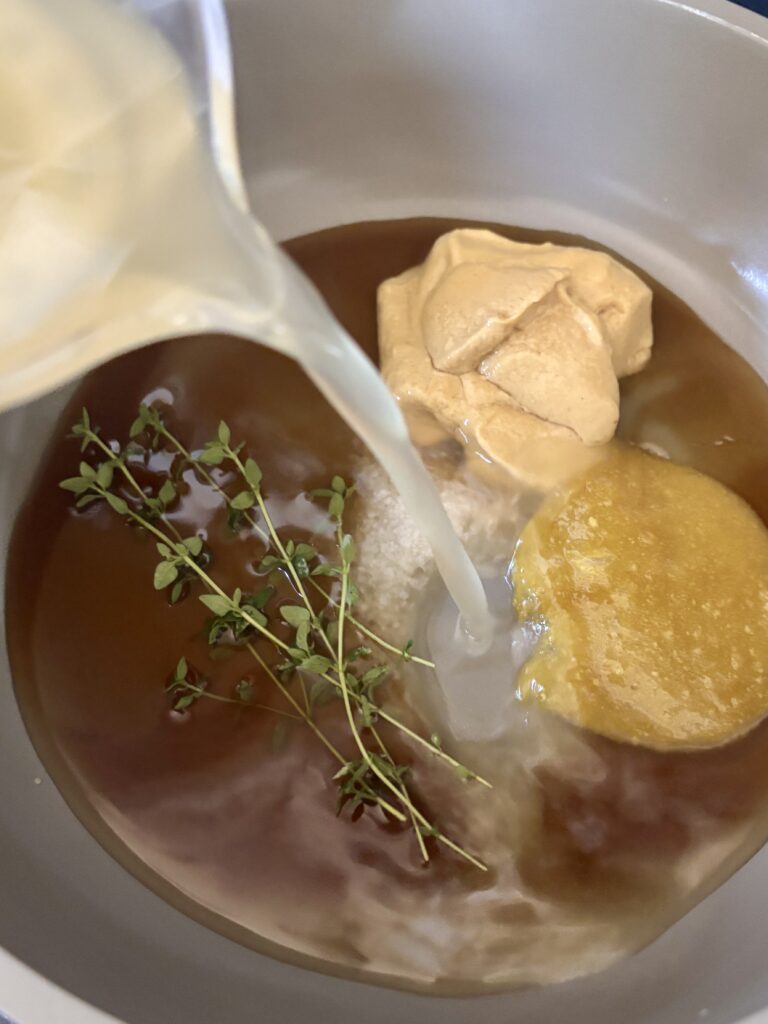
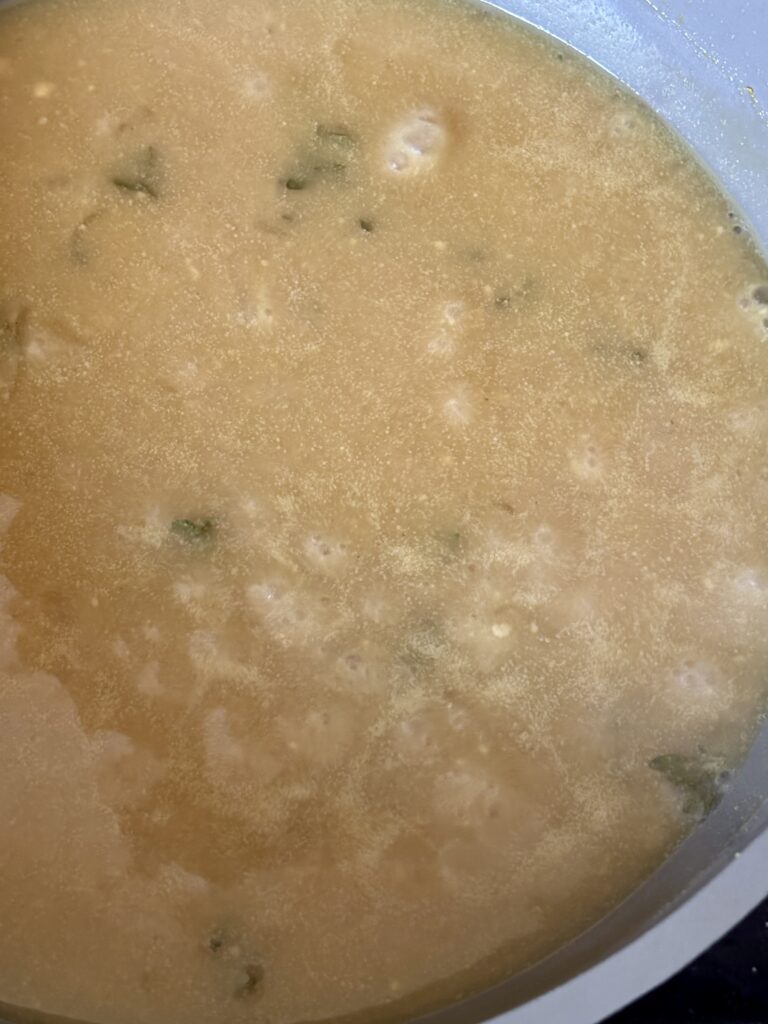
- While the chicken roasts, add the chicken broth, Dijon mustard, maple syrup, fresh thyme, apple cider vinegar, and Better Than Bouillon chicken base to a small saucepan. Whisk until combined.
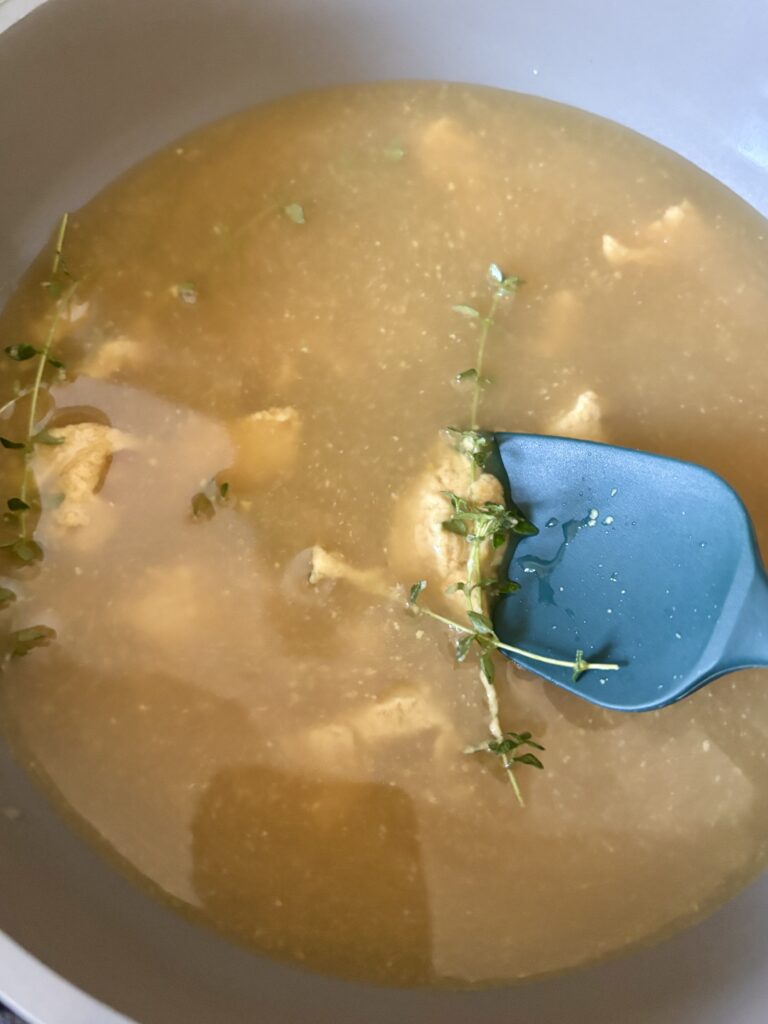
- Bring the mixture to a gentle simmer over medium heat, stirring occasionally until the chicken base dissolves.
- In a small bowl, whisk together the cornstarch and water until smooth. Slowly pour the slurry into the simmering glaze, whisking continuously. Simmer for approximately 1–2 minutes, until the glaze thickens slightly. Taste and add additional salt only if needed.
Glaze and Finish Roasting
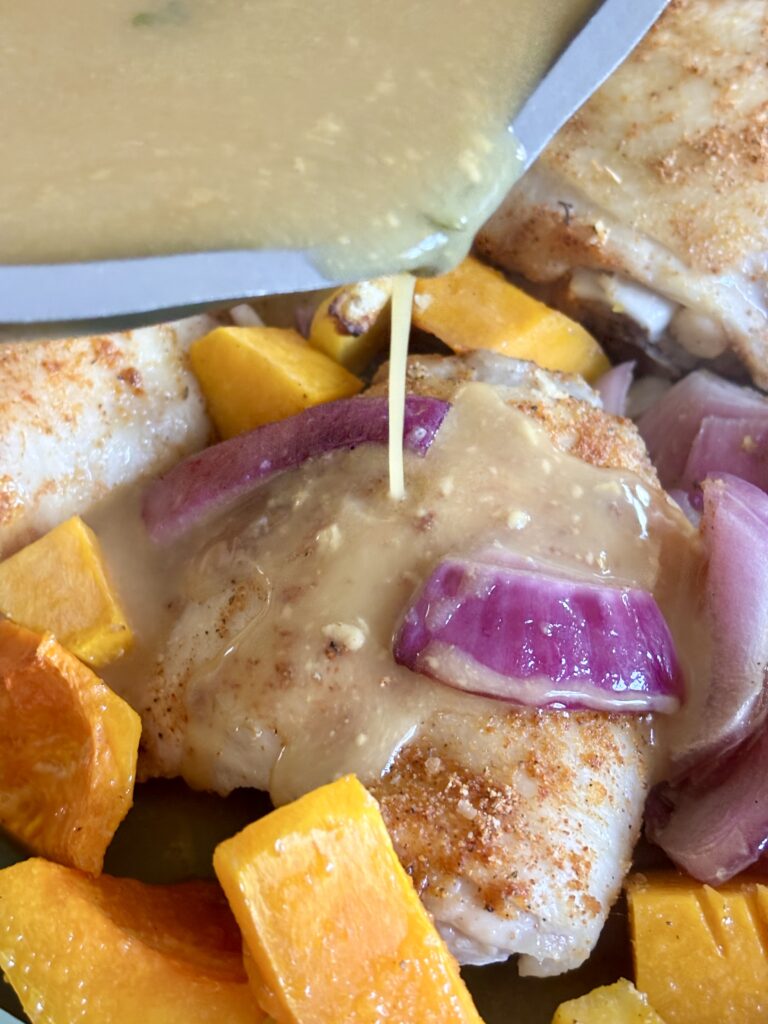
- After the chicken thighs have roasted for 20–25 minutes, carefully remove the pan from the oven. Turn the butternut squash and red onions to encourage even caramelization. Reserve a few tablespoons of the glaze in a clean bowl for serving. Then pour, spoon, or brush the remaining glaze generously over the chicken thighs and vegetables.
- Return the pan to the oven and roast for another 10–20 minutes, or until the chicken thighs reach an internal temperature of at least 165°F and the vegetables are tender. For especially tender dark meat, continue cooking until the internal temperature reaches approximately 175–185°F.
- For additional browning and caramelization, switch the oven to broil and cook for 1–3 minutes, watching carefully to prevent the maple glaze from burning.
- Remove the pan from the oven and allow the chicken thighs to rest for approximately 5 minutes. Spoon the reserved maple Dijon glaze over the chicken and vegetables, garnish with additional fresh thyme if desired, and serve warm.
Notes
- Bone-in chicken thighs generally take 35–45 minutes at 400°F, although larger thighs may require additional roasting time. Always check the internal temperature. ook the chicken to at least 165°F.
- Avoid Overcrowding, if the chicken thighs and vegetables don’t fit comfortably in one layer, use two baking sheets.
- The glaze should be slightly thickened but still pourable. Add a splash of chicken broth if it becomes too thick.
- Chicken base is concentrated and salty. Taste the glaze before adding any additional salt.
- Sweet potatoes, carrots, other types of squash, and Brussels sprouts are all delicious alternatives, although cooking times may vary.
- Refrigerate leftovers in an airtight container for up to 3–4 days.
Sheet Pan Maple Dijon Chicken Thighs | Maple Dijon chicken thighs | sheet pan chicken thighs | maple mustard chicken | baked chicken thighs | roasted chicken thighs with butternut squash | fall chicken dinner | maple glazed chicken thighs | easy sheet pan chicken dinner | bone-in chicken thigh recipes

Nutritional Content Disclaimer
I choose not to include nutritional information with my recipes, as these values can be calculated from the ingredients provided. With my background as a pediatric nurse practitioner and my own family experience with disordered eating, I understand how focusing on numbers can affect our relationship with food. My philosophy is that all foods have a place—sweet, savory, nourishing, or indulgent. I aim to share recipes that support a healthy, joyful approach to eating. My hope is that this space also encourages a balanced, healthy relationship with food for you and your family too.