
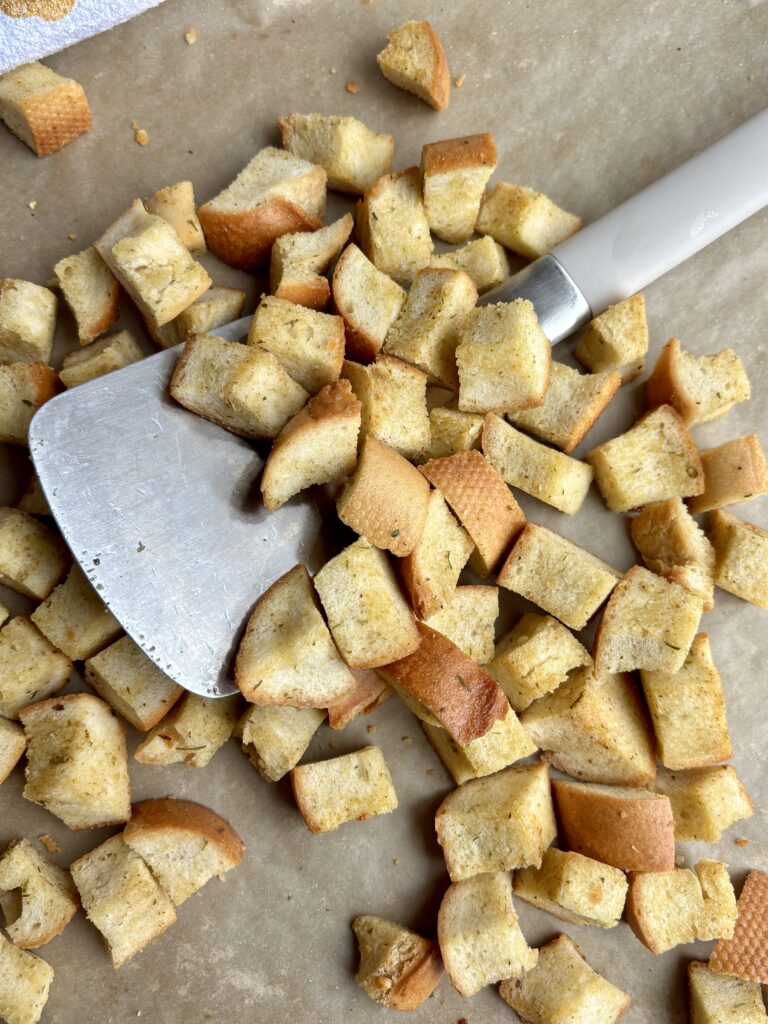
One of my favorite things to make from scratch is homemade croutons. They’re so much easier than you might think, taste a million times better than anything you’ll find at the grocery store, and they’re a great way to use up bread that’s starting to go stale. Once you make your own, I promise it’s pretty hard to go back to the store-bought kind!
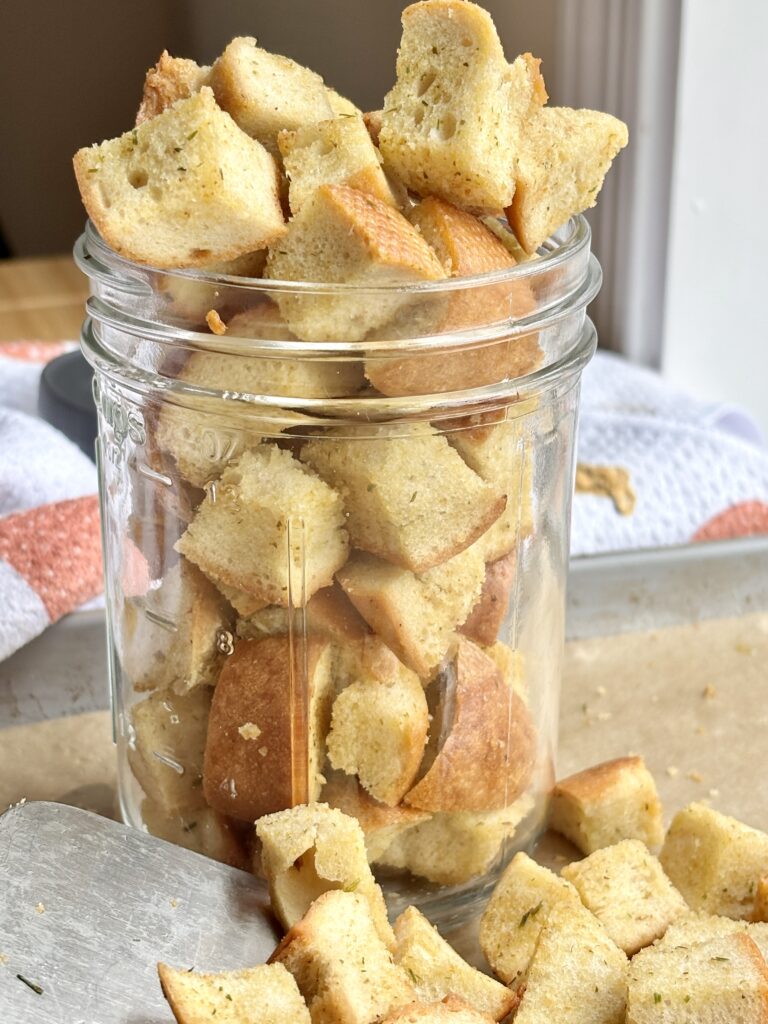
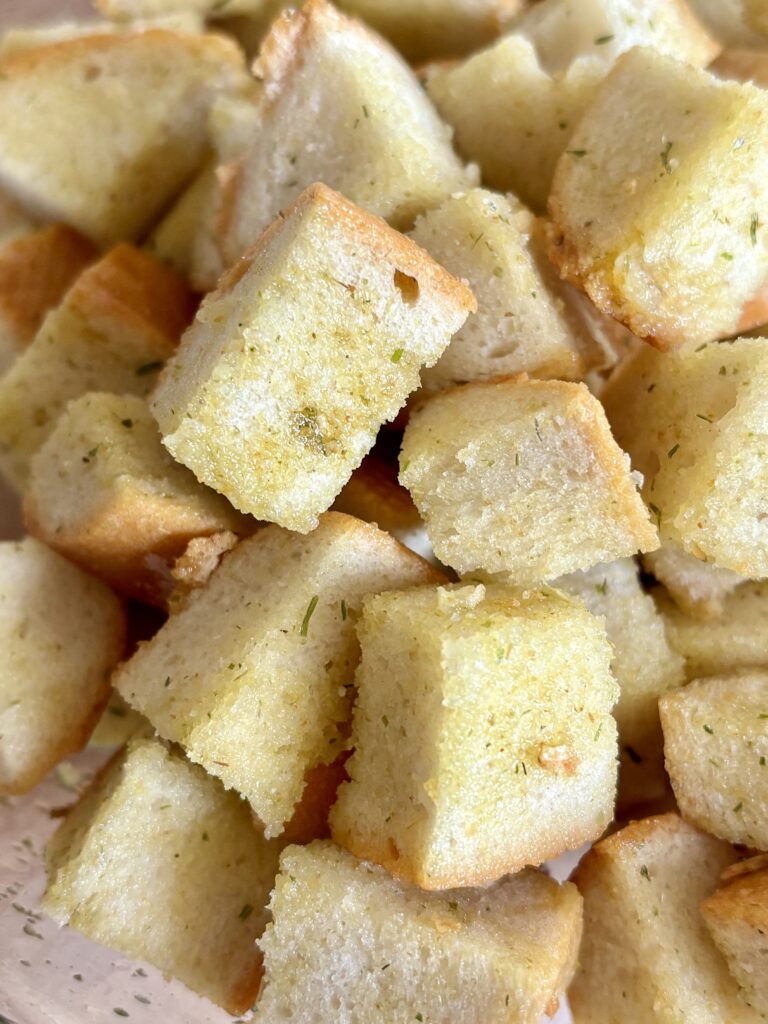
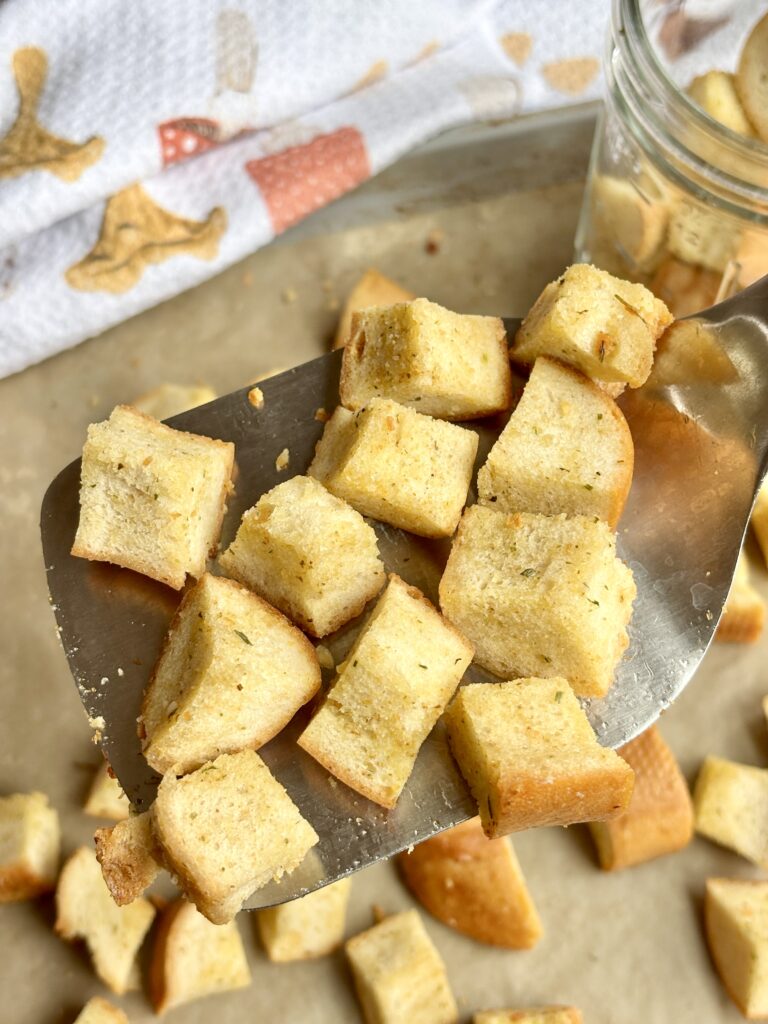
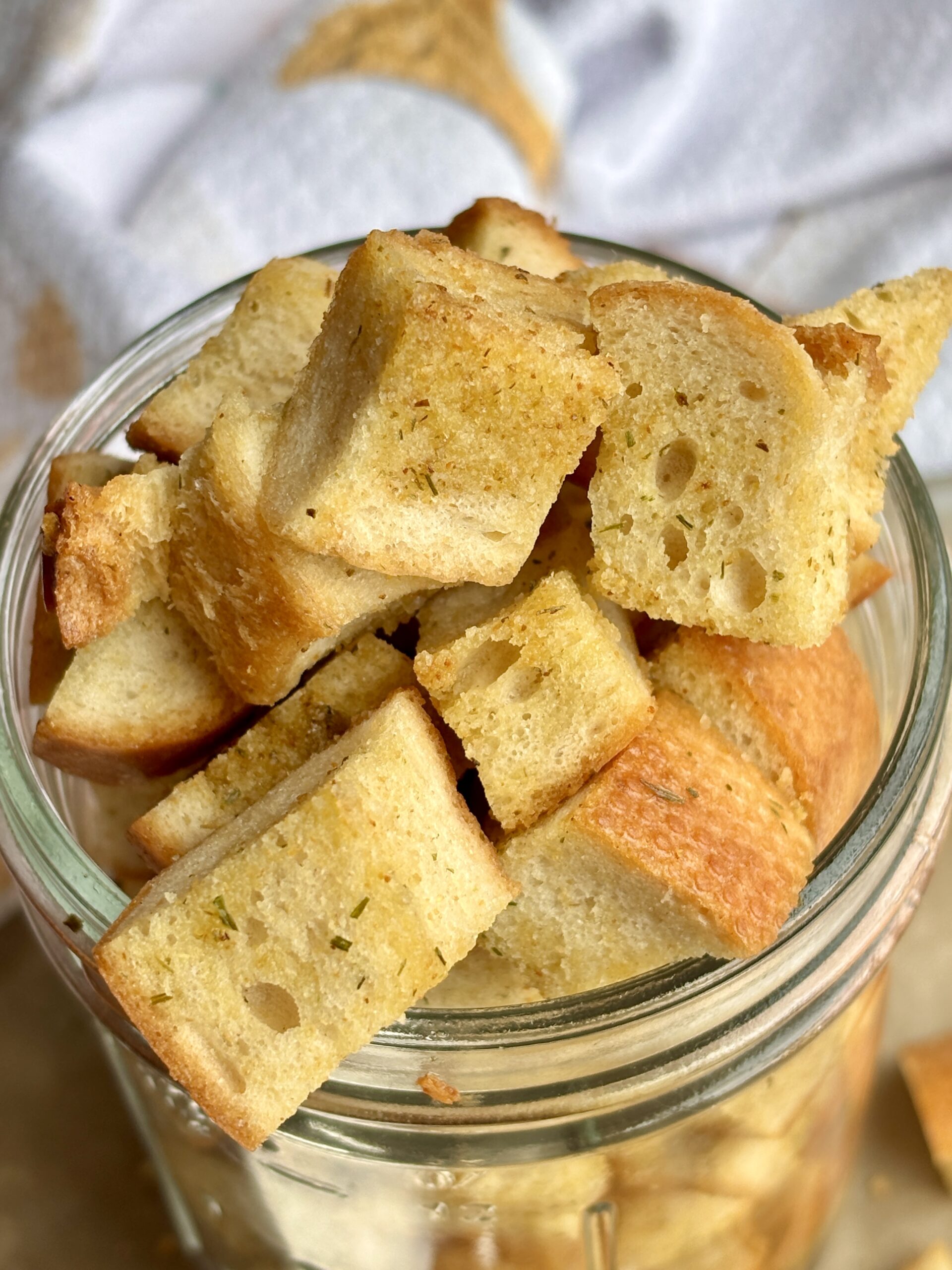
These easy Homemade Croutons are golden, wonderfully crunchy, and packed with flavor. All you need is a little olive oil, a few simple seasonings, and some leftover bread to make the most delicious addition to your favorite salads and soups.
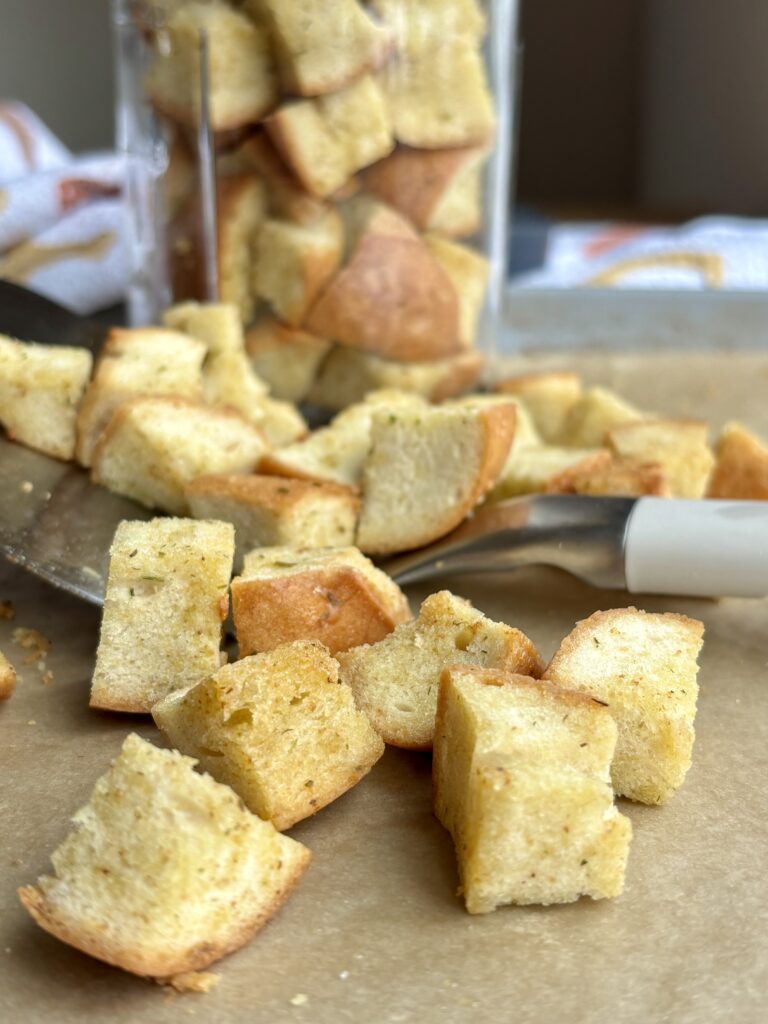
The secret is baking them low and slow, instead of cranking up the heat and ending up with croutons that are browned on the outside but still soft in the middle. This method gives the bread time to dry out and become perfectly crisp all the way through.
I also like to keep the seasoning simple. My go-to is Trader Joe’s Onion Salt because it adds so much flavor without needing a handful of different spices. But a combination of garlic powder, onion powder, dried parsley, and salt works beautifully, too.
They’re especially delicious tossed into a homemade Caesar salad, sprinkled over a bowl of creamy soup, or added to your favorite casserole. And the next time you have a few slices of bread that are past their prime, don’t throw them away. Make a batch of these instead. You’ll be glad you did!
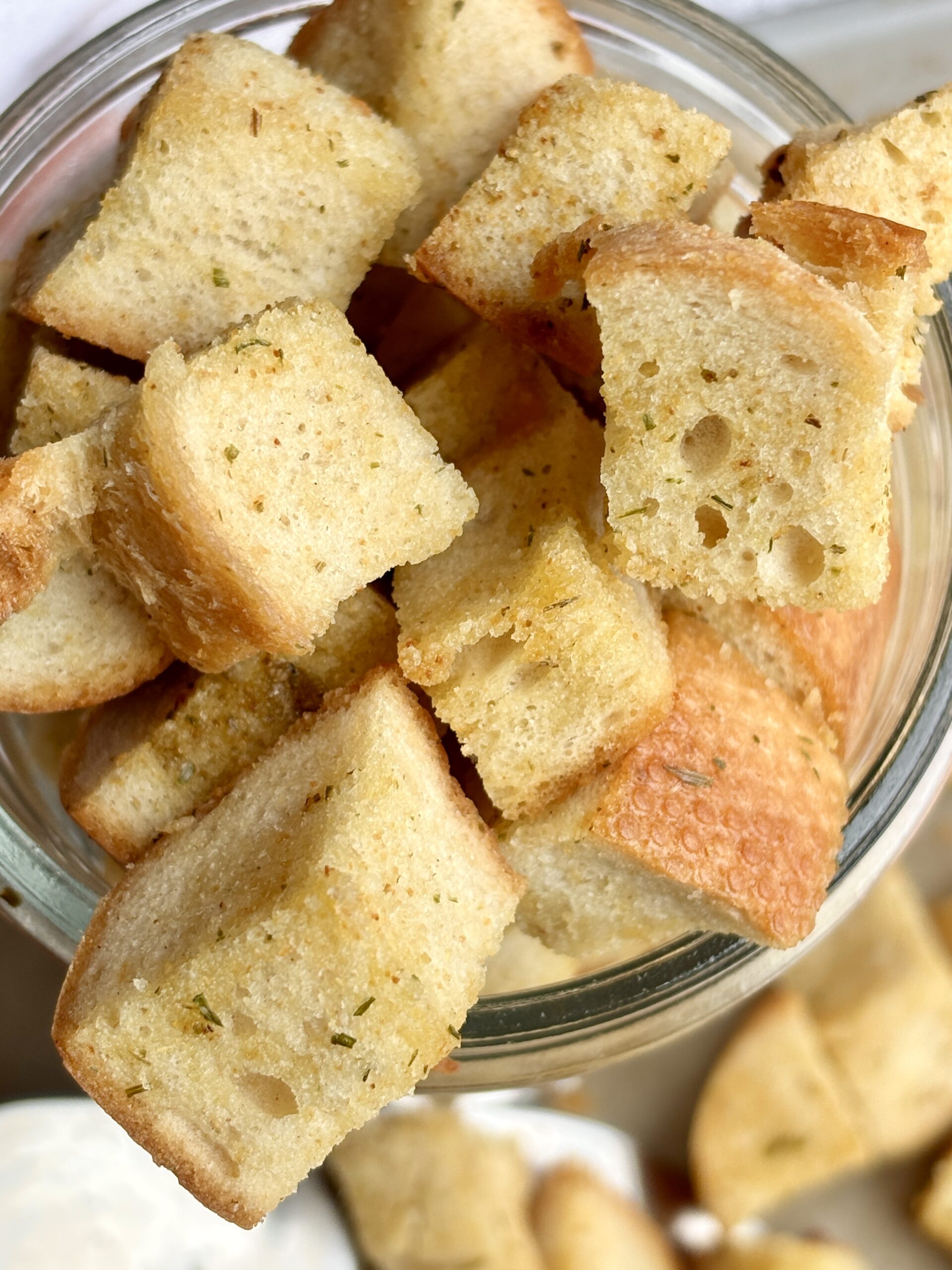
Why you’ll love this recipe!
What Makes These Homemade Croutons So Crispy?
The secret to perfectly crunchy homemade croutons is baking them at a lower temperature for a longer period of time.
Many homemade crouton recipes use a hotter oven to brown the bread quickly. While that method works, it can sometimes leave the outside deeply toasted before the center has fully dried.
For this recipe, I prefer baking at 250°F for approximately 30–40 minutes.
The gentle heat slowly removes moisture from the bread, helping create a crisp, crunchy texture without burning the seasonings or making the edges overly dark.
Stirring the croutons once or twice during baking also helps them dry evenly.
And don’t forget to let them cool completely! The croutons will continue to firm up as they cool, giving you that satisfying crunch that makes them so good.
What ingredients do I need?
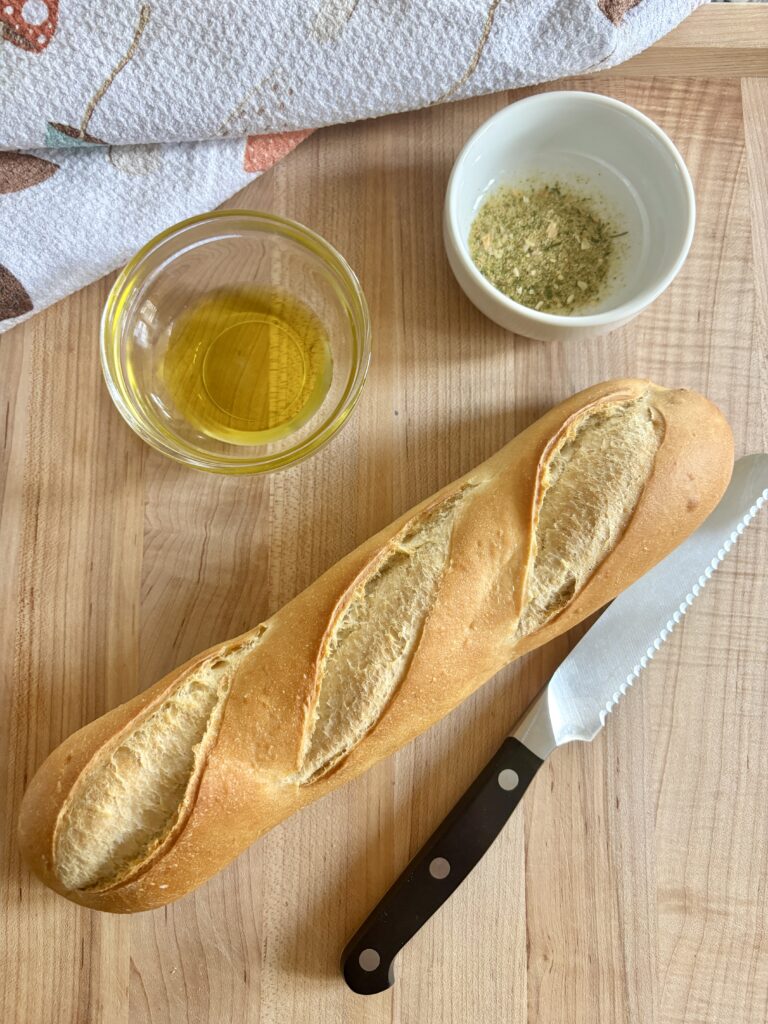
- Bread: The best part about homemade croutons is that you can use so many different types of bread. French bread, Italian bread, sourdough, and rustic country loaves all work beautifully. I especially love using slightly stale bread because it already contains less moisture, which helps the croutons become crispy in the oven.
- Extra Virgin Olive Oil: Olive oil helps the bread toast evenly while adding a delicious, slightly fruity richness. I prefer extra virgin olive oil because it adds flavor without making the croutons feel greasy.
- Seasoning: This is where you can have a little fun! My favorite shortcut is Trader Joe’s Onion Salt. It adds plenty of savory flavor without having to measure out several different spices. But you can also make a simple homemade seasoning blend using garlic powder, onion powder, kosher salt, and dried parsley.
The Best Bread for Homemade Croutons
You don’t need to buy a special loaf of bread to make really good homemade croutons. In fact, leftover bread that’s starting to get a little stale is often perfect. Some great options are:
- French Bread: Creates classic, light, crispy croutons with a mild flavor that works well with almost any salad or soup.
- Italian Bread: A great all-purpose choice with a tender interior and a slightly chewy crust.
- Sourdough Bread: Adds a subtle tang and a heartier texture. Sourdough croutons are especially delicious in Caesar salads and creamy soups.
- Rustic Country Bread: Creates substantial, crunchy croutons with plenty of texture.
- Brioche: Produces richer, slightly sweeter croutons. I especially like this option for salads with fruit, nuts, or sweeter dressings.
- Whole Wheat Bread: Adds a nuttier flavor and creates a slightly denser crouton.
- Sandwich Bread: Works in a pinch, although the finished croutons may be lighter and more delicate than those made with rustic bread.
- Bagels: Grab your favorite bagels for so many fun variations to top salads and soups! I love grabbing an everything bagel and then I don’t even need seasoning.
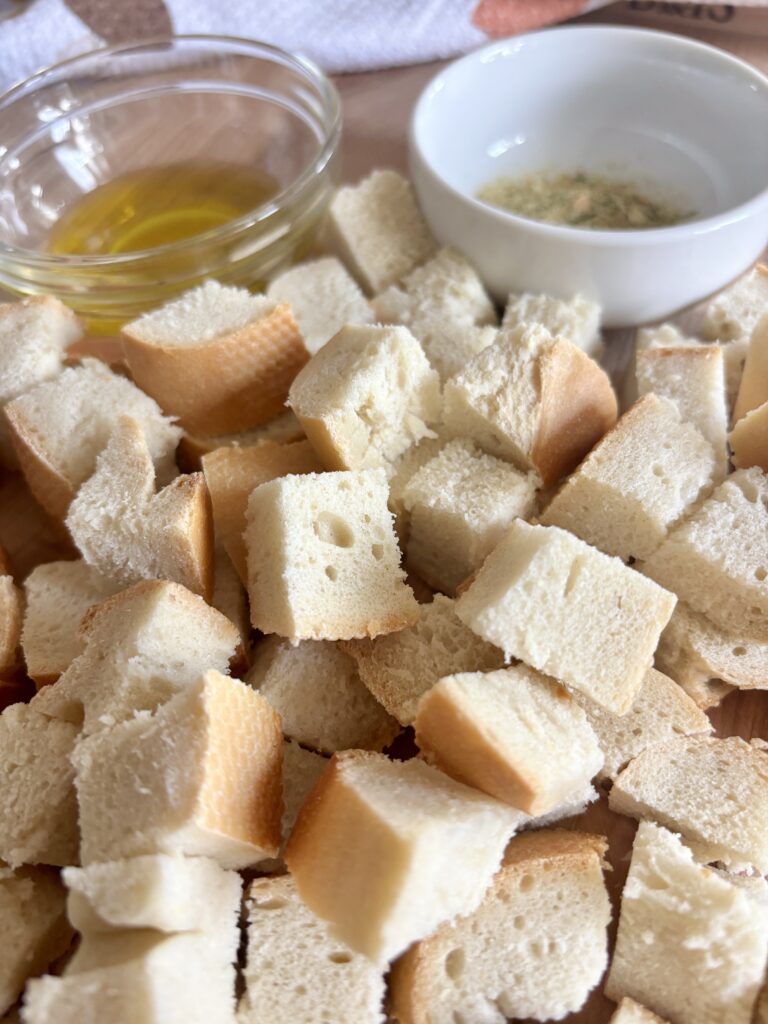
For the best texture, I recommend using bread that’s a day or two old rather than bread that’s extremely soft and freshly baked.
I also love playing with the flavor of breads. Think rye bread, whole wheat, oat bread, really the possibilities are endless!
Recipe Variations
- Garlic Parmesan Croutons: Season the bread with garlic powder and dried parsley. Sprinkle with 2–3 tablespoons finely grated Parmesan during the last 5–10 minutes of baking.
- Italian Herb Croutons: Use 1 teaspoon Italian seasoning, ½ teaspoon garlic powder, and a little kosher salt. These are especially delicious with tomato soup, minestrone, and Italian-inspired salads.
- Everything Bagel Croutons: Toss the bread with olive oil and 1–2 teaspoons everything bagel seasoning. Because these blends often contain salt, adjust the amount according to taste.
- Ranch-Style Croutons: Use a little dried dill, garlic powder, onion powder, dried parsley, and black pepper for a savory ranch-inspired flavor. You can also grab a ranch seasoning packet for ease and sprinkle some on top before baking.
- Spicy Garlic Croutons: Add ¼ teaspoon crushed red pepper flakes or a pinch of cayenne pepper to the garlic and herb seasoning.
- Rosemary Sea Salt Croutons: Use finely chopped fresh rosemary, garlic powder, and flaky sea salt. These are especially good with creamy mushroom soup or roasted vegetable soups.
- Buttery Croutons: Replace the olive oil with melted unsalted butter for a richer, buttery flavor.
- Cinnamon Sugar Croutons: For a sweeter variation, use melted butter, cinnamon, and granulated sugar instead of savory seasonings. These are delicious over fruit salads or yogurt bowls.
Pro Tips
- Use slightly stale bread. Bread that’s a day or two old contains less moisture, making it easier to achieve a crisp texture. Fresh bread works, too, but it may need additional baking time.
- Cut the bread into even pieces with a good serrated knife. Aim for approximately ½-inch cubes. Smaller pieces may become too crunchy or brown too quickly, while larger cubes can take longer to dry out in the center.
- Don’t remove the crusts. The crust adds flavor and texture. Unless you’re using an especially thick or tough crust, there’s no need to remove it.
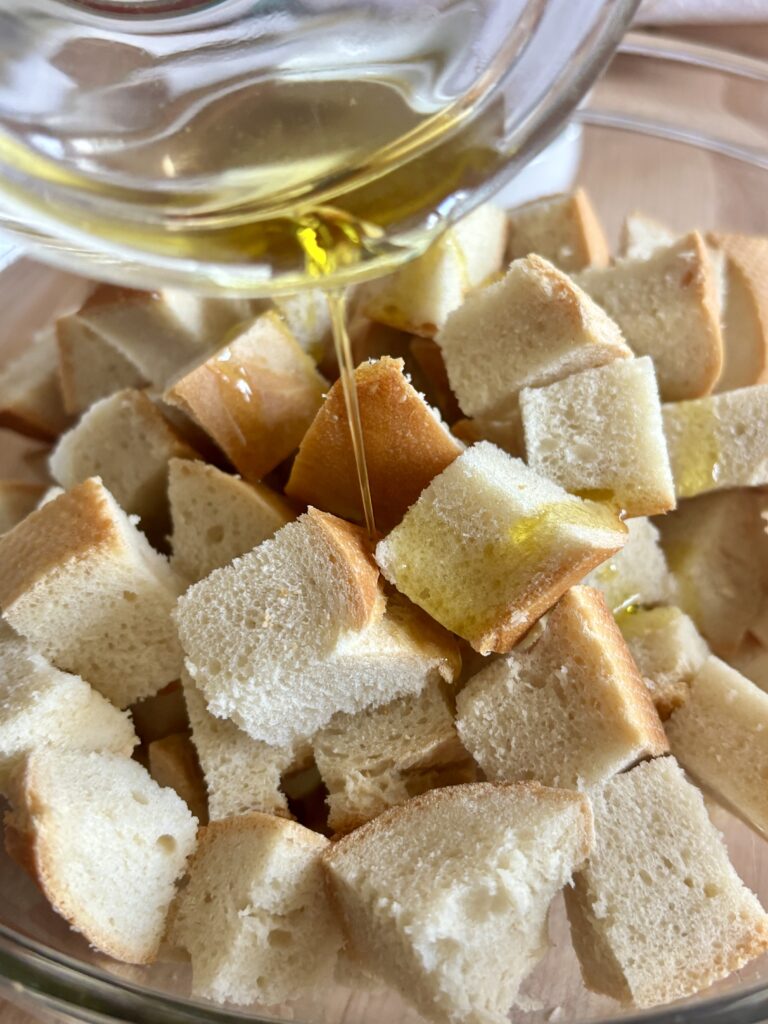
- Use enough olive oil, but don’t oversaturate the bread. You want the bread lightly and evenly coated, not soaked. Too much oil can make the croutons greasy rather than crisp.
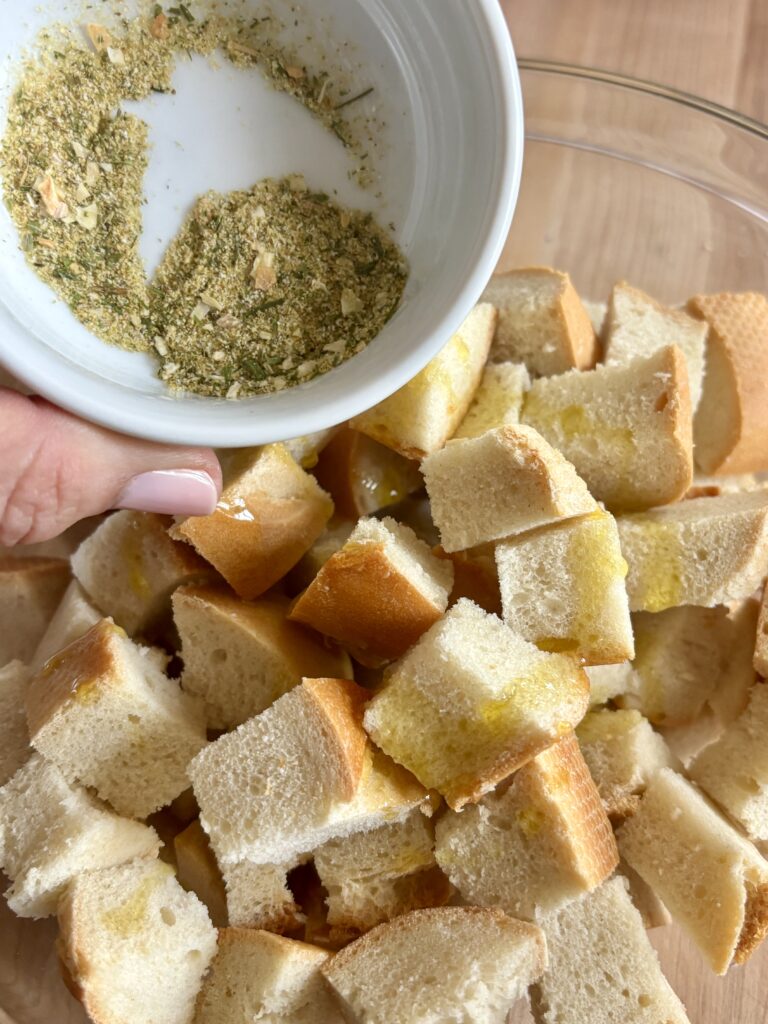
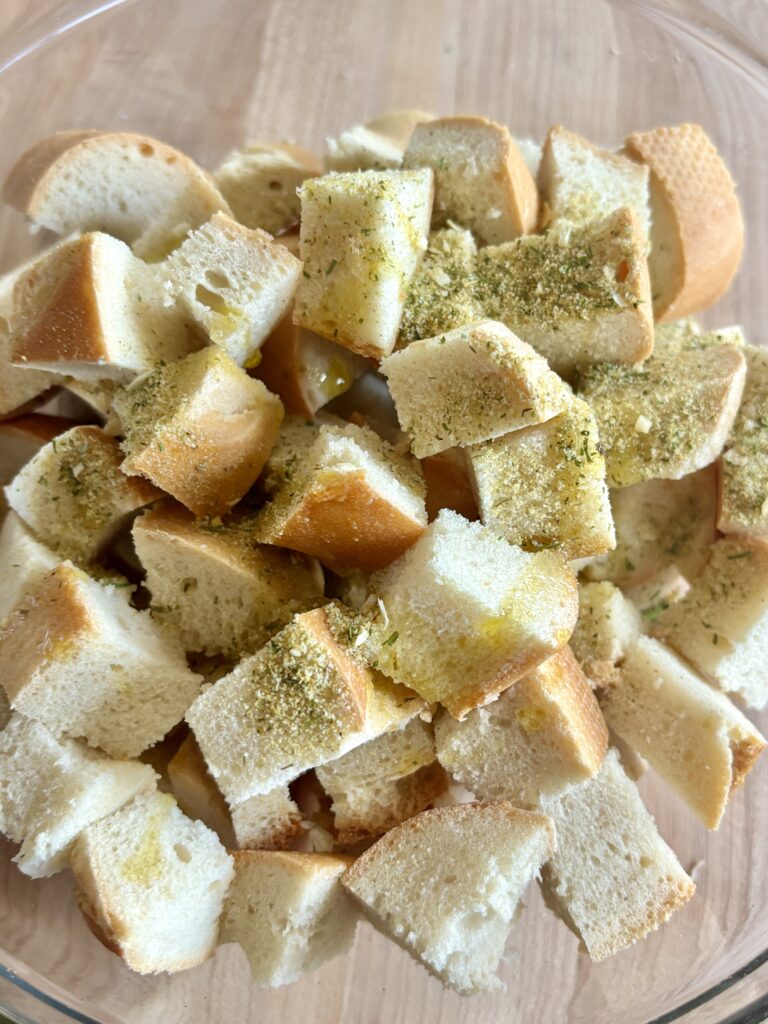
- Toss the bread thoroughly. Make sure the oil and seasonings reach as many pieces as possible. I like using a large mixing bowl so there’s plenty of room to toss everything together.
- Use a low oven temperature. Baking at 250°F allows moisture to evaporate gradually, creating croutons that are crunchy throughout without overly browned edges.
- Spread the bread in a single layer. Overcrowding the baking sheet traps moisture and can prevent the croutons from crisping evenly. Use two baking sheets if necessary.
- Stir once or twice while baking. Turning the bread cubes helps expose different sides to the heat and encourages even drying.
- Don’t rely on color alone. Because these croutons bake at a lower temperature, they may not become deeply golden. Look for a dry, firm texture and a satisfying crunch instead.
- Remember that different breads bake differently. Dense sourdough may need more time than light sandwich bread. Start checking around 30 minutes and continue baking as needed.
- Let the croutons cool completely. They become even crispier as they cool. Storing them while warm can trap steam and make them soft.
- Season according to your bread. Some breads are already fairly salty, and seasoning blends can contain different amounts of salt. Taste and adjust accordingly.
- Make extra for later. These are great to keep on hand for salads, soups, and adding crunch to everyday meals.
Can I Substitute?
Yes! Like always though, any substitutions made to the recipe can result in a change in texture and/or flavor.
- Bread Substitutions: You can use French bread, Italian bread, sourdough, rustic country bread, bagels, or sandwich bread.
- Olive Oil Substitutions: Avocado oil is a good substitute for extra virgin olive oil if you prefer a more neutral flavor. Melted unsalted butter can also be used for a richer, buttery flavor, although butter-based croutons may brown differently and are best enjoyed sooner.
- Seasoning Substitutions: If you don’t have Trader Joe’s Onion Salt, like I use here, use the homemade garlic and herb seasoning blend included in the recipe card below. You can also substitute your favorite all-purpose seasoning, Italian seasoning, ranch-style seasoning, or another savory spice blend.
Dietary Substitutions
- Vegetarian: These homemade croutons are vegetarian as written, provided your bread and seasonings are vegetarian.
- Vegan: Use vegan bread and olive oil rather than butter. Check packaged seasoning blends for any dairy-based ingredients.
- Gluten-Free: Substitute your favorite gluten-free bread. Gluten-free bread can dry out more quickly, so begin checking the croutons before the full baking time has elapsed.
- Dairy-Free: The recipe is dairy-free when prepared with olive oil and dairy-free bread and seasonings.
- Nut-Free: The basic recipe doesn’t require nuts. Check your bread and seasoning labels if preparing these for someone with a nut allergy.
Ways to Use Homemade Croutons
There are so many ways to use homemade croutons beyond a traditional salad. Use them in:
- Caesar Salad: Toss them with crisp romaine, freshly grated Parmesan, and your favorite Caesar dressing.
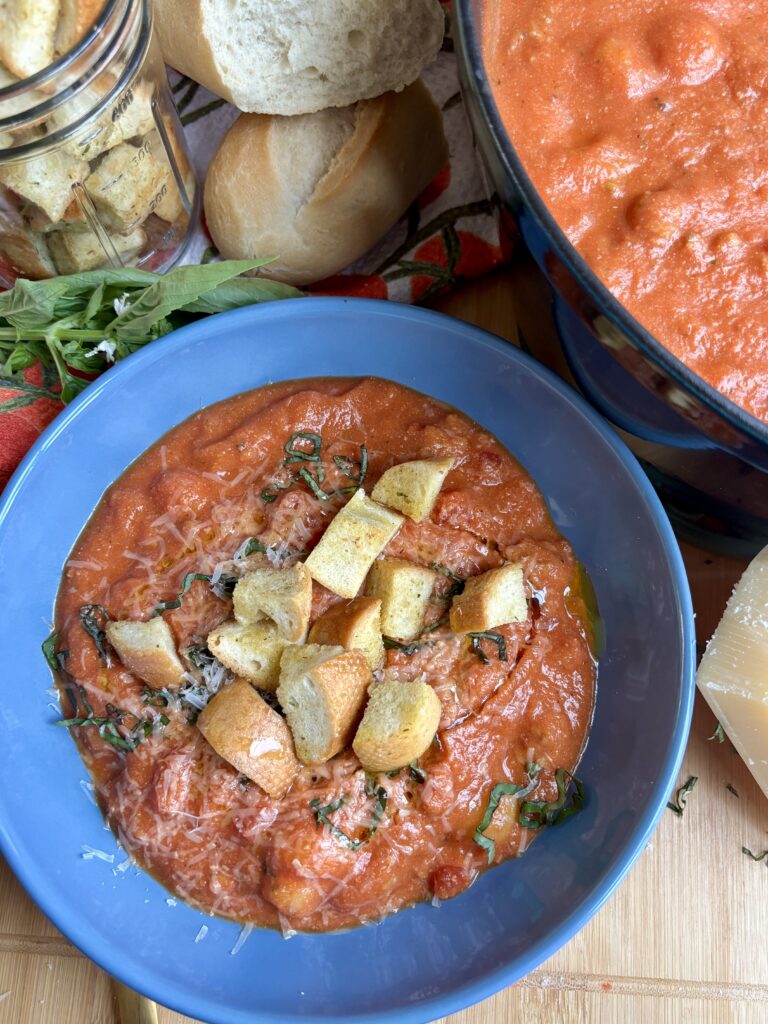
- Creamy Tomato Soup: A handful of crunchy croutons is the perfect contrast to a silky tomato soup.
- Broccoli Cheddar Soup: Add a few croutons right before serving for extra crunch.
- Sausage and Gnocchi Soup: These are especially delicious on top of a thick, creamy tomato-based soup with Italian sausage and gnocchi.
- Autumn Salads: Use them in salads with roasted vegetables, kale, Brussels sprouts, or seasonal greens.
- French Onion Soup: Add croutons underneath melted cheese for a delicious twist on the classic.
- Casseroles: Crush the croutons slightly and sprinkle them over baked casseroles for a crispy topping.
- Homemade Breadcrumbs: Pulse cooled croutons in a food processor to create seasoned breadcrumbs for meatballs, casseroles, and breaded chicken.
- Snacking: And of course, they’re pretty delicious straight from the container! In fact, this is how my children enjoy them.
Leftovers and Storage
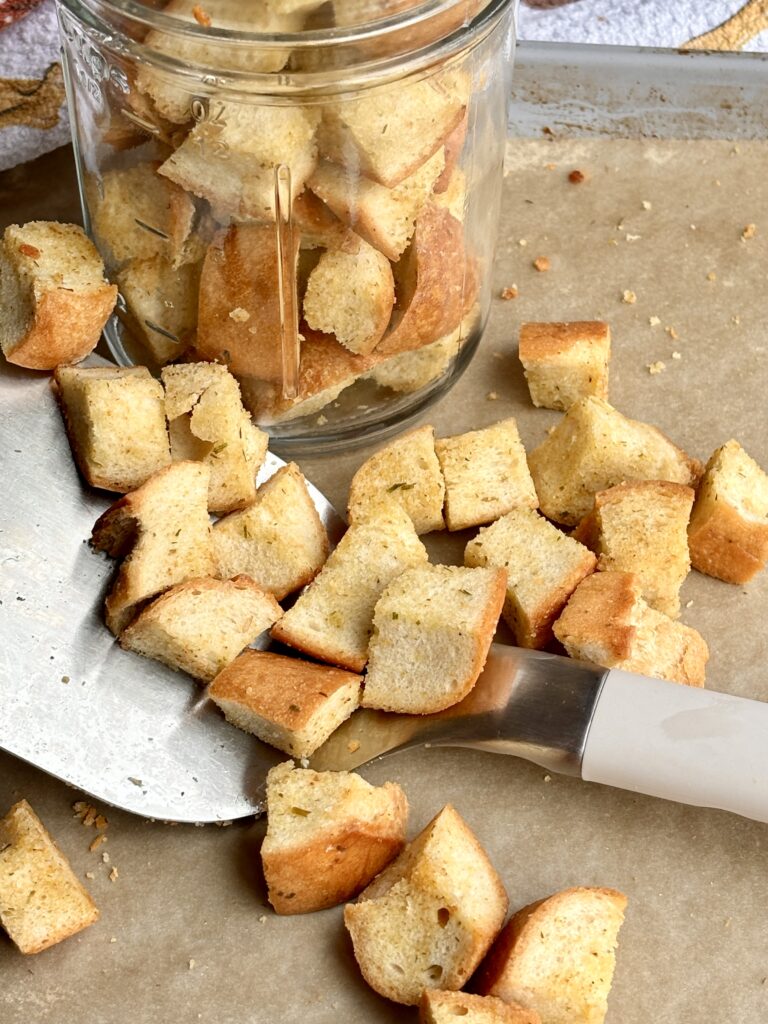
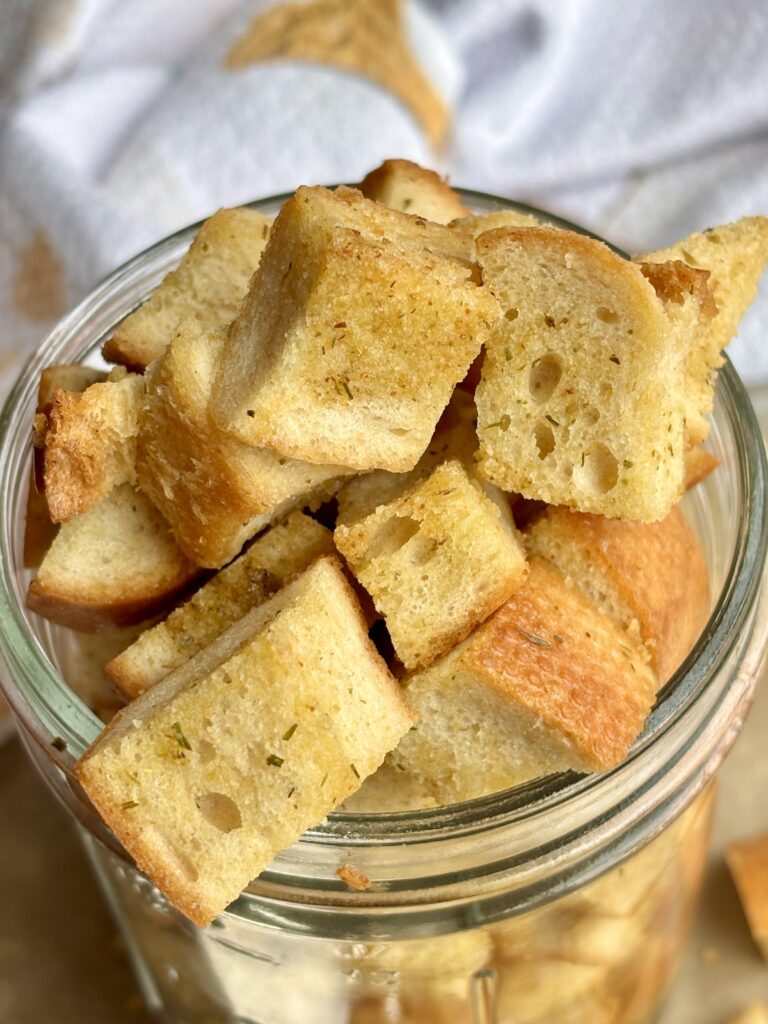
- Room Temperature: Allow croutons to cool completely, then store in an airtight container or resealable bag in a cool, dry place for up to 5–7 days.
- Refrigerator: Refrigeration isn’t recommended, as moisture can cause croutons to lose their crunch.
- Freezer: Freeze completely cooled croutons in an airtight, freezer-safe container or bag for up to 2 months. Thaw in the sealed container to prevent condensation.
- How to Re-Crisp: If croutons soften, spread them on a baking sheet and bake at 250°F for 5–10 minutes, or until crispy. Cool completely before storing.
- Make Ahead: Prepare croutons several days in advance and store at room temperature. Add them to salads or individual bowls of soup just before serving to keep them crunchy.
Troubleshooting
My croutons aren’t crunchy.
The bread likely still contains too much moisture. Return the croutons to the oven at 250°F and bake for another 5–10 minutes, checking frequently. Dense bread or larger cubes may require additional time. Allow them to cool completely before deciding whether they’re crisp enough.
My croutons are too hard.
The bread may have been cut into very small pieces or baked longer than necessary. Some rustic breads also have naturally dense crusts that become especially hard when dried. Try cutting the bread into slightly larger cubes or reducing the baking time.
My croutons are burnt around the edges.
The bread may have been cut unevenly, or your oven may run hotter than the temperature setting states. Keep the cubes a consistent size, spread them evenly on the baking sheet, and stir once or twice while baking.
My croutons are greasy.
Too much oil can make the bread feel heavy or oily. Start with approximately 3 tablespoons of olive oil for 3 cups of cubed bread and toss thoroughly to distribute it evenly.
My croutons taste bland.
They may need additional seasoning or salt. Make sure the bread is evenly coated before baking, and adjust the seasonings according to the type of bread you’re using. A light sprinkle of salt after baking can also help.
My croutons are too salty.
Seasoning blends such as onion salt can contain a significant amount of salt. Use less of the blend next time or replace part of it with unsalted garlic powder, onion powder, or dried herbs.
My croutons are browning unevenly.
The bread cubes may be different sizes or overcrowded on the baking sheet. Cut them as evenly as possible, arrange them in a single layer, and stir during baking.
My croutons became soft after storing.
They may have been stored before cooling completely, or moisture may have entered the container. Spread them on a baking sheet and return them to a 250°F oven for 5–10 minutes, or until crisp again. Allow them to cool completely before storing.
My croutons are crispy outside but chewy inside.
The oven temperature may have been too high, or the bread cubes may need more time to dry out. Continue baking at 250°F until the centers are dry and crisp.
My seasoning is falling off the bread.
Make sure you add the oil before or together with the seasonings and toss thoroughly. The oil helps the herbs and spices adhere to the bread.
But, I Still Have A Few Questions…
What is the secret to crispy homemade croutons?
The secret is removing enough moisture from the bread without burning it. Baking at a lower temperature for a longer period of time helps the bread dry evenly and become crisp throughout.
Why do you bake croutons at 250°F?
Baking at 250°F allows the bread to dry gradually rather than brown too quickly. This creates a crunchy texture throughout the croutons while keeping the exterior from becoming overly dark.
Can I bake croutons at a higher temperature?
Yes. Croutons can be baked at higher temperatures, but they will brown more quickly and require closer attention. I prefer the low-and-slow method for a consistently crunchy texture.
Can I use fresh bread to make croutons?
Absolutely. Fresh bread works, although it may require a little more baking time to dry out completely.
Is stale bread better for croutons?
Slightly stale bread is ideal because it has already lost some moisture. However, the bread should still be safe to eat and free from mold. Never use moldy bread.
How big should I cut bread for croutons?
Approximately ½-inch cubes work well for salads and soups. You can cut them slightly larger for a heartier crouton, but they may need additional baking time.
Can I use butter instead of olive oil?
Yes. Melted butter creates a richer flavor, although it may brown differently. You can also use a combination of melted butter and olive oil.
Can I use fresh garlic?
You can, but fresh garlic may brown or burn during baking. Garlic powder is easier to distribute evenly and produces more consistent results.
Can I add Parmesan cheese?
Absolutely. Finely grated Parmesan adds a delicious salty, nutty flavor. For best results, sprinkle it over the croutons toward the end of baking.
How do I know when homemade croutons are done?
The croutons should feel dry, firm, and crunchy, with lightly golden edges. Allow a piece to cool briefly and test the center. If it’s still chewy, continue baking.
Do homemade croutons get crispier as they cool?
Yes. The croutons continue to firm up as they cool, so let them cool completely before storing them.
Can I use homemade croutons to make breadcrumbs?
Absolutely. Pulse cooled croutons in a food processor until they reach your desired consistency. They’re a great way to make seasoned breadcrumbs for casseroles and other savory recipes.
What salads are best with homemade croutons?
Caesar salad, garden salad, chopped salads, and hearty autumn salads all benefit from homemade croutons. They add crunch and help make salads more satisfying.
What soups are best with homemade croutons?
Creamy tomato soup, broccoli cheddar soup, French onion soup, vegetable soup, and hearty sausage and gnocchi soup are all delicious with croutons.
Can I double this recipe?
Yes. Double the ingredients and spread the bread cubes between two large baking sheets. Avoid overcrowding so the croutons dry evenly. Rotate the baking sheets as needed.
Other Recipes You’ll Love
Let’s engage!
Make sure to tag @thehomechefmomma on Instagram or Facebook, and leave a review or comment if you make these. I always get so excited to see your creations, variations of the recipe, and feedback! Just remember to be kind in your comments, there is still a person behind this screen! 🙂
Easy Homemade Croutons
Ingredients
Homemade Croutons
- 3 cups bread cut into approximately ½-inch cubes (French, Italian, sourdough, or rustic bread)
- 3 tablespoons extra virgin olive oil
- Up to 2 teaspoons Trader Joe’s Onion Salt or to taste
Homemade Seasoning Alternative
- Use this blend instead of the Trader Joe’s Onion Salt:
- 1 teaspoon garlic powder
- ½ teaspoon onion powder
- ¼ teaspoon kosher salt
- ¼ teaspoon dried parsley
Instructions
- Preheat your oven to 250°F. Line a large baking sheet with parchment paper.
- Cut the bread into approximately ½-inch cubes, keeping the pieces as uniform as possible for even baking.
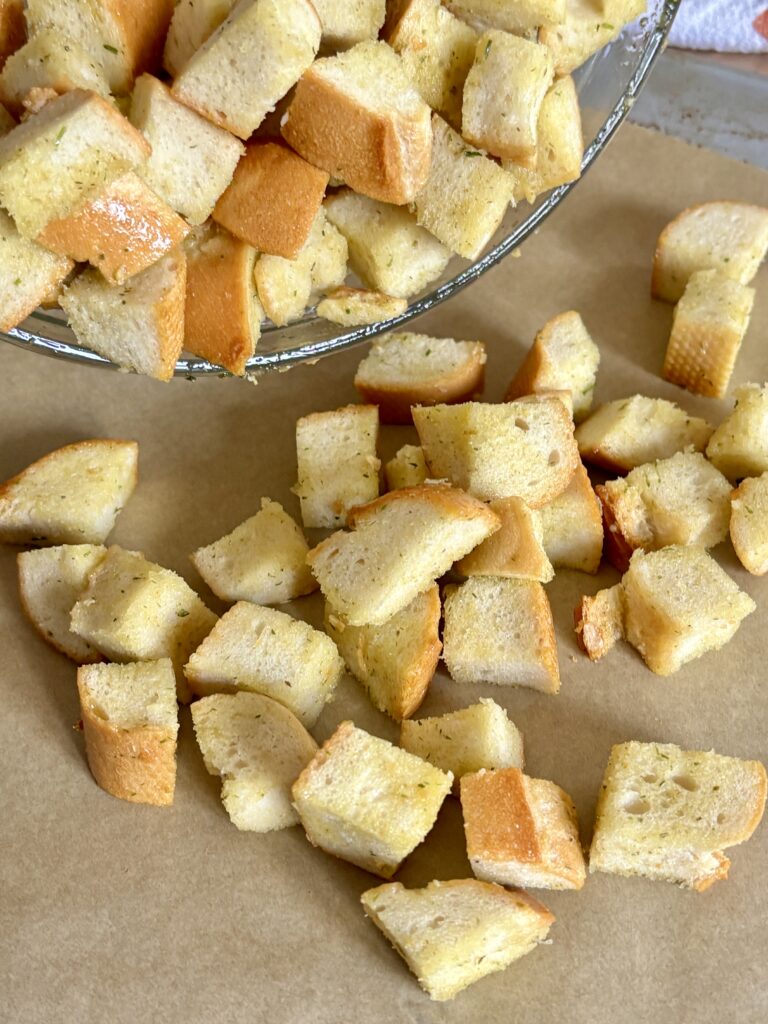
- Place the bread cubes in a large mixing bowl. Drizzle with the extra virgin olive oil.
- Sprinkle with Trader Joe’s Onion Salt or the homemade seasoning blend. Toss thoroughly until the bread cubes are evenly coated with oil and seasoning.
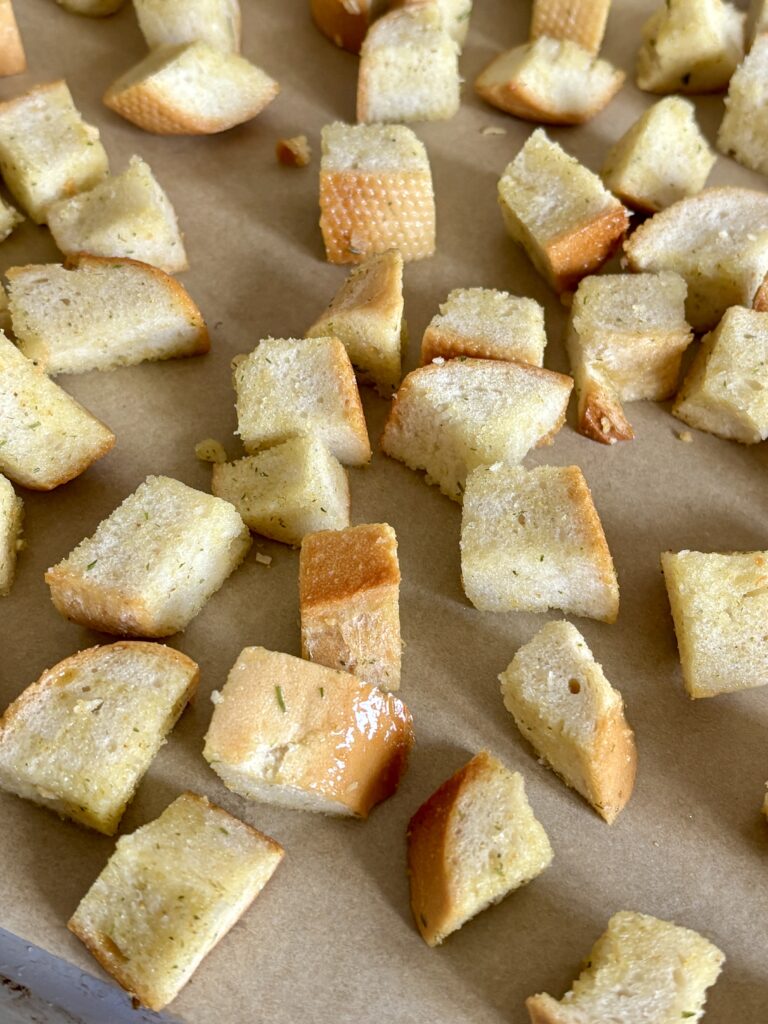
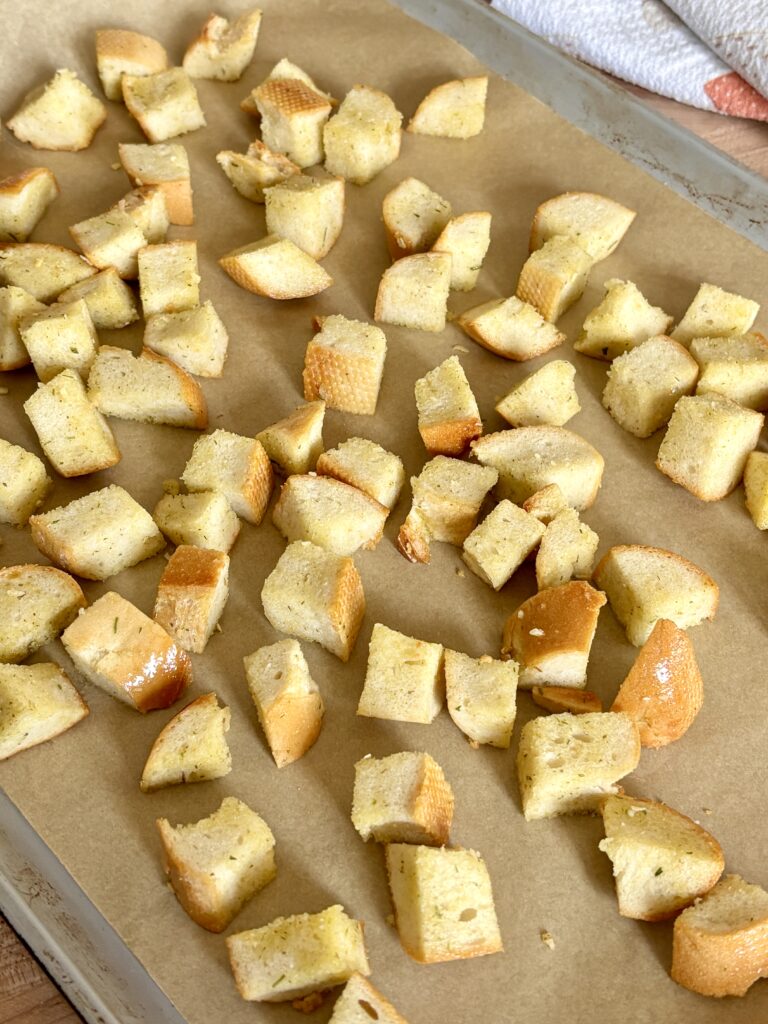
- Spread the seasoned bread cubes in a single, even layer on the prepared baking sheet, leaving a little space between the pieces.
- Bake at 250°F for approximately 30–40 minutes, stirring once or twice during baking, until the croutons are dry, crunchy, and lightly golden. Baking time may vary depending on the type of bread and size of the cubes.
- Remove the baking sheet from the oven and allow the croutons to cool completely. They will continue to crisp up as they cool.
- Enjoy immediately on salads or soups, or transfer to an airtight container once completely cooled.
Notes
- Bread: Slightly stale bread works especially well because it contains less moisture. Fresh bread can also be used but may need additional baking time.
- Bread Quantity: This recipe uses approximately 3 cups of cubed bread, not necessarily an entire loaf. Bread loaf sizes vary considerably.
- Cube Size: Cut the bread into approximately ½-inch cubes for evenly sized, bite-sized croutons.
- Olive Oil: Use enough olive oil to coat the bread lightly without saturating it.
- Seasoning: Trader Joe’s Onion Salt is my favorite shortcut, but the homemade garlic and herb blend works beautifully. Start with less onion salt if your bread is already salty, then adjust to taste.
- Low-Temperature Baking: Baking at 250°F helps dry the croutons gradually, creating a crisp texture without overly dark edges.
- Baking Time: Start checking around 30 minutes. Fresh or dense bread may need additional time, while lighter bread may finish sooner.
- Cooling: Allow the croutons to cool completely before storing to prevent trapped moisture from making them soft.
- Storage: Store in an airtight container at room temperature for approximately 5–7 days for the best quality.
- Freezing: Freeze cooled croutons in a freezer-safe container for up to 2 months.
- Re-Crisping: If the croutons soften, return them to a 250°F oven for 5–10 minutes, or until crunchy again.
Homemade Croutons | Perfect Homemade Croutons | Easy Homemade Croutons | How to Make Croutons | Oven Baked Croutons | Crispy Homemade Croutons | Homemade Croutons from Bread | Garlic Herb Croutons | Homemade Salad Croutons | Croutons for Soup | Homemade Croutons with Olive Oil | Seasoned Homemade Croutons | Sourdough Croutons | Low Temperature Baked Croutons | Croutons from Stale Bread | How to Make Crispy Homemade Croutons | Easy Homemade Croutons in the Oven | Homemade Croutons with Olive Oil and Garlic | How to Make Croutons from Leftover Bread | Homemade Croutons for Caesar Salad | Crispy Croutons for Tomato Soup | How to Make Croutons Without Burning Them | Homemade Croutons with Trader Joe’s Onion Salt | How to Store Homemade Croutons | Easy Crouton Recipe | Homemade Salad Toppings | Leftover Bread Recipes | Homemade Caesar Salad Croutons | Easy Soup Toppings | Crispy Bread Croutons | From Scratch Recipes | Homemade Pantry Staples

Nutritional Content Disclaimer
I choose not to include nutritional information with my recipes, as these values can be calculated from the ingredients provided. With my background as a pediatric nurse practitioner and my own family experience with disordered eating, I understand how focusing on numbers can affect our relationship with food. My philosophy is that all foods have a place—sweet, savory, nourishing, or indulgent. I aim to share recipes that support a healthy, joyful approach to eating. My hope is that this space also encourages a balanced, healthy relationship with food for you and your family too.