
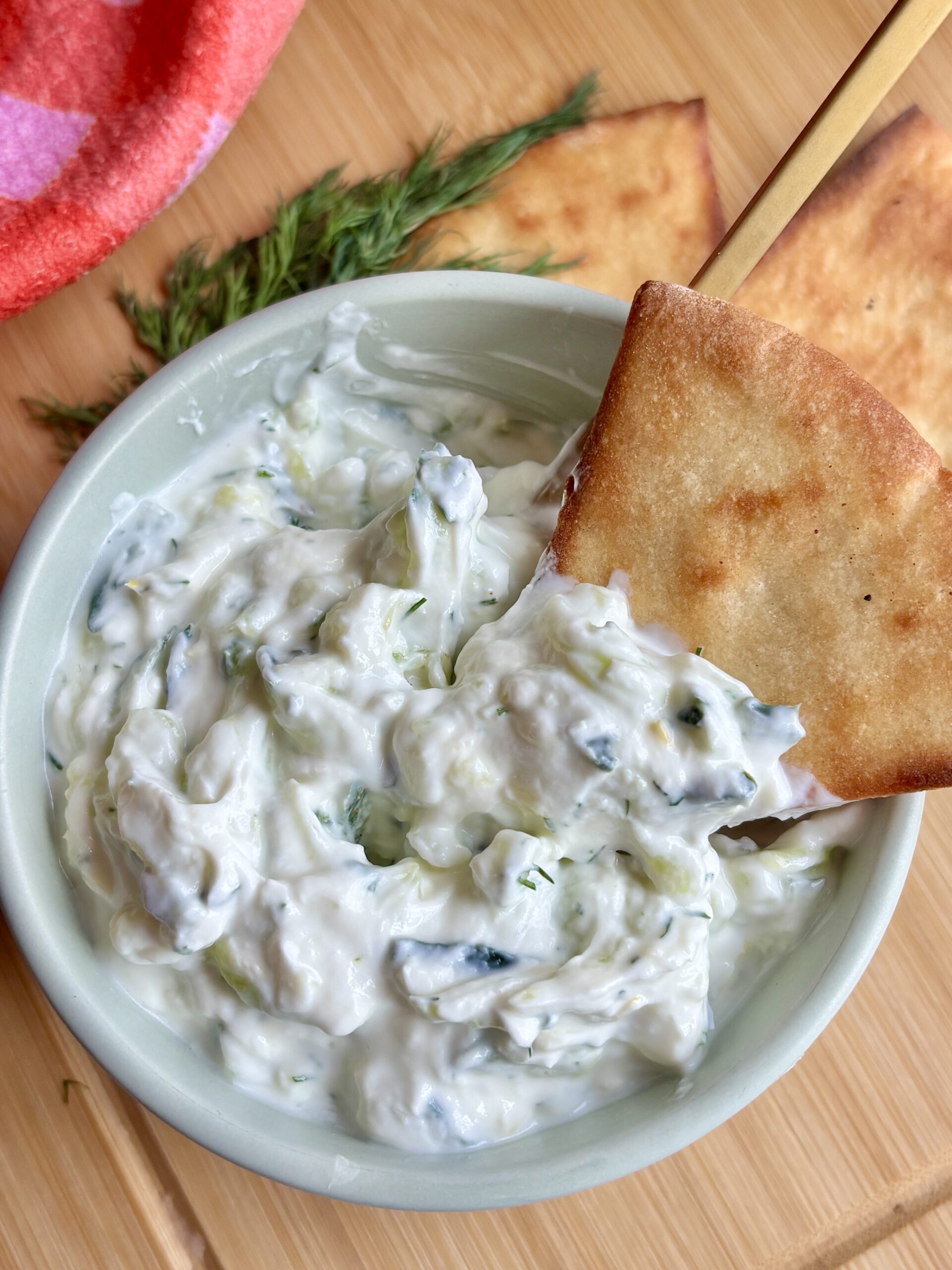
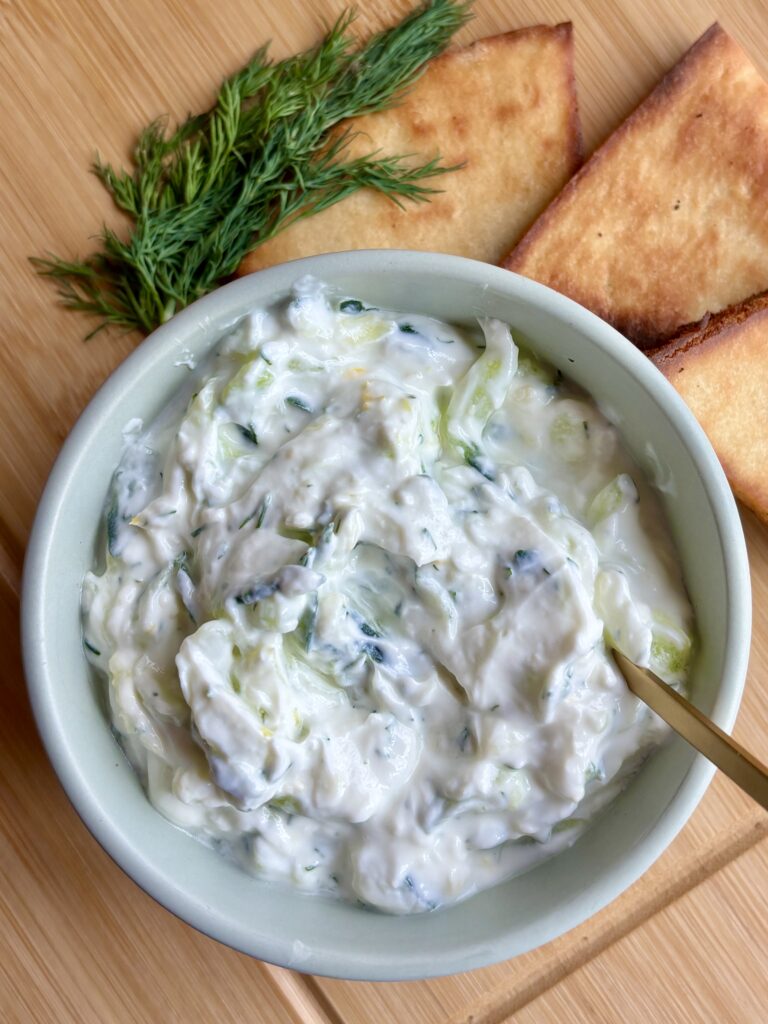
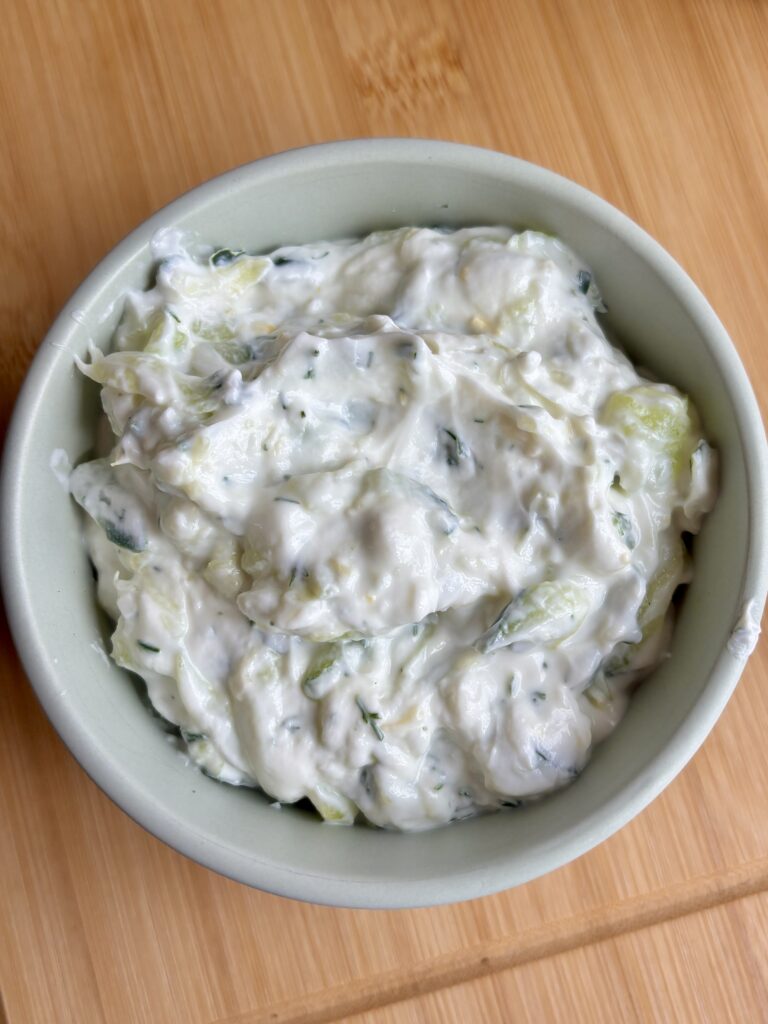
If you have ever had a truly great tzatziki then you already know it has the power to completely transform a meal. It is cool, creamy, garlicky, has a perfectly refreshing cucumber bite. Plus it is so much easier than you might think to make right at home, and so much better than anything that comes out of a plastic tub at the grocery store. This Homemade Tzatziki Sauce is the real deal, and once you make it yourself, you will never go back.
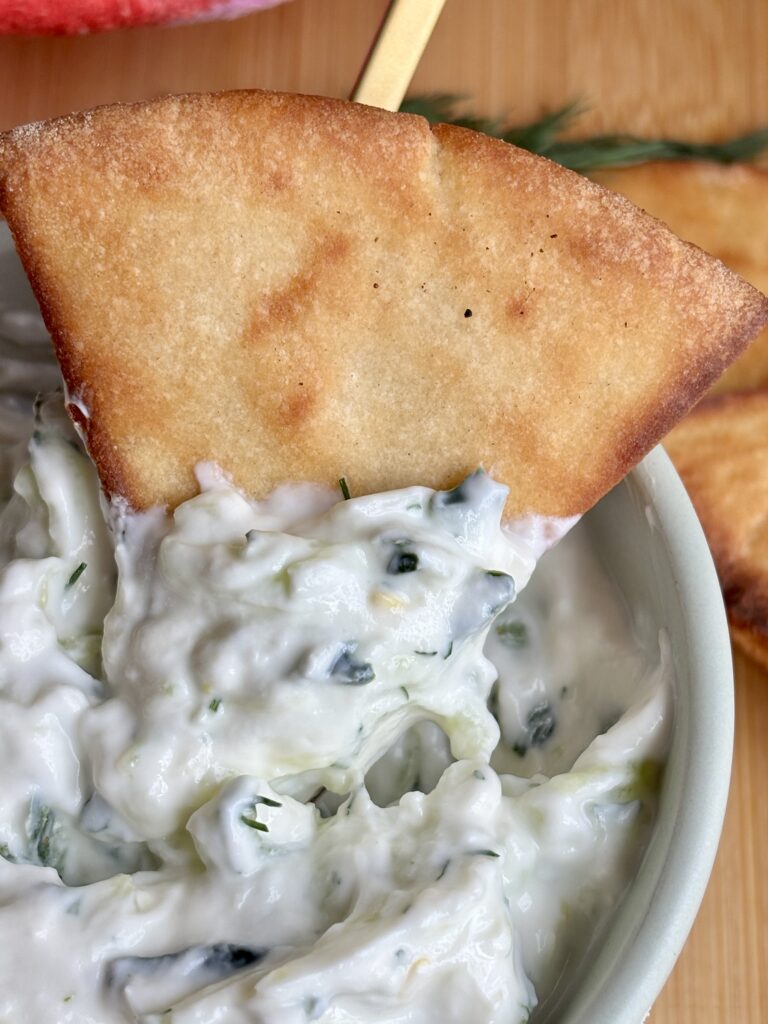
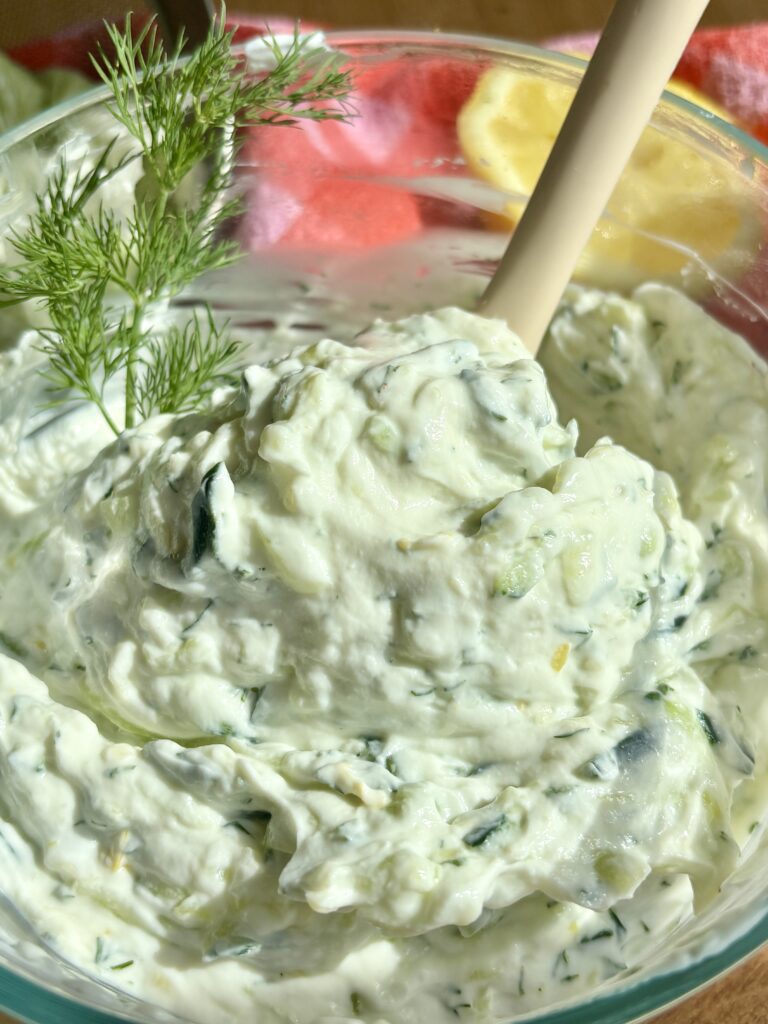
Made with thick plain whole milk Greek yogurt, freshly grated cucumber, bright lemon zest and juice, fragrant dill, and a touch of wine vinegar for that classic authentic tang, this sauce is everything a great tzatziki should be. The garlic deepens beautifully as it chills, and that 30 minute rest in the refrigerator is where the magic really happens. Flavors meld, the sauce thickens up perfectly, and what comes out is something that tastes like it belongs on a restaurant mezze platter.
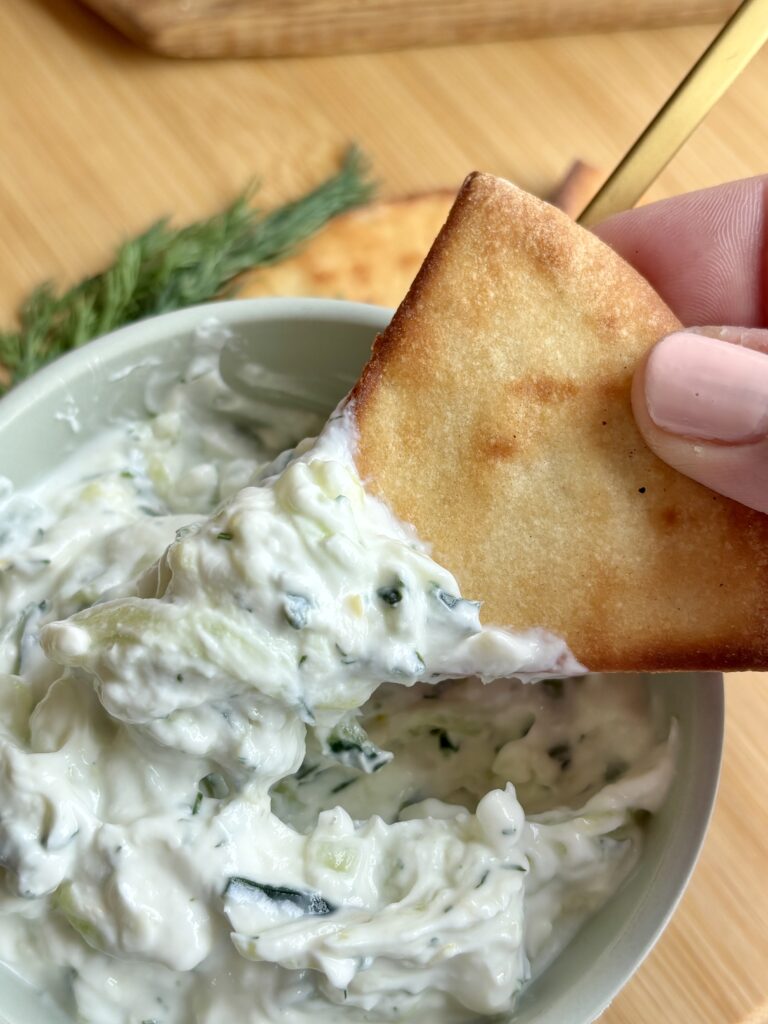
I love serving this alongside my Beef Kofta Bowls and Green Parsley Sauce for the ultimate Mediterranean spread, but honestly this tzatziki earns its place at the table no matter what you are making. Grilled chicken, lamb, roasted vegetables, a simple pita and crudités platter, grain bowls, the possibilities are endless! This is one of those recipes you will find yourself making on repeat all year long, and especially all summer long.
Why you’ll love this recipe!
What ingredients do I need?
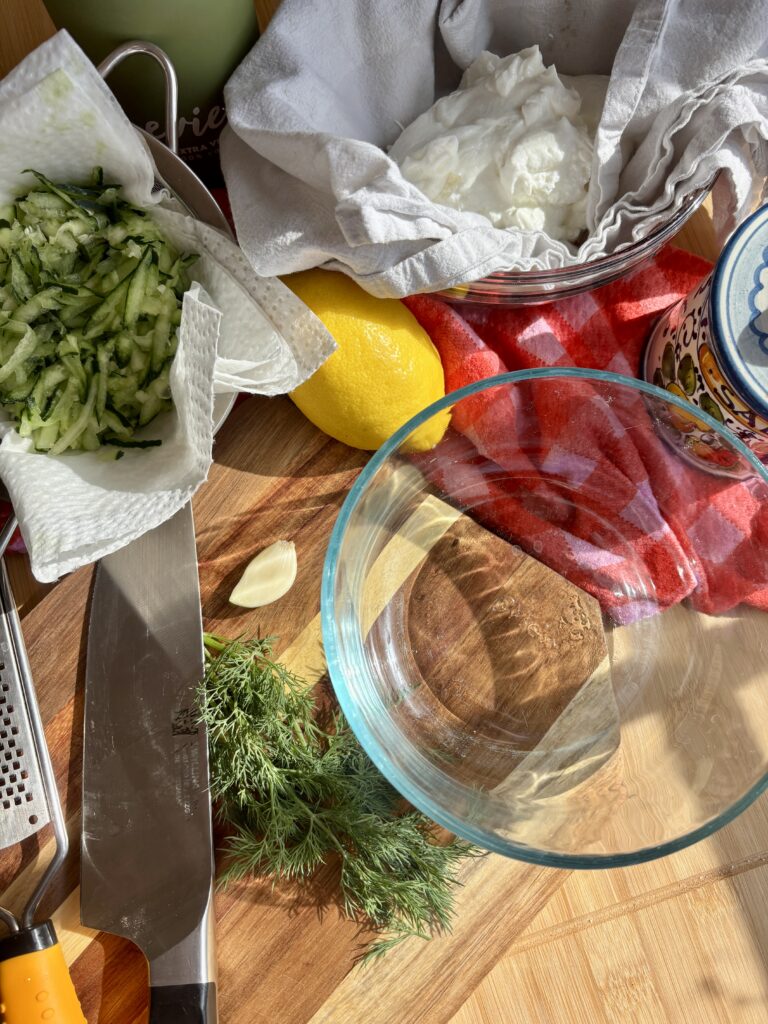
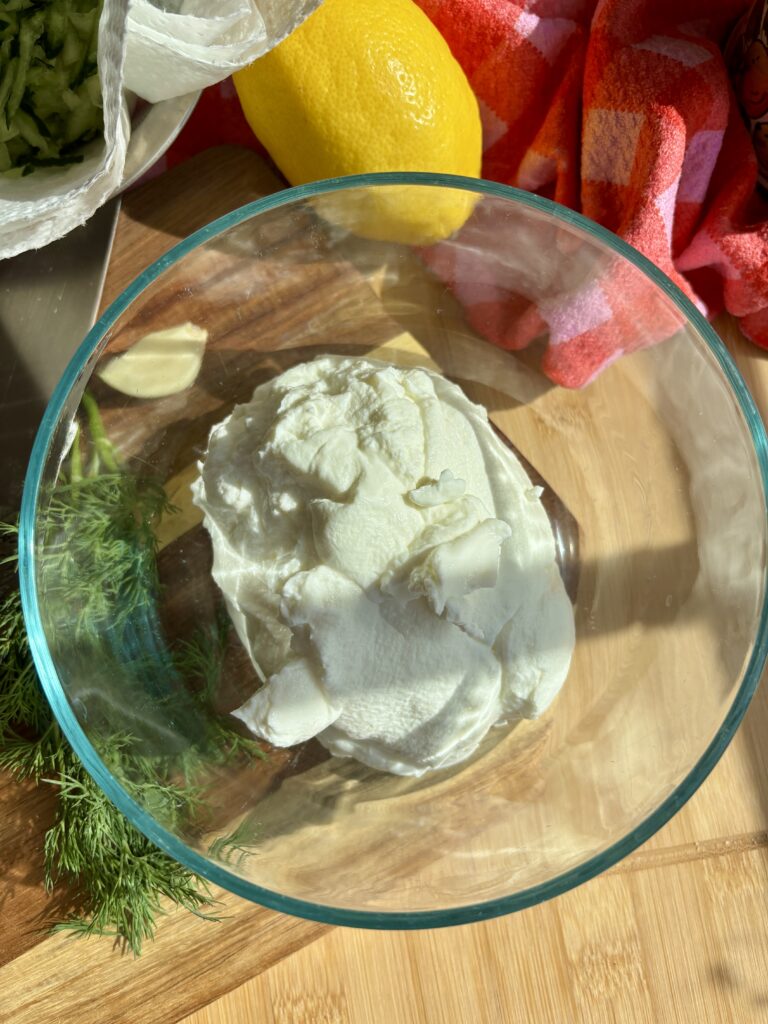
- Plain whole milk Greek yogurt: The foundation of a great tzatziki. Whole milk Greek yogurt gives you the creamiest, richest result. If your yogurt isn’t very thick, strain it through cheesecloth for 30–60 minutes before using for that authentic, luxuriously thick consistency.
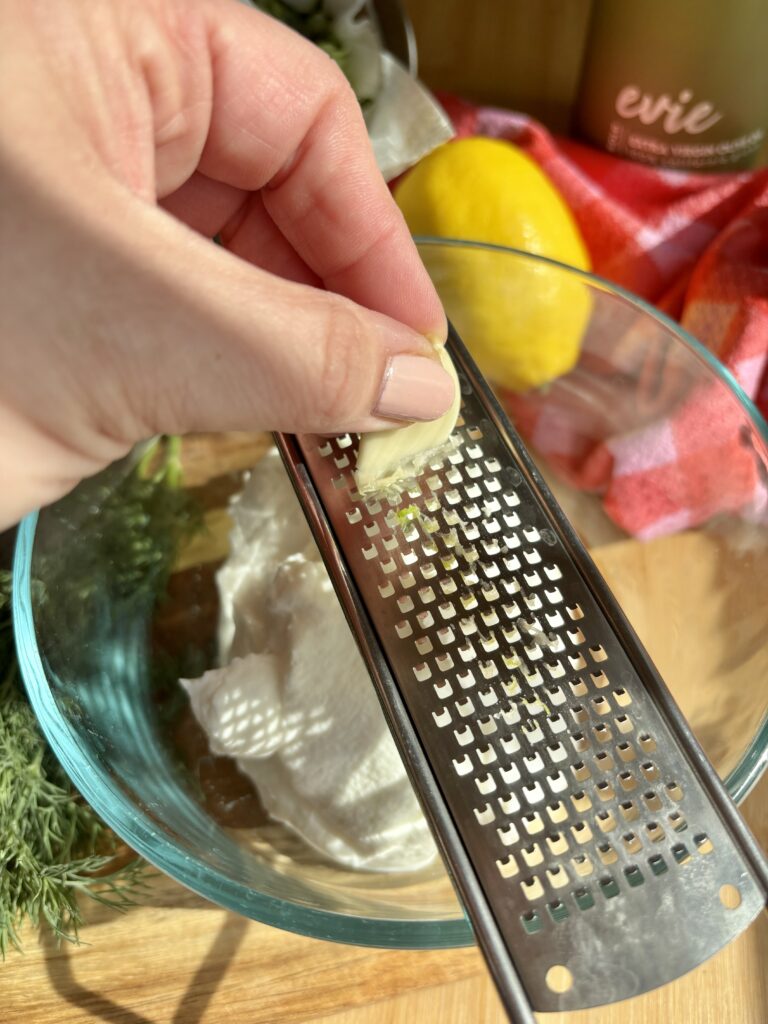
- Garlic clove, finely grated: Fresh garlic is non-negotiable here. Grate it on a microplane for the smoothest incorporation and most even flavor distribution. Keep in mind the garlic flavor will deepen and intensify as the sauce chills, so start with one clove and adjust from there.
- Salt: Start with ¼ teaspoon and adjust to taste after mixing. The cucumber also releases a little salt as it drains, so season gradually.
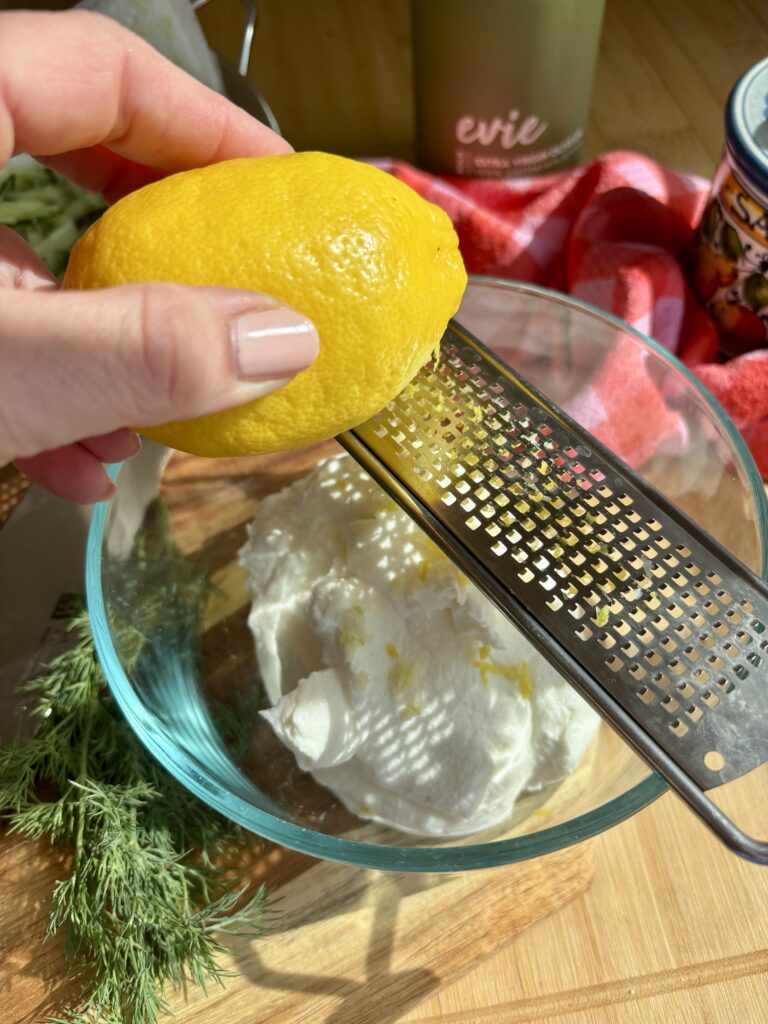
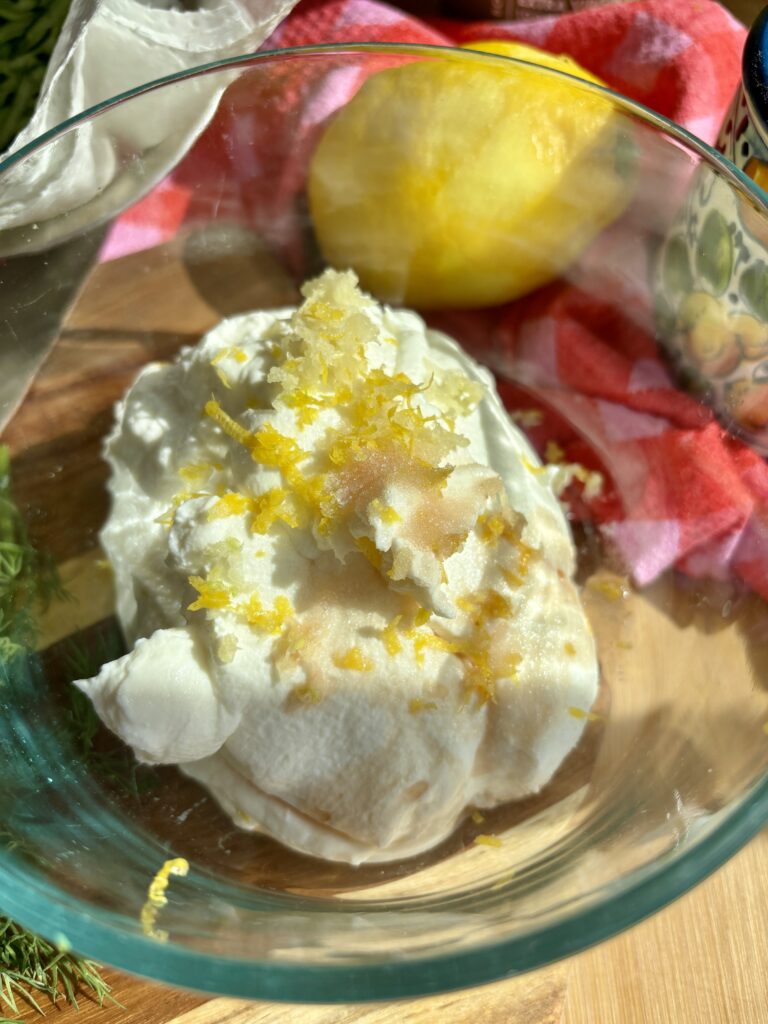
- Lemon zest: This is the secret flavor booster most people skip, please don’t! The zest adds a bright, concentrated citrus flavor that juice alone just can’t replicate.
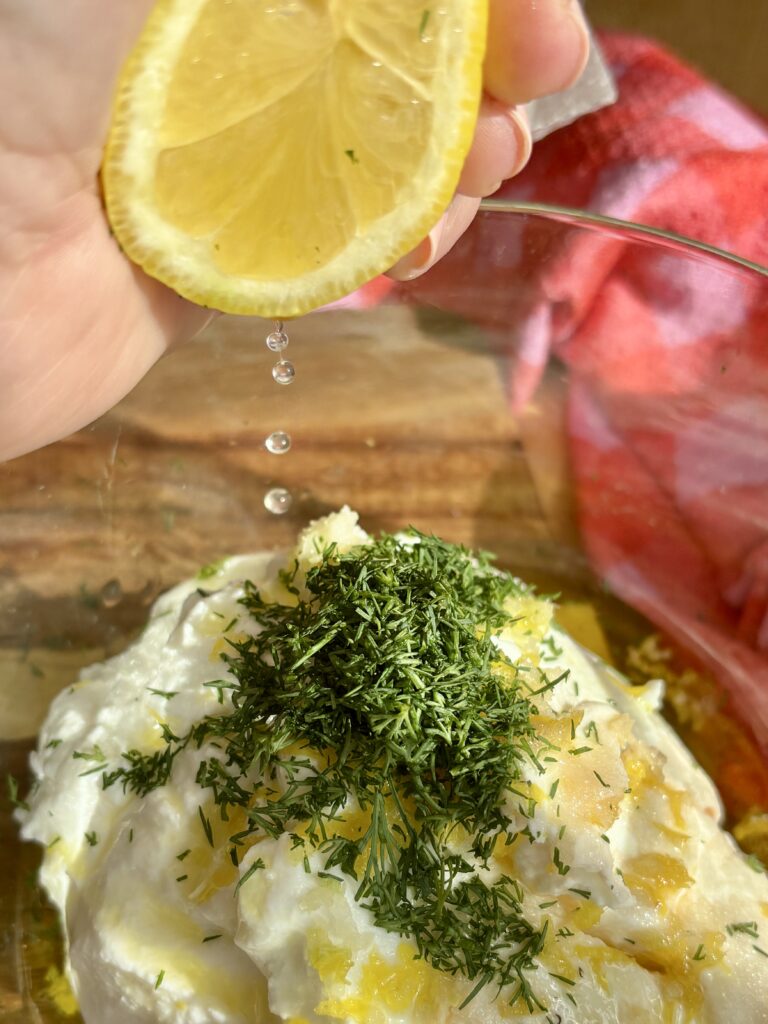
- Lemon juice: Freshly squeezed only. Adds brightness and balances the richness of the yogurt beautifully.
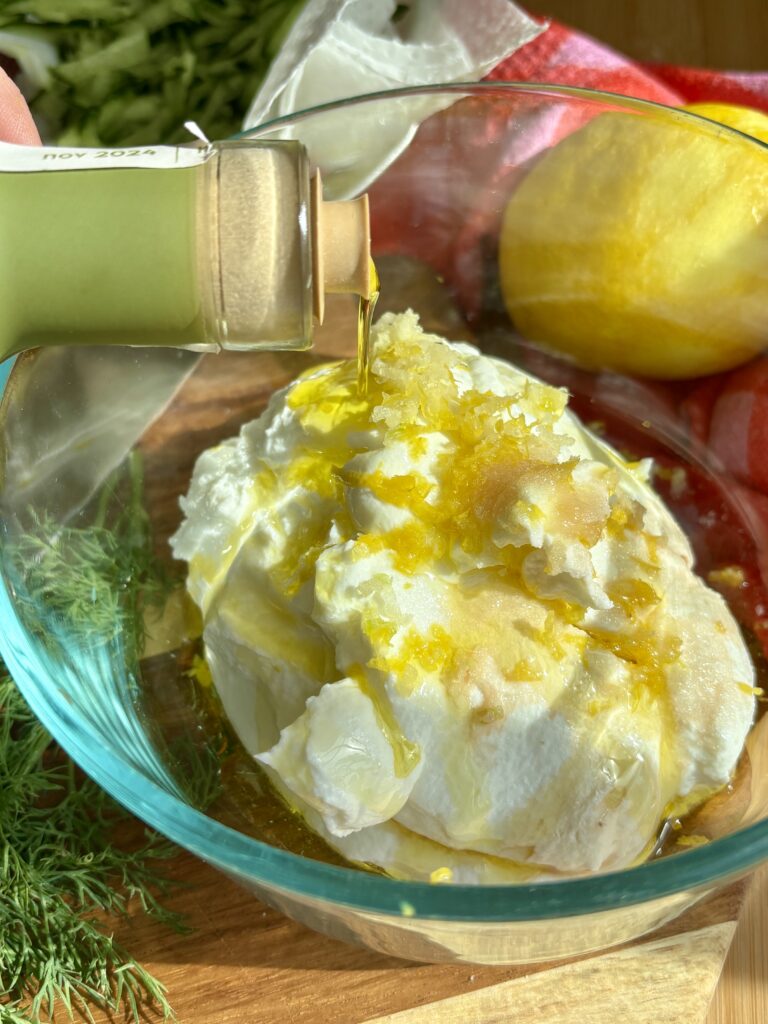
- Extra virgin olive oil : Just a small amount adds silkiness and a subtle richness that rounds out the whole sauce. Use a good quality extra virgin olive oil since it’s going in uncooked.
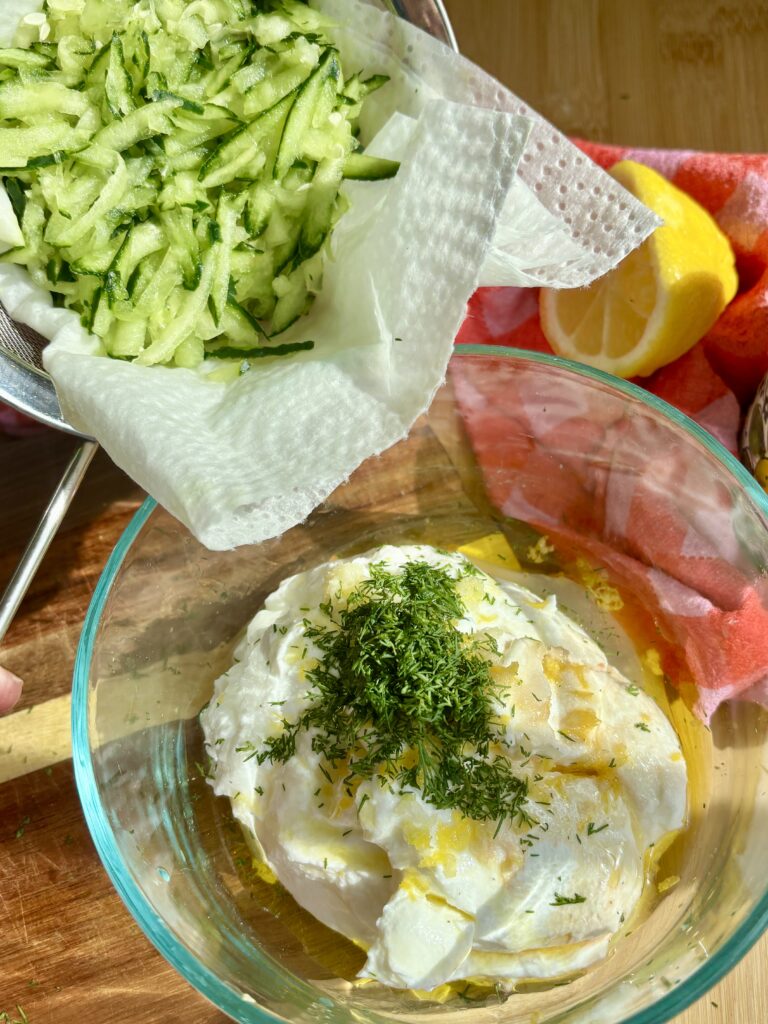
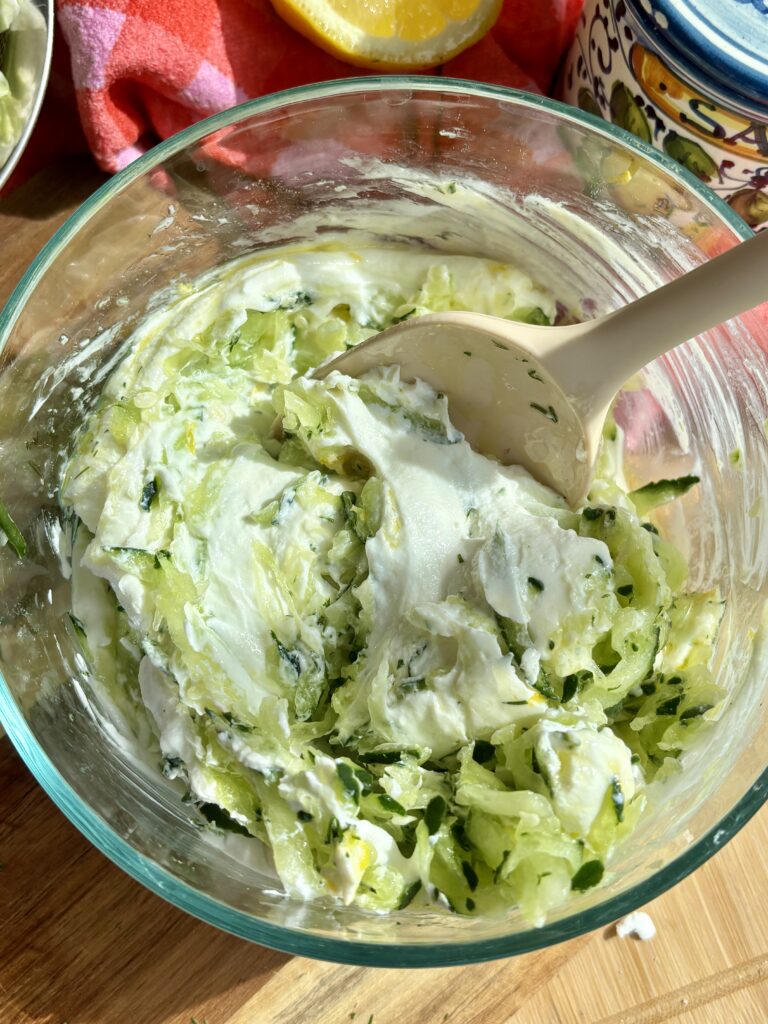
- Cucumber, shredded and drained: English or Persian cucumbers are ideal here, they have a lower water content, thinner skin, and milder flavor than standard cucumbers. Squeezing out every last drop of moisture is the single most important step for a thick, creamy tzatziki that doesn’t turn watery.
- Red or white wine vinegar: Just a splash adds the authentic tangy depth that sets a great tzatziki apart from a basic yogurt dip. Red wine vinegar is slightly more robust, while white is a little more delicate, both are equally delicious.
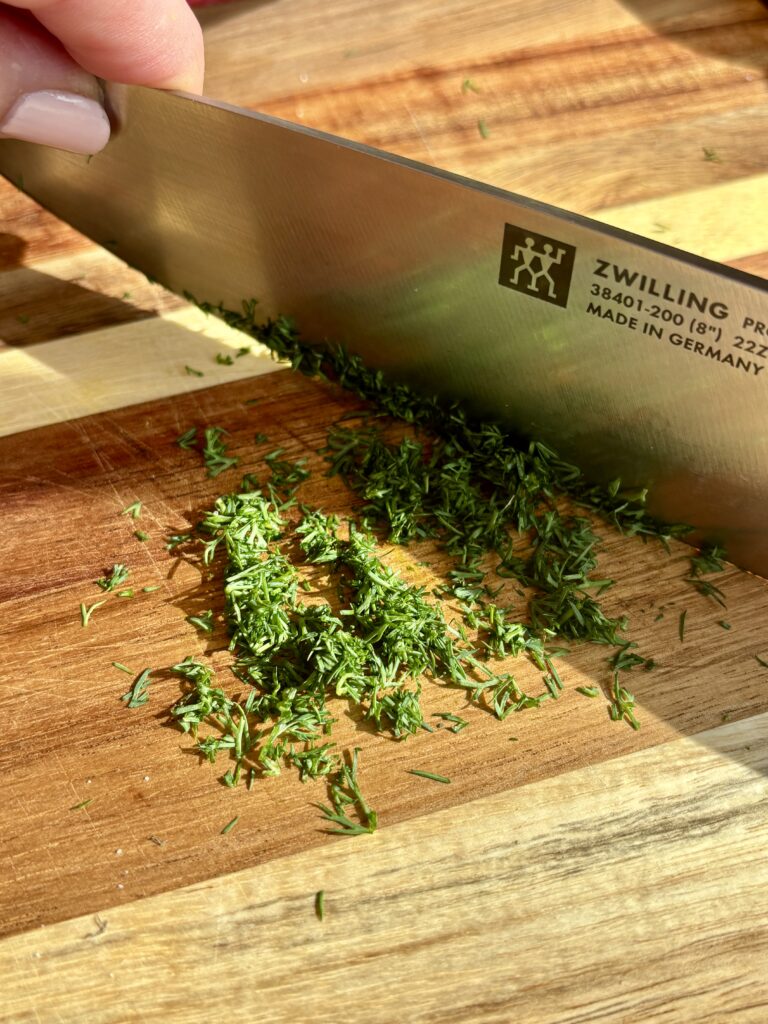
- Fresh dill: Fresh dill gives you that classic, unmistakable tzatziki flavor. Dried dill can work in a pinch but fresh is strongly preferred here for the most vibrant, authentic taste.
Recipe Variations
- Mint Tzatziki: Swap half the dill for fresh mint leaves for a cooling, slightly sweeter variation that is absolutely beautiful alongside lamb chops or kofta
- Spicy Tzatziki: Add a pinch of cayenne pepper or a small amount of finely minced jalapeño for a version with a little kick
- Roasted Garlic Tzatziki: Use roasted garlic instead of raw for a sweeter, mellower, more complex garlic flavor. This is perfect for garlic lovers who find raw garlic too sharp
- Herb Tzatziki: Add a tablespoon of finely chopped fresh parsley or chives alongside the dill for a more complex, multi-herb version
Pro Tips
- Drain the cucumber completely! This is the most important step in the entire recipe. Squeeze, squeeze, and squeeze again. Any remaining moisture will make your tzatziki thin and watery as it sits. A clean kitchen towel works better than paper towels for really wringing it out.
- Grate your garlic on a microplane. Finely grated garlic incorporates seamlessly into the sauce with no chunks and distributes flavor evenly throughout every bite.
- Strain your yogurt if needed. If you can’t find a very thick Greek yogurt, line a fine mesh strainer with cheesecloth, a thin towel, or even paper towels (I’ve done it all!), then add the yogurt, and let it drain over a bowl in the refrigerator for 30–60 minutes. The result is a luxuriously thick, authentic tzatziki.
- Don’t skip the chill time if at all possible! Thirty minutes minimum in the refrigerator is where the flavors come alive. The garlic mellows slightly, the dill infuses through the yogurt, and everything comes together into something really special.
- Add the lemon zest! Most basic tzatziki recipes only call for lemon juice. The zest adds a punch of concentrated citrus flavor that makes a noticeable difference, don’t skip it!
- Garnish before serving, especially if using as a dip. A drizzle of your best olive oil, a sprinkle of fresh dill, and a few cucumber slices on top make this look absolutely beautiful on a table
Can I Substitute?
Yes! Like always though, any substitutions made to the recipe can result in a change in texture and/or flavor.
- Greek yogurt: Swap with full-fat plain regular yogurt, just make sure to strain it through cheesecloth for several hours first to remove excess liquid and get it closer to Greek yogurt consistency.
- Fresh dill: Swap with fresh mint, a classic and equally authentic herb choice for tzatziki; use the same amount.
- Lemon juice: Add a little white wine vinegar instead if you’re out of lemons. A small splash of white wine vinegar provides similar acidity and brightness.
- Red or white wine vinegar: Swap with apple cider vinegar. A mild, slightly fruity swap that works well if wine vinegar isn’t available
- Extra virgin olive oil: Use avocado oil if you are out of olive oil. It is a neutral, high-quality alternative with a milder flavor profile.
Dietary Substitutions
- Dairy-Free: Use a thick, plain dairy-free yogurt in place of Greek yogurt. Try a coconut, soy, or almond based yogurt. Just make sure to drain it well as it can be slightly thinner than traditional Greek yogurt
- Vegan: The dairy-free yogurt swap above makes this fully vegan. All other ingredients are already plant-based
Leftovers and Storage
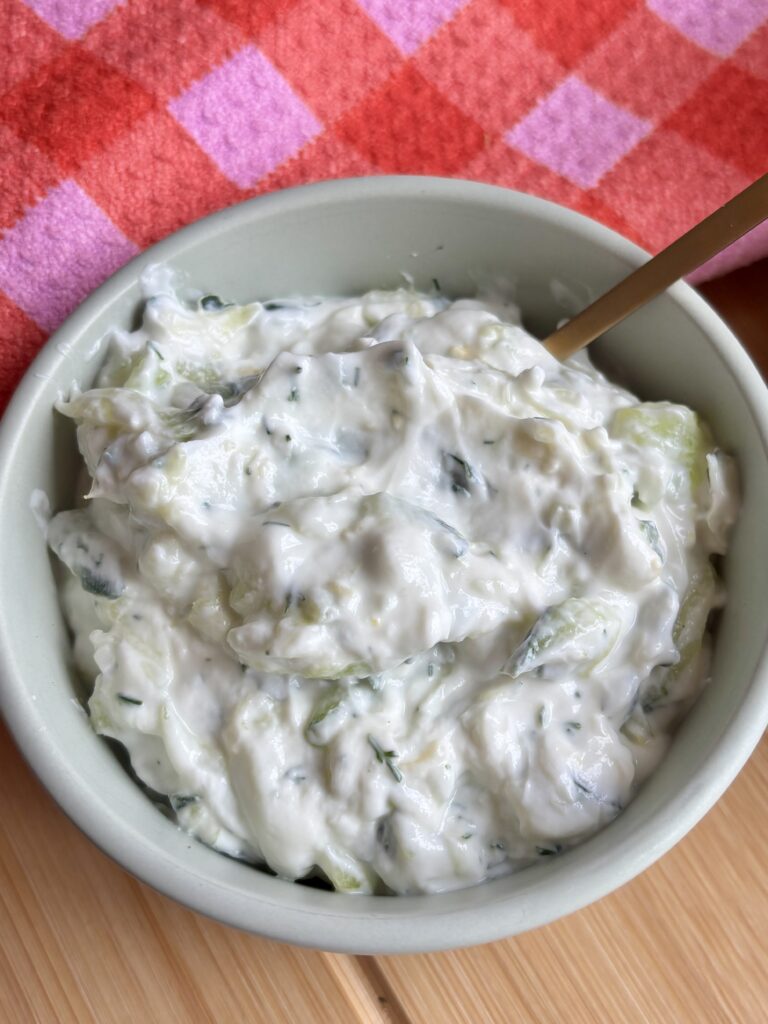
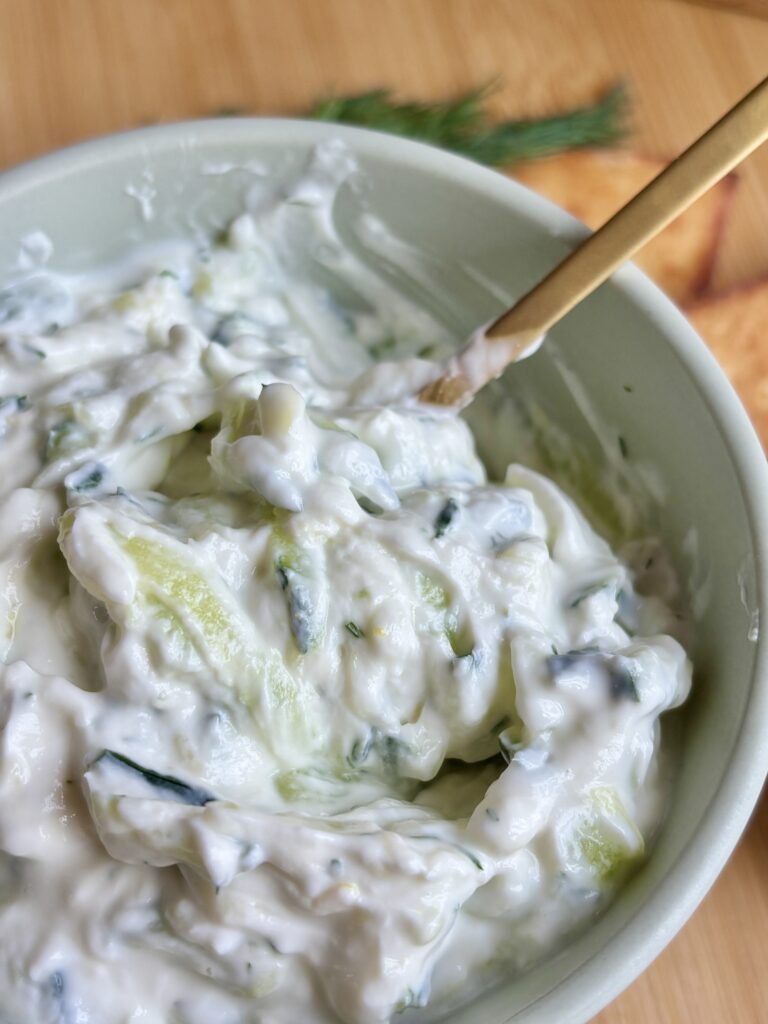
- Refrigerator: Store in an airtight container for up to 3–4 days. Before sealing, drizzle a thin layer of extra virgin olive oil over the top to help maintain freshness and prevent the surface from drying out.
- Stir Before Serving: Some liquid separation is completely normal as the tzatziki sits. Simply give it a good stir before serving and it will come right back together.
- Do Not Freeze: Freezing is not recommended for tzatziki. The yogurt and cucumber do not freeze well, the texture becomes grainy and watery upon thawing and the sauce loses its creamy consistency.
- Marinade Safety: If you have used tzatziki as a marinade on raw meat or poultry, discard it afterward. Never reuse marinade that has been in contact with raw protein as a serving sauce, always set aside a fresh portion before marinating.
- Meal Prep Tip: Tzatziki is a fantastic meal prep addition! Make a batch on Sunday and use it throughout the week on grain bowls, wraps, grilled proteins, and veggie platters. It gets even better as the week goes on as the flavors continue to develop
But, I Still Have A Few Questions…
Why is my tzatziki watery? This almost always comes down to the cucumber. It must be shredded and squeezed as thoroughly as possible before adding it to the yogurt. Use a clean kitchen towel for the best results and really wring it out. Also make sure you are using a thick whole milk Greek yogurt, or strain it beforehand if needed.
Can I make tzatziki ahead of time? Yes, and it is actually better when made ahead! The flavors meld and deepen beautifully as it chills. Make it up to 24 hours in advance for the best flavor. It keeps well in the refrigerator for up to 3–4 days.
Do I have to peel the cucumber? If you are using an English or Persian cucumber, peeling is optional — the skin is thin and tender. If using a standard garden cucumber, peel it first as the skin can be thick and slightly bitter.
Can I use sour cream instead of Greek yogurt? You can! Sour cream gives a similar creamy, tangy result. The flavor will be slightly different and richer, less bright than Greek yogurt, but still delicious. Full-fat sour cream works the best.
How long does homemade tzatziki last? Stored in an airtight container in the refrigerator, homemade tzatziki keeps well for 3–4 days. Stir before each use as some liquid separation is normal.
What is the best cucumber for tzatziki? English or Persian cucumbers are the top choices. They have a lower water content, thinner skin, smaller seeds, and a milder flavor than standard slicing cucumbers, which means less moisture to squeeze out and a cleaner, fresher flavor in the finished sauce.
Can I use dried dill instead of fresh? Fresh dill is strongly recommended for the most vibrant, authentic flavor and color. If you only have dried, use about 1 teaspoon in place of 1 tablespoon of fresh. The flavor will be less bright, but still good.
What can I serve with tzatziki? So many things! It is classic with gyros, pita, and grilled meats like chicken, lamb, and shrimp. It is also wonderful alongside falafel, roasted vegetables, grain bowls, crudités, and Mediterranean platters. Try it with my Beef Kofta Bowls and Green Parsley Sauce for the ultimate Mediterranean spread!
Other Recipes You’ll Love

Let’s engage!
Make sure to tag @thehomechefmomma on Instagram or Facebook, and leave a review or comment if you make these. I always get so excited to see your creations, variations of the recipe, and feedback! Just remember to be kind in your comments, there is still a person behind this screen! 🙂
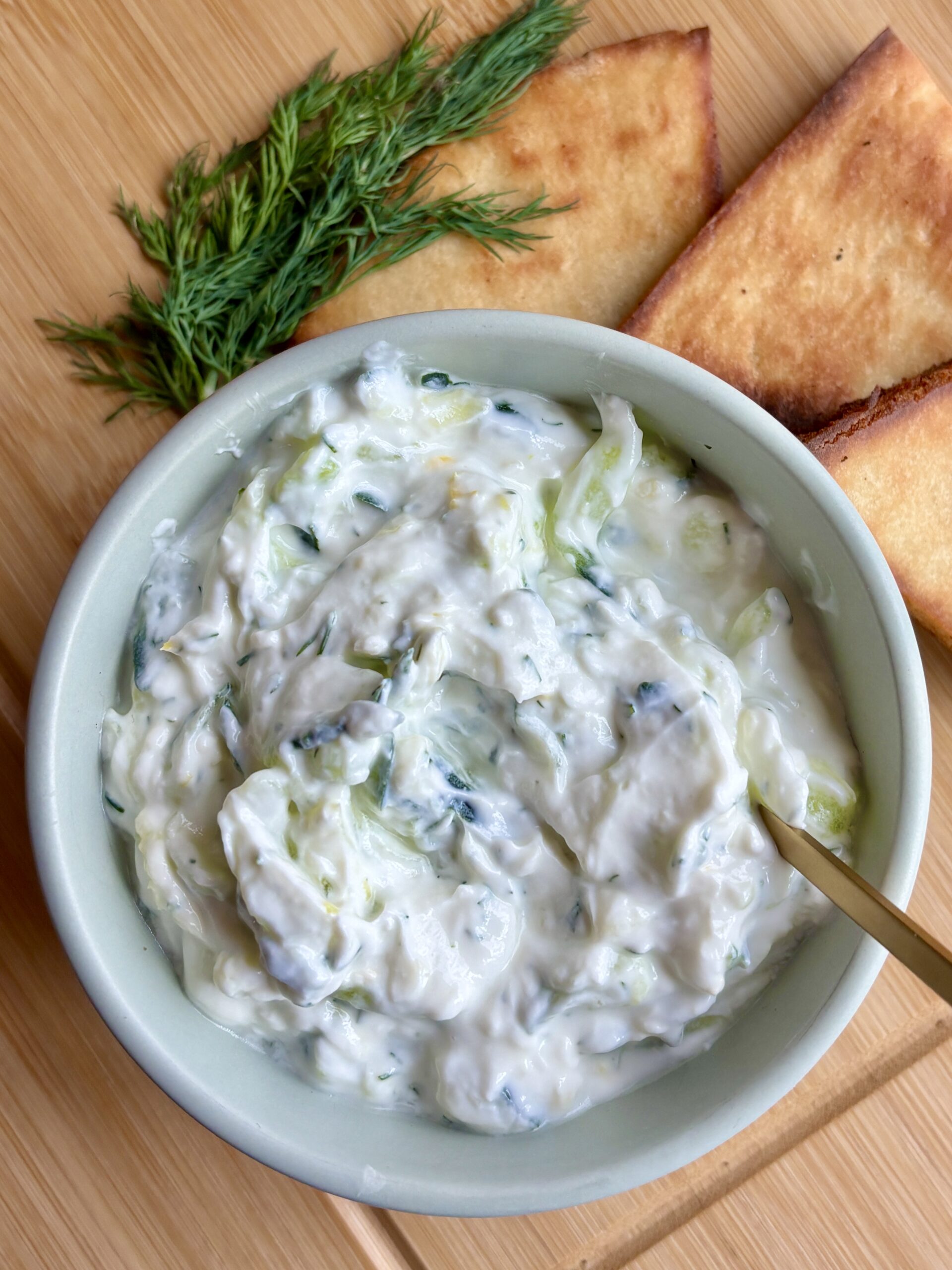
Homemade Tzatziki Sauce
Ingredients
- 1 cup plain whole milk Greek yogurt strained if needed
- 1 garlic clove finely grated on a microplane
- ¼ –½ teaspoon salt to taste
- ½ teaspoon lemon zest
- Juice of ½ lemon freshly squeezed
- ½ tablespoon extra virgin olive oil
- ⅔ cup shredded cucumber thoroughly drained
- ¼ teaspoon red or white wine vinegar
- 1 tablespoon fresh dill chopped
Instructions
- Shred the cucumber using a box grater. Place it in a clean kitchen towel and squeeze out as much moisture as possible. Do not skip this step, it is the key to a thick, creamy tzatziki.
- In a medium bowl, combine the Greek yogurt, finely grated garlic, and salt. Stir until smooth and well incorporated.
- Mix in the lemon zest, lemon juice, and extra virgin olive oil until fully combined.
- Gently fold in the drained cucumber, wine vinegar, and fresh dill until evenly distributed throughout the sauce.
- Adjust seasoning with additional salt, lemon juice, or a touch more dill as desired.
- Cover and refrigerate for at least 30 minutes before serving to allow the flavors to meld.
- Before serving, drizzle with a touch of olive oil and sprinkle with a little extra fresh dill if desired.
Notes
- English or Persian cucumbers are ideal for their lower water content and mild flavor.
- For extra thickness, strain your yogurt through cheesecloth for 30–60 minutes before using.
- The garlic flavor intensifies as the sauce chills, so start with one clove and adjust to taste.
- Store in an airtight container in the refrigerator for up to 3–4 days. Do not freeze.
homemade tzatziki sauce | authentic tzatziki recipe | Greek tzatziki | Mediterranean yogurt sauce | cucumber yogurt dip | tzatziki for gyros | traditional tzatziki sauce | easy tzatziki recipe | homemade Greek dip | yogurt cucumber sauce

Nutritional Content Disclaimer
I choose not to include nutritional information with my recipes, as these values can be calculated from the ingredients provided. With my background as a pediatric nurse practitioner and my own family experience with disordered eating, I understand how focusing on numbers can affect our relationship with food. My philosophy is that all foods have a place—sweet, savory, nourishing, or indulgent. I aim to share recipes that support a healthy, joyful approach to eating. My hope is that this space also encourages a balanced, healthy relationship with food for you and your family too.